Tag: UGC

  • UGC to Boost Engagement and Trust in Higher Education

    UGC to Boost Engagement and Trust in Higher Education

    Reading Time: 14 minutes

    Student recruitment has never been more competitive, or more personal. The institutions standing out right now aren’t the ones shouting the loudest; they’re the ones showing the most truth. That’s where authenticity comes in.

    Prospective students want to see real stories from real people, not polished marketing copy or staged photos. They want to hear from the student who filmed a late-night study session, the alum who just landed their first job, or the professor who shares genuine classroom moments. That’s the power of user-generated content (UGC). It turns your community into your most credible storytellers.

    In this guide, we’ll look at what authentic content really means, why it works, how to build it into your strategy, and how to measure its impact. Along the way, you’ll see examples of schools already doing it well and learn simple ways to kickstart your own approach.

    If your goal is to humanize your brand and connect with Gen Z on a deeper level, authenticity isn’t a trend. It’s the foundation. Let’s get into it.

    Struggling with enrollment?

    Our expert digital marketing services can help you attract and enroll more students!

    What Is User-Generated Content (UGC) in Higher Education Marketing

    User-Generated Content (UGC) is any material created by people outside your marketing team: students, alumni, faculty, or even parents. It includes everything from TikToks and Instagram stories to blog posts, reviews, and testimonial videos. What makes UGC powerful is its honesty. It’s not scripted or staged; it’s content created by individuals sharing their own experiences. That authenticity lends it credibility that traditional marketing can’t replicate.

    Authentic content, on the other hand, goes beyond UGC. It’s any content that feels real, relatable, and trustworthy, even if your institution produces it. A student-led vlog created by your admissions team, a behind-the-scenes video from orientation week, or an unfiltered faculty Q&A on LinkedIn can all count as authentic content. The goal is to showcase genuine stories without the hard sell.

    Here’s the distinction: UGC is always created by your community, while authentic content can come from anyone, as long as it feels natural and transparent. The most effective education marketers use both. Inviting their audiences to create, while also producing school-made content that keeps the same raw, human touch. Together, they tell a believable story that draws students in and builds lasting trust.

    What Is Authentic Storytelling in Higher Education Marketing?

    Authenticity is the backbone of modern education marketing. Students trust people more than institutions, and they can spot inauthenticity instantly, especially Gen Z, who’ve grown up spotting inauthenticity from miles away. Research shows people are about 2.4× more likely to say UGC feels authentic than brand-created content. That difference matters: authentic stories make prospects stop scrolling, listen, and believe.

    Authenticity also builds emotional connection. Gen Z and Millennials want to see themselves in your content, to think, “That could be me at that school.” A student-run TikTok showing dorm life or a grad’s blog about their first job after graduation brings that feeling to life. It’s no surprise that social is now a default research channel. The vast majority of students use social media to research colleges, and peer-created posts carry even more sway.

    The impact extends to engagement. Across benchmarks, UGC often delivers meaningfully higher social engagement and can drive up to ~4× higher CTR in ads. And over time, that engagement builds trust: 81% of consumers trust UGC more than branded content. In a high-stakes decision like education, that trust can make all the difference.

    Benefits of UGC in Campaigns

    Incorporating user-generated content (UGC) into your marketing mix delivers tangible gains in both performance and perception. The first, and often most noticeable, benefit is higher engagement. According to industry data, social campaigns featuring UGC see up to 50% higher engagement, while ads with UGC achieve 4× higher click-through rates (CTR) than standard creative. The reason is simple: real photos and videos from students feel relatable. Prospects engage with them more readily than with polished brand assets. The August 2025 HEM webinar confirmed this pattern, showing that UGC consistently lifted social engagement by 50% and CTRs by a factor of four.

    UGC also stretches your marketing budget. Instead of producing every asset in-house, you can tap into the creativity of your student community. UGC can reduce content production costs by shifting more creation to students and alumni, and in paid campaigns, CPC/CPL are often lower when UGC is used.

    Beyond performance metrics, UGC builds credibility. It’s a living form of social proof, real students sharing their experiences in their own words. That authenticity creates trust and fosters community pride. When students and alumni contribute content, they become advocates, helping schools turn everyday stories into powerful recruitment tools that attract, engage, and convert.

    Best Practices for Implementing UGC

    Launching a user-generated content (UGC) initiative takes planning and structure. Here’s how to build a sustainable, effective framework that keeps authenticity at the heart of your strategy.

    1. Make UGC a Core Content Pillar: Treat UGC as a foundational part of your marketing plan, not an add-on. Include it in your annual content calendar alongside official updates, blogs, and campaigns. Schools that do this well, like the University of Glasgow’s #TeamUofG campaign, consistently weave student voices into their newsletters, social feeds, and websites, making authenticity a constant thread, not a seasonal feature.
    2. Align with Enrollment Cycles: Timing matters. Match UGC themes with where prospects are in the funnel. Early awareness? Share student life and orientation highlights. Decision season? Spotlight testimonials and day-in-the-life videos. Seasonal UGC enrollment marketing tactics, like winter study sessions or graduation snapshots, keep your school top of mind year-round.
    3. Assign Ownership and Collaboration: Even though UGC is created externally, internal management is key. Assign a small cross-functional team, including marketing, admissions, and communications, to coordinate, moderate, and track results. Admissions can identify standout students to act as ambassadors, while marketing supports them with creative direction.
    4. Guide Contributors Without Scripted Control: Students thrive with light structure. Provide a short framework—Hook → Introduction → Key Message → Call-to-Action. To help them share meaningful stories that align with your brand. Offer practical production tips: use natural light, steady shots, and clear audio. Authentic doesn’t mean low quality.
    5. Protect Participants and Your Brand: Always secure written permission before reposting UGC, especially when featuring minors. Create clear content-use policies, moderate posts regularly, and track your branded hashtags with social listening tools. This ensures alignment with your school’s tone and values.
    6. Prioritize Diversity and Inclusion: Feature a range of student perspectives, including international, mature, online, and graduate learners. Authentic storytelling thrives on variety. Prospects should be able to see themselves reflected in your content.

    Examples of Real UGC Applications in School Marketing

    To inspire your own strategy, let’s look at the many ways schools are using UGC and authentic storytelling to strengthen engagement and humanize their brands. Across the education sector, institutions are experimenting with creative formats that empower students, faculty, alumni, and even parents to share their real experiences.

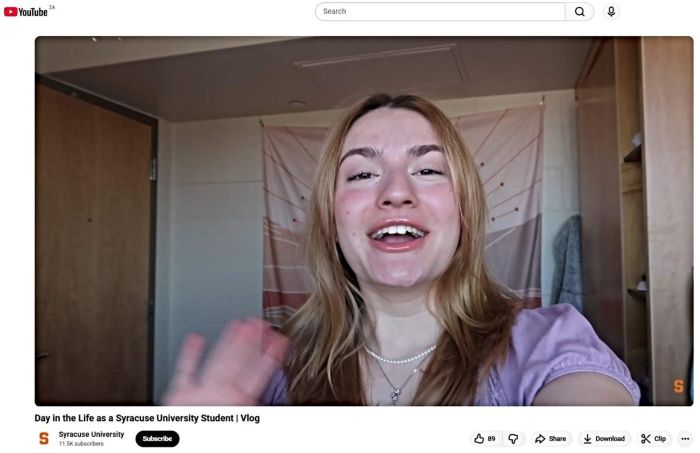
    Example: Syracuse University, Student Vlog on YouTube. A Syracuse student’s “Day in the Life” YouTube vlog offers an unscripted, immersive look into campus life: lectures, study sessions, and community activities. YouTube’s longer format allows for deeper storytelling and helps prospective students experience the campus virtually.
    HEM 1HEM 1

    Syracuse University, Student Vlog on YouTube

    Student “Day in the Life” Takeovers
    One of the most effective UGC formats is the student takeover, where a student documents a typical day on campus through Instagram or TikTok. These videos often follow an unscripted, narrative flow, showing classes, dorm life, study sessions, and social activities from morning to night. Schools typically host these takeovers on official channels or promote student posts through hashtags. This format resonates because it offers an unfiltered look at campus life and helps prospective students picture themselves in that environment.

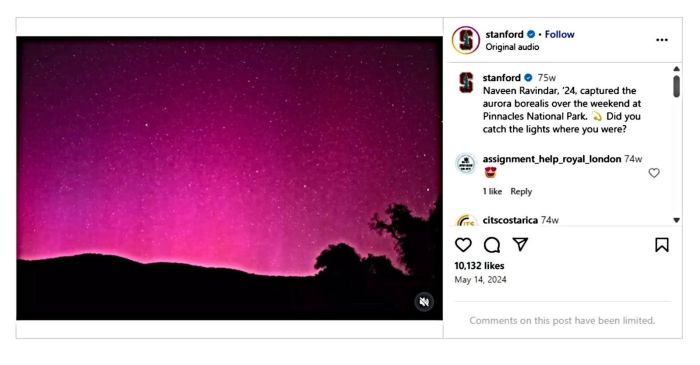
    Example: Stanford University, UGC Nature Reel Stanford University curated a student-shot Instagram Reel featuring the aurora borealis over Pinnacles National Park. The video, captured entirely by a student, embodies the spirit of authentic storytelling, showing beauty, wonder, and student life through the lens of a real experience.
    HEM 2HEM 2

    Stanford University: UGC Nature Reel 

    Behind-the-Scenes of Events
    UGC thrives on authenticity, and few things feel more genuine than spontaneous moments from student events. Encouraging students to share behind-the-scenes perspectives from orientations, club fairs, or sports games helps outsiders experience the energy and community spirit that define your school. These candid glimpses make institutional content more approachable and emotionally engaging.

    Faculty or Staff Takeovers and Reflections
    Authentic content doesn’t have to come solely from students. Faculty and staff can also contribute by sharing casual reflections or quick videos about their daily work. A professor might record a short lab update, while an admissions officer could post a quick tour from a college fair. These snapshots add a human touch to your education marketing strategies by showing the passion, personality, and commitment that drive your institution.

    Student-Run Q&As and AMAs
    Interactive Q&A sessions, where current students answer prospective students’ questions live on Instagram or through social threads, are among the most effective UGC formats. This setup offers unfiltered, peer-to-peer insights that prospects trust. When real students respond in their own voices, it builds transparency and community, turning your social platforms into spaces for genuine connection.

    Social Media Contests and Hashtag Campaigns
    Encouraging students to create around shared prompts or themes is another great UGC driver. Campaigns like “Show your campus pride” or “Dorm room decor challenge” can generate dozens of authentic submissions in a short time. Just ensure clear rules and creator permissions (and parent consent for minors) so you can safely feature the best entries across your platforms. These initiatives not only supply fresh content but also boost engagement and school spirit.

    Testimonials from Parents and Alumni
    UGC isn’t limited to current students. Parents and alumni can offer powerful, credible perspectives through short testimonial videos or written stories. Sharing how a parent watched their child grow or how an alumnus found career success can feel more authentic than any scripted message, and often connects strongly with audiences considering your programs.

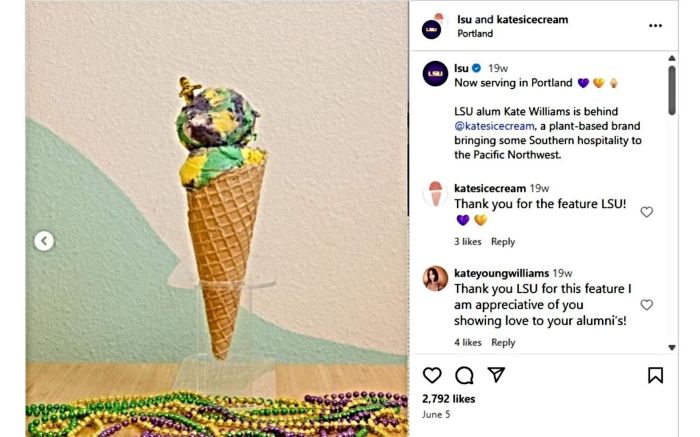
    Example: Louisiana State University, Alumni-Submitted Carousel LSU showcased an alumna’s entrepreneurial journey through a carousel post featuring her photos and story. The alumni-submitted visuals celebrate post-graduation success while reinforcing a sense of lifelong belonging, transforming alumni into ambassadors for the LSU brand.
    HEM 3HEM 3

    Louisiana State University Alumni Carousel

    Fun Trends and Challenges
    Participating in lighthearted social trends can also create strong UGC moments. Whether it’s a campus meme, a TikTok challenge, or a humorous group video, joining or amplifying these moments signals that your institution is lively, student-centered, and culturally aware. These pieces of content not only entertain but also reinforce your brand’s relatability and spirit.

    Using Podcasts to Showcase Authenticity

    Podcasts have become one of the most powerful tools for education marketers looking to connect with audiences through genuine, long-form storytelling. Unlike short-form social media content, podcasts allow room for nuance, emotion, and conversation, making them ideal for showcasing the real voices and experiences that define your school community. Whether you’re featuring students, faculty, or alumni, the format gives your audience something they crave: authenticity.

    Set a Clear Purpose and Goals
    Before launching a podcast, clarify its purpose. 

    What role will it play in your marketing strategy? 

    Is it meant to support recruitment by spotlighting programs and student experiences? 

    To engage current students through campus discussions? 

    To deepen alumni connections with nostalgia and advice? 

    Each episode can have a distinct focus, but your overall series should align with strategic objectives. Identify your audience: prospective students, parents, current students, or alumni, and craft episodes that meet their needs. A school emphasizing innovation might produce a series around student research and campus projects, while one focused on student life could highlight real stories about growth, belonging, and discovery.

    Plan Your Content Strategy
    Successful podcasts rely on structure and consistency. Choose a defined theme or niche rather than covering every topic under the sun. Themes like Student Voices: First-Year Journeys or Faculty Conversations: Research That Matters help listeners know what to expect. Pre-plan your first 8–10 episodes to maintain a steady release rhythm. 

    Aim for a predictable cadence (biweekly or monthly) so listeners know when to expect new episodes. Formats can vary: student interviews, faculty discussions, narrative storytelling, or on-site event recordings. Involving student co-hosts or interviewers adds natural authenticity and relatability, bridging the gap between your institution and prospective students.

    Focus on Storytelling and Value
    Every episode should deliver something meaningful. Encourage guests to share honest stories, not scripted talking points. A student might recount a defining academic challenge; a professor might discuss what inspires their teaching; an alum could describe their career journey post-graduation. 

    Let conversations unfold naturally; even small moments of humor or vulnerability can make an episode memorable. Strive to balance emotional connection and practical value, offering listeners insight, inspiration, or tangible takeaways.

    Feature Diverse Voices
    Authenticity thrives on diversity. Feature a wide range of speakers—students from different backgrounds, professors across disciplines, and staff who shape campus life behind the scenes. Mixing perspectives gives your audience a fuller, more human picture of your institution. Episodes could spotlight student-led initiatives, faculty research, or stories that reflect different aspects of campus life, from residence halls to community outreach.

    Production and Promotion
    Good audio quality matters. Use a reliable microphone, record in a quiet space, and lightly edit to maintain clarity while preserving natural conversation flow. Publish episodes consistently and promote them across channels, email newsletters, your website, and social media. Short audiograms or quote graphics can extend your podcast’s reach while reinforcing its authentic tone.

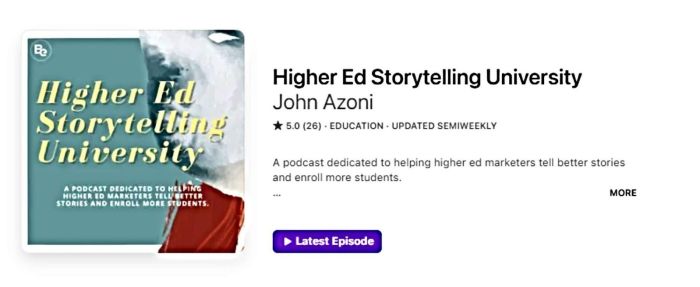
    Example: Higher Ed Storytelling University Podcast. The Higher Ed Storytelling University podcast features marketers, educators, and students discussing authenticity, narrative strategy, and digital storytelling. This example illustrates how schools and industry experts are using long-form audio to humanize their messaging and reach broader audiences.
    HEM 4HEM 4

    Higher Ed Storytelling University Podcast

    Tools, Platforms, and Quick Wins for UGC

    Building a successful user-generated content (UGC) strategy doesn’t require starting from scratch. With the right tools and a few well-planned quick wins, your institution can begin collecting and showcasing authentic stories almost immediately. Below are practical tools and easy-to-implement tactics that can help you get started.

    UGC Creation and Curation Tools

    • Canva: A go-to tool for both marketing teams and students. Canva makes it easy to design branded graphics, quote cards, and short visuals using preset templates. Students can create Instagram takeover intros, testimonial cards, or club event spotlights, all while staying on-brand thanks to shared school colors and fonts.
    • CapCut: A free, mobile-friendly video editing app perfect for short-form social content. Encourage students to use it to trim clips, add subtitles, and polish their footage before submission. Subtitles, in particular, improve accessibility and help engagement since many viewers watch videos without sound.
    • Later or Buffer: Social media scheduling platforms like these help teams plan and publish UGC consistently. For example, you can schedule weekly “Student Spotlight” features or testimonial series, keeping your feeds active with minimal daily effort.
    • TINT or Tagboard: These UGC management tools collect content tagged with your campaign hashtags across multiple platforms into one dashboard. They also help you request permissions, filter submissions, and display curated UGC feeds on your website (such as a live “#CampusLife” wall on your admissions page).

    Quick Wins to Kickstart UGC

    1. Identify 3 Student Storytellers: Start small. Find three enthusiastic students, perhaps a club leader, athlete, or international student, and invite them to share their stories through takeovers, vlogs, or blog posts. Their content will serve as authentic examples and inspire others to participate.
    2. Launch a Branded Hashtag: Create a memorable, campaign-specific hashtag like #[YourSchool]Life or #Future[YourMascot] and start promoting it immediately. Add it to your bios, marketing emails, and on-campus signage. Repost tagged content regularly to reward engagement and grow participation.
    3. Pilot an Authentic Video Post: Experiment with one short, genuine video on Instagram or TikTok. Try a student Q&A, a “what I wish I knew” segment, or a move-in day recap. Compare engagement metrics with your usual posts. You’ll often find authentic, lightly produced clips outperform polished ads.
    4. Amplify Existing UGC: Look for what’s already out there. Students are likely tagging your school in posts or videos. Engage with those by resharing or commenting, signaling that you value authentic voices.
    5. Offer Student Club Consultations: Provide quick content workshops or audits for student groups. Helping them improve their storytelling or branding indirectly elevates the quality of UGC being created across campus.

    Measuring the Impact of UGC

    Just like any other marketing initiative, your user-generated content (UGC) strategy needs to be measured to prove its value and refine future campaigns. The impact of UGC goes beyond clicks and likes. It touches trust, community sentiment, and enrollment. That’s why it’s important to measure both quantitative and qualitative outcomes. Here’s how to assess what’s working and why.

    1. Track Engagement and Reach
      Start with the fundamentals: likes, comments, shares, saves, and views. Compare these against your institution’s regular branded posts. UGC often performs better, signaling a stronger connection and authenticity. Also track reach and impressions—are your hashtags expanding visibility? If your student takeover generates thousands of views and dozens of replies, that’s evidence of increased awareness and interest at the top of the funnel.
    2. Monitor Cost Efficiency
      If UGC is part of paid campaigns, track cost per click (CPC) and cost per lead (CPL). Ads using student-generated content tend to have higher click-through rates and lower costs because they appear more genuine. Run A/B tests: one glossy ad versus one featuring a real student photo. If the authentic ad drives more engagement at a lower cost, you’ve got clear ROI data to share with stakeholders.
    3. Measure Conversions and ROI
      Track what happens after engagement. Did a UGC-driven post increase form submissions or event sign-ups? Ask applicants how they heard about your school. If they mention your social media or specific student stories, that’s qualitative proof of impact. You can also calculate Return on Ad Spend (ROAS) by comparing tuition value or lead generation to ad spend, or use proxy metrics like cost-per-application to show improved performance. Learn more in HEM’s social media playbook.
    4. Gather Feedback from Students and Staff
      Numbers don’t tell the whole story. Collect feedback from your community through surveys or informal polls. Ask whether students feel represented in your content or whether prospective students found your UGC helpful. Anecdotal comments, like “Your Instagram takeovers made me want to apply,” are qualitative gold and demonstrate the emotional impact of authenticity.
    5. Track Sentiment and Community Growth
      Pay attention to the tone of comments and discussions. Are people tagging friends or expressing excitement? Positive sentiment indicates your content resonates. Also, monitor the growth of branded hashtags and organic posts. If more students are tagging your school or sharing their own stories without prompting, your UGC strategy is inspiring real advocacy.
    6. Build a UGC Dashboard
      Bring it all together with a simple dashboard that tracks UGC performance quarterly, engagement rates, CPC/CPL trends, sentiment highlights, and standout examples. This helps visualize the tangible outcomes of authenticity-driven marketing and makes it easier to communicate results to leadership.

    Example: University of Tennessee, Knoxville
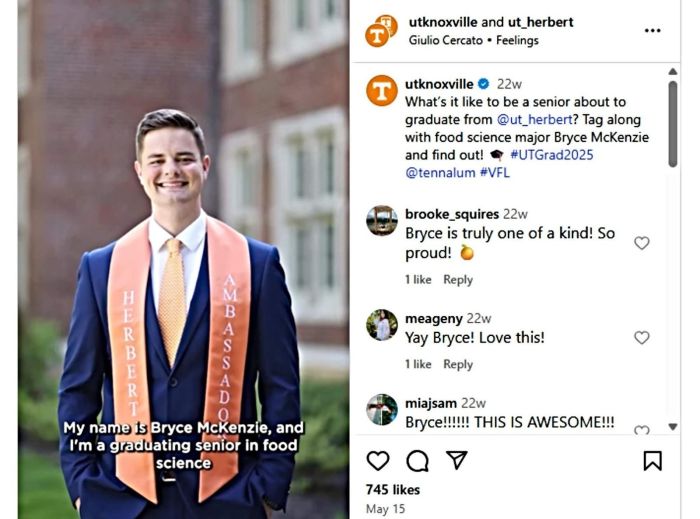
    A University of Tennessee senior’s “Day in the Life” video exemplifies how authentic, student-produced content can outperform traditional marketing posts. The Reel’s organic engagement, thousands of views, and high interaction highlight the measurable impact of relatability on social media reach and engagement.
    HEM 5HEM 5

    University of Tennessee, Knoxville: “Day in the Life” Reel

    Embrace Authenticity with HEM’s Expertise

    Authenticity in marketing is the foundation of meaningful connection. By weaving user-generated and authentic content into your strategy, your institution can foster trust, spark engagement, and inspire real relationships with students and families. Throughout this guide, we’ve explored how to define UGC, why it works, and how to implement it strategically through proven best practices and simple quick wins. The takeaway is clear: campaigns that feel real outperform those that feel rehearsed.

    Of course, launching an authenticity-driven strategy takes more than good intentions. It demands planning, creativity, and a partner who understands how to balance storytelling with measurable results. That’s where Higher Education Marketing (HEM) comes in. Our team has helped colleges and universities around the world capture genuine student stories and transform them into powerful digital campaigns. Whether you’re planning a branded hashtag initiative, building a library of student video testimonials, or training student ambassadors and UGC programmes to create engaging social content, HEM can guide you every step of the way.

    Authentic voices are your greatest marketing asset, and with HEM’s expertise, you can amplify them strategically. Reach out today for a free UGC strategy consultation and discover how genuine stories can drive real enrollment results. Let’s build trust, engagement, and community authentically.

    Struggling with enrollment?

    Our expert digital marketing services can help you attract and enroll more students!

    Frequently Asked Questions 

    Question: What Is User-Generated Content (UGC) in Higher Education Marketing

    Answer: User-Generated Content (UGC) is any material created by people outside your marketing team: students, alumni, faculty, or even parents. It includes everything from TikToks and Instagram stories to blog posts, reviews, and testimonial videos.

    Question: What Is Authentic Storytelling in Higher Education Marketing?

    Answer: Authenticity is the backbone of modern education marketing. Students trust people more than institutions, and they can spot inauthenticity instantly, especially Gen Z, who’ve grown up spotting inauthenticity from miles away.




    Source link

  • Using UGC and Authentic Storytelling For Education Marketing

    Using UGC and Authentic Storytelling For Education Marketing

    Reading Time: 9 minutes

    Today’s schools need to get creative to promote their programs in a way that resonates with prospects. To spur action from your audience, you need to build trust, create engagement, and foster an emotional connection. How do you do that with so many other schools competing for the spotlight? One of the most effective strategies for making a strong impression on your audience is combining user-generated content and authentic storytelling. 

    These methods allow your institution to showcase real experiences, highlight student voices, and differentiate itself from competitors in an increasingly crowded educational landscape. Keep reading to discover the unique advantages of these effective education marketing tactics, get actionable insights into how to use them to reinvent your marketing plan, and examine real examples for inspiration.

    Struggling with enrollment?

    Our expert digital marketing services can help you attract and enroll more students!

    What Is User-Generated Content (UGC)?

    User-generated content refers to any content, such as testimonials, social media posts, blogs, and videos, created by students, alumni, faculty, or other stakeholders rather than your institution itself. By leveraging UGC, you can present an unfiltered, genuine representation of student life and success. This makes your marketing feel more authentic and increases engagement and reach across digital platforms.

    Why is user-generated content important in marketing? UGC is created by your students and alumni; it is perceived as more trustworthy than traditional promotional materials. Prospective students are more likely to trust and engage with content created by their peers rather than content crafted solely by an institution. This credibility makes UGC a powerful tool for increasing enrollment and engagement.

    The Unique Advantages of User-Generated Content in Education Marketing

    A key user-generated content advantage is its ability to build trust. When prospective students see real stories from current students or alumni, they develop a connection to your institution. This sense of authenticity makes them more likely to inquire about programs and ultimately enroll.

    Another advantage is the ability to foster engagement across digital platforms. Content created by students, such as Instagram stories, TikTok videos, or blog posts, generates far higher engagement than traditional ads. People love sharing their experiences, and prospective students love seeing real perspectives from peers who have been in their shoes.

    A major user-generated content advantage is cost-effectiveness. Instead of investing heavily in producing marketing materials, you can encourage students and alumni to share their stories organically. This reduces costs and enhances your reach, as UGC spreads naturally through networks.

    Another reason why user-generated content is important in marketing is its adaptability across multiple platforms. UGC can be repurposed into social media campaigns, website testimonials, video promotions, and email marketing efforts. This versatility allows you to maintain a steady stream of fresh, compelling content.

    Image 2Image 2

    Source: HEM

    What Is Authentic Storytelling in an Educational Marketing Context?

    Authentic storytelling goes beyond traditional marketing materials to craft compelling narratives highlighting real student and faculty experiences. Instead of relying solely on promotional messages, this approach uses emotion, relatability, and personal journeys to engage prospective students.

    What is the power of storytelling in education? Authentic storytelling is powerful because it transforms abstract institutional values into relatable, real-world experiences. It allows prospective students to see themselves in your stories, making their decision-making process more personal and impactful. This approach humanizes your institution and strengthens your brand identity.

    One of the best ways to incorporate authentic storytelling into your marketing strategy is by featuring in-depth student and alumni stories. A compelling blog could follow the experiences of an international student adjusting to life in a new country while studying at your institution. A video series could showcase students discussing their educational journey, including their challenges and triumphs. By doing this, you create content that is informative and emotionally engaging.

    The Advantages of Authentic Storytelling in Education Marketing

    Unlike traditional promotional content, authentic storytelling builds emotional connections that influence student decision-making. By sharing real experiences from your students and faculty, you provide prospects insight into your institution’s culture, values, and impact.

    One of the greatest advantages of authentic storytelling is its ability to make your institution’s messaging more relatable. Instead of generic promotional materials, prospective students see real-life success stories, challenges, and personal growth journeys, helping them visualize their own future at your school.

    Another unique benefit is the ability to enhance brand trust and credibility. People connect with stories, not advertisements. By showcasing genuine experiences through student interviews, alumni journeys, and behind-the-scenes campus life, your school appears more transparent and welcoming. This approach fosters a deeper connection with your audience, making them more likely to engage with your institution.

    Authentic storytelling also strengthens retention and alumni relations. When students feel emotionally connected to your institution through compelling narratives, they are more likely to remain engaged throughout their education and beyond. Alumni who feel valued through storytelling initiatives often become ambassadors for your school, further enhancing your brand reach.

    Image 3Image 3

    How Your School Can Leverage User-Generated Content and Authentic Storytelling

    Building a marketing strategy around user-generated content and authentic storytelling requires a proactive approach. Instead of simply encouraging students to share their experiences, you need to create opportunities for engagement, provide platforms for their voices, and consistently highlight their stories. By doing so, you ensure that the content generated aligns with your school’s brand and messaging while maintaining the authenticity that makes it so powerful.

    Encourage Student-Generated Social Media Content

    One of the best ways to integrate UGC into your marketing strategy is by motivating students to share their experiences on social media. Encourage them to document campus life, extracurricular activities, and classroom experiences.

    For example, your university might launch an Instagram challenge where students post their favorite campus spots with a branded hashtag. Similarly, a career college could create a TikTok trend showcasing student projects or daily routines in their training programs.

    Example: This video, posted by a UCLA student, is a free promotion for the school’s dining hall. She is making a relatable joke about the proverbial ‘freshman fifteen,’ an expression for the weight gain that tends to occur in the first year of college. The creator credits the delicious food at UCLA for her freshman fifteen, and this is not the only video of its kind on her page. Satisfied students eager to share their experiences are invaluable for generating compelling UGC. Encourage students to use specific hashtags for their UGC as this creator did (#ucla #dininghall, etc).

    @ronigrush

    If you didn’t gain freshman 15 I hate you #ucla #dininghall #food #foodtok #icecreamday #collegelife #freshmanyear #freshman15

    ♬ Dance You Outta My Head – Cat Janice

    Source: TikTok

    Feature Student and Alumni Testimonials

    Prospective students value hearing from those who have already walked the path they are considering. Featuring student and alumni testimonials on your website, in promotional videos, and on social media channels provides relatable insights into your programs.

    An example of effective testimonial use is a nursing college that records short video interviews with recent graduates discussing their experiences and career outcomes. These testimonials provide compelling, relatable stories that reinforce the value of your school’s programs.

    Example: AAPS regularly posts alumni video testimonials highlighting each graduate’s unique background, career goals, and how the institution supported the attainment of their objectives. Here, Teresa Barnes describes how the Quality Assurance and Regulatory Affairs program at AAPS helped her to find success as a Medical Writer. Your alumni community is probably full of careerists who are proud of their achievements and are excited to talk about their journey. This is an excellent opportunity for effective brand storytelling.

    YouTube videoYouTube video

    Source: Academy of Applied Pharmaceutical Sciences | YouTube

    Develop Long-Form Content With Authentic Storytelling

    Creating blog posts or video documentaries featuring students’ journeys can be a powerful way to engage prospects. A compelling blog could follow a student during an internship and how the experience shaped their career aspirations. This approach showcases your school’s opportunities while telling a relatable story that resonates with other students considering similar paths.

    Additionally, long-form content allows for in-depth storytelling that goes beyond surface-level promotions. A well-written blog post could feature a student reflecting on their academic journey, describing their challenges, the mentors who guided them, and the personal growth they experienced. Similarly, a video series might document a student’s transition from their first day on campus to their graduation, providing prospective students with a complete picture of what they can expect.

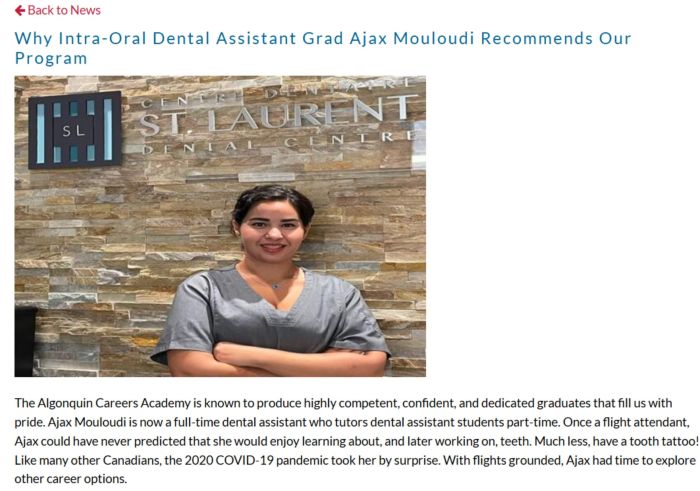
    Example: Blogs remain a relevant way to tell your school’s story and give your student body a voice. Here, Algonquin Careers Academy tells the story of one of their dental assistant graduates. By publishing a blog post that features a student interview, the message is personable, inspirational, and authentic. Try to infuse personality into your long-form content whether you choose to blog, post videos, create a newsletter, or all three.

    Image 4Image 4

    Source: Algonquin Careers Academy

    Highlight Behind-The-Scenes Content

    Showcasing the day-to-day experiences of students, faculty, and staff makes your institution feel more welcoming and accessible. A behind-the-scenes video series might follow a day in the life of a student in a culinary arts program, walk viewers through a school event, and showcase hands-on learning experiences and interactions with industry professionals.

    An effective example comes from business schools that share faculty-led discussions, giving students an inside look at the classroom environment before they apply. This storytelling adds authenticity and provides a window into your school’s culture and academic strengths.

    Example: Here, the American Musical and Dramatic Academy showcases its open house event, building anticipation for prospects and providing useful information about what they can expect from the event. Behind-the-scenes videos are easy to film, effective for humanizing your brand, and excellent ways to inform your audience in an engaging, easy-to-digest format.

    @amdaofficial

    Get a behind the scenes look at AMDA student life during our open house events! #amdacollege #collegelife #collegeopenhouse #collegetok #nyclife

    ♬ Canyons – Official Sound Studio

    Source: AMDA College | TikTok

    Run UGC Contests and Campaigns

    To increase engagement, your school can launch user-generated content campaigns that incentivize participation. This could include video challenges, photo competitions, or student-run social media takeovers. For instance, a digital marketing diploma program might host a competition where students submit real-world marketing campaign ideas, with the winner featured on your school’s website and social media pages. This not only showcases student talent but also strengthens your brand’s credibility.

    Example: Seguin High School showcases the artistic talent of one of their students who had won an art contest. Not only is this an excellent way to instill well-deserved pride and support in your students, but it is also a great way to humanize your school brand and display your strong community.

    Image 5Image 5

    Source: Seguin High School | Instagram

    Get Support as You Elevate Your Education Marketing Strategy

    In today’s highly competitive and interconnected world, attracting qualified student prospects online is essential to a successful recruitment strategy. Schools and universities must implement innovative and authentic marketing techniques, leveraging user-generated content and authentic storytelling to connect with their audiences on a deeper level. Working with a marketing agency specializing in education marketing can be a game changer for your results. 

    For over 15 years, Higher Education Marketing has crafted successful digital marketing strategies for schools worldwide. Our deep understanding of education marketing allows us to design multichannel campaigns that drive engagement and enrollment. We provide  tailored services, including:

    • Content Marketing
    • Search Engine Optimization (SEO)
    • Social Media Marketing
    • Paid Advertising Campaigns

    Partner with us to harness the power of storytelling in education and leverage the benefits of user-generated content to drive real engagement. Contact us today to explore how our expert digital marketing solutions can transform your student recruitment efforts and enhance your institution’s online presence.

    Struggling with enrollment?

    Our expert digital marketing services can help you attract and enroll more students!

    Frequently Asked Questions

    Question: Why is user-generated content important in marketing? 

    Answer: UGC is created by your students and alumni; it is perceived as more trustworthy than traditional promotional materials. Prospective students are more likely to trust and engage with content created by their peers rather than content crafted solely by an institution.

    Question: What is the power of storytelling in education? 

    Answer: Authentic storytelling is powerful because it transforms abstract institutional values into relatable, real-world experiences. It allows prospective students to see themselves in your stories, making their decision-making process more personal and impactful. This approach humanizes your institution and strengthens your brand identity.


    Source link

  • Leverage Student Ambassadors and UGC in Education Marketing

    Leverage Student Ambassadors and UGC in Education Marketing

    Reading Time: 11 minutes

    Authenticity has become a cornerstone of successful education marketing campaigns. Nothing speaks louder to prospective students than real experiences shared by current students. That’s why we recommend the combined use of two powerful tools: student ambassador programs and user-generated content (UGC). 

    These strategies harness the voices of your students to create compelling, authentic narratives that resonate. In this blog, we’ll explore the enrollment-boosting potential of student ambassadors and UGC for education marketing, the benefits they offer, and actionable steps to integrate them into your strategy. Let’s get started!

    Struggling with enrollment?

    Our expert digital marketing services can help you attract and enroll more students!

    Understanding the Role of a Student Ambassador

    What is a student ambassador? A student ambassador is a current student who represents your institution in various capacities, from marketing and recruitment to campus events. These individuals are typically chosen for their enthusiasm, communication skills, and ability to connect with diverse audiences. 

    What do student ambassadors do? As the face of your school, student ambassadors embody its culture and values, offering prospective students and their families an authentic glimpse into campus life. 

    The roles of student ambassadors are varied. They may host campus tours, participate in Q&A sessions during open houses, or even create content for your social media platforms. By sharing their personal experiences, they help humanize your institution, breaking down barriers and building trust.

    HEM Image 2HEM Image 2

    HEM Image 3HEM Image 3

    Source: University of Waterloo

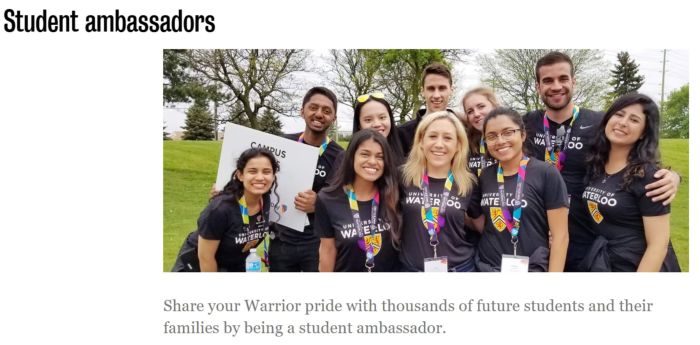
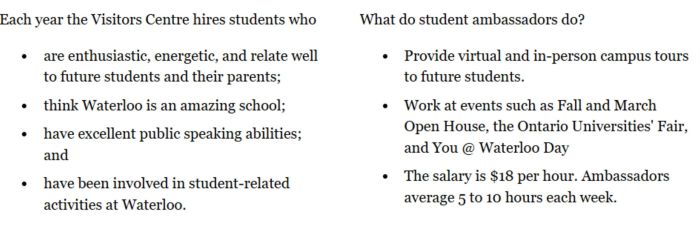
    Example: On its website, the University of Waterloo has a dedicated page for members of its community who are interested in its student ambassador program. This page details the role of a student ambassador, the requirements for candidates, their workload, and compensation. When you launch your student ambassador program, use site content to provide vital information to potential candidates and the students they’ll support in their roles. Use social media to keep your audience updated on the application process and involve student ambassadors in content creation to establish a relationship between them and the rest of your student body. 

    Reach out for help implementing effective enrollment-boosting digital marketing strategies! 

    What Is User-Generated Content (UGC)?

    User-generated content (UGC) refers to any content created by your students, alumni, or even staff, rather than your marketing team. This can include photos, videos, testimonials, social media posts, or blogs that showcase their authentic experiences. Unlike polished advertising campaigns, UGC is often raw and unfiltered, making it highly relatable and trustworthy.

    Now that audiences are bombarded with promotional material, UGC stands out. It delivers a level of authenticity that professionally crafted content simply cannot replicate. For prospective students, seeing someone “just like them” thriving at your institution can be the deciding factor in their enrollment journey.

    HEM Image 4HEM Image 4

    Source: University of Oxford | TikTok

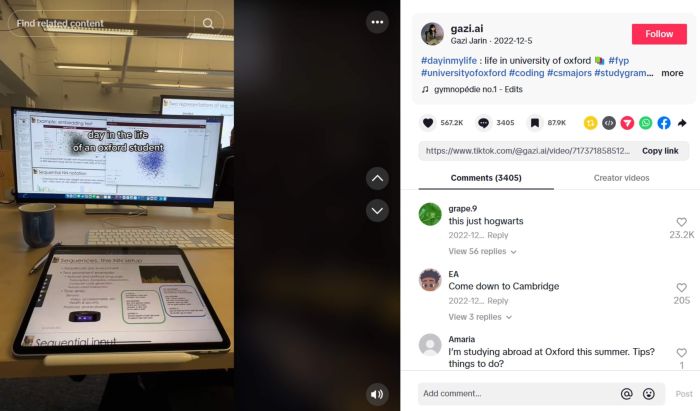
    Example: Take a look at the comments on this TikTok video. The bottom one shows how many prospective students are turning to current students for advice and insights into their journey with your institution. This “day in the life” video from a University of Oxford student offers a glimpse into campus life from a personal perspective. Videos shared on a student’s personal page often feel more genuine since they don’t come across as promotional content.

    That’s not to say your school shouldn’t engage with these posts! Use hashtags, like #universityofoxford, to find UGC created by your community and reshare it on your school’s profile. To encourage more of this content, promote specific hashtags and even run contests or challenges to inspire creativity and engagement.

    The Benefits of Student Ambassadors and UGC

    Though their methodology is different, both student ambassador programs and UGC help to tell your school’s unique story authentically.

    These methods are particularly effective at humanizing your school’s brand. Discover some more of the unique benefits you can see when you combine these strategies correctly.

    • Authenticity and Trust: Both student ambassadors and UGC provide unfiltered insights into your institution. Prospective students are more likely to trust the words of a peer than a marketing brochure. When real students share their stories, it creates a sense of transparency and trust.
    • Increased Engagement: Content created by student ambassadors and peers often performs better on social media platforms. Audiences are more likely to engage with posts that feel genuine and relatable. This increased engagement can translate to higher visibility for your institution.
    • Cost-Effectiveness: Leveraging the voices of your students can reduce the need for extensive advertising budgets. While there may be costs associated with training or compensating ambassadors, the return on investment through increased applications and enrollment often outweighs the initial expenditure.
    • Community Building: By involving students in your marketing efforts, you foster a sense of pride and belonging. Ambassadors feel more connected to your institution, and their enthusiasm is infectious, positively influencing both their peers and prospective students.

    How to Build a Successful Student Ambassador Program

    Building a student ambassador program involves creating a structured initiative that aligns with your school’s marketing goals and fosters authentic engagement. A successful program requires careful planning, clear objectives, and ongoing support to empower ambassadors as true representatives of your institution. Here, we’ll walk you through the essential steps to design and implement a program that connects with prospective students and amplifies your school’s story.

    Define Clear Objectives

    Clear objectives are the cornerstone of a student ambassador program, aligning with your marketing goals and guiding ambassadors toward success. Start by clearly outlining the program’s purpose. For example, increasing applications, enhancing campus tour experiences, or boosting social media engagement. 

    This clarity of intent should be paired with measurable goals, to help ambassadors understand what success looks like. Measurable goals could be increasing tour attendance by 20% or generating a set number of social media posts each month 

    Tailor these objectives to match the unique strengths of each ambassador, assigning roles that play to their talents, such as public speaking for campus tours or storytelling for blog posts and videos. Providing a clear role description that details their responsibilities, tasks, and time commitments is equally critical to avoid confusion and set expectations. 

    To foster motivation, explain the “why” behind their tasks, helping them see how their efforts impact prospective students, build trust in the institution, and contribute to enrollment goals. Regular check-ins or feedback sessions can also ensure ambassadors stay on track, allowing for adjustments and maintaining engagement. With clearly defined objectives and the right support, ambassadors can confidently represent your institution and drive meaningful results.

    Recruit the Right Ambassadors

    Select ambassadors who reflect the diversity and values of your institution. Look for individuals who are enthusiastic, articulate, and comfortable sharing their experiences. Peer recommendations, faculty referrals, and application processes can help identify the best candidates.

    Foster Collaboration

    Facilitate collaboration between ambassadors and your marketing team. Regular meetings can help align their content with your broader campaigns while maintaining authenticity. Ambassadors should feel supported but not micromanaged.

    HEM Image 5HEM Image 5

    Source: University of Windsor

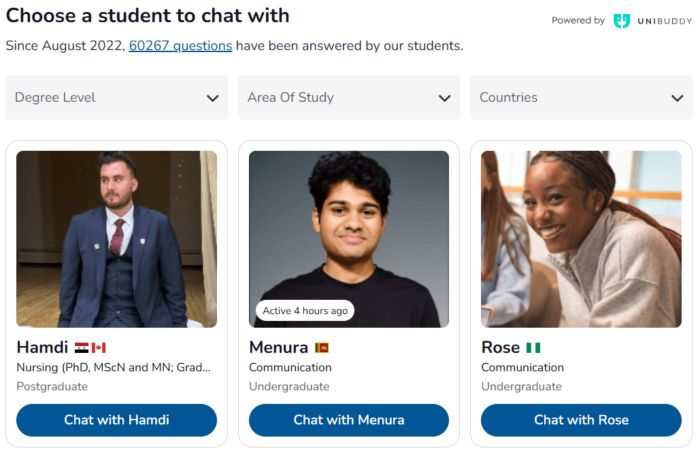
    Example: The University of Windsor demonstrates trust in its student ambassadors with a unique feature on its website. It allows current and prospective students to select an ambassador to chat with for answers to their school-related questions. To replicate this success, implement a comprehensive training program to ensure consistency and quality. Clear expectations enable your ambassadors to take on key responsibilities confidently, delivering a strong return on your investment.

    Provide Comprehensive Training

    • Familiarize Ambassadors with Your Institution’s Key Messaging and Values
      Begin by familiarizing ambassadors with your institution’s key messaging and values. This includes providing them with a clear understanding of your school’s mission, vision, and what sets it apart from competitors. Equip them with talking points about academics, extracurricular offerings, campus facilities, and student life, ensuring consistency in how they communicate your brand. Role-playing exercises can be particularly effective here, helping ambassadors practice delivering messages in a variety of scenarios, such as open houses, campus tours, or online Q&A sessions.
    • Train Ambassadors on Social Media Best Practices
      Training should also include social media best practices, especially if ambassadors are creating content for your platforms. Teach them how to craft posts that are engaging and aligned with your school’s tone and style. Provide guidelines on appropriate language, photo and video quality, and compliance with privacy policies.
    • Develop Public Speaking Skills
      Since many ambassadors will engage with prospective students and families in person, public speaking training is invaluable. Help them refine their communication skills with workshops that focus on clarity, confidence, and storytelling. Encourage them to share personal anecdotes about their experiences at your school, as these authentic stories are often the most memorable. Practice sessions with constructive feedback can significantly boost their comfort in delivering presentations or handling impromptu questions.
    • Build Soft Skills for Diverse Audiences
      Effective training also involves building soft skills like empathy, adaptability, and cultural awareness, especially for ambassadors interacting with diverse audiences. 

    Include scenarios that challenge them to navigate different cultural perspectives or address sensitive questions tactfully. By fostering these skills, you ensure ambassadors can create welcoming and inclusive experiences for prospective students and their families.

    • Incorporate Interactive Training Methods
      To make training engaging and practical, use a mix of interactive methods such as role-playing, group discussions, and hands-on activities. Incorporate real-world examples and success stories from past ambassadors to inspire new recruits and show them what’s possible. Providing a training manual or digital resource hub can also serve as a handy reference for ambassadors as they grow into their roles.
    • Provide Ongoing Support and Refreshers
      Finally, ongoing support and refreshers are critical. Schedule periodic check-ins to provide additional guidance, address challenges, and celebrate successes. The more prepared they are, the more effectively they’ll represent your school.

    Empower Ambassadors to Create

    Empowering student ambassadors to create their own content is one of the most effective ways to showcase the authentic, lived experiences that resonate with prospective students. By trusting ambassadors with creative freedom, you enable them to craft content that feels genuine and relatable—qualities that polished marketing campaigns often struggle to replicate.

    Start by encouraging ambassadors to focus on their personal experiences and unique perspectives. Heartfelt testimonials are another powerful form of content. Whether it’s a written story, a video, or a social media post, ambassadors sharing their personal journeys—why they chose your school, how it’s impacted their lives, and what they’ve learned—can create an emotional connection with viewers. 

    To provide inspiration and structure, consider giving student ambassadors a content calendar – a detailed content plan that outlines the where, what, and when of your posts. Highlighting diverse voices within your ambassador team ensures a broad range of experiences and perspectives are represented, appealing to a wider audience.

    Celebrate Their Contributions

    Recognize and reward your ambassadors for their efforts. This can range from financial compensation to exclusive perks like access to networking events or career development opportunities. Publicly celebrating their work reinforces their value and motivates others to get involved.

    HEM Image 6HEM Image 6

    Source: New York University

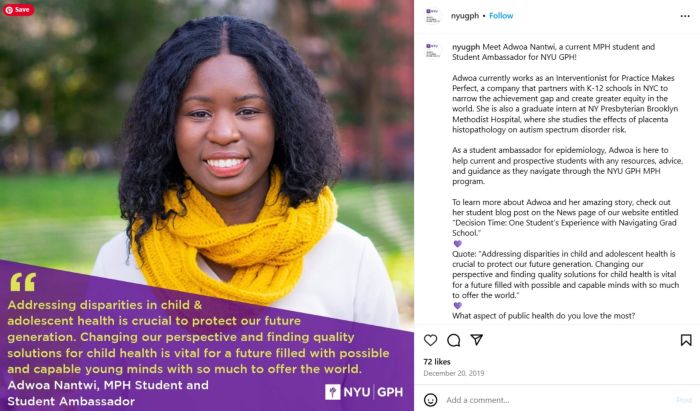
    Example: Here, New York University’s School of Global Public Health welcomes a new student ambassador, celebrating her accomplishments in the field, describing her role in the NYU community, and directing the audience to her student blog post. In addition to monetary rewards, student ambassadors appreciate public acknowledgments of their contributions. 

    Measure Success

    Track the impact of your ambassador program using metrics such as social media engagement, website traffic, and application rates. Use this data to refine your approach, ensuring continuous improvement.

    Incorporating UGC into Your Marketing Strategy

    A UGC marketing campaign can be a goldmine for schools looking to leverage their communities to tell their story. By encouraging students to share their experiences, you tap into a wealth of relatable and engaging material that resonates with prospective students. Let’s explore how to integrate UGC into your marketing strategy for maximum impact.

    Create Opportunities for UGC

    Encourage your students to share their experiences by hosting contests, themed hashtag campaigns, or student takeovers on social media. The more accessible you make the process, the more likely students are to participate.

    HEM Image 7HEM Image 7

    Source: Caleontwins | TikTok

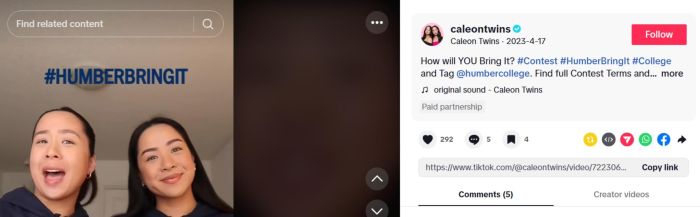
    Example: Here, Humber College has paid well-known influencers to promote a contest called Humber Bring It. The aim was to showcase all the unique skills students brought to their community. In their video, the Caleon twins shared all the essential details of the contest such as the deadline, prizes for winners (a 5000 dollar tuition credit or a laptop), and the hashtag that each contestant should use. Contests like this are the perfect way to create a UGC buzz around your institution. 

    Showcase UGC Across Platforms

    To maximize the impact of user-generated content (UGC), feature it prominently across your marketing platforms. Incorporate student stories, photos, and videos on your website’s homepage, within program pages, and in blog posts to provide a genuine glimpse into campus life. Social media channels are another natural home for UGC, where they can drive engagement and create relatable touchpoints with prospective students. Consider integrating this content into admissions brochures, emails, and campus tour presentations to ensure consistent messaging.

    Before sharing any UGC, prioritize student consent. Always seek permission from contributors, clearly explaining where and how their content will be used. Providing written guidelines and gaining explicit agreement ensures transparency and builds trust. By celebrating your students’ experiences respectfully and prominently, you showcase your school’s vibrant community and also create a foundation of authenticity and ethical storytelling that resonates with your audience.

    Maintain Quality Control

    While UGC is inherently less polished, maintaining a level of quality ensures it aligns with your institution’s values and messaging. Begin by establishing clear guidelines for students contributing content. 

    These guidelines should outline your school’s tone, branding, and expectations for appropriateness, while still encouraging creativity and individuality. For example, provide tips on photography and video basics, such as lighting and framing, to enhance visual appeal without compromising authenticity.

    Review content before publication to ensure it represents your school positively. This doesn’t mean heavily editing or sanitizing the material—rather, it’s about ensuring the content reflects your institution’s culture, is free of inappropriate language or imagery, and avoids unintentional misrepresentation.

    Offering feedback to students can also be a valuable learning experience, helping them refine their work while staying true to their voice. By balancing authenticity with quality, you showcase the best of your community in a way that’s both relatable and professional.

    Engage with UGC Creators

    Show appreciation for students who contribute content by engaging with their posts, sharing their work, or even spotlighting them in dedicated campaigns. This not only boosts their morale but also encourages others to participate.

    Use UGC to Tell Stories

    Go beyond individual posts by weaving UGC into cohesive narratives. For example, compile videos and testimonials into a series showcasing different aspects of campus life. Storytelling adds depth and emotional resonance to your campaigns.

    Bringing It All Together

    Student ambassador programs and UGC are avenues for building authentic connections with your audience. By leveraging the voices of your students, you showcase your institution’s unique story in a way that resonates deeply with prospective students and their families.

    At Higher Education Marketing, we specialize in helping schools like yours unlock the potential of these strategies and many others. Whether you’re just starting or looking to refine your approach, our expertise ensures your campaigns drive meaningful engagement and results.

    Your students are your greatest storytellers. Let their voices elevate your brand and inspire the next generation to join your community.

    Struggling with enrollment?

    Our expert digital marketing services can help you attract and enroll more students!

    Frequently Asked Questions 

    What is a student ambassador

    A student ambassador is a current student who represents your institution in various capacities, from marketing and recruitment to campus events.

    What do student ambassadors do? 

    As the face of your school, student ambassadors embody its culture and values, offering prospective students and their families an authentic glimpse into campus life.

    Source link