Tag: UK

  • Bell English to close after 70 years

    Bell English to close after 70 years

    In a statement, Bell Educational Services Ltd confirmed that the group has served notice to put its three schools in Cambridge, London and St Albans into administration due to financial difficulties, with the schools set to close on October 31.

    “It is with deep regret that we announce Bell Educational Services Ltd has made the difficult decision to wind down its operations and will cease to trade shortly,” the group said in a statement.

    “Regrettably, the closure of the schools will also mean that staff members will face redundancy in the coming weeks,” it said, adding: “This is a deeply sad outcome for all involved”.

    English UK is finding replacement courses for some 125 students affected by the news under the student Emergency Support Scheme (SES), which obliges British Council-accredited centres to offer places to those whose schools have closed suddenly. The affected students are currently studying at Bell’s Cambridge and London locations, while the St Albans site will have no students by the closure date at the end of this month.

    English UK’s acting joint chief executive, Huan Japes, said he was “very sorry” for all those caught up in the closure. “[We] wish to pay our respects to the contribution that Bell has made to shaping the English language teaching industry over the last 70 years,” he added.

    “The English UK team is working with Bell management and nearby centres to ensure the students can continue their courses as quickly as possible. We have visited the school to answer the students’ questions in person, and we hope staff who have lost jobs find new employment quickly. We are very grateful to Bell staff and the administrators for managing the closure responsibly and with sensitivity.”

    Bell highlighted its “proud heritage spanning over 70 years” that has been “widely recognised as a pioneer in the teaching of English as a foreign language”.

    But it said it faced “significant cashflow challenges” and was unable to recover financially from the prolonged impact of the pandemic. Nor could it secure a buyer for the business.

    This is a very sad closure, but we don’t see it as part of a wider trend

    Huan Japes, English UK

    Bell school was founded by Frank Bell in 1955, having been inspired to start a language school after teaching languages in a prisoner of war camp.

    English UK noted that many bastions of the ELT sector had worked for Bell at some point in their careers. “We extend our sympathies to all of Bell’s staff, students and partners affected by this closure,” it said.

    Despite the news, Japes asserted that English UK data monitoring showed the UK remained a resilient market for the ELT sector. In spite of “tough trading conditions”, English UK student numbers dipped just 0.6% between 2023 and 2024, he said.

    “Unexpected closures do happen, but they are rare. Bell English’s financial set up was very unusual for our industry as it was run by a charitable foundation. This is a very sad closure, but we don’t see it as part of a wider trend,” he continued.

    “We understand how shocking closures are to affected staff and students, and our student emergency scheme is here to help anyone affected complete their studies as planned. We encourage students and agents to continue booking English courses in the UK with confidence.”

    The company noted that Bell Switzerland SA – of which Bell is the sole shareholder – would be unaffected by the closure and would continue operating as usual.

    Source link

  • India embraces UK unis, says Southampton VC after Starmer-Modi meet

    India embraces UK unis, says Southampton VC after Starmer-Modi meet

    He was part of a 126-member UK delegation to India led by UK Prime Minister Starmer, which included entrepreneurs, cultural leaders, and university VCs, to celebrate the landmark trade deal between the two countries.

    “The presence of all nine UK universities with a Letter of Intent (LoI) or Letter of Acceptance (LoA) is a major achievement for the UK HE sector, surpassing approvals from all other countries,” said Atherton, in a chat with The PIE News.

    “UK universities have embraced the new regulations and India has embraced UK universities. All nine universities met with Prime Minsters Modi and Starmer during their joint press [conference], which celebrated the campuses and highlighted their contribution to the growth and development of higher education in India.”

    Though Starmer has insisted that visa routes for Indian workers and students are not part of the broader trade deal, expanding overseas offerings for students to study in India was a key aim of the trip.

    Major UK universities, including Coventry, Queen’s University Belfast, Surrey, Bristol, York, Aberdeen, Lancaster, and Liverpool, are set to launch campuses by 2026 across GIFT City, Mumbai, and Bengaluru. Southampton is the only functional campus so far, opening in August with 120 students in its inaugural cohort.

    The presence of all nine UK universities with a LoI or LoA is a major achievement for the UK HE sector, surpassing approvals from all other countries
    Andrew Atherton, University of Southampton

    India’s growing demand for higher education, projected at 70 million places by 2035, presents opportunities for UK institutions, particularly as cautious immigration policies shape study abroad choices among Indian students.

    Both countries are also set to deepen education ties through the Vision 2035 framework, with an annual ministerial dialogue to review qualification recognition and promote knowledge-sharing via platforms like the UK’s Education World Forum and India’s National Education Policy (NEP).

    The University Grants Commission (UGC), India’s higher education regulator, introduced relaxed rules in 2023 for foreign universities to open branch campuses in India. While initial interest was slow, many institutions are now actively exploring opportunities, according to Atherton.

    “When the NEP first talked about international campuses in India there was some debate and activism about whether international universities would apply,” said Atherton.

    “With nine from the UK and three from Australia and one from the US, the policy has proven its ability to engorge international universities to set up campuses in India.”

    Source link

  • India embraces UK unis, says Southampton VP after Starmer-Modi meet

    India embraces UK unis, says Southampton VP after Starmer-Modi meet

    He was part of a 126-member UK delegation to India led by UK Prime Minister Starmer, which included entrepreneurs, cultural leaders, and university VCs, to celebrate the landmark trade deal between the two countries.

    “The presence of all nine UK universities with a Letter of Intent (LoI) or Letter of Acceptance (LoA) is a major achievement for the UK HE sector, surpassing approvals from all other countries,” said Atherton, in a chat with The PIE News.

    “UK universities have embraced the new regulations and India has embraced UK universities. All nine universities met with Prime Minsters Modi and Starmer during their joint press [conference], which celebrated the campuses and highlighted their contribution to the growth and development of higher education in India.”

    Though Starmer has insisted that visa routes for Indian workers and students are not part of the broader trade deal, expanding overseas offerings for students to study in India was a key aim of the trip.

    Major UK universities, including Coventry, Queen’s University Belfast, Surrey, Bristol, York, Aberdeen, Lancaster, and Liverpool, are set to launch campuses by 2026 across GIFT City, Mumbai, and Bengaluru. Southampton is the only functional campus so far, opening in August with 120 students in its inaugural cohort.

    The presence of all nine UK universities with a LoI or LoA is a major achievement for the UK HE sector, surpassing approvals from all other countries
    Andrew Atherton, University of Southampton

    India’s growing demand for higher education, projected at 70 million places by 2035, presents opportunities for UK institutions, particularly as cautious immigration policies shape study abroad choices among Indian students.

    Both countries are also set to deepen education ties through the Vision 2035 framework, with an annual ministerial dialogue to review qualification recognition and promote knowledge-sharing via platforms like the UK’s Education World Forum and India’s National Education Policy (NEP).

    The University Grants Commission (UGC), India’s higher education regulator, introduced relaxed rules in 2023 for foreign universities to open branch campuses in India. While initial interest was slow, many institutions are now actively exploring opportunities, according to Atherton.

    “When the NEP first talked about international campuses in India there was some debate and activism about whether international universities would apply,” said Atherton.

    “With nine from the UK and three from Australia and one from the US, the policy has proven its ability to engorge international universities to set up campuses in India.”

    Source link

  • UK still top choice for pathway students despite policy changes

    UK still top choice for pathway students despite policy changes

    International students are placing getting a quality education over policy developments – with the UK keeping its spot as the preferred desitnation for 80% of nearly 1,000 pathway students surveyed by NCUK.

    A new report covering the survey’s findings analyses data from 921 students across 88 countries studying an international foundation year or Master’s preparatino programs, looking at their motivations for studying in top destinations, as well as other preferences.

    It found that Australia was the second most popular choice, with 4% of students surveyed marking it as their preference, followed by Canada, the US, New Zealand and Ireland at 3%. Meanwhile, the most coveted programs are business and computer science, as the preferred subjects for just under a third (31%) of respondents.

    Students’ continued preference for the UK comes in spite of a slew of policy changes affecting international students. In May, the government unveiled its long-awaited immigration white paper, setting out the way Keir Starmer’s Labour party intends to tackle migration over the coming years.

    It included plans to reduce the Graduate Route by six months to a total of 18 months, as well as new compliance metrics that higher education institutions must in order to continue recrutiing international students. Tougher Basic Compliance Assessment (BCA) requirements are set to take effect this month, meaning that universities will face penalties if more than 5% of their students’ visas are rejected, down from 10%.

    And last September, the UK increased international student maintenance requirements for the first time since 2020. Under the new rules, students coming to London must show evidence of having £1,483 per month, while studying outside of London need proof that they have at least £1,136 per month.  

    But NCUK’s chief marketing officer Andy Howells pointed out that students are looking beyond arbitrary political decision when choosing their preferred study destination, thinking instead about their long-term prospects.

    “This research demonstrates that international students are sophisticated decision-makers who look beyond political headlines to focus on educational quality and career outcomes,” he said. “While policy changes generate significant discussion in our sector, students are primarily motivated by the academic excellence and opportunities that institutions can provide.”

    The survey found that, of a sample size of 646 students, just 12% who said they were considering studying in the UK said that financial requiremwnr increases would stop them from applying to UK instiutuons.

    However, the popularity of other major study destinations were ore impacted by political headwinds, the survey found.

    Over a third (36%) interested in applying the Australian institutions said that proposed international enrolment caps would affect their decision, while 26% of those looking to study in Canada said they would no longer apply to Canadian institutions over policy changes – particularly changes to the country’s postgraduate work permit scheme.

    And almost four in 10 (38%) considering the US said Donald Trump’s second presidency would negatively impact their choice to study in America.

    For the majority of students surveyed (69.9%), education quality is the primary driver leading them to seek study abroad opportunities, closely followed by enhanced career development opportunities (56.4%) and gaining new knowledge (55.2%).

    The survey also shone a light on students’ post-graduation plans. Half of respondents said they wanted to stay in their study destination, with 31% planning to work and 19% looking at further studies.

    This research demonstrates that international students are sophisticated decision-makers who look beyond political headlines to focus on educational quality and career outcomes
    Andy Howells, NCUK

    But a growing number of students plan to return to their hoe country immediately after graduating, with 23% saying they want to do this – up from 18% in last year’s survey.

    Immigration has continued to be a hot topic in the UK as the anti-immigration Reform party grows in popularity.

    Just earlier this week, Home Secretary Yvette Cooper drew ire from the international education sector after announcing that the government will be tougher on overseas students who make asylum claims that “lack merit” as a means to stay in the country after their visa expires.

    Some 10,000 students have already been texted and emailed warning them that they will not be allowed to stay in the UK if they have no legal right to remain and explicitly warning them against making bogus asylum claims.

    Source link

  • Top UK unis partner on career initiatives for India and China

    Top UK unis partner on career initiatives for India and China

    The University of Birmingham, home to over 2,000 Indian students, has partnered with the University of Glasgow to create a new in-country role in India employability relationship manager – who will be responsible for building links with employers, career services, and alumni networks to help graduates succeed in the local job market.

    According to a joint statement issued by the institutions, graduates will be offered practical support through pre-entry briefings, skills development programs, and post-graduation engagement.

    The two universities have also launched an exclusive partnership with the Chinese graduate career support organisation, JOBShaigui.

    The career portal, well regarded in China for its links to top employers, will offer a range of bespoke services, including online seminars with the latest job market insights, guidance on recruitment processes, access to an extensive employer network, and in-country networking events with alumni and employers.

    Both Birmingham and Glasgow, ranked among the QS global top 100, see China and India, with their combined 400,000 alumni worldwide, as priority markets.

    Offering enhanced career support is seen as crucial, as recent trends show a majority of students from these countries are choosing to return home after their study abroad journey.

    “More and more students, quite reasonably, are saying: I want to know what my employment prospects are after getting a degree. We do a lot to prepare students for their future careers while they study with us, but it has become increasingly clear that we must also support them after they graduate,” Robin Mason, pro-vice-chancellor (international) at the University of Birmingham, told The PIE News.

    “Our two largest cohorts of international students are from China and India, so we said: for these two really important countries, we’re going to create in-country support for careers and employability career fairs, interview preparation, CV workshops, all those sorts of things.”

    Increasingly, after that period of work in the UK, Indian graduates are looking to come back home to India
    Robin Mason, University of Birmingham

    While both Birmingham and Glasgow already collaborate on joint research, particularly in the medical field, the career support initiative made sense as the cost could be shared between the two universities, according to Mason.

    Moreover, the universities expect the initiative to be particularly successful in India, from where students make up the largest cohort of graduate visa holders.

    “Particularly Indian students, more than Chinese students, want to stay in the UK after graduation. But increasingly, after that period of work in the UK, Indian graduates are looking to come back home to India,” stated Mason.

    According to Mason, while most Indian students prefer fields such as computer science, data science, engineering, business management, finance, economics, and health-related subjects, in principle students of any discipline, “even classics, English, or history”, will be supported equally in their careers back in India.

    The initiatives also come at a time when international students in the UK are being urged to “sharpen their skills” for both the UK and global job markets, as employers increasingly look beyond “textbook skills” to focus on a candidate’s ability to bring innovation to the table.

    Further plans in India for University of Birmingham

    Although the University of Birmingham operates an overseas campus in Dubai, an attractive option for Indian students given its proximity to the UK and large Indian community, the institution has no plans to establish a campus in India anytime soon.

    Instead, it is focusing on initiatives such as the in-country employability role and partnerships with local institutions.

    While the University of Birmingham offers dual degrees with Jinan University in China in fields such as maths, economics, statistics, and computing, it is now exploring a partnership with IIT Bombay in India in areas such as quantum technology, energy systems, AI, and healthcare, building on its successful venture with IIT Madras.

    “If you do it properly, campuses are very expensive things. I don’t think you do these things lightly. You have to make the investment and be there for the long term,” said Mason. “Birmingham is 125 years old this year, and you need to be thinking in terms of decades if you’re going to build a campus. It’s a really long-term commitment because it takes so much time and investment to build a high-quality university.”

    As part of its 125-year celebrations, the institution also announced scholarships for Indian students, offering funding of £4,000 to £5,000 for a wide range of postgraduate taught master’s degrees starting in September 2025.

    “As part of our 125th anniversary celebrations, we introduced a special scholarship, offering up to 40% funding for students joining our Dubai campus,” stated Devesh Anand, regional director, South Asia and Middle East, University of Birmingham.

    “This was combined with academic and merit-based scholarships, giving students the opportunity to access multiple forms of support. The response has been fantastic, as students saw it as a real achievement and recognition of their efforts.”

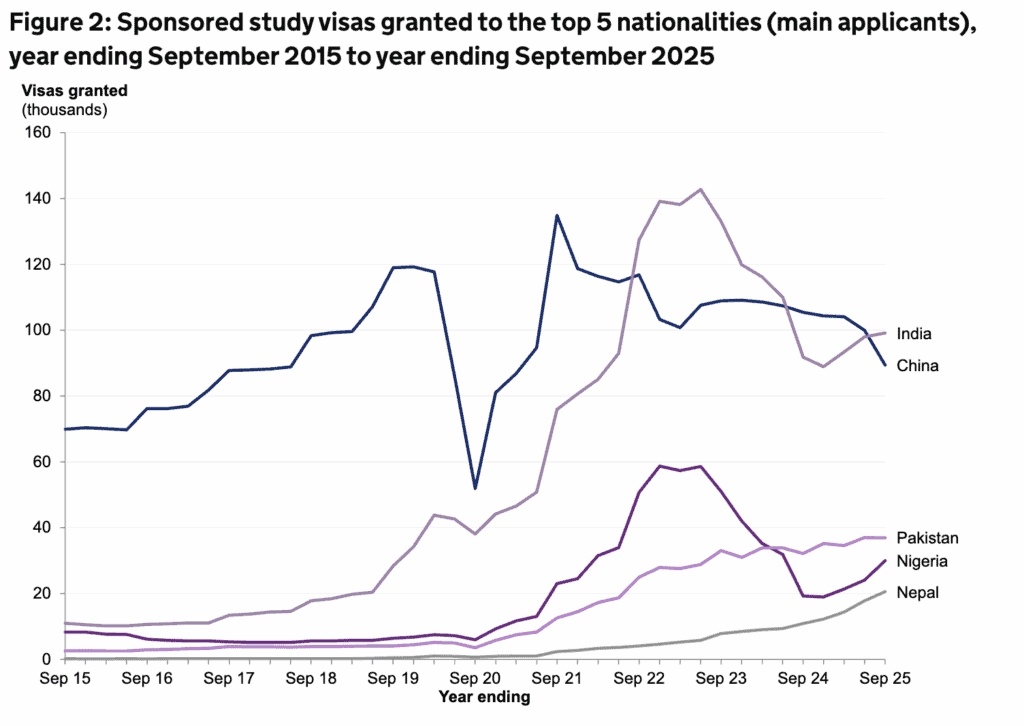
    The number of Indian students studying in the UK remains high, with the Home Office data showing 98,014 study visas granted in the year ending June 2025.

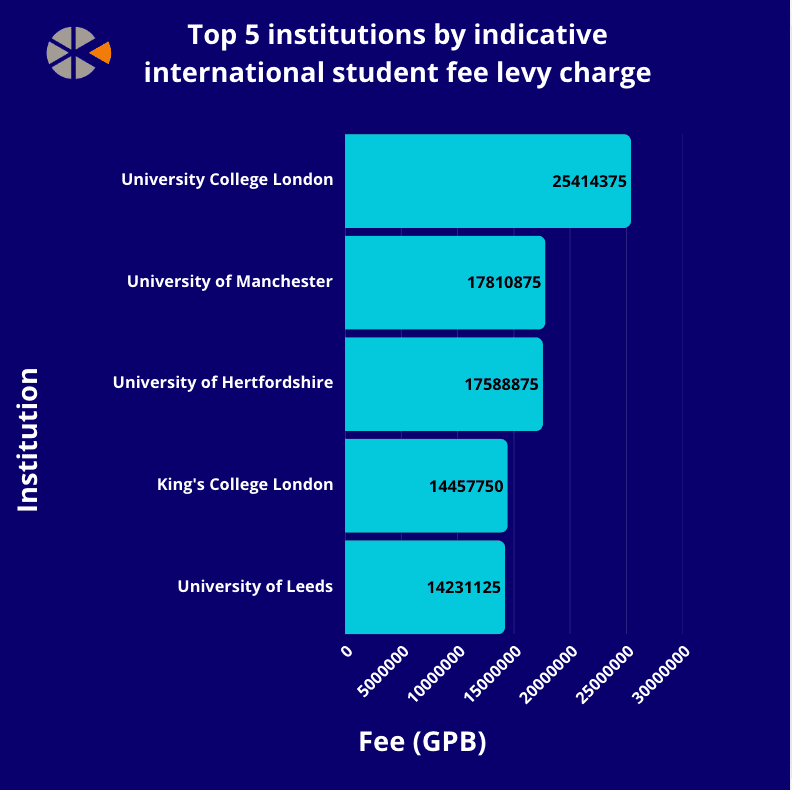
    However, not everything is rosy, as students are increasingly concerned about their future in light of the immigration white paper, which proposes reducing the Graduate Route by six months and imposing a levy on international student fees.

    In such a situation, the aim for institutions like the University of Birmingham is to remain attractive to graduates seeking employment opportunities.

    “What we have to ensure is that University of Birmingham graduates are career-ready and can get the sorts of jobs that allow them to continue working in the UK if they want to, so they can be sponsored by an employer at the required graduate-level salary,” said Mason.

    “To put it delicately, I think the universities that will struggle with the immigration changes are those not paying enough attention to employability. If your graduates are employable, it’s not an issue.”

    Source link

  • International students encouraged to sharpen their skills to stand out in UK job market

    International students encouraged to sharpen their skills to stand out in UK job market

    More than 600 international students studying across the UK came together at Queen Mary University of London last month for the second edition of Leverage Careers Day.

    While a record 758,855 international students were enrolled in UK higher education in 2022/23, a 12% rise on the previous year, rising employer uncertainty, growing graduate anxiety, and an increase in job scams have made students more cautious in their professional choices.

    The event saw students, who are now exploring opportunities in AI, data science, marketing, finance, and more, connect with top employers and industry leaders, to network, explore career pathways, and gain valuable career advice.

    “We saw a remarkable breadth of interest from students across a range of disciplines, with data science and AI standing out as clear frontrunners. Many were especially drawn to AI-layered roles in marketing, creative industries, finance, and healthcare,” Akshay Chaturvedi, founder and CEO, Leverage, told The PIE News.

    “At the same time, digital marketing and content strategy sparked strong interest of their own, driven by rising opportunities in the digital economy. Beyond these, students also gravitated towards specialized tracks for example in biotechnology, luxury management, automobile design, and culinary arts.”

    For many international students, a successful career has long been the ultimate benchmark of achievement, and in the UK, standing out is crucial, with a sponsored job often seen as the true return on their significant investment in tuition and living costs.

    Moreover, with over a quarter of UK employers unaware of the Graduate Route – which allows international students to work sponsor-free for up to two years but is set to be reduced to 18 months under the May 2025 immigration white paper and tied more closely to skill-based jobs – understanding the realities of today’s hiring market has become increasingly important. 

    “Employers aren’t just looking for textbook skills anymore — they’re looking for forward-thinking talent who can bring innovation to the table,” explained Lee Wildman, director, global engagement, Queen Mary University of London, who joined a fireside chat on mentorship, global exposure, and the skills needed in an ever-evolving world, alongside Chaturvedi and Rhianna Skeetes, international careers consultant at QMUL.

    “What ideas do you have to take an organisation to the next level? Be prepared to sell yourself – not just in terms of what you’ve learned, but in terms of how you think.”

    What excites me most is seeing students ask better, sharper questions about their careers – not just what job they’ll get, but how they’ll grow, how they’ll lead, and how they’ll stand out

    Akshay Chaturvedi, Leverage

    Adaptability was also highlighted as the “strongest tool in a student’s back pocket” by Jennifer Ogunleye, B2B communications lead at Google, who delivered a keynote urging students to look beyond job titles, and academic credentials, and focus on building a personal brand. 

    “There isn’t always a straightforward route into tech or any industry today – even those who were most in demand just a year ago are having to pivot,” noted Ogunleye. 

    “What matters more than ever is your personal brand: What are you passionate about beyond your job title? That’s what sets you apart from AI, from competition, from volatility.”

    The event also brought together organisations such as Publicis Groupe, Reed Recruitment, Hyatt Place, Ribbon Global, and GoBritanya, which offered insights into student accommodation services across the UK and Ireland, giving students exposure to careers across creative, corporate, hospitality, and FinTech sectors. 

    The Westminster and Holborn Law Society also provided guidance to aspiring legal professionals on navigating local and international career pathways.

    “Students today aren’t satisfied with just ‘getting a job’ anymore. They’re actively chasing careers that offer international mobility, cross-border exposure, and long-term growth,” stated Chaturvedi.

    “That’s a significant shift, and quite refreshing so, given how only a few years back stability was often the top priority. Now, they want to thrive in industries that are constantly evolving every single day, with technology, globalization, and new market needs at play.”

    Source link

  • Number of Chinese undergrads accepted to UK unis surges by 13%

    Number of Chinese undergrads accepted to UK unis surges by 13%

    According to UCAS data released today to coincide with A-level results day, the number of international students accepted to UK institutions has risen to 52,640 – up 2.9% on 2024 when this figure stood at 51,170.

    In just a year, the number of students from China accepted into university via the UCAS system went up a whopping 13% – with a total of 12,380 acceptances.

    Meanwhile, 2025 has proven to be a year of success for domestic students in the UK – with 28.3% of all grades being A or A* for students across England, Wales and Northern Ireland, according to the BBC.

    Commenting on the numbers, UCAS chief executive Jo Saxton pointed out the huge achievement of this year’s students, whose education was hit hard by the Covid-19 pandemic.

    “This year’s students were just thirteen when the pandemic hit, and their secondary schooling was turned upside down,” she said. “It’s great to see these applicants securing a university place in record numbers, seeking more education and investing in their futures. I am equally delighted to see how universities across the country have responded to their ambition.”

    Undergraduate international students have also found success this year despite some universities prioritising domestic students due to a focus on financial stability.

    According to a recent BBC article, Saxton explained that some UK universities were focussing on enrolling domestic undergraduates because of “uncertainty” around international students.

    She also pointed out that some institutions could accept a greater number of domestic students this year even if they did not meet the exact conditions of their offer because offering places to UK students, as opposed to international students, was more likely to result in financial stability for the institution.

    It’s great to see these applicants securing a university place in record numbers, seeking more education and investing in their futures
    Jo Saxton, UCAS

    It comes amid a turbulent time for the international education sector in the UK – with upcoming compliance changes forcing some universities to stop recruiting for certain courses or from some countries rather than risk falling foul of tightened BCA metrics.

    Many UK universities are currently facing financial difficulties, with around four in 10 universities currently at a deficit, according to a report by the Office for Students.

    Of the courses chosen by students, the most popular in the UK this year were Engineering and Technology, up 12.5% from last year at 30,020 acceptances, Mathematics with 9,220 acceptances and Law with 27,150.

    Source link

  • Malvern International partners with Liverpool Hope University

    Malvern International partners with Liverpool Hope University

    The deal encompasses pathway and pre-master’s programs from the upcoming Liverpool Hope University International Study Centre, which will be based at the university’s Hope Park Campus.

    Claire Ozanne, vice-chancellor and rector at Liverpool Hope University, said the new study centre will form an “exciting and important part” of the institution’s international strategy – one that would “further enhance our position as a global university and one that has an inclusive approach to education”.

    “International students and the rich diversity of ideas and experiences they bring to our campuses hugely enhance the academic experience for all of our students,” she added.

    Malvern International said that through the partnership, students attending the centre can expect to find a challenging curriculum, set to enhance their English language proficiency and the skills to help them successfully transition into university life.

    International students and the rich diversity of ideas and experiences they bring to our campuses hugely enhance the academic experience for all of our students
    Claire Ozanne, Liverpool Hope University

    Ashleigh Veres, senior director, university recruitment and partnerships at Malvern International, said that the deal marked “an important step forward and a proud moment for Malvern as we continue to grow and diversify our pathways division, scaling up our capabilities to deliver exceptional services that benefit both universities and students”.

    She added: “We are delighted to partner with Liverpool Hope University, an institution renowned for its excellent student satisfaction and commitment to academic excellence. Together, we are dedicated to providing transformative opportunities for students while expanding the University’s global reach and impact.” 

    Source link

  • London Mayor slams proposed international tuition fee levy

    London Mayor slams proposed international tuition fee levy

    In a keynote address earlier this week at Imperial Global Ghana – Imperial College London’s overseas branch campus in Accra – Sadiq Khan warned that proposals for a new levy on international university fees would hit the UK’s finances hard, describing the policy as “an act of immense economic self-harm”.

    The UK government is currently considering a new levy on income that English universities generate from international students as part of its immigration whitepaper, which could not only put students off coming  from overseas but also create a substantial extra financial burden for already stretched universities.

    International students contribute about £12.5 billion to London, and another £55bn to the national economy every year, Khan pointed out. For this reason, the government should not make it difficult for these students to study in the UK, Khan said at the event – which formed part of his trade mission to Ghana.

    With 5% of students in London’s higher education institutions coming from Africa, Khan stressed the need to ensure that international students are not frustrated. 

    “Closing our economy to global talent would be an act of immense economic self-harm. One that would slow down growth and leave working people in Britain worse off than before. At a time when President Trump is attacking international students, we should be welcoming them,” he added.

    Khan said the international students also bring a longer-term labour market value, as many stay after their studies to work in key economic sectors from tech and AI to finance and creative industries. For this reason, he disagreed with the view that, “we should pull up the drawbridge to international students or punish universities that choose to welcome people from around the world”.

    On Imperial College opening up a hub in Ghana, he said London is ready to contribute to the development effort of Ghana, “not as a patron, but as a partner. In a genuinely reciprocal relationship that brings benefits to us both”.

    President Trump is attacking international students, we should be welcoming them
    Sadiq Khan, Mayor of London

    The vice-chancellor of the University of Ghana, Nana Aba Appiah Amfo, said the university is committed to providing to its  students with a transformative experience that goes beyond the classroom to nurture innovation, leadership and practical problem solving, adding that “this commitment is rooted in our strategic plan, which prioritises student success, impactful research and strategic partners”.

    “One such partnership, rich in promise and results, is with Imperial College London. What began as a collaboration between two researchers has evolved into a university-wide alliance, advancing work in climate change, diagnostics, and entrepreneurship. It is a powerful model of what mutual trust and shared purpose can achieve,” Amfo added.

    She said the Student Venture Support Programme has become the flagship agenda of the partnership which was launched in 2022 with the Imperial College and is  equipping students with skills, mentoring and funding to turn ideas into viable ventures. 

    To date, it has supported over 400 students and more than 115 startups, spanning four universities across Ghana.

    Despite Khan’s strong opposition to the levy, it looks likely to go ahead.

    At last week’s BUILA conference, skills minister Jacqui Smith doubled down on the need for the levy, saying it would reinforce public confidence in the UK’s international education sector.

    Source link

  • First look at the University of Southampton’s Delhi campus

    First look at the University of Southampton’s Delhi campus

    TFTDL podcast – David Winstanley (Who’s The Man?)

    Listen to David Winstanley, the man with the weight of expectation on his shoulders as all eyes are on the University of Southampton as they prepare to open their Indian campus in August 2025. The TFTDL crew return to the airwaves on the day of the Air India crash, in a rare, new episode.

    Source link