Tag: unconstitutional

  • ‘Blatantly unconstitutional’: Student groups sue over Texas law limiting campus protests

    ‘Blatantly unconstitutional’: Student groups sue over Texas law limiting campus protests

    This audio is auto-generated. Please let us know if you have feedback.

    Dive Brief: 

    • The Foundation for Individual Rights and Expression sued the University of Texas System on Wednesday on behalf of students over a new state law that directs public colleges to prohibit expressive activities on campus from 10 p.m. to 8 a.m.
    • The lawsuit also takes aim at the statute’s provisions that prohibit inviting speakers to campus, using devices to amplify speech, or playing drums or other percussive instruments during the last two weeks of any term. 
    • FIRE called the provisions “blatantly unconstitutional,” arguing they violate First Amendment and due process rights on public colleges. The group is urging the judge overseeing the case to declare the prohibitions unconstitutional and to permanently block the UT System from enforcing them.  

    Dive Insight: 

    Texas state Sen. Brandon Creighton — who authored the bill and has been named the sole finalist for chancellor of the Texas Tech University Systemhas framed the legislation as a response to pro-Palestinian demonstrations campuses both within Texas and across the nation last year. 

    “While the world watched Columbia, Harvard and other campuses across the country taken hostage by pro-terrorist mobs last year, Texas stood firm. UT allowed protest, not anarchy,” Creighton told Austin American-Statesman earlier this year after lawmakers passed his bill. 

    Police arrested dozens of demonstrators at the University of Texas at Austin in April last year after they erected a protest encampment. They likewise quickly dismantled a protest encampment at the University of Houston the following month. 

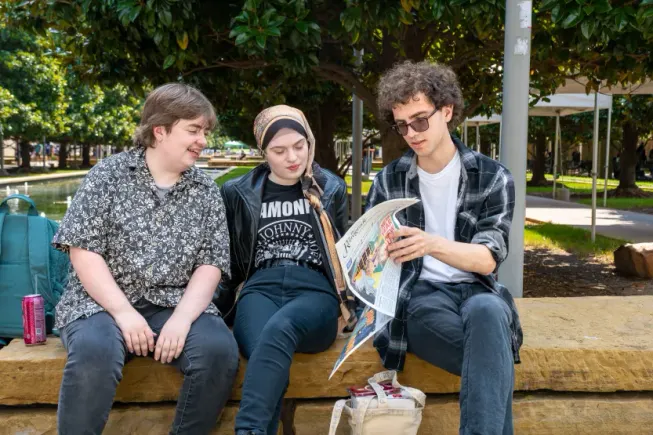
    In the new lawsuit, several student groups — including the independent student newspaper at the University of Texas at Dallas, an interdenominational student ministry, and libertarian organization Young Americans for Liberty — say the legislation blocks a broad array of protected speech. 

    That’s because the legislation defines expressive activities as “any speech or expressive conduct protected by the First Amendment to the United States Constitution.” 

    “Early morning prayer meetings on campus, for example, are now prohibited by law,” the lawsuit says. “Students best beware of donning a political t-shirt during the wrong hours. And they must think twice before inviting a pre-graduation speaker, holding a campus open-mic night to unwind before finals, or even discussing the wrong topic — or discussing almost anything — in their dorms after dark.” 

    Other activities covered by the 10-hour daily block on expressive activities include screening a film at midnight, “wearing a Halloween costume after 10 p.m.,” photographing the sunrise, setting up an information booth early on the morning of election day to boost voter awareness, or even saying, ‘Good morning,’ the lawsuit says.

    The Retrograde, a student-run newspaper at UT-Dallas, voiced concerns that the ban covers their reporting and publishing deep into the night. Working in those hours is necessary for the students to fulfill their journalist mission, according to the lawsuit. 

    Similarly, the student ministry group, the Fellowship of Christian University Students’ chapter on UT-Dallas, often meet to discuss issues of faith — even after their official events conclude at 10 p.m. 

    “The First Amendment doesn’t set when the sun goes down,” FIRE senior supervising attorney JT Morris said in a statement Wednesday. “University students have expressive freedom whether it’s midnight or midday, and Texas can’t just legislate those constitutional protections out of existence.”

    Along with the UT System’s board members and chancellor, the lawsuit also names the heads of UT-Austin and UT-Dallas as defendants. 

    The UT System said via email Thursday that it has not reviewed the lawsuit and declined to comment further. UT-Austin and UT-Dallas did not immediately respond to a request for comment. 

    The 10-hour daily block on expressive activities exempts commercial speech. According to the lawsuit, that means students would be banned from protesting world hunger at 7 a.m. but they would not be prevented from hosting a bake sale at that time. 

    That type of content-based restriction makes the law unconstitutional, the lawsuit argues. 

    The lawsuit also argues against the prohibitions on certain types of expressive activities — including inviting speakers or playing percussive instruments — during the last two weeks of any term. Those bans are overly broad, the lawsuit alleges.

    UT-Austin, for instance, has seven academic terms, meaning bans on those expressive activities would cover 98 days of the year. At UT-Dallas, these bans would be in place for over 90 days, according to the lawsuit.

    Source link

  • DOJ Deems Definition of HSIs Unconstitutional, Won’t Defend

    DOJ Deems Definition of HSIs Unconstitutional, Won’t Defend

    Photo illustration by Justin Morrison/Inside Higher Ed | InnaPoka and yongyuan/iStock/Getty Images

    The country’s roughly 600 Hispanic-serving institutions are in peril of losing hundreds of millions of dollars annually from the federal government, after the Department of Justice said it won’t defend the program against a lawsuit alleging the way HSIs are currently defined is unconstitutional. The suit challenges the requirement that a college or university’s undergraduate population must be at least a quarter Hispanic to receive HSI funding.

    U.S. solicitor general D. John Sauer wrote to House Speaker Mike Johnson July 25 that the DOJ “has determined that those provisions violate the equal-protection component of the Fifth Amendment’s Due Process Clause.” Federal law requires DOJ officers to notify Congress when they decide to refrain from defending a law on the grounds that it’s unconstitutional.

    Citing the 2023 U.S. Supreme Court ruling that banned affirmative action in student admissions, Sauer wrote that “the Supreme Court has explained that ‘[o]utright racial balancing’ is ‘patently unconstitutional’” and said “its precedents make clear that the government lacks any legitimate interest in differentiating among universities based on whether ‘a specified number of seats in each class’ are occupied by ‘individuals from the preferred ethnic groups.’” 

    The Washington Free Beacon, a conservative outlet, first reported on the letter Friday. The DOJ subsequently provided Inside Higher Ed with the letter but gave no further comment or interviews.

    The Free Beacon wrote that “the letter likely spells the end for the HSI grants, which the Trump administration is now taking steps to wind down.” The Education Department wrote in an email, “We can confirm the Free Beacon’s reporting,” but didn’t provide Inside Higher Ed an interview or answer further written questions. 

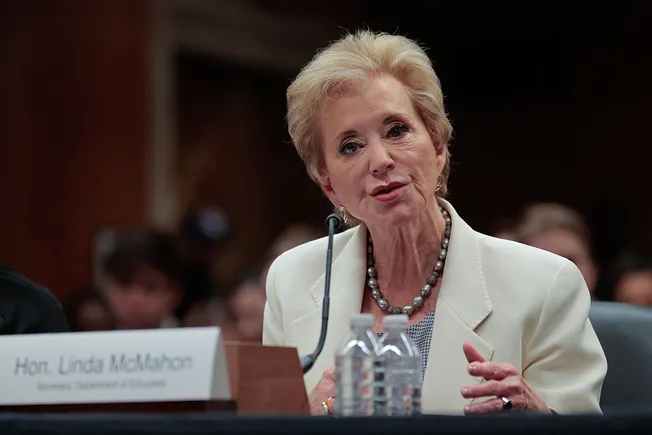
    Just because the executive branch has given up defending the program doesn’t necessarily mean it’s over—or that the group Students for Fair Admissions and the state of Tennessee have won the lawsuit they filed in June. The Hispanic Association of Colleges and Universities moved to intervene in the case late last month, asking U.S. District Court judge Katherine A. Crytzer to add the group as a defendant. She has yet to rule, but the Education Department and education secretary Linda McMahon, the current defendants, didn’t oppose this intervention. 

    The legal complaint from Students for Fair Admissions and Tennessee  asks Crytzer to declare the program’s ethnicity-based requirements unconstitutional, but not necessarily to end the program altogether. Students for Fair Admissions is the group whose suits against Harvard University and the University of North Carolina at Chapel Hill yielded the 2023 Supreme Court decision banning affirmative action in admissions. In the suit over the HSI program, that group and Tennessee’s attorney general, Jonathan Skrmetti, now argue that the admissions ruling means Tennessee colleges and universities can’t use affirmative action to increase Hispanic student enrollments in order to qualify for HSI funding. 

    Deborah Santiago, co-founder and chief executive officer of Excelencia in Education, which promotes Latino student success, said Friday that the Education Department in June “opened a competition to award grants for this fiscal year for HSIs.”

    “There are proposals to the Department of Education right now that they said they were going to allocate,” Santiago said, noting that the program was set to dole out more than $350 million this fiscal year—money that institutions use for faculty development, facilities and other purposes. 

    “The program doesn’t require that any of the money go to Hispanics at all,” she said. For a college or university to qualify for the program, at least half of the student body must be low-income, in addition to the requirement that a quarter be Hispanic. 

    “The value of a program like this has really been investing in institutions that have a high concentration of low-income, first generation students,” Santiago said. 

    Source link

  • VICTORY! 5th Circuit blocks West Texas A&M’s unconstitutional drag ban

    VICTORY! 5th Circuit blocks West Texas A&M’s unconstitutional drag ban

    NEW ORLEANS, Aug. 18, 2025 — In a victory for student expression on campus, the U.S. Court of Appeals for the Fifth Circuit today overruled a lower court to halt an unconstitutional ban on student drag performances at West Texas A&M University.

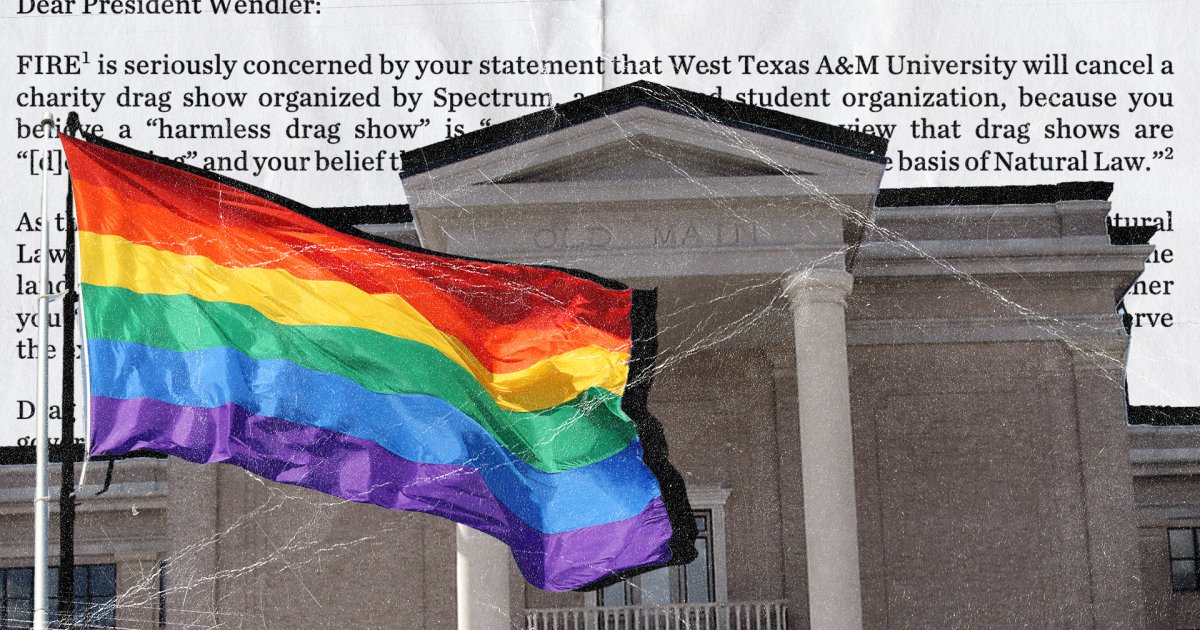
    In March 2023, West Texas A&M President Walter Wendler announced that he was unilaterally canceling a planned campus drag show hosted by LGBTQ+ organization Spectrum WT to raise money for suicide prevention. In a campus-wide email, Wendler said that he was canceling the event because he believes it offends and demeans women.

    As a public official at a state university, the First Amendment bars Wendler from censoring a performance based on nothing more than his personal disapproval. But astonishingly, Wendler admitted he was canceling the show even though “the law of the land appears to require” him to allow it.

    The Foundation for Individual Rights and Expression quickly jumped into action, filing a lawsuit against Wendler and West Texas A&M on behalf of Spectrum WT, its president Bear Bright, and vice president Marcus Stovall. FIRE’s lawsuit seeks to halt Wendler’s unlawful censorship and obtain damages for violating the students’ clearly established First Amendment rights.

    In September 2023, the district court denied FIRE’s motion for a preliminary injunction. While the case made its way through the courts, Wendler canceled a second drag show planned by Spectrum WT in March 2024.

    Today’s ruling from the Fifth Circuit overturns the district court’s ruling and places a temporary hold on Wendler’s enforcement of his illegal directive, allowing Spectrum WT and any other student organization to put on drag shows while litigation continues.

    The majority opinion from Judge Leslie H. Southwick found a substantial likelihood that Spectrum WT’s First Amendment claims would prevail on the merits.

    “Because theatrical performances plainly involve expressive conduct within the protection of the First Amendment, and because we find the plaintiffs’ drag show is protected expression,” the Fifth Circuit held Wendler’s censorship failed to pass constitutional muster. 

    “FIRE is pleased that the Fifth Circuit has halted President Wendler’s unconstitutional censorship and restored the First Amendment at West Texas A&M,” said FIRE Supervising Senior Attorney JT Morris. “This is a victory not just for Spectrum WT, but for any public university students at risk of being silenced by campus censors.”


    The Foundation for Individual Rights and Expression (FIRE) is a nonpartisan, nonprofit organization dedicated to defending and sustaining the individual rights of all Americans to free speech and free thought — the most essential qualities of liberty. FIRE educates Americans about the importance of these inalienable rights, promotes a culture of respect for these rights, and provides the means to preserve them.

    CONTACT:

    Alex Griswold, Communications Campaign Manager, FIRE: 215-717-3473; [email protected]

    Source link

  • LAWSUIT: FIRE challenges unconstitutional provisions Rubio uses in crusade to deport legal immigrants over protected speech

    LAWSUIT: FIRE challenges unconstitutional provisions Rubio uses in crusade to deport legal immigrants over protected speech

    • The First Amendment trumps the statutes that the government is abusing to deport people for speech alone
    • This lawsuit seeks a landmark ruling that the First Amendment forbids the government from deporting lawfully present noncitizens for constitutionally protected speech
    • FIRE attorney: ‘In a free country, you shouldn’t have to show your papers to voice your opinion’

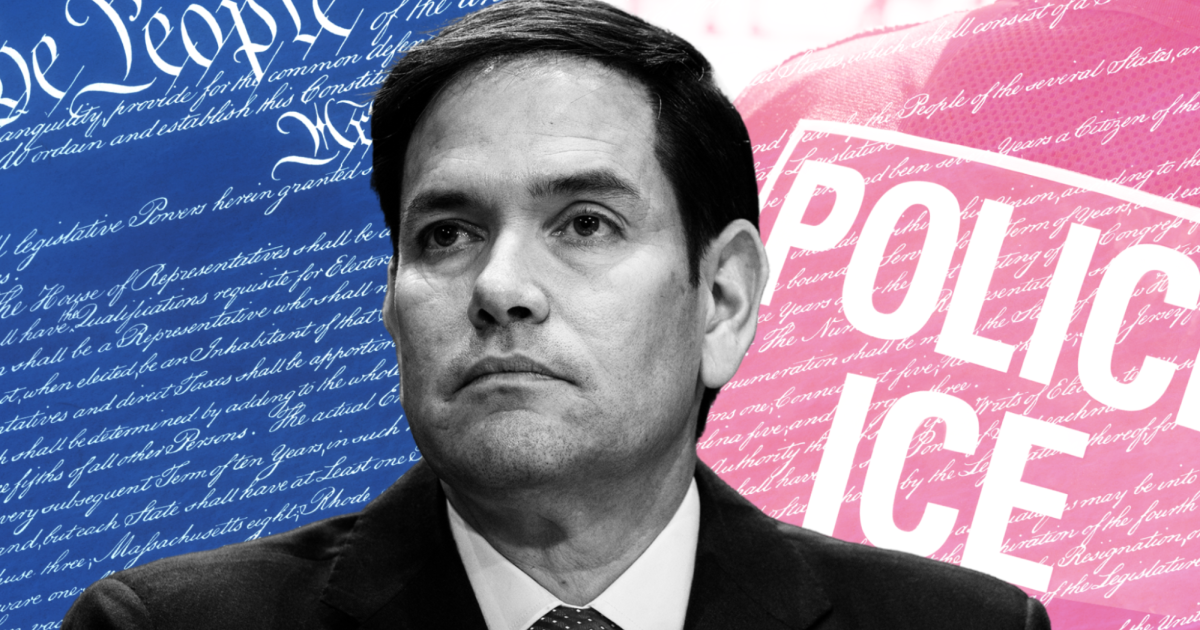
    SAN JOSE, Calif., Aug. 6, 2025 — Today, the Foundation for Individual Rights and Expression sued Secretary of State Marco Rubio, challenging two federal immigration law provisions that give him unchecked power to revoke legal immigrants’ visas and deport them for protected speech.

    “In the United States of America, no one should fear a midnight knock on the door for voicing the wrong opinion,” said FIRE attorney Conor Fitzpatrick. “Free speech isn’t a privilege the government hands out. Under our Constitution it is the inalienable right of every man, woman, and child.” 

    But since March, Rubio and the Trump administration have waged an assault on free speech, targeting foreign university students for deportation based on bedrock protected speech like writing op-eds and attending protests. Their attack is casting a pall of fear over millions of noncitizens, who now worry that voicing the “wrong” opinion about America or Israel will result in deportation.

    Noncitizens in the United States have First Amendment rights. Despite that, Rubio is wielding two provisions of the Immigration and Nationality Act to target lawfully present noncitizens for their opinions.

    • The first allows the secretary of state to initiate deportation proceedings against  any noncitizen for protected speech if the secretary “personally determines” the speech “compromises a compelling foreign policy interest.”
    • The second enables the secretary of state to revoke the visa of any noncitizen “at any time” for any reason. 

    As FIRE’s lawsuit explains, the provisions are unconstitutional when used to revoke a visa or deport someone for speech the First Amendment protects. 

    The Trump administration is proudly using the provisions to revoke the visas of and deport lawfully present noncitizens for their speech if the government deems it anti-American or anti-Israel. Rubio used the first provision to target Columbia University student Mahmoud Khalil for protected pro-Palestinian speech and the second to target Tufts University student Rümeysa Öztürk for coauthoring an op-ed.

    Rubio and the Trump administration claim — as all censors do — that this time is different. They claim that this political speech comes from noncitizens, which therefore warrants setting aside America’s protection of free speech.

    That’s wrong. America’s founding principle is that liberty comes not from the government, but is an inherent right of every individual. Every person — whether they’re a U.S. citizen, are visiting for the week, or are here on a student visa — has free speech rights in this country.

    “Two lawful residents of the United States holding the same sign at the same protest shouldn’t be treated differently just because one’s here on a visa,” said FIRE Legal Director Will Creeley. “The First Amendment bars the government from punishing protected speech — period. In our free country, you shouldn’t have to show your papers to speak your mind.”

    Plaintiffs in FIRE’s lawsuit represent the wide range of groups and individuals whose speech is threatened by the continued assault on noncitizens’ protected speech:

    • The Stanford Daily, the independent, student-run newspaper at Stanford University, where writers with student visas are declining assignments related to the conflict in the Middle East, worried that even reporting on the war will endanger their immigration status
    • Jane Doe and John Doe, two legal noncitizens with no criminal record who engaged in pro-Palestinian speech and now fear deportation and visa revocation because of their expression

    “There’s real fear on campus and it reaches into the newsroom,” said Greta Reich, editor-in-chief of The Stanford Daily. “I’ve had reporters turn down assignments, request the removal of some of their articles, and even quit the paper because they fear deportation for being associated with speaking on political topics, even in a journalistic capacity. The Daily is losing the voices of a significant portion of our student population.”

    There’s also historical context that should give the government pause. Congress passed the Alien and Sedition Acts 225 years ago. One of those acts allowed President John Adams to deport noncitizens if he thought they posed a “danger” to the country. It was one of the most unconstitutional laws in our nation’s history and died a quick death two years later, after the acts contributed to Adams’ resounding loss in the 1800 presidential election to Thomas Jefferson. 

    FIRE aims to stop the government’s use of the two provisions that stand counter to our ideals as a nation: Provisions that — in their expansive scope and unchecked authority — are more at home in countries like China and Russia than in a free America. By defeating these provisions, no administration of any party will be able to weaponize them against individuals for expression disfavored by the government.

    FIRE moved for a preliminary injunction to stop the government from abusing the visa provision while the case is ongoing.

    Marc Van Der Hout, Johnny Sinodis, and Oona Cahill at Van Der Hout LLP are serving as local and advisory counsel on the case.

    From today’s lawsuit: “Our First Amendment stands as a bulwark against the government infringing the inalienable human rights to think and speak for yourself.”

    The Foundation for Individual Rights and Expression (FIRE) is a nonpartisan, nonprofit organization dedicated to defending and sustaining the individual rights of all Americans to free speech and free thought — the most essential qualities of liberty. 

    CONTACT:

    Daniel Burnett, Senior Director of Communications, FIRE: 215-717-3473; [email protected]

    Source link

  • VICTORY! Tenn. town buries unconstitutional ordinance used to punish holiday skeleton display

    VICTORY! Tenn. town buries unconstitutional ordinance used to punish holiday skeleton display

    GERMANTOWN, Tenn., April 29, 2025 — After a federal lawsuit, the town of Germantown, Tennessee, has sent to the graveyard an ordinance that was used to fine a resident for using giant skeletons in a Christmas lawn display.

    Alexis Luttrell received a citation and court summons from the Memphis suburb in January for keeping up decorative skeletons after Halloween and repurposing them for Election Day and Christmas. In February, the Foundation for Individual Rights and Expression filed a federal lawsuit seeking to have the citation thrown out and Germantown’s unconstitutional holiday ordinance overturned on First Amendment grounds. FIRE also committed to defending Alexis against the charges in municipal court.

    Germantown voluntarily dismissed the municipal charges against Alexis a month later, but FIRE’s federal lawsuit against the ordinance remained pending before the U.S. District Court for the Western District of Tennessee. But last night, the Board of Mayor and Aldermen voted to repeal the ordinance entirely, and Germantown agreed to a $24,999 settlement in exchange for dismissing the lawsuit.

    “Not only am I no longer at risk of being fined for my skeletons, the unconstitutional ordinance is now dead and buried,” Alexis said. “Today is a victory for anyone who has ever been censored by a government official and chose to fight back.”

    The ghastly affair began in October 2024, when Alexis purchased a large decorative skeleton and skeleton dog for Halloween. She later kept the skeletons up and dressed them with Election Day signs in November and then Santa-themed attire in December.

    COURTESY PHOTOS OF ALEXIS AND HER SKELETON DISPLAYS

    Perplexingly, this was illegal under Germantown Ordinance 11-33, which required that holiday decorations “shall be removed within a reasonable period of time, not to exceed 30 days.” In Germantown officials’ view, Alexis’s skeletons weren’t “really” Christmas decorations, but an unsanctioned Halloween display. In December, the town sent Alexis a warning that she violated the ordinance, and followed up with a citation and summons when the skeletons were still up in January.

    Germantown’s ordinance wasn’t just an exercise in misguided micromanagement, it violated the Constitution. Under the First Amendment, Americans are free to put up holiday decorations on their property whenever they like, not just in a government-approved period of time. And by demanding the Santa-themed skeletons come down — even if one has a dark sense of humor, or happens to like Tim Burton movies — the city engaged in viewpoint discrimination about what constitutes an “acceptable” Christmas display.

    “Germantown’s leaders deserve a lot of credit for quickly repealing its holiday ordinance after FIRE’s lawsuit,” FIRE Attorney Colin McDonell said. “Instead of digging in and wasting time and taxpayer dollars defending an unconstitutional ordinance, they boned up on the First Amendment and did the right thing.”

    Alexis’ skeletons have remained in her yard and she’s continued to dress them up with different outfits and decorations for new holidays. Since February, they’ve been dressed in Valentine’s Day, St. Patrick’s Day, and Easter garb, and Pride Month and Juneteenth are coming up soon.

    “Alexis and all the residents of Germantown can now celebrate the holidays of their choice on their own property without worrying their creativity will get them fined,” said McDonell. “And that’s how it should be in a free country.”


    The Foundation for Individual Rights and Expression (FIRE) is a nonpartisan, nonprofit organization dedicated to defending and sustaining the individual rights of all Americans to free speech and free thought — the most essential qualities of liberty. FIRE educates Americans about the importance of these inalienable rights, promotes a culture of respect for these rights, and provides the means to preserve them.

    CONTACT:

    Alex Griswold, Communications Campaign Manager, FIRE: 215-717-3473; [email protected]

    Source link

  • Trump administration’s coercion at Columbia is unlawful and unconstitutional

    Trump administration’s coercion at Columbia is unlawful and unconstitutional

    FIRE today filed a “friend of the court” brief in support of the American Association of University Professors and the American Federation of Teachers in their lawsuit against the Department of Justice and other federal agencies. FIRE argues that the Trump administration’s actions against Columbia University are unlawful and unconstitutional attacks on freedom of expression, freedom of association, and academic freedom. The brief’s summary of argument follows.


    The federal government characterizes its abrupt revocation of $400 million in federal grants to Columbia University — and the government’s threat to revoke billions more if its demands are not met — as necessary to address anti-Semitism on campus in the wake of pro-Palestinian protests that sometimes veered into unlawful activity. Addressing discrimination is a worthy end. But it cannot justify the government’s flatly unconstitutional means here. While Columbia’s response to campus misconduct may raise questions about the university’s obligations under federal anti-discrimination law, there is no question about the government’s failure to meet its obligations under the First Amendment. The administration’s coercion is a blatant end-run around statutory safeguards and a flagrant attempt to jawbone the university into surrendering its institutional autonomy to federal officials. For the sake of Columbia’s students, faculty, and our free society, this government intimidation cannot stand unanswered.

    The same federal statute that governs institutional responses to allegations of anti-Semitism — Title VI — requires funding recipients like Columbia to receive notice, a hearing, and an opportunity to come into compliance voluntarily before the government can terminate funding. These provisions protect students, faculty, and institutions from precisely the kind of repressive, capricious government overreach that now harms Plaintiffs. Yet despite its professed interest in addressing campus anti-Semitism, the administration chose to ignore entirely the lawful statutory means by which it may do so. Instead, it has instituted rule by fiat: arbitrarily declaring Columbia subject to punishment, cancelling hundreds of millions of dollars in grants and threatening worse to come, and leaving Columbia faculty and students at the mercy of unchecked federal authority under the specter of a hostile takeover.

    This is unlawful. Just last year, the Supreme Court reaffirmed that the government cannot jawbone private actors into punishing speech that the First Amendment protects from state intrusion. Nat’l Rifle Ass’n of Am. v. Vullo, 2024). But jawboning is exactly what the administration is doing to Columbia — except here, the government’s bullying is so extreme it might more accurately be called extortion. Wielding the threat of crippling financial consequences like a mobster gripping a baseball bat, the government forced Columbia to adopt a restrictive speech code that punishes disfavored or dissenting viewpoints. Not only would it be unconstitutional at a public university, the speech code also violates Columbia’s free speech promises and its right as a private entity to set its own rules regarding speech. The government further forced Columbia to surrender control of an entire academic department and to relinquish its right to make independent decisions about discipline and admissions — all of which violate longstanding precepts of academic freedom, institutional independence, and university self-governance.

    These demands are unconstitutional. Again, just last year, the Supreme Court reemphasized the limits the Constitution places on the government in its interactions with private institutions. “On the spectrum of dangers to free expression,” the Court wrote, “there are few greater than allowing the government to change the speech of private actors in order to achieve its own conception of speech nirvana.” (Moody v. NetChoice, LLC, 2024). As Defendants trample constitutional barriers in seeking to effectively outlaw certain political views on campus, this grave danger that the Court identified is fully realized.

    The government’s gambit is not permissible simply because federal funding is involved. The Supreme Court long ago established that “even in the provision of subsidies, the Government may not ‘ai[m] at the suppression of dangerous ideas’” — and that the First Amendment demands judicial intervention if funding is “‘manipulated’ to have a ‘coercive effect.’” (Nat’l Endowment for the Arts v. Finley, 1998) (quoting Regan v. Tax’n With Representation of Wash., 1983). Few things could be more manipulative or coercive than revoking grants in an explicit attempt to override the expressive and associational rights of a private institution of higher education, its students, and its faculty.

    This case illustrates the grave threat to core First Amendment freedoms posed by expansive — and here, extralegal and unbounded — conceptions of governmental power to address discrimination. For more than a quarter century, amicus FIRE has advocated against overly broad and impossibly vague campus speech codes promulgated under federal anti-discrimination law. To that end, FIRE successfully led the charge against the Obama administration’s attempt to pressure institutions to adopt a federal definition of “sexual harassment” — advanced as a national “blueprint” — that subjected wide swaths of protected speech to investigation and punishment. And yet as misguided as that initiative was, those pressure tactics pale in comparison to the scope and intensity of the unlawful shakedown Defendants mount here.

    The government’s aggression against Columbia is alarming not just because it is unlawful and unconstitutional, but because its plain aim is “suppression of free speech and creative inquiry in one of the vital centers for the Nation’s intellectual life, its college and university campuses.” Rosenberger v. Rector & Visitors of the Univ. of Va., 1995). While Columbia was the first institution targeted by the administration, it has not been the last — the list of colleges facing coercive funding cuts and chilling demands is growing.

    Addressing anti-Semitism does not and cannot require violating the First Amendment. Left unchecked, the administration will continue to deploy its distorted conception of federal anti-discrimination law as a battering ram against institutional autonomy and to seize for itself power to control permissible speech and instruction on our campuses. The stakes are high: “Teachers and students must always remain free to inquire, to study and to evaluate, to gain new maturity and understanding; otherwise our civilization will stagnate and die.” Sweezy v. New Hampshire, 1957). This Court must act now to protect freedom of expression, academic freedom, and our institutions of higher education from a hostile federal takeover.

    Source link

  • FIRE and ACLU of TX: University of Texas must drop unconstitutional drag ban

    FIRE and ACLU of TX: University of Texas must drop unconstitutional drag ban

    AUSTIN, Texas, Apr. 22, 2025 — A pair of civil liberties organizations are joining forces today to demand the University of Texas System Board of Regents rescind its ban on campus drag shows — a clear First Amendment violation.

    In a joint letter, the American Civil Liberties Union of Texas and Foundation for Individual Rights and Expression called on the UT System to drop its drag ban that is currently chilling and infringing upon the speech of more than 200,000 students across its nine campuses.

    “Banning performances because government officials disapprove of their message is a textbook example of unconstitutional government censorship,” said FIRE Attorney Adam Steinbaugh. “The First Amendment protects the right of students at public universities to express themselves through art and performance, and that includes drag.”

    In March, University of Texas System Board of Regents Chair Kevin Eltife, citing unspecified “executive orders,” publicly declared that “our public university facilities, supported by taxpayers, will not serve as venues for drag shows.” Eltife’s statement followed a letter from Tarrant County Judge Tim O’Hare, which complained that drag shows “denigrate women” and suggested they violated an executive order from President Donald Trump that said “federal funds shall not be used to promote gender ideology.”

    But as a public university system, the UT System is required to abide by the First Amendment, which protects expression even if it offends state officials, campus administrators, or fellow students. And the justifications O’Hare cited are the same arguments from the Texas A&M University System that a federal judge in Texas roundly rejected when holding that system’s drag ban unconstitutional. On March 24 — just days after UT announced its drag ban — Judge Lee H. Rosenthal of the U.S. District Court for the Southern District of Texas struck down Texas A&M’s drag ban, ruling that drag “is speech and expressive conduct protected by the First Amendment.”

    The UT drag ban violates the First Amendment in a number of ways. First, it creates a prior restraint on speech, silencing artistic performances before they can even be held. This is a form of censorship that the Supreme Court has held to be “the most serious and the least tolerable infringement on First Amendment rights.”

    Second, by seemingly being issued to comply with Trump’s executive order targeting “gender ideology,” the ban is viewpoint discrimination; government institutions can’t gag speech based solely on whether they approve of the ideology being expressed. Lastly, UT’s drag ban is unconstitutionally vague. Because “drag” and “gender ideology” are undefined by the Board of Regents, students have no way of knowing whether their speech will fall afoul of regulations.

    West Texas A&M President cancels student charity drag show for second time

    News

    West Texas A&M President Wendler enforced his unconstitutional prior restraint by canceling a student-organized charity drag show for the second time.


    Read More

    “The University of Texas System must immediately rescind its unconstitutional anti-drag policy, which is an affront to its students’ First Amendment rights and its stated commitment to free speech and academic freedom,” said ACLU of Texas staff attorney Chloe Kempf. “The UT System’s vague and discriminatory ban on drag performances will make its campuses less free, less fair, and less welcoming for every student — especially LGBTQIA+ students. Texans expect state institutions to vigorously protect our fundamental rights and freedoms, no exceptions.”

    UT’s drag ban doesn’t just contradict the Constitution and recent court rulings in Texas — it also contradicts its own expressed values. Just last year, the UT System Board announced a “Commitment to Freedom of Speech and Expression,” which held that “it is not the proper role of the UT System or the UT institutions to attempt to shield individuals from ideas and opinions they find unwelcome, disagreeable, or even deeply offensive.” 

    “The UT Board of Regents laid down its marker last year that it would uphold the First Amendment and protect speech that may offend others,” said FIRE Supervising Senior Attorney JT Morris. “Now’s the time to put their money where their mouth is and stand up for the constitutional rights of all its students, instead of bowing to political pressure.”


    The Foundation for Individual Rights and Expression (FIRE) is a nonpartisan, nonprofit organization dedicated to defending and sustaining the individual rights of all Americans to free speech and free thought—the most essential qualities of liberty. FIRE recognizes that colleges and universities play a vital role in preserving free thought within a free society. To this end, we place a special emphasis on defending the individual rights of students and faculty members on our nation’s campuses, including freedom of speech, freedom of association, due process, legal equality, religious liberty, and sanctity of conscience.

    The ACLU of Texas is a nonpartisan nonprofit organization that works with communities, at the State Capitol, and in the courts to protect and advance civil rights and civil liberties for every Texan, no exceptions.

    CONTACT:

    Alex Griswold, Communications Campaign Manager, FIRE: 215-717-3473; [email protected]

    Kristi Gross, Press Strategist, ACLU of Texas, [email protected]

    Source link

  • Harvard stands firm, rejects Trump administration’s unconstitutional demands

    Harvard stands firm, rejects Trump administration’s unconstitutional demands

    Last Friday, three federal agencies sent a demand letter to Harvard University laying out conditions for the university to continue receiving federal funds. The letter is unprecedented in its scope. It would essentially render Harvard a vassal institution, subjecting much of its corporate and academic governance to federal directives. 

    If Harvard acceded to these demands, faculty hiring, student admissions, student and faculty disciplinary procedures, university programming decisions, student group recognition processes, and much more would be transformed to align with the government’s ideological preferences.

    Among other things, the university would be required to:

    • Abolish ideological litmus tests in hiring and admissions practices and take steps to ensure viewpoint diversity in the faculty and student body. How Harvard can take both steps simultaneously and also commit to merit-based hiring and admissions, another directive, is unclear. FIRE opposes ideological litmus tests, but you can’t abolish them by trading one litmus test for another.
    • Deny admission to international students who are “hostile to the American values and institutions inscribed in the U.S. Constitution and Declaration of Independence.” These values go undefined. And, as any historian or Supreme Court observer would know, they’re subject to intense debate and varied interpretations. Ironically, this is also an ideological litmus test of the sort prohibited by the directive that Harvard abolish such tests.
    • Audit certain disfavored academic departments. The mandatory audit would include investigations into individual faculty members and would require Harvard to work hand in glove with the government to sanction faculty members who allegedly engaged in anti-Semitic discrimination or otherwise “incited students to violate Harvard’s rules.” The federal government’s definition of anti-Semitism incorporates the IHRA definition, which Harvard recently adopted and FIRE has long criticized as violating First Amendment standards.
    • Discontinue DEI. This would include shuttering all “programs, offices, committees, positions, and initiatives” relating to “diversity, equity, and inclusion.” These terms also go undefined in the letter, and while FIRE has been critical of many university DEI programs for their tendency to chill and censor speech, not all of them do, and many programs are within a university’s prerogative to create. This is especially true at private institutions.
    • Reform student disciplinary processes and procedures. The letter demands Harvard not fund or recognize any student group that “endorses or promotes criminal activity, illegal violence, or illegal harassment.” This amounts to a federal requirement of viewpoint discrimination. While many would find these categories of speech abhorrent, the categories go undefined and would nevertheless be protected by the First Amendment so long as the speech stays confined to endorsement and promotion and the student groups do not themselves engage in any criminal activity, illegal violence, or illegal harassment. The letter also identifies specific student groups that must lose recognition and funding.
    • Implement a comprehensive mask ban. Masks can be used by criminals to commit crimes, the sick to stay healthy, and, yes, protesters to remain anonymous. A blanket mask ban is an overbroad requirement that infringes on individuals’ constitutional right to anonymous speech.
    • Risk double jeopardy. The letter demands that Harvard “carry out meaningful discipline for all violations that occurred during the 2023-2024 and 2024-2025 academic years.” To the extent any student was already tried for these alleged violations, this requirement would amount to “double jeopardy,” violating the venerated and centuries-old principle of fundamental fairness, enshrined in the Fifth Amendment, that says no individual should be tried for the same infraction twice.
    • Generally reform corporate governance structure and practices, including by “reducing the power held by students and untenured faculty” in its current structure. How Harvard governs its academic programs, and who should have a say in that governance, is up to Harvard, not the federal government. The First Amendment and basic principles of academic freedom require no less.

    In addition to these demands, the university would be required to undergo frequent and highly intrusive audits to ensure compliance. In short, the federal government would effectively serve as president and provost of Harvard University.

    The ostensible justification for these demands stems from the government’s belief that Harvard has allowed for a hostile environment for Jewish students in violation of Title VI of the Civil Rights Act. But federal law also dictates specific procedures for adjudicating alleged noncompliance — procedures the government circumvented here. 

    If allowed to stand, the government could revoke federal funding from any institution regardless of the merit of the government’s allegations. This processless approach is a loaded gun for partisan administrations to target institutions and individuals that dissent from administration policies and priorities.

    What Harvard does — for better or worse — others follow. Those of us who support free inquiry, academic freedom, and fair procedures on campus — not to mention institutional autonomy — can hope that maybe its action will inspire other institutions to grow a backbone.

    It’s true that institutions take federal funding voluntarily. But it’s also true that the government cannot condition federal funding on institutions giving up their autonomy and constitutional rights. A requirement that Harvard relinquish its authority to guide core academic programs certainly violates its free speech and academic freedom rights, as well as those of its students and faculty.

    It’s also true that Harvard doesn’t have clean hands. For the past two years, it has sat at the bottom of FIRE’s College Free Speech Rankings, and it may well have violated Title VI by failing to meaningfully respond to conduct creating a hostile environment for Jewish students on campus. But just as with individuals, we don’t punish institutions based on allegations alone. And we cannot restore free speech with censorship.

    This isn’t the first time FIRE has objected to a presidential administration using federal civil rights law to violate rights. Under the Obama and Biden administrations, the federal government weaponized Title IX to erode campus due process and free speech protections. The fight over the Obama/Biden rules lasted over a decade, and has been largely resolved (for now) in court and with President Trump’s Department of Education promulgating federal rules that protect free speech and due process rights in campus sexual misconduct investigations.

    That’s why we’re deeply concerned that the administration doesn’t recognize that what was wrong and unlawful in the Title IX context is also wrong and unlawful in the Title VI context. Indeed, these federal requirements go even further than what we saw in the Title IX context.

    Fortunately, Harvard is fighting back. Yesterday, Harvard President Alan Garber wrote in an open letter:

    The administration’s prescription goes beyond the power of the federal government. It violates Harvard’s First Amendment rights and exceeds the statutory limits of the government’s authority under Title VI. And it threatens our values as a private institution devoted to the pursuit, production, and dissemination of knowledge. No government—regardless of which party is in power—should dictate what private universities can teach, whom they can admit and hire, and which areas of study and inquiry they can pursue.

    Garber’s response didn’t sit well with the federal government, which soon announced it was freezing $2.2 billion in grants to the university. The fight will continue.

    What Harvard does — for better or worse — others follow. Those of us who support free inquiry, academic freedom, and fair procedures on campus — not to mention institutional autonomy — can hope that maybe its action will inspire other institutions to grow a backbone.

    There is some evidence of that already. On the same day Harvard announced it was rejecting the administration’s demands, Columbia University’s new acting president announced Columbia would not agree to any federal demands that “require us to relinquish our independence and autonomy as an educational institution.”

    In addition to Columbia, the administration also froze grants at Cornell University and Northwestern University and is investigating nearly 60 other universities.

    Behavior that gets rewarded gets repeated. Until more universities stand alongside Harvard in opposing the government’s unconstitutional demands, we can be sure these demands won’t be the last.

    Source link

  • VICTORY: Federal court blocks Texas A&M’s unconstitutional drag ban

    VICTORY: Federal court blocks Texas A&M’s unconstitutional drag ban

    HOUSTON, March 24, 2025 —  A federal judge today upheld the First Amendment rights of a Texas A&M student group by blocking an attempt by officials to prohibit the group’s upcoming drag show on the College Station campus.

    In her ruling, Judge Lee H. Rosenthal of the U.S. District Court for the Southern District of Texas held that a student organization, the Texas A&M Queer Empowerment Council, was likely to succeed in showing the drag ban violated the First Amendment. The court held that drag is theatrical expression protected by the First Amendment and that the university’s justifications for prohibiting the student-funded, student-organized “Draggieland” performance fell short. Draggieland will now take place as planned on Thursday evening.

    “In recent years, the commitment to free speech on campuses has been both challenging and challenged,” ruled Judge Rosenthal. “There have been efforts from all sides of the political spectrum to disrupt or prevent students, faculty, and others from expressing opinions and speech that are deemed, or actually are, offensive or wrong. But the law requires the recognition and application of speech rights and guardrails that preserve and protect all our treasured First Amendment rights.”

    “Today is a resounding victory for the First Amendment at public universities in Texas,” said Adam Steinbaugh, an attorney with the Foundation for Individual Rights and Expression, who argued last week at the district court. “The court reaffirmed that state university officials cannot block student expression they claim is offensive. State officials should stop trying to score political points at the expense of students’ First Amendment rights.”

    Every year since 2020, students at Texas A&M University-College Station have held “Draggieland” (a combination of “Drag” and “Aggieland”) on campus. But in February, citing a recent executive order issued by President Donald Trump on “gender ideology,” the Texas A&M University System Board of Regents abruptly voted to ban drag performances across all 11 campuses, claiming drag was “offensive” and “inconsistent with” the “core values of its universities, including the value of respect for others.”

    That vote canceled Draggieland’s March 27 performance, which the Queer Empowerment Council plans and hosts in a campus theatre open to all student groups. But the regents’ edict clearly violated the First Amendment, which does not allow public university officials to censor student performances based on nothing more than their personal dislike of its content or perceived ideology. 

    FIRE sued on the Queer Empowerment Council’s behalf earlier this month seeking to have the ban overturned on First Amendment grounds, and filed a motion for an injunction that would allow the show to go on while the case made its way through the courts.

    “We’re overjoyed with today’s decision,” said the Queer Empowerment Council. “This is another display of the resilience of queer joy, as that is an unstoppable force despite those that wish to see it destroyed. While this fight isn’t over, we are going to appreciate the joy we get to bring by putting on the best show that we can do.”

    “Texas A&M, like any public university, has the utmost duty to respect the First Amendment rights of students,” said FIRE Supervising Senior Attorney JT Morris. “As public officials, they can’t banish speech from campus just because it offends them, any more than they could shut down a political rally or a Christmas pageant.” 


    The Foundation for Individual Rights and Expression (FIRE) is a nonpartisan, nonprofit organization dedicated to defending and sustaining the individual rights of all Americans to free speech and free thought—the most essential qualities of liberty. FIRE recognizes that colleges and universities play a vital role in preserving free thought within a free society. To this end, we place a special emphasis on defending the individual rights of students and faculty members on our nation’s campuses, including freedom of speech, freedom of association, due process, legal equality, religious liberty, and sanctity of conscience.

    CONTACT:

    Alex Griswold, Communications Campaign Manager, FIRE: 215-717-3473; [email protected]

    Source link

  • FIRE and civil liberties groups challenge ‘unconstitutional retaliation’ against Mahmoud Khalil

    FIRE and civil liberties groups challenge ‘unconstitutional retaliation’ against Mahmoud Khalil

    FIRE along with the National Coalition Against Censorship, The Rutherford Institute, PEN America, and First Amendment Lawyers Association today filed a “friend of the court” brief arguing that the jailing of Mahmoud Khalil violates the First Amendment. What follows is the brief’s summary of argument.


    America’s founding principle, core to who and what we are as a Nation, is that liberty comes not from the benevolent hand of a king, but is an inherent right of every man, woman, and child. That includes “the opportunity for free political discussion” as “a basic tenet of our constitutional democracy.” (Cox v. Louisiana). And “a function of free speech under our system of government is to invite dispute. It may indeed best serve its high purpose when it induces a condition of unrest, creates dissatisfaction with conditions as they are, or even stirs people to anger.” (Terminiello v. City of Chicago). For these reasons, along with all citizens, “freedom of speech and of press is accorded aliens residing in this country.” (Bridges v. Wixon).

    Secretary of State Marco Rubio, however, is attempting to deport a permanent resident, Mahmoud Khalil, not because the government claims he committed a crime or other deportable offense, but for the seemingly sole reason that his expression stirred the Trump administration to anger. The Secretary claims he can deport Mr. Khalil under a Cold War–era statute giving the secretary of state the power to deport anyone he “personally determines” is contrary to America’s “foreign policy interest.” And he argues this power extends even to deporting permanent residents for protected speech. It does not.

    The First Amendment’s protection for free speech trumps a federal statute. (United States v. Robel). Accepting Secretary Rubio’s position would irreparably damage free expression in the United States, particularly on college campuses. Foreign students would (with good reason) fear criticizing the American government during classroom debates, in term papers, and on social media, lest they risk deportation. That result is utterly incompatible with the longstanding recognition that “[t]he essentiality of freedom in the community of American universities is almost self-evident,” and that “students must always remain free to inquire, to study and to evaluate, to gain new maturity and understanding.” (Sweezy v. New Hampshire).

    Secretary Rubio claims (as do all censors) that this time is different, that the supposed repulsiveness of Mr. Khalil’s pro-Palestine (and, as Secretary Rubio alleges, pro-Hamas) views cannot be tolerated. But “if there is a bedrock principle underlying the First Amendment, it is that the government may not prohibit the expression of an idea simply because society finds the idea itself offensive.” (Texas v. Johnson) (holding the First Amendment protects burning the American flag in protest); see also (Snyder v. Phelps) (holding the First Amendment protects displaying “God Hates Fags” and “Thank God for Dead Soldiers” posters outside a military funeral).

    Allowing the Secretary of State to deport any non-citizen whose views, in his subjective judgment, are against America’s foreign policy interests places free expression in mortal peril. China’s Constitution, for example, provides that “when exercising their freedoms and rights, citizens . . . shall not undermine the interests of the state.” As China’s experience shows, allowing the government to step in as censor when it believes speech threatens the government’s interests is a loophole with infinite diameter. It has no place in America’s tradition of individual liberty.

    The only court to address the deportation provision Secretary Rubio relies upon to deport Mr. Khalil reached a similar conclusion, holding the law unconstitutional. As that court explained, “If the Constitution was adopted to protect individuals against anything, it was the abuses made possible through just this type of unbounded executive authority.” (Massieu v. Reno).

    The “First Amendment does not speak equivocally. It prohibits any law ‘abridging the freedom of speech, or of the press.’ It must be taken as a command of the broadest scope that explicit language, read in the context of a liberty-loving society, will allow.” (Bridges v. California) (invalidating criminal convictions, including of a non-citizen, based on protected speech). Our “liberty-loving society” does not permit deportation as a punishment solely based on expression the government disfavors. The Court should grant Mr. Khalil’s motion.

    Source link