Tag: unconstitutional

  • Harvard stands firm, rejects Trump administration’s unconstitutional demands

    Harvard stands firm, rejects Trump administration’s unconstitutional demands

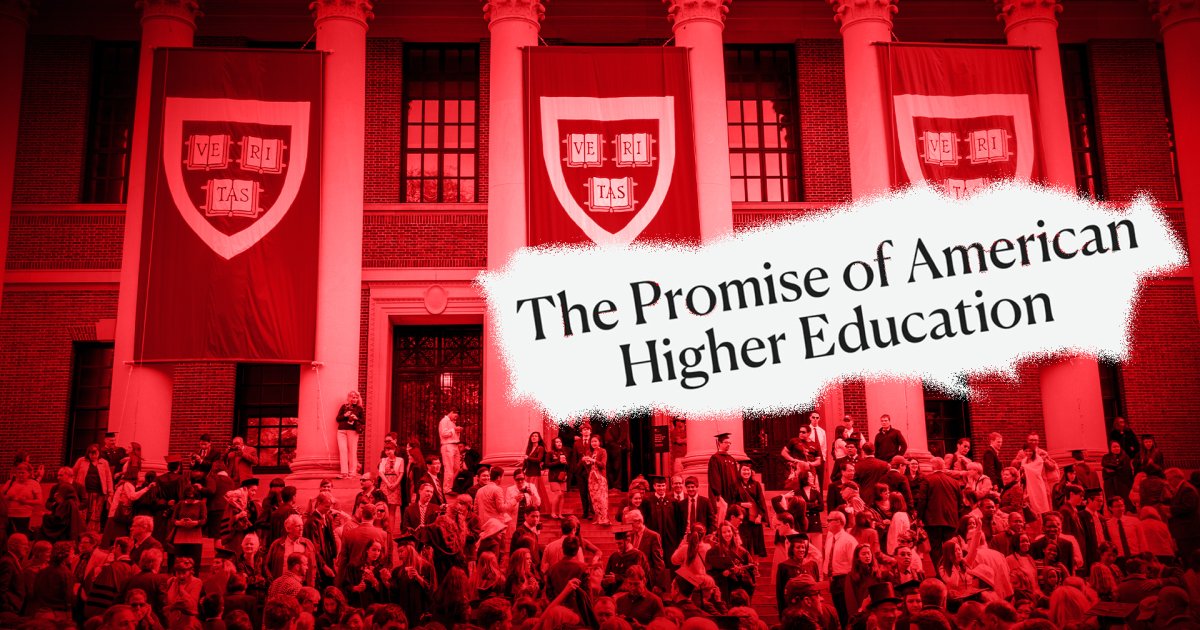
    Last Friday, three federal agencies sent a demand letter to Harvard University laying out conditions for the university to continue receiving federal funds. The letter is unprecedented in its scope. It would essentially render Harvard a vassal institution, subjecting much of its corporate and academic governance to federal directives. 

    If Harvard acceded to these demands, faculty hiring, student admissions, student and faculty disciplinary procedures, university programming decisions, student group recognition processes, and much more would be transformed to align with the government’s ideological preferences.

    Among other things, the university would be required to:

    • Abolish ideological litmus tests in hiring and admissions practices and take steps to ensure viewpoint diversity in the faculty and student body. How Harvard can take both steps simultaneously and also commit to merit-based hiring and admissions, another directive, is unclear. FIRE opposes ideological litmus tests, but you can’t abolish them by trading one litmus test for another.
    • Deny admission to international students who are “hostile to the American values and institutions inscribed in the U.S. Constitution and Declaration of Independence.” These values go undefined. And, as any historian or Supreme Court observer would know, they’re subject to intense debate and varied interpretations. Ironically, this is also an ideological litmus test of the sort prohibited by the directive that Harvard abolish such tests.
    • Audit certain disfavored academic departments. The mandatory audit would include investigations into individual faculty members and would require Harvard to work hand in glove with the government to sanction faculty members who allegedly engaged in anti-Semitic discrimination or otherwise “incited students to violate Harvard’s rules.” The federal government’s definition of anti-Semitism incorporates the IHRA definition, which Harvard recently adopted and FIRE has long criticized as violating First Amendment standards.
    • Discontinue DEI. This would include shuttering all “programs, offices, committees, positions, and initiatives” relating to “diversity, equity, and inclusion.” These terms also go undefined in the letter, and while FIRE has been critical of many university DEI programs for their tendency to chill and censor speech, not all of them do, and many programs are within a university’s prerogative to create. This is especially true at private institutions.
    • Reform student disciplinary processes and procedures. The letter demands Harvard not fund or recognize any student group that “endorses or promotes criminal activity, illegal violence, or illegal harassment.” This amounts to a federal requirement of viewpoint discrimination. While many would find these categories of speech abhorrent, the categories go undefined and would nevertheless be protected by the First Amendment so long as the speech stays confined to endorsement and promotion and the student groups do not themselves engage in any criminal activity, illegal violence, or illegal harassment. The letter also identifies specific student groups that must lose recognition and funding.
    • Implement a comprehensive mask ban. Masks can be used by criminals to commit crimes, the sick to stay healthy, and, yes, protesters to remain anonymous. A blanket mask ban is an overbroad requirement that infringes on individuals’ constitutional right to anonymous speech.
    • Risk double jeopardy. The letter demands that Harvard “carry out meaningful discipline for all violations that occurred during the 2023-2024 and 2024-2025 academic years.” To the extent any student was already tried for these alleged violations, this requirement would amount to “double jeopardy,” violating the venerated and centuries-old principle of fundamental fairness, enshrined in the Fifth Amendment, that says no individual should be tried for the same infraction twice.
    • Generally reform corporate governance structure and practices, including by “reducing the power held by students and untenured faculty” in its current structure. How Harvard governs its academic programs, and who should have a say in that governance, is up to Harvard, not the federal government. The First Amendment and basic principles of academic freedom require no less.

    In addition to these demands, the university would be required to undergo frequent and highly intrusive audits to ensure compliance. In short, the federal government would effectively serve as president and provost of Harvard University.

    The ostensible justification for these demands stems from the government’s belief that Harvard has allowed for a hostile environment for Jewish students in violation of Title VI of the Civil Rights Act. But federal law also dictates specific procedures for adjudicating alleged noncompliance — procedures the government circumvented here. 

    If allowed to stand, the government could revoke federal funding from any institution regardless of the merit of the government’s allegations. This processless approach is a loaded gun for partisan administrations to target institutions and individuals that dissent from administration policies and priorities.

    What Harvard does — for better or worse — others follow. Those of us who support free inquiry, academic freedom, and fair procedures on campus — not to mention institutional autonomy — can hope that maybe its action will inspire other institutions to grow a backbone.

    It’s true that institutions take federal funding voluntarily. But it’s also true that the government cannot condition federal funding on institutions giving up their autonomy and constitutional rights. A requirement that Harvard relinquish its authority to guide core academic programs certainly violates its free speech and academic freedom rights, as well as those of its students and faculty.

    It’s also true that Harvard doesn’t have clean hands. For the past two years, it has sat at the bottom of FIRE’s College Free Speech Rankings, and it may well have violated Title VI by failing to meaningfully respond to conduct creating a hostile environment for Jewish students on campus. But just as with individuals, we don’t punish institutions based on allegations alone. And we cannot restore free speech with censorship.

    This isn’t the first time FIRE has objected to a presidential administration using federal civil rights law to violate rights. Under the Obama and Biden administrations, the federal government weaponized Title IX to erode campus due process and free speech protections. The fight over the Obama/Biden rules lasted over a decade, and has been largely resolved (for now) in court and with President Trump’s Department of Education promulgating federal rules that protect free speech and due process rights in campus sexual misconduct investigations.

    That’s why we’re deeply concerned that the administration doesn’t recognize that what was wrong and unlawful in the Title IX context is also wrong and unlawful in the Title VI context. Indeed, these federal requirements go even further than what we saw in the Title IX context.

    Fortunately, Harvard is fighting back. Yesterday, Harvard President Alan Garber wrote in an open letter:

    The administration’s prescription goes beyond the power of the federal government. It violates Harvard’s First Amendment rights and exceeds the statutory limits of the government’s authority under Title VI. And it threatens our values as a private institution devoted to the pursuit, production, and dissemination of knowledge. No government—regardless of which party is in power—should dictate what private universities can teach, whom they can admit and hire, and which areas of study and inquiry they can pursue.

    Garber’s response didn’t sit well with the federal government, which soon announced it was freezing $2.2 billion in grants to the university. The fight will continue.

    What Harvard does — for better or worse — others follow. Those of us who support free inquiry, academic freedom, and fair procedures on campus — not to mention institutional autonomy — can hope that maybe its action will inspire other institutions to grow a backbone.

    There is some evidence of that already. On the same day Harvard announced it was rejecting the administration’s demands, Columbia University’s new acting president announced Columbia would not agree to any federal demands that “require us to relinquish our independence and autonomy as an educational institution.”

    In addition to Columbia, the administration also froze grants at Cornell University and Northwestern University and is investigating nearly 60 other universities.

    Behavior that gets rewarded gets repeated. Until more universities stand alongside Harvard in opposing the government’s unconstitutional demands, we can be sure these demands won’t be the last.
    Source link

  • VICTORY: Federal court blocks Texas A&M’s unconstitutional drag ban

    VICTORY: Federal court blocks Texas A&M’s unconstitutional drag ban

    HOUSTON, March 24, 2025 —  A federal judge today upheld the First Amendment rights of a Texas A&M student group by blocking an attempt by officials to prohibit the group’s upcoming drag show on the College Station campus.

    In her ruling, Judge Lee H. Rosenthal of the U.S. District Court for the Southern District of Texas held that a student organization, the Texas A&M Queer Empowerment Council, was likely to succeed in showing the drag ban violated the First Amendment. The court held that drag is theatrical expression protected by the First Amendment and that the university’s justifications for prohibiting the student-funded, student-organized “Draggieland” performance fell short. Draggieland will now take place as planned on Thursday evening.

    “In recent years, the commitment to free speech on campuses has been both challenging and challenged,” ruled Judge Rosenthal. “There have been efforts from all sides of the political spectrum to disrupt or prevent students, faculty, and others from expressing opinions and speech that are deemed, or actually are, offensive or wrong. But the law requires the recognition and application of speech rights and guardrails that preserve and protect all our treasured First Amendment rights.”

    “Today is a resounding victory for the First Amendment at public universities in Texas,” said Adam Steinbaugh, an attorney with the Foundation for Individual Rights and Expression, who argued last week at the district court. “The court reaffirmed that state university officials cannot block student expression they claim is offensive. State officials should stop trying to score political points at the expense of students’ First Amendment rights.”

    Every year since 2020, students at Texas A&M University-College Station have held “Draggieland” (a combination of “Drag” and “Aggieland”) on campus. But in February, citing a recent executive order issued by President Donald Trump on “gender ideology,” the Texas A&M University System Board of Regents abruptly voted to ban drag performances across all 11 campuses, claiming drag was “offensive” and “inconsistent with” the “core values of its universities, including the value of respect for others.”

    That vote canceled Draggieland’s March 27 performance, which the Queer Empowerment Council plans and hosts in a campus theatre open to all student groups. But the regents’ edict clearly violated the First Amendment, which does not allow public university officials to censor student performances based on nothing more than their personal dislike of its content or perceived ideology. 

    FIRE sued on the Queer Empowerment Council’s behalf earlier this month seeking to have the ban overturned on First Amendment grounds, and filed a motion for an injunction that would allow the show to go on while the case made its way through the courts.

    “We’re overjoyed with today’s decision,” said the Queer Empowerment Council. “This is another display of the resilience of queer joy, as that is an unstoppable force despite those that wish to see it destroyed. While this fight isn’t over, we are going to appreciate the joy we get to bring by putting on the best show that we can do.”

    “Texas A&M, like any public university, has the utmost duty to respect the First Amendment rights of students,” said FIRE Supervising Senior Attorney JT Morris. “As public officials, they can’t banish speech from campus just because it offends them, any more than they could shut down a political rally or a Christmas pageant.” 


    The Foundation for Individual Rights and Expression (FIRE) is a nonpartisan, nonprofit organization dedicated to defending and sustaining the individual rights of all Americans to free speech and free thought—the most essential qualities of liberty. FIRE recognizes that colleges and universities play a vital role in preserving free thought within a free society. To this end, we place a special emphasis on defending the individual rights of students and faculty members on our nation’s campuses, including freedom of speech, freedom of association, due process, legal equality, religious liberty, and sanctity of conscience.

    CONTACT:

    Alex Griswold, Communications Campaign Manager, FIRE: 215-717-3473; [email protected]

    Source link

  • FIRE and civil liberties groups challenge ‘unconstitutional retaliation’ against Mahmoud Khalil

    FIRE and civil liberties groups challenge ‘unconstitutional retaliation’ against Mahmoud Khalil

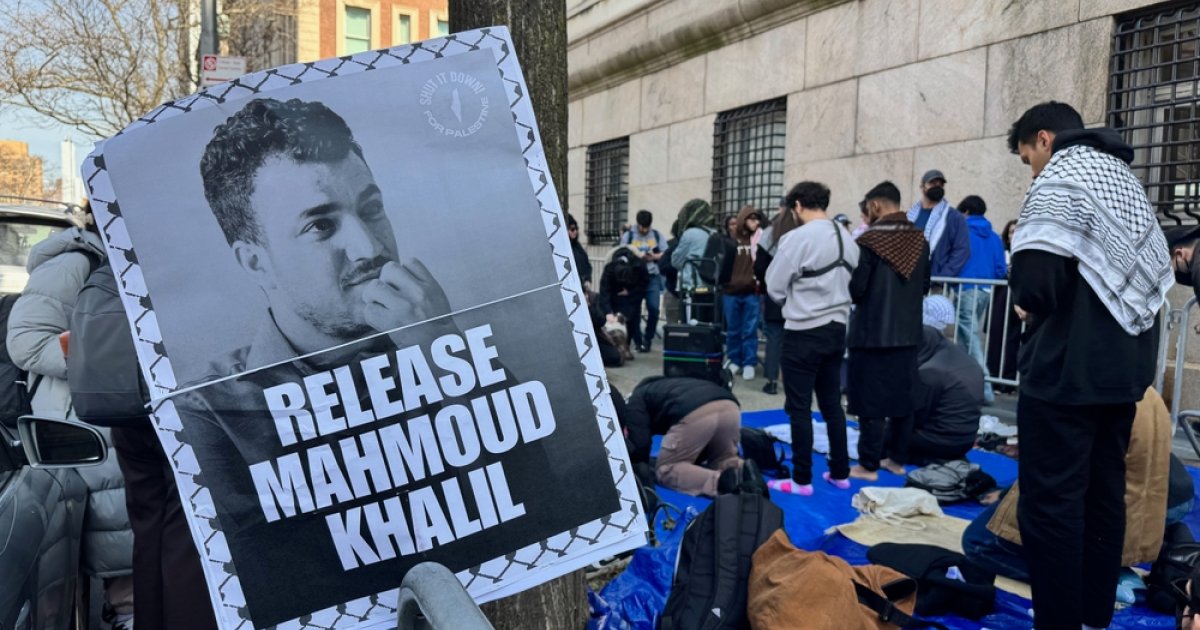
    FIRE along with the National Coalition Against Censorship, The Rutherford Institute, PEN America, and First Amendment Lawyers Association today filed a “friend of the court” brief arguing that the jailing of Mahmoud Khalil violates the First Amendment. What follows is the brief’s summary of argument.


    America’s founding principle, core to who and what we are as a Nation, is that liberty comes not from the benevolent hand of a king, but is an inherent right of every man, woman, and child. That includes “the opportunity for free political discussion” as “a basic tenet of our constitutional democracy.” (Cox v. Louisiana). And “a function of free speech under our system of government is to invite dispute. It may indeed best serve its high purpose when it induces a condition of unrest, creates dissatisfaction with conditions as they are, or even stirs people to anger.” (Terminiello v. City of Chicago). For these reasons, along with all citizens, “freedom of speech and of press is accorded aliens residing in this country.” (Bridges v. Wixon).

    Secretary of State Marco Rubio, however, is attempting to deport a permanent resident, Mahmoud Khalil, not because the government claims he committed a crime or other deportable offense, but for the seemingly sole reason that his expression stirred the Trump administration to anger. The Secretary claims he can deport Mr. Khalil under a Cold War–era statute giving the secretary of state the power to deport anyone he “personally determines” is contrary to America’s “foreign policy interest.” And he argues this power extends even to deporting permanent residents for protected speech. It does not.

    The First Amendment’s protection for free speech trumps a federal statute. (United States v. Robel). Accepting Secretary Rubio’s position would irreparably damage free expression in the United States, particularly on college campuses. Foreign students would (with good reason) fear criticizing the American government during classroom debates, in term papers, and on social media, lest they risk deportation. That result is utterly incompatible with the longstanding recognition that “[t]he essentiality of freedom in the community of American universities is almost self-evident,” and that “students must always remain free to inquire, to study and to evaluate, to gain new maturity and understanding.” (Sweezy v. New Hampshire).

    Secretary Rubio claims (as do all censors) that this time is different, that the supposed repulsiveness of Mr. Khalil’s pro-Palestine (and, as Secretary Rubio alleges, pro-Hamas) views cannot be tolerated. But “if there is a bedrock principle underlying the First Amendment, it is that the government may not prohibit the expression of an idea simply because society finds the idea itself offensive.” (Texas v. Johnson) (holding the First Amendment protects burning the American flag in protest); see also (Snyder v. Phelps) (holding the First Amendment protects displaying “God Hates Fags” and “Thank God for Dead Soldiers” posters outside a military funeral).

    Allowing the Secretary of State to deport any non-citizen whose views, in his subjective judgment, are against America’s foreign policy interests places free expression in mortal peril. China’s Constitution, for example, provides that “when exercising their freedoms and rights, citizens . . . shall not undermine the interests of the state.” As China’s experience shows, allowing the government to step in as censor when it believes speech threatens the government’s interests is a loophole with infinite diameter. It has no place in America’s tradition of individual liberty.

    The only court to address the deportation provision Secretary Rubio relies upon to deport Mr. Khalil reached a similar conclusion, holding the law unconstitutional. As that court explained, “If the Constitution was adopted to protect individuals against anything, it was the abuses made possible through just this type of unbounded executive authority.” (Massieu v. Reno).

    The “First Amendment does not speak equivocally. It prohibits any law ‘abridging the freedom of speech, or of the press.’ It must be taken as a command of the broadest scope that explicit language, read in the context of a liberty-loving society, will allow.” (Bridges v. California) (invalidating criminal convictions, including of a non-citizen, based on protected speech). Our “liberty-loving society” does not permit deportation as a punishment solely based on expression the government disfavors. The Court should grant Mr. Khalil’s motion.

    Source link

  • LAWSUIT: LGBTQ student group sues to overturn Texas A&M’s unconstitutional drag ban

    LAWSUIT: LGBTQ student group sues to overturn Texas A&M’s unconstitutional drag ban

    HOUSTON, Texas, March 5, 2025 — The Foundation for Individual Rights and Expression filed a federal lawsuit on behalf of an LGBTQ+ student organization to block a new policy from the Texas A&M University System that bans drag performances on its 11 public campuses — a clear violation of the First Amendment.

    FIRE is asking a court in the Southern District of Texas to halt Texas A&M officials from enforcing the drag ban, abruptly adopted on Friday afternoon. The lawsuit is on behalf of the Queer Empowerment Council, a coalition of student organizations at Texas A&M University-College Station and the organizers of the fifth annual “Draggieland” event that was scheduled to be held on campus on March 27. 

    “We refuse to let Texas A&M dictate which voices belong on campus,” said the Queer Empowerment Council. “Drag is self-expression, drag is discovery, drag is empowerment, and no amount of censorship will silence us.”

    Texas A&M students first held “Draggieland” (a portmanteau of “Drag” and “Aggieland,” a nickname for Texas A&M) at the campus theatre complex in 2020, and the event has been held on campus annually ever since. But last Friday, the Board of Regents suddenly voted to ban drag events entirely across all 11 Texas A&M campuses. 

    “The board finds that it is inconsistent with the system’s mission and core values of its universities, including the value of respect for others, to allow special event venues of the universities to be used for drag shows,” the board’s resolution reads. The regents also claimed that drag performances are “offensive” and “likely to create or contribute to a hostile environment for women.”

    “Public universities can’t shut down student expression simply because the administration doesn’t like the ‘ideology’ or finds the expression ‘demeaning,’” said FIRE attorney Adam Steinbaugh. “That’s true not only of drag performances, but also religion, COVID, race, politics, and countless other topics where campus officials are too often eager to silence dissent.”

    The regents’ attempts to justify the drag ban as anything other than illegal viewpoint discrimination are feeble. The board admits they want to ban drag on campus because they find it “demeans women,” “promotes gender ideology,” or runs contrary to their “values”—- but the First Amendment squarely protects speech that offends and even angers others. And in all cases, it prevents campus officials from silencing speech because they disagree with the “ideology.” As a taxpayer-funded university system, Texas A&M campuses cannot treat some student events differently simply because they dislike the view being expressed. 

    “Even putting on an on-campus production of Shakespeare or Mrs. Doubtfire, or taking part in powderpuff, could be banned at A&M if some hostile administrator thinks they ‘promote gender ideology,’” said FIRE senior attorney JT Morris. “But if the First Amendment means anything, it’s that the government can’t silence ideologies they don’t like — real or perceived.”

    Title IX’s prohibition on creating a “hostile environment” also does not give public universities the ability to run around the First Amendment. FIRE has long seen efforts to suppress speech on the basis that it might contribute to a “hostile environment” because someone finds it offensive, but if speech can be suppressed because someone believes it is offensive, no speech is safe. The First Amendment does not permit public universities to suppress speech because someone thinks it is inappropriate.

    In order to fit the definition of harassment the Supreme Court has established, speech must be “objectively offensive” AND “severe” AND “pervasive.” A once-a-year drag show in an enclosed theatre that requires a ticket to enter doesn’t even come close to satisfying those strict conditions.

    “If other students dislike or disagree with Draggieland, the solution is simple: don’t go,” said FIRE attorney Jeff Zeman. “Or they could organize a protest, as students opposing drag have in the past. The First Amendment protects drag and the ability to criticize drag — and it forbids the government silencing the side it disagrees with.”

    Finally, the regents’ motion notes that “there are alternative locations for such events off-campus.” But that violates the First Amendment, too. The government cannot censor speech in places the First Amendment protects it, just because a speaker might express themselves elsewhere. “Draggieland” highlights why that principle is so vital: if a student group can’t reach their campus community with their message, then their message can’t fulfill its purpose.

    In the face of unconstitutional censorship, Draggieland organizers have remained unbowed. They have announced to supporters that they will hold an on-campus “Day of Drag” protest on Thursday and that they are committed to holding the event even if forced off-campus.

    “We are committed to ensuring that our voices are heard, and that Draggieland will go on, no matter the obstacles we face,” the Queer Empowerment Council announced.


    The Foundation for Individual Rights and Expression (FIRE) is a nonpartisan, nonprofit organization dedicated to defending and sustaining the individual rights of all Americans to free speech and free thought—the most essential qualities of liberty. FIRE recognizes that colleges and universities play a vital role in preserving free thought within a free society. To this end, we place a special emphasis on defending the individual rights of students and faculty members on our nation’s campuses, including freedom of speech, freedom of association, due process, legal equality, religious liberty, and sanctity of conscience.

    CONTACT:

    Alex Griswold, Communications Campaign Manager, FIRE: 215-717-3473; [email protected]

    Source link

  • 20 Michigan towns with unconstitutional public comment policies that could cost them

    20 Michigan towns with unconstitutional public comment policies that could cost them

    • National free speech group FIRE flags 20 cities and towns that restrict citizens’ First Amendment rights
    • Another city — Eastpointe, MI — learned the hard way that censorship doesn’t pay, ponying up $83K after violating four citizens’ rights at a city council meeting

    DETROIT, Feb. 6, 2025 — The Foundation for Individual Rights and Expression today urged 20 Michigan cities and towns — including Grand Rapids, Saginaw, and several around Detroit — to reform public comment policies that unconstitutionally censor their citizens.

    “Public office doesn’t come with the power to muzzle the people you serve,” said FIRE Director of Public Advocacy Aaron Terr. “These cities should immediately repeal their unconstitutional public comment rules to avoid being dragged into court. Otherwise they won’t just be violating the First Amendment — they’ll be writing checks to the constituents they tried to silence.”

    The First Amendment and recent court rulings affirm citizens’ right to criticize government officials and otherwise speak their minds during the public comment periods of city council meetings. Rules that unduly restrict this right are illegal, undemocratic, and prevalent in Michigan.

    Local governments can impose reasonable, well-defined, viewpoint-neutral restrictions on public comments at their meetings. They can, for example, prohibit genuinely disruptive conduct — such as speaking out of turn or making true threats. But the rules in these 20 towns go too far, banning large swaths of protected speech. Many bar “personal attacks” on government officials, some are plain bizarre, and all are unconstitutional.

    • Clinton Township bans talk of excrement, “disrespectful” references to the supernatural, and “personal attacks.” 
    • The use of “vulgar, obscene . . . or otherwise inappropriate language or gestures” is prohibited at Southgate City Council meetings.
    • Romulus City Council bans remarks with racial, ethnic, religious, sexual or national origin “overtones.” 
    • “Abusive” and “personally directed” public comments are prohibited at Park Township government meetings.
    • Rochester Hills City Council bans “inappropriate” public comments at its meetings.

    Similar rules have not fared well in court. In 2018, a man was ejected from an Ohio school board meeting after criticizing the board for suppressing opposition to pro-gun views. He sued and the U.S. Court of Appeals for the Sixth Circuit — which has jurisdiction over the Great Lakes State — sided with him. Its decision invalidated bans on “antagonistic,” “abusive,” and “personally directed” public comments at local government meetings.

    Four years later, FIRE put those principles to work when we represented several Eastpointe, MI, residents in their suit against the city and its mayor. Then-Mayor Monique Owens used a rule barring comments directed at city council members as justification to shout down and silence four constituents who tried to criticize her during public-comment periods. Last year, Eastpointe reached a settlement with the residents that required the city to stop enforcing the unconstitutional rule, pay each plaintiff $17,910, and pay additional attorneys’ fees.

    When municipal bodies fail to respect constituents’ First Amendment rights, they can expect to hear from FIRE.

    • A Surprise, AZ, mom was forcibly ejected from a city council meeting for criticizing the city attorney’s pay raise, and FIRE is now representing her in a lawsuit.  
    • After a Uvalde, TX, dad was banned from school grounds for questioning the qualifications of a school district police officer at a school board meeting, FIRE got the school district to lift the ban. 
    • A man was ejected from an Edison, NJ, city council meeting for violating its ban on “props” — by holding a copy of the U.S. Constitution and a small American flag. Thanks to FIRE’s advocacy, the council quickly repealed the ridiculous ban.

    FIRE is happy to help local governments bring their public comment policies into compliance with the First Amendment, free of charge. In 2023, FIRE successfully worked with Bay City, MI, to eliminate its unconstitutional restrictions on public comments that were “derogatory,” “vulgar,” or “demeaning” to city officials or employees.

    “The First Amendment doesn’t protect politicians’ egos,” Terr said. “It protects the public’s right to hold them accountable.”

    The Foundation for Individual Rights and Expression (FIRE) is a nonpartisan, nonprofit organization dedicated to defending and sustaining the individual rights of all Americans to free speech and free thought — the most essential qualities of liberty. FIRE educates Americans about the importance of these inalienable rights, promotes a culture of respect for these rights, and provides the means to preserve them.

    CONTACT

    Jack Whitten, Communications Campaign Specialist, FIRE: 215-717-3473; [email protected]

    Source link