
Tag: undergrads

  • FIRE poll: 90% of undergrads believe words can be violence even after killing of Charlie Kirk

    FIRE poll: 90% of undergrads believe words can be violence even after killing of Charlie Kirk

    • Nine out of ten undergrads believe that “words can be violence”
    • Differences in views becoming more stark between liberal and conservative students

    PHILADELPHIA, Dec. 2, 2025 — Ninety one percent of undergraduate students believe that words can be violence, according to a new poll by the Foundation for Individual Rights and Expression and College Pulse.

    The survey’s findings are especially startling coming in the wake of Charlie Kirk’s assassination — an extreme and tragic example of the sharp difference between words and violence.

    “When people start thinking that words can be violence, violence becomes an acceptable response to words,” said FIRE Chief Research Advisor Sean Stevens. “Even after the murder of Charlie Kirk at a speaking event, college students think that someone’s words can be a threat. This is antithetical to a free and open society, where words are the best alternative to political violence.”

    The new 21-question poll, conducted between Oct. 3-31 by FIRE and College Pulse, assessed free speech on campus in the wake of Kirk’s assassination at Utah Valley University on Sept. 10 and asked undergraduates about their comfort level with a number of controversial topics. The survey of 2,028 undergrads included an oversample of 204 students at Utah Valley, and has a margin of error of +/- 2%. 

    Half of students surveyed say that because of what happened to Kirk, they are now less comfortable attending or hosting controversial public events on their campus, and one in five say they are less comfortable attending class. 

    Other findings show stark differences between students at Utah Valley and other schools, as well as widening rifts between liberal and conservative students:

    • When asked whether the country is headed in the right or wrong direction for people’s ability to freely express their views, 84% of Utah Valley students said “wrong direction,” significantly higher than the 73% reported by students at other schools.
    • Moderate and conservative students across the country became significantly less likely to say that shouting down a speaker, blocking entry to an event, or using violence to stop a campus speech are acceptable actions. In contrast, liberal students’ support for these tactics held steady, or even increased slightly.
    • Among moderate and conservative students, opposition to controversial speakers generally declined. Opposition among liberal students, on the other hand, either held steady or increased for all of the controversial speakers compared to the spring.

    The gaps between conservative and liberal students may be widening, but some concerns transcend politics. A majority of students of all persuasions (53%) say that political violence is a problem among all groups, considerably more than the 35% of Americans who recently said this in FIRE’s October National Speech Index

    “Students want to feel safe, and the killing of Charlie Kirk naturally eroded their sense of safety,” said Stevens. “What we want students to recognize is that the safest environment is one in which people can speak their minds without fear of censorship or violence.”


    The Foundation for Individual Rights and Expression (FIRE) is a nonpartisan, nonprofit organization dedicated to defending and sustaining the individual rights of all Americans to free speech and free thought — the most essential qualities of liberty. FIRE educates Americans about the importance of these inalienable rights, promotes a culture of respect for these rights, and provides the means to preserve them.

    Katie Stalcup, Communications Campaign Manager, FIRE: 215-717-3473; [email protected]
    Source link

  • No Cost for Undergrads With Family Income Below $100K

    No Cost for Undergrads With Family Income Below $100K

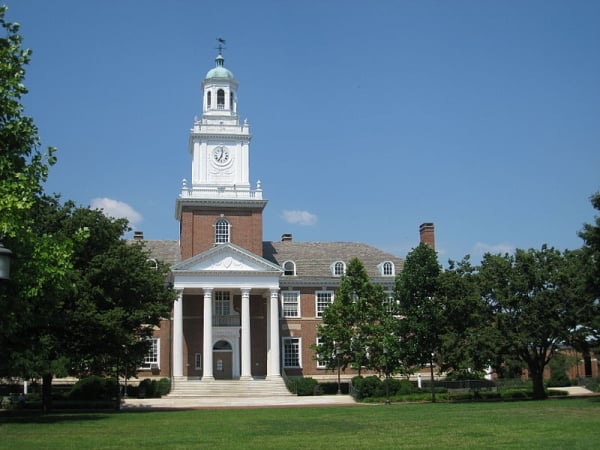
    Johns Hopkins University announced Thursday that it’s eliminating tuition, fees and living expenses for its Homewood campus undergraduates whose families make less than $100,000 a year; students whose families earn up to $200,000 will pay no tuition. It joins a wave of other institutions—especially private, selective ones—that have announced tuition guarantees.

    In a news release, the university said the change “means students from a majority of American families, including middle-class families earning above the national median household income of $87,730, can attend Hopkins at no expense.”

    Further, Hopkins said, “Most families with incomes up to $250,000 will continue to qualify for significant financial aid. Even those with annual incomes exceeding $250,000 may qualify, especially when there are multiple children in college at the same time.”

    Most of the university’s undergrads study on the Homewood campus, in North Baltimore. The release said the new aid levels “will go into effect for eligible current students in the spring 2026 semester and for new, incoming students next fall.”

    In a message to the university community, JHU president Ron Daniels said that since businessman and former New York mayor Michael Bloomberg donated $1.8 billion to the university in 2018, Hopkins’s share of Pell Grant–eligible students rose from 15.4 percent to 24.1 percent, the highest proportion in university history.

    “Our financial aid investment has continued to grow, inspired by Mayor Bloomberg’s transformative gift, with generous contributions by more than 1,200 donors who have given $240 million for financial aid at Hopkins over the last several years,” Daniels wrote. “We are in their collective debt.”

    Source link

  • Number of Chinese undergrads accepted to UK unis surges by 13%

    Number of Chinese undergrads accepted to UK unis surges by 13%

    According to UCAS data released today to coincide with A-level results day, the number of international students accepted to UK institutions has risen to 52,640 – up 2.9% on 2024 when this figure stood at 51,170.

    In just a year, the number of students from China accepted into university via the UCAS system went up a whopping 13% – with a total of 12,380 acceptances.

    Meanwhile, 2025 has proven to be a year of success for domestic students in the UK – with 28.3% of all grades being A or A* for students across England, Wales and Northern Ireland, according to the BBC.

    Commenting on the numbers, UCAS chief executive Jo Saxton pointed out the huge achievement of this year’s students, whose education was hit hard by the Covid-19 pandemic.

    “This year’s students were just thirteen when the pandemic hit, and their secondary schooling was turned upside down,” she said. “It’s great to see these applicants securing a university place in record numbers, seeking more education and investing in their futures. I am equally delighted to see how universities across the country have responded to their ambition.”

    Undergraduate international students have also found success this year despite some universities prioritising domestic students due to a focus on financial stability.

    According to a recent BBC article, Saxton explained that some UK universities were focussing on enrolling domestic undergraduates because of “uncertainty” around international students.

    She also pointed out that some institutions could accept a greater number of domestic students this year even if they did not meet the exact conditions of their offer because offering places to UK students, as opposed to international students, was more likely to result in financial stability for the institution.

    It’s great to see these applicants securing a university place in record numbers, seeking more education and investing in their futures
    Jo Saxton, UCAS

    It comes amid a turbulent time for the international education sector in the UK – with upcoming compliance changes forcing some universities to stop recruiting for certain courses or from some countries rather than risk falling foul of tightened BCA metrics.

    Many UK universities are currently facing financial difficulties, with around four in 10 universities currently at a deficit, according to a report by the Office for Students.

    Of the courses chosen by students, the most popular in the UK this year were Engineering and Technology, up 12.5% from last year at 30,020 acceptances, Mathematics with 9,220 acceptances and Law with 27,150.

    Source link