Tag: Union

  • CSU Trade Workers Union Votes to Strike Statewide

    CSU Trade Workers Union Votes to Strike Statewide

    David McNew/Getty Images

    Members of Teamsters Local 2010, a union representing 1,100 skilled trade employees at the California State University system, voted Monday to authorize a strike across all 22 campuses.

    CSU refused to pay contractually guaranteed five percent raises and salary step increases in July, and the union has filed several unfair labor practice complaints against the university system, union representatives said in a news release. Teamsters members are not striking yet, but are prepared to do so “if CSU continues to break the law, ignore their contract, and refuse to pay the raises that its skilled workforce is owed,” the release stated.

    “CSU is steering itself into a completely avoidable battle with the Teamsters Union. Our members will not stand by while the University commits unfair practices, misuses state funds, breaks its promises, and enriches executives at the expense of the workers who keep its campuses running,” Jason Rabinowitz, secretary-treasurer of Teamsters Local 2010, said in the release. “CSU’s greed, dishonesty and disrespect for its workforce are indefensible. This vote makes clear that we are ready to strike if CSU continues to rip us off while lining their own pockets.”

    In a statement, a spokesperson for the CSU Chancellor’s office said the vote is procedural and that a strike is not necessarily “imminent.”

    “The result of the strike authorization vote is disappointing, as the current labor agreement, negotiated and ratified through the collaborative collective bargaining process, contained clear contingency provisions language that tied certain salary increases to the receipt of new, unallocated, ongoing state funding. Those contingencies were not met, leading to the current reopener negotiations on salary terms,” the spokesperson said. “We believe the time and resources of all parties would be more productively devoted to the bargaining table, where meaningful progress can be made, rather than toward preparing for a strike.”

    Source link

  • Union to hold confidence vote for UTS VC – Campus Review

    Union to hold confidence vote for UTS VC – Campus Review

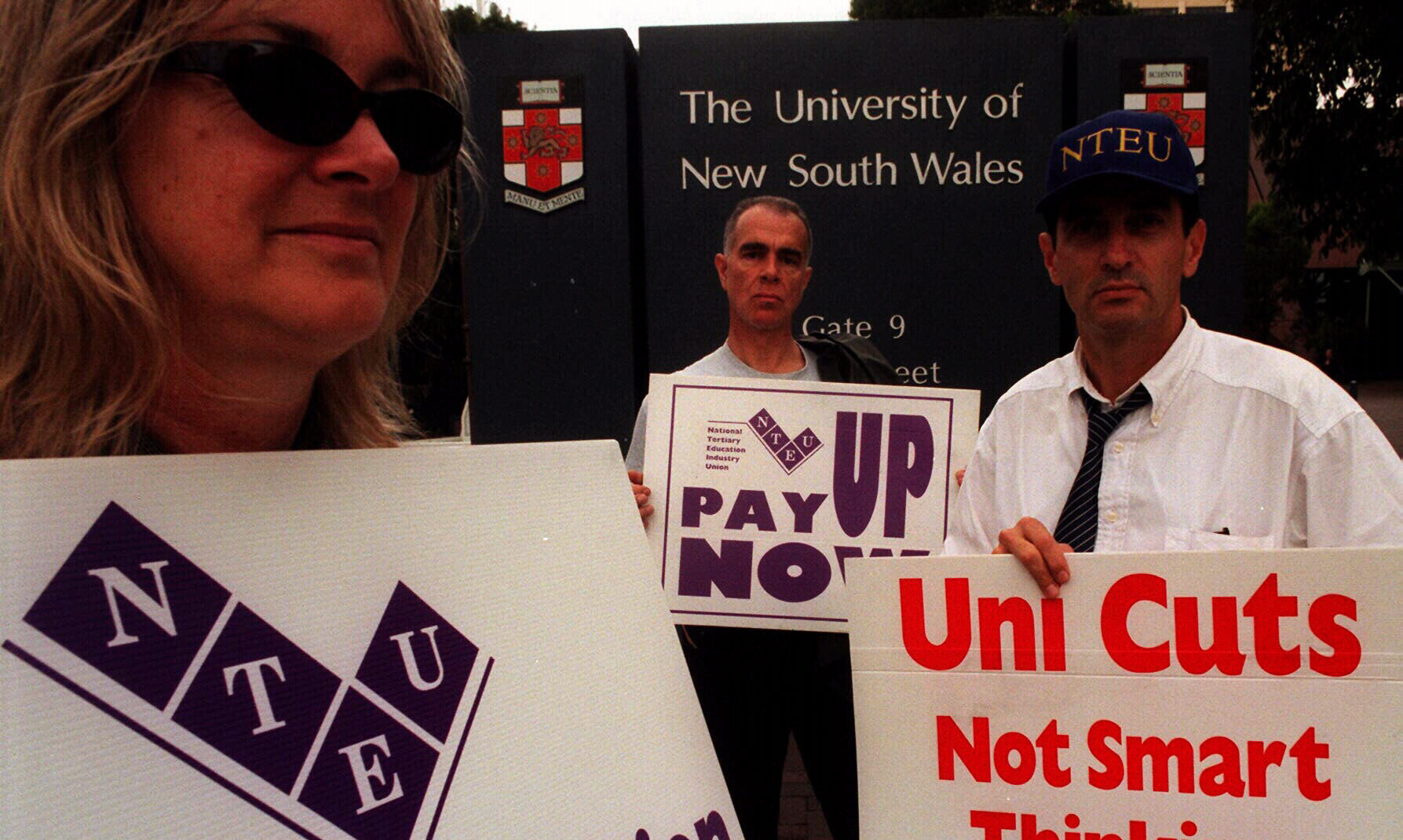
    The tertiary education union will this week ask staff whether they are confident in the leadership of University of Technology Sydney (UTS) vice-chancellor Andrew Parfitt.

    Please login below to view content or subscribe now.

    Membership Login

    Source link

  • Federal Union Sues Trump Admin Over Political OOO

    Federal Union Sues Trump Admin Over Political OOO

    J. David Ake/Getty Images

    The American Federation of Government Employees, a union representing federal workers, sued the Trump administration Friday, challenging the automated out-of-office email responses it placed on many employees’ email accounts when the government shut down. 

    The message, which was placed on the email accounts of all furloughed staff members without their consent, blamed Democrats in the Senate for causing the shutdown.

    AFGE’s members, who will be represented by the legal firms Democracy Forward and Public Citizen Litigation Group, argue in the complaint that the message Trump attached to their email accounts is “partisan political rhetoric.” Not only does it violate the Hatch Act, a federal law that requires nonappointed government staff to stay nonpartisan, but it also violates the First Amendment rights of the individual employees, they argue. 

    “The Trump-Vance administration is losing the blame game for the shutdown, so they’re using every tactic to try to fool the American people, including taking advantage of furloughed civil servants,” Skye Perryman, president of Democracy Forward, said in a news release. “Even for an administration that has repeatedly demonstrated a complete lack of respect for the Constitution and rule of law, this is beyond outrageous. The court must act immediately to stop this flagrant unlawfulness.”

    Source link

  • Union takes UTS to Fair Work over course cuts – Campus Review

    Union takes UTS to Fair Work over course cuts – Campus Review

    The tertiary education union will take the University of Technology Sydney (UTS) to the Fair Work Commission over the university’s decision to pause enrolments to 140 courses.

    Please login below to view content or subscribe now.

    Membership Login

    Source link

  • Union seeks delay in Education Department layoffs

    Union seeks delay in Education Department layoffs

    This audio is auto-generated. Please let us know if you have feedback.

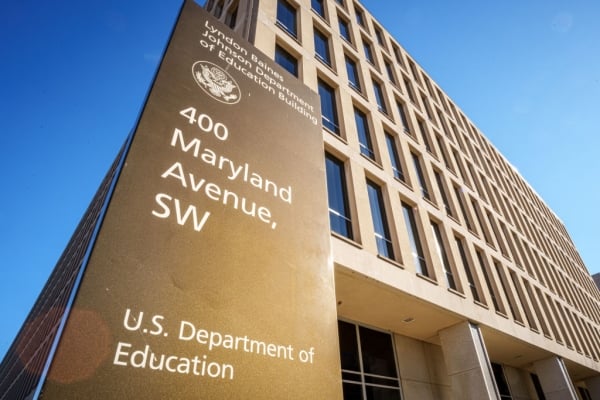
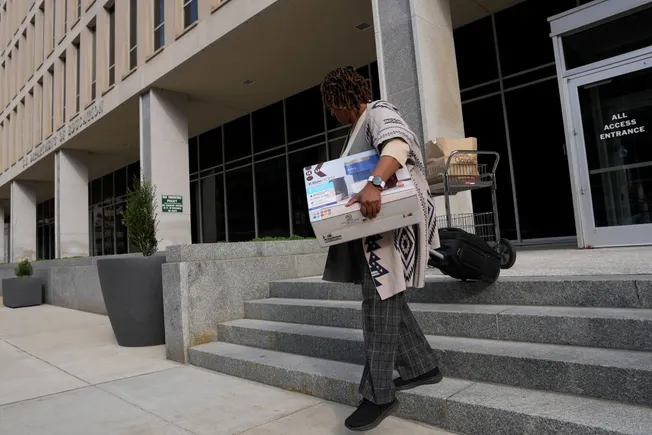
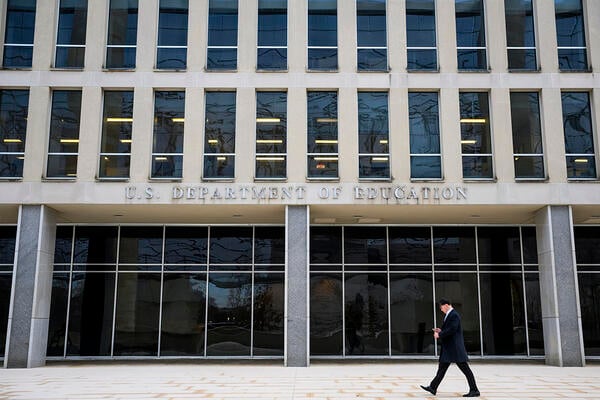
    U.S. Department of Education employees caught in the Trump administration’s reduction in force say they are being terminated against the terms of their bargaining agreement. The union representing them, American Federation of Government Employees Local 252, is seeking to delay the department’s termination date as a result. 

    It filed a grievance against the department on Wednesday, claiming the new Aug. 1 termination date only gives employees two weeks rather than the required 60-day notice. The department put in place the new termination date after a recent U.S. Supreme Court decision greenlighting the layoffs.

    On July 14, the Supreme Court allowed the department to move forward with a mass termination of over 1,000 employees originally announced in March. The department, in turn, notified employees that their new separation date was Aug. 1 rather than the previously announced date of June 9 — which got delayed due to the legal challenges. 

    The union claims, however, that the department must re-start its RIF process — which requires longer notice than two weeks and a briefing — since it walked back its March RIF due to blocks from the lower courts.

    During that time, the department sent RIF’d employees multiple emails over the course of a few months saying they were planning for the employees’ reentry into the office, the AFGE Local 252 grievance document says. “We are actively assessing how to reintegrate you back to the office in the most seamless way possible,” a June 6 email from the department told employees on administrative leave. 

    The Education Department, however, says its termination date set two weeks after the Supreme Court’s decision complies with the 60-day notice period required within the collective bargaining agreement. 

    “The CBA does not specify that the agency must provide 60 consecutive days’ notice,” said Madi Biedermann, deputy assistant secretary for communications, in an email to K-12 Dive. “ED is now providing affected employees with, in total, more than 60 days’ notice.” 

    The union’s grievance is the latest wrinkle in the Trump administration’s efforts to wind down the department, which have been met with resistance and criticism from former department employees, lawmakers and some public education advocates concerned about the agency’s effectiveness with only half of its staff remaining. 

    While these wrinkles unfold, the department has been spending $7 million in taxpayer dollars per month to pay workers on leave.

    That dollar amount is only for 833 of the 962 laid-off Education Department workers that the union represents and whom it was able to reach for its analysis. Thus, much more than $7 million is actually being spent per month to keep the more than 1,300 laid-off employees on payroll.

    Source link

  • Alliant Credit Union Foundation Grants $108K to Boost AI and Digital Programs at Ridgewood High School

    Alliant Credit Union Foundation Grants $108K to Boost AI and Digital Programs at Ridgewood High School

    The Alliant Credit Union Foundation has awarded a $108,000 grant to Digital Leaders Now, the nonprofit that powers the Digital Leaders Academy at Ridgewood Community High School District 234, to support the implementation of innovative digital opportunity programs.

    The initiative will begin rolling out in Spring 2025, with full program implementation for the 2025-2026 school year. The grant will help students gain critical digital skills, enhance career preparation opportunities at Ridgewood and beyond, and ensure teachers have the necessary resources to integrate technology into the classroom effectively.

    “The Alliant Credit Union Foundation is committed to fostering educational opportunities that prepare students for the future,” said Meredith Ritchie, President of The Alliant Credit Union Foundation. “By partnering with the Digital Leaders Academy, we are helping to bridge the digital divide and ensure that students in Ridgewood Community High School District 234 are equipped with the skills and knowledge they need to succeed in the evolving workforce.”

    The grant will support key initiatives, including:

    • Integration of AI Tools: Students will gain hands-on experience using AI and emerging technologies to enhance their learning and problem-solving skills.
    • Teacher Training & Development: Supporting professional development programs that empower educators with the tools and knowledge to incorporate digital learning strategies into their curriculum.
    • Digital Fluency Expansion: Enhancing student digital literacy and technology-based learning experiences to build a foundation for future careers.
    • Career Readiness Programs: Preparing students for high-demand technology roles by connecting them with industry experts, mentorship opportunities, and real-world applications of digital skills.

    Through this initiative, the Alliant Credit Union Foundation continues its mission of driving positive change in education by expanding access to technology and professional development resources.

    “The Digital Leaders Academy is a testament to the power of partnership and community. With the support of Alliant, we’re equipping students, teachers, and parents with the tools to thrive in the digital age, because when we invest in digital fluency, we unlock limitless potential,” said Caroline Sanchez Crozier, Founder of Digital Leaders Now, an Illinois-based nonprofit, and creator of Digital Leaders Academy.

    Ridgewood Community High School District 234 students will benefit from enhanced learning experiences, giving them a competitive edge in today’s digital economy.

    Kevin Hogan
    Latest posts by Kevin Hogan (see all)

    Source link

  • Did union fights for better conditions unintentionally casualise the workforce? – Campus Review

    Did union fights for better conditions unintentionally casualise the workforce? – Campus Review

    A new research paper has investigated the factors that have “legitimised” the creation and acceptance of a casual academic workforce in Australia.

    Please login below to view content or subscribe now.

    Membership Login

    Source link

  • Researchers, Higher Ed Union Fight NIH Grant Terminations

    Researchers, Higher Ed Union Fight NIH Grant Terminations

    Suzanne Kreiter/The Boston Globe/Getty Images

    Individual university researchers, a public health advocacy organization and a union representing more than 120,000 higher education workers are suing the National Institutes of Health after the agency terminated more than $2.4 billion in grants it claims support “non-scientific” projects that “no longer” effectuate agency priorities.

    “Plaintiffs and their members are facing the loss of jobs, staff, and income. Patients enrolled in NIH studies led by Plaintiffs face abrupt cancellations of treatment in which they have invested months of time with no explanation or plan for how to mitigate the harm,” according to a complaint of the lawsuit filed Wednesday afternoon. “As a result of Defendants’ Directives scientific advancement will be delayed, treatments will go undiscovered, human health will be compromised, and lives will be lost.”

    It’s the latest in a mounting series of legal challenges against the Trump administration’s blitz of executive actions aimed at rooting out so-called gender ideology; diversity, equity and inclusion initiatives; and alleged waste, fraud and abuse of taxpayer funds. Some of those lawsuits have already resulted in federal judges ordering injunctions and restoration of canceled grants.

    But this is one of the first to directly challenge the NIH’s grant cancellations; more legal challenges are expected.

    The lawsuit was filed by the American Public Health Association; the United Automobile, Aerospace and Agricultural Implement Workers and NIH-funded medical researchers from Harvard University; the Universities of Michigan and New Mexico; and the Center for Science in the Public Interest, which have all lost their grants. The American Civil Liberties Union is representing the plaintiffs.

    A NIH spokesperson said that the agency doesn’t comment on pending litigation.

    ‘Erosion of Scientific Freedom’

    The plaintiffs want the Massachusetts district court to declare the actions of the NIH “unlawful,” restore funding for at least the plaintiffs’ terminated grants and prevent the agency “from terminating any grants based on allegedly no longer effectuating agency priorities, or withholding review of applications.”

    The majority of the terminated grants focused on topics related to vaccine hesitancy, climate change, diversifying the biomedical research workforce, “countries of concern” (including China and South Africa), and the health of women, racial minorities and members of the LGBTQ+ community, according to the lawsuit.

    One of the plaintiffs, Brittany Charlton, who is the founding director of Harvard University’s LGBTQ Health Center of Excellence, has had five NIH grants terminated since President Donald Trump took office in January and launched a crusade to root out so-called gender ideology and diversity, equity and inclusion initiatives.

    Charlton said in an email to Inside Higher Ed that she’s lost nearly $6 million in NIH grants as a result of the agency’s directives, signifying “a potential end to my academic career.”

    But her motivation for signing on to the lawsuit extends beyond concern for her own livelihood.

    “This isn’t just a fight for my professional survival but a stand against the erosion of scientific freedom,” Charlton said. “[The grant cancellations set] a worrying precedent where scientific inquiry becomes vulnerable to political rhetoric. The concern here is not merely academic; it affects the very foundation of public health policy and the health of vulnerable communities.”

    Another plaintiff, Katie Edwards, a social work professor at the University of Michigan who researches violence prevention in minority communities, has had six NIH grants pulled this year. And a third plaintiff, Nicole Maphis, a first-generation college student and postdoctoral fellow at the University of New Mexico’s School of Medicine who researches the link between alcohol use and Alzheimer’s, is no longer in consideration for an NIH grant designed to help underrepresented researchers become faculty members.

    ‘Arbitrary and Capricious’

    The lawsuit argues that NIH didn’t have the authority to cancel those or any of the other grants the agency claims no longer effectuate agency priorities. That’s because the “no longer effectuates agency priorities” regulatory language the NIH has cited to justify its termination of particular grants won’t go into effect until October.

    Additionally, canceling the grants disregards “Congress’s express mandate that NIH fund research to address health equity and health disparities, include diverse populations in its studies, improve efforts to study the health of gender and sexual minorities, and enhance diversity in the bio-medical research profession,” according to the complaint.

    The lawsuit also says that the government violated numerous aspects of the Administrative Procedure Act—including a provision prohibiting agency action considered “arbitrary, capricious, an abuse of discretion, or otherwise not in accordance with law”—when it terminated the grants. It further asserts that the agency usurped Congress’s “exclusive power over federal spending” and violated the Fifth Amendment by offering “vague” justifications for terminating grants, including involvement with “transgender issues,” “DEI” or “amorphous equity objectives.”

    “Defendants have failed to develop any guidelines, definitions, or explanations to avoid arbitrary and capricious decision-making in determining the parameters of the agency’s prohibitions against research with some connection to DEI, gender, and other topics that fail Defendants’ ideological conformity screen,” the suit alleges.

    That leaves grantees “unsure, for example, which areas of study they can pursue, which populations they can focus on as study subjects, what they might argue to appeal grant terminations, and what the demographics of study participants must be” and “makes it impossible to determine how to reconfigure future research to stay within the bounds of NIH’s newest ‘priorities.’”


    Source link

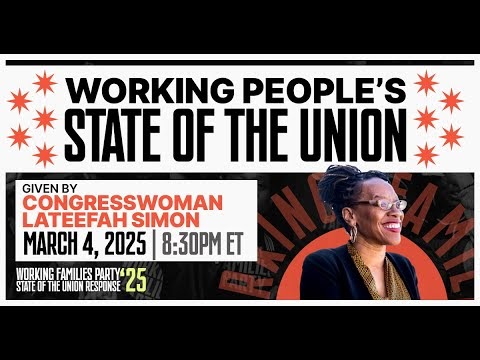
  • Working People’s State of the Union

    Working People’s State of the Union

    The official Working Families Party response to President Trump’s address to the joint session of Congress was delivered by Rep. Lateefah Simon (CA-12).

    Source link

  • Teachers’ union sues to block Trump admin’s DEI guidance

    Teachers’ union sues to block Trump admin’s DEI guidance

    Pete Kiehart/The Washington Post/Getty Images

    A coalition of educators and sociologists is challenging the Department of Education and its unprecedented Dear Colleague letter—which declared all race-conscious student programming illegal—in a lawsuit filed late Tuesday evening.

    The American Federation of Teachers and the American Sociological Association argue in the complaint, which was submitted to a Maryland federal court, that following the letter’s dictates “will do a disservice to students and ultimately the nation by weakening schools as portals to opportunity.”

    “This vague and clearly unconstitutional memo is a grave attack on students, our profession and knowledge itself … It would hamper efforts to extend access to education, and dash the promise of equal opportunity for all, a central tenet of the United States since its founding,” AFT president Randi Weingarten said in a statement. “It would upend campus life.”

    The expected legal challenge came just three days before a Feb. 28 compliance deadline. The four-page guidance document says that colleges and universities must rescind any race-based policies, activities and resources by the end of the day or risk investigation and the loss of federal funding.

    The department justifies its demands through a new interpretation of the Supreme Court’s 2023 ruling in Students for Fair Admissions v. Harvard, which banned the consideration of race in college admissions. Although the Supreme Court’s decision applied specifically to admissions, the Trump administration believes it extends to all race-conscious activities.

    On Friday, a judge from the same federal court in Maryland issued a temporary injunction in a separate lawsuit that blocked parts of President Trump’s antidiversity executive orders.

    But higher education legal experts say that the Dear Colleague letter and the executive orders, though similar, are independent levers, so the injunction doesn’t affect the department’s guidance. The Education Department has also said it is still moving forward with its interpretation of the law and the deadline stands.

    So now all eyes are on this most recent court case, as higher education leaders wait to see if the judge will issue a second injunction and block the guidance.

    “The Department of Education’s new policy, reflected in the February ‘Dear Colleague’ letter, seeks to undermine our nation’s educational institutions and is an unlawful attempt to impose this administration’s particular views,” said Skye Perryman, president of Democracy Forward, the legal group representing the plaintiffs. “We will continue to pursue every legal opportunity to oppose and stop harmful attacks on freedom of expression and on the values like inclusion, diversity and belonging that make us all and our nation stronger.”

    In the meantime, higher education advocacy groups are urging colleges and universities to stay calm and not overreact to the Dear Colleague letter.

    On Tuesday the American Council on Education sent a letter to Craig Trainor, the acting assistant secretary of civil rights, requesting that he “rescind the DCL” and work with higher education institutions to ensure a clearer understanding of the letter before setting a new compliance deadline.

    “Over the last two years, our colleges and universities have worked hard to assess and modify, as appropriate, policies and practices in light of the decision in the SFFA case and applicable civil rights laws,” ACE president Ted Mitchell wrote. “It is unreasonable for the department to require institutions to appropriately respond to this extremely broad reinterpretation of federal law in a mere two weeks and in the absence of necessary guidance.”

    Source link