

The Priorities Survey for Online Learners (PSOL) is the instrument in the Satisfaction-Priorities Survey family that best reflects the unique experiences of students in online two-year and four-year programs, including at the graduate level. The Priorities Survey for Online Learners provides the perspectives of online students aside external national benchmarks to inform decision-making for 150 institutions across the country.
It is critical to understand the full experience of online students who may have limited interactions with the institution, and the Priorities Survey for Online Learners allows leadership to know what matters to their online students in both their academic and non-academic interactions. Students respond on items related to instructional, enrollment, academic and enrollment services along with their general perceptions of the institution. This broad view provides direction to campus leaders to be able to best serve what may be a growing population for the institution. Online students indicate a level of importance and satisfaction with just over two dozen items.
The combination of satisfaction and importance scores identifies strengths (areas of high importance and high satisfaction) to be celebrated and challenges (areas of high importance and low satisfaction) to be improved. Along with the external national comparison data specific to online students published annually, institutions can compare their students’ perceptions internally over time with annual or every-other-year administrations. In addition, the provided reporting gives institutions the opportunity to review their data for demographic subpopulations to focus initiatives appropriately.
All students enrolled in online programs, undergraduate and graduate alike, can be invited to complete the Priorities Survey for Online Learners. Like the Student Satisfaction Inventory and the Adult Student Priorities Survey (the other survey instruments in the Satisfaction-Priorities family), the data gathered by the survey can support multiple initiatives on campus including to inform student success efforts, to provide the student voice for strategic planning, to document priorities for accreditation purposes, and to highlight positive messaging for recruitment activities. Student satisfaction has been positively linked with higher individual student retention and higher institutional graduation rates, getting right to the heart of higher education student success.
“Having an independent organization with a well-known brand provide the student perspective is hugely important to us. The data is valued by our Board of directors and by our accrediting organizations. It shows how we are performing when it comes to institutions that are similar to us,” said Ada Uche, director of assessment and institutional effectiveness at Colorado Technical University (CO) about their regular administration of the Priorities Survey for Online Learners.
Learn more about best practices for administering the Priorities Survey for Online Learners at your institution, which can be done any time during the academic year on the institutions’ timeline.
Ask for a complimentary consultation with our student success experts
What is your best approach to increasing student retention and completion? Our experts can help you identify roadblocks to student persistence and maximize student progression. Reach out to set up a time to talk.


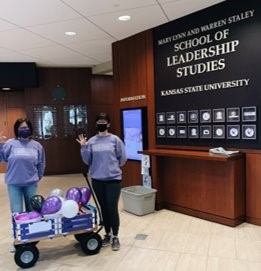 The Braggin’ Wagon was developed by K-State’s Staley School of Leadership, which has a strong partnership with HR. The decorative travelling wagon is filled with treats, candy, small toys and other fun items for the receiving team to enjoy. Once the wagon is delivered to a department, it is up to that department to restock the wagon and deliver it to another department in order to keep the recognition going.
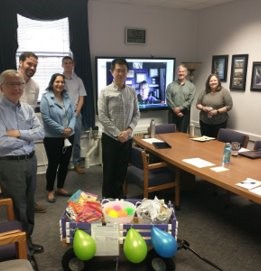 “When K-State resumed in-person work, it was important to put the emphasis on our employees and the solid work they were doing to make a difference. The Braggin’ Wagon was a way for departments to recognize other university partners who contributed to their work in a positive way,” says Shanna Legleiter, associate vice president of human capital services at K-State.