There’s a huge story going on right now in Australian higher education, one that hasn’t made many ripples outside the country yet, but really should have.
In January of 2026, two of the country’s major universities will be merging. The old research intensive University of Adelaide, one of the country’s so-called sandstone — meaning prestigious — universities, will be joining with the newer post Dawkins i.e., created in the early 1990s, University of South Australia, which began its life as the South Australian Institute of Technology.
The new institution, Adelaide University, will be a behemoth of a multiversity, among the five largest institutions in the country. I’m fairly certain I’m right in saying this is the largest merger ever of two anglophone universities. But there are a lot of questions about how this is gonna work out. How will the new institution manage to maintain two separate missions? One is a research institution and one is an access institution. How can two very distinct cultures be bridged? And also, how do you create a distinct curricular or pedagogical identity for a new institution?
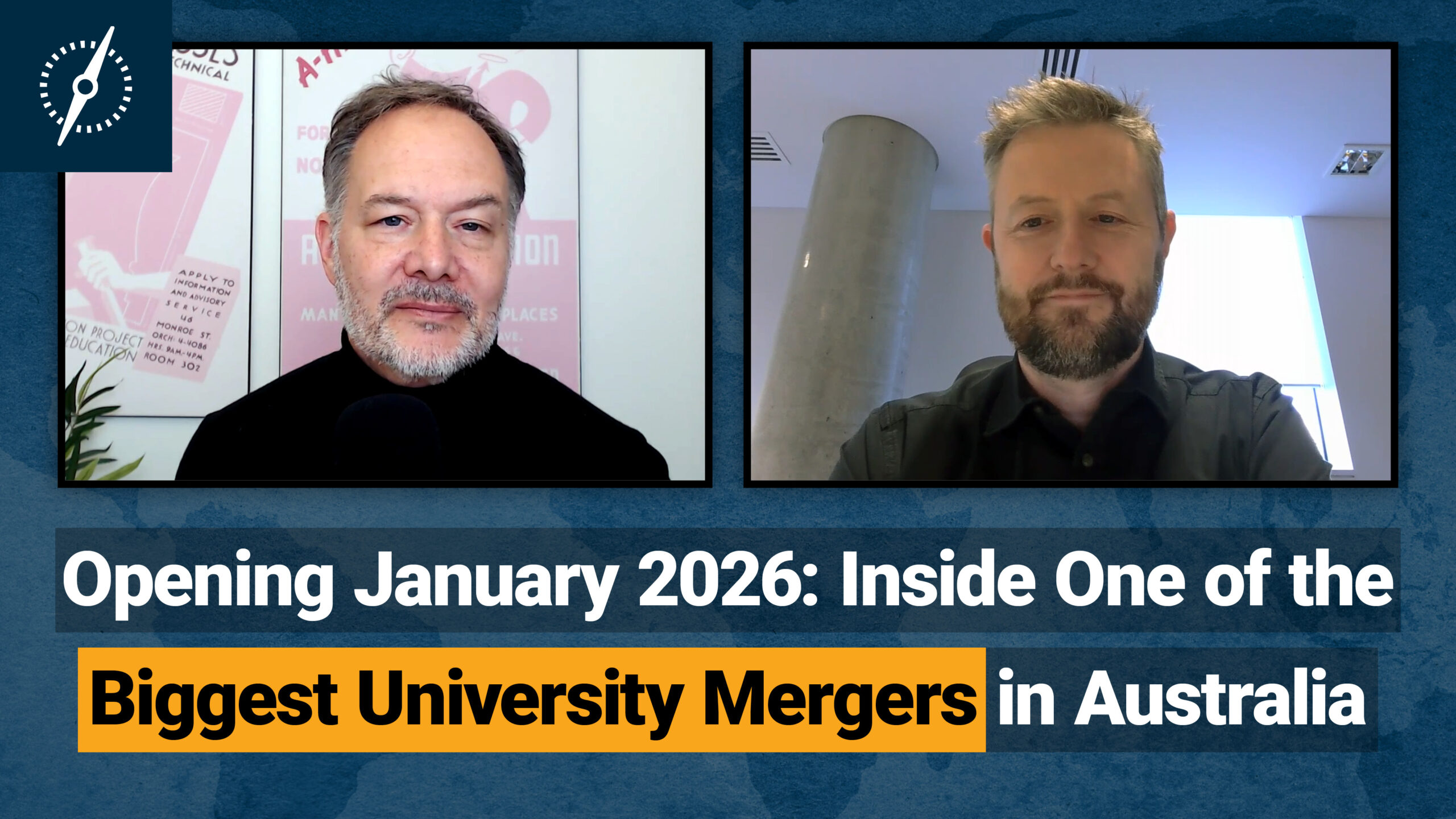
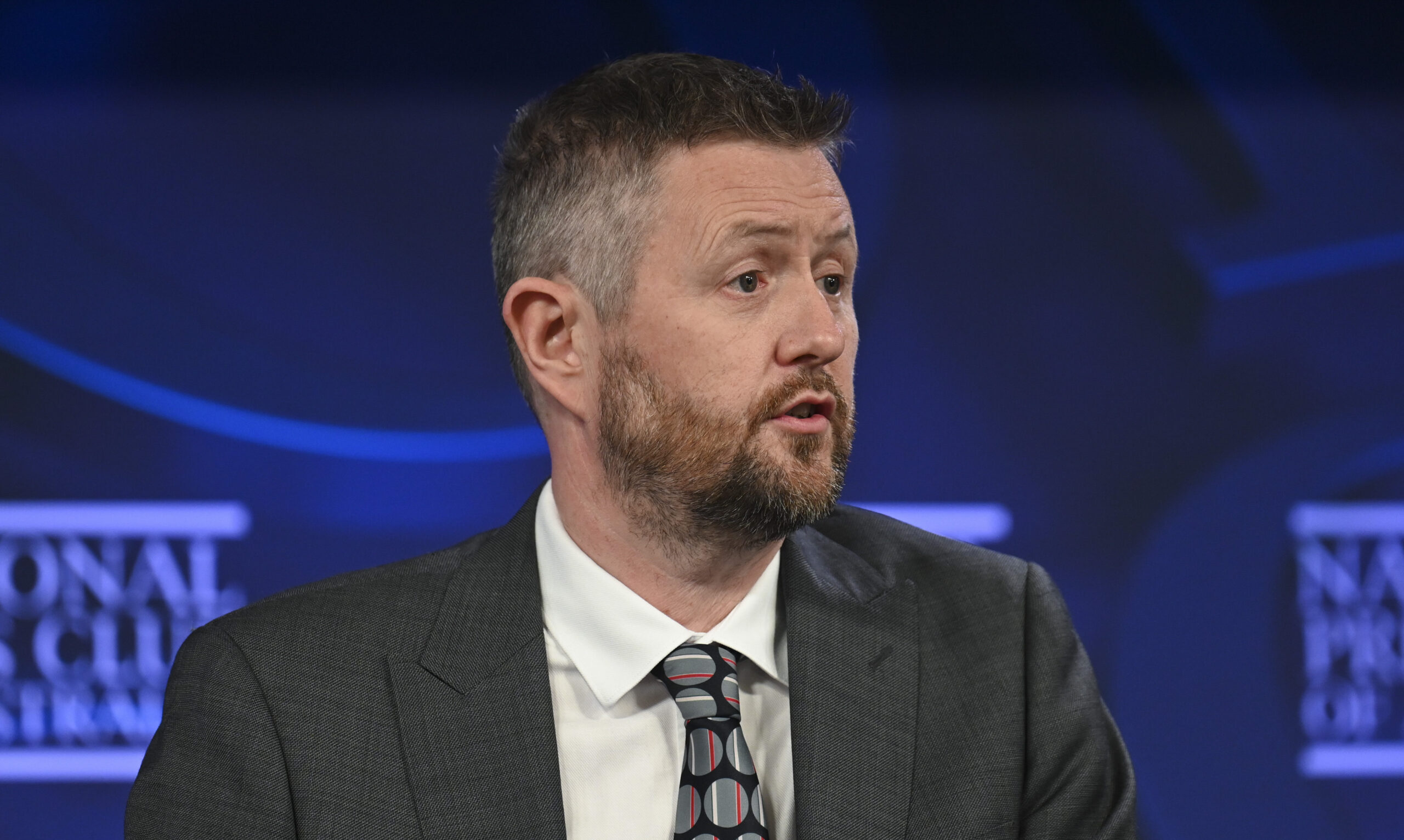
With me today is David Lloyd. He’s the Vice Chancellor of the University of South Australia, and until the merger happens, also the Deputy Vice Chancellor at the University of Adelaide, and as you probably guessed, he’s one of the architects of the merger.
In the course of this interview, we cover a range of issues such as what are the benefits of mergers? Why these two institutions? Why now? And how on earth do you possibly make a merger of this scale actually work? I can’t do any of this justice in an intro, so let’s just turn it over to David.
The World of Higher Education Podcast
Episode 3.33 | Opening January 2026: Inside One of the Biggest University Mergers in Australia
Transcript
Alex Usher (AU): David, why merge these two institutions—and why now? What made this the right moment to bring these two very different institutions together?
David Lloyd (DL): I guess sometimes we joke and say there’s never going to be a better time. I’m not sure there ever is a perfect time. In this case, it’s not our first attempt. Ever since UniSA was established in 1991, people have questioned why another university was needed in South Australia.
Right now, though, the political landscape is aligned in support of this. There’s institutional ambition on both sides of the ledger—coming from different motivations, but ultimately converging. You’ve got leaders who’ve known each other for a long time, strong financial positions in both institutions, and a shared history—we came very close before. We nearly merged in 2012. We nearly did it again in 2018. So in some ways, it’s like—third time lucky.
AU: What do you gain together that you don’t already have apart? What’s the advantage here?
DL: One of the biggest advantages is scale. Australian universities are large organizations. UniSA has about 40,000 students and Adelaide has about 30,000. So combined, you’re looking at 70,000 students—which makes it a $2.1 billion enterprise. It’s a big operation. Now, big isn’t automatically better, but it does mean you’re more financially robust and resilient.
At that scale, the student mix is also important—about 75% domestic and 25% international on day one. That gives you a really strong foundation, making the institution more shockproof in the face of events like the pandemic or future geopolitical disruptions. You get a very robust organization.
And then, if you think about how you can leverage the cash flow of a $2.1 billion enterprise into applications and resources—it throws off a lot more than each institution could alone. That gives you a real capacity for investment.
AU: You said this isn’t your first go at this, right? That this is actually at least the second time, that I know of, that this has been considered. So take us back. Presumably, at some point after 1991, as UniSA grew from being an old technical institution into what it is now, there would have been various moments when people said, “Hey, there are gains to be had from a merger.” Over this long period—20 or 30 years—what were the big turning points? When did the light go off and people say, “Aha, we should definitely do this”?
DL: I think it goes back to the origins of the institution in the 1990s. When the policy came through under the Hawke Labor government—John Dawkins was the Minister for Education at the time—the creation of new institutions was happening across the country.
In that formative period, you had faculties and activities from what had been an Institute of Technology and a College of Advanced Education. There was a bit of a shop-around approach—people were saying, “Well, these parts could go to University X, or those parts could go to University Y, or we could put them together and create something new.” And in South Australia, that led to the creation of a new university.
So you went from a town with two institutions—the old, established sandstone University of Adelaide, and Flinders University, a 1950s construct—to suddenly having this new kid on the block in 1991. And it quickly became a real challenger to the other two. It grabbed a large share of the domestic market and drove the participation agenda. The national driver at the time was to increase tertiary attainment, and suddenly, a lot of people who’d never gone to university had access.
Then you fast forward to 2012. There was a desire at that time—between the University of South Australia and the University of Adelaide—to pursue a merger. It didn’t go through, for all sorts of reasons. I think mostly small, local considerations. Peter Høj—who’s now my co–Vice Chancellor at the new Adelaide University—was the Vice Chancellor of UniSA back then. He left to run the University of Queensland.
And I was recruited to lead UniSA after that particular push toward merger had fizzled. So I came into an institution that had thought about merging, had moved somewhat in that direction, but ultimately hadn’t done it.
Then in 2018, the same kinds of conversations came up again. These things tend to resurface when there’s a leadership change. When a Vice Chancellor leaves, people say, “Well, we could hire a new one—or we could merge the universities.” It’s a very simple framing, but it does come up.
In 2018, that cycle happened again. We went quite far down the road exploring a merger. There was a public process. But in the end, UniSA withdrew. We said no, and we said no because of the business case. What was being articulated at that time didn’t look like something that would take the goals and ambitions of the institution to where we believed it needed to be—especially not given the overhead that would come with creating a new university.
So things settled down again—until we got to the conditions we talked about earlier, the ones that make this moment feel like the right one.
AU: Let me just ask you—based on what you’ve described, why, from the University of South Australia’s perspective, is Adelaide the right merger partner? Why not Flinders?
DL: Yeah, yeah, that’s a really good point. I can tell you that in the various machinations over the years—and I’ve been here now for 13 years—there have definitely been times when I thought, you could actually end up with quite a different landscape in South Australia. UniSA and Flinders could have come together to create a kind of younger, more modern university that would have competed in the domestic market against the older, more established University of Adelaide. That would’ve created a local differentiator.
But the combination that actually came about—and the reason we are where we are today—has a lot to do with a key political shift. In 2021, while still in opposition, the now state government released a policy position saying that, if elected, they would establish a merger commission to examine the merits of a combination—with a view to making it happen. It was a very clear and determinative policy.
They believed a merger had been a missed opportunity in the past and were committed to a process that would determine the next steps. That put universities in an interesting position. You had the prospect of an external body telling you, “You have to merge—and here’s who you’re going to merge with.” That creates a real risk of losing institutional autonomy and control.
What stood out in that policy position, though, was the stated ambition to create a university that could rank sustainably in the global top 100. If you look at different combinations, a UniSA–Flinders merger wouldn’t get you there—at least not without a significant uplift in investment. But a UniSA–University of Adelaide merger could. And so that becomes one of the key factors shaping the path we chose.
AU: There’s one other country that’s really moved in this direction, specifically with the goal of getting institutions into the global top 100, and that’s France. Right? You’ve seen a lot of that in places like Lyon and Paris. Did you spend much time looking at the dos and don’ts from the French experience—or from any other international mergers?
DL: We did spend some time on that. There’s quite a bit of jurisdictional variability when it comes to amalgamating institutions. The example we really studied, with a kind of weather eye on how to do this properly, was the creation of the University of Manchester.
But that was quite a while ago now. When we looked at the French experience, what stood out was that their approach often seemed to involve putting a veneer of amalgamation over existing institutions and then dropping a kind of cash bundle on top to make the veneer hold together. So it’s less the creation of a single institution and more the creation of an amalgamated system. From our perspective, this is a non-trivial exercise. We didn’t want to just have an umbrella that said, “This is a merged university.” We wanted to create a new university.
And from UniSA’s side, the conditions for entering the process were very clear: we would create a new institution—with its own mission, its own purpose—its own values, and all of those things. That’s not really what the French model does. But one interesting lesson from the French approach was that if you apply that veneer—and if you’re something like Paris-Saclay—you can be considered a young university again, which is an intriguing outcome. The Sorbonne, for example, is now viewed as a young university again.
That was an interesting insight into how these things are perceived. So for us, the goal was to do this really well—to create an integrated, new institution. That way, we’d have the benefits of a young university, with all the pedigree and legacy behind us too.
AU: David, I assume—though I’m not sure exactly what process you used—there was some kind of letter of intent or memorandum of understanding that said, “We’re going to do this, and we’re serious.” How does the planning process unfold from there? Once you’ve done the initial feasibility and assured each other you’re acting in good faith, how do you move through the bottlenecks of institutional governance, stakeholder engagement, and all those kinds of things? How do you get to the finish line?
DL: Um, great tenacity—I think that’s key. Peter and I started this as an informal conversation back in 2021, and we’re planning to open the doors of the new university on the first Monday of 2026—January 5th. So it’s a long road from informal talks to delivering a functional, operational, competitive institution.
On the plus side, we had very strong intent from the state government to enable this. In our system, it’s the state government that legislates the creation of universities. But then you also have to negotiate with the federal government to be recognized as an Australian university—
AU: And funded.
DL: Exactly. So, at the local level, we could establish a corporate body, but we still needed legislation to pass through the house. It was much more complex than just signing an MOU.
We actually had to draft legislation and, mechanistically, we created a new corporate entity—a new university—that sits alongside the two existing ones. So when I’m co–Vice Chancellor of the new Adelaide University, I’m still the Vice Chancellor of the University of South Australia. These are independent and autonomous institutions—one of which is actively creating the other, even while the original continues to exist legislatively. It’s quite an unusual construct.
On the federal side, this goes back to why now. The current federal government—a Labor government—has a strong agenda around widening participation. When we approached them and said, “We’re going to have the largest population of domestic Australian students of any institution in the country,” that positioned us as a sovereign educator. We’re delivering an equity and participation agenda at a scale no other Australian university can match. That naturally leads to a conversation about: how do they help us set it up?
AU: As I understand it, you’ve got some kind of transition council. I’m not sure if that’s a joint council for both institutions, or if each has its own. How does that work? Who’s on that council making the nitty-gritty decisions? And how do you make sure everything stays on track?
DL: That goes back to the legislation. Adelaide University was formally established in legislation in March 2024. That legislation created a council—capital “C”—with the word “transition” in front of it, which gives you a sense of its purpose.
The composition of that council was agreed upon by the two institutions, determining how to populate the board of this new university from the existing boards of UniSA and the University of Adelaide. It was set up as a 50/50 split between the two, with UniSA having the right to appoint the chancellor of the new university. That was one of the key elements in the background negotiations—like why it’s called Adelaide University and not the University of South Australia.
In fact, the act establishing the new university is based on the University of South Australia Act, and UniSA retained the right to appoint the transition chancellor.
But functionally, this council operates as a fully independent university council, completely autonomous from the two existing institutions. Everyone who joined the council had to step off their former boards and now acts solely in the interest of the new institution, as required by law.
What the council does is provide a governance framework for the executive to work within. It approves the strategy, but it’s the executive team—originally Peter and myself, along with a team drawn from both universities—that brings forward the decisions.
Now, we’ve started appointing deputy vice chancellors who are employees of the new Adelaide University. We’ve brought forward a strategy that actually originated in the business case—a white paper—that both universities had independently agreed was in their best interests.
If you go back to 2022, we were asking: What will we create? What should it look like? Why are we doing this? How much will it cost? We built a strong business case and rationale. That was then translated into a strategy for the new institution—one that doesn’t just cover the start in 2024, but runs all the way through to 2030. That’s when we aim to have a fully established, steady-state university of scale, delivering everything we set out to achieve: a purposeful, excellent institution.
AU: One thing that’s really struck me about this process—watching it from 8,000 miles away—is how remarkably smooth it seems to have been. Mergers often stir up a lot of turbulence, especially with alumni communities. And while I don’t know the geography of Adelaide very well, I imagine there can be tensions if one part of town gains certain things and another part doesn’t.
Then there’s the fact that your two institutions have different origins, stories, and areas of specialization—but still quite a bit of overlap in terms of departments and programs. That’s usually where the real head-butting happens: getting people to play nicely together. But you seem to have managed that really well. What’s the secret to a smooth merger?
DL: Well, part of it is that this is our third attempt—so maybe it’s third time lucky. As I said earlier, this isn’t our first rodeo. This has been considered before, so there was a certain inevitability in the way we presented it this time. There was a clear policy position, enabling legislation, and strong support from the government behind us.
But that only takes you so far. You can’t just rely on top-down directives. People can still dig in their heels. If the message had been, “We’re doing this because we were told to,” we could’ve faced a lot of turbulence.
Instead, what we had were two universities that went through their own internal processes—through their academic boards, their senates—and independently concluded that creating this new institution was in their best interest, and in the best interest of the state. So both came to the table willingly, but from different perspectives.
Each institution had a view of what it would give up—and what it would become. This is really a baton pass from both organizations to something new.
And when we looked at the mechanics of creating that new institution, we didn’t take a “lift and shift” approach. We didn’t just bundle together the activities of both universities under a single umbrella. We committed to building a new structure. We committed to delivering a new curriculum. We agreed to design everything—program content included—through a forward-looking Adelaide University lens, rather than from the perspective of UniSA’s past or Adelaide’s past.
And what was remarkable—and maybe a bit fortuitous—was the way our people responded. Let’s say we brought together two marketing faculties. We told them, “We want you to design a new curriculum that takes the best of both.” And instead of any sense of loss or resistance, what we got was strong academic alignment in shaping that new product.
We did that across the board—wherever we had overlapping programs: two business degrees, two law degrees, two science degrees. The faculty teams who had once been institutional competitors came together and asked, “If we start with a blank piece of paper—not with the past—what would the ideal program look like?”
And that approach has been incredibly unifying. Thousands of academics have gone through that process already, and many more will continue to do so between now and 2030.
AU: You’re talking about new programs here. What’s striking, again from a distance, is the early commitment to pedagogy—a move away from the traditional lecture system. As I understand it, the institution committed to moving away from in-person lectures. Have I got that right? Is that the plan?
DL: I love having these conversations—especially when the 8,000-kilometer view is, “You guys aren’t going to have lectures anymore.”
AU: That’s why we’re having this conversation, David!
DL: Exactly. And we had a similar conversation in Beijing when we were on stage launching the new brand. Journalists there were asking the same thing. But no, we are not getting rid of lectures.
What we are getting rid of is the idea that students just sit in a room while someone talks at them for an hour, and then leave—as if knowledge has magically transferred from the person at the podium to the students in the seats. Instead, we’re aiming for much richer, more engaging classroom experiences.
These will still be face-to-face, but students will come prepared. The foundational content—the pre-reading, the prerequisite material—will be delivered online. We’ll expect students to engage with that before attending the in-person component, whether it’s a workshop, tutorial, or some other interactive format.
And that core online content is being designed so it can also stand alone. If you’re not physically in South Australia, you’ll still be able to engage with the material from anywhere—across the country or internationally.
AU: So, it’s flipped classrooms at scale?
DL: Yes. Exactly.
AU: That’s a significant pedagogical shift. It’s not something you’d typically get from individual departmental committees. Was there wide buy-in for that? Because even when you frame it as flipped classrooms rather than online classes, it still feels like a big change for academics across a wide range of disciplines.
DL: Yeah, and I think in a post-COVID era, that shift is more understandable. The pandemic showed us all that you can go online—and do it either really well or really poorly. But if you do it well, students can have a great experience.
We’ve anchored all of our structural decisions through the lens of student experience and student success. And the evidence we have shows that, when done right, students actually report better experiences with these kinds of blended or flipped models than they do with traditional, lecture-heavy formats.
If you go back to one of UniSA’s strengths: in 2018, we created a division called UniSA Online. Higher education bodies now say we’re number one in Australia for online education—and top ten globally. That means we already had a strong engine for content creation and pedagogical design.
Now we’re layering that into an institution with the generational pedigree and academic reputation that the University of Adelaide brings. So together, the new Adelaide University will have a really compelling mix.
And to be clear—it’s not a wholesale replacement of everything that came before. The academic content is still owned by the faculty. What’s changed is how that content is curated and presented in the online environment. That curation is handled institutionally, but the ownership remains firmly with the academics.
AU: We’re a little more than seven months away from opening day. I have two questions: what are you most looking forward to in all of this? And what do you think the global implications are—what lessons might institutions outside Australia take from this?
DL: Yeah. The first part—this has been nearly a five-year journey for me, getting this institution to the point of opening. On a personal level, my daughter is just finishing a diploma with the University of South Australia. She’s about to start her degree in the next few weeks, entering mid-year. So she’ll begin at UniSA just as it officially ends—and she’ll graduate from Adelaide University in, hopefully, three years’ time.
So I have a very real hope that we’ve managed to build an institution that will empower her, her peers, our colleagues, and future learners—to be successful, to find meaningful employment, and to have a great experience along the way. That’s not the reason we did all this, of course, but when I look at the outcomes we aimed for, I want to see that we’ve hit the metrics we set.
It’s a very ambitious strategy. But we’ve had the financial resources and a long runway to plan—something only a whole-of-institution change like this could make possible.
Personally, I’m really looking forward to 2030. That’s when I want to look back and assess whether we’ve achieved what we set out to do. Not necessarily from inside the organization—Peter and I won’t be the Vice Chancellors next year. We’ve made a conscious decision to hand over to a new leader who will carry this strategy forward.
But I want to see how they reach those milestones based on the breadcrumbs and trail we’ve laid down. And in the next few months, we’ll see the inaugural rankings for this institution as we move into its first year of operation. I’m quietly confident we’ll meet our targets.
And I’ll admit—part of me is looking forward to proving the doubters wrong. The ones who said, “You can’t do this. You’ll go backwards. It’s dilution.” I want them to be left eating humble pie. Glen Davis—the former Vice Chancellor of the University of Melbourne, now working in the Prime Minister’s department—once said to me, “Good luck as you attempt the impossible.” And if we pull this off, that’s where the real satisfaction will come from.
AU: And from an international perspective—what should others learn from this?
DL: I think what we’re demonstrating is that there are two ways to approach a merger. You can put up an umbrella, apply a veneer, and say, “Here’s a system.” Or you can take a planned, deliberate, mindful approach—what I wouldn’t call a leap of faith, but an investment in doing it properly.
And that means proper integration. Proper consideration of what it means to deliver a new organization—not just on paper, but in culture, structure, and purpose. If you do that, you can create something that really is more than the sum of its parts.
I think we’re showing what’s possible.
AU: DL, thank you so much for being with us today.
DL: Pleasure. Thanks, Alex.
AU: And it just remains for me to thank our excellent producers, Tiffany MacLennan and Sam Pufek, and to thank you—our viewers, listeners, and readers—for joining us. If you have any questions or comments about today’s episode, or suggestions for future ones, don’t hesitate to get in touch at [email protected]. Run—don’t walk—to our YouTube page and subscribe. That way, you’ll never miss an episode of The World of Higher Education.
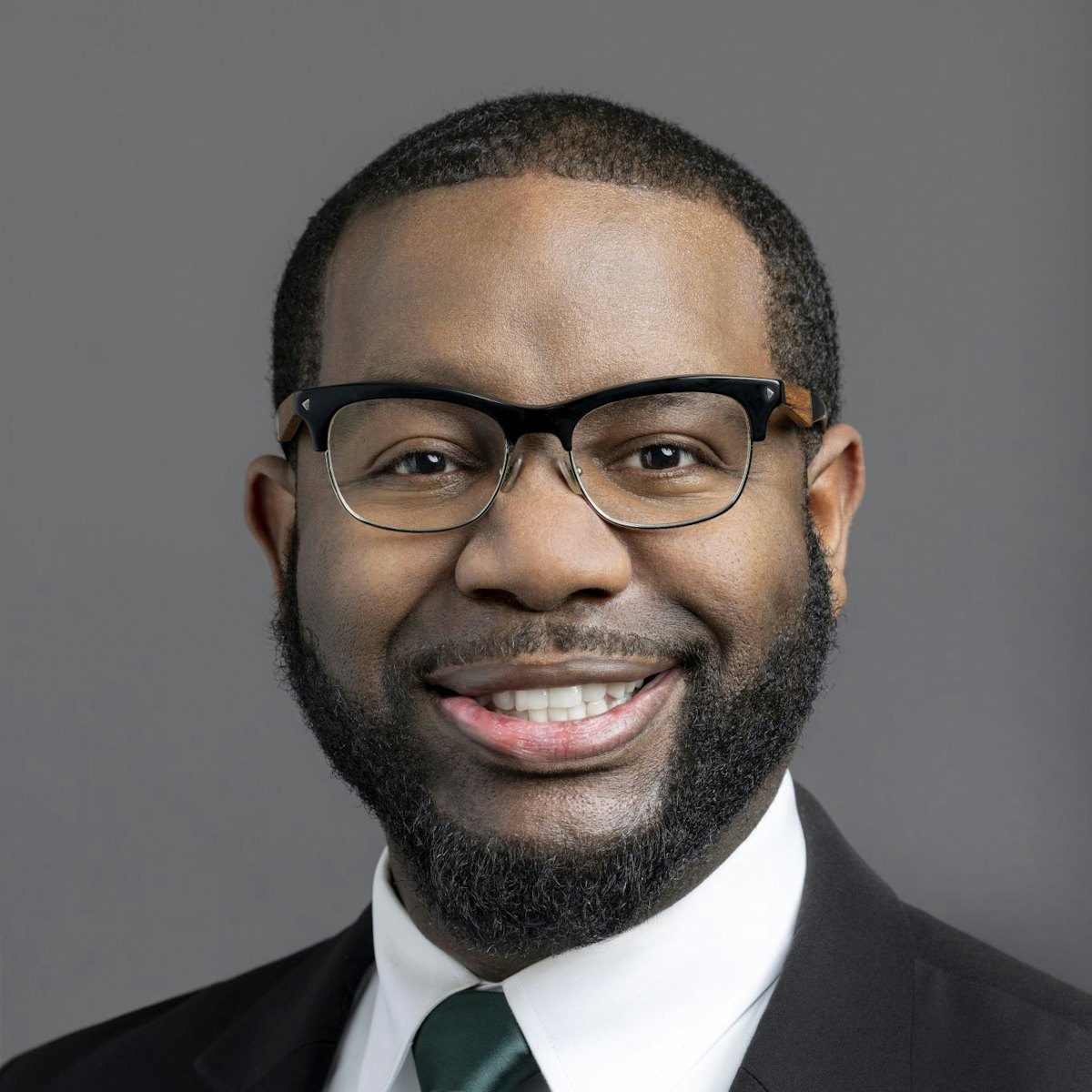
Join us next week, when our guest will once again be Brendan Cantwell from Michigan State University. You may remember him from last fall’s episode, when he suggested—based on a close reading of Project 2025—that a second Trump administration might shift from a culture war posture to one of active sabotage and destruction of the higher education sector. We’ll see whether he can resist saying, “I told you so.” Bye for now.
*This podcast transcript was generated using an AI transcription service with limited editing. Please forgive any errors made through this service. Please note, the views and opinions expressed in each episode are those of the individual contributors, and do not necessarily reflect those of the podcast host and team, or our sponsors.
This episode is sponsored by KnowMeQ. ArchieCPL is the first AI-enabled tool that massively streamlines credit for prior learning evaluation. Toronto based KnowMeQ makes ethical AI tools that boost and bottom line, achieving new efficiencies in higher ed and workforce upskilling.