Tag: University

  • Columbia University vows to remove any future encampments

    Columbia University vows to remove any future encampments

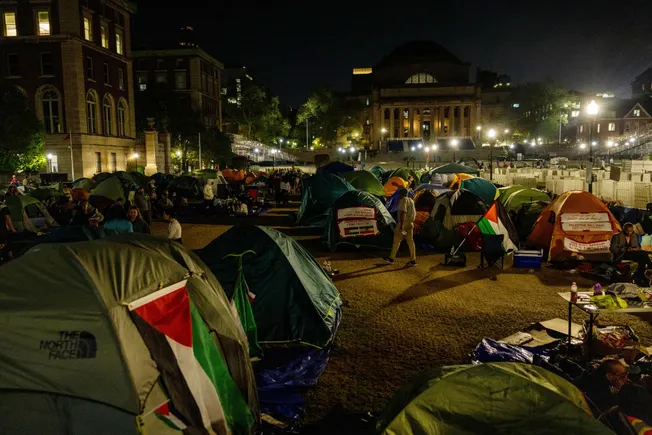
    Columbia University officials said Wednesday they would immediately remove any future encampments on campus and threatened demonstrators with arrest amid reports that students were planning another wave of pro-Palestinian protests. 

    We have been made aware of possible plans to establish encampments on Columbia’s campuses,” the New York institution said in a public safety notice. “We want to clearly communicate that camping and encampments on Columbia’s campuses are prohibited by University Policy.”

    More than 100 people wearing masks to hide their identities met Tuesday to discuss establishing multiple encampments at Columbia this week, according to an NBC News report based on anonymous sources and a recording of the meeting. 

    At the time, the protesters intended to begin demonstrating at Columbia’s main campus in the Morningside Heights neighborhood on Thursday, followed by the Ivy League institution’s Manhattanville location on Friday, NBC reported Wednesday. 

    The planned demonstrations would come about a year after Columbia students first erected an encampment to protest the Israel-Hamas war and call on the university to divest from companies with links to Israel. The encampment at Columbia kicked off similar demonstrations across the nation’s colleges, stoking anger from conservative lawmakers and leading to hundreds of student arrests. 

    Since then, the university said it has hired more public safety officers, increased campus patrols and restricted access to its main campus.

    Still, President Donald Trump threatened to pull federal funding from colleges that don’t crack down on “illegal protests” in a March social media post that drew backlash from free speech and civil rights advocates.

    The Trump administration made good on this threat when it pulled $400 million in federal contracts and grants from Columbia in March, claiming it was yanking the funding over concerns the university hasn’t done enough to protect Jewish students from harassment. The administration has since pulled large swaths of fundingor threatened to — from other well-known colleges over similar allegations.

    A growing number of lawmakers, free speech experts and academics are accusing Trump of weaponizing antisemitism to target colleges. On Thursday, five Jewish Democratic senators lambasted the president for using “what is a real crisis as a pretext to attack people and institutions who do not agree with you.”

    “By doing so, he not only fails to address the threat of antisemitism but also exploits it to delegitimize higher education, while often ignoring or downplaying the rise of antisemitism within his own party,” they said in a statement.

    Last month, Columbia ceded to several demands from the Trump administration — including revamping its protest policies — with the hopes of retaining access to its federal funding

    U.S. Education Secretary Linda McMahon, along with other federal officials, has praised the university’s compliance. But the Trump administration has yet to publicly reinstate its funding and is reportedly pursuing a consent decree against Columbia, which would give a federal judge oversight of the institution’s compliance with the administration’s demands. 

    The administration is facing at least one lawsuit over allegations that it is overstepping its authority at Columbia.

    If protesters establish a new encampment at Columbia, the university vowed to immediately remove tents and other structures, restrict access to the campus and instruct demonstrators to leave, according to Wednesday’s announcement. If they don’t leave, they could face “removal from campus and possible arrest,” Columbia’s notice said. 

    Source link

  • Limestone University may have a ‘lifeline’ to avert closure

    Limestone University may have a ‘lifeline’ to avert closure

    This audio is auto-generated. Please let us know if you have feedback.

    Dive Brief:

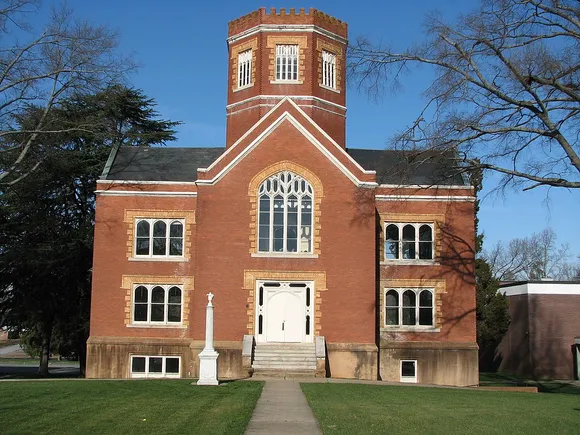
    • Limestone University may have the “financial lifeline” it needs to avoid shutting down and maintain its in-person courses and operations, its board of trustees said Tuesday. The announcement did not disclose details on the funding source. 
    • The private Christian institution, in South Carolina, signaled last week it could be forced to close or turn to online-only operations without an immediate cash injection. The board said it has tabled those discussions for now and plans to reconvene no later than April 29.
    • However, the 179-year-old university will proceed as though it will be online-only after the semester ends, Limestone President Nathan Copeland said in a statement. “I regret the uncertainty of the situation, but we must be exceptionally cautious,” he added.

    Dive Insight:

     In a statement, board Chair Randall Richardson was frank about just how deep Limestone’s financial troubles run. 

    Last week, we were at the brink of a possible closure or transition to online-only classes,” Richardson said. “Now, we are pausing that discussion so we can wait on more information about a potential financial lifeline.”

    Officials offered no details on the financing, saying only that “a possible funding source has surfaced” that could mitigate the university’s current crisis. A university spokesperson declined Wednesday to share more information about the funding source.

    Previously, officials said the university would need a $6 million emergency fund to stave off closure and keep its physical campus and activities running. 

    In the university’s announcement Tuesday, it said the proposed cash infusion would “stabilize operations and give the university the opportunity to pursue long-term solutions that preserve its on-campus identity.”

    Richardson said the board was “cautiously optimistic about the future of Limestone,” but added a hedge: “We want to emphasize, this is just a possibility at the current time.”

    Limestone attributed its financial woes in part to falling enrollment. Between 2018 and 2023, its fall headcount dropped 27% to 1,782 students, per federal data. The university said Tuesday that enrollment now stands at about 1,600 students.

    High costs have also added pressure. The university has faced persistent budget deficits — $9.2 million in fiscal 2024, following an $11.4 million gap in 2023, according to its latest financials. 

    Limestone has tapped its endowment to fund its operations amid the financial strain. Between fiscal years 2023 and 2024, Limestone’s net assets declined by more than $12 million, to $61 million, as the university ramped spending from its endowment.

    In its latest financial statement, the university’s auditors issued a “going concern” warning, indicating they found “substantial doubt” about Limestone’s ability to continue operating over the next year.

    For now, Limestone’s uncertain fate remains a predicament for officials, employees and students alike as they try to plan for upcoming semesters — a challenge which the university’s leaders acknowledged. 

    We will update everyone as soon as we know more,” Richardson said. “Please be patient and continue to pray for a viable solution to save this historic university.” 

    Source link

  • FIRE and ACLU of TX: University of Texas must drop unconstitutional drag ban

    FIRE and ACLU of TX: University of Texas must drop unconstitutional drag ban

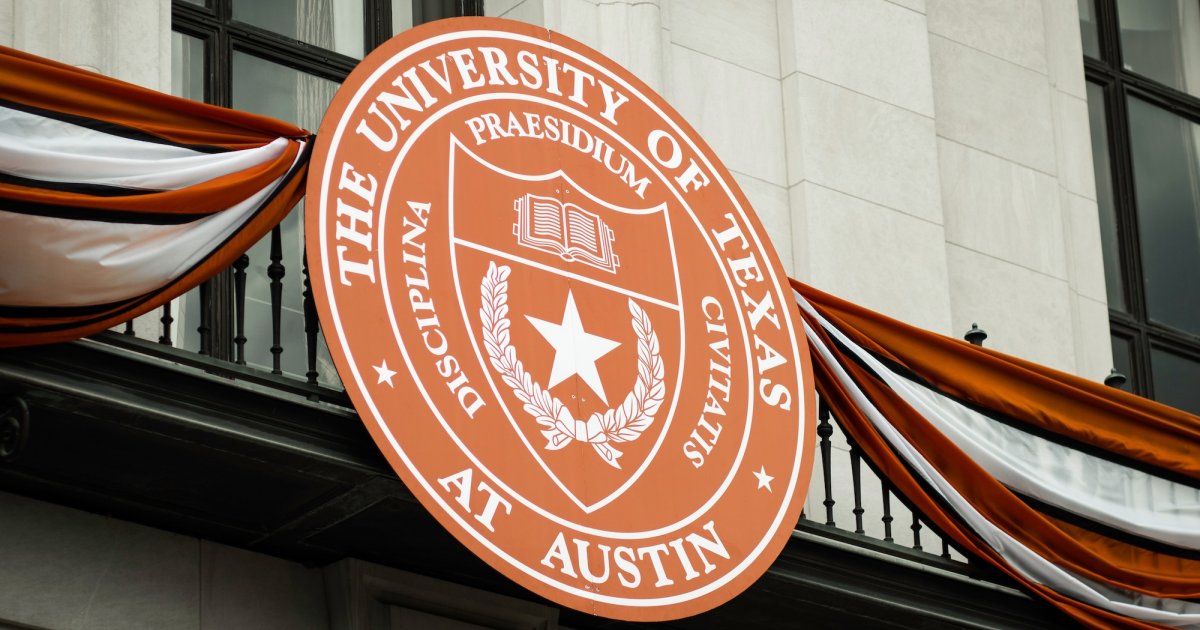
    AUSTIN, Texas, Apr. 22, 2025 — A pair of civil liberties organizations are joining forces today to demand the University of Texas System Board of Regents rescind its ban on campus drag shows — a clear First Amendment violation.

    In a joint letter, the American Civil Liberties Union of Texas and Foundation for Individual Rights and Expression called on the UT System to drop its drag ban that is currently chilling and infringing upon the speech of more than 200,000 students across its nine campuses.

    “Banning performances because government officials disapprove of their message is a textbook example of unconstitutional government censorship,” said FIRE Attorney Adam Steinbaugh. “The First Amendment protects the right of students at public universities to express themselves through art and performance, and that includes drag.”

    In March, University of Texas System Board of Regents Chair Kevin Eltife, citing unspecified “executive orders,” publicly declared that “our public university facilities, supported by taxpayers, will not serve as venues for drag shows.” Eltife’s statement followed a letter from Tarrant County Judge Tim O’Hare, which complained that drag shows “denigrate women” and suggested they violated an executive order from President Donald Trump that said “federal funds shall not be used to promote gender ideology.”

    But as a public university system, the UT System is required to abide by the First Amendment, which protects expression even if it offends state officials, campus administrators, or fellow students. And the justifications O’Hare cited are the same arguments from the Texas A&M University System that a federal judge in Texas roundly rejected when holding that system’s drag ban unconstitutional. On March 24 — just days after UT announced its drag ban — Judge Lee H. Rosenthal of the U.S. District Court for the Southern District of Texas struck down Texas A&M’s drag ban, ruling that drag “is speech and expressive conduct protected by the First Amendment.”

    The UT drag ban violates the First Amendment in a number of ways. First, it creates a prior restraint on speech, silencing artistic performances before they can even be held. This is a form of censorship that the Supreme Court has held to be “the most serious and the least tolerable infringement on First Amendment rights.”

    Second, by seemingly being issued to comply with Trump’s executive order targeting “gender ideology,” the ban is viewpoint discrimination; government institutions can’t gag speech based solely on whether they approve of the ideology being expressed. Lastly, UT’s drag ban is unconstitutionally vague. Because “drag” and “gender ideology” are undefined by the Board of Regents, students have no way of knowing whether their speech will fall afoul of regulations.

    West Texas A&M President cancels student charity drag show for second time

    News

    West Texas A&M President Wendler enforced his unconstitutional prior restraint by canceling a student-organized charity drag show for the second time.


    Read More

    “The University of Texas System must immediately rescind its unconstitutional anti-drag policy, which is an affront to its students’ First Amendment rights and its stated commitment to free speech and academic freedom,” said ACLU of Texas staff attorney Chloe Kempf. “The UT System’s vague and discriminatory ban on drag performances will make its campuses less free, less fair, and less welcoming for every student — especially LGBTQIA+ students. Texans expect state institutions to vigorously protect our fundamental rights and freedoms, no exceptions.”

    UT’s drag ban doesn’t just contradict the Constitution and recent court rulings in Texas — it also contradicts its own expressed values. Just last year, the UT System Board announced a “Commitment to Freedom of Speech and Expression,” which held that “it is not the proper role of the UT System or the UT institutions to attempt to shield individuals from ideas and opinions they find unwelcome, disagreeable, or even deeply offensive.” 

    “The UT Board of Regents laid down its marker last year that it would uphold the First Amendment and protect speech that may offend others,” said FIRE Supervising Senior Attorney JT Morris. “Now’s the time to put their money where their mouth is and stand up for the constitutional rights of all its students, instead of bowing to political pressure.”


    The Foundation for Individual Rights and Expression (FIRE) is a nonpartisan, nonprofit organization dedicated to defending and sustaining the individual rights of all Americans to free speech and free thought—the most essential qualities of liberty. FIRE recognizes that colleges and universities play a vital role in preserving free thought within a free society. To this end, we place a special emphasis on defending the individual rights of students and faculty members on our nation’s campuses, including freedom of speech, freedom of association, due process, legal equality, religious liberty, and sanctity of conscience.

    The ACLU of Texas is a nonpartisan nonprofit organization that works with communities, at the State Capitol, and in the courts to protect and advance civil rights and civil liberties for every Texan, no exceptions.

    CONTACT:

    Alex Griswold, Communications Campaign Manager, FIRE: 215-717-3473; [email protected]

    Kristi Gross, Press Strategist, ACLU of Texas, [email protected]

    Source link

  • George Mason University calls cops on student for article criticizing Trump

    George Mason University calls cops on student for article criticizing Trump

    In 1787, Thomas Jefferson declared that “The tree of liberty must be refreshed from time to time with the blood of patriots and tyrants.” George Mason — the founding father for whom GMU is named — championed the right to resist tyranny, penning the 1776 Virginia Declaration of Rights that helped inspire the First Amendment.

    Fast forward 250 years, and GMU is calling the police on a student for daring to echo those revolutionary sentiments in modern terms.

    It seems GMU has forgotten its namesake’s legacy. So here’s a reminder: calling the cops over political commentary has no place at an American university bound by the First Amendment. 

    On April 16, GMU student Nicholas Decker published a Substack essay titled “When Must We Kill Them?,” a provocative piece exploring whether violence is ever justified as a last resort against what he perceives as tyranny under the Trump administration. The essay explicitly warns that force is only defensible when all peaceful and legal avenues have been exhausted. Decker invokes the founding fathers to argue that violence “is to be employed only in defense of our Constitution, and of democracy.”

    The next day, GMU referred Decker to “state and federal law enforcement for evaluation of criminal behavior” and denounced his essay as “not the Mason way.” Then came a knock at Decker’s door from the Secret Service. After reviewing his words, they agreed he broke no laws.

    GMU’s overreaction has sent a dangerous message: write something controversial, and the feds might show up at your door. That’s chilling and, frankly, un-American.

    A university dedicated to free thought should know better. The First Amendment draws a clear line between unprotected “true threats” and core political speech. Speech is only a true threat when it demonstrates a serious, specific, and imminent intent to commit unlawful violence against a particular individual or group. That’s a high bar — and for good reason. It’s meant to protect public debate, especially about uncomfortable topics. Advocacy for violence, no matter how disturbing, remains protected unless it crosses that line.

    Decker’s essay never comes close. It’s abstract, hypothetical, and lacks any indication of intent to commit violence. Asking about the moral propriety of force is philosophy, not a true threat. And while deeply offensive speech may upset many, that doesn’t make it unlawful, as intense political debate will inevitably offend someone

    But it should never have come to this. GMU’s overreaction has sent a dangerous message: write something controversial, and the feds might show up at your door. That’s chilling and, frankly, un-American. When administrators start acting like King George III, they’ve lost their way. Ironically, GMU’s behavior resembles that of UK speech police, where citizens are arrested for criticizing public officials online.

    Thankfully, in America, the First Amendment answers the question of whether robust political debate is “criminal behavior.” Students expressing themselves on public issues is very much “the Mason way.” FIRE calls on GMU to ensure this mistake does not become an accepted practice.


    FIRE defends the rights of students and faculty members — no matter their views — at public and private universities and colleges in the United States. If you are a student or a faculty member facing investigation or punishment for your speech, submit your case to FIRE today. If you’re a faculty member at a public college or university, call the Faculty Legal Defense Fund 24-hour hotline at 254-500-FLDF (3533). If you’re a college journalist facing censorship or a media law question, call the Student Press Freedom Initiative 24-hour hotline at 717-734-SPFI (7734).


    Source link

  • What is a ‘governing document’ in the University of Sussex?

    What is a ‘governing document’ in the University of Sussex?

    by GR Evans

    The  Office for Students has found that the Trans and Non-Binary Equality Policy Statement  of the University of Sussex involves breach of two of the relevant OfS Regulatory Requirements in late March 2025, and imposed an unprecedentedly substantial fine. The first of those criticised (OfS Condition E1) concerns the duty to protect freedom of speech and academic freedom:

    The provider’s governing documents must uphold the public interest governance principles that are applicable to the provider.

    A further OfS Condition (E2) requires that ‘the provider must have in place adequate and effective management and governance arrangements’ so as  to ‘operate in accordance with its governing documents’.

    On 9 April 2025 the Vice-Chancellor of the University of Sussex published a fierce criticism of the unprecedented decision of Office for Students that it had failed to comply with one of its own ‘policies’. The Vice-Chancellor considered that the policy in question was:

    a really small statement, of which we have many dozens, if not hundreds, of similar policies and statements. Whereas the governing documents of the university  are its charter and statutes and regulations.

    There was press coverage about the ensuing uncertainty. UniversitiesUK, as the ‘collective voice’ of universities promised to write to the OfS to ask for clarity as its decision appears to find that it is a ‘failure to uphold freedom of speech and academic freedom’ if a university has ‘policies’ to prevent ‘abusive, bullying and harassing’ material or speech.

    The University has notified the OfS of its intention to apply for judicial review.  Among the grounds Sussex relies on is that the Office for Students did not have powers to treat ‘documents that are not a provider’s “governing documents”’ as creating the public interest governance condition necessary to permit the OfS to seek judicial review. The OfS defines ‘governing documents’ somewhat inadequately as ‘set out in’ its ‘Regulatory Framework’, where  ‘the provider’s governing documents must uphold the public interest governance principles that are applicable to the provider. In this case it held:

    that the University of Sussex breached ongoing condition of registration E2 because it failed to have adequate and effective management and governance arrangements in place to ensure that it operates in accordance with its governing documents.

    The definition of ‘governing documents’ is therefore of the first importance if a precedent is to be set by this OfS decision. The Higher Education and Research Act (2017) s.3(8)(a) protects the autonomy of higher education providers, defining it as ‘the freedom of English higher education providers within the law to conduct their day to day management in an effective and competent way’. Sussex was created among the batch of new universities of the 1960s.

    The Act created a new Regulator, the Office for Students, stating that the Regulator ‘must have regard to’ the ‘need to protect the institutional autonomy of English higher education providers’. This requires a fine balance if the OfS is to avoid intrusion upon a provider’s autonomy.

    The institutional autonomy of higher education providers gives them control of the drafting of their internal legislation. External authorities may insist on particular points in certain cases. For example medical qualifications set by a provider cannot constitute a qualification to be a doctor unless they are recognised by the General Medical Council.  But the right to create its own rules (within the law) largely lies with the provider, who may design them  and order them in its own preferred hierarchy.  The Office for Students may not interfere.

    Nevertheless the creation of ‘governing documents’ must carry certain implications about the source of the internal or external authority to create, review or amend them.  It is suggested that ‘Sussex contends that these are matters for our old friend the Visitor, a traditional legal role in UK university governance, who in Sussex’s case is the actual King’, and:

    cites longstanding legal authority confirming that the Visitor has exclusive jurisdiction over internal governance questions, including interpretation and application of the university’s own rules, and says that unless Parliament clearly removes or overrides that jurisdiction, external bodies like OfS can’t interfere.

    Where the Monarch is not the Visitor it is normally a Bishop.

    However a Visitor is not essential to the law-making of a higher education provider. ‘Alternative providers’ may not have Visitors. As eleemosynary bodies their Colleges normally have Visitors of their own but neither Oxford nor Cambridge has a Visitor. Under the Oxford and Cambridge Universities Act of 2023, both Universities create their own Statutes. In Oxford’s case those which are King-in-Council Statutes require the consent of the Privy Council on behalf of the King. In Cambridge all its Statutes require that consent to their creation or modification. Their subordinate legislation, most Regulations in Oxford (some of Oxford’s Regulations may be created by its Council) and Special Ordinances and Ordinances in Cambridge, simply require the consent of their governing bodies, Oxford’s Congregation of over 5000 and Cambridge’s Regent House of over 7000 members.

    The rules at the top of a provider’s hierarchies may constitute governing documents but it is far from clear how far down that status applies. For purposes of management ‘procedural or process documents’ explain the required ways of doing things and the processes which must be followed’. Among these are Codes of Practice and ‘Guidance documents’. This seems to be where the Trans and Non-Binary Equality Policy Statement fits, as approved by the Executive Group in 2018, 2022, 2023 and 2024 and placed under the heading of Equality, Diversity and Inclusion(revised in 2022, 2023 and 2024).  Is it a governing document in this lowly position?

    Also found relevant by the Office for Students in the Sussex case was the exercise of powers of delegation. It identified ‘a pattern of decisions taken at the university to adopt and/or revise policies without proper delegated authority’, both that its:

    Prevent Steering Group approved and adopted the 2021 version of the University’s Freedom of Speech Code of Practice despite not having delegated authority to do so

    and also that ‘the 2023 version of the External Speakers Procedure was approved by the University Executive Group, despite that group not having delegated authority to do so’.

    Like similar universities Sussex has an Executive Team composed of a Vice-Chancellor, Pro-Vice-Chancellors, their deputies, Deans of Schools and Faculties, with senior academic-related staff headed by a University Secretary, a Financial Officer and various Directors. These are not directly responsible for framing its legislation but may have authority to apply it, though not necessarily powers to delegate its application.

    The Office for Students could turn to the University’s rules about delegation in framing its criticism. Sussex has given thought to that. Sussex’s Council approved a Scheme of Delegation in March 2018. ‘Responsibility’ may be delegated by the Council except for the appointment of the Vice-Chancellor and President; ‘the variation, amendment or revocation of the Charter or Statutes’; and responsibility for approving the University’s annual audited accounts or the appointment of Auditors. The Scheme of Delegation clarifies where roles and responsibilities are allocated between Council and its Committees, among Committees, and between Council and Senate. The ‘Executive’ and a University Executive Group are described as exercising ‘leadership’ and there is also a University Leadership Team, though ‘leadership’ is undefined.

    Sussex has also given thought to overall responsibilities for supervision of the exercise of its internal rules. It has chosen to describe them collectively as ‘policies’. It is recognised to be ‘important that a clear and consistent approach is taken to drafting and updating policies across the institution’ details the requirements for the creation, approval, review, and updating of policies.  However it clarifies the difference between policies and other associated documents, sets out responsibilities relating to policies, and details the requirements for the creation, approval, review, and updating of policies. An overarching Policy on Policies has been agreed by the ‘University Executive Team and Council’. This consists in a Policy on the Creation and Management of University Policies (‘Policy Framework’).

    The aim of the University’s Policy Framework is to make clear what a policy is and what policies should be used for, to differentiate between policies and other types of documents (e.g. procedural documents, codes of practice, etc), and to outline the process that should be followed when drafting, reviewing, and updating policies. An outline of where responsibilities lie in relation to policies is also included.

    This suggests that if pressed Sussex might take all these to constitute its ‘governing documents’, while recognising distinctions among them.

    Nevertheless Sussex distinguishes governance and management. ‘A policy is a high-level statement of principles, requirements or behaviours that apply broadly across the University’ and ‘reflects institutional values’, thus supporting ‘the delivery of the University’s strategy’.  It  reflects ‘legal and regulatory obligations, sector standards, or high-level operational requirements’. These create obligations.

    Among them Sussex lists ‘Regulations’, which  must be made ‘pursuant to the Charter’. These contain detailed rules governing a wide variety of actions of, or on behalf of, the University falling under governance but extending into management: staffing procedures, student disciplinary and appeals procedures, the Students’ Union, the composition of Council and Senate, titles of degrees and Schools, roles of Heads of Schools, lists of collaborative institutions, academic titles and dress, the various degree courses awarded by the University, and general University regulations (library, ICT, administrative). These Regulations are updated annually and approved by Council and/or Senate. Next come written ‘Resolutions’ which Council members may choose to approve or not, ‘in accordance with procedures set out in the Regulations’, though amendments to the Charter and the Statutes and certain Regulations require ‘a three-fourths majority’.

    For purposes of management ‘procedural or process documents’ going beyond these categories explain the required ways of doing things at Sussex and ‘the processes which must be followed’. Among these are Codes of Practice and ‘Guidance documents’. This seems to be where the Trans and Non-Binary Equality Policy Statement fits, as approved by the Executive Group in 2018, revised in 2022, 2023 and 2024. placed under the heading of Equality, Diversity and Inclusion.  Are they still among ‘governing documents’ with a constitutional role in the University’s  governance? An application for a judicial review will take a considerable time to produce a recommendation even if it supports Sussex’s argument

    SRHE member GR Evans is Emeritus Professor of Medieval Theology and Intellectual History in the University of Cambridge.

    Author: SRHE News Blog

    An international learned society, concerned with supporting research and researchers into Higher Education

    Source link