La Trobe University will fork out more than $10m to cover the underpayments of 6700 staff, after investigations found the institution had failed to properly pay employees over a seven-year period.
Please login below to view content or subscribe now.
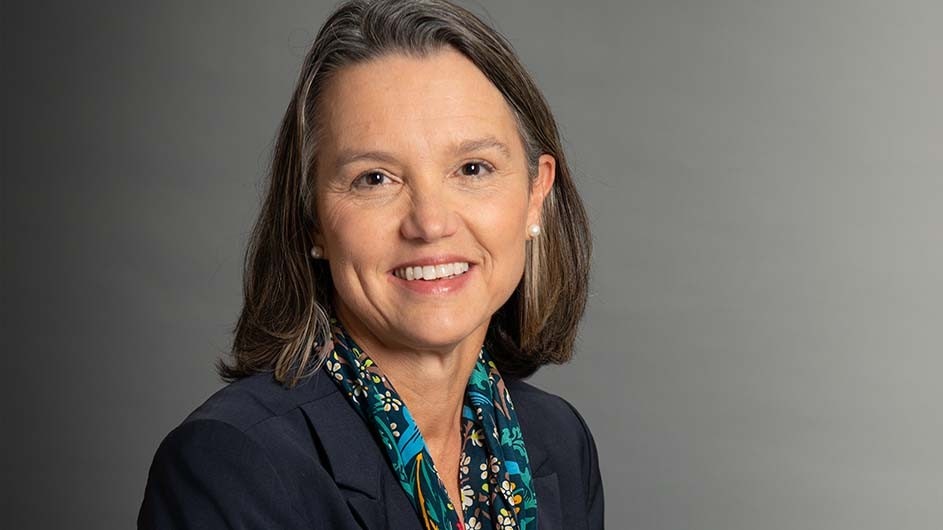
Dr. Katrina ArmstrongColumbia University is grappling with significant financial challenges after the Federal Task Force to Combat Antisemitism announced $400 million in cuts to federal funding, a development that Interim University President Dr. Katrina Armstrong says will “touch nearly every corner of the University.”
The task force described the cuts as a consequence of Columbia’s “continued inaction in the face of persistent harassment of Jewish students” and warned that this represents only the “first round of action,” with “additional cancellations” to follow.
This announcement comes just four days after the task force revealed it would consider stop work orders for $51.4 million in contracts between Columbia and the federal government and conduct a “comprehensive review” of more than $5 billion in federal grant commitments to the institution.
In her communication to the Columbia community, Armstrong acknowledged that the cuts would have an immediate impact on research and critical university functions, affecting “students, faculty, staff, research, and patient care.” Federal funding constituted approximately $1.3 billion of Columbia’s annual operating revenue in the 2024 fiscal year.
“There is no question that the cancellation of these funds will immediately impact research and other critical functions of the University,” Armstrong wrote in en email to the campus community, while emphasizing that Columbia’s mission as “a great research university does not waver.”
The situation at Columbia highlights the increasing tensions between academic institutions and the Trump administration, particularly regarding how universities respond to claims of antisemitism on campus. Since October 2023, Columbia has been at the center of pro-Palestinian student protests, drawing federal scrutiny, especially from the Trump administration.
President Trump recently stated on Truth Social that “All Federal Funding will STOP for any College, School, or University that allows illegal protests.”
Armstrong, who assumed her interim position following former University President Minouche Shafik’s resignation in August 2024, described Columbia as needing a “reset” from the “chaos of encampments and protests.” She emphasized that the university “needed to acknowledge and repair the damage to our Jewish students.”
Armstrong affirmed the university’s commitment to working with the federal government on addressing antisemitism concerns, stating: “Columbia can, and will, continue to take serious action toward combatting antisemitism on our campus. This is our number one priority.”
Armstrong, however, did not outline specific plans for how Columbia would adapt to the significant loss of federal funding, instead focusing on the university’s broader mission and values.
“Antisemitism, violence, discrimination, harassment, and other behaviors that violate our values or disrupt teaching, learning, or research are antithetical to our mission,” Armstrong noted. “We must continue to work to address any instances of these unacceptable behaviors on our campus. We must work every day to do better.”
The situation at Columbia raises important questions for higher education institutions nationwide about balancing free speech, campus safety, and federal compliance in the age of the Trump presidency. As universities increasingly face scrutiny over their handling of contentious social and political issues, the consequences—both financial and reputational—can be severe.
Armstrong called unity within the Columbia community to maintain the university’s standing and continue its contributions to society.
“A unified Columbia, one that remains focused on our mission and our values, will succeed in making the uncommonly valuable contributions to society that have distinguished this great university from its peers over the last 270 years,” she said.
This audio is auto-generated. Please let us know if you have feedback.
Dive Brief:
Saint Augustine’s University announced Thursday that its appeal to keep its accreditation has been denied,striking a major blow to the struggling historically Black institution.
Officials at the North Carolina university said they are entering a 90-day arbitration process in another bid to remain accredited. That will also ensure students graduating through May 2025 will earn their diplomas from an accredited institution, according to the university.
Brian Boulware, Saint Augustine’s board chair, struck an optimistic tone in Thursday’s announcement about the arbitration process, saying that the university’s “strengthened financial position and governance will ensure a positive outcome.”
Dive Insight:
Saint Augustine’s has been on the precipice of losing its accreditation for over a year. In 2023, the university’s accreditor — the Southern Association of Colleges and Schools Commission on Colleges — voted to terminate the university’s accreditation.However, college officials successfully contested that last year through arbitration.
Yet in December, SACSCOC once again voted to terminate Saint Augustine’s from its membership, citing issues with the university’s finances and governance.Saint Augustine’sThursday announcement says that it lost its appeal of that decision, but arbitration once again gives the university another shot at retaining its accreditation.
Since the December vote, the university has sought to shore up its budget through widespread cuts and new sources of funding.
Still, Saint Augustine’s is grappling with steep declines in enrollment, with just 200 students in the 2024-25 academic year, WRAL reported. That’s down from over 1,100 students just two years ago.
In Thursday’s announcement, Saint Augustine’s officials announced they had secured up to $70 million, which they described as a bridge loan, “at competitive market rates and terms” in a deal that they expect to close later this month. University officials did not disclose where the $70 million in funding is coming from, citing nondisclosure agreements.
The announcement comes after Saint Augustine’s failed to get approval from the state attorney general’s office to enter a land lease deal with 50 Plus 1 Sports, an athletics development firm.
In January, the attorney general’s office said the deal could put the university’s nonprofit status at risk,arguing that the upfront lease payment of up to $70 million was far too low for Saint Augustine’s103-acre property. The office said the campus had been appraised at over $198 million.
Following the decision from the attorney general’s office, the two parties began restructuring the deal to lease less than half of Saint Augustine’s campus to50 Plus 1 Sports, INDY Week reported. Under the new terms — which circumvent the need for the state office’s sign-off — the sports development firm would also share some of its revenue from its use of the land with the university.
Saint Augustine’s did not mention 50 Plus 1 Sports in Thursday’s announcement.
“This funding is a game-changer,” Hadley Evans, vice chair on Saint Augustine’s board, said in Thursday’s announcement. “We now have the financial leverage to protect SAU’s legacy, enhance academic offerings, and create sustainable revenue streams through strategic campus development.”
Saint Augustine’s has also drastically cut its workforce amid its financial woes. In November, the university said it was cutting over 130 staff and faculty positions to shave $17 million from its budget.
“I don’t share my political or religious perspectives at work; I never have”, asserted my experienced professorial colleague over an informal coffee. “A bit of shame, but kind of admirable, right?”, I thought.
I recalled a politics lecturer during my time as an undergraduate, who, like seemingly most of that generation of academics (1990s-00s), believed in impartiality and explicitly stated his liberal neutrality when presenting challenging topics: may the best arguments win. The problem was that through reading his online bio and finding his works in the library, one could very quickly discern his political and philosophical leanings!
When I began teaching philosophy at the same university a few years later, I too attempted to feign neutrality; neither sharing my political nor religious leanings, nor ethnic or cultural heritage. It wasn’t the done thing. Autobiography and self-disclosure had no place in the philosophy seminar room.
I’ve since thawed. I’m now leaning far more towards disclosure than when I started teaching. I long held neutral impartiality as the gold standard of instruction, whereby challenging – and perhaps controversial – topics were discussed, but the educator held the space for students to explore perspectives, without sharing their own. This, while often the received wisdom, and certainly well-intentioned, is, I now reflect, limited.
For an academic to be teaching on a module, especially if they’ve created it, means they’re very likely to be published in that field of inquiry. Engaged students will find such materials, understand their lecturer’s perspectives, and recognise when they’re playing devil’s advocate in sessions. Furthermore, given that we teach face to face, and not in confession booths, the visibility of us as lecturers often speaks volumes; students will make an array of assumptions. For example, if in a session led by the university’s chaplain, it’s safe for students to assume that they’re a member of the Church of England.
Kelly’s heuristic quartet
There is a case to be argued for “committed impartiality” as per Social Scientist Thomas Kelly’s (1986) heuristic quartet:
Exclusive neutrality: The educator takes a neutral position and eschews any potentially controversial issues; i.e. appropriate in a school context, but too reductive for HE.
Exclusive partiality: The educator takes a biased position; i.e. traditionally a big no no. Think here of educators who use their classes to enact their activism.
Neutral impartiality: The educator is impartial and neutral, encouraging students to explore controversial issues; i.e. the gold standard of HE instruction based on received wisdom.
Committed impartiality: The educator takes a biased position while also being impartial; i.e. seen with scepticism by those who practise neutral impartiality. This is a potentially slippery slope into exclusive partiality.
While referring principally to the teaching of “controversial” topics in school education, I think the quartet can be helpfully adapted to fit the context of contemporary HE teaching in the social sciences and humanities. Kelly claimed that owing to its contradictory position, “committed impartiality” is the most defensible course of action for educators to engage in teaching controversial issues. This is because it requires the educator to put their cards on the table and encourage debate without claiming an unbiased standpoint.
Wading
When discussing loaded issues such as race, sexuality and religious perspectives, perhaps this is where the received wisdom about steadfastly refusing to disclose shines through and avoids the – especially contemporary – quagmire of a shallow form of identity politics and virtue signalling that can sometimes turn into a form of oppression Olympics? The “disclosure dilemma” is, of course, ultimately a personal, context bound one.
In the context of schools, the issue of disclosure is much more vexed, given that teachers are effectively agents of the state who have a moral duty to avoid prosletysing given the power dynamic of the classroom (I recall the example during COvid-19 of a teacher in Nottinghamshire getting national attention for encouraging students to write letters of frustration to the then PM).
While school curricula are obviously created by groups of individuals with political agendas, in HE we too have areas of expertise, interest, and passion. In an increasingly regulatory framework, the dissemination of our darlings is bound by legislation such as the Equality Act (2010), and The Higher Education Freedom of Speech Act (2023). Furthermore, to adhere to these acts within a localised context, my employer has a university dignity policy, mission statements, and, within my department, enacts the Chatham House Rule. We also provide trigger warnings to create inclusive learning environments.
Tightrope
This discussion has implications for those in the social sciences, especially those who deal, like I do, with explicitly political content (I recognise that the personal is also the political). Of course, navigating the tightrope between committed impartiality and exclusive partiality is tricky. The received wisdom is valuable insofar as it helps the educator to avoid this balancing act. But when the educator has a specialism that speaks to a political issue of the day, it is arguably upon them to do so. For example, in March 2023 I was teaching a session for final year UG students on migration in the context of international education when the Gary Lineker “issue” kicked off. I had a well-informed perspective on that issue, and it linked neatly to the scheduled taught content that day. It’s fair to say that I teetered on that tightrope between committed impartiality and exclusive partiality!
The challenge is not about self-censorship in the service of an apparently noble ideal of neutral impartiality, but enacting personal commitment and setting the groundwork for civic debate. Deciding to disclose may have the intended learning outcome of rapport building, modelling particular behaviours or perspectives, humanising oneself, normalising situations, or problematising a set of affairs; it’s about practising the messy craft of educating, and being open to self-transformation.
Risk aversion
I’m sure others could make equally compelling cases for different positions within, and outside of, Kelly’s heuristic quartet. I think a primary driver behind neutrality is, rather than a noble but impossible quest for untainted discourse, perhaps one of nervousness; nervousness of being seen as doctrinaire or unduly influencing students’ perspectives?
Overall, the disclosing instructor must consider their visibility in terms of gender, age, physical presence, professional titles etc. that starkly reinforce a power imbalance between student and academic, aka judge, jury and executioner in terms of grades and longer-term prospects. Where the stakes are high boldness of speech, disclosing personal leanings in a learning environment are worth the risk.
“Ideas of the university in the public domain are hopelessly impoverished. ‘Impoverished’ because they are unduly confined to a small range of possible conceptions of the university; and ‘hopelessly’ because they are too often without hope, taking the form of either a hand-wringing over the current state of the university or merely offering a defence of the emerging nature of ‘the entrepreneurial university’.”
Fifty years on from the Robbins Report, that was how Ron Barnett began Imagining the University in 2013, and it seems that nothing much has changed since then. Stefan Collini had written a much-cited book, What are universities for?, in 2012, which as the Guardian review said (Conrad, 2012) was “heavy on hand-wringing and light on real answers”. Tom Sperlinger, Josie McLellan and Richard Pettigrew wrote Who are universities for? Remaking higher education in 2018, which despite its respectable intentions was more akin to what Barnett called a ‘defence of the emerging nature of the entrepreneurial university’, aiming in the authors’ words to “make UK universities more accessible and responsive to a changing economy.”
“… what should a ‘good university’ look like? … Raewyn Connell asks us to consider just that, challenging us to rethink the fundamentals of what universities do. Drawing on the examples offered by pioneering universities and educational reformers around the world, Connell outlines a practical vision for how our universities can become both more engaging and more productive places, driven by social good rather than profit, helping to build fairer societies.”
Simon Marginson and his colleagues in the Centre for Global Higher Education have pursued a broad programme to conceptualise and promote the idea of the public good of higher education, but in his interviews with English university leaders:
“Nearly all advocated a broad public good role … and provided examples of public outcomes in higher education. However, these concepts lacked clarity, while at the same time the shaping effects of the market were sharply understood.”
His sad conclusion was that:
“English policy on the public good outcomes of higher education has been hi-jacked, reworked, and emptied out in Treasury’s long successful drive to implement a fee-based market.”
This means that everyday pressures too often drive us back to either handwringing or apologetic entrepreneurialism, or some mixture of the two. Even Colin Riordan, one of the most thoughtful of VCs during his tenure at Cardiff, could not break the mould:
“What are universities for? Everybody knows that universities exist to educate students and help to create a highly educated workforce. Most people know they’re also the place where research is done that ends up in technologies like smartphones, fuel-efficient cars and advanced medical care. That means universities are a critical part of the innovation process.”
These ideas sell the university short, and leave their leaders and managers ill-equipped to live the values they need to protect.
We are entering an era when Donald Trump and Elon Musk seem determined to ‘move fast and break things’, as the Facebook motto once had it. Mark Zuckerberg tried to move on ten years ago to “Move fast with stable infrastructure”, but it seems that Elon Musk didn’t get the memo, as the ‘Department of Government Efficiency’ cuts huge swathes through and – as it presumably hopes – out of US government. Whether or not DOGE succeeds we will soon discover, but the disregard for stable infrastructure may well prove fatal to its own efforts.
People would not normally accuse a university of moving fast, but what some might see as an excessive concern for stable infrastructure perhaps conceals the speed at which universities move to break existing ideas and understandings. The pursuit of truth may be an imperfect way to describe the aim of the university, but as an academic motivation it suffices to explain how one way of understanding will sometimes rapidly give way to another. Yes, we know that some paradigms hang on doggedly, often supported long past their sell-by date by academics with too much invested in them. But usually and eventually, often more suddenly, the truth will out.
How can universities best protect their distinctive quality, of encouraging open-minded teaching and research which will create the most favourable conditions for learning, individually and collectively? Strategies and academic values have their place, they might even constitute the stable infrastructure that is needed for a university to flourish. But the infrastructure needs to be built on a simple idea which everyone can comprehend. And that simple idea has to be infinitely flexible while staying perpetually relevant – here is one I prepared earlier:
“Many people can’t shake off the idea that management in higher education is or at least it should be about having clear objectives, and working out what to do through systematic analysis and ‘cascading’ objectives down through the organisation. They want to see the university as a rational machine, and the manager as a production controller, because Western scientistic culture has encouraged them to think that way.
The best way to deal with that way of thinking is to agree with it. You say: yes, we must focus on our key objective. In teaching our key objective is personal learning, development and growth for students, a process which cannot be well specified in advance. In research our key objective is the generation of new knowledge. So in higher education the key objective in each of our two main activities is the generation of unpredictable outcomes. Now please tell me what your key performance indicators will be.”[1]
The fundamental test of performance for a university is that it generates unpredictable outcomes. An infinitely flexible, endlessly relevant idea that everyone can understand – and always disruptive. That is why higher education matters – not just training students for the economy, not just innovation in research for economic growth. Universities need to keep generating unpredictable outcomes because that is their unique function as open public institutions, and that is what their wider society needs and deserves.
Rob Cuthbert is editor of SRHE News and the SRHE Blog, Emeritus Professor of Higher Education Management, University of the West of England and Joint Managing Partner, Practical Academics. Email [email protected]. Twitter/X @RobCuthbert.
[1] Text taken from inaugural professorial lecture; Rob Cuthbert, 7 November 2007
The Coalition would scrap Australian Tertiary Education Commission (ATEC) and have an independent tribunal decide vice-chancellor pay, opposition education spokeswoman Senator Sarah Henderson told universities on Wednesday.
Reinstating the 50 per cent pass rate rule and significantly capping overseas students to inner-city Sydney and Melbourne unis are also top of the list.
The senator outlined her party’s priorities for the first time at the Universities Australia Solutions Summit, a meeting of university leaders, which also facilitated discussion within the sector about current issues.
The Coalition is adamant that “Australian students must come first” in every decision universities make, but that direction would come from vice-chancellors and a regulator, not government policy, she said.
“To put students first, universities must be governed by strong and principled leaders who run their institutions efficiently, transparently and with integrity,” she said.
“Universities must be able to operate with certainty and plan for the long term, free from day-to-day government intervention and policy chaos; overseen by a tough and feared regulator, which enforces the highest standards when required.”
An LNP government will cancel the establishment of ATEC, and instead the Tertiary Education Quality Standards Agency (TEQSA) would be the responsible regulator.
“This is another layer of education bureaucracy and a significant cost which will not take our universities forward. It certainly does not add value to students,” she said.
Senator Henderson said things like scholarships and student support funds, which ATEC has been tasked with reviewing, is work for government and ministers.
“The ATEC tells us this government doesn’t know what to do.There’s no proper understanding of its role, no legislation. And yet it is set to commence in three months time,” she said.
“The hard work you would expect a government to undertake is being sent to the Commission.“
Her party would assess changes to funds such as theHigher Education Partnerships and Participation Program and the Indigenous Students Support Fund by asking the following questions: “Do they support quality of teaching and learning? Labour market needs? Equity access so all Australians can aspire to university education? Student completion rates and employment outcomes?”
The LNP previously announced it would increase the number of Commonwealth-supported places for medial students by 100 in 2026 and 2027, and by 150 from 2028, an Accord-recommended policy.
The party has not changed its position on Job-Ready Graduates, she said, but it will review the funding arrangement.
Although the senator welcomed the Universities Accord final report’s recommendations, she said the Albanese government has unfairly placed the burden of reform onto individuals and universities.
She said Education Minister Jason Clare has “outsourced much of the heavy lifting” to Accord chair Professor Mary O’Kane and her panel.
She also said universities should not bear the burden of means-testing students, in other words, evaluating whether a student is eligible for government support regarding the Commonwealth prac payment.
“Consider, for instance, the prac payments: discretionary grant programs where you are being asked to means-test students. Universities are not Centrelink offices,” she said.
“We understand that universities are big and complex organizations, but they have not enjoyed a strong track record always in supporting students. Too many times students have been left high and dry.”
She also said TEQSA has not done enough to protect women from sexual violence on campus or Jewish students and staff from anti-Semitism.
“A Dutton government would adopt zero-tolerance of anti-Semitism on university campuses. We will not wait for universities to act in their own time,” she said.
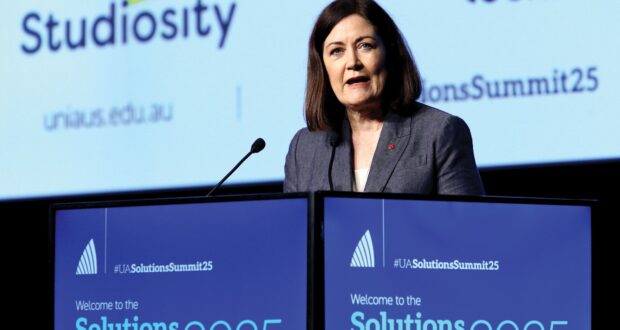
The senator told universities they need to do more to stop anti-Semitism on campuses. Picture: UA
“We expect all universities to fully cooperate with the new dedicated anti-Semitism Task Force, led by the Australian Federal Police and other agencies.”
All Australian vice-chancellors agreed on a definition of anti-Semitism on Wednesday. While the senator said she appreciated the vice-chancellors agreement, the Coalition would require unis to adopt the International Holocaust Remembrance Alliance’s definition, which is a more robust framework and definition, she said.
The Coalition would implement a national higher education code to prevent and respond to anti-Semitism and establish a judicial inquiry into anti-Semitism at Australian universities, she announced.
“We will leave no stone unturned, including amending the Fair Work Act if necessary.”
Another LNP priority is to reinstate the 50 per cent pass rate rule, she said.
“We don’t believe there are enough safeguards to protect struggling students from leaving university with no qualification and a large student debt,” she said.
The Accord final report recommended removing the rule as a “priority action”. The rule says students who failed over half of their studies weren’t eligible for a HECS-HELP loan and had to pay upfront.
Theoretically, the rule was supposed to protect young people from acquiring debt with no qualifications, aimed at students who are possibly ill-placed to be at university.
Practically, the Accord panel found the rule disproportionately affected students from First Nations, low socioeconomic and other underrepresented or educationally disadvantaged backgrounds, who are more likely to fall behind in university due to external circumstances.
Later on Wednesday in his National Press Club address, UA chief executive Luke Sheehy said bringing back the rule would be detrimental to students in equity cohorts, which the Accord and the Labor government have been trying to help become qualified for economic reasons.
“It would be devastating. Our universities were very displeased and upset with the 50 per cent rule when it came in because it undermines the autonomy of our world class teachers and educators at our universities to support students in their own universities,” he said.
“I always worry about mandated policies from one central point in Canberra, made without proper consultation. It’s such a blunt rule. And we will be asking again for the Coalition to reconsider that.”
Vice-chancellor salaries would be set by the Remuneration Tribunal, not university boards, under a Dutton government.
“In this cost-of-living crisis, the current situation, frankly, does not meet the pub test,” she told the audience.
The senator would also back an “Australian universities performance index”, a website accessible to the public that provides measurements of an institution’scompletion rates, student satisfaction, course quality and cost.
“As a parent, I can attest to the complexity of navigating the university system for school leavers or those seeking to reskill or upgrade their qualifications,” she said.
“Just working out to which course to apply [for] is a challenge. So rather than judge universities on the research dollars they generate, which drives international students and global rankings, let’s focus on home-grown performance.
“This reform will drive up competition, lift teaching standards and ensure students make informed choices about their education.”
While both major parties plan to bring down the number of international students studying in Australia, the Coalition’s cap would be harsher than a Labor government’s, and would focus on getting overseas students out of cities, where two-thirds of them reside, and into the regions.
She echoed a speech delivered by veteran businesswoman and University of Technology Sydney chancellor Catherine Livingstone on Tuesday: universities haven’t been listening to community concerns about the “perceived impact of immigration on housing availability and affordability.’’
“We persist with offering opaque and inflated claims about [universities’] direct impact,” Senator Henderson said.
“[The current number of international students] is not good for our country or for the education outcomes of Australian students. We need to get the balance right. Every country has a responsibility to run its migration program in the national interest.”
She said more information about a Coalition overseas student policy will be announced in the next few weeks.
The LNP is disheartened about the lack of commercialisation of research, the senator said, which will be “put back on the agenda,” fostering more collaboration between universities and industry to boost student experience and job-readiness.
It will also reinstate ministerial discretion to allAustralian Research Council grant programs, in contrast to the current government which has control of only some research grants,.
By doing so, the government has“absolved itself of its responsibility to safeguard precious taxpayer funds in the interest of all Australians.”
“Under our Westminster system of government, the buck stops with the government of the day, and not an unelected board,” she continued.
“Universities matter. But universities that are run in the best interests of students really matter.
“If I am given the honor of being the next Minister for Education, I look forward to working closely with you with certainty, not ambiguity, to share in this crucial mission.“
Tuition has increased faster than
inflation. State funding has increased faster than inflation.
Administrator salaries have increased faster than inflation. Yet, the
administration is demanding that the teachers, librarians, and
researchers who drive the university’s educational mission take real
wage cuts.
While everyone acknowledges the
financial challenges facing higher education, the UO is receiving more
money per student than ever before. If this money isn’t going toward
student education and knowledge creation, where is it going?
The Facts:
Quality Education Requires Investment in Faculty
The value of a University of Oregon degree depends on the quality of
its professors, instructors, researchers, and librarians. When faculty
wages erode due to artificial austerity, neglect, or slow attrition, it
affects not only the quality of education and research, but also the
long-term value of a UO degree for students and alumni alike.
UO faculty salaries rank near the bottom among our peer institutions in the American Association of Universities (AAU).
United Academics has proposed fair wage increases that would merely adjust salaries for inflation and restore them to pre-pandemic budget levels.
Despite pandemic-related learning loss, the administration is spending less on education per student (adjusted for inflation) than before COVID-19.
The administration has prioritized administrative growth over academic excellence, while faculty have taken on increased workloads since the pandemic.
Faculty Sacrificed to Protect UO—Now It’s Time for Fair Wages
During the pandemic, faculty agreed to potential pay reductions to
help UO weather an uncertain financial future. We made sacrifices to
ensure the university could continue to serve students. Now, as we
bargain our first post-pandemic contract, the administration refuses to
offer wage increases that:
Cover inflation
Acknowledge additional faculty labor since the pandemic
Recognize our unwavering commitment to UO’s educational mission
Our Vision for UO: Excellence in Teaching & Research
The University of Oregon’s mission is clear:
“The University of Oregon is a comprehensive public research
university committed to exceptional teaching, discovery, and service. We
work at a human scale to generate big ideas. As a community of
scholars, we help individuals question critically, think logically,
reason effectively, communicate clearly, act creatively, and live
ethically.”
Our vision for the University of Oregon is one where the educational
and research mission are at the fore; an institution of higher learning
where we attract and maintain the best researchers and instructors and
provide a world class education for the citizens of Oregon and beyond.
Yes, this will take a shift in economic priorities, but only back to
those before the pandemic. Our demands are neither extravagant nor
frivolous. Our demand is that the fiduciaries of the University of
Oregon perform their primary fiduciary duty: support the mission of the
University of Oregon.
Why This Matters Now
We are currently in state-mandated mediation, a final step before a
potential faculty strike. Striking is a last resort—faculty do not want
to disrupt student learning. However, the administration’s arguments for
austerity do not align with the university’s financial situation or
acknowledge the increased faculty labor and inflated economic reality
since the pandemic. If the administration does not relent, we may have
no choice but to strike.
We Need Your Support
A strong show of support from the UO community—students, parents,
alumni, donors, legislators and citizens of Oregon and beyond—can help
pressure the administration to do the right thing.
This audio is auto-generated. Please let us know if you have feedback.
Dive Brief:
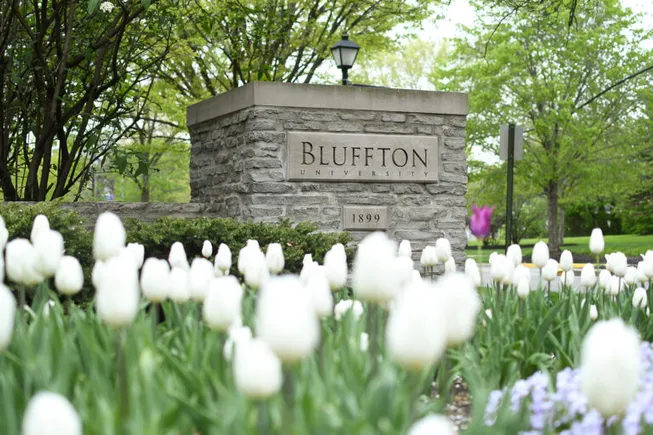
The University of Findlaywon’t move forward with its planned merger with Bluffton University after a Wednesday voteby Findlay’s board.
Findlay is terminating its memorandum of understanding with Bluffton, signed last March, according to a news release.The university cited time and expenses required to complete the merger, as well as the costs of keeping their respective NCAA teams at different divisions.
“For us, due diligence in this case has demonstrated that partnering in key ways is a better solution,” Findlay President Katherine Fell said in a statement.
Dive Insight:
Bluffton had no control over Findlay’s decision not to proceed with their joint merger application with their accreditor, the Higher Learning Commission, according to Cheryl Hacker, chair of Bluffton’s board of trustees.
The private Christian universities, both in Ohio, announced their planned merger in March 2024. At the time, both boards unanimously approved the plan.
“From a vantage point in the future, we will look back at this moment in the history of higher education as one that required new approaches and bold actions,” Findlay’s Fell said then. “I believe this merger will prove to be both.”
Findlay is by far the larger institution, with 5,057 students in fall 2023, compared to Bluffton’s 678.
It’s the financially stronger one as well, with $238.2 million in assets and $84.7 million in total revenue in fiscal 2023,well over double what Bluffton reported on both counts. Although both institutions posted operating deficits in fiscal 2023, Bluffton’s was larger even though it brought in less revenue.
Their original plan called for Findlay to maintain both of their campuses post-merger. They would also maintain their athletic teams under their current NCAA divisions — Division II for Findlay, Division III for Bluffton. This was a “key” element of the merger, Findlay said Thursday.
“However, regulations necessitate separate processes for athletic financial aid distribution and prohibit the sharing of resources and sports facilities, resulting in fewer synergies in those areas than originally anticipated,” the university said.
Following Findlay’s decision to terminate the merger process, Bluffton’s Hacker said that the university “continues to be financially stable, strategically independent, and well-prepared for the future,” and that the termination would not detract from its mission.
Bluffton also noted that it will “continue to explore strategic partnerships that support the long-term goals of the institution and the students it serves.”
Officials at both universities also maintained that the due diligence and preparation process was valuable and educational, even though it wouldn’t result in a merger.
According to Fell, the process “resulted in an invaluable reflective process for both campuses through the examination of strengths, areas for growth, and capacity to innovate and change within the evolving landscape of higher education.”
The expense and complexity of merging higher education institutions are among the key challenges in making a combination work, experts say.
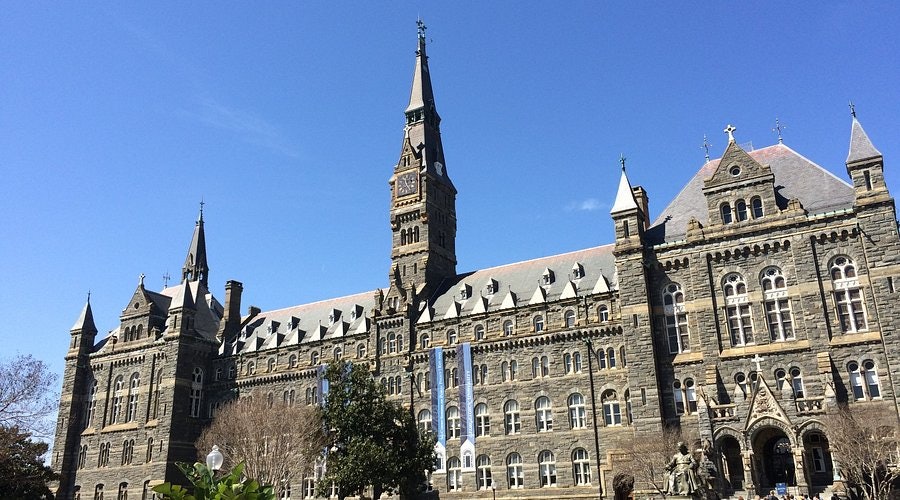
Georgetown UniversityAs Xavier University of Louisiana enters its centennial year, the nation’s oldest Catholic institution—Georgetown University—celebrated the institution’s 100-year legacy and the 45th anniversary of its Institute for Black Catholic Studies (IBCS).
Last Thursday’s event, titled “Reflecting on the Significance of the Institute for Black Catholic Studies and the Journey Toward Reconciliation,” included a discussion among leaders from Xavier’s IBCS, the Descendants Truth & Reconciliation Foundation, and Georgetown University. It also showcased an exhibition co-created by the Georgetown University Library, highlighting the impact of the IBCS—a graduate program dedicated to fostering Black Catholic theology, ministry, and leadership.
Founded in 1925 by Saint Katharine Drexel and the Sisters of the Blessed Sacrament, Xavier University of Louisiana remains the only historically Black Catholic university in the United States. The Georgetown event not only honored Xavier’s continued contributions but also reflected on the role of Black Catholic scholarship in shaping faith and social justice initiatives.
Dr. Kathleen Dorsey Bellow, director of IBCS, acknowledged the deep collaboration between Xavier and Georgetown.
Reflecting on her journey, Bellow shared how she initially hesitated to attend the IBCS in 1989 but was transformed by the experience.
“I immediately appreciated that I was on holy ground,” said Bellow. “After my very first class, I knew I would complete the program and try to come back every summer after that. I needed to be refreshed, challenged, and affirmed in my mission as a Black Catholic woman in church and society,” she said. She said that the Institute was created to form strong Catholics who can express and explain their faith in ways that resonate with their communities.
IBCS offers two tracks: a graduate theology program for future church leaders and a continuing education track for lay people seeking deeper faith formation. The program takes a well-rounded approach by including challenging coursework, combined with cultural experiences, prayer, and opportunities to build strong communities.
“We study together, we pray together, we have African dance and drumming in the evenings,” Bellow said. “We are Black and Catholic Sunday through Saturday, and our mission is to share the gift of Blackness in the life of the Church.”
The legacy of resistance, persistence, and transcendence was also central to the event’s discussion, a theme introduced by Father Joseph Brown, S.J., a leading scholar and former head of IBCS.
Monique Trusclair Maddox, CEO of the Descendants Truth & Reconciliation Foundation discussed her family’s history of enslavement by the Jesuit order and the impact of learning about Georgetown University’s role in the sale of enslaved persons to save the institution.
For years, the story remained buried until 2004, when Patricia Bayonne-Johnson uncovered it while tracing her family history. Since then, researchers along with the Jesuits, have worked to trace the lineage of those enslaved by the Society of Jesus and the Catholic Church. Their efforts have identified over 10,000 descendants, a number that continues to grow.
Trusclair Maddox detailed her spiritual journey, including prayers for peace and understanding, and the establishment of the Descendants Truth and Reconciliation Foundation. The foundation, supported by JP Morgan Chase, has issued over $166,000 in scholarships and launched programs for home modifications and racial healing. Maddox emphasized the need for systemic change and called for broader awareness and participation in restorative justice efforts.
“We knew that reconciliation required more than an acknowledgment, but demanded action,” Trusclair Maddox said. “Restorative justice isn’t just about the past, it’s about what we do today to shape a more just future,” she added, and called on institutions and individuals to engage in meaningful change toward racial healing.
As part of an effort to support the Descendants Truth & Reconciliation Foundation, Maddox highlighted a series of grassroots initiatives to raise awareness through media and marketing. He also announced the Jesuit order’s commitment of $100 million over the first five years to fund the foundation’s operations.
“Now that we have operational dollars and we’re starting to give our grants to not just descendants, but also into transformation programs and truth-telling, we’re going to continue to build our programs,” Trusclair Maddox said.
Dr. Joseph Ferrara, senior vice president and chief of staff at Georgetown University, said that he is excited about the school’s continued partnership with Xavier University.
“We’re grateful for this opportunity to celebrate alongside Xavier and to recognize their importance to Catholic higher education,” Ferrara said. “We have an opportunity to reflect on the legacy at Xavier and the process toward reconciliation. Georgetown is very happy to be a part of the process, and that’s a journey we’re still on.”











.png)

