Tag: University

  • Law professor challenges university after campus ‘shooting’ hypothetical changed in lesson plan

    Law professor challenges university after campus ‘shooting’ hypothetical changed in lesson plan

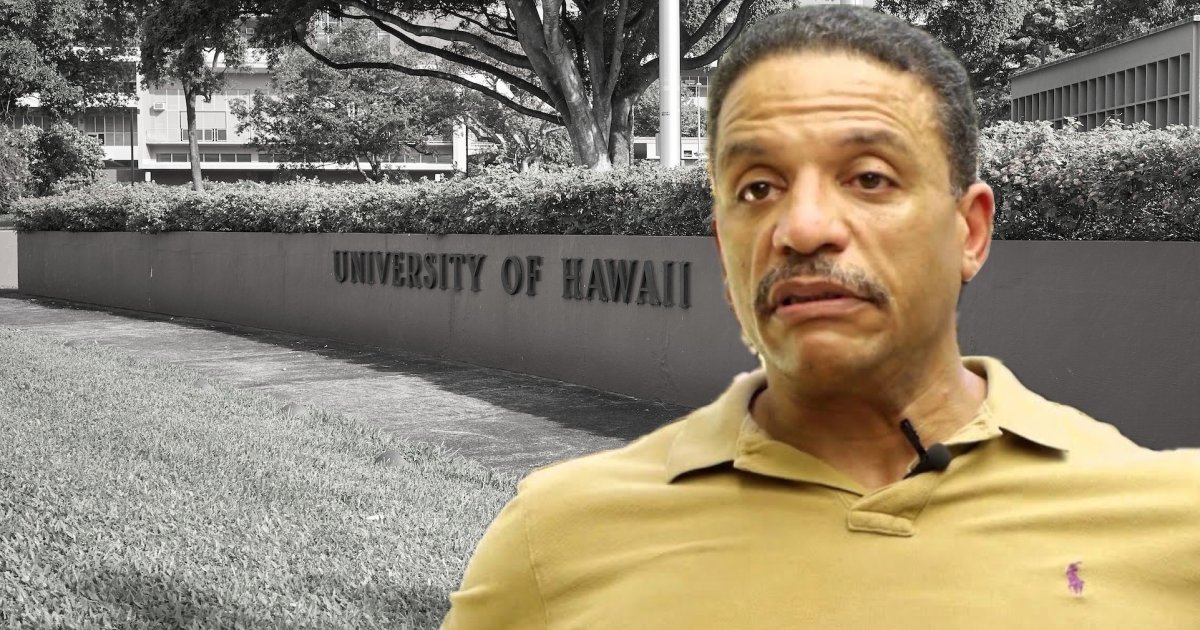
    Those concerned that law schools are shying away from teaching some areas of law to avoid controversy just got more reasons to worry, this time courtesy of the University of Hawai’i at Manoa and its absurd treatment of law professor Kenneth Lawson.

    Lawson, an accomplished faculty member at UH, used a simple hypothetical to teach the idea of “transferred intent,” a legal concept invoked when a defendant intends to harm one person, but ends up harming a second person instead. As is common in law school, Lawson offered a hypothetical to convey this idea: Imagine if a dean at his institution tried to shoot another dean, missed, and hit Lawson instead.

    Here’s a screenshot from part of his lesson:

    Those who have been to law school will understand that using campus figures to illustrate hypotheticals is not at all unusual, and is intended to add a bit of levity and grounding to what can be pretty esoteric topics.

    But when an anonymous student filed a complaint, calling the hypothetical “extremely disturbing” and citing the context of some shootings near the university’s campus, administrators summoned Lawson to a meeting near the end of last semester. Though they acknowledged he had not violated any university policy, they nevertheless mandated that he remove the thought experiment from a posted video of the class — or they would change it for him

    The ability of administrators to forcibly alter course materials is positively ripe for abuse.

    Lawson hadn’t thought twice about including the example, and had been using the example for years, not simply because it wasn’t unusual but because the protections of academic freedom give faculty wide latitude in determining how to approach controversial or potentially difficult material. When Lawson refused to alter the video of his presentation, given that he had not violated any policy, and using the hypothetical was well within his academic freedom rights, administrators just went on the school’s online curriculum system, where faculty submit presentations, to make the changes themselves.

    Remember: these changes were being made because, supposedly, some found a hypothetical of campus figures being shot to be disturbing. So this is what the administration came up with.
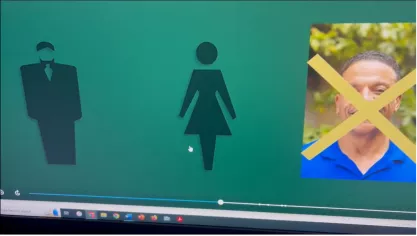
    Slide with an image of law professor Ken Lawson alongside generic man/woman icons

    You will note that there is still a campus figure on that slide, and it’s the person who was (hypothetically) shot: Professor Lawson. Only the deans have been removed. It seems that at UH, some hypothetical victims are more equal than others.

    There’s no denying that this is silly, and many will be tempted to chalk it up as just more campus craziness. But there’s a disturbing wrinkle here, which is that the ability of administrators to forcibly alter course materials is positively ripe for abuse. The university’s administrators have granted themselves unilateral authority to interfere with faculty teaching decisions, despite the fact that UH is a public institution bound by the First Amendment, which views academic freedom, which protects that right, as a “special concern.” If administrators can “memory hole” bits and pieces of curricula they don’t like, even when it violates no rule, where does it stop?

    UH still has an opportunity to do the right thing. It’s easy, too — all it has to do is step back and let faculty teach, and save the video editing for film class.
    FIRE wrote the university on Dec. 13, urging it to reverse course and restore Lawson’s original hypothetical. The university responded in early January, declining to substantively engage with our concerns or detail specific issues with our argument. Lawson, and all UH students, deserve better. As our second letter states: 

    FIRE’s concerns are only amplified by the fact that this alleged capitulation to sensitivity is occurring in a law school. To receive a proper education in the law, students will inevitably encounter difficult topics like sexual assault, homicide, physical assault, domestic violence, and may be faced in school and in their careers with descriptions of personal injuries far more graphic than those in Lawson’s hypothetical. Where do UH administrators draw the line regarding their interference in faculty instruction if they feel free to operate under a nebulous standard of protecting students from “disturbing and harmful” material? 

    Lawson has submitted a grievance about the situation, so UH still has an opportunity to do the right thing. It’s easy, too — all it has to do is step back and let faculty teach, and save the video editing for film class.

    Source link

  • How Stony Brook University got students off academic probation

    How Stony Brook University got students off academic probation

    This audio is auto-generated. Please let us know if you have feedback.

    WASHINGTON — The transition from high school to higher education is often tumultuous, and students can face a unique disadvantage their first year. With so few credits banked, one or two bad final grades can tank their cumulative GPA and risk their academic standing.

    One institution undertook an experiment to assist such students and saw promising results after just one semester.

    In summer 2024, Stony Brook University launched the Summer Academic Resilience Program, or SARP, a pilot program designed to support first-year students who had been placed on academic probation after their first semesters.

    Leaders at the public New York institution presented the results Wednesday at the American Association of Colleges and Universities‘ annual conference. 

    In just a few months, the program — which offered one-on-one coaching and wraparound services — improved the students’ GPAs and raised the institution’s overall first-year retention rate by 1 percentage point, they said.

    A common challenge

    A 2.0 GPA is the typical threshold for academic probation. The higher education research nonprofit California Competes found that 1 in 5 students end their first years with a cumulative GPA below that.

    Research has also shown that students’ likelihood of academic success and on-time graduation diminishes once they’re put on probation.

    At Stony Brook, 210 first-year students were placed on academic probation in fall 2023. Just 22 were reinstated to good standing in the spring. And 24 went on to be suspended, the last step before being dismissed.

    And that was an improvement from the year before, according to Rachelle Germana, senior associate provost for undergraduate education at Stony Brook.

    “In fall of 2022, we reinstated one first-year student who had been suspended — only one,” she told conference attendees. Another 32 students were suspended that term.

    The situation led Stony Brook, a member of the State University of New York system, to design the pilot program to improve student outcomes more quickly and prevent suspension after probation.

    In summer 2024, SARP enrolled 30 first-year students on probation. Michelle Setnikar, associate director and academic standing coordinator at Stony Brook, described the cohort as both racially and economically diverse.

    Nearly all participating students reported facing a significant personal challenge, such as mental health concerns, a family crisis or financial difficulties. Almost half said they were experiencing two or more such challenges at once.

    The pilot offered participants full financial support, covering the cost of two summer courses, housing and meals. It also conducted a needs assessment for each student and connected them with wraparound support services, including a dedicated academic advisor and one-on-one financial aid consultations.

    Before the program, the pilot group’s average cumulative GPA was 1.62, Germana said. After the summer semester, the average increased to 2.03. And by the end of fall 2024, the group’s cumulative GPA had risen to 2.65.

    More than a third of participants, 11, finished 2024 with GPAs above 3.0, Germana said.

    “What became even more impressive for us was the way in which the students demonstrated improved academic skills, which was reflected in their summer term GPA,” she said. “For five credits across these 30 students, they averaged a 3.67 GPA with the support that was provided.”

    Probation also carries nonacademic consequences, including loss of financial aid, Germana said. Even if affected students stay enrolled, the loss of funds can force them to take fewer classes and slow their progress through their programs.

    “We covered some balances for some of these students to help promote their retention, because they had been so successful as far as their GPA was concerned,” Germana said.

    Stony Brook will continue the SARP program this summer and aims to slowly increase the number of students it serves, Germana said. For 2025, the goal is to enroll up to 50 students and put a more robust financial aid plan in place.

    Source link

  • Liberty University in the Trump Era

    Liberty University in the Trump Era

    Responding to changing demographics, beliefs, and norms, US religious colleges must reflect what’s popular and profitable: Christian evangelism, prosperity theology, contemporary technology, and international outreach. Like other areas of higher education, Christian higher education must focus on the realities of revenues, expenses, and politics, as well as religious dogma.  

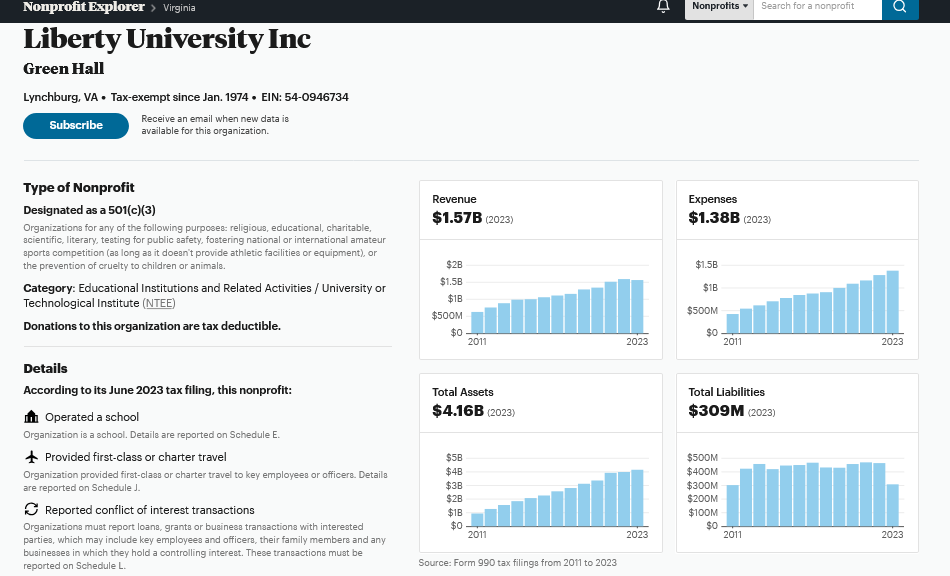
    While a number of Christian colleges and seminaries close each year, and many more face lower enrollment and financial woes, one conservative Christian university stands out for robust enrollment, stellar finances, and political pull: Liberty University. There are other older schools, particularly Catholic schools with more wealth and prestige, but that’s changing. And it could be argued that those schools are religious in a historical sense rather than a contemporary sense.    

    Two Liberties

    Liberty University is an educational behemoth, and has the advantage of being a nonprofit school that uses proprietary marketing strategies. The brick-and-mortar school, with an enrollment of less than 20,000 students, is predominantly straight, white, and middle-class. The school also has a strict honor code called the Liberty Way, which prohibits activity that may be counter to conservative Christian beliefs.

    The growing campus includes a successful law school that serves as a pipeline to Christian businesses and conservative government. The Jesse Helms School of Government and the ban of a Young Democrats club reflect its conservative principles. Liberty also houses the Center for Creation Studies and Creation Hall, with a museum to promote a literal interpretation of the Christian Bible, to include the stories of God and the beginning of time, Adam and Eve, Noah and the Ark, and Moses and the Ten Commandments. 

    Liberty University Online (LUO), an international Christian robocollege with about 100,000 students, is more diverse in terms of age, race/ethnicity, nationality, and social class. Despite a lower than average graduation rate, the online school is thriving financially, and excess funds from the operation help fund the university’s growing infrastructure, amenities, and institutional wealth. Liberty spends millions on marketing and advertising online, using its campus as a backdrop. And those efforts result in manifold profits.  

    Liberty History

    Liberty University was founded in 1971 by Jerry Falwell Sr., a visionary in Christian marketing and promotion, who used technology the technology of the time–television–to gain adherents and funders. Fawell’s vision was not to create a new seminary, but to educate evangelical Christians to be part of the fabric of professional society, as lawyers, doctors, teachers, and engineers.

    Responding to the political and cultural winds, Falwell Sr. moved away from his segregationist roots as he built his church Liberty University. It was not easy going for Liberty in the early years, which had to rely on controversial supporters. The minister also used the abortion question, the homosexual question, and conservative Christian evangelism in Latin America and Africa to energize his flock and to create important political alliances during the Ronald Reagan era. Information about those years are available at the Jerry Falwell Library Archives.

    During the Reagan era and beyond, Falwell’s idea of a Moral Majority proposed that Church and State should not be divided, and those thoughts of a strong Christian theocracy have spread for more than four decades. 

    In March 2016, Jerry Falwell Jr. referred to presidential candidate Donald Trump as America’s King David. And under the first Trump Administration, the school gained favor from the President

    Under Donald Trump’s second term, Liberty University should be expecting to get closer to that goal of a Christian theocracy. For the moment, LU has the political power and the economic power that few other schools have to enjoy.

    Related links:

    Jerry Falwell Library Digital Archives 

    Dozens of Religious Schools Under Department of Education Heightened Cash Monitoring 

    Liberty University fined record $14 million for violating campus safety law (Washington Post) 

    How Liberty University Built a Billion Dollar Empire Online (NY Times) 

    Source link

  • Resilience, flexibility and inclusion: digital transformation at The University of Manchester

    Resilience, flexibility and inclusion: digital transformation at The University of Manchester

    As Chief Information Officer, PJ Hemmaway is driving innovation at Manchester to future-proof the university and deliver the best possible day-to-day experience. In this recent interview with Melissa Bowden, Content Writer at Kortext, he shared insights on creating a sector-leading learning environment where everyone can thrive. PJ Hemmaway will be speaking at Kortext LIVE in Manchester on 6 February 2025: you can register here.

    Building resilient and flexible systems

    The University of Manchester has a bold ambition: to ‘be recognised globally as Europe’s most innovative university’. Since 2022, Hemmaway has been tasked with realising this vision, leading the institution’s digital transformation as Chief Information Officer.

    ‘As CIO, I have two core aims,’ he says. The first is ‘keeping the operational lights on’ so the university functions effectively now. The second is ensuring ‘we’re future ready – not just for one, three or five years, but for the next fifteen to twenty years’. For Hemmaway, this means making decisions that deliver long-term value, not just quick wins, and taking calculated risks.  

    Over the last two years, Hemmaway has been implementing several high-level technology strategies, all of which are underpinned by a focus on resilience and flexibility. One project has enhanced digital capabilities by laying ‘foundational building blocks’, such as a new enterprise service management system and a new integration platform, that ‘allow us to streamline workflows and improve access to services that align to our one university theme,’ he says.

    Hemmaway’s philosophy of ‘buy, don’t build’ is central to achieving his aims. ‘In the university sector, we’ve got very intelligent people who love to build things,’ he says, ‘but that creates technical debt, skills debt and data debt.’ Instead, he prefers a modular, scalable approach. ‘One of the reasons Manchester’s technology transformation has been so successful is that we’ve been modular and had small pilots – we’ve built on those and we’ve delivered’.

    Enhancing institutional intelligence

    The next stage of Hemmaway’s digital transformation strategy involves modernising Manchester’s existing data infrastructure. This means replacing older systems, which he prefers to describe as ‘heritage’ rather than ‘legacy’ technology. ‘I’ve got a lot of colleagues who implemented this technology,’ he explains, ‘and it’s part of our heritage as an institution’.

    Data is ubiquitous in higher education, yet many universities are still not leveraging it effectively. ‘As a sector, we’re not capitalising on the data we’ve got,’ says Hemmaway, ‘whether it’s research outputs or data from teaching, learning, and professional services ecosystems’.

    In response, Hemmaway is keen to foster a culture of data sharing. ‘Gone are the days where we want people to be holding their silos of data,’ says Hemmaway. Instead, by integrating data from multiple sources across the institution and then leveraging analytics tools, the university can benefit from powerful insights into areas like student retention, outcomes and wellbeing.

    Bridging the digital divide

    People are ‘at the heart’ of Manchester’s strategic plan, with its vision of students and colleagues working together ‘as one connected community’. For Hemmaway, a personal focus on equity and inclusion informs his stewardship of the university’s digital transformation too.

    He shares, ‘I come from a humble background but, thanks to my dad, I was very fortunate to have a computer in the late 80s’. When Hemmaway started his career in a bank, this early access gave him an advantage over colleagues who were still unfamiliar with the Internet.

    ‘It created an imbalance in terms of those that ‘could’ – a digital divide,’ he says. A similar gap is emerging now, with the rapid proliferation of generative AI tools. ‘It is critical to provide equitable access,’ Hemmaway states, ‘otherwise we’re going to see that digital divide again’. But access alone is not sufficient; institutions must help users develop digital confidence too.

    As part of this, Hemmaway encourages a risk-based culture of experimentation. ‘Most organisations are risk averse and they lose opportunities,’ he says. Instead, he has been selecting new products – including AI tools – and inviting colleagues to try them out in a trusted and supported environment. Feedback from these trials informs further product development.

    Successfully implementing new technology

    When asked for advice on technology adoption, Hemmaway emphasises collaboration. ‘My biggest piece of advice is to work with partners’, he says. For him, that means having a network of go-to peers and finding trusted vendors who understand the higher education sector.

    Hemmaway is now keen to explore partnering with Kortext, after seeing a demonstration of Kortext fusion – a unified strategic platform developed in collaboration with Microsoft. Following a conference, he was motivated to find a solution built on Microsoft Fabric and ‘I nearly broke my number one principle,’ he jokes. ‘I thought we were going to have to build it, not buy it’.

    However, the introduction to Kortext fusion was ‘serendipity’. Going forward, Hemmaway will be working closely with Kortext and Microsoft to explore how the platform can help Manchester to enhance data-driven decision-making and enhance the student experience. He adds, ‘this technology could also help me accelerate my digital-first strategy’, seeing it as a foundation to support flexible and inclusive education with equitable access for all.

    The benefits of a unified platform align with Hemmaway’s final thoughts. ‘The world is a complex place,’ he says, ‘and we need to simplify it’. For him, ‘simplification is a number one priority’ for successful digital transformation. Without this, he says, ‘we won’t be efficient, we won’t be flexible, and we won’t have inclusive education in a digital-first environment’.

    Join PJ, HEPI Director Nick Hillman and other education and technology expert speakers at a series of three events for HE leaders hosted at Microsoft’s offices in London, Edinburgh and Manchester during late January and early February. Find out more and register your free place here.

    Source link

  • FIRE to University of Texas at Dallas: Stop censoring the student press

    FIRE to University of Texas at Dallas: Stop censoring the student press

    The University of Texas at Dallas has a troubling history of trying to silence students. Now those students are fighting back.

    Today, the editors of The Retrograde published their first print edition, marking a triumphant return for journalism on campus in the face of administrative efforts to quash student press.

    Headlines above the fold of the first issue of The Retrograde, a new independent student newspaper at UT Dallas.

    Why call the newspaper The Retrograde? Because it’s replacing the former student newspaper, The Mercury, which ran into trouble when it covered the pro-Palestinian encampments on campus and shed light on UT Dallas’s use of state troopers (the same force that broke up UT Austin’s encampment just one week prior) and other efforts to quash even peaceful protest. As student journalists reported, their relationship with the administration subsequently deteriorated. University officials demoted the newspaper’s advisor and even removed copies of the paper from newsstands. At the center of this interference were Lydia Lum, director of student media, and Jenni Huffenberger, senior director of marketing and student media, whose titles reflect the university’s resistance to editorial freedom.

    The conflict between the paper and the administration came to a head when Lum called for a meeting of the Student Media Oversight Board, a university body which has the power to remove student leaders, accusing The Mercury’s editor-in-chief, Gregorio Olivares Gutierrez, of violating student media bylaws by having another form of employment, exceeding printing costs, and “bypassing advisor involvement.” Yet rather than follow those same bylaws, which offer detailed instructions for removing a student editor, Lum told board members from other student media outlets not to attend the meeting. A short-handed board then voted to oust Gutierrez. Adding insult to injury, Huffenberger unilaterally denied Gutierrez’s appeal, again ignoring the bylaws, which require the full board to consider any termination appeals.

    The student journalists of The Retrograde have shown incredible spirit. With your help, we can ensure their efforts — and the rights of all student journalists — are respected.

    In response, The Mercury’s staff went on strike, demanding Gutierrez’s reinstatement. To help in that effort, FIRE and the Student Press Law Center joined forces to pen a Nov. 12, 2024 letter calling for UT Dallas to honor the rights of the student journalists. We also asked them to pay the students the money they earned for the time they worked prior to the strike.

    UT Dallas refused to listen. Instead of embracing freedom of the press, the administration doubled down on censorship, ignoring both the students’ and our calls for justice.

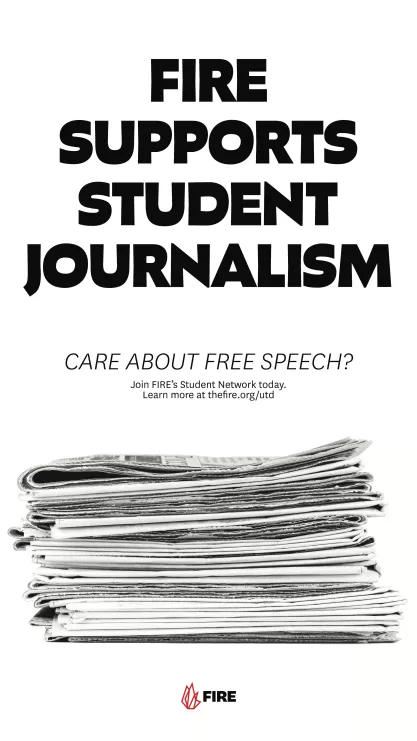
    FIRE's advertisement in the first issue of the Retrograde student newspaper at UT Dallas. The headline reads: "FIRE Supports Student Journalism"

    FIRE took out a full page ad in support of The Retrograde at UT Dallas.

    In our letter, we argued that the university’s firing of Gutierrez was in retaliation for The Mercury’s unflattering coverage of the way administrators had handled the encampments. This is not even the first time UT Dallas has chosen censorship as the “best solution;” look no further than in late 2023 when they removed the “Spirit Rocks” students used to express themselves. Unfortunately, the university ignored both the students’ exhortations and FIRE’s demands, leaving UT Dallas without its newspaper. 

    But FIRE’s Student Press Freedom Initiative is here to make sure censorship never gets the last word.

    Students established The Retrograde, a fully independent newspaper. Without university resources, they have had to crowdfund and source their own equipment, working spaces, a new website, and everything else necessary to provide quality student-led journalism to the UT Dallas community. They succeeded, and FIRE is proud to support their efforts, placing a full-page ad in this week’s inaugural issue of The Retrograde.

    The fight for press freedom at UT Dallas is far from over — but we need your help to make a difference.

    Demand accountability from UT Dallas. The student journalists of The Retrograde have shown incredible spirit. With your help, we can ensure their efforts — and the rights of all student journalists — are respected.

    Source link

  • Time to address disability inclusion for university staff

    Time to address disability inclusion for university staff

    Staff wellbeing is important for all organisations.

    This is especially evident in higher education where research indicates that staff wellbeing impacts on the student experience, the metric that drives the sector.

    In particular, reports demonstrate that stress and burnout is higher in university staff than in the general population, reflecting systemic factors such as high workloads and insecure contracts.

    There has been a greater focus on this issue in recent years and staff wellbeing is acknowledged within the University Mental Health Charter. However, as the sector is squeezed financially, staff are being placed under even greater pressure to do more with less, further placing staff wellbeing at risk.

    Such issues are likely to disproportionately impact those with protected characteristics – including disabled staff. However, nowhere is the need for staff support more apparent than in relation to equality and diversity, where the focus on student experience typically leaves a void for staff: For example, Universities UK notes:

    We believe that anyone who would benefit from a university education should have access to one. But more than that, we want to support our members in creating inclusive environments where all students enjoy their experience and achieve their study and career goals.” (emphasis added)

    But what about disabled staff?

    Data from Advance HE reveal that 6.8 per cent of staff in higher education have disclosed a disability, with the Higher Education Statistics Agency (HESA) reporting this as 15,155 academic staff and 16,320 staff in non-academic roles (though the latter figure represents only those providers that complete this, optional part of the underlying HESA submission). Given that 24 per cent of working age adults have a disability and 17.3 per cent of students declare a disability, disabled staff are vastly under-represented in higher education. Representation is especially problematic for academics, as declarations are consistently higher among professional and support staff. It is likely that the rates of disabled staff are impacted by a range of factors including a reluctance to disclose, with sharing a disability likened to “coming out”.

    Even the words “disclosure” and “declare” themselves suggest that sharing your disability is something to be concerned about; hence inclusive language is important in all discussions of disability. Disclosure is, of course, particularly important for staff with non-visible disabilities who may otherwise not have their impairments acknowledged. Being visible is also central to challenging ableism and collective advocacy.

    Disabled staff face a number of barriers to inclusion. For example, line management support is inconsistent and disabled staff experience glass partitions and ceilings that limit both horizontal and vertical movement. It should, however, be emphasised that disabled staff are not a homogenous group.

    Staff with a range of impairments are included within available data, including those disclosing specific learning differences and longstanding illness or health conditions. Further, some staff disclose multiple disabilities, impairments and conditions. Care should be taken to understand the experiences of staff with specific conditions or condition types and to acknowledge the extent to which experiences differ both across and within categories of disability.

    Staff are legally protected by the Equality Act (2010) which requires workplaces to make reasonable adjustments for impairments. Negotiating this process can, however, be exhausting for staff who have to advocate for themselves and make a case for how the employer should operationalise the weasel word “reasonable”. Staff can be encouraged to disclose disabilities though an improved commitment to support, for example by universities being flexible in their application of accommodations and line managers being given training to appreciate that staff may have fluctuating conditions and that the same impairment can impact staff differently.

    Wider support is also welcomed through government initiatives such as Access to Work, though accessing timely support is challenging in the UK context where reported wait times for assessment have increased significantly.

    Disabled Staff Networks can be a core part of the support for workers with impairments; these can offer a place for social connection, an empathic ear, and a place where staff can share experiences and strategies to respond to workplace challenges. In addition, the National Association of Disabled Staff Networks (NADSN) connects and represents disabled staff networks; here members share resources, promote events and work together to bring about change. NADSN has been supporting disabled staff networks to drive real policy change within higher education institutions (HEIs) and, over the past decade, has responded to national consultations and contributed to policy development thus amplifying the voices of all disabled staff and providing challenge to colleagues leading equality, diversity and inclusion (EDI); there are excellent resources on their website for anyone wanting to learn more.

    While NADSN’s work has been powerful for disabled staff, there is a lack of wider support from influential organisations to drive equality and diversity in relation to disability in universities. Important progress is being made in highlighting key issues relating to race and gender; in particular the Race Equality Charter and Athena Swan are pressing for transformative change. Although these schemes have not been without criticism, they have increased visibility of equality issues and championed a cultural shift. It is also important to recognise that intersectionality is highlighted within these charters, pertinent to staff who face more than one form of discrimination, such as disabled women in academia who benefit from support with progression. Nonetheless, a disability charter has been conspicuous by its absence.

    Work to improve disability inclusion for staff in universities is taking place, for example Evans and Zhu’s (2022) Disability Inclusion Institutional Framework stresses an integrated approach to disability inclusion, and places equal emphasis on staff and student disability inclusion. They argue that if disability inclusion is to improve for students we need to start with staff. There are also excellent examples of work such as podcasts sharing experiences of disability in HE; these increase visibility of disability, help to connect the community, and promote learning from each other. Within research, disability is being addressedand there is greater focus in both policy and practice on the development of anti-ableist research cultures that enable disabled researchers and professional services colleagues. Also pressing for change is the University Mental Health Charter where wellbeing of staff is acknowledged within domain 3 and inclusivity noted as an enabling theme; the charter describes the challenges that staff have to navigate such as issues with adjustments, social barriers, and the impact of the built environment.

    What’s next?

    More focus and commitment is needed to respond to disability initiatives and drive impactful change. In 2022 colleagues who had met via NADSN began discussing how to respond to this need. Rather than creating a charter like the examples above, we set out to develop a mechanism to encourage universities to share best practice relating to the inclusion of disabled staff. RIDE Higher, standing for “Realising the Inclusion of Disabled Employees” in Higher Education, was born and today it is a core initiative of NADSN.

    RIDE Higher is chaired by Melanie Best of the University of Wolverhampton, and run by and for disabled staff working in higher education; our steering group includes staff from HE institutions across the UK (Please connect with us through NADSN’s news page and social media channels). Its mission is to change the HE landscape and ensure that disabled employees are seen, valued, and can thrive.

    RIDE Higher is committed to a research-informed approach to driving disability inclusion across the sector. Central to this initiative, is the need for better understanding the lived experience of disabled staff working in higher education. This is why RIDE higher is launched the first National Disabled Staff Survey (NDSS) during Disability History Month, which fittingly, focussed on “livelihood and employment” this year.

    We invite all staff who are Disabled, Deaf, Neurodivergent and living with a long-term health condition in UK universities to share their experiences with us  We welcome your perspectives, whatever your role in the university, whether your experiences of disability are visible or non-visible, whether you have a diagnosis confirmed or not, and whether you have disclosed your impairment or health condition to your university or not. We acknowledge that identity is complex and that you may have an impairment but not identify as disabled; we welcome your input however you choose to identify.

    Acknowledgements: As authors we would like to thank those who provided peer feedback during the development of this article including the RIDE Higher steering group (Melanie Best, Hamied Haroon, Dan Goodley, Elisabeth Griffiths, Meredith Wilkinson, Gayle Brewer, and Anica Zeyen).

    Source link

  • Students feel “spammed” by “overload” of university emails

    Students feel “spammed” by “overload” of university emails

    Students feel that they receive “too many emails” from their universities, and they find their institution’s communications “inconsistent, inauthentic and rather annoying,” according to researchers.

    A new paper says that an “overload” of emails sent from universities to students means important emails are getting “buried” and that students simply disengage from their inboxes.

    The article, based on interviews with students, senior academics and professional staff who typically distribute emails, found that students were more likely to read emails sent by course tutors, whereas they were likely to ignore mass emails sent from unknown senders.

    “Students spoke positively about the messages that related to modules they were studying but were critical of the ‘dear student’ mass communications, which most described as ‘irrelevant’ and some described as ‘spam’,” says the paper published in Perspectives: Policy and Practice in Higher Education.

    It found students were “remarkably consistent” when filtering their emails, explaining, “They read all the emails relating to their modules, then prioritized the rest using the name of the generator and the subject line. Messages from teaching staff were welcomed, but students rarely read messages from unknown generators, messages sent to all students or newsletters.”

    Student services staff said they felt “uncomfortable [and] even guilty” about some of the messages they were asked to distribute, and one student told the researchers, “In my first year, like, there were so many emails being sent out that I basically just gave up.”

    However, report co-author Judith Simpson, lecturer in material culture at the University of Leeds, told Times Higher Education that while institutions were “a long way away from optimal communication,” it was “important to note that we measured student perception of email.”

    “Some students definitely feel as if they are being spammed, but we don’t actually know how many emails it takes to create that effect. A small number of emails asking you to do life admin might feel like a horrible burden if you haven’t done life admin before,” she said.

    The article concedes that “universities are in a difficult situation” and that “students expect to be provided with necessary information but seem unprepared to read it.”

    It argues that while this is an “eternal problem” and students failed to read paper handbooks in the pre-email era, “‘overload’ does seem to have been accentuated by the pandemic,” when universities “compensated” for the lack of in-person communication by “reaching out” to students via email. This often included important news, as well as information about “all the good things the university was doing” during this period to support students.

    “Staff and students are less likely to meet on campus now that hybrid working is the norm, and the ‘email habits’ developed in the pandemic are still in operation,” the article says.

    It suggests that to improve student engagement, universities should consider re-routing well-being messages through personal tutors, and that administrative staff should be introduced to students—virtually or in-person—to increase trust in communications.

    Source link

  • University of the Arts unloads 2 buildings for $10.3M in auctions

    University of the Arts unloads 2 buildings for $10.3M in auctions

    This audio is auto-generated. Please let us know if you have feedback.

    Dive Brief:

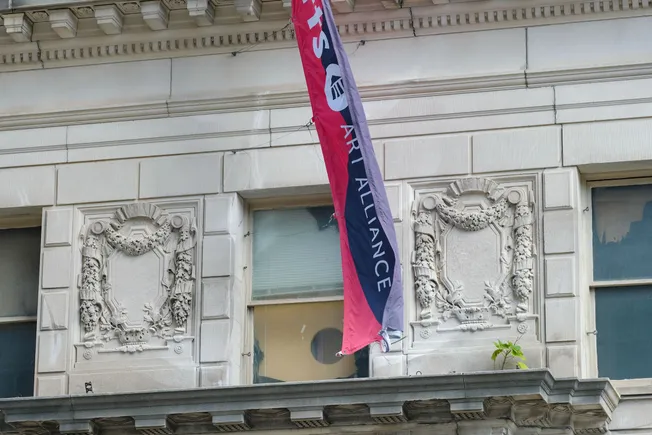
    • The University of the Arts Tuesday sold one of its prized properties, the Arts Alliance building in Philadelphia’s Rittenhouse Square neighborhood, in a bankruptcy liquidation auction run by its Chapter 7 trustee. 
    • The Philadelphia-based nonprofit Curtis Institute of Music offered $7.6 million for the building at auction, topping the previous high bid from real estate developer Allan Domb. The bankruptcy judge overseeing UArts’ case approved the sale Wednesday.
    • UArts’ Arts Bank building also sold in a separate auction for $2.7 million to the firm Quadro Bay, which beat out a bid from the nonprofit Lantern Theater Co. The sale still needs court approval.

    Dive Insight:

    The fate of a failed college’s property often draws interest from the surrounding community. In UArts’ case, the university — which shocked Philadelphia with its sudden closure last summer — occupied several historic buildings in the city’s downtown.

    The case’s trustee, Alfred Giuliano, said previously in court papers that efforts to sell the properties involved 27,000 emails to prospective buyers and more than 150 confidentiality and nondisclosure agreements signed with prospects. 

    One of the key players so far has been nearby Temple University, which has enrolled hundreds of UArts’ former and prospective students. The university has bid $18 million for UArts’ Terra Hall, which sits on the university’s main South Broad Street campus. 

    A one-time hotel, Terra Hall served as UArts’ primary academic building. In a statement last week, Temple leadership described the possible acquisition as an “exciting prospect as it allows us to establish a prominent Temple presence in an iconic Philadelphia building.”

    The public university added that buying Terra Hall would create “an opportunity for the university to be part of the continued revitalization of the Avenue of the Arts — an important cultural corridor — while opening the door for additional academic opportunities for our students.”

    Temple also offered $6.2 million for the Arts Alliance building, which UArts acquired through a 2018 merger. The university was narrowly beaten out by Domb’s bid. However, Pennsylvania Attorney General Michelle Henry objected to the developer’s bid Monday, arguing that Temple should be given priority because of restrictions on the sale of charitable assets in state law and the building’s deed covenants. After the auction, the trustee deemed Temple the backup bidder should the sale to the Curtis Institute fail to close.

    Domb reportedly withdrew from bidding during the bankruptcy auction. 

    What attracted me to it was the potential of the building, how beautiful it is, the ability to use it for mostly arts, culture and possibly music,” the developer told WHYY, Philadelphia’s NPR affiliate. But he added of the winning bidder, “Curtis is a gem and I’m really pleased they got it.”

    Until Wednesday, the Lantern Theater Co. led the bidding for UArts’ Arts Bank building on South Broad Street with an offer of nearly $1.8 million. Giuliano named the nonprofit as the backup buyer if the deal with auction winner Quadro Bay falls through.

    As with the Arts Alliance building, the attorney general during a Wednesday hearing raised concerns selling Arts Bank to a for-profit company, WHYY reported. However, the building does not carry the same restrictive deed covenants as Arts Alliance.

    UArts has several other buildings in its portfolio left to be sold, including the columned Dorrance Hamilton Hall and other facilities on its main campus. When it filed for bankruptcy in September, the university listed nine properties that it owned, valuing them collectively at $87.1 million. Terra Hall came in highest at $48.4 million.

    Source link

  • West Virginia Executive Order on ‘DEI’ unconstitutionally limits university classroom discussions.

    West Virginia Executive Order on ‘DEI’ unconstitutionally limits university classroom discussions.

    West Virginia Gov. Patrick Morrisey issued an executive order yesterday to eliminate certain diversity, equity, and inclusion practices in state agencies and organizations that receive state money. While the state may limit certain programs or activities of state agencies, the executive order is written so broadly that it applies to classroom instruction in higher education. As such, the executive order violates the First Amendment and must be rescinded or amended to make clear that it does not affect what’s discussed in college classrooms. If the order is not rescinded or amended, West Virginia’s public institutions must protect faculty academic freedom rights and make sure that classroom teaching is not affected. 

    If you are a faculty member whose teaching may be impacted by Executive Order 3-25, FIRE is here for you.

    Provision 1.b. sweeps in an enormous amount of expression protected under the First Amendment protected expression at West Virginia’s universities and colleges. It provides: 

    [No] entity receiving state funds, shall utilize state funds, property, or resources to . . . Mandate any person to participate in, listen to, or receive any education, training, activities, procedures, or programming to the extent such education, training, activity, or procedure promotes or encourages the granting of preferences based on one person’s particular race, color, sex, ethnicity, or national origin over that of another.

    This language violates the First Amendment, reaching college classroom instruction and discussion. It is viewpoint-discriminatory, prohibiting faculty from sharing any material that “promotes or encourages” a view while allowing them to criticize that viewpoint. And while other states’ anti-DEI efforts have included language that might protect discussions in university and college classrooms, West Virginia’s does not — instead, it applies to any agency receiving state funds. West Virginia’s public universities cannot both comply with the executive order and their obligations under the first Amendment. 

    Governor Morrisey should rescind or amend the Executive Order to make clear that it does not affect higher education classroom instruction. 

    Whatever authority states might have to regulate other state agencies (including K-12 education and non academic higher education programming), the university classroom context is different. The First Amendment protects the right of faculty members at public universities and colleges to discuss pedagogically-relevant material in their courses, even if that material is offensive to students, colleagues, the public, or lawmakers. As the Supreme Court held in Keyishian v. Board of Regents of the University of the State of New York (1967), state officials cannot use the law to impose an “orthodoxy over the [college] classroom,” where students learn “through wide exposure to that robust exchange of ideas,” not “authoritative selection,” wrote Justice William Brennan.

    FIRE has defended this important right across the ideological spectrum in courts across the country, successfully suing over Florida’s “Stop WOKE Act” and maintaining an ongoing challenge against California’s requirement that faculty incorporate ‘anti-racist’ viewpoints into their classroom teaching.

    Executive Order 3-25 violates those First Amendment rights. Under Executive Order 3-25:

    • A law professor teaching constitutional law cannot present Supreme Court opinions arguing in favor of race-conscious admissions at universities and colleges, including the dissenting opinions in Students for Fair Admissions v. Harvard College or the plurality or majority opinions in Bakke and Grutter.
    • A college professor cannot recount other arguments in favor of affirmative action or racial preferences, which remain legal in many other circumstances outside of the university context.
    • A professor discussing reparations — including proposals recently introduced in the United States Senate — can only criticize reparations, but could not present arguments in favor, even if they want to dissect those arguments.
    • A history professor would have to think twice before presenting materials relating to historic immigration policies that limited immigrants by national origin, as that might “promote” preferences based on national origin.
    • A political science professor cannot present materials arguing in favor of continuing to limit Selective Service (i.e., the military draft) registration requirements to men, or limiting combat roles to men, as those arguments would “promote” preferences based on sex.

    Diversity, equity, and inclusion statements FAQ

    Issue Pages

    Vague or ideologically motivated DEI statement policies can too easily function as litmus tests for adherence to prevailing ideological views on DEI.


    Read More

    Worse still, it is impossible for an educator to know what might “promote or encourage the granting of preferences” with regard to a particular student. For instance, since students reading the Supreme Court decisions in Bakke and Grutter may find their arguments convincing, even teaching about these landmark cases would risk violating the executive order. This cannot be reconciled with the First Amendment and academic freedom rights of West Virginia students and professors.

    The plain language of the provision clearly conflicts with West Virginians’ constitutional rights. Governor Morrisey should rescind or amend the Executive Order to make clear that it does not affect higher education classroom instruction. If you are a faculty member whose teaching may be impacted by Executive Order 3-25, please contact FIRE: https://thefire.org/alarm.

    Source link

  • Student Minds Blog : Loneliness at University: A Common, Shared Experience

    Student Minds Blog : Loneliness at University: A Common, Shared Experience

    William discusses the common experience of loneliness at university, emphasising that it’s okay to feel this way. He shares tips for coping and encourages students to connect, support each other, and create a more inclusive environment.


    – William Sarenden

    Loneliness is something we don’t talk about enough. Yet, it’s an experience many students face — perhaps more often than we realise. 

    The transition to university is a massive life change. You’re stepping into an unfamiliar environment, meeting new people, and often leaving behind the support systems you’ve relied on. You might even find yourself feeling lonely despite making friends, excelling in your studies, or working toward your goals.  

    If this resonates with you, know this: you’re not alone in these feelings, and it’s okay. Loneliness is a deeply human emotion, and acknowledging it is the first step toward overcoming it.  

    The Impact of Loneliness

    Loneliness is more than an emotional challenge and can affect many aspects of life, from academic focus to physical well-being and self-esteem. It often leads to a cycle of withdrawal, making it even harder to break free from. But loneliness isn’t a sign of weakness or failure; it’s a natural signal that something needs attention. Much like hunger tells us to eat, loneliness is a reminder to seek connection. What matters is how we respond to this feeling and the steps we take to address it.  

    The Value of Community

    During my time at university, I’ve learned that community is vastly understated. Whether it’s sharing a laugh during a chaotic group work session, exchanging smiles in a lecture, or starting a conversation at an event, small interactions can lead to the most meaningful connections. It’s true though that building a sense of community requires effort. Imagine how different university life could feel if we all made an effort to include others — whether by saying hello, organizing a get-together, or simply asking, “Are you okay?” It’s not about having a vast social circle but about fostering genuine moments of connection.  

    Practical Ways to Tackle Loneliness

    If you’re struggling with loneliness, here are some strategies that have worked for me and others I know:  

    • Reframe Your Perspective – Loneliness is a signal, not a flaw. Instead of seeing it as something negative, think of it as an opportunity for growth. This mindset shift can help you feel empowered to take action.  
    • Seek Social Opportunities – Get involved in campus clubs or societies that align with your interests. I found that group activities have helped me slide into conversation more easily, allowing me to grow my circle and feel more comfortable starting conversations with new people.  
    • Open Up – Sharing your feelings with someone you trust can make a significant difference. Vulnerability can deepen relationships and help others understand you better.  
    • Start Small – Begin with small gestures, like greeting someone in your class or striking up a light conversation. Over time, these interactions can grow into meaningful connections. I know that some of my closest friends have come from these small acts.  
    • Care for Yourself – When loneliness feels overwhelming, self-care can often be overlooked. Prioritise eating well, exercising, and getting enough rest—your physical well-being directly affects your mental health.  

    A Shared Journey

    Loneliness is a common experience that doesn’t define you but reminds you that you’re human. It might feel daunting at times, but with patience, persistence, and a little drive, it’s something you can overcome.  

    If you feel isolated, remember that many of your peers are navigating similar challenges. None of us have it all figured out, and most of us have moments of uncertainty and longing for connection.  

    University life is full of ups and downs, but it’s also brimming with opportunities for growth and connection. Let’s make an effort to create a more inclusive and supportive environment, together. Who knows? That awkward hello might lead to a friendship that lasts a lifetime.  

    Take care of yourselves, and don’t hesitate to seek support if you need it.


    Find out more about how you can overcome loneliness at the Student Space.

    I am a final-year Philosophy undergraduate, and I wanted to write about loneliness because it’s something I’ve observed all too often during my time at university and something I’ve experienced myself. Reflecting on my journey, I realise how helpful it would have been to have some guidance along the way. My hope in sharing these thoughts is that it might help others feel a little less alone.

    Source link