Tag: University

  • Dean Hoke Appointed President and CEO of the American Association of University Administrators – Edu Alliance Journal

    Dean Hoke Appointed President and CEO of the American Association of University Administrators – Edu Alliance Journal

    BLOOMINGTON, Ind. – March 21, 2023 — Dean Hoke, of Bloomington, Indiana, has been chosen to serve as the next President and Chief Executive Officer of the American Association of University Administrators (AAUA), currently based in Glen Mills, Pennsylvania. His appointment is effective July 1st when the current President & CEO, Dan L. King will retire after nineteen years of service in that position.

    A highly successful and internationally recognized higher education administrator, Mr. Hoke first affiliated with the Higher Colleges of Technology in the United Arab Emirates in 2009 as Head of Marketing and Institutional Development; that experience was followed by four years at Khalifa University with the UAE Advanced Network for Research and Education. In 2014 he became Co-Founder in a new educational management consulting firm, Edu Alliance Ltd. based in the UAE; three years later Edu Alliance Group opened its US office in Bloomington serving as the Managing Partner.

    Mr. Hoke has extensive experience in the fields of higher education, marketing, communications and e-Learning. He has held a number of senior higher education administrative positions; and co-founded the Connected Learning Network, a provider of online educational services for educational institutions. In the field of broadcasting he served as an executive and CEO of four public broadcasting stations, and executive vice president of a cable network. He currently serves on the Advisory Board of the School of Education of Franklin University in Ohio and is a member of the Advisory Board of Higher Education Digest. He recently served as president-elect for the United States Distance Learning Association and chaired the Global Partnership Committee.

    Mr. Hoke currently produces and co-hosts the podcast series Higher Ed Without Borders. He holds a B.A. degree from Urbana University and an M.S. degree from the University of Louisville. He also completed the Executive Management Program at The Wharton School of the University of Pennsylvania.

    AAUA Board of Directors chairperson William Hill, assistant dean of the College of Education at Wayne State University, said, “Mr. Hoke is, without a doubt, the best person to step up and take over the executive administration of this organization. His background and his wide range of experiences will be useful. Moreso, his enthusiasm for leading AAUA to new programming ventures which should lead to expanded membership is contagious!”

    When interviewed, Mr. Hoke remarked, “It is a great honor to be selected as the AAUA’s next President and CEO. I am grateful to the Board for their unanimous support and to Dan King, who has led the organization for several years.”

    He continued, “AAUA sees a high percentage of administrators leaving the higher education profession. They are frustrated over the lack of opportunities for advancement, work challenges, and readily available professional development. The AAUA board of directors and I will work with our membership to build new and innovative professional development programs and services which will address a higher level of training and increase retention of our higher education administrator colleagues.”

    Departing chief executive, Dan King remarked, “I had planned to leave my AAUA responsibilities over two years ago but my departure was delayed by the COVID pandemic. The delay turned out to be fortuitous because it was during this time that I developed a closer professional tie with Mr. Hoke and was able to recruit his candidacy for this position. AAUA is ready for new direction, and Mr. Hoke has the perfect combination of personality, vision and enthusiasm to lead it to new heights. I look forward to watching the association improve and grow.”

    Source link

  • NLRB Region Files Complaint Against the NCAA, Pac-12 and the University of Southern California – CUPA-HR

    NLRB Region Files Complaint Against the NCAA, Pac-12 and the University of Southern California – CUPA-HR

    by CUPA-HR | December 21, 2022

    On December 15, the National Labor Relations Board (NLRB)’s Region 31 announced it will pursue a complaint against the National Collegiate Athletic Association (NCAA), the Pac-12 Conference and the University of Southern California (USC) for violating the National Labor Relations Act (NLRA) by misclassifying student-athletes as non-employees, unless the matter is settled. On February 8, the National College Players Association filed an unfair labor practice (ULP) charge with the region alleging that USC; the University of California, Los Angeles; the Pac-12 Conference; and the NCAA are “joint employers” who violated the NLRA by “repeatedly misclassifying employees as ‘student-athlete’ non-employees.”

    Region 31 is part of the NLRB’s Office of General Counsel, which is responsible for receiving charges from employees, unions or employers that allege violations of the NLRA. The region decides whether to issue a complaint on charges it receives. If the region does not issue a complaint, the matter is generally closed. If the region decides to file a complaint, however, the case is litigated before an administrative law judge.

    Region 31’s complaint is the latest development regarding the employment status of student-athletes. The National College Players Association’s February 8 charge followed NLRB General Counsel Jennifer Abruzzo’s memorandum issued last September in which she argues that student-athletes are employees under the NLRA and are therefore afforded all statutory protections as prescribed under the law.

    The region’s decision in response to the February ULP charge means the NCAA, Pac-12 Conference and USC can either settle or litigate the case. A final ruling could take years to come to fruition, however, as both parties in the case could appeal the decisions made by the administrative law judge to the five-member NLRB. The NLRB’s decision can be appealed to federal appellate courts  and from there all the way up to the Supreme Court.

    The news of the region’s complaint follows the announcement earlier in the day that Massachusetts Governor Charlie Baker would be the NCAA’s next president in March after his last term in office expires in January. Baker, a Republican, is known for his work to build bipartisan consensus on policy in Massachusetts, which the NCAA may recognize as a strength as they continue to engage Congress on other issues related to student-athlete compensation. It is unclear what, if any, impact this will have on the ULP charges.

    CUPA-HR will continue to keep members apprised of this case and others involving student-athlete employment classification that may emerge in the future.


    Source link

  • More Than Half of College and University Employees Say They Are Likely to Look for Other Employment in the Near Future – CUPA-HR

    More Than Half of College and University Employees Say They Are Likely to Look for Other Employment in the Near Future – CUPA-HR

    by CUPA-HR | July 21, 2022

    New research from CUPA-HR shows that higher education institutions are in the midst of a talent crisis, as many staff, professionals and administrators are considering other employment opportunities due to dissatisfaction with their pay, their opportunities for advancement, their institutions’ remote and flex work policies, and more.

    The newly published research report, The CUPA-HR 2022 Higher Education Employee Retention Survey: Initial Results, provides an overview of what proportion of the higher ed workforce is at risk for leaving, why they’re considering leaving employment, and with which policies, work arrangements and benefits employees are satisfied or dissatisfied. The report includes several recommendations for addressing these issues.

    Data from 3,815 higher ed employees across 949 institutions and representing 15 departments/functional areas were analyzed for this report.

    Findings

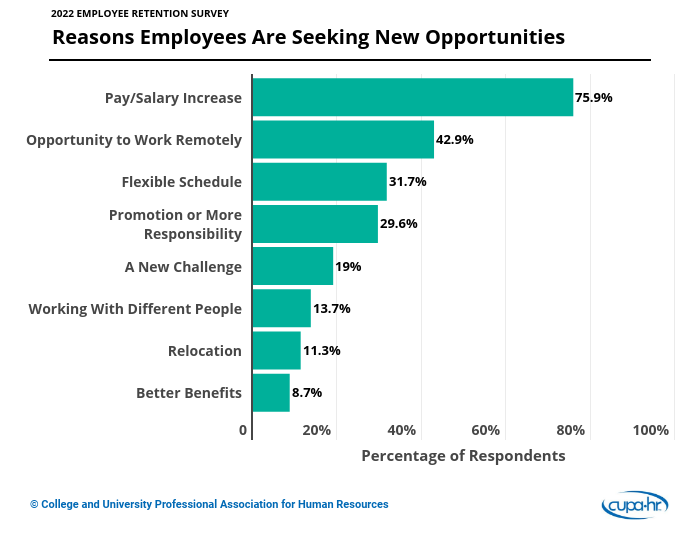
    Higher ed employees are looking for other jobs, mostly because they desire a pay increase. More than half (57%) of the higher ed workforce is at least somewhat likely to look for other employment opportunities in the next 12 months. The most common reason for seeking other employment (provided by three-fourths of those likely to look for another job) is an increase in pay. Other reasons are that they desire more remote work opportunities, a more flexible schedule, and a promotion or more responsibility.

    Higher ed institutions are not providing the remote work opportunities that employees want. Nearly three-fourths (71%) of employees report that most of their duties can be performed remotely, and 69% would prefer to have at least at least a partially remote work arrangement, yet 63% are working mostly or completely on-site.

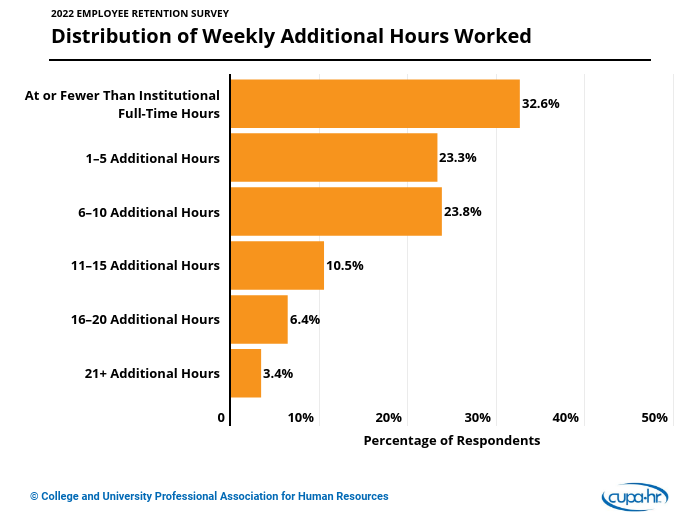
    Higher ed employees are working longer and harder than ever. Two-thirds (67%) of full-time staff typically work more hours each week than what is considered full-time. Nearly two-thirds (63%) have taken on additional responsibilities of other staff who have recently left, and nearly three-fourths (73%) have taken on additional responsibilities as a direct result of the pandemic.

    Higher ed employees have clear areas of satisfaction and dissatisfaction. Areas of satisfaction include benefits, relationship with supervisor, job duties, and feeling a sense of belonging. Areas of dissatisfaction include investment in career development, opportunities for advancement, fair pay, remote work policies and parental leave.

    Read the full report.


    Source link

  • Higher Ed Without Borders speak with President Jim Henderson of the University of Louisiana System – Edu Alliance Journal

    Higher Ed Without Borders speak with President Jim Henderson of the University of Louisiana System – Edu Alliance Journal

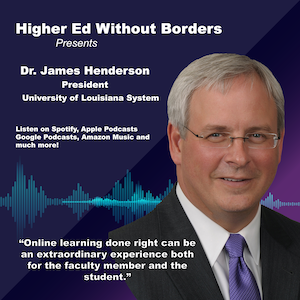
    On this podcast episode of Higher Ed Without Borders co-hosted by Edu Alliance Founders Dr. Senthil Nathan and Dean Hoke speak with Dr. Jim Henderson, President of the University of Louisiana System.

    Dr. James Henderson, President of the University of Louisiana System, a multi-university campus system with an enrollment of approximately 90,000 students. Prior to being appointed as President of the System, Dr. Henderson served as President of Northwestern State University.  He is a native of Shreveport Louisiana. He received his Master’s in Administration from the University of West Florida, and his Doctor of Management degree from the University of Maryland – University College.

    In an October 2021 newspaper article in the Acadiana Advocate, Dr. Henderson’s wife Tonia discussed her husband and love of learning. “Jim has “gone through a lot of schooling” during their marriage and he is a constant reader. He earned his master’s and doctorate while they were married. He also has routinely taken coursework where available — he oftentimes takes Massive Open Online Courses, or MOOCs — most recently one in Irish literature. “He’s always trying to learn new things,” she said.

    His penchant for lifelong learning made an impact on their three children; only the youngest lives at home now. She says she gets inspired by watching him use his time so well. He allots time for work, family, and his own study.”

    Senthil and Dean discussed with Dr. Henderson about the university system and his views on education and leadership.

    Comments and Suggestions:

    Higher Ed Without Borders would love to hear your ideas for future topics and guests. Connect with Dr. Senthil Nathan or Dean Hoke on LinkedIn. You can also visit the Edu Alliance website. To hear the entire series please subscribe to Higher Ed Without Borders on your preferred podcast platforms such as Apple, Spotify, or Google. The podcast is sponsored by Edu Alliance, an education consulting firm located in Bloomington Indiana, and Abu Dhabi, United Arab Emirates.

    We assist higher education institutions worldwide on a variety of mission-critical projects. Production support was provided by White Rabbit Printing and Design.

    If your organization wants to know more about how Edu Alliance can best serve you, please contact either Dean Hoke or Dr. Senthil Nathan.

    Source link

  • Recent Tour at Michigan State University, East Lansing, Michigan.

    Recent Tour at Michigan State University, East Lansing, Michigan.

    By Lisa Schmidt LPC, NCC, College Planning Counselor at Parros College Planning LLC.

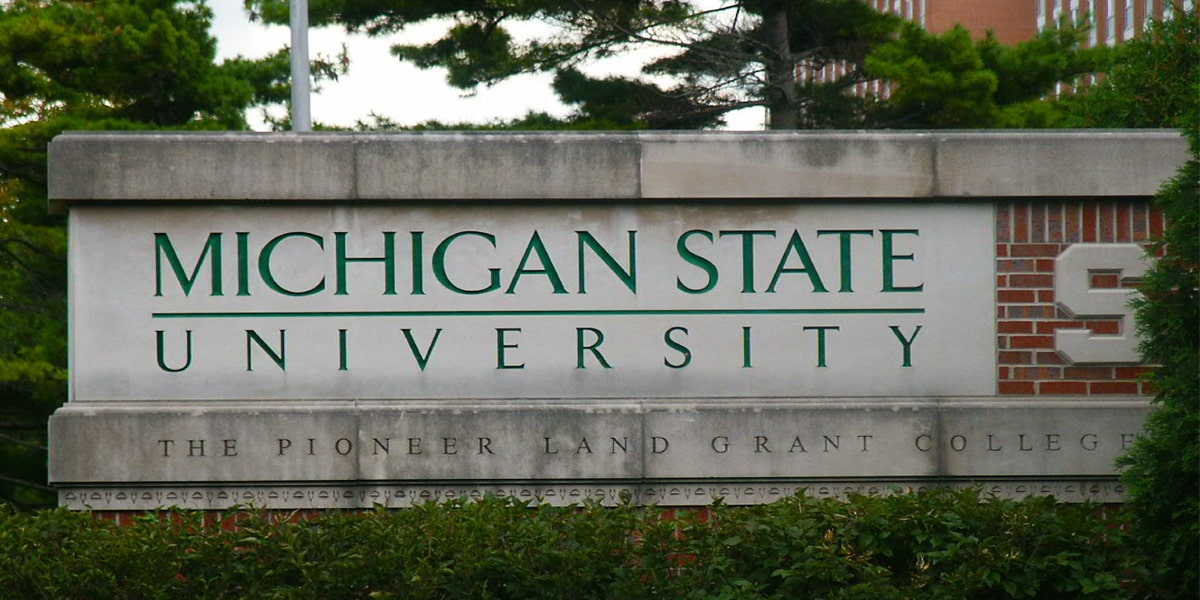
    Living and working just an hour from East Lansing, we felt pretty confident that we understood what Michigan State University had to offer to our students. However, on our recent campus tour, with a group of Independent Educational Consultants, we discovered there was still much more to learn about the large state university in our backyard.

    The facilities were top-notch, but the brand new STEM building blew us away. MSU transformed a 70-year-old power plant into a “student-ready maker and collaboration space. Old silos are now conference rooms, and a 1946 limestone entrance welcomes students. Original steam boilers and mechanical hardware are art installations.” The cool urban design includes high-tech classrooms, a dining area, and cozy study spots containing the latest technology needed to complete group projects and coursework.

    A short walk from here is the brand new music building. It is a beautiful spot for students to attend class and work on their musical skills. All of the MSU bands and orchestras have competitive auditions to gain entry, but all students, no matter their major or skill level, have the opportunity to try out. Also, the community music school offers lessons for a small fee to non-music majors.

    Another highlight was getting to understand the Residential Colleges better. We feel these smaller communities within the large university may be the perfect fit for many students. “The residential colleges at MSU offer the best of both worlds: the finest qualities of small liberal arts colleges combined with the energy and resources of a large research university. Three living-learning communities unite students with similar interests in designated residence halls on the campus. This assists in creating distinctive educational atmospheres. They are:

    • James Madison is where students share a common goal of addressing and examining the major political, legal, social, and economic issues affecting our world.
    • Lyman Briggs empowers students to change the world by understanding science and math in society.
    • Residential College in the Arts and Humanities is for students passionate about the arts, humanities, and community engagement.

    The majority of the consultants we traveled with were not Michigan residents, and they were not disappointed by their first trip to MSU. Here is some of what they had to say:

    “This was my first visit and tour of Michigan State University. I was impressed with the beauty of the campus, the sincerity and energy of the staff members we had the pleasure of meeting throughout the day, and the consistent message that was shared at every department/college we visited of a desire to help every student find their place and be successful at MSU.”


    “After years of suggesting MSU as an option to my students, I am so much better informed on the fantastic offerings. I have a much better understanding of the residential college system (James Madison, Lyman Briggs, and ARCAH), which is very appealing to many of my students.”


    “I especially enjoyed eating at Thrive, an allergen-free dining hall. Thrive is committed to being sesame-conscious and free of the Big 8 allergens (milk, eggs, soy, wheat, peanuts, tree nuts, fish, and shellfish) plus gluten. Another dining highlight was the unlimited swipes so students with meal plans can eat anywhere on campus as often as possible. A snack can be picked up at one hall and then a meal at another.”

    In regards to major areas of study, most students list their intended major on the application but are not admitted to the specific program until after they complete their first year of college. For example:

    • Engineering – students interested in engineering take 28 prerequisite credits the first year and are automatically admitted to engineering if they have over a 3.0 GPA.
    • Business – students interested in business must apply after taking 28 credits. Admission is competitive. A select few students will be accepted directly to the Broad School of Business from high school.
    • Nursing – is a VERY competitive program, only admitting about 100 students each year through the application process after students take the required 28 prerequisite credits. A 3.9 GPA is generally needed to be competitive.

    After the tour, we were all very excited to look at our client list and match some of our students with MSU. We appreciated the red carpet that the admissions team at MSU rolled out to us, and we had a fantastic tour! Please reach out to us to schedule your complimentary consultation so that we can help you in the college application process!

    Source link

  • The DeSantification of a University

    The DeSantification of a University

     I cannot help but think of Joseph  Welch and his historic face off with Joseph McCarthy when he finally said, in effect, ENOUGH, “Have you no sense of decency.” The answer was obvious, Joseph McCarthy had no such thing.

    Nor does the despicable, demagogue  Ron DeSantis who will do anything to appeal to the worst values in people. Rather then lead people to embrace the moral high ground,  he encourages people to wallow in the mud of racism, homophobia, and xenophobia. Rather than ask people to be better he asks them to be worse, much worse.

    And among his staunchest enforcers is the University of Florida particularly President Fuchs, Provost Glover, and Law School Dean Laura Rosenbury. With respect to the latter especially, one would expect some sense of decency, or at least the courage to resist what is clearly a case of moral lawlessness.  But no, in the Desantification of the University of Florida, rather then stand up against a bully, as did Joseph Welch, these so-called leaders cowered and when ask to jump simply asked “how high.” Any one of them could have been a hero in the world of higher education if they had simply said I will resign before I follow the orders of a maniac.

    So, at the height of the covid crisis faculty were allowed to teach remotely but only after weeks of in person teaching.  In the next year, while other schools required masks — a small price to pay perhaps to save a few lives — UF did not require masks.  Fuchs, Glover, and Rosenbury were just trying to keep Florida’s McCarthy happy. And then, when professors were asked to testify as experts witnesses,  they all folded again and decided it would displease their master if a word were uttered to upset his seemingly fascist agenda. 

    When the Desantis’ bizarre choice for Surgeon General appears to have needed a little extra dough, he was appointed to UF Med School. Not sure if the opening was announced ahead of time or whether a search took place. But who cares when it is to please the Governor. What was Fuchs’ response? Once again he simply said “how high.”

    And remember, this cowadise occurred in the context of administrators who all had a guarantee of life time employment. In fact, even their professional aspirations might have been enhanced if they stood up against a demagogue. In short, some show of courage would have been easy but, then again, there are no heroes at UF. 

    Source link

  • My Goodbye to Trent University – THE STUDENT LIFE BLOG

    My Goodbye to Trent University – THE STUDENT LIFE BLOG

    Photos and written by Amy Bridges

                This post is not only my goodbye to the 2021-2022 year but my goodbye to the blog and Trent University. The winter semester was my last semester of my B.A. which also means it was my last semester at Trent University. My experience at Trent University has been a long hard journey.

                I knew that my decision to go to university was going to change my life but I did not realize how much. Choosing Trent University was one of the best decisions of my life. While at Trent I was able to find my passion and gain the confidence to follow it, meet people who have made a huge impact on my life and was even able to gain experiences I wouldn’t have anywhere else.  

                In my four years at Trent, I have changed majors, went on an archaeological dig, gained experience working in a museum, worked for a professor and for 2 other departments in the university, moved apartments, had one of the worst seizures of my life, dealt with a pandemic, and was accepted to a Masters program. It has been a rollercoaster of an experience but I would not have traded it in for anything. These last four years have been challenging but the most rewarding.

    Even though I have been finished classes and set to graduate for a couple of weeks now I am still conflicted about leaving Trent. I am excited to be finished and I am proud of what I have accomplished, but I am sad that it means I will be leaving Trent and that I won’t be seeing the same people every week. Moving onto U of T for my Masters is going to be an exciting next step but terrifying at the same time.

                As I struggle with saying goodbye to Trent, I am also saying goodbye to this blog. This will be my last post on The Student Life Blog. I have been writing for the blog for 3 out of the 4 years I have been at Trent. I will be handing off the blog to another writer and in September you will be able to continue your journey at Trent with them. I am sure they will love this blog as much as I have over the past 3 years and I look forward to seeing where this blog goes in the future. Thank you for reading!

    Colour outside the lines,

    Amy Bridges 

    Source link

  • Why You Should Be A Member of the American Association of University Administrators – Edu Alliance Journal

    Why You Should Be A Member of the American Association of University Administrators – Edu Alliance Journal

    April 11, 2020 by Dean Hoke – When I came back to the United States in 2017-18 I wanted to re-engage with the US university community. I joined NAFSA primarily due to my work in International Higher Education but I also wanted to be a part of a smaller organization where I could get to know the people better and attend conferences that would continue my professional development. I decided to join in 2018 The American Association of University Administrators (AAUA).

    Who is AAUA

    AAUA is a non-profit professional organization founded in 1970 for higher education leaders and administrative personnel. It is the only professional association for individuals who are interested in the entire range of higher education management (from department chair/unit director through president) in the entire diverse set of American colleges and universities (two- and four-year; public, private non-profit, private for-profit; comprehensive, research-focused, special mission).

    Membership in AAUA helps support the association’s mission. In addition, membership provides—for those members who have an interest—opportunities for professional networking and leadership. In addition to enrolling and serving a significant complement of administrators at the most senior levels, the association is also interested in assisting early-career practitioner administrators build/enhance their leadership portfolios by providing leadership opportunities through service on association committees, boards, and taskforces. Opportunities to collaborate on offering professional development services are available as well.

    Professional Development Opportunities

    Annual Leadership Seminar: In particular this is my favorite because of the networking and the presentations. The 50th Leadership Seminar of the American Association of University Administrators is scheduled for June 9-10, 2022. It will be held as a hybrid event, with in-person sessions meeting at the Marriott Stanton South Beach Hotel (Miami, Florida). In-person sessions are planned for June 9 (morning and evening) and June 10 (morning). On-line sessions will be held on the afternoon of June 9th. I will be attending in person.

    AAUA Professional Development Fellows Program : The Fellows Program is an individually designed, year-long, mentored professional development experience during which the candidate uses his/her day to-day responsibilities as the spring board for improving a set of self-identified professional skills to enhance his/her administrative competence.

    Cross-Institution Visits : Recognizing the value of learning from administrative peers at other institutions (both similar in nature and of radically different structure or purpose), AAUA facilitates short-term (one to three week) cross institution visits between like-role administrators. The association also occasionally organizes and conducts small group (6-10 people) two- and three-day visits to clusters of institutions for the purpose of learning about notable or unique programs.

    So What is the Cost of Membership?

    There are two types of memberships. One is Individual and the other is Institutional

    Individual: An active Membership (Open to any person interested in the administration of higher education) is $100. The Student (Open to any graduate student enrolled in an institution of higher education who is interested in the field of higher education administration. is $35.

    Institutional: Any college/university or any other organization/firm may sponsor the membership of individuals on the following basis:

    • 1-6 Supported Members – Total membership dues rate: $500
    • 7-15 Supported Memberships – Total membership dues rate: $1,000
    • 16-24 Supported Memberships – Total membership dues rate: $1,500
    • 25 or more Supported Memberships: $2,000

    I would encourage you to consider becoming a member of the AAUA. I have found the people you get to know are outstanding, the conferences educational and enjoyable and the cost of membership is well worth the value.

    If you have questions or wish to join feel free to contact me or better yet contact:

    Dan L. King, Ed.D., President, and Chief Executive Officer
    American Association of University Administrators
    1 Ralph Marsh Drive, Glen Mills, Pennsylvania 19342 (USA)Phone: 814-460-6498
    Email: [email protected]

    Dean Hoke is a Managing Partner of Edu Alliance Group in the United States and Co-Founder of Edu Alliance Ltd. in the United Arab Emirates. Dean has decades of progressively responsible and visionary leadership roles in higher education, communications & online learning. He has led numerous initiatives that have created innovation & positive change in the higher education & non-profit sector. 

    Dean began his career in 1975 with Bellarmine University working in various roles, including admissions and external relations. In 1983 he entered the broadcasting field, serving as a senior executive for Public Broadcasting System stations and a cable network. In 1998 he co-founded The Connected Learning Network, a full-service online learning company. In 2009 accepted an invitation to move to the United Arab Emirates serving in senior positions at Higher Colleges of Technology & Khalifa University.

    He participates in numerous advisory & consulting projects in the fields of international education, branding, business intelligence, and online learning. He is an active speaker and writer in the field of global higher education and distance learning. Dean has presented and written worldwide on leadership, higher education, and distance learning. Dean is a member of the Board of the American Association of University Administrators, the Franklin University School of Education Advisory Board, and a member of NAFSA. Mr. Hoke has a B. A from Urbana University, an M.S from the University of Louisville, and a Certificate in Executive Management from the University of Pennsylvania Wharton School.

    Source link

  • Three Examples of Interactive Syllabi (Designed with Open Educational Resources from a University Library)

    Three Examples of Interactive Syllabi (Designed with Open Educational Resources from a University Library)

    Last week, I had the opportunity to present at the Open Education Conference. It was virtual and the content was definitely interesting! 

    My session was held on Monday, October 18 • 3:45pm – 4:25pm and it was titled, “Designing an Interactive OER Syllabus as an Equitable Practice”. 

    During the session, I talked about my interactive OER syllabus and I had the opportunity to network with some amazing colleagues. One of the amazing faculty members from my institution attended as well – shout out to Dr. Trina Geye!

    I am passionate about open educational resources and I like fact that OERs can save students money. This is very important for our Texas college students. Open Educational Resources are equitable resources!

    Here are the notes from the presentation:

    I know some of you are wondering WHY I incorporate OERs instead of textbooks for my courses…. This is why…

    • Day-One Access/No-Cost (Equitable)
    • Easier for the Student
    • Mobile Access
    • Linkable to Canvas
    • Easier for the Professor (Updates/Changes)

    I always emphasize partnering with the library to find additional educational resources. Here are some starting points!

    • Podcast Links
    • Guides from Prior Semesters (Student Approved Work)
    • YouTube Videos
    • Database Article Links
    • E-Books
    • Lib Guides

    As you transition from semester-to-semester, I always recommend this checklist for “refreshing” your OER syllabus:

    • Check Your Links
    • Check for More Relevant Resources
    • Develop a Pre and Post Semester Checklist
    • Integrate Your OER Endeavors with Research

    In fact, here’s a copy of my OER syllabi:

    I also design a syllabus and Canvas tour for my students to help them become more familiar with the content.

    Students in my classes (both graduate and undergraduate students) REALLY enjoy the free resources and they are also “more up-to-date” than a traditional textbook.

    Have any questions about OERs? Contact me.

    ***

    Enjoy!

    Check out my book – Retaining College Students Using Technology: A Guidebook for Student Affairs and Academic Affairs Professionals.

    Remember to order copies for your team as well!

    Thanks for visiting! 


    Sincerely,


    Dr. Jennifer T. Edwards
    Professor of Communication

    Executive Director of the Texas Social Media Research Institute & Rural Communication Institute

    Source link