Tag: Urges

  • Spanberger urges UVA to pause presidential search until she takes office

    Spanberger urges UVA to pause presidential search until she takes office

    This audio is auto-generated. Please let us know if you have feedback.

    Dive Brief:

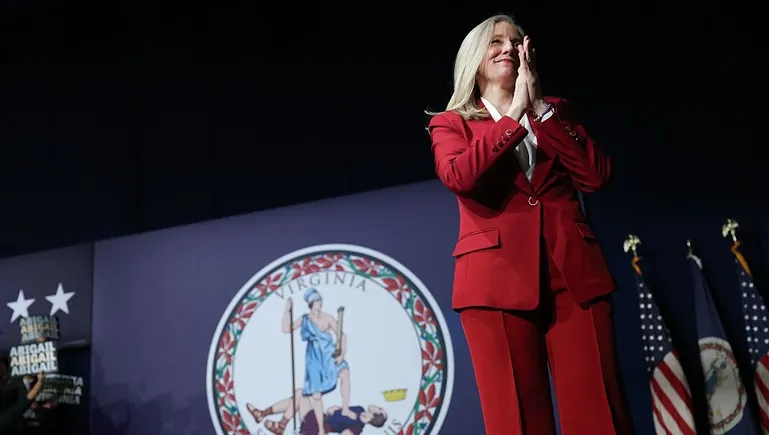
    • Virginia Gov.-elect Abigail Spanberger is calling on the University of Virginia’s governing board to hold off on naming a new president or selecting finalists for the role until she takes office in January.
    • Over the past six months, UVA’s Board of Visitors has “severely undermined the public’s and the University community’s confidence” in its ability to act transparently and in the best interests of the state flagship, Spanberger said in a Wednesday letter to board leaders.
    • Spanberger, a Democrat and an alumna of UVA, said five appointees to the board “failed to achieve confirmation” by the Virginia Assembly as law requires. That raises concerns about the legitimacy of any decisions made by the current board, as it isn’t “fully constituted,” she argued.

    Dive Insight:

    UVA’s governing board has been in a state of flux since June. Outgoing Gov. Glenn Youngkin, a Republican, is in the midst of a fight with Virginia’s Democrat-controlled Senate committee over his selections for several public college boards, including UVA.

    The committee rejected eight of Youngkin’s appointments in June, but the governor instructed them to begin serving anyway. In July, a judge ruled that those eight board appointees for UVA, George Mason University and Virginia Military Institute could not serve on those boards. An appeal from outgoing Virginia Attorney General Jason Miyares is before the Virginia Supreme Court.

    Democratic lawmakers similarly rejected another round of Youngkin appointees in August, bringing the total number of board seats under contention at Virginia public colleges to nearly two dozen.

    At UVA, five appointees are in legal limbo. 

    Because of this, “the Board is not fully constituted and its composition is now in violation of statutory requirements in crucial respects, further calling into question the legitimacy of the Board and its actions,” Spanberger said in her letter.

    UVA’s board currently has 12 voting members, well above the five it requires for a quorum. The university did not immediately respond to questions Thursday. 

    The governor-elect advised the board to pause its presidential search until it is “at full complement and in statutory compliance, adding that would entail her appointing new members and the General Assembly approving them.  

    In turn, Spanberger pledged to make her appointments to the UVA board “quickly upon my swearing in.”

    UVA formed a special committee in July to select a new president following the abrupt departure of its former leader, Jim Ryan, less than a month earlier. 

    Ryan, who originally planned to leave the role at the end of the 2025-26 academic year, stepped down early amid reports of a pressure campaign orchestrated against him by the U.S. Department of Justice. The DOJ had been probing UVA’s diversity, equity and inclusion efforts, which expanded following the deadly 2017 Unite the Right rally on the university’s campus and Ryan’s inauguration as president a year later.

    In his resignation announcement, Ryan said he wouldn’t challenge the Trump administration out of concern that attempting to keep his job would cost UVA research funding and student aid, as well as put international students at risk.

    UVA said in November that in-person interviews for Ryan’s replacement would take place late this month.

    Spanberger in her letter Wednesday criticized Ryan’s ouster as “a result of federal overreach” and noted that it went unchallenged by UVA’s board members.

    That lack of response, she argued, among other actions taken by the board over the last six months, has resulted in a “loss of confidence” in the governing body. She cited no confidence votes from both the UVA faculty senate and the university student council in July and August, respectively.

    In October, UVA struck a deal with the DOJ to formally close the agency’s investigations over its DEI work by 2028. In return, the university agreed to several changes, including adopting the DOJ’s contentious anti-DEI guidance and making quarterly compliance reports.

    Because the deal doesn’t include a financial penalty, it did not require a formal vote from the board, the university said in an FAQ.

    Leaders of Virginia’s Democratic-controlled Senate have called for a legal audit of the agreement, questioned its constitutionality and labeled it “a fundamental breach of the governance relationship” between the university and the state.

    Last month, the Trump administration also offered the research university a separate deal — preferential access to federal research funding in exchange for enacting several wide-ranging and unprecedented conditions. UVA ultimately declined the compact, as did six other colleges to which the administration initially offered it.

    Source link

  • Berkeley Law Dean Urges SCOTUS to Be “Guardrail” for Democracy

    Berkeley Law Dean Urges SCOTUS to Be “Guardrail” for Democracy

    Carlos Avila Gonzalez/The San Francisco Chronicle/Getty Images

    PHILADELPHIA—The final speech at the Association of Public and Land-grant Universities’ annual conference this week dissected the Trump administration’s “financial assault” on universities and urged the Supreme Court to be a check on a president whom Congress hasn’t reined in.

    Erwin Chemerinsky, dean of the University of California, Berkeley, School of Law and a constitutional scholar, also told the attendees of the APLU meeting that their institutions should be united against the administration’s attacks on higher ed.

    “The one thing we all learned on the playground is if you give in to a bully, it only makes it worse in the long term,” Chemerinsky said Tuesday, adding—to applause—that “it’s so important that institutions of higher education stand together at this moment and stand together for our shared missions.”

    The speech comes after multiple prominent universities, including a few public ones, refused to sign Trump’s proposed “Compact for Academic Excellence in Higher Education,” which asked them to give up significant autonomy in exchange for an unspecified edge in competitions for federal funds.

    It also follows legal victories against the administration’s grant cancellations. Litigation by UC researchers against Trump, the Department of Government Efficiency and other federal agencies and officials has restored more than $500 million in federal research grants, which the administration cut at UCLA after the Justice Department accused it of tolerating antisemitism during a spring 2024 pro-Palestinian protest encampment. Chemerinsky, who is Jewish, is representing the researchers in that litigation.

    Asked for comment, a White House official told Inside Higher Ed in an email, “UC Berkely clearly needs to make some changes – violence broke out on UC Berkeley’s campus just last night and they have failed to police antisemitism by tolerating an ‘unrelenting’ steam of antisemitic harassment toward Jewish students and faculty.”

    Even before the latest cuts, Chemerinsky estimated the Trump administration had already slashed close to $1 billion in funding for faculty and researchers across the UC system, a figure that he said was much higher than DOGE’s tally. The UC system didn’t confirm or deny this estimate or provide a more recent estimate Tuesday, saying the system was closed for Veterans Day.

    “I think the termination of grants that we’ve seen, whether it’s to researchers and faculty or to universities, is clearly illegal,” Chemerinsky said. But when it comes to “nonrenewal of grants in the future and funding in the future,” he added, the “government has far more discretion, and there it’s going to be much harder to bring legal challenges.”

    Chemerinsky also said federal funding cuts are just one of four financial vulnerabilities the administration has identified in universities: “they’re very dependent” on federal money, tuition, philanthropy and foreign students. Using his own institution as an example, he said Berkeley Law has an L.L.M., or master of laws, degree program that’s exclusively for foreign students and represents $20 million in its annual budget.

    He then expressed concern about how the Supreme Court has ruled on the administration’s actions, even beyond higher ed.

    “By my count, 39 matters have come to the Supreme Court since [Inauguration Day] Jan. 20, challenging actions of the Trump administration,” he said. “All are instances where the lower courts ruled against the Trump administration, and in 36 of 39, the Supreme Court has ruled in favor of the Trump administration.”

    Noting eight of the nine justices graduated from the law schools at either Harvard or Yale Universities (Amy Coney Barrett graduated from the University of Notre Dame), he said, “My optimistic self believes that the United States Supreme Court will stand up for higher education.” Chemerinsky added that since Congress hasn’t served as a check on the president, it’s up to the federal judiciary to uphold the laws and the Constitution.

    Fittingly, his speech took place at a Philadelphia hotel about a 15-minute walk from where the founders adopted the Constitution. APLU said more than 1,300 people attended this week’s three-day conference.

    “Ultimately, I believe the guardrail of our democracy has to be the courts and the Supreme Court,” Chemerinsky said. “If there is going to be a check on a president who has authoritarian impulses, it’s going to have to be from the restraints of the Constitution—and the only way we can enforce those is the courts.”

    Chemerinsky noted that “one characteristic of every authoritarian—or would-be authoritarian—rule is the way they go after universities. What we’ve seen in the last nine and a half months is unprecedented in American history.”

    He compared Trump’s actions to McCarthyism, the 1950s-era political persecution of faculty, government employees and others. But Chemerinsky pointed out that back then, “it wasn’t the president of the United States leading the attack on higher education,” and “there wasn’t the financial assault on universities.”

    “But the one thing that the McCarthy era should say to all of us is that history will judge us,” he said. “Twenty, 30, 50, 75 years from now, people will look back on us the way we look at university officials in the McCarthy era, and they will judge us as to whether we capitulated or whether we had courage.”

    Source link

  • George Williams urges VCs to ‘aim higher’ – Campus Review

    George Williams urges VCs to ‘aim higher’ – Campus Review

    Universities are ‘friendless and alone’, Western Sydney University vice-chancellor George Williams explained in his new essay, that warns of the dangers of fading social license.

    Please login below to view content or subscribe now.

    Membership Login

    Source link

  • American Lung Association urges school radon testing

    American Lung Association urges school radon testing

    This audio is auto-generated. Please let us know if you have feedback.

    The American Lung Association is urging K-12 schools to prioritize indoor air quality and to test for radon, the second-leading cause of lung cancer in the U.S.

    The naturally occurring, odorless, tasteless and colorless radioactive gas can accumulate indoors, entering through cracks in floors, walls and foundations. The only way to determine if a facility has elevated radon levels is through testing, according to the organization. “There is no known safe level of radon exposure,” it says. 

    “Radon … can accumulate inside schools without anyone knowing,” Harold Wimmer, president and CEO of the American Lung Association, said in a statement. “The good news is that testing for radon is simple and affordable — and schools can take action to fix the problem if levels are high.” 

    Young children are especially vulnerable to indoor air pollutants like radon because they spend more time indoors and breathe more air relative to their body size than adults, according to a working paper by the Center on the Developing Child at Harvard University. 

    ALA recommends short-term, charcoal-based radon test kits. In its announcement, it shares two national standards facility managers can follow: 

    • The Radon Mitigation Standards for Schools and Large Buildings (RMS-LB 2018), released jointly by the American National Standards Institute and the American Association of Radon Scientists and Technologists. The standards address specialized techniques and quality assurance processes to mitigate radon in buildings with complicated designs and specialized airflow, which is typical of schools. 
    • The Radon in Schools standards, developed by the U.S. Environmental Protection Agency, recommend that building operators take action if radon levels are at 4.0 picocuries per liter or higher and consider taking action if levels are as low as 2.0 pCi/L. 

    ALA also recommends a school radon testing guide the Minnesota Department of Health developed. 

    HVAC status

    To assess radon levels during normal conditions, testing must take place while the building’s HVAC system is running, the ALA says in a fact sheet. For the most accurate test results, HVAC maintenance and filter changes must be current, it says. 

    If testing finds radon levels under 4.0 pCi/L, schools don’t need to test again for five years, according to the ALA fact sheet. But changes that affect the school HVAC system or changes to the building foundation or the surrounding soil could warrant sooner testing because those events can affect radon levels, the organization says.  

    Many states offer training for school facility managers on how to conduct radon testing, or schools can hire licensed professionals to conduct the tests, according to National Radon Proficiency Program information. 

    The EPA requires states that are receiving indoor radon grants to maintain and provide the public with a list of radon testing service providers credentialed through their own state programs or through two national radon proficiency programs.

    Source link

  • America First Legal Urges DOJ to Investigate Hopkins for DEI

    America First Legal Urges DOJ to Investigate Hopkins for DEI

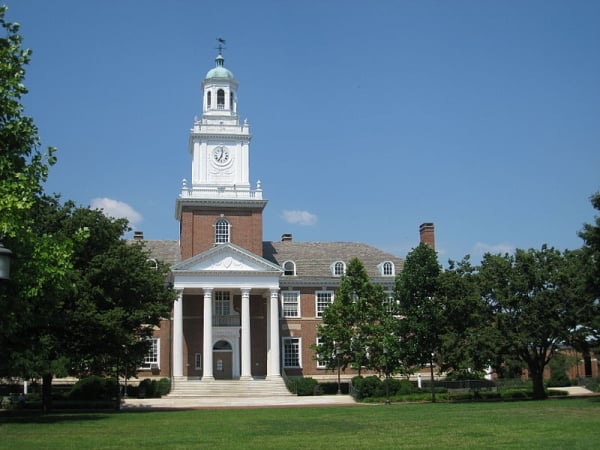
    America First Legal has called on the U.S. Department of Justice to investigate the Johns Hopkins University School of Medicine for alleged racial discrimination, according to The Baltimore Banner.

    In a 133-page complaint filed Thursday, the conservative legal group, run by President Trump’s deputy chief of staff, Stephen Miller, urged the DOJ to investigate Johns Hopkins “for its systemic, intentional, and ongoing discrimination within its School of Medicine on the basis of race, sex, ethnicity, national origin, and other impermissible, immutable characteristics under the pretext of ‘diversity, equity, and inclusion’ (‘DEI’) in open defiance” of civil rights laws, Supreme Court precedent and presidential executive orders.

    “Johns Hopkins has not merely preserved its discriminatory DEI framework—it has entrenched, expanded, and openly celebrated it as a cornerstone of its institutional identity,” the complaint reads, adding that identity-based preferences are “embedded” in the medical school’s curriculum, admissions processes, clinical practices and administrative operations.

    The America First Legal complaint singles out certain medical school divisions and programs for seeking to recruit a “diverse applicant pool,” including residency programs in gynecology and obstetrics, emergency medicine, dermatology, anesthesiology and critical care.

    But the complaint leaves room for attacks beyond the medical school, noting that DEI practices “are part of a comprehensive, university-wide regime of racial engineering.”

    Johns Hopkins has not responded to America First Legal’s complaint.

    But the university has lately taken pains to address what critics have called a lack of viewpoint diversity on campus, engaging in civic education initiatives and partnering with the conservative American Enterprise Institute to “convey the importance of rooting teaching and research with implications for the nation’s common life in a broad range of points of view,” according to the university.

    Source link

  • U of Utah Urges Compliance After State Restricts Pride Flags

    U of Utah Urges Compliance After State Restricts Pride Flags

    A University of Utah lawyer last week urged faculty to comply with the state’s new prohibition on the “prominent“ display of pride flags and other flags on campus, The Salt Lake Tribune reported.

    Deputy general counsel Robert Payne urged faculty in a meeting not to “be a lightning rod to the Legislature” and said state lawmakers “have a lot of power over us,” the newspaper reported. Payne also suggested that if employees tried to get around the law by hanging pride posters instead of flags, legislators might “come back with something worse,” the Tribune reported.

    Utah’s Republican-controlled Legislature passed House Bill 77 last month, and Gov. Spencer J. Cox, a Republican, let it become law without signing or vetoing it. When it takes effect May 7, it will ban government entities, including public colleges and universities, from displaying flags on government property “in a prominent location.” Some flags are exempted, such as the U.S. flag and the prisoner of war/missing in action flags.

    Trevor Lee, a Republican Utah House member and HB 77’s chief sponsor, told Inside Higher Ed he didn’t file the legislation specifically to ban pride flags. But “that’s just been the biggest, biggest issue of any political flag,” he said. “I mean, it’s not even close.”

    Lee said the flags go beyond representing inclusivity. He said, “It’s a sex flag. It tells everyone what sexual ideology you believe in.”

    The University of Utah has released guidance online saying the law generally bans pride flags, Juneteenth flags and others from prominent locations. The guidance notes exemptions, including that students and employees can “wear or carry a flag as a personal expression of free speech,” and that employees can decorate their offices with flags “so long as they are not easily visible outside of their personal space (e.g., posted in an office window).”

    Payne said the university hasn’t yet decided how it will enforce the flag ban, according to the Tribune. The university’s guidance says, “Flags may also be used as decorations in connection with a brief cultural celebration hosted by the university within a university building,” but can’t be up for more than a week. It’s unclear whether pride will be considered a cultural celebration.

    Source link

  • Columbia AAUP Urges University to Reject Trump’s Demands

    Columbia AAUP Urges University to Reject Trump’s Demands

    The American Association of University Professors chapter at Columbia University is urging officials there to reject the Trump administration’s demands, which include putting an academic department under receivership, abolishing the University Judicial Board and giving security employees arrest authority.

    “Compliance would make Columbia complicit in its own destruction, stripping shared control of academic and student affairs from the faculty and administration and replacing the deliberative practices and structures of the university with peremptory fiats from outside the institution,” the AAUP chapter said in a statement Tuesday. “We see no evidence that compliance would assuage the hostility of the White House.”

    The Trump administration announced March 7 it was canceling about $400 million in federal grants and contracts for Columbia due to what it claims is the university’s “continued inaction in the face of persistent harassment of Jewish students.” Then, in a letter last week, federal officials listed “next steps that we regard as a precondition for formal negotiations regarding Columbia University’s continued financial relationship with the United States government.” They set a March 20 deadline for complying with the demands, which also include a mask ban, a plan for changing admissions and more.

    The Columbia AAUP’s statement said, “The government’s demands read like a ransom letter, dictating to the university what principles it must sacrifice and what ideological positions it must adopt to restore research funding.” As for the justification of fighting antisemitism, the AAUP chapter said the university took “many actions over the last year to accommodate its Jewish students, sometimes at the expense of the grievances of other campus groups.”

    The AAUP chapter said this “assault on Columbia will serve as a model for attacks on other universities across the nation” and urged colleagues to speak out and “march in the streets.”

    The White House didn’t return a request for comment Tuesday.

    Source link