Tag: Vaccine

  • Most Americans Believe in the Effectiveness of Childhood Vaccines — But There’s a Catch – The 74

    Most Americans Believe in the Effectiveness of Childhood Vaccines — But There’s a Catch – The 74


    Get stories like this delivered straight to your inbox. Sign up for The 74 Newsletter

    This story was originally reported by Barbara Rodriguez of The 19th. Meet Barbara and read more of their reporting on gender, politics and policy.

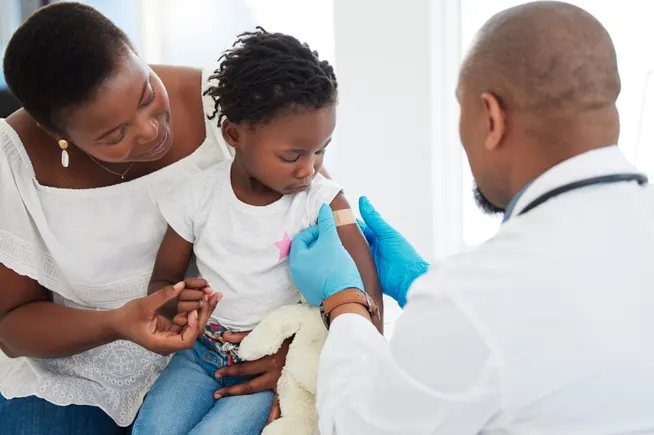
    Although a majority of Americans are confident that childhood vaccines are highly effective against serious illness, Republicans’ trust in vaccine safety and support of school requirements is dropping, according to new polling from Pew Research Center.

    Sixty-three percent of Americans are extremely or very confident in the effectiveness of childhood vaccines, according to a survey published Tuesday. But Democrats and those who lean Democrat are much more likely than Republicans and Republican-leaners to hold that view — 80 percent versus 48 percent.

    And while the majority of Americans believe in the safety of vaccines — 53 percent believe childhood vaccines have been tested enough for safety and 51 percent agree that the childhood vaccine schedule is safe — there is significantly more uncertainty among Republicans. For Democrats, 74 percent show high confidence in the safety testing of vaccines and 71 percent believe the childhood vaccine schedule is safe. For Republicans, those numbers are 35 percent and 32 percent, respectively.

    “Both things can be true, that people believe in vaccines’ effectiveness overall and the confidence is a little softer on safety,” said Eileen Yam, director of science and society research at Pew who was part of the primary research team. “But writ large, that’s been pretty stable to see confidence in vaccines. But at the same time, when it comes to things like school requirements, or ‘telling me what to do,’ or requiring me to do something — that’s where you see the bristling on the Republican side.”

    Americans have become more skeptical of requiring that children get the measles-mumps-rubella (MMR) vaccine to attend public school. Sixty-nine percent support it, a decline from 82 percent in 2016. Most of the drop can be attributed to Republicans — with just 52 percent believing in the requirement, compared to 79 percent in 2016. For Democrats, that support was 83 percent in 2016 and actually climbed to 86 percent this year.

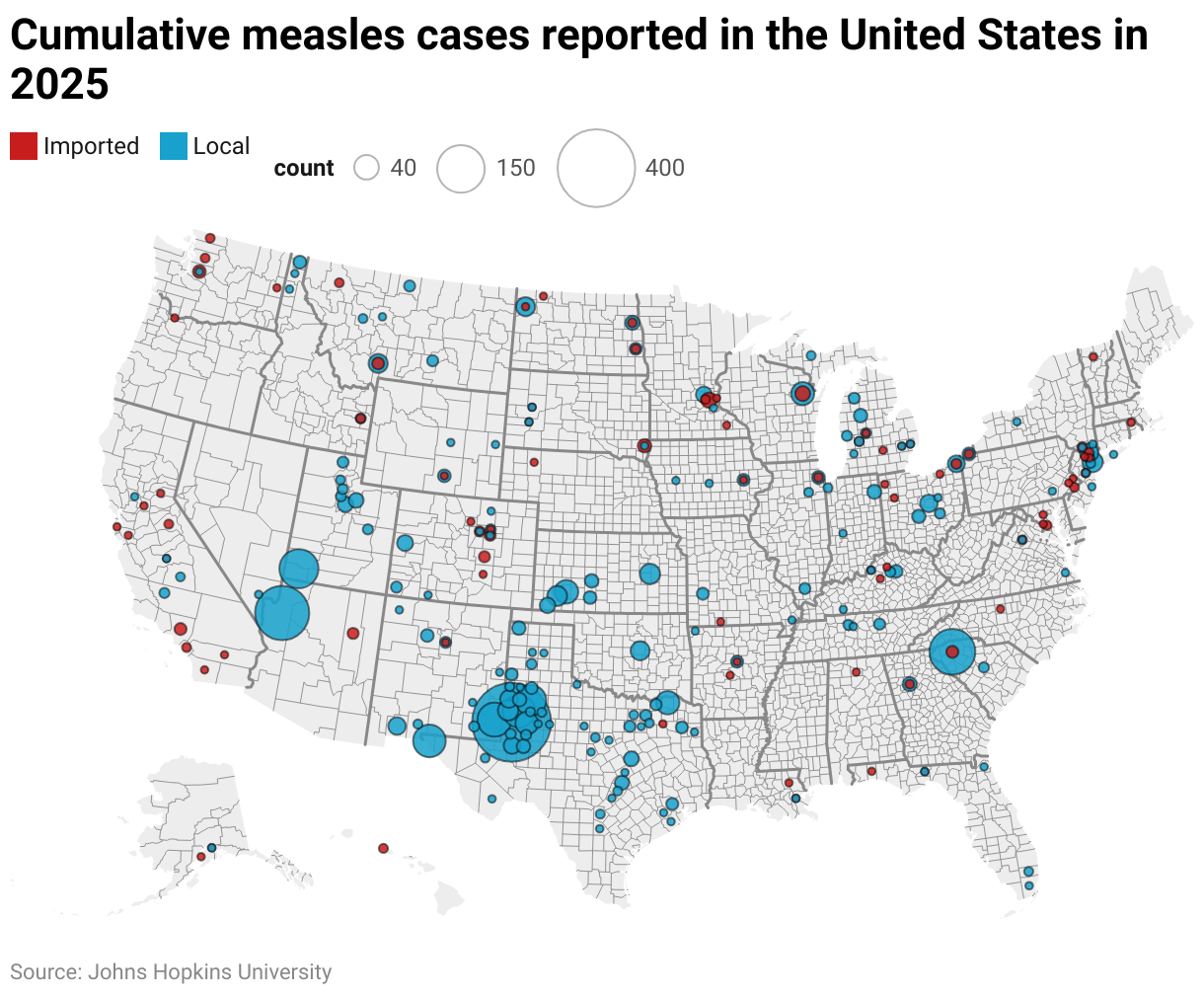
    This all comes amid a major measles outbreak in the United States that started in Texas and has spread to multiple other states. And while students are required in each state to get the MMR vaccine to attend public school, officials in Florida have indicated a willingness to drop that requirement.

    Pew found broad and consistent support for the MMR vaccine: 84 percent believe its benefits outweigh its risks (of which there are minor side effects). When Pew first started asking about this in 2016, support was at 88 percent. Yam said the findings show some agreement on the benefits of the MMR vaccine. While 92 percent of Democrats believe the benefits of the vaccine outweigh the risks, 78 percent of Republicans do, too.

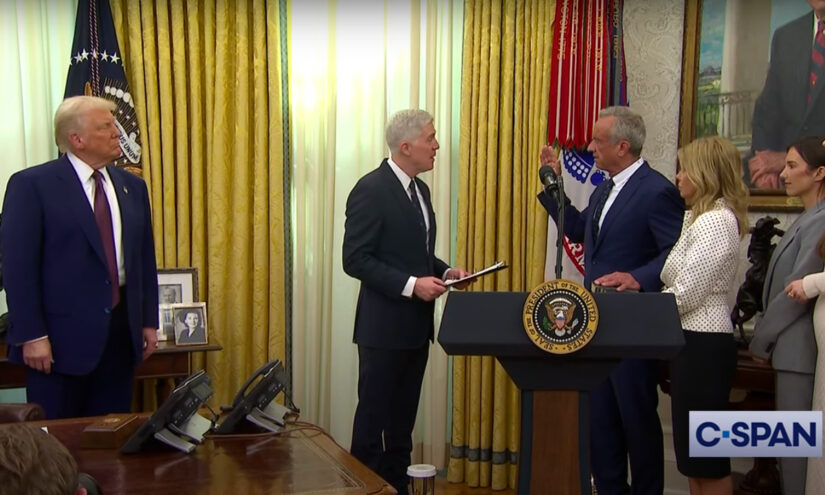
    Health and Human Services Secretary Robert F. Kennedy, an anti-vaccine activist who has revamped a key panel that helps decide vaccine policy, has questioned the safety of the MMR vaccine without evidence. He has the backing of President Donald Trump, who has perpetuated misinformation this year about childhood vaccines.

    Pew surveyed parents and found a majority with minor children (57 percent) say they are extremely or very confident in childhood vaccines’ effectiveness. Republican parents are far less likely than Democratic parents to have that confidence (45 percent versus 71 percent), belief in safety testing (29 percent versus 63 percent) and the childhood vaccine schedule (27 percent versus 58 percent).

    Democrats are more likely than Republicans to say medical scientists should have a major role in decisions about childhood vaccines (85 percent vs. 62 percent). There are more partisan fissures on the role of parents: 71 percent of Republicans say that parents of young children should have a major role in policy decisions about childhood vaccines. For Democrats, it’s 46 percent.

    “That speaks to just a divergence in trust in science that we’ve been tracking since before the pandemic,” Yam said. “Just Republicans since the pandemic, their confidence in scientists, the way they look at the CDC has just dropped off much more than on the Democrat side. Democrats have had fairly stable views on scientists and on the CDC, in contrast to Republicans.”

    Pew also examined how recent Centers for Disease Control and Prevention recommendations have influenced Americans’ decisions around getting a COVID-19 shot. The agency recently agreed with Kennedy’s new vaccine panel to stop recommending the shot to everyone and to instead leave the choice up to people. Forty-four percent say they have heard nothing at all about the CDC’s changes to recommendations. Among those who have heard at least a little, 63 percent say it has had no influence on whether they got an updated vaccine.

    “The one big takeaway there is that policies really can’t influence behaviors if people haven’t heard about the policies or the recommendations,” Yam said. “And in this case, a lot of people haven’t heard about it, and some when they have, their minds were made up. They’ve already kind of decided, and it really didn’t influence their behavior one way or the other.”

    This story was originally published on The 19th.


    Did you use this article in your work?

    We’d love to hear how The 74’s reporting is helping educators, researchers, and policymakers. Tell us how
    Source link

  • School nurses: Keep K-12 vaccine mandates

    School nurses: Keep K-12 vaccine mandates

    This audio is auto-generated. Please let us know if you have feedback.

    Dive Brief:

    • The National Association of School Nurses is urging the continuation of vaccine mandates in K-12 schools to help protect children from preventable illnesses. The organization credits school vaccine requirements for significantly reducing the risk of disease outbreaks in schools and the broader communities. 
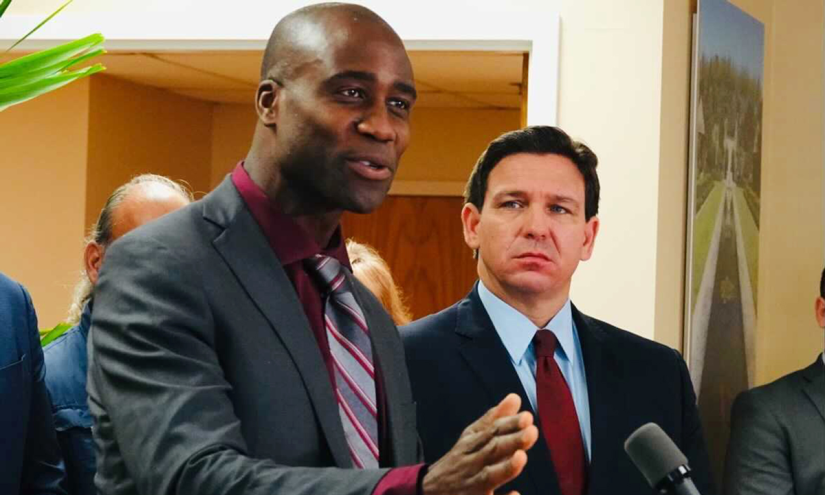
    • NASN and the Florida Association of School Nurses issued a joint statement last week condemning a recent announcement by Florida Surgeon General Joseph Ladapo that the state would seek to eliminate vaccine requirements, including those for school-aged children.
    • The statement comes as national debate increases over vaccine safety. A Centers for Disease Control and Prevention panel on Thursday recommended changing the inoculation guidelines for the first shot of the combined measles, mumps, rubella and chickenpox vaccine for children ages 4 and younger to further prevent rare cases of fever-related seizures.

    Dive Insight:

    Vaccination is one of the greatest public health achievements in American history,” the statement from NASN and FASN said. “It has eradicated or dramatically reduced the spread of numerous deadly and debilitating diseases. Thanks to vaccines, countless children — and vulnerable populations such as immunocompromised individuals and older adults — have been protected from preventable illnesses.”

    The NASN and FASN statement points to the rise in measles cases across several states earlier this year as a warning of what can happen when vaccination rates decline.

    In Florida, the elimination of vaccine mandates would occur through policy changes and legislation, Ladapo said. Earlier this month, Ladapo said Florida would be the first state to not require vaccinations, but the timeline for this is unclear.

    Currently, the state requires a variety of immunizations for participation in preschool and K-12, according to the Florida Department of Health.

    While the CDC recommends childhood vaccination schedules, school immunization requirements are typically set at the state level. However, many states use recommendations from CDC’s Advisory Committee on Immunization Practices to set school vaccine policies.

    According to the CDC, vaccination participation among kindergarteners in the U.S. decreased for all reported vaccines in the 2024-25 school year, compared to the previous school year.

    Data from the National Conference of State Legislatures shows all 50 states and Washington, D.C., require certain vaccinations for school attendance. Most states also give exemptions for religious or personal reasons. Only four states — California, Connecticut, Maine, and New York — allow only medical exemptions.

    According to a Sept. 12 paper from KFF, exemptions from school vaccination requirements, particularly non-medical exemptions, have increased in recent years. That coincides with shifts in attitudes about childhood vaccinations, which are likely fueled in part by vaccine misinformation, KFF said.

    At least 10 states this year have enacted legislation that could reduce childhood vaccination rates in those states. And at least one state — Colorado — made changes that could maintain or increase childhood vaccine rates, according to KFF.

    As vaccine skepticism seems to be increasing, polling shows reduced levels of support for school vaccine requirements. Just over half — 52% — of U.S. adults support their state requiring vaccinations as a condition of public or private school attendance, according to a report released in January by the Annenberg Public Policy Center at the University of Pennsylvania. That’s down from 71% in 2019.

    About 1,077 U.S. adults were polled by Annenberg Public Policy Center for the 2025 survey.

    Source link

  • Fired CDC director says RFK Jr. aims to change childhood vaccine schedule

    Fired CDC director says RFK Jr. aims to change childhood vaccine schedule

    This audio is auto-generated. Please let us know if you have feedback.

    Health secretary Robert F. Kennedy Jr. plans to soon make changes to the childhood vaccine schedule, according to former Centers for Disease Control and Prevention Director Susan Monarez, who Kennedy ousted from her role earlier this month.

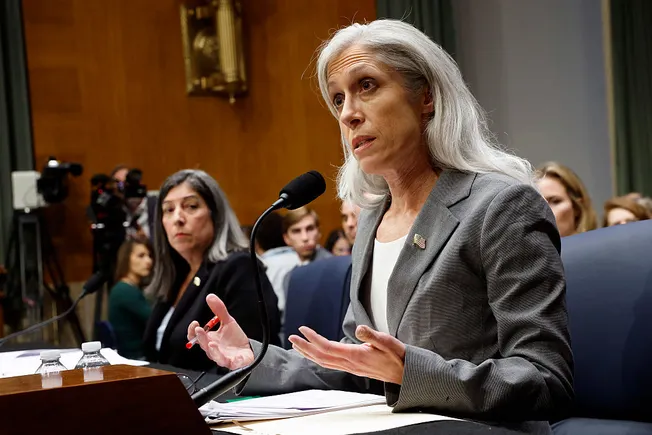
    Monarez informed U.S. lawmakers of Kennedy’s plans Wednesday during a hearing hosted by the Senate Health, Education, Labor and Pensions Committee. The hearing is the first public appearance by Monarez since her firing, which spurred several other high-ranking CDC officials to resign in protest.

    In a Sept. 4 op-ed in The Wall Street Journal and again Wednesday, Monarez said she was removed for refusing to rubber-stamp vaccine guidelines without supportive evidence.

    “He just wanted blanket approval,” Monarez said during the hearing, referring to Kennedy. “If I could not commit to an approval to each of the recommendations, I would need to resign.”

    Monarez said Kennedy plans to change recommendations for childhood vaccinations against COVID-19 and hepatitis B. Both shots will be discussed at a meeting this week of the CDC’s Advisory Committee on Immunization Practices, which is tasked with formulating guidelines.

    “In the first meeting [with Kennedy], he asked me to commit to firing scientists or resign. He asked me to pre-commit to signing off on each one of the forthcoming ACIP recommendations, regardless of whether or not there was scientific evidence.”

    Debra Houry, the CDC’s former chief medical officer who resigned after Monarez’s ouster, also testified at the hearing Wednesday.

    ACIP’s meeting, which will take place Thursday and Friday, will be closely watched. A draft agenda indicates the committee will discuss and vote on guidelines for vaccines against hepatitis B, COVID, and measles, mumps, rubella and varicella.

    Monarez and Houry told senators that they were not aware of any scientific evidence to support changing the age at which children can get those vaccines.

    Sen. Bill Cassidy, R-La, expressed support for the inclusion of the hepatitis B vaccine in the childhood immunization schedule. The shot is recommended for all infants.

    “That is an accomplishment to make America healthy again, and we should stand up and salute the people that made that decision, because there’s people who would otherwise be dead if those mothers were not given that option to have their child vaccinated,” Cassidy said.

    Since becoming head of HHS, Kennedy has remade ACIP, firing its previous 17 members and stacking it with seven advisers he picked. This week, just days ahead of the committee’s meeting, Kennedy added five new members, including individuals whose backgrounds are atypical for the panel. Now among the panel’s members are critics of COVID vaccine policies and skeptics of vaccine technologies like messenger RNA.

    At an earlier meeting in June, the seven advisers first chosen by Kennedy indicated they held doubts about the evidence supporting COVID vaccines and voted to remove a little-used, but controversial preservative that’s been targeted by anti-vaccine groups.

    Typically, CDC working groups prepare data in support of ACIP votes on guidelines. Houry said no working groups besides one for COVID have been convened ahead of this week’s meeting, however.

    Monarez indicated she would be open to changing the childhood vaccine schedules if there was supporting evidence to do so.

    “Kennedy responded that there was no science or evidence associated with the childhood vaccine schedule, and he elaborated that CDC had never collected the science or the data to make it available related to the safety and efficacy,” Monarez said.

    Studies supporting the vaccines included in the childhood immunization schedule are public, and the current schedule has been supported by medical associations.

    “I worry about our medical institutions having to take care of sick kids that could have been prevented by effective and safe vaccines,” Monarez said. “I worry about the future of trust in public health.”

    Source link

  • The New COVID Vaccine Rules Leave Parents with More Questions than Answers – The 74

    The New COVID Vaccine Rules Leave Parents with More Questions than Answers – The 74


    Get stories like this delivered straight to your inbox. Sign up for The 74 Newsletter

    The federal government’s latest guidelines for COVID-19 vaccines make it difficult to know who, exactly, will be able to access shots this fall. While Health and Human Services Secretary Robert F. Kennedy Jr. and some of his staff claim anyone will be able to access a shot in consultation with their doctor, medical groups are warning that the new guidance will impact a broad swath of people, including postpartum people and healthy children.

    “For children and young adults that I see, there are constraints, and they are significant,” said Dr. Molly O’Shea, a pediatrician in Michigan and a spokesperson for the American Academy of Pediatrics (AAP).

    It might also take several more weeks to know who will be able to receive no-cost COVID-19 vaccines covered by health insurance. That decision partly depends on formal recommendations from a vaccine panel that isn’t scheduled to meet until mid-September. 

    Actions by the Food and Drug Administration last week mean that none of the COVID-19 vaccines that are slated to be on the U.S. market this fall will have an emergency use authorization that had allowed their quick (yet still rigorously tested) approval at the height of the pandemic. The removal of this designation means the drug company Pfizer will no longer offer COVID-19 vaccines to very young children, limiting parents’ brand options and potentially impacting supply.

    Moderna, Pfizer and Novavax, the three main COVID-19 vaccine manufacturers, have all shared news releases about what they’ve been approved to offer:

    • Moderna, Pfizer or Novavax will offer shots to anyone who is 65 and older, irrespective of medical history.
    • Pfizer will offer shots to anyone between the ages of five and 64 if they have at least one underlying condition that puts them at high risk for severe outcomes from COVID-19.
    • Moderna will offer shots to anyone between six months and 64 if they have at least one underlying condition that puts them at high risk for severe outcomes from COVID-19.
    • Novavax, the only company providing a non-mRNA COVID-19 vaccine, will offer shots to anyone between 12 and 64 if they have at least one underlying condition that puts them at high risk for severe outcomes from COVID-19.

    The vaccine panel known as the Advisory Committee for Immunization Practices (ACIP) is expected to make formal recommendations on these FDA-approved vaccines, and those recommendations have historically determined whether insurance providers will cover a vaccine at no cost under insurance.

    An HHS spokesperson did not immediately respond to a request for information and comment from The 19th, but in a post on X, Kennedy said: “These vaccines are available for all patients who choose them after consulting with their doctors.” Separately, USA Today reported on a document from HHS stating the FDA’s actions do “not affect access to these vaccines for healthy individuals. These vaccines remain available to those who choose them in consultation with their healthcare provider.”

    Dr. Marty Makary, FDA commissioner, added in a separate X post: “100% of adults in this country can still get the vaccine if they choose. We are not limiting availability to anyone.”

    But what that means practically for everyday people who want to access a COVID-19 shot — everything from whether their doctor will prescribe it, or if a pharmacy will be able to administer it, and whether there will be an out-of-pocket cost — is unclear for now. 

    How will it impact postpartum people?

    Pregnant people are expected to still have access to the vaccine because the CDC continues to list pregnancy as an underlying condition that puts an individual at high risk for severe outcomes from COVID-19. (The list of at least two dozen conditions also includes chronic health conditions and immunocompromised conditions.)

    But Kennedy, who has repeatedly questioned the safety of COVID-19 vaccines despite research that shows their effectiveness, announced in May that the CDC would no longer formally recommend such vaccines to pregnant people and healthy children, a move that seemed to contradict his own department

    Lactating and postpartum individuals must have an underlying medical condition to be eligible for one of the FDA’s approved vaccines, according to the American College of Obstetricians and Gynecologists (ACOG)’s understanding of the announcement. ACOG continues to recommend COVID-19 vaccination to people who are contemplating pregnancy, are pregnant, were recently pregnant or are now lactating.

    “We recognize that now, disappointingly, only lactating and postpartum individuals with an underlying condition will be eligible for vaccination. Still, it remains critical that pregnant patients receive the vaccines so that they are able to provide passive immunity from COVID-19 to their infants in those first few months of life before they can be vaccinated,” said ACOG President Steven J. Fleischman in an email.

    How will it impact healthy children?

    Healthy children will likely still be able to access the COVID vaccine, but the cost for a parent or guardian, as well as availability, will be impacted by these decisions.

    Charlotte A. Moser, co-director of the Vaccine Education Center at Children’s Hospital of Philadelphia, said parents who want to get their kids the COVID-19 vaccine should still be able to do so through what is called shared clinical decision-making in consultation with their child’s health care provider, according to the CDC’s current vaccine schedule. But it’s unclear whether this will change when ACIP meets again.

    But physicians who prescribe a COVID-19 vaccine outside of the parameters of how the FDA approved them would be OKing use of the shot “off-label” — a designation that means a medical product is being used outside of how the FDA approved it. That raises questions about access and cost. Physicians might not be willing to prescribe off-label because of concerns about liability.

    “I think that there will be a substantially smaller number of pediatricians, pharmacies, etc., who will be comfortable taking that risk,” O’Shea said.

    Dr. Dial Hewlett, medical director of tuberculosis services at Westchester County Department of Health in New York and a spokesperson for the Infectious Diseases Society of America, said an off-label prescription might also not be covered by insurance.

    “A mother or father can go in with their child and say, ‘I’d like for them to have the vaccine,’ but they may be told, ‘Well we’ll give it, but you’re going to have to pay $200,’” he said.

    The science on COVID vaccines has consistently indicated they are safe for children to receive.
    (Joseph Prezioso / AFP / Getty Images)

    Depending on the circumstances, pharmacists may also not be able to provide off-label vaccines. Some states tie pharmacist immunization authority to FDA approval,which has the potential to create a hodgepodge of access. The New York Times reported that CVS and Walgreens, the country’s largest pharmacy chains, have begun restricting COVID-19 shots in some states to people with a prescription. 

    “There may be some variability from state to state, but it’s a big barrier if FDA approval is not there, and the FDA approvals have been pulled back from where they were previously,” Hewlett said.

    The FDA announcement is “concerning,” added Moser, who noted that limiting Pfizer’s vaccine will make it more difficult for all children to get a COVID-19 vaccine this year because of anticipated supply limitations.

    O’Shea, the pediatrician in Michigan, said her office is currently deciding how many COVID-19 shots to stock, and it’s proving tricky as they weigh the cost vs. demand — the percentage of children under 18 getting the shot is under 15 percent.

    “Figuring out how much we want to have at any one time, and how we are going to give it to people — this really makes it a lot more complicated,” she said.

    What happens next?

    Moser said the announcement adds confusion for providers and families, and noted that the unilateral approach by Kennedy so far when it comes to vaccine policy “removes hundreds of voices of clinicians and scientists that were part of the process.” Moser recently served on ACIP and is among the members that Kennedy removed. He has replaced the panel with people who do not have relevant experience.

    “That army of voices ensured a process informed by clinical experience and scientific expertise to which the small group making these decisions now cannot possibly compare,” she said in an email.

    The revamped ACIP panel is scheduled to meet over two days beginning on September 18. Republican Sen. Bill Cassidy, a doctor who is chair of the Senate Health, Education, Labor, and Pensions (HELP) Committee, is now questioning whether that panel has enough legitimacy to meet, especially amid a leadership shakeup at the Centers for Disease Control and Prevention

    “Serious allegations have been made about the meeting agenda, membership, and lack of scientific process being followed for the now announced September ACIP meeting,” he said in a statement. “These decisions directly impact children’s health and the meeting should not occur until significant oversight has been conducted. If the meeting proceeds, any recommendations made should be rejected as lacking legitimacy given the seriousness of the allegations and the current turmoil in CDC leadership.”

    AAP called Kennedy’s latest COVID guidelines “deeply troubling” and urged COVID vaccine decision-making to remain between medical experts and families. 

    Dr. Susan J. Kressly, president of AAP, said in a statement that any barrier to COVID-19 vaccination as the nation enters the respiratory virus season creates “a dangerous vulnerability for children and their families.”

    “Any parent who wants their child vaccinated should have access to this vaccine,” she said, adding that HHS’ action “not only prevents this option for many families, but adds further confusion and stress for parents trying to make the best choices for their children.”

    This story was originally reported by Barbara Rodriguez of The 19th. Meet Barbara and read more of their reporting on gender, politics and policy.


    Get stories like these delivered straight to your inbox. Sign up for The 74 Newsletter

    Source link

  • mRNA Vaccine Research Cuts Blow to Innovation

    mRNA Vaccine Research Cuts Blow to Innovation

    Academic researchers are worried that the government’s plans to stop investing in the development of messenger RNA vaccines, a technology university scientists first used to help develop the COVID-19 vaccines, will undermine the United States’ standing as a global leader in biomedical research and development.

    As promising as mRNA technology may be for treating a range of maladies, including numerous types of cancer and autoimmune diseases, its role in developing the COVID vaccine has thrust it into a political crossfire, fueled by the Trump administration’s smoldering criticisms of the Biden administration’s handling of the pandemic.

    Last week, Robert F. Kennedy Jr., director of the Department of Health and Human Services, who frequently cites misinformation about vaccines and other public health issues, announced that the department is winding down mRNA vaccine research under the Biomedical Advanced Research and Development Authority and canceling $500 million worth of contracts and grants with numerous biotech companies and Emory University in Atlanta.

    “We reviewed the science, listened to the experts, and acted,” Kennedy, a lawyer by training, said in a statement, claiming that “the data show these vaccines fail to protect effectively against upper respiratory infections like COVID and flu. We’re shifting that funding toward safer, broader vaccine platforms that remain effective even as viruses mutate.”

    Jeff Coller, director of the RNA Innovation Center at Johns Hopkins University, whose own graduate student helped develop Moderna’s COVID vaccine, said that “mRNA technology is incredibly misunderstood by the public and many of our politicians.”

    Despite that, “the science has always been consistently clear about the powerful medical benefits of the mRNA platform,” he said. “It’s saved millions of lives, is incredibly safe, has huge potential and will revolutionize medicine in the next 100 years. Yet, we’re ceding American leadership in this technology.”

    The half-a-billion-dollar cut comes at the same time that the Trump administration has withdrawn support for federally funded scientific research that doesn’t align with its ideological views, including projects focused on vaccine hesitancy, LGBTQ+ health and climate change.

    According to a report from STAT News, the 181-page document Kennedy cited as his evidence that mRNA vaccines aren’t safe or effective references disputed studies written by other skeptics of COVID mitigation protocols, including stay-at-home orders and vaccines.

    Jay Bhattacharya, director of the National Institutes of Health, who criticized the NIH’s pandemic guidance in 2020, has also publicly defended the decision on Fox News, Steven Bannon’s podcast War Room and in an opinion article he published in The Washington Post Tuesday.

    In his op-ed, Bhattacharya acknowledged that mRNA is a “promising technology” that “may yet deliver breakthroughs in treating diseases such as cancer,” but that “as a vaccine intended for broad public use, especially during a public health emergency, the platform has failed a crucial test: earning public trust.”

    “Unfortunately, the Biden administration did not manage public trust in the coronavirus vaccines, largely because it chose a strategy of mandates rather than a risk-based approach and did not properly acknowledge Americans’ growing concerns regarding safety and effectiveness,” he wrote.

    ‘Political Shot Across the Bow’

    The vast majority of scientists agree that the mRNA-based COVID vaccine—which was created in record time as a result of President Donald Trump’s Operation Warp Speed, launched in 2020—is generally safe and effective.

    “I’m concerned about [the cut] weakening our country and putting us at a disadvantage,” said an mRNA researcher who asked to remain anonymous out of fear of retaliation. “The promise of mRNA is almost limitless, and I’d like to see those advances being made in this country. But currently it seems those advances are more likely to come from Europe and Asia. I’m also worried about the impact this could have on our economy—this is a growing field of industry.”

    Coller, of Johns Hopkins, said Kennedy’s decision to withdraw funding for mRNA vaccine research has more than financial implications.

    “It was a political shot across the bow of the entire research community, both in industry and academia,” Coller said. “What it says is that the government doesn’t want to support this technology and is going to make sure it doesn’t happen. If you’re an academic thinking about starting a new program in mRNA medicines, don’t waste your time.”

    And now it will be even easier for political whims to drive the government’s scientific research priorities. Last week, Trump issued an executive order that will put political appointees—rather than subject-matter experts—in charge of federal grant-making decisions.

    Heather Pierce, senior director for science policy and regulatory counsel at the Association of American Medical Colleges, said that while Kennedy’s decision won’t end all of the nation’s mRNA research, “the indication that a certain technology or scientific area won’t be pursued regardless of the progress made so far is worrisome as a concept.”

    That’s in part because “when we unilaterally close the door on a specific type of research or technology, we don’t know what would have come from that,” she said. “It’s not to say that every research project using every technology and scientific tool will necessarily lead to a cure or breakthrough, but the initial funding of these projects shows that there was promise that made it worth exploring.”

    Both Kennedy and Bhattacharya have said the government will continue to support research on other uses of mRNA technology unrelated to infectious disease vaccines. But experts say separating those research areas isn’t so simple.

    “They’re all interconnected,” said Florian Krammer, a professor of vaccinology at the Icahn School of Medicine at Mount Sinai. “If you take away funding in the infectious disease space and innovation doesn’t happen there, it’s also not happening in other spaces where mRNA technology is used.”

    That will create a “huge problem for researchers,” he added, “because a lot of fields are using this technology, and if it’s not moving forward, it closes doors.”

    Source link

  • UQ vaccine bought in billion-dollar deal – Campus Review

    UQ vaccine bought in billion-dollar deal – Campus Review

    Breakthrough vaccine technology invented by the University of Queensland is at the centre of a landmark deal worth up to $1.6bn struck with global pharmaceutical giant Sanofi.

    Please login below to view content or subscribe now.

    Membership Login

    Source link

  • Trump: Aus research must disclose vaccine, transgender, DEI or China ties

    Trump: Aus research must disclose vaccine, transgender, DEI or China ties

    US President Donald Trump in the Oval Office of the White House. Picture: Mandel Ngan

    Australian researchers who receive United States funding have been asked to disclose links to China and whether they agree with US President Donald Trump’s “two sexes” executive order.

    Please login below to view content or subscribe now.

    Membership Login

    Source link

  • Parents, Medical Providers, Vaccine Experts Brace for RFK Jr.’s HHS Takeover – The 74

    Parents, Medical Providers, Vaccine Experts Brace for RFK Jr.’s HHS Takeover – The 74


    Get stories like this delivered straight to your inbox. Sign up for The 74 Newsletter

    While Robert F. Kennedy Jr. ‘s Senate confirmation to head the Department of Health and Human Services was not unexpected, it still shook medical providers, public health experts and parents across the country. 

    Mary Koslap-Petraco, a pediatric nurse practitioner who exclusively treats underserved children, said when she heard the news Thursday morning she was immediately filled with “absolute dread.”

    Mary Koslap-Petraco is a pediatric nurse practitioner and Vaccines for Children provider. (Mary Koslap-Petraco)

    “I have been following him for years,” she told The 74. “I’ve read what he has written. I’ve heard what he has said. I know he has made a fortune with his anti-vax stance.”

    She is primarily concerned that his rhetoric might “scare the daylights out of people so that they don’t want to vaccinate their children.” She also fears he could move to defund Vaccines for Children, a program under the Centers for Disease Control and Prevention that provides vaccines to kids who lack health insurance or otherwise wouldn’t be able to afford them. While the program is federally mandated by Congress, moves to drain its funding could essentially render it useless.

    Koslap-Petraco’s practice in Massapequa Park, New York relies heavily on the program to vaccinate pediatric patients, she said. If it were to disappear, she asked, “How am I supposed to take care of poor children? Are they supposed to just die or get sick because their parents don’t have the funds to get the vaccines for them?” 

    And, if the government-run program were to stop paying for vaccines, she said she’s terrified private insurance companies might follow suit. 

    Vaccines for Children is “the backbone of pediatric vaccine infrastructure in the country,” said Richard Hughes IV, former vice president of public policy at Moderna and a George Washington University law professor who teaches a course on vaccine law.

    Kennedy will also have immense power over Medicaid, which covers low-income populations and provides billions of dollars to schools annually for physical, mental and behavioral health services for eligible students.

    If Kennedy moves to weaken programs at HHS, which experts expect him to do, through across-the-board cuts in public health funding that trickle down to immunization programs or more targeted attacks, low-income and minority school-aged kids will be disproportionately impacted, Hughes said. 

    “I just absolutely, fundamentally, confidently believe that we will see deaths,” he added.

    Anticipating chaos and instability

    Following a contentious seven hours of grilling across two confirmation hearings, Democratic senators protested Kennedy’s confirmation on the floor late into the night Wednesday. The following morning, all 45 Democrats and both Independents voted in opposition and all but one Republican — childhood polio survivor Mitch McConnell of Kentucky — lined up behind President Donald Trump’s pick.

    James Hodge, a public health law expert at Arizona State University’s Sandra Day O’Connor College of Law, said that while it was good to see senators across the political spectrum asking tough questions and Kennedy offering up some concessions on vaccine-related policies and initiatives, he’s skeptical these will stick.

    “Whatever you’ve seen him do for the last 25 to 30 years is a much, much greater predictor than what you saw him do during two or three days of Senate confirmation proceedings,” Hodge said. “Ergo, be concerned significantly about the future of vaccines, vaccine exemptions, [and] how we’re going to fund these things.”

    Hodge also said he doesn’t trust how Kennedy will respond to the consequences of a dropoff in childhood vaccines, pointing to the current measles outbreak in West Texas schools.

    “The simple reality is he may plant misinformation or mis-messaging,” he said.

    During his confirmation hearings, Kennedy tried to distance himself from his past anti-vaccination sentiments stating, “News reports have claimed that I am anti-vaccine or anti-industry. I am neither. I am pro-safety … I believe that vaccines played a critical role in health care. All of my kids are vaccinated.”

    He was confirmed as Linda McMahon, Trump’s nominee to head the Department of Education, was sitting down for her first day of hearings. At one point that morning, McMahon signaled an openness to possibly shifting enforcement to HHS of the Individuals with Disabilities Education Act — a federal law dating back to 1975 that mandates a free, appropriate public education for the 7.5 million students with disabilities — if Trump were to succeed in shutting down the education department.

    This would effectively put IDEA’s $15.4 billion budget under Kennedy’s purview, further linking the education and public health care systems.

    In a post on the social media site BlueSky, Randi Weingarten, president of the American Federation of Teachers, wrote she is “concerned that anyone is willing to move IDEA services for kids with disabilities into HHS, under a secretary who questions science.”

    Keri Rodrigues, president of the National Parents Union and a parent of a child with ADHD and autism, told The 74 the idea was “absolutely absurd” and would cause chaos and instability. 

    Kennedy’s history of falsely asserting a link between childhood vaccines and autism — a disability included under IDEA coverage — is particularly concerning to experts in this light.

    “You obviously have a contingent of kids who are beneficiaries of IDEA that are navigating autism spectrum disorder,” said Hughes, “Could [we] potentially see some sort of policy activity and rhetoric around that? Potentially.”

    Vaccines — and therefore HHS — are inextricably linked to schools. Currently, all 50 states have vaccine requirements for children entering child care and schools. But Kennedy, who now has control of an agency with a $1.7 trillion budget and 90,000 employees spread across 13 agencies, could pull multiple levers to roll back requirements, enforcements and funding, according to The 74’s previous reporting. And Trump has signaled an interest in cutting funding to schools that mandate vaccines.

    “There’s a certain percentage of the population that is focused on removing school entry requirements,” said Northe Saunders, executive director of the pro-vaccine SAFE Communities Coalition. “They are loud, and they are organized and they are well funded by groups just like RFK Jr.’s Children’s Health Defense.”

    Kennedy will also have the ability to influence the makeup of the committees that approve vaccines and add them to the federal vaccine schedule, which state legislators rely on to determine their school policies. Hodge said one of these committees is already being “re-organized and re-thought as we speak.”

    “With him now in place, just expect that committee to start really changing its members, its tone, the demeanor, the forcefulness of which it’s suggesting vaccines,” he added.

    Hughes, the law professor, said he is preparing for mass staffing changes throughout the agency, mirroring what’s already happened across multiple federal departments and agencies in Trump’s first weeks in office. He predicts this will include Kennedy possibly asking for the resignations “of all scientific leaders with HHS.” 

    Kennedy appeared to confirm that he was eyeing staffing cuts Thursday night during an appearance on Fox News’s “The Ingraham Angle.”

    “I have a list in my head … if you’ve been involved in good science, you have got nothing to worry about,” Kennedy said.


    Get stories like these delivered straight to your inbox. Sign up for The 74 Newsletter

    Source link

  • Supreme Court Blocks OSHA Vaccine and Testing ETS and Upholds CMS Healthcare Worker Vaccine Mandate – CUPA-HR

    Supreme Court Blocks OSHA Vaccine and Testing ETS and Upholds CMS Healthcare Worker Vaccine Mandate – CUPA-HR

    by CUPA-HR | January 14, 2022

    On January 13, the U.S. Supreme Court blocked enforcement of the Occupational Safety and Health Administration (OSHA)’s Emergency Temporary Standard (ETS) that would mandate vaccines or testing requirements for employers with 100 or more employees, but reinstated enforcement of the Centers for Medicare and Medicaid Services (CMS)’s mandate that would require COVID-19 vaccinations for healthcare workers working at facilities that participate in Medicare and Medicaid.

    In December, the U.S. Court of Appeals for the 6th Circuit vacated the 5th Circuit Court’s nationwide emergency motion to stay the OSHA ETS, paving the way for OSHA to continue enforcement of the ETS vaccine and testing requirements. The decision led several business groups and Republican-led states to file emergency applications with the Supreme Court seeking to reinstate the stay. The Supreme Court heard oral arguments on the OSHA mandate on January 7, leading to the court’s decision to block the vaccine and testing mandate.

    Additionally, the Supreme Court heard oral arguments on the CMS healthcare worker mandate on January 7. They ultimately ruled in favor of allowing the CMS healthcare worker vaccine mandate to take effect while the mandate is being litigated in several U.S. district courts and circuit courts. The CMS mandate was previously stayed in 25 states after four lawsuits were filed against CMS in district courts in Missouri, Louisiana, Florida and Texas.

    Though not heard or ruled on by the Supreme Court, the federal contractor vaccine mandate, which requires all federal contractors to mandate COVID-19 vaccinations for their employees, remains stayed by the U.S. District Court for the Southern District of Georgia, which issued a nationwide preliminary injunction against the mandate on December 7. The Biden administration has appealed the decision to the 11th Circuit Court, which has since upheld the lower court’s injunction but has not yet ruled on the legal merits of the mandate. Litigation continues for this rule in the 11th Circuit Court.

    The Supreme Court’s decisions bring the rules back to the lower courts to continue litigation on their merits; however, the recent decisions do signal how the Supreme Court would likely rule on the merits of the cases if they are once again appealed to the higher court.

    CUPA-HR will continue to keep members apprised of any legal updates as they relate to the fate of the OSHA ETS, the CMS healthcare vaccine mandate, and the federal contractor vaccine mandate.


    Source link

  • Biden Administration’s Vaccine Mandates Face Legal Challenges in Court – CUPA-HR

    Biden Administration’s Vaccine Mandates Face Legal Challenges in Court – CUPA-HR

    by CUPA-HR | December 9, 2021

    Over the past several months, the Biden administration announced and implemented several vaccine and testing mandates for federal workers, federal contractors and private employers. States and business stakeholders quickly responded with lawsuits against the administration’s mandates, which continue to be challenged in courts around the country. To keep CUPA-HR members apprised of the legal challenges, we have detailed below the most recent litigation updates for the federal contractor vaccine mandate, the Occupational Safety and Health Administration (OSHA)’s Emergency Temporary Standard (ETS), and the Centers for Medicare and Medicaid Services’ (CMS) vaccine mandate for healthcare workers — all three of which are on hold pending the various lawsuits’ outcomes.

    Federal Contractor Vaccine Mandate

    On September 9, President Biden issued Executive Order 14042 (EO), “Ensuring Adequate COVID Safety Protocols for Federal Contractors,” as part of his “Path Out of the Pandemic” plan. The EO tasks the Safer Federal Workforce Task Force with implementing guidance that requires all federal contractors to mandate COVID-19 vaccinations for their employees. The current effective date is January 4, 2022, meaning all covered contractor employees must be fully vaccinated by January 18, 2022. A federal court recently enjoined the government from implementing the EO, however, so it remains unclear when, if ever, the mandate will go into effect.

    Numerous lawsuits have been filed against the mandate arguing that the Biden administration does not have authority to require vaccinations, and two federal courts have already issued decisions. On November 30, the U.S. District Court for the Eastern District of Kentucky issued a preliminary injunction against the mandate, stopping enforcement in Kentucky, Ohio and Tennessee only. On December 7, a federal judge at the U.S. District Court for the Southern District of Georgia granted a motion for a nationwide preliminary injunction against the vaccination mandate for federal contractors, halting enforcement for federal contractors in all states. The Biden administration is expected to challenge this decision.

    OSHA Emergency Temporary Standard

    On November 5, OSHA issued its COVID-19 Vaccination and Testing ETS requiring employers with 100 or more employees to implement vaccination or testing policies for their workers. As it currently stands, the ETS requires covered employers and employees to be fully vaccinated by January 4, 2022. A federal court has enjoined OSHA from implementing the ETS, however, and it remains unclear whether the ETS will be in effect on January 4 or anytime thereafter.

    Over three dozen lawsuits were filed against the rule, with at least one in all 12 circuit courts in the country. On November 6, the U.S. Court of Appeals for the 5th Circuit granted an emergency motion to stay the ETS, and on November 12, it extended the stay while it further reviewed the motion for a permanent injunction, ordering OSHA to stop implementation and enforcement of the ETS until further court order. Due to the high volume of cases at various circuit courts, a lottery was held on November 18 to determine which circuit court would hear the case to make a sweeping decision, which the 6th Circuit won, meaning the stay remains in place until the 6th Circuit makes a decision on the motion. It is likely the stay will remain in place until at least December 10; that said, the 6th Circuit can decide to lift the stay before that if it chooses to do so.

    CMS Vaccine Mandate for Healthcare Workers

    On November 5, the Centers for Medicare and Medicaid Services (CMS) issued a rule requiring healthcare workers in facilities that receive Medicare or Medicaid funds be vaccinated against COVID-19 by January 4, 2022. This rule also has been stayed by federal courts.

    Four lawsuits were filed against CMS challenging the agency’s authority to issue the rule. On November 29, the District Court for the Eastern District of Missouri blocked implementation and enforcement in the 10 states that challenged the rule: Missouri, Nebraska, Arkansas, Kansas, Iowa, Wyoming, Alaska, South Dakota, North Dakota and New Hampshire. On November 30, the District Court for the Western District of Louisiana issued a preliminary injunction blocking enforcement of the mandate nationwide, except in the 10 states impacted by the Missouri ruling. Decisions in the two other lawsuits are still pending.

    CUPA-HR continues to monitor the ongoing litigation for all of the vaccine and testing mandates and will keep members apprised of any decisions that will impact institutions’ compliance efforts.


    Source link