This week on the podcast, live from our Festival in London, we discuss access and social mobility as the Office for Students reshuffles its leadership, and the Sutton Trust publishes a new report that paints a sobering picture.
Plus we discuss university governance and our new paper for the Post-18 Project, and we capture the vibes from our event, from the best quotes to the big debates shaping the sector’s future.
With Alistair Jarvis, Chief Executive at Advance HE, Janet Lord, Deputy Pro Vice Chancellor for Education at Manchester Metropolitan University, and Michael Salmon, News Editor at Wonkhe – and presented by Jim Dickinson, Associate Editor at Wonkhe.
Let’s face it, the news cycle is a pretty gloomy place at the moment, so we’ve decided to take a different perspective. This is our attempt to find our happie place (notice the pun we’ve got going here?).
This regular column aims to bring you positive news, flashes of inspiration and a warm, fuzzy feeling that will nourish your soul. We want to celebrate international student success and colleagues who go above and beyond. Get involved and send us the good stuff so we can share the love.
We recognise that in this unpredictable market, real challenges exist – and that this is nothing more than a sticking plaster – but sometimes there’s strength in looking for the positives.
I was born in Lagos, but I was made in Swansea Michael Ijaiyemakinde, international student
This week, we decided to check in with some of the international graduates we’ve met in the UK over the years to see how they’re getting on.
These stories are a simple reminder of why we believe in the transformational power of study abroad and the power to change individual lives (including our own).
Franka Zlatic – Studying abroad reinvigorated my worldview
“Spending six years studying in the UK profoundly shaped my academic and personal development.
“Immersed in a diverse, intellectually stimulating environment, I gained both theoretical grounding and the confidence to pursue independent research. Living abroad also allowed me to travel extensively across Europe and beyond, which broadened my horizons in ways I hadn’t anticipated.
“I met people from all walks of life, encountered different worldviews, and had the time of my life – experiences that have deeply influenced how I relate to others and approach my work. Later, working at a law school in India further deepened my understanding of migration, identity, and postcolonial dynamics – topics central to my academic focus.
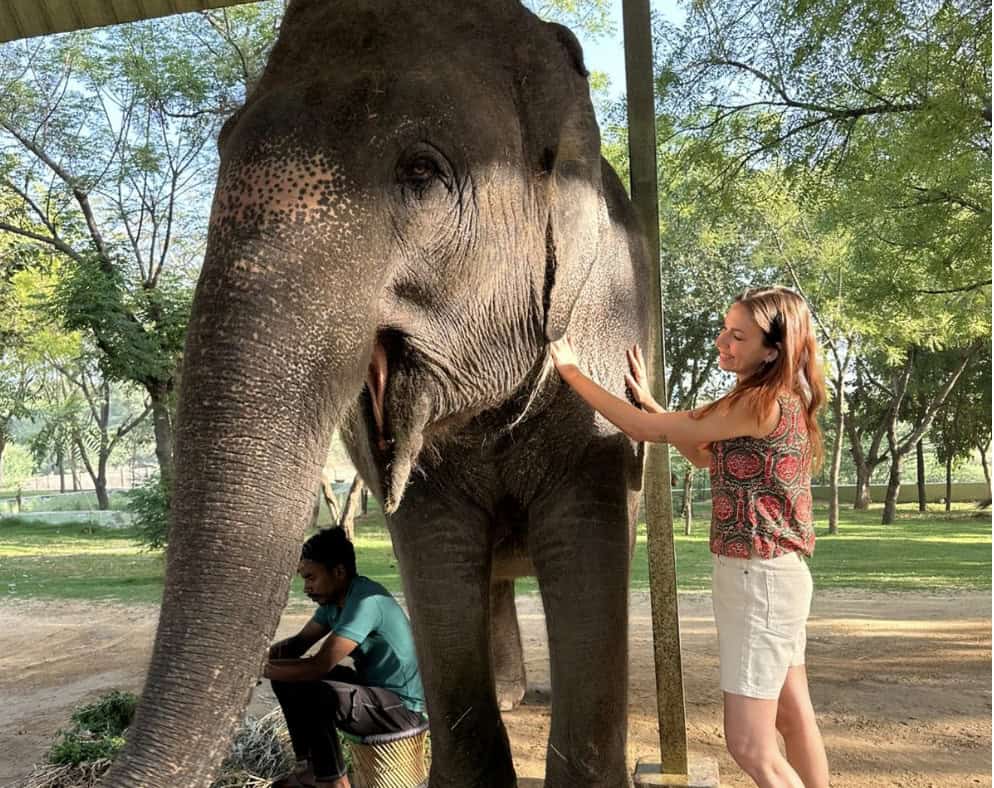
Franka cuddling an elephant while teaching in India
“Engaging with students and scholars in a culturally different yet intellectually rich context challenged me to adapt, reflect, and grow. Both experiences, academic rigour in the UK and practical, cross-cultural engagement in India, equipped me with a unique combination of analytical insight, global perspective, and resilience.
“Returning to my home country, Croatia, I brought back not only knowledge but also a sense of purpose and a desire to contribute to local academic debates with a broader, transnational understanding.
“These international experiences positioned me competitively for a postdoctoral role in Croatia and reaffirmed my commitment to inclusive, globally engaged scholarship.”
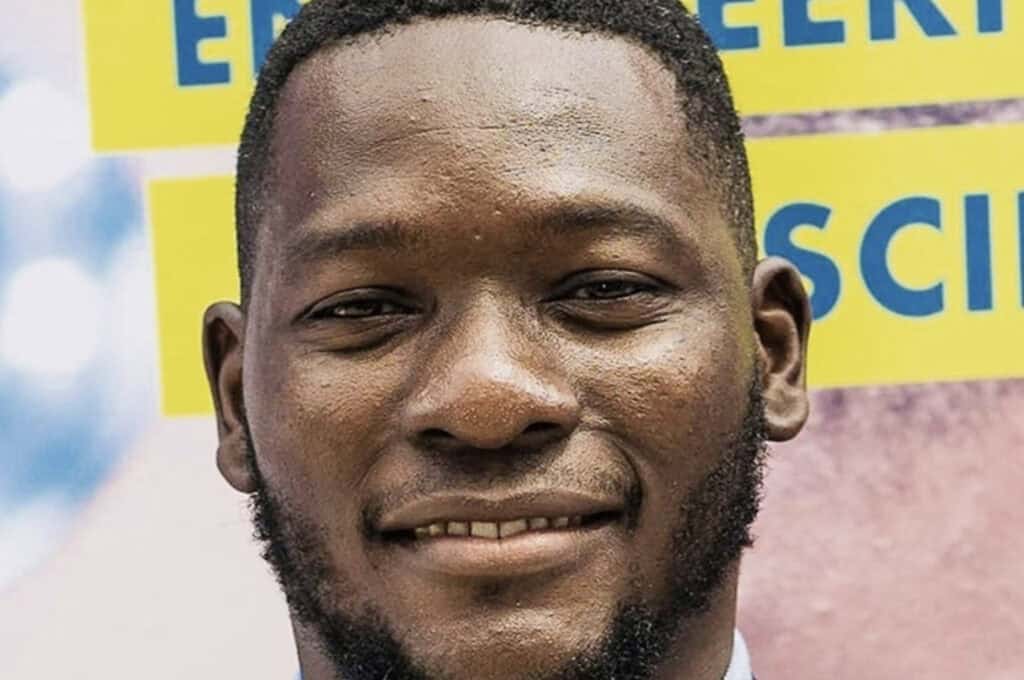
Michael Ijaiyemakinde – studying in Wales was the making of me
“I was born in Lagos, but I was made in Swansea.
“Every time I say this, I get the same reaction – raised eyebrows, shocked expressions, and sometimes even pushback: you’re not patriotic.
“But here’s what I really mean. Growing up in Nigeria, life was fast-paced, driven by results, and often defined by expectations. While it gave me resilience, it didn’t speak my love languages or give me the space to find myself. I was always doing – but rarely being.
“At 17, I moved to study at Swansea University in Wales. Swansea’s a small city, often overlooked. But for me? It became a sanctuary. It was in Swansea that I experienced support that wasn’t transactional. I met managers, mentors, and everyday people who lived out values like empathy, service, and patience – people just like you who are reading this now.
Michael found his happie place on the southwest coast of Wales thanks to people just like you
“You didn’t just teach me – you showed me. Through kindness. Through consistency.
“You helped me shed temper issues, rebuild my self-esteem, and rediscover my voice. Swansea didn’t change who I was. It simply gave me permission to become it.
“What positive message am I trying to pass on here? What thoughts to help my colleagues stay positive in difficult times?
“The right environment can change everything: not because where you’re from is bad – but because sometimes you need a new setting to unlock the next chapter of your growth.
“Is the current environment you’re in helping you become the best version of yourself? Or is it holding you back from discovering who that version really is?
“If not, maybe it’s time to find your Swansea.”
Filip-Matej Pfeifer
Born in Slovenia, Filip attended the University of Ljubljana Faculty of Sport, then transferred to the UK in September 2024 to pursue his master’s degree and continue his rowing career.
This summer he will not only graduate with his degree in international business from Oxford Brookes University (OBU) – he will also compete at the world-famous Henley Royal Regatta in July.
Imagine if we could get everyone in the sector all rowing in the same direction. Kudos to Filip for showing us the way.
Filip represented OBU at the 2025 BUCS Regatta where he took the silver medal in the men’s Single Sculls, setting a new rowing record for his UK university team and has competed internationally in both the European Rowing Championships and the World Rowing Cup.
On May 30, he reached the semi-finals of the Single Sculls at the 2025 European Rowing Championships in Bulgaria.
Huge thanks to the Student Sports Company for keeping us up to speed with Filip’s achievements as an international student athlete in the UK. We’re all cheering him on!
Have you got some positive news to share?
Help us to showcase the best of international education by sending us your testimonials, love letters and inspirational thoughts to [email protected] labelled ‘Happie place’. And remember – good vibes only.
As I mentioned yesterday, I recently spent some time at the International Association of Universities’ (IAU) annual meeting in Tokyo earlier this month. It’s tough to organize a meaningful international meeting about what you might call the “hard” issues in university management (resources, budget allocations, management styles) because these vary so much from one part of the world to another, and so the program tends to be taken up with more universalist themes like “values.”
The interesting thing about values was the divide in the room(s) about how insecure everyone felt about them. The white folks in the room spoke a lot about “challenging times,” which was mostly code for “holy crap, not Trump again, won’t we ever get out of this authoritarian populist nightmare?” But interestingly, the Africans in particular were not really interested in this discussion. They deal with strong-arming governments nearly all the time, and so there was a slight edge of “wake up, times are always challenging” to some of their interventions.
I’ll spare you the blow-by-blow, but something occurred to me as I listened to the various sessions: “vibes” are really the way that universities keep score of their successes, collectively at any rate. Sure, it’s nice that governments give them money—and they are bloody expensive to run—but what really matters is whether they are loved and respected.
For an empiricist like me, this is really annoying. I can measure investments and can compare them from one university or one country to another. But vibes? Very difficult to measure. Hard even to come up with a definition that makes sense across countries: in Canada we do measure how much the public “trusts” universities, but in other countries the vibes are much more directly about their ability to accept new students, or whether they are helping the country advance economically.
But what the hell? Let’s give it a try!
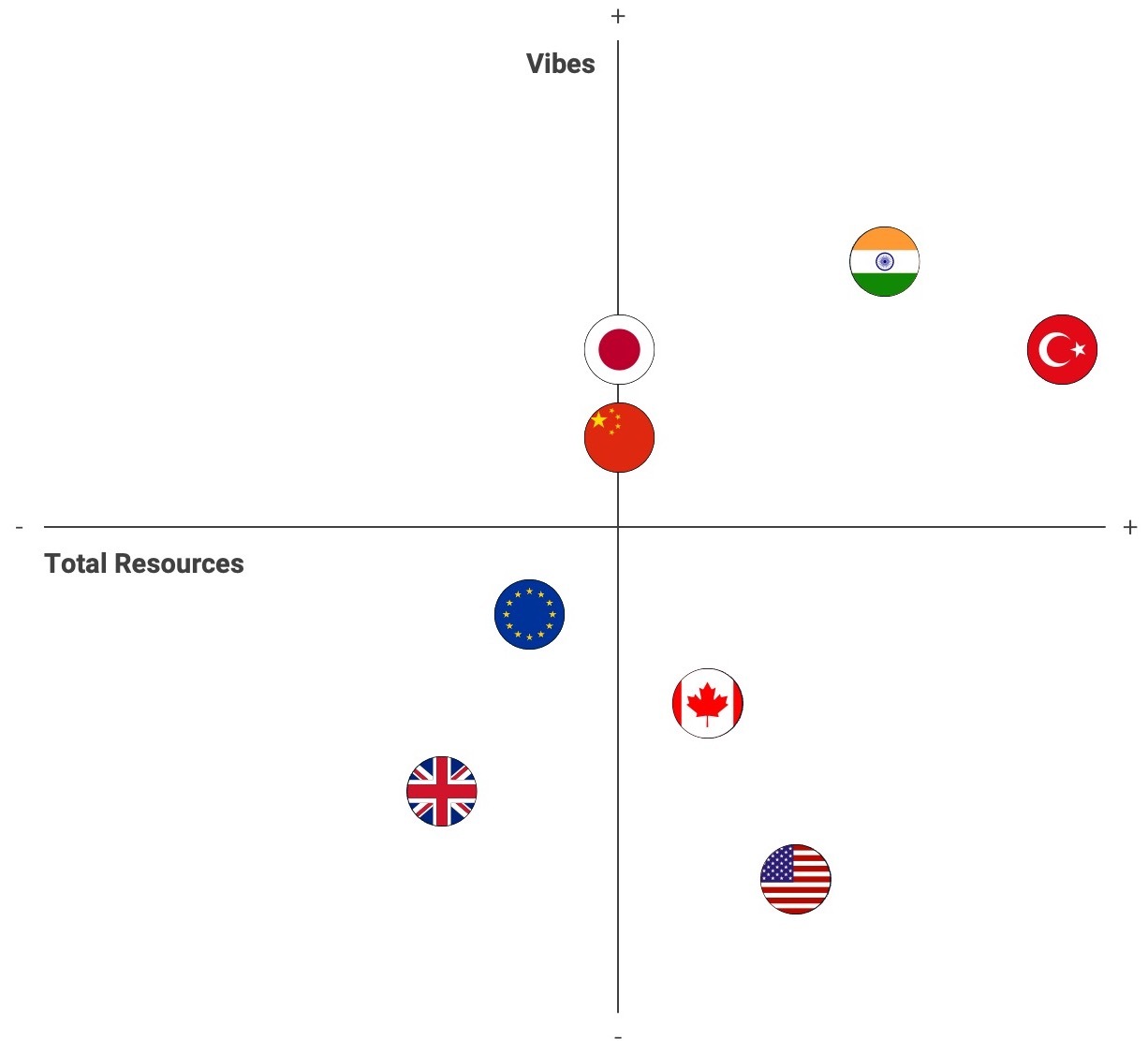
Below is a 2×2 (it’s not social science unless there is a 2×2!) that shows change in both total financial resources and vibes over the past five years in various countries. Data for the money axis is from my own records and analysis (you can see some of it back here from the talk I gave in Helsinki a couple of months ago), while data on the vibes axis is totally made up, based on my own observations. I’d be happy to discuss a better way to operationalize and measure this axis, but for the moment let’s just say this attempt to visualize how universities are faring is illustrative rather than in any way definitive and move on to the exercise itself
(If you’d like to argue for a specific source of information for various countries, or just argue my choice of placement of a particular country on the vibes scale, get in touch!)
What you can see plainly from Figure 1 is that higher education systems occupy one of three quadrants. There’s the one where both money and vibes are changing for the better (Turkey, India), one where money is going up but vibes are going down (the USA), and places where both money and vibes are headed in the wrong direction (the UK).
What we don’t see, really, are any countries in the top left quadrant where vibes are going up but money is going down. And I think what that tells you is that good vibes are not absolutely required in order for universities to receive new money, but they make it a whole heck of a lot easier. Which is of course why university Presidents are so concerned with public opinion.
Anyways, this is all pretty theoretical. But I think it points to the possibility that perhaps measuring public sentiment about universities in consistent ways across countries might yield some interesting insights into the determinants of public funding. And in any event, if vibes are the way that universities measure their own success, shouldn’t we try to measure that in the same way we measure institutional finances?