Tag: Vice

  • UNC Merges Information and Data Science Schools, Names New AI Vice Provost

    UNC Merges Information and Data Science Schools, Names New AI Vice Provost

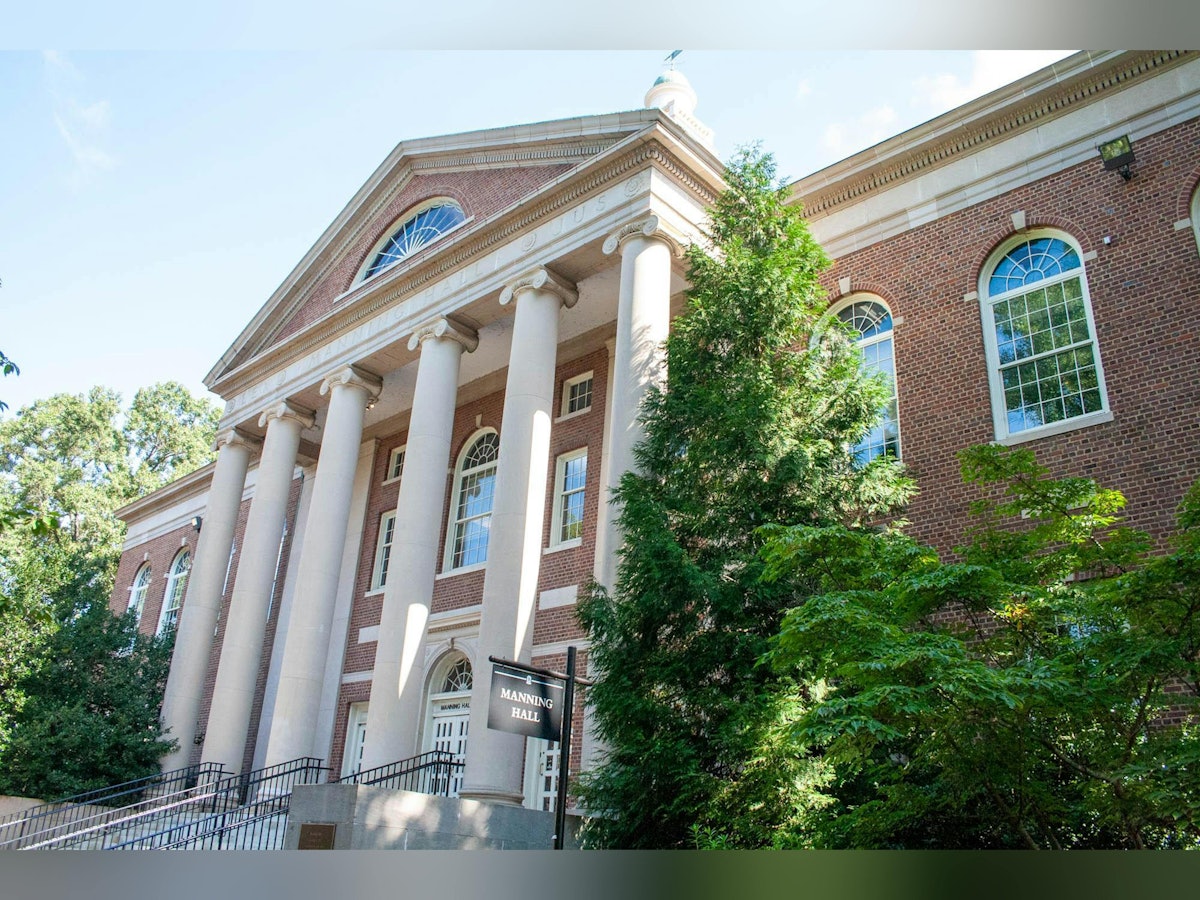
    Manning Hall at University of North Carolina Chapel HillUNCThe University of North Carolina at Chapel Hill announced last week that it will merge the School of Information and Library Science and the School of Data Science and Society into a single, yet-to-be-named institution focused on applied technology, information science and artificial intelligence.

    The merger, announced in a joint letter from Chancellor Lee H. Roberts and Interim Executive Vice Chancellor and Provost James W. Dean Jr., represents what administrators called “a bold step forward” in positioning Carolina as a national leader in data and AI education.

    Dr. Stanley Ahalt, current dean of the School of Data Science and Society, will serve as inaugural dean of the new school. Dr. Jeffrey Bardzell, dean of the School of Information and Library Science, will continue leading SILS through the transition while also assuming a newly created secondary appointment as Chief Artificial Intelligence Officer and Vice Provost for AI.

    “Information technologies, especially generative AI, are having a transformational impact,” the letter stated. “This new school is a bold step forward in our commitment to preparing students for a world increasingly shaped by data, information and artificial intelligence.”

    The AI vice provost position, which will become full-time once the new school is operational, will coordinate the university’s response to artificial intelligence across all campus units.

    “Dean Bardzell has been a key voice informing our thinking about AI campuswide,” Roberts and Dean wrote. “We are grateful to have his experience in the classroom, administration and research guiding our efforts.”

    The announcement comes as universities nationwide grapple with integrating AI into curriculum and operations. UNC joins a growing number of institutions restructuring academic units to address what administrators describe as rapid technological change.

    While the decision to merge has been finalized, administrators said that implementation plans remain under development. The university will establish a task force, advisory committee and multiple working groups to determine operational details.

    “Faculty, staff and students will be engaged throughout,” the announcement stated. Both schools will maintain current academic programs during the transition, with administrators expressing hope the merger will support enrollment growth and expanded impact.

    SILS, established in 1931, has approximately 600 students across bachelor’s, master’s and doctoral programs, with strengths in information ethics, library science and human-centered information design.

    SDSS, founded in 2019, has grown to roughly 400 students and focuses on computational methods, statistical analysis and data science applications across disciplines.

    “Both SILS and SDSS bring distinct strengths and areas of excellence to Carolina — technical expertise, humanistic inquiry and a deep understanding of the societal implications of emerging technologies,” administrators wrote.

    The letter noted that the merger is “driven by long-term possibilities” rather than budget constraints, with a focus on growth and expanding both schools’ “powerhouse academic programs.”

    University officials did not provide a timeline for completing the merger or naming the new school. They also did not specify budget details or projected enrollment targets.

    The announcement marks the latest in a series of administrative restructuring efforts at UNC-Chapel Hill, which has seen several organizational changes in recent years as it responds to shifting academic priorities and funding models.

    Source link

  • Selecting and Supporting New Vice Chancellors: Reflections on Process & Practice – PART 2 

    Selecting and Supporting New Vice Chancellors: Reflections on Process & Practice – PART 2 

    Author:
    Dr Tom Kennie

    Published:

    This HEPI blog was kindly authored by Dr Tom Kennie, Director of Ranmore 

    Introduction 

    In the first blog post, I focused on the process of appointing new Vice Chancellors. with some thoughts and challenges to current practice. In this second contribution, I focus more on support and how to ensure that the leadership transition receives as much attention as candidate selection.  

    Increasingly, the process of leadership transitions often starts way before the incoming successful candidate has been appointed. Depending on the circumstances which led to the need for a new leader, the process may involve a short or extended period with an Interim Leader. This can be an internal senior leader or someone externally who is appointed for a short, fixed-term period. This in itself is a topic for another day. It does, however, require careful consideration as part of the successful transition of a new leader (assuming the interim is not appointed to the permanent role). 

    Reflections to consider when on-boarding Vice Chancellors 

    Rules of engagement with the Interim or Existing post-holder  

    Clear rules of engagement must be agreed with the appointed Interim. Among those rules are those relating to the engagement with the Board. Often these can feel quite implicit and unspoken. I’d encourage both parties to be much more explicit and document their mutual expectations to share with each other.     

    Incoming Vice Chancellor transition plan (individual and team-based) 

    Moving onto the post-appointment, pre-arrival period is an important phase in the process of ensuring a successful outcome. How can the incoming leader prepare (whilst often doing another big job)? How might the team prepare the way for the incoming leader? And, how might the existing or interim leader hold things together during this period? This is often a period of heightened anxiety within the senior leadership team (although rarely surfaced and discussed). Working with the team during this phase can help to reduce the danger of siloed working and help prepare the team for the arrival of the new leader.  

    Outgoing Vice Chancellor transition plan  

    Frequently overlooked is the importance of ensuring a successful transition for the current post-holder (assuming it has not been a forced exit). Beware of placing too much focus on the new person. Often, as indicated earlier, the current post holder may have many months to go before the new person can start. They also require support and encouragement. And, of course, recognition for their period in office.  

    Day 1 and week 1 

    The lead-up to day 1 requires significant consideration by the new Vice Chancellor. Meeting the new ‘inner office’ and considering how and in what ways the new Vice Chancellor is different in style and expectations compared to the outgoing leader is an important factor. Induction processes will, no doubt, feature heavily in the first few weeks, but a new Vice Chancellor should ensure that they control the transition process. This requires careful coordinated communication and choreography.   

    First x days (what’s the right number?) 

    Every new Vice Chancellor should be wary of being persuaded to work towards delivering a plan by some (often arbitrary) date, typically 90-100 days after their arrival. Understanding the context of the institution, and working with this, is more important. 

    Potential surprises & dilemmas  

    A new Vice Chancellor should expect a few surprises when they start. Context and culture are different and these will have an impact on the interpretation of events. To ensure success, these should be soaked up and immediate responses should be avoided. In time, it will be much easier to work out how to respond and what needs to change. 

    Match and ideally exceed expectations  

    Whilst clearly important and easy to say, it is vital to ensure the Vice Chancellor priorities are clarified with the Chair. Having done this, the senior team should be invited to similarly clarify their priorities. Lastly, these should be shared across the team. This, by itself, is likely to signal a new way of working. 

    A final proposal  

    The process of appointing Vice Chancellors is clearly an important matter for Chairs of Governing Boards. Whilst guidance is provided by the Committee of University Chairs (CUC), the latest edition of the document Recruiting a Vice Chancellor was published in 2017. Much has changed in the past eight years and it feels timely for a fresh look given the very different context and shifts in practice. 

    To close, it is worth remembering that nobody comes fully ready for any senior leadership role. Gaps exist and context and culture are different from the new perspective even if the candidate has had a prior role in a different place. You might wish to consider offering some independent support for your new Vice Chancellor. This could be through being a member of a peer-group and/or individual transition coaching. Being in charge is a lonely place and it can be constructive to be able to talk through dilemmas, issues and opportunities in a safe space. Sometimes this can’t be with one’s Chair or Senior Team.  

    Lastly, don’t be too judgemental and try and give any new Vice Chancellor the benefit of the doubt – well at least for a short while! 

    Source link

  • Selecting and Supporting New Vice Chancellors: Reflections on Process & Practice – PART 1 

    Selecting and Supporting New Vice Chancellors: Reflections on Process & Practice – PART 1 

    • This HEPI blog was kindly authored by Dr Tom Kennie, Director of Ranmore.
    • Over the weekend, HEPI director Nick Hillman blogged about the forthcoming party conferences and the start of the new academic year. Read more here.

    Introduction 

    Over the last few months, a number of well-informed commentators have focused on understanding the past, present and to some extent, future context associated with the appointment of Vice Chancellors in the UK. See Tessa Harrison and Josh Freeman of Gatensby Sanderson Jamie Cumming-Wesley of WittKieffer and Paul Greatrix

    In this and a subsequent blog post, I want to complement these works with some practice-informed reflections from my work with many senior higher education leaders. I also aim to open a debate about optimising the selection and support for new Vice Chancellors by challenging some current practices. 

    Reflections to consider when recruiting Vice Chancellors 

    Adopt a different team-based approach 

    Clearly, all appointment processes are team-based – undertaken by a selection committee. For this type of appointment, however, we need a different approach which takes collective responsibility as a ‘Selection and Transition Team’. What’s the difference? In this second approach, the team take a wider remit with responsibility for the full life cycle of the process from search to selection to handover and transition into role. The team also oversee any interim arrangements if a gap in time exists between the existing leader leaving and the successor arriving. This is often overlooked.  

    The Six Keys to a Successful Presidential Transition is an interesting overview of this approach in Canada. 

    Pre-search diagnosis  

    Pre-search diagnosis (whether involving a search and selection firm or not) is often underestimated in its importance or is under-resourced. Before you start to search for a candidate to lead a university, you need to ensure those involved are all ‘on the same page’. Sometimes they are, but in other cases they fail to recognise that they are on the same, but wrong, page. Classically, this may be to find someone to lead the organisation of today, and a failure to consider the place they seek to be in 10 years. Before appointing a search firm, part of the solution is to ensure you have a shared understanding of the type of universityyou are seeking someone to lead.   

    • Role balance and capabilities 

    A further diagnostic issue, linked to the former point, is to be very clear about the balance of capabilities required in your selected candidate. One way of framing this is to assess the candidate balance across a number of dimensions, including:  

    • The Chief Academic Officer (CAO) capabilities; more operational and internally focussed. 
    • The Chief Executive Officer (CEO) capabilities; more strategic and initially internally focussed. 
    • The Chief Civic Officer (CCO) capabilities: more strategic and externally focussed; and 
    • The Chief Stakeholder Relationship Officer (CSRO): more operational and externally focussed. 

    All four matter. One astute Vice Chancellor suggested to me a fifth; Chief Storytelling Officer (CSO). 

    Search firm or not?   

    The decision as to whether to use a search firm is rarely considered today – it is assumed you will use one. It is, however, worth pausing to reflect on this issue, if only to be very clear about what you are seeking from a search firm. What criteria should you use to select one? Are you going with one who you already use, or have used, or are you open to new players (both to you and to the higher education market)? The latter might be relevant if you are seeking to extend your search to candidates who have a career trajectory beyond higher education.  

    ‘Listing’ – how and by whom?   

    Searching should lead to many potential candidates Selecting who to consider is typically undertaken through a long-listing process and from this a short-list is created. Make sure you understand how this will be undertaken and who will be doing it. When was the last time you asked to review the larger list from which the long list was taken?  

    Psychometrics – why, which and how? 

    A related matter involves the use of any psychometric instruments proposed to form part of the selection process. They are often included –yet the rationale for this is often unclear. As is the question of how the data will be used. Equally importantly, if the judgment is that it should be included, who should undertake the process? Whichever route you take, you would be wise to read Andrew Munro’s recent book on the topic, Personality Testing In Employee Selection: Challenges, Controversies and Future Directions 

    Balance questions with scenarios and dilemmas 

    Given the complexity of the role of the Vice Chancellor, it is clearly important to assess candidates across a wide range of criteria. Whilst a question-and-answer process can elicit some evidence, we should all be aware of the limitations of such a process. Complementing the former with a well-considered scenario-based processes involving a series of dilemmas, which candidates are invited to consider, is less common than it should be. 

    Rehearse final decision scenarios  

    If you are fortunate as a selection panel, after having considered many different sources of evidence, you will reach a collective, unanimous decision about the candidate you wish to offer the position. Job almost done. More likely, however, you will have more than one preferred candidate – each providing evidence to be appointable albeit with evidence of gaps in some areas. Occasionally, you may also have reached an impasse where strong cases are made to appoint two equally appointable candidates. Preparing for these situations by considering them in advance. In some cases, the first time such situations are considered are during the final stage of the selection exercise. 

    In part 2 I’ll focus more on support and how to ensure the leadership transition is given as much attention as candidate selection. 

    Source link

  • Ryan Lufkin, Vice President of Global Academic Strategy, Brings the Skinny

    Ryan Lufkin, Vice President of Global Academic Strategy, Brings the Skinny

    When the developers of Canvas, the world’s leading web-based learning management system (LMS) software, invite you to a party—July 22-24 this year in Spokane, WA—you might consider the offer. Expected to draw 3,000 attendees across various roles from individual educators to IT leadership, the event promises product reveals, professional development, and collaborative opportunities like Hack Night, designed to help educators and administrators demonstrate tangible value when they return to their institutions. I was able to grab Ryan Lufkin, Vice President of Global Academic Strategy at Instructure, for some pre-show scuttle butt. Have a listen and scroll down for some highlights:

    ➜InstructureCon 2025 is evolving its AI strategy beyond basic features to an “agentic approach,” leveraging partnerships with Anthropic, Microsoft, and Google to create integrated AI experiences across campus environments. Says Ryan: “That’s because our open architecture is the most well-positioned learning platform in the world to really pull in, not just those AI-powered features that we’ve developed, but we also leverage those from our partners.”

    ➜Instructure is responding to educational institutions’ budget constraints by focusing on helping customers maximize their technology investments through better data usage, adoption metrics, and optimization strategies. Says Ryan: “We really want educators and administrators to walk away with just a toolkit of how to use these products better, how to use them more deeply and tangibly show that value because we know the budgets are tight.”

    A few session highlights:  

    Transforming Student Success with Mastery Connect: A Proven Approach to Data-Driven Instruction in Richland One School District

    Get ready to discover how Richland One (R1) School District in South Carolina has been transforming student success with Mastery Connect since 2015! This digital assessment platform has empowered R1 teachers to seamlessly administer standards-based formative and summative assessments, dive into score reports, and collaborate with colleagues. MC has unlocked deeper insights into student mastery, giving teachers and teams the tools they need to drive data-driven instruction. Join us for an exciting session where R1 will share its curriculum map structure and district approach to formative assessments. Discover how to save time on data collection and analysis—whether you’re a teacher or an admin. Learn how newer features like Quick Reassess and Assessment Compare can help you work smarter, not harder! You’ll also explore how to harness real-time data to fuel impactful discussions in your Professional Learning Communities (PLCs), driving focused, results-oriented collaboration.

    Cracking the Code: Turning Data into Action with Mastery Connect

    Drowning in data but struggling to make it meaningful? Join us on a journey to transform numbers into actionable insights using Mastery Connect! In this session, we’ll share how we built educator buy-in, shifted mindsets, and empowered teachers to use data in meaningful ways. Discover practical strategies for making data analysis approachable, actionable, and impactful—without overwhelming teachers. We’ll explore real-world examples, time-saving tips, and effective ways to connect assessment data to instructional decisions. Whether you’re just getting started or looking to refine your approach, this session will equip you with insights and strategies to turn data into a catalyst for student success.

    Beyond the Classroom: Maximizing Canvas for Non-Academic Programs in Resource-Limited Environments.

    As institutions face financial and regulatory challenges, maximizing existing technology investments is essential. While Canvas is primarily used for academic courses, its capabilities extend beyond the classroom. This session explores how a small liberal arts institution has successfully repurposed Canvas for faculty onboarding, professional development, syllabus archiving, student organizations, and institutional assessment—all without additional costs. A key focus will be the development of a syllabus submission portal designed to streamline syllabus collection, ensure compliance with learning outcomes, and create a structured faculty repository. Attendees will gain practical insights into overcoming adoption challenges, achieving measurable ROI, and applying these strategies to institutions of varying sizes.

    Kevin Hogan
    Latest posts by Kevin Hogan (see all)

    Source link

  • 60 Minutes and Vice President Vance put Europe’s worrying speech restrictions into the spotlight

    60 Minutes and Vice President Vance put Europe’s worrying speech restrictions into the spotlight

    Free speech in Europe is under debate at the moment, and for good reason. For anyone who is concerned about the preservation of free expression on a global scale, the restrictions on speech — including online speech — in countries like the United Kingdom and Germany in recent years have been alarming. 

    I’ve long written about international threats to free expression at FIRE — including in our newsletter, the Free Speech Dispatch — to help Americans better understand the broader state of speech, and how our First Amendment fits into the global stage. The current spotlight on speech restrictions abroad should once again remind us of the value of protecting our rights here at home. 

    Policing the ‘limits’ of Germany’s speech

    A CBS 60 Minutes segment that aired over the weekend is particularly disturbing, both because of the extent to which Germany polices speech and the casual disregard the prosecutors interviewed showed toward freedom of expression. 

    One of the prosecutors, when asked how targets respond to raids — sometimes conducted pre-dawn — of their homes and electronics, said that they are surprised to discover that they have committed a crime. “You have free speech as well, ” Dr. Matthäus Fink said, “but it also has its limits.” 

    Indeed it does, online and off. Just look at how German police and prosecutors have responded to speech that has the potential to offend in recent years. 

    A 64-year-old man is facing charges not just for alleged antisemitic posts, but also for calling a German politician a “professional idiot.” An American writer living in Germany may be sentenced to years in prison for satirically using a swastika to criticize the country’s COVID policies. Berlin police literally cut off the power to a pro-Palestinian conference because of “the potential for hate speech.” Then they shut down a pro-Palestinian protest because they couldn’t be sure if Irish protesters were saying something hateful in a foreign language — better censored than sorry. And what of the arrests of people who share, even unknowingly, a fake quote, because “the accused bears the risk of spreading a false quote without checking it”? Or of the man whose home was raided at dawn for tweeting at a local politician, “You are such a penis”?

    And it’s not only Germany that targets insults of politicians. Just yesterday, news broke that a musician from the band Placebo has been charged with defamation for “contempt of the institutions” after calling Italian Prime Minister Giorgia Meloni a “piece of shit, fascist, racist” during a 2023 music festival.

    Free speech is under threat in Europe, whether it’s online speech, blasphemy, or public protests.

    In case you thought arrests over insults were a fluke, the prosecutors featured by 60 Minutes are here to assure you: That’s the intention, not a byproduct. When interviewer Sharyn Alfonsi asked, “Is it a crime to insult somebody in public?,” all three confirmed it was, with Fink suggesting punishment for online insult could be even more severe “because in internet, it stays there.” Reposts, too, can be criminal. 

    Fink went on to defend prosecutorial action against the man who called a politician a “penis,” suggesting this and similar crass language has “nothing to do with … political discussions or a contribution to a discussion.” The notion that prosecutors should use the power of the state to shape the civility of political discourse should alarm anyone concerned about the state of expression in Germany and online.

    Vance criticizes European leaders’ speech policing

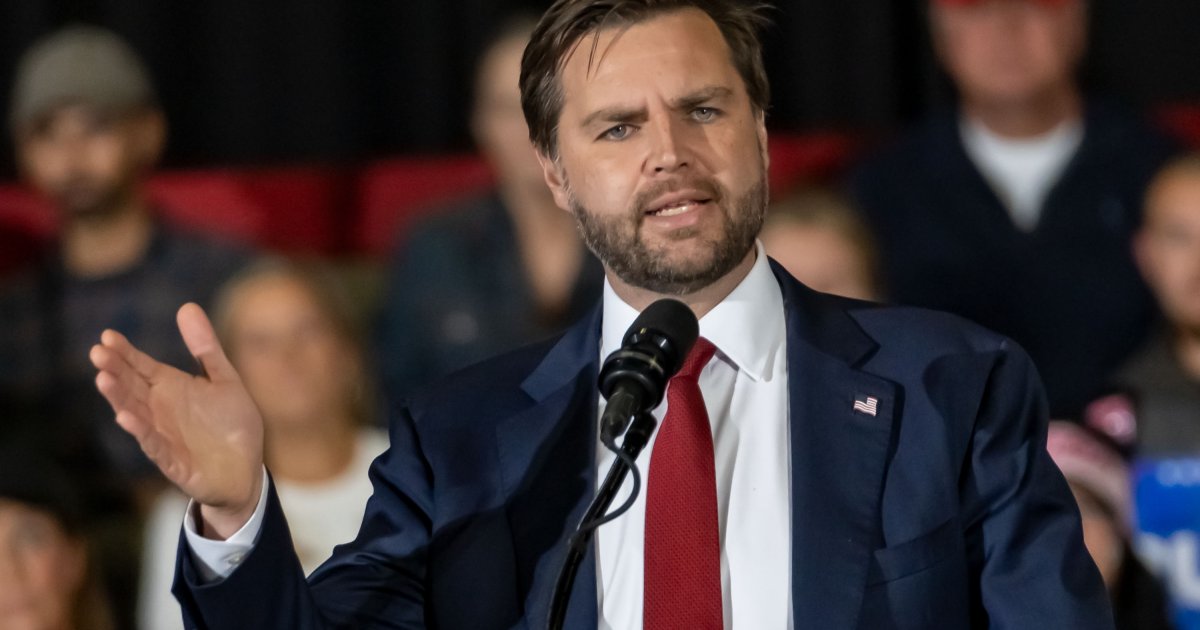
    Last week, Vice President JD Vance gave a much-discussed speech about “shared values” at the Munich Security Conference. In it, Vance took European leadership to task over censorship of conservative and religious speech, particularly in the UK. “Free speech, I fear, is in retreat,” Vance said. 

    The speech prompted pushback from European officials who objected to Vance’s diagnosis. Business Secretary Jonathan Reynolds, for example, said in response to Vance’s discussion of religious speech, “let’s be clear, we don’t have blasphemy laws in the UK.”

    That isn’t so clear at all. 

    In just the past few months alone, the UK managed to have multiple blasphemy controversies. (Not to mention the UK’s many other recent free speech woes covered in FIRE’s Free Speech Dispatch, which are too numerous to discuss in full here.) 

    In November, the Advertising Standards Authority banned comedian Fern Brady from using an advertisement for her stand-up tour that depicted Brady as the Virgin Mary because it could cause “serious offence” to Christians. Then Member of Parliament Tahir Ali called on Prime Minister Keir Starmer to create “measures to prohibit the desecration of all religious texts and the prophets of the Abrahamic religions” — also known as a blasphemy law.

    And early this month, Greater Manchester Police arrested a man “on suspicion of a racially aggravated public order offence” for publicly burning a Quran. An assistant chief constable said police “made a swift arrest at the time and recognise the right people have for freedom of expression, but when this crosses into intimidation to cause harm or distress we will always look to take action when it is reported to us.” 

    Harm? Distress? These concepts are vast enough to fit the entirety of Big Ben. It is, as writer Kenan Malik puts it, “a form of blasphemy restriction but in secular garb.”

    Labour Deputy Prime Minister Angela Rayner is also establishing a council to create an official government definition of Islamophobia. Depending on the council’s ultimate definition, and whether and how it is used by government agencies to respond to Islamophobia, it could implicate UK citizens’ ability to speak freely about important religious issues. (As FIRE has written repeatedly in the context of the International Holocaust Remembrance Alliance’s definition of anti-Semitism in the U.S., codification of these definitions into official policy can risk punishment or chilling of protected speech about political and religious matters.) 

    Outside of the UK, Europe’s restrictions on blasphemy are growing — and show no signs of stopping. Indeed, the Manchester man arrested for burning a Quran did so in response to the Jan. 29 assassination in Sweden of Iraqi refugee Salwan Momika, known for his well-publicized and controversial public Quran burnings. Just after Momika’s killing, a Swedish court found Salwan Najem, another Iraqi refugee who burned Qurans with Momika, guilty of incitement against an ethnic group. Momika faced similar charges, which were only dropped upon his death.

    The United Nations Human Rights Council encourages these kinds of prosecutions, passing a 2023 resolution advising countries to “address, prevent and prosecute acts and advocacy of religious hatred.” Denmark did so, enacting a law criminalizing desecration of holy texts later that year. 

    Vance’s support of speech abroad is undermined by Trump admin’s early censorship efforts

    Free speech is under threat in Europe, whether it’s online speech, blasphemy, or public protests. But it simply isn’t possible to square Vance’s criticism of European censorship with the recent actions of the administration in which he serves.

    In his speech, Vance said “there is a new sheriff in town” and “under Donald Trump’s leadership, we may disagree with your views, but we will fight to defend your right to offer them in the public square.” Vance also objected to “shutting down media.” 

    Has Vance checked in on what the sheriff is doing? 

    The president is directly targeting people for their speech, which frustrates the United States’ ability to credibly — and rightfully — advocate for free speech on the world stage. Take, for example, the White House’s decision last week to indefinitely bar the Associated Press from spaces including the Oval Office and Air Force One over its failure to adopt the government-preferred term “Gulf of America.” Press Secretary Karoline Leavitt confirmed that the White House was punishing what it deems misinformation, saying that “if we feel that there are lies being pushed by outlets in this room, we are going to hold those lies accountable.” In his speech, Vance criticized the Biden administration for “threaten[ing] and bull[ying]” private companies into censoring “so-called misinformation.”

    Vance, however, is aware of the AP decision — and supports it. In response to journalist Mehdi Hasan’s post asking Vance if he’d seen the ban, he wrote yesterday afternoon: “Yes dummy. I think there’s a difference between not giving a reporter a seat in the WH press briefing room and jailing people for dissenting views. The latter is a threat to free speech, the former is not. Hope that helps!”

    That’s rationalizing censorship. 

    He’s right that banning a journalist from press events isn’t the same as imprisoning them. Obviously some punishments are worse than others, but any punishment based on a journalist’s viewpoint is a free speech violation. As my colleague Aaron Terr explained last week, explicitly barring a news outlet on the basis of viewpoint — and its failure to adopt the state’s preferred terminology — is a serious threat to free speech, one Americans should oppose regardless of who is in the Oval Office.

    Vance also said in Munich, “Speaking up and expressing opinions isn’t election interference.” He’s right. There is perhaps no one who needs to hear that message more than President Donald Trump, who praised Vance’s speech but is nevertheless suing Iowa pollster J. Ann Selzer for her polling in the 2024 election — calling it “election interference.” (FIRE represents Selzer.) 

    FIRE’s defense of pollster J. Ann Selzer against Donald Trump’s lawsuit is First Amendment 101

    News

    A polling miss isn’t ‘consumer fraud’ or ‘election interference’ — it’s just a prediction and is protected by the First Amendment.


    Read More

    Another member of the Trump administration, Elon Musk, separately called this weekend for journalists at 60 Minutes to receive “a long prison sentence” for “deliberate deception to interfere with the last election,” referring to the journalists’ editing of an interview with then-Vice President Kamala Harris, not the segment on Germany’s online speech policing. Instead, hours later, he shared a clip of that segment with the caption, “Thank the Lord that America has freedom of speech!”

    Elected officials should press their colleagues around the world to stand by the values of free expression. Vance’s articulation of those rights is necessary. But being effective requires credibility. That’s why FIRE believes our commitment to nonpartisanship, and our dedication to defending the right to speak regardless of preference or popularity, is our most important value. 

    If we undermine these freedoms at home, it’s harder to advocate them abroad to an already skeptical body politic. 

    Source link

  • Introducing Our New Vice President of Business Development Peter Moran

    Introducing Our New Vice President of Business Development Peter Moran

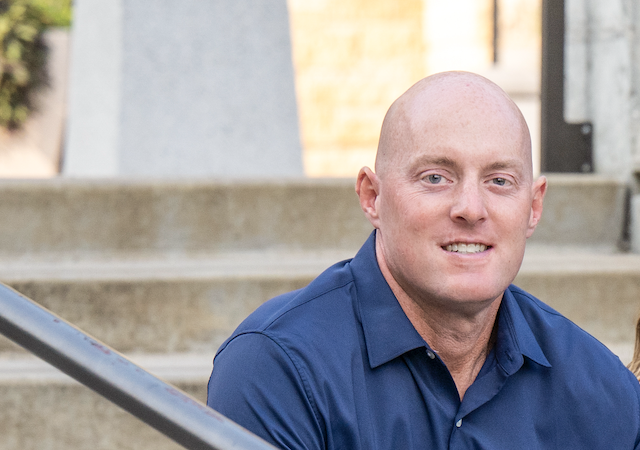
    Peter Moran assumed the helm of Collegis Education’s business development team earlier this year, but he’s not new to our company or higher education. Learn more about him in this Q&A.

    What brought you to Collegis Education?

    Higher ed has been at the core of my career journey. I was partnership director at Cengage Learning for several years. That role required building strong relationships with college and university leaders, and I learned very quickly about the higher ed landscape and its challenges, specifically from the partner perspective. After a brief stint with a start-up, I had the opportunity to join Collegis as senior director of partnerships. When I started, I think we had 16 partners; today, we have over 50.

    That’s some impressive growth in a relatively short amount of time.

    That was eight years ago; it’s wild to think how much we’ve grown as a company. Our partner schools have grown, too. When I started, we worked primarily with small, four-year, private nonprofit institutions, and we still do. But now, we also work with some of the largest colleges and universities in the United States, several community colleges, and other two-year institutions. It’s been a fun ride.

    What’s the best part of working at Collegis?

    From the day I started with the company, we’ve always adapted quickly to meet the market where it’s at and structure solutions to help address the biggest challenges colleges and universities are facing. I’m proud to be a part of an organization with that mindset.

    And now you’re leading the business development at Collegis. What’s that like?

    It’s great. I get to work with some incredible people and have a fantastic team. Everyone has a partner-first approach. On the surface, you can easily say, “Well, sure, it’s sales,” but there is an authenticity that each of our reps brings to their role. It’s genuine. We prioritize listening and understanding — understanding our partners’ goals, what they’re trying to impact, and the challenges they’re facing.

    What’s the best piece of advice you have ever received?

    Be early, be responsible, and be a gentleman.

    What’s the best piece of advice you have ever given?

    “Take a breath, reset, all good.”

    See, I played baseball competitively for years and have coached youth baseball for the past 12. Pitchers will throw bad pitches, and hitters will have bad swings. When that happens, you can see stress, anxiety, pressure, and even a little embarrassment start to mount. In those moments, “Take a breath, reset, all good.” I think it’s also applicable professionally, and while I may not use those exact words, I think of them often as our team and I work through different challenges.

    OK, so if your career wasn’t in sales, what job would you likely be doing and why?

    I think I would really enjoy being an athletic director at a small college. It would be a perfect blend of sports and higher ed. Plus, you have the opportunity to make a positive impact on young adults.

    So, I’m getting the sense you’re a big sports guy, huh?

    Yes, definitely – attending, playing, watching on TV. I am also extremely involved with our area youth sports organization. I coach and sit on the board. I’m also a sports dad and am often on the move, attending our sons’ various sporting events.

    Any other hobbies and interests outside of work?

    I enjoy reading, fishing, skiing in the winter, golfing from time to time, family dinners, and spending time with our golden retriever, Briggsy. Additionally, I am a dedicated, albeit reluctant, runner.

    Back to shop talk. What do you see as the major challenges and opportunities facing higher ed right now?

    How much time do you have? In all seriousness, it’s a really competitive market right now. It always has been. There’s the impending demographic cliff, the national discount rate continues to rise, and according to more recent studies, tuition revenue, in turn, is going down. Staff reductions are happening at many schools, and we’re hearing more conversation around consolidation.

    Oh, is that all?

    [Laughs] Look, every industry has its peaks and valleys, and sure, this is one of higher ed’s more challenging times. But every problem has a solution. You first have to get to the root cause of the issue, what’s preventing progress. There’s a lot of disruption going on, and that typically provides motivation for change, which can be a very good thing.

    Alright, I’ll take the bait. What is preventing the progress, Peter?

    It comes down to data, tech, and talent. When these three things work together, schools find efficiency, offer a better experience for students, and make better decisions. But when they are not aligned, or worse, working against one another, it’s paralyzing.

    Let’s look at the data element: What is an example of how Collegis helps schools be more data-enabled to win in this competitive market?

    The higher ed market, despite best intentions, is a bit behind other industries in how it uses and governs data. Most partners don’t have the financial resources to compete in ways that other schools do. We support them by putting an integrated tech infrastructure in place that allows them to connect data sets from across the entire student lifecycle and utilize that data to make more informed decisions. This enables them to connect upstream investments to downstream outcomes and helps them determine how to spend money — what activities and programs they should support and what actions they should take. All of these factors help them to be successful.

    How does data help your partners develop new offerings?

    For institutions exploring new offerings, we can provide them with an informed point of view on what their data is saying, where we see opportunities or challenges, and what investments make sense for them. Before going down a path, making an investment, and doing all the work necessary to set up a new program, we want to make sure they have the information they need to make the best decision possible, utilizing not only their own data but also data from external sources. Collegis can guide them through that process and help them successfully move in a direction that supports their goals –– from increasing enrollment to generating new revenue and more.

    Who has had the biggest influence on you, personally or professionally?

    As a child, my mother; as an adult, my wife. They are the two most kind, giving, thoughtful, and selfless people I have ever known.

    I asked you earlier about what brought you to Collegis; now tell me, what keeps you here?

    I believe in what we do and how we do it.

    And what is that?

    Hey, if you’re asking for the sales pitch, I’ll give it to you.

    [Laughs] OK, let me hear it. I guess it’s only fitting to end this interview with the new VP of business development delivering the sales pitch.

    Number one, we’re not offering one particular service or product. We provide different services, ranging from marketing, recruitment, and retention to instructional design and IT support. There are many companies that help schools with their marketing, companies that support recruitment, tons of instructional design companies, and certainly many IT support companies. There aren’t many out there today that do all those things and help institutions activate data to inform decision-making.

    Second, every single one of our partnerships is different from the next. Through a series of meetings with their various functional teams, we identify strengths and gaps, and then develop a customized plan that leverages our experienced team and resources to achieve their desired impact. That makes us unique in the marketplace.

    Our partner institutions have talented people, but often, they deal with small teams that are stretched very thin. One value we bring is to augment their existing team with our experienced team through consistent communication. There are, of course, regularly scheduled calls on a weekly or biweekly basis, but there’s also organic communication happening every day between us and the institution’s teams. Many of those conversations focus on the use of data, uncovering and interpreting insights, and recommending action. That doesn’t mean an institution has to move in that direction, but with our experience and expertise, we can provide an informed point of view and have a collaborative discussion.

    We’ve pioneered and proven the fee-for-service model in higher education, unbundling a collection of services into customized plans for institutions. When I first came to Collegis, that was really new in the marketplace. Now, we’re seeing other companies try to replicate it, which is great validation. So even though other companies are offering similar engagements, our model is proven, and we are more established. We’re not learning how to do our job on our partner’s dime and time.

    Our market is broadening, and we are seeing opportunities at schools that eight years ago may not have even considered our approach. We’re expanding and partnering with new types of institutions, which is exciting. We’re looking forward to spreading our message even further and helping more colleges and universities make an impact.

    Source link