Tag: Virginia

  • Virginia Looks to Plug Brain Drain With More Internships

    Virginia Looks to Plug Brain Drain With More Internships

    Internships can be a meaningful step in a college student’s career development. That’s why the commonwealth of Virginia is working to guarantee that undergraduates have a fair shot at paid experiential learning.

    The Virginia Economic Development Partnership announced a new collaboration today with the job board Handshake as part of the state’s effort to train and retain local talent through internship opportunities.

    Virginia has committed to giving all undergraduate students at least one form of meaningful work-based learning before graduation, said Megan Healy, senior vice president of talent and workforce strategy at VEDP. Overseen by the Virginia Talent and Opportunity Partnership, this work-based learning could include experiential learning or a paid internship.

    The partnership with Handshake is one layer of a multifaceted approach to increasing opportunities for entry-level applicants to break into local job markets, helping to reduce brain drain and encourage economic development for evolving local markets.

    State of play: Internships provide students with skills and experience for future careers, but for many of them paid internships remain out of reach. A 2024 report from the Business–Higher Education Forum found that nearly half of students who wanted an internship didn’t participate in one, and of those who did, only 70 percent said it was a “high-quality experience.”

    A 2025 Student Voice survey by Inside Higher Ed and Generation Lab found that 38 percent of respondents believe their college should emphasize helping them find and access paid internships to enhance career services, and 30 percent want help making strong connections with potential employers.

    Virginia has recently seen a dramatic drop in available internship listings; when President Trump took office in January, he slashed the federal workforce, reducing available roles in the D.C., Maryland and Northern Virginia region. Internship postings dropped 36 percent in June 2025 compared to June 2024, according to Lightcast data—a 20-percentage-point-greater decline compared to similar metropolitan job markets.

    Brookings Institute

    VEDP’s partnership with Handshake includes data sharing within the platform and additional visibility into existing or future internship opportunities for students.

    Over 70 percent of colleges and universities in Virginia, representing 470,000 students, already connect to Handshake, said Christine Cruzvergara, the company’s chief education officer. In addition, 20,000 Virginia employers have posted more than 150,000 jobs and internships on the platform.

    Building better internships: One of Virginia’s goals is to develop opportunities for students outside of metropolitan hubs.

    “The state of Virginia is very diverse, and the majority of students that graduate from a lot of the Virginia schools end up going to Richmond or Northern Virginia—those are the two main hubs that most students go to,” said Cruzvergara, a former Virginia resident and college administrator herself. “But there are so many other regions of Virginia that also need amazing talent, and I think this particular initiative is going to help distribute more of that talent.”

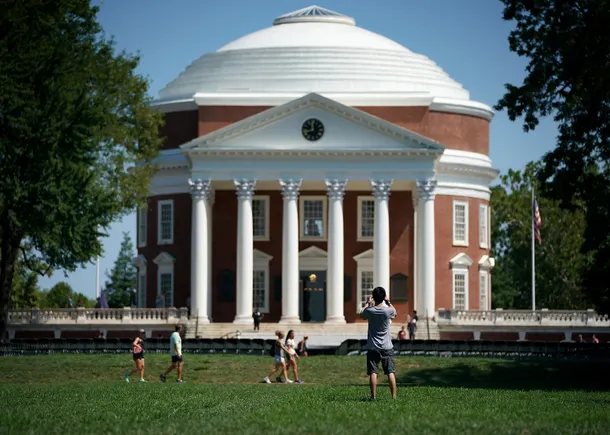
    The state is partnering with local business in more rural areas—including near Virginia Tech in Blacksburg and in Charlottesville, where the University of Virginia is located—to establish more high-impact and paid internships to attract students from these universities.

    “We’re also looking at ways to connect students from those specific institutions,” Healy of VEDP said. “They also have the most out-of-state students because they’re very popular and very highly ranked.”

    To increase internship offerings across the state, VEDP hosts regular training sessions to help employers build meaningful internship experiences for students and assists them in listing jobs on Handshake. The state hopes that connecting students with employers on an already-trusted platform will help expand access to opportunities as well as meet talent demands in the commonwealth.

    Small businesses (employing 150 people or less) are also eligible for a grant program if they hire interns; the state will provide $7,500 in matched funds to compensate an intern for eight weeks and 120 hours making at least minimum wage.

    “I think this particular initiative is going to help distribute more of that talent, because they’re going to tap into the local economy and the local employers to create the internships and opportunities that will be needed to attract students and also help them see this could be a great place to live In Virginia,” said Cruzvergara.

    How is your college or university increasing opportunities for students to intern? Tell us more here.

    Source link

  • Virginia lawmakers call for audit of UVA’s Justice Department deal

    Virginia lawmakers call for audit of UVA’s Justice Department deal

    This audio is auto-generated. Please let us know if you have feedback.

    Dive Brief:

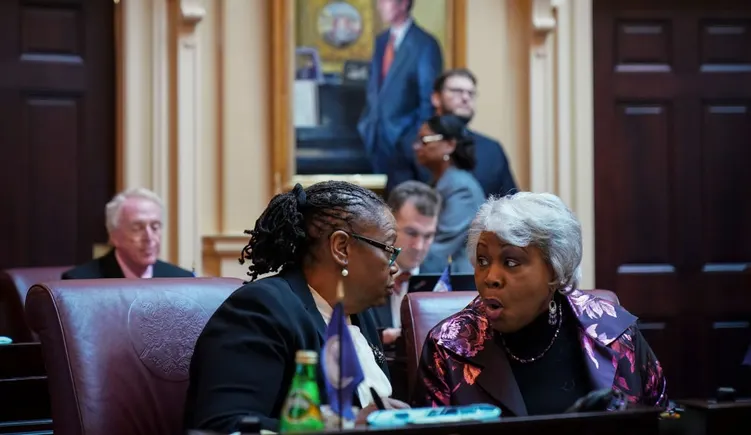
    • Two Democratic leaders in the Virginia Legislature are questioning the legality of the University of Virginia’s recent deal with the U.S. Department of Justice and calling for an independent review of its constitutionality.
    • In an eight-page letter this week, state Sens. Scott Surovell and L. Louise Lucas said the agreement “directly conflicts with state law, commits the University to eliminate legislatively mandated programs, subjects the University President to personal certification requirements and potentially places UVA in violation of its statutory obligations.”
    • The pair requested UVA Interim President Paul Mahoney and Rachel Sheridan, the head of UVA’s board, to formally respond by Nov. 7. UVA did not immediately respond to questions Thursday.

    Dive Insight:

    On Oct. 22, Mahoney signed a four-page agreement with the DOJ to eventually close five investigations into UVA. In exchange, the public university agreed to adhere to the DOJ’s sweeping July guidance against diversity, equity and inclusion efforts and provide the agency with quarterly compliance reports.

    In their letter, Surovell and Lucas lambasted Mahoney and Sheridan for “a fundamental breach of the governance relationship” between the university and the state.

    “This agreement was disturbingly executed with zero consultation with the General Assembly, despite the fact that the General Assembly controls the University and provides the bulk of its government funding,” they said, arguing the lack of legislative involvement could violate state statute.

    When announcing the deal, UVA said Mahoney struck the deal with input from the university’s governing board, whose members were “kept apprised of the negotiations and briefed on the final terms before signature.” Since the agreement doesn’t include a financial penalty, it did not require a formal vote from the board, the university said in an FAQ.

    Along with the board, Mahoney has said he struck the deal with input from the university’s leadership and internal and external legal counsel.

    Surovell and Lucas questioned if Jason Miyares, Virginia’s Republican Attorney General and an ally of President Donald Trump, had counseled the university about the deal. 

    Miyares — who fired UVA’s longtime legal counsel upon taking office in 2022 — is up for reelection in November with Trump’s endorsement, a backing Lucas and Surovell cast as an “inherent conflict of interest.” 

    It is unclear, they said, if Virginia’s top lawyer is “competent and capable of providing truly independent legal advice to Virginia’s public universities in this area of the law.”

    Virginia public colleges “need legal counsel who will zealously defend state sovereignty and institutional autonomy — not counsel whose political fortunes are tied to the very administration applying the pressure,” they said.

    The two lawmakers, along with Democratic state Sen. Mamie Locke, previously threatened UVA’s state funding if the university agreed to the Trump administration’s separate higher education compact, which offered preferential access to grant funding in exchange for unprecedented federal oversight. UVA turned it down five days before announcing its deal with the DOJ.

    Lucas and Surovell aren’t the only Virginia legislators to question the integrity of the UVA-DOJ deal. State Del. Katrina Callsen and Sen. R. Creigh Deeds, Democrats who represent UVA’s district, condemned it as subjecting the university “to unprecedented federal control.”

    In an Oct. 23 letter, the pair told Mahoney and the board that their approval of the agreement calls “into grave question your ability to adequately protect the interests and resources entrusted to you by the Virginia General Assembly.”

    “Your actions fail to leave the University free and unafraid to combat that which is untrue or in error,” they said. “By agreeing to these terms, UVA risks betraying the very principles you espouse in your letter: academic freedom, ideological diversity, and free expression.”

    Callsen and Deeds called on UVA leadership to reverse the deal and “reject further federal interference.”

    When asked on Thursday if Mahoney or the board had responded, Deed’s office referred to a story published by The Cavalier Daily, the university’s independent student newspaper.

    In a letter shared with The Daily, Mahoney and Sheridan said that they “respectfully disagree” with Deeds and Callsen’s assessment, adding that the deal is the “culmination of months of engagement” with the DOJ and other federal agencies over multiple civil rights investigations.

    They also said the institution’s deal with the federal government differs significantly from the “lengthy lists of specific obligations” agreed to by Columbia and Brown universities.

    “Our agreement is different — if the United States believes we are not in compliance, its only remedy is to terminate the agreement,” they said.

    Source link

  • What Did the University of Virginia Agree To?

    What Did the University of Virginia Agree To?

    In agreeing to follow sweeping guidance from the Department of Justice earlier this week, the University of Virginia committed to eliminating all DEI programming and adhering to the Trump administration’s broad interpretation of the Supreme Court’s 2023 decision banning race-conscious admissions policies.

    The nine-page DOJ memo, released in July, also bans the participation of transgender athletes in sports and the use of “ostensibly neutral proxies” for race, like geographic location. It came just three months after a federal court struck down a similar directive from the Department of Education and was viewed by many policy experts as even more wide-reaching and restrictive. The guidance hasn’t yet faced a legal challenge.

    Attorney General Pam Bondi originally wrote in the memo that the provisions outlined were a list of “non-binding suggestions” designed to “minimize the risk of [legal] violations.” But now, at least for UVA, it has become obligatory “so long as that guidance remains in force and to the extent consistent with relevant judicial decisions.” Failure to comply could risk the university’s federal funding.

    Under the agreement, the DOJ says it will temporarily pause all pending civil rights investigations, but if at any point Trump officials determine the flagship institution is making “insufficient progress toward compliance,” the DOJ reserves the right to resume investigation, pursue enforcement actions or terminate federal funding. In the meantime, UVA will be required to provide “relevant information and data” to the agency on a quarterly basis through 2028.

    “So if [UVA] feels confident that they can comply, then this could be a good outcome for the school. The investigations are closed and they don’t admit liability,” said Scott Goldschmidt, a partner and civil rights specialist at the law firm Thompson Coburn LLP. “But if there is any issue, or the government sees otherwise, then all bets are off, and they could be in a worse position than when they signed the agreement.”

    In Goldschmidt’s view, it’s all a part of the DOJ’s effort to encourage colleges to accept “their interpretation of law” without facing a legal challenge.

    “It was nonbinding,” he said of the guidance, “which is, again, why it’s so interesting that UVA seemed to pre-emptively comply with this over the summer and now has turned it into mandatory guidance by this agreement.”

    Starting in April, the DOJ used a series of letters to accuse UVA officials of actively attempting to “defy and evade federal anti-discrimination laws.” By early June, experts say, the assistant attorney general pressured former UVA president James Ryan to resign. Still, in the wake of the Justice Department’s pressure campaign, the institution’s interim president, Paul Mahoney, rejected the Trump administration’s even more sweeping “Compact for Academic Excellence in Higher Education” last week.

    UVA is just the latest institution to cut a deal with the Trump administration, though unlike those previous agreements, the public university won’t have to pay anything. This is also the first agreement to be made that deals primarily with the Justice Department’s guidance and diversity, equity and inclusion rather than alleged mishandling of antisemitism on campus.

    As other colleges and universities face related investigations, this deal could become a new framework for the administration and how it negotiates to bring higher education to heel.

    So, here’s a look at three key aspects of the agreement.

    1. Ending What Trump Calls Segregation and Preferential Treatment

    The July directive set four core standards for the universities and provided a broad but nonexhaustive list of examples for each.

    First, the DOJ requires the university to eliminate any practices in admissions, hiring or programming that Trump deems “preferential treatment” based on race, sex, religion or “other protected characteristics.” This could include identity-based scholarships, affinity groups or support programs; hiring or promotion practices that prioritize one specific group over another; or designating certain spaces on campus for students of a particular identity.

    Then, officials added in the memo that the use of purportedly neutral characteristics, like geographic location and cultural competency, are also prohibited as they can be used as “substitutes” for protected characteristics and are therefore “unlawful proxies.”

    The department cited essay prompts that suggest applicants write about “overcoming obstacles” as an example, despite the fact that the Supreme Court explicitly said in its ruling on affirmative action that college applicants could still write about their experiences with racism, sexism or religious discrimination so long as universities did not use them to re-establish “the regime we hold unlawful today.”

    The memo also lists segregation and training that officials say promotes discrimination as violations of civil rights law, citing as examples race-based training sessions like “Black caucuses” and “white ally meetings” and measures for selecting contracts that prioritize female-owned businesses.

    But what UVA is required to do under the guidance could change depending on court decisions.

    2. Not Infringing Academic Freedom

    In the text of the agreement and various materials distributed by UVA, university officials appear to intentionally reinforce that these restrictions on admissions, hiring and extracurricular programing will not impede the university’s right to academic freedom.

    “The U.S. does not aim to dictate the content of academic speech or curricula, and no provision of this agreement, individually or taken together, shall be construed as giving the United States the authority to dictate the content of academic speech or curricula,” the sixth point of the agreement reads.

    Mahoney’s statement to the UVA committee, as well as a frequently asked questions page on the UVA website, emphasized similar points, saying that no “external monitor” would be involved and that UVA will address any compliance concerns raised by the DOJ independently.

    “Importantly, [the agreement] preserves the academic freedom of our faculty, students, and staff,” Mahoney wrote. “We will also redouble our commitment to … free expression, and the unyielding pursuit of ‘truth, wherever it may lead,’ as Thomas Jefferson put it.”

    This differs from the more recent Compact for Academic Excellence in Higher Education, which would require an institution to restrict employees from expressing political views on behalf of the institution and shut down departments that “punish, belittle” or “spark violence against conservative ideas.”

    3. Pausing Liability but Keeping the University Vulnerable

    The second line of the agreement makes it clear that the document is not “an admission, in whole or in part” and that UVA “expressly denies liability with respect to the subject matter of the investigations.”

    So, as long as UVA complies with the DOJ memo, the investigations will be closed and the university will no longer be at risk of having to pay a multimillion-dollar settlement fee or losing federal financial aid. But Goldschmidt from Thompson Coburn emphasized that such a scenario is “a big if.”

    “If the DOJ at any point finds that UVA did not comply, then everything gets reopened, and all the potential issues, penalties, etc. that could come from a federal civil rights investigation would fall back down on the institution,” he explained.

    And given that the DOJ’s memo is “the most aggressive document that we’ve seen reinterpreting Title VI civil rights laws,” Goldschmidt said, the risk is even greater. So while UVA has already made its decision, he suggested that other universities think it through before they do the same.

    “Schools would really want to think hard and deep about whether there is any wiggle room,” he said, “because the consequences of violating the DOJ’s memo are so strong.”

    Article was updated to reflect a clause in UVA’s agreement that the university is bound by the guidance so long as it remains and consistent with relevant judicial decisions.

    Source link

  • Virginia Giuffre’s Memoir Details Sex Abuse by Epstein, Maxwell, Prince Andrew (Democracy Now!)

    Virginia Giuffre’s Memoir Details Sex Abuse by Epstein, Maxwell, Prince Andrew (Democracy Now!)


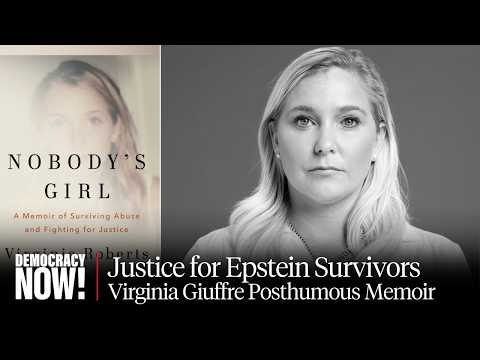
    Virginia Roberts Giuffre’s posthumous memoir has just been released, detailing how she was groomed by Jeffrey Epstein and his co-conspirator Ghislaine Maxwell, whom she met at Donald Trump’s Mar-A-Lago resort. In Nobody’s Girl: A Memoir of Surviving Abuse and Fighting for Justice, she writes that she was forced to have sex with Prince Andrew three times, beginning when she was 17, and was beaten and raped by a “well-known prime minister.” Virginia Giuffre died by suicide earlier this year in Australia at age 41. 

    Democracy Now! speaks with Amy Wallace, Giuffre’s ghostwriter, who says Giuffre experienced the “depths of hell” with Maxwell and Epstein. “It’s not just a catalog of horrors. It’s a woman who is terribly abused as a child, escapes from that terrible abuse … and then becomes an advocate,” says Wallace.

    Source link

  • Virginia lawmakers threaten state funding consequences if UVA signs Trump compact

    Virginia lawmakers threaten state funding consequences if UVA signs Trump compact

    This audio is auto-generated. Please let us know if you have feedback.

    Dive Brief:

    • Three leading Virginia state senators this week urged University of Virginia’s top officials to immediately reject the Trump administration’s proposed higher education compact and threatened the institution’s state funding if they signed on.
    • In an Oct. 7 letter to UVA leaders, Democratic state Sens. Scott Surovell, L. Louise Lucas and Mamie Locke called the federal government’s conditions “an unprecedented federal intrusion into institutional autonomy and academic freedom.” 
    • Agreeing to those terms would invite further federal interference at the university, the trio said, citing the Trump administration’s recent ouster of UVA’s president. If UVA agrees to the compact, they warned, the institution will face “significant consequences in future Virginia budget cycles.”

    Dive Insight:

    The Trump administration’s compact would offer UVA, along with eight other research universities, preferential access to federal research funding if they agree to its wide-ranging and unprecedented conditions. 

    Some of those terms are straightforward, such as a five-year tuition freeze, a standardized testing requirement for admissions and a 15% cap on international students’ share of undergraduate enrollment.

    Others are less clear cut, including required public audits of the viewpoints of employees and students, institutional neutrality on most political and social events, and a commitment to changing — or ending — institutional units that purposefully “punish” or “belittle” conservative ideas.

    All of the proposed conditions of the agreement “are fundamentally incompatible with the mission and values of a premier public research university,” the lawmakers told UVA Interim President Paul Mahoney and Rachel Sheridan, head of the institution’s governing board. 

    For instance, the state senators raised alarms about one element of the compact that would bar signatories with large endowments from charging tuition for students enrolled in “hard science programs.”

    That would force students in humanities and social sciences “to subsidize” those enrolled in STEM programs, representing “a bizarre federal intrusion into institutional financial planning that devalues essential fields of study,” they wrote. 

    “This is not a partnership,” the lawmakers said. “It is, as other university leaders have aptly described, political extortion.”

    Surovell, Lucas and Locke wield significant legislative power as the state Senate majority leader, president pro tempore and chair of the Senate Democratic Caucus, respectively. They underlined this influence in their letter, vowing “to ensure that the Commonwealth does not subsidize an institution that has ceded its independence to federal political control.”

    The three senators pointed specifically to the forced departure of former UVA President Jim Ryan, who abruptly resigned in June amid federal pressure to step down over the university’s diversity efforts during his seven-year tenure. 

    In his announcement, Ryan said he wouldn’t fight back against the Trump administration and attempt to keep his job because staying would cost UVA research funding and student aid and hurt its international students.

    Federal officials ousted Ryan, the state senators said, “not for any failure of leadership, but because they disagreed with the University’s approach to diversity and inclusion.” They categorized Ryan as a successful leader who was made into a political sacrifice — one that didn’t stave off further interference.

    “President Ryan’s resignation was meant to spare the University from federal retaliation, yet here we are again, facing even more aggressive demands on institutional autonomy,” they told UVA leaders. “The lesson is unmistakable — appeasing this Administration only emboldens further encroachment.”

    UVA faculty similarly called for institutional leaders to rebuke the compact. In a 60-2 vote, the university’s faculty senate approved a resolution on Oct. 3 whose preamble called the proposal dangerous to UVA and a likely violation of state and federal law.

    The Trump administration gave the nine universities until Oct. 20 to offer feedback on the compact and until Nov. 21 to sign the agreement.

    Source link

  • Virginia Democrats Accuse GMU Rector of Conflict of Interest

    Virginia Democrats Accuse GMU Rector of Conflict of Interest

    Photo illustration by Justin Morrison/Inside Higher Ed | Robert Knopes/UCG/Universal Images Group/Getty Images | Maxine Wallace/The Washington Post/Getty Images

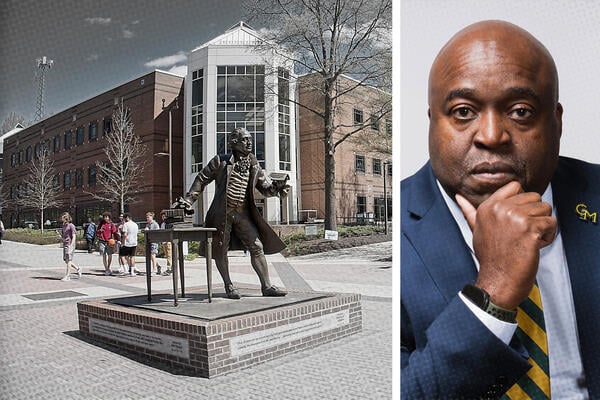
    Virginia Democrats want George Mason University board rector Charles Stimson to recuse himself from federal investigations into the university as well as discussions about the university president’s future, saying that his role at the Heritage Foundation, which recently released a report critical of GMU, presents a conflict of interest.

    The letter comes almost two weeks after a state Senate committee blocked 14 gubernatorial appointments to university boards, including six at GMU, which left the Board of Visitors without a quorum. The letter also follows the Heritage report that accused GMU of attempting to hide diversity, equity and inclusion programs. Stimson has had several jobs at Heritage, where he’s currently deputy director of the organization’s legal and judicial studies center.

    The Trump administration has accused GMU of engaging in discriminatory hiring practices and implementing “unlawful DEI policies” and has opened several investigations into the university.

    However, GMU president Gregory Washington has stood his ground, arguing that the federal government rushed the investigation and disputing its findings while rejecting calls to personally apologize. Now, as GMU’s Board of Visitors is stuck without a quorum while a legal challenge over the appointments plays out, state Democrats are seeking to neutralize Stimson in his role as rector.

    A Call for Recusal

    Senate Majority Leader Scott Surovell and other top Democrats in the Senate, L. Louise Lucas and Mamie E. Locke, specifically took issue with the Heritage report’s call to “withhold federal taxpayer funds from universities that violate the Civil Rights Act of 1964,” which the Education Department accused GMU of doing. State Democrats argued that Stimson’s employer is essentially seeking to harm the university.

    “This creates an untenable ethical conflict where your employer’s published position is diametrically opposed to your duties as Rector,” the lawmakers wrote to Stimson.

    (Stimson is one of multiple university board members appointed by Republican governor Glenn Youngkin with distinctly right-wing profiles, including some with ties to conservative think tanks, the Trump administration, GOP megadonors and former Republican politicians, Inside Higher Ed found earlier this year.)

    State Democrats also raised concerns over how he became rector.

    “The appearance of impropriety is compounded by the fact that your selection as Rector reportedly occurred only after direct intervention by Governor Youngkin, raising questions about whether your Heritage Foundation affiliation influenced that appointment,” the Democrats wrote.

    Given what they view as a conflict of interest, the three Democratic leaders called on Stimson to recuse himself “from all Board of Visitors deliberations, discussions, and votes” involving Washington’s employment status or performance evaluations, GMU responses to federal DEI investigations or compliance concerns, GMU funding strategies and university DEI policies.

    “If you cannot commit to this recusal, I believe the appropriate course would be your resignation as Rector to eliminate this conflict entirely,” Surovell and the other Democrats wrote to Stimson while calling on him to respond “outlining the specific steps you will take to address this conflict.”

    Neither GMU officials nor Stimson responded to requests for comment from Inside Higher Ed.

    Youngkin accused Democrats of trying to undermine university boards.

    “Virginia’s progressive left elected officials are trying to paralyze the governing boards of Virginia’s colleges and universities by using despicable bullying and intimidation tactics,” Youngkin wrote in a post on X.

    Faculty Support

    As Washington, GMU’s first Black president, has found himself in the Trump administration’s cross hairs and fighting back, board support has been a constant question. Rumors of Washington’s expected firing swirled in July, but the Board of Visitors kept him on the job.

    George Mason faculty have also rallied around the embattled president, with dozens of professors, students and others protesting outside the July meeting. GMU’s chapter of the American Association of University Professors applauded the senators’ letter on Tuesday.

    “We believe that Mr. Stimson has failed to fulfill his fiduciary duties and has repeatedly exceeded his proper authority as Rector of the Board of Visitors. His conflicting leadership role at the Heritage Foundation and his repeated attempts to overreach his authority threaten the foundation of Virginia’s largest public university, endangering its governance, stability, and future,” the GMU-AAUP Executive Committee wrote in an email to members.

    The local AAUP chapter struck a sharper tone than Virginia’s Senate leadership, alleging that Stimson has “usurped GMU President Gregory Washington’s authority to manage the university’s responses to federal investigations, contrary to the president’s delegated authority established in the [Board of Visitors’] Bylaws.”

    GMU-AAUP also echoed the call for Stimson to recuse himself from certain board duties.

    “If Rector Stimson cannot commit to this recusal, we join Senators Surovell, Lucas, and Locke in calling for his resignation as Rector to eliminate this conflict entirely,” the organization wrote. “The independence, integrity, and future of George Mason University depend on nothing less.”

    The group previously voted no confidence in the Board of Visitors in July.

    Source link

  • 5 Northern Virginia districts put on high-risk status for Title IX violations

    5 Northern Virginia districts put on high-risk status for Title IX violations

    This audio is auto-generated. Please let us know if you have feedback.

    Dive Brief:

    • Five large school districts in Northern Virginia were put on high-risk status and told their federal funding would only be distributed by reimbursement from the U.S. Department of Education Tuesday.
    • The announcement comes after the Education Department last month found the five districts had violated Title IX through their policies allowing transgender students to use restrooms and locker rooms that match their gender identity. 
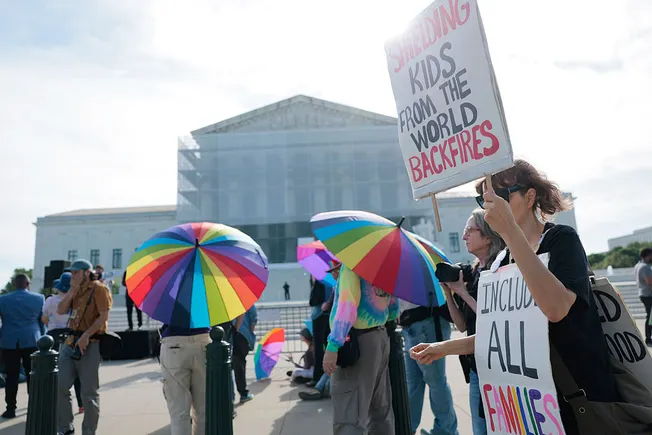
    • As the Trump administration advances its agenda to exclude transgender students from sports teams and bathrooms aligning with their gender identities, LGBTQ+ advocates and Democratic lawmakers warn that these funding restrictions are unprecedented and will cause financial hardships to the districts.

    Dive Insight:

    Collectively, the five Virginia districts impacted have about $50 million in federal formula funding, discretionary grants and impact aid grants that will need to be processed through reimbursements, according to a Tuesday statement from the Education Department.

    The districts — all located near Washington, D.C. — are Alexandria City Public Schools, Arlington Public Schools, Fairfax County Public Schools, Loudoun County Public Schools, and Prince William County Public Schools. 

    “We have given these Northern Virginia School Divisions every opportunity to rectify their policies which blatantly violate Title IX,” said U.S. Education Secretary Linda McMahon in the statement. 

    Under the Trump administration, the Education Department has maintained that transgender student inclusion in school facilities and on athletic teams encroaches on cisgender girls’ Title IX rights. The 53-year-old Title IX law prohibits sex discrimination in federally funded education programs.

    “Today’s accountability measures are necessary,” McMahon said, because the five districts “have stubbornly refused to provide a safe environment for young women in their schools.” 

    After finding the districts in violation of Title IX in July, the Education Department’s Office for Civil Rights offered a proposed resolution agreement to the districts. The districts were asked to voluntarily agree within 10 days or risk imminent enforcement action including referral to the U.S. Department of Justice. However, the districts rejected those efforts.

    The proposed resolution agreement would require the districts to rescind policies that allow students to access facilities based on their “gender identity” rather than their sex and issue a memo to each school explaining that any future policies related to access to facilities must separate students strictly on the basis of sex. The memo would have to specify that Title IX ensures women’s equal opportunity in any education program including athletic programs. 

    In addition, the agreement would require the districts to adopt “biology-based” definitions of the words “male” and “female” in all practices and policies relating to Title IX.

    Fairfax County Public Schools, which has nearly 183,000 pre-K-12 students and is one of the country’s largest school systems, said in a Wednesday statement that the district is reviewing OCR’s letter about the district’s high-risk status and will then respond to OCR. In the meantime, the district is maintaining its policies that it said align with Virginia law and rulings from the 4th U.S. Circuit Court of Appeals.

    “FCPS remains dedicated to creating a safe, supportive, and inclusive school environment for all students and staff members, including our transgender and gender-expansive community. Any student who has a need or desire for increased privacy, regardless of the underlying reason, shall continue to be provided with reasonable accommodations,” the district said.  

    The two Virginia senators, Mark Warner and Tim Kaine — both Democrats — condemned the action against the five districts, saying the Education Department “wants to punish high-performing, award-winning schools districts in Northern Virginia.

    “You can’t have a strong economy without strong schools, so add this to the list of President Trump’s disastrous economic policies,” the senators said.

    Denise Marshall, CEO of the Council of Parent Attorneys and Advocates, called the action a “direct assault on schools” in a Tuesday statement.  The administration’s efforts to withhold “critical” funding are unlawful and amount to “political warfare” and “continue to do significant harm” to schools,” Marshall said.  

    She added the announcement “is part of the Administration’s pattern to exhibit explicit hostility towards LGBTQ+ students and students of color whose identity often intersects with and includes disability.”

    But America First Legal — the organization that filed a complaint with OCR against the five districts earlier this year, sparking the Education Department investigation — condemned the five districts’ defiance of a “federal directive to end illegal ‘gender identity’ policies and choosing to follow extremist ideology over federal law while jeopardizing millions in federal funding.” The AFL had asked the department in its February complaint to “cut off all federal funding” if necessary. 

    Ian Prior, senior counsel at America First Legal, said in a statement Tuesday that the districts are “proving that they are deliberately indifferent to the safety of schoolchildren and are perfectly willing to sacrifice millions of dollars” in funding that he says supports low-income and special needs students.

    Prior added that the “grim reality is that these school districts are merely delaying the inevitable — these policies will soon be dead and buried.”

    Source link

  • University of Virginia President Resigns After Trump’s Demands

    University of Virginia President Resigns After Trump’s Demands

    This is a developing story and will be updated.

    The University of Virginia president James Ryan said Friday he was resigning after the Justice Department demanded he step down.

    “To make a long story short, I am inclined to fight for what I believe in, and I believe deeply in this university,” Ryan wrote in a letter to the campus community. “But I cannot make a unilateral decision to fight the federal government in order to save my own job. To do so would not only be quixotic but appear selfish and self-centered to the hundreds of employees who would lose their jobs, the researchers who would lose their funding, and the hundreds of students who could lose financial aid or have their visas withheld.”

    The Justice Department has for months been quietly investigating whether the Virginia flagship complied with President Donald Trump’s order banning diversity, equity and inclusion programs. The university’s Board of Visitors voted to dissolve its DEI office in March, but multiple conservative alumni groups and legal entities complained that Ryan failed to eliminate DEI from all corners of campus. In many cases, critics argue that the university simply changed the names of programs but maintained their core function. 

    The New York Times first reported on the resignation and the Justice Department’s demand Thursday evening.

    Ryan wrote that he had planned to step down next spring for reasons separate from the investigation; he didn’t say when his resignation would take effect.

    “While there are very important principles at play here, I would at a very practical level be fighting to keep my job for one more year while knowingly and willingly sacrificing others in this community,” he wrote.

    Ryan took over at UVA in August 2018, steering the institution through the aftermath of the deadly white supremacist rally in August 2017, the pandemic and the racial reckoning in 2020. He also cracked down on pro-Palestinian protesters last spring—a move that Republicans in the state backed but students and faculty condemned. Ryan also embraced institutional neutrality and sought to make UVA a leader in the study of democracy.

    Assistant Attorney General Harmeet Dhillon said in a statement Friday that the Justice Department welcomes “leadership changes in higher education that signal institutional commitment to our nation’s venerable federal civil rights laws.”

    DOJ hasn’t said publicly what laws UVA allegedly violated, though Dhillon’s statement noted that the agency “has a zero-tolerance policy toward illegal discrimination in publicly-funded universities.”

    From the early days of his second term, Trump has made a point of dragging elite, largely Ivy League institutions like Columbia and Harvard Universities into the national spotlight and berating them for their supposed liberal ideologies and alleged antisemitism. But this investigation of UVA, a public institution in a state led by a Republican, represents a new front in the administration’s  war against higher education—and so far Trump is succeeding.

    Brendan Cantwell, a higher education professor at Michigan State University, said Ryan’s resignation is a “major blow” to the independence of American institutions. 

    “It is a sign that major public research universities are substantially controlled by a political party whose primary goal is to further its partisan agenda and will stop at nothing to bring the independence of higher education to heel,” he told Inside Higher Ed. “It undercuts both the integrity of academic communities as self-governing based on the judgment of expert professionals and the traditional accountability that public universities have to their states via formal and established governance mechanisms.”

    Legal experts who spoke with the Times struggled to recall other instances when the federal government has demanded a university board fire the chief official, saying it has only been done in the past when concerning corporate criminal cases.

    Robert Kelchen, an education policy professor at the University of Tennessee, noted that Ryan’s resignation portends a future in which all public university presidents must conform to the political views of their state’s leadership or be kicked out of office.

    “Trump pushing James Ryan to resign at UVA is important, but it happened in part because VA’s governor is also Republican,” Kelchen wrote on BlueSky. 

    Virginia’s two senators, who are both Democrats, said in a joint statement that the demand for Ryan to resign “is a mistake that hurts Virginia’s future.”

    “It is outrageous that officials in the Trump Department of Justice demanded the Commonwealth’s globally recognized university remove President Ryan—a strong leader who has served UVA honorably and moved the university forward—over ridiculous ‘culture war’ traps,” said Sens. Tim Kaine and Mark Warner. “Decisions about UVA’s leadership belong solely to its Board of Visitors, in keeping with Virginia’s well-established and respected system of higher education governance.”

    Virginia governor Glenn Youngkin thanked Ryan for his service to UVA in a statement Friday afternoon. Youngkin, a Republican, has appointed a majority of the university’s board members.

    “The Board of Visitors has my complete confidence as they swiftly appoint a strong interim steward, and undertake the national search for a transformational leader that can take Mr. Jefferson’s university into the next decade and beyond,” he said in the statement.

    A Quiet Inquiry

    While the administration’s campaign against Harvard and Columbia mostly played out in public, the UVA investigation was more quiet. The DOJ didn’t send press releases about UVA or make public hay about its demands. Instead it sent letters to the university about its inquiry and findings.

    On April 28, DOJ cited complaints about how the university was handling its DEI programs, according to the Times and the Charlottesville Daily Progress. Initially the letter set a compliance deadline of May 2. That was then extended to May 30.

    After that, the DOJ received multiple complaint letters from groups like American First Legal, a legal advocacy group founded by Trump’s deputy chief of staff Stephen Miller, suggesting the university had yet to comply.

    In a final letter, dated June 17, the department laid out its demands yet again, this time noting the complaints it had received from groups like AFL and saying that the university needed to make swift changes or pay the price, the Times reported. The government’s lawyers, which include several UVA alumni, found that UVA considered race in its admissions and in deciding other student benefits, according to the Times.

    “Time is running short, and the department’s patience is wearing thin,” the letter said. 

    Neither the White House nor the DOJ have released a public statement about their demands of UVA or Ryan’s resignation. 

    The university said in a statement Friday morning that it is “committed to complying with all federal laws and has been cooperating with the Department of Justice in the ongoing inquiries.” But it has not said anything further since Ryan announced his departure.

    Source link

  • Virginia enacts ban on school cellphone use, limits on social media

    Virginia enacts ban on school cellphone use, limits on social media

    This audio is auto-generated. Please let us know if you have feedback.

    Dive Brief:

    • Virginia Gov. Glenn Youngkin recently signed legislation banning cellphone use during school hours for all students. The law makes Virginia the 21st state to ban or limit cellphones in schools, according to a legislation tracker by Ballotpedia. 
    • Starting January 2026, children in Virginia under the age of 16 will also only be allowed to use social media for an hour per day under another law signed by Youngkin in early May. That law, SB 854, mandates that social media companies verify a minor’s age and enforce a time limit of one hour per day for children and young teens.
    • In Florida, a similar — albeit stricter — law passed in 2024 that bans social media use for children under 14 years old hit a roadblock in court. On Tuesday, a federal judge temporarily barred parts of HB 3 from being enforced while the case moves forward, saying that the law’s restrictions are “likely facially unconstitutional.”

    Dive Insight:

    Pushes for bans or limits on cellphone and social media use among children are growing as lawmakers and some advocates note the harmful effects of technology on young people’s mental health and wellbeing.

    In 2024, then-U.S. Surgeon General Vivek Murthy called for social media platforms to display warning labels similar to messages that accompany alcohol and cigarettes. Murthy said at the time that social media is an “important contributor” to the nation’s worsening teen mental health crisis.

    Teens themselves are also increasingly aware of the harmful impacts social media can have on their mental health. A recent Pew Research Center survey of U.S. teens found that 48% said social media has a mostly negative impact on their peers — up 16 percentage points from 2022.

    Laws enforcing cellphone bans in schools have also largely gained bipartisan support in both liberal and conservative-leaning states.

    Upon signing Virginia’s K-12 cellphone ban, Youngkin said in a May 30 statement that “students will learn more and be healthier and safer” under this new legislation. “School should be a place of learning and human interaction — free from the distractions and classroom disruptions of cell-phone and social media use.”

    Research from Common Sense Media finds that 1 in 4 children had their own cellphone by the age of 8 in 2024. A separate study from 2023 also revealed that 97% of teens use their phones to some extent during the school day, and that students were most likely to turn to social media, YouTube or gaming when doing so.

    However, data privacy and cybersecurity concerns are rising alongside states’ efforts to enforce broader social media bans outside of school.

    In the Florida case, Computer & Communications Industry Association and NetChoice v. James Uthmeier, challenging the state’s 2024 social media ban for children, the plaintiffs have alleged the law violates the First Amendment and puts Floridians’ online security at risk. The recent order from Chief U.S. District Judge Mark Walker temporarily prevents the law from requiring those in Florida to provide identification to access social media apps, said NetChoice in a Tuesday statement. 

    “HB 3 violates the First Amendment by forcing all Floridians to hand over their personal data just to access lawful, protected speech online,” NetChoice said of Walker’s order. “It requires websites to collect their users’ sensitive documentation, creating a cybersecurity risk by making private data more vulnerable to hackers and predators.”

    Source link

  • Victory in Virginia! Gov. Youngkin defends free speech by vetoing bill on ‘altered’ political media

    Victory in Virginia! Gov. Youngkin defends free speech by vetoing bill on ‘altered’ political media

    If you were planning to post an edited photo online of a Virginia political candidate during the next election, you might’ve been in trouble. 

    After FIRE’s opposition and outreach on this bill, Gov. Glenn Youngkin just prevented that from happening by vetoing HB 2479. 

    The Virginia General Assembly passed HB 2479 to suppress “altered” and AI-generated depictions of candidates — enforced with threats of fines and even jail time — unless a conspicuous disclaimer was added. Instead of trusting the public to decide what’s true, false, or credible, HB 2479 would have violated the free speech rights of Virginians to make the government into the arbiter of truth. 

    This bill would’ve made it illegal for virtually any Virginian to sponsor an “electioneering communication” that contains “altered” or AI-generated images or audio recordings of identifiable candidates running for elected office. This included messages appearing in print, TV, radio, or online platforms within 60 days of an election. 

    Not only would it have included traditional paid campaign ads, but anyone’s speech expressing support for or against a candidate that involves the exchange of something of value and appears in a paper, a broadcast, or is promoted online for a fee. This could include using an AI tool that requires a paid license or even posting on a social media platform using a paid premium account that many platforms offer to extend the content’s visibility and reach.

    What “altered” means is anyone’s guess — but the government would be the decider.  Any edit that created a “fundamentally different impression” of the photo or video could count, meaning it could have covered even simple edits like cropping a photo. If an image of a candidate was cropped to fit onto a page, an aggrieved candidate could sue and argue that the crop created a “fundamentally different impression” from the original if the portion cropped out removed some kind of context — such as part of the background or another person.

    And every speaker was covered, not just mud-slinging political opponents. Suppose a small business owner buys space in a newspaper to highlight how a mayor running for reelection failed to address public safety concerns outside her shop. If she includes a slightly edited and unflattering image of the mayor, she could have been sued — even if the content is not misleading (or even relevant).

    The disclaimer requirement wouldn’t have solved the bill’s problems, and in fact created new ones. The First Amendment protects both your right to speak your mind and to hold your tongue, but disclaimers force you to utter government-mandated speech.   Even worse, the disclaimer here could have actually misled voters into thinking that someone is spreading falsehoods — even if the ad was factually accurate — simply because edited or AI-generated material was included. 

    Lawmakers certainly need to protect the electoral process, but this bill would have done the opposite, and it restricted far more speech than necessary to prevent true voter deception. It therefore was unlikely to withstand judicial scrutiny. 

    The better, constitutional way to fight falsehoods that arise during campaigns is to let candidates fight speech with more speech. If an ad is misleading or outright wrong, candidates can and should point it out. Should any depictions of candidates rise to the level of being actually defamatory, Virginia already has laws to address it. Otherwise, the First Amendment protects our right to use expressive tools like AI to enhance political communication.

    Our system of government hinges on the freedom to freely express our opinions about candidates for public office. We commend Youngkin for his veto, which will help preserve the First Amendment rights of Virginians and ensure a vibrant, open political discourse.

    Source link