Tag: voucher

  • Shortage of Rural Private Schools Complicates Indiana’s Voucher Expansion – The 74

    Shortage of Rural Private Schools Complicates Indiana’s Voucher Expansion – The 74


    Get stories like this delivered straight to your inbox. Sign up for The 74 Newsletter

    Sitting on the Kentucky border, the Christian Academy of Indiana draws students from 56 different ZIP codes in southern Indiana. Some come from as far as 30 miles away and live in counties without private schools.

    Families in those distant communities make the drive every day — sometimes carpooling — because they’re drawn to the school’s environment and extracurriculars, and especially its Christian teaching, said Lorrie Baechtel, director of admissions for the school, which is part of a three-school network in Indiana and Kentucky.

    “There are lots of good public school options in Indiana. Families come to our Indiana campus more for that mission,” Baechtel said.

    The school’s enrollment has boomed in the last four years, driven in part by the expansion of the Choice Scholarship, Indiana’s signature voucher program. That’s made tuition more affordable, Baechtel said. More than 1,200 students attended in 2024-2025, up from around 700 in 2021-22.

    That reflects a statewide trend: Voucher use has surged in recent years as Indiana lawmakers loosened eligibility requirements. In 2026, the program will open to all families, regardless of income.

    But the Christian Academy’s ability to attract students from far away tells another story too. Even as vouchers have become more accessible, Indiana’s rural students aren’t using them at the same rate as their urban and suburban peers. That’s in part because one-third of counties don’t have a private school that accepts vouchers within their borders, and distance is a factor in parents’ decisions on school choice.

    The result is that students who live closer to an urban center — which typically have one or more voucher-accepting private schools — may use vouchers at rates up to 30 percentage points higher than those for students who live in a neighboring district.

    That also means rural families may be at a significant disadvantage when the state opens the Choice Scholarship to all, and when private school scholarships funded by new federal tax credits also begin to roll out in 2027.

    “If there are no schools there for you to attend it’s unlikely it’s going to be all that useful for you,” said Jon Valant, director of the Brown Center on Education Policy at the Brookings Institution.

    More than that, public education advocates say splitting state school funding with vouchers leaves less for the rural public schools these students do attend.

    “We’re making the policy choice to fund a lot more choices than we used to,” said Chris Lagoni, executive director of the Indiana Small and Rural Schools Association, which represents public schools. “We’re inviting more and more folks to Sunday dinner. It’s a little bit of a bigger meal, but a lot more guests.”

    But the state’s Republican lawmakers have dismissed the fears of a hit to public rural schools as a result of vouchers, saying that rural voters support choice and parents want educational options — whether that’s private, charter, or traditional public schools.

    Meanwhile, school choice advocates say the latest expansion of the Choice Scholarship, along with a growing preference for smaller learning environments and the rise of voucher-accepting online schools, could mean more private school access for rural areas in the near future.

    “I think we’re best when we have a robust ecosystem of private and public options,” said Eric Oglesbee of the Drexel Fund, a nonprofit venture philanthropy organization that funds new private schools in Indiana and throughout the U.S.

    Location matters in accessing a private school

    Across the state, around 76,000 students received vouchers for the 2024-25 school year — an increase of about 6,000 students from the year before. The program cost the state $497 million last year, and the average voucher recipient came from a household with just over $100,000 in income.

    But around one-third of Indiana counties don’t have voucher-accepting private schools within their borders, according to a Chalkbeat analysis of state data, which also shows that voucher use is lower in rural areas than urban ones.

    Voucher use can shift dramatically even between nearby areas. For example, around 16% of students who reside in the Madison school district in southern Indiana use vouchers, but that rate drops to as low as 1% in nearby districts that are more rural. Similar trends hold in other areas of the state, like Indianapolis, Evansville, Fort Wayne, and South Bend.

    Location matters because driving distance has been shown to be a factor in how parents choose a school.

    In a 2024 survey of parent preferences by EdChoice, an Indianapolis-based group that supports vouchers, around half of parents said they would drive a max of 15 minutes for their children “to attend a better school.” Just over a quarter said they would drive no more than 20 minutes, and the final quarter said 30 minutes would be their max.

    Concerns about this issue have persisted in the state for years. Alli Aldis of the advocacy group EdChoice pointed to a 2018 report from her organization that called areas of rural Indiana as “schooling deserts.” It estimated that in the 2017-18 school year, around 3% of Indiana students, many in rural counties, lived more than 30 minutes from a charter, magnet, or voucher-accepting private school.

    Starting a new school anywhere, but particularly in a rural area, comes with challenges like finding a building, said Oglesbee of the Drexel Fund.

    A 2023 Drexel Fund report found that facilities in the state are “inadequate to meet the needs of new entrants to the market.” Though the report notes that real estate is both affordable and available, there are no public sources of facilities funding, and surplus facilities are not available to private schools.

    But new laws in Indiana have the potential to change that. House Enrolled Act 1515 established voluntary school facility pilot programs open to both public and private schools to “allow for additional flexibility and creativity in terms of what is considered a school facility,” like colocating with schools, government entities, and community organizations.

    Oglesbee said the organization is fielding an explosion of interest from potential new private schools in Indiana, possibly as a latent result of the 2023 expansion to voucher eligibility, which made the program nearly universal.

    School succeeds ‘if the community asks for it’

    Other challenges to opening a private school include hiring staff and recruiting students, which can be a particular issue in rural areas with both fewer children and licensed teachers, advocates said.

    Opening a school also requires a team of people with both education and business experience, Oglesbee said. And they’re more likely to succeed if they have roots in the community they hope to serve.

    “I see less of the ‘if you build it, they will come’ idea,” Oglesbee said. “A school is successful if the community asks for it.”

    At a recent conservative policy conference, Indiana House Speaker Todd Huston said rural Indiana communities were “super excited” for school choice, and noted that no Republican lawmaker had been beaten in a primary for supporting the policy.

    But Indiana voters haven’t voted on school vouchers, and don’t have a legal avenue to overturn the policy, said Chris Lubienski of the Center for Evaluation and Education Policy at Indiana University. Last year, voters in Kentucky and Colorado rejected ballot measures in favor of school choice, while Nebraska voters partially repealed a state-funded scholarship program.

    “There’s resistance: ‘Why do I want to have my taxes fund a program I can’t use?’” Lubienski said.

    In rural areas, support for school choice may actually mean support for transfers between public school districts, said Lagoni.

    Ultimately, the Rural Schools Association believes any school receiving state dollars should be subject to the same expectations of transparency and accountability, Lagoni said.

    Asked about concerns that rural students often have difficulty using vouchers, Huston said he expects voucher usage to continue to grow once the program becomes universal in 2026-27.

    “We want to make sure our policies align with what works best for families,” Huston said.

    Vouchers add to financial stress for rural schools

    With more school options in Indiana, downward pressure on local tax revenue, and declining population, rural public schools feel pressure to compete. Sometimes that means closing and consolidating schools.

    Vigo County schools recently announced plans to close two rural elementary schools as part of a plan to renovate facilities and offer more programming. The school corporation’s enrollment has declined slightly, due in part to an overall decline in the county’s total population, said spokesperson Katie Shane.

    More students who reside in the district are using vouchers, although they’re not the biggest reason for the district’s falling enrollment. While 429 students used vouchers to attend private schools last school year, an increase from 252 the year before, around 870 Vigo students transferred to another public school district in the fall of the 2024-25 school year. That reflects a statewide trend.

    Without their nearest public elementary schools, students may have to travel by bus for half an hour or more to the nearest school, according to community members who have started a petition to save one of the two schools marked for closure, Hoosier Prairie Elementary School.

    “Hoosier Prairie isn’t just about going to school,” said Shyann Koziatek, an educational assistant at the school who also signed the petition to stop its closure. “Kids love to learn and love the routine we have.”

    Rural schools also often function as large area employers and drivers of the economy.

    “Schools are often the center and identity of the community, how people view who they are,” Lubienski said. “You go and cheer on your football team, it’s where you put on your school play.”

    But private schools can serve the same role, choice advocates say.

    “If people have stronger educational options, more choices, that only strengthens the community,” said Aldis of EdChoice.

    Chalkbeat is a nonprofit news site covering educational change in public schools. This story was originally published by Chalkbeat. Sign up for their newsletters at ckbe.at/newsletters.


    Get stories like these delivered straight to your inbox. Sign up for The 74 Newsletter

    Source link

  • The details behind the first national school voucher program

    The details behind the first national school voucher program

    After decades of trying, conservatives this year succeeded in creating the first national school voucher program.

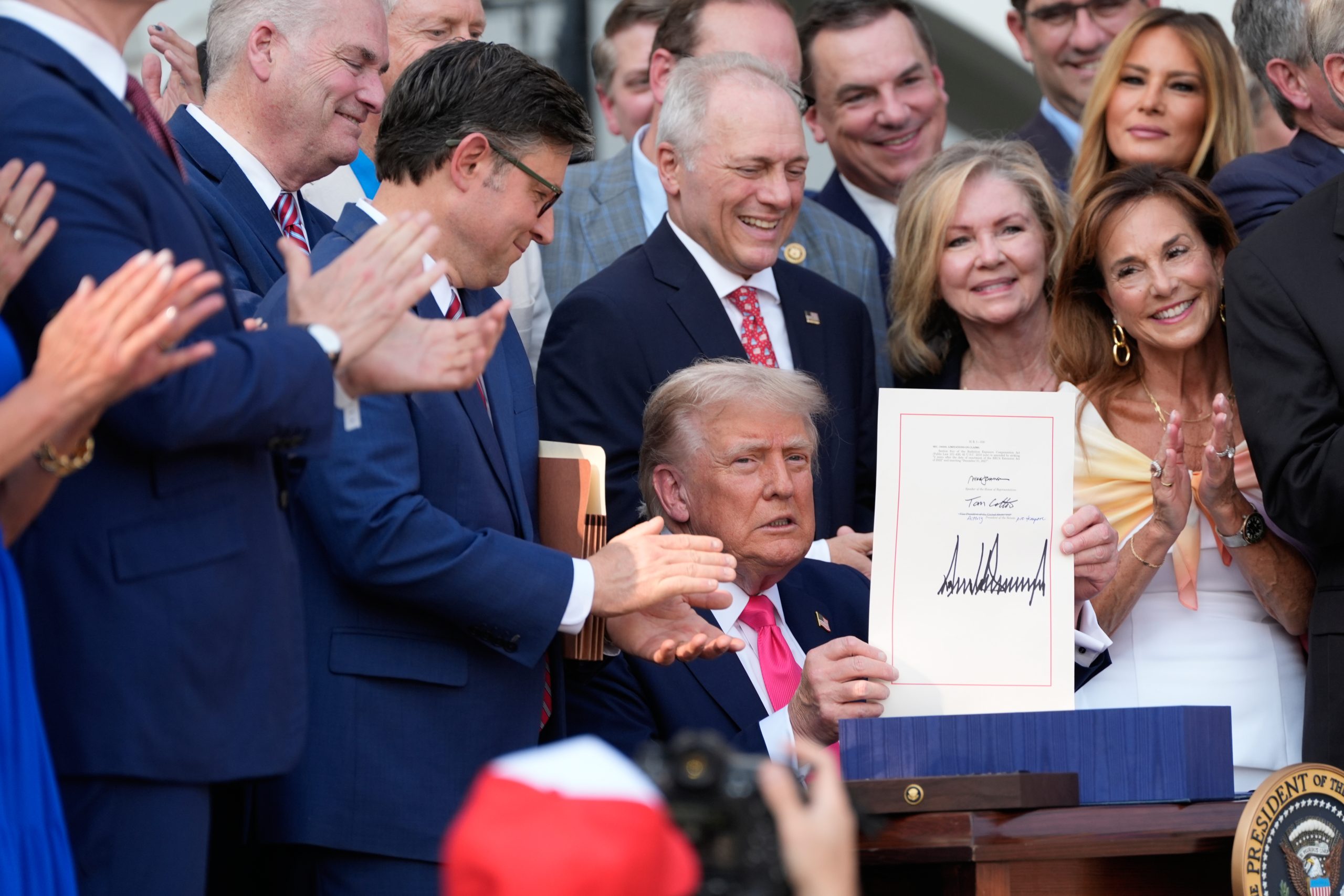
    The Republican megabill that President Donald Trump signed into law in July will establish new tax credit scholarships for families to use at private schools, including religious ones — a long-held goal of school privatization advocates who argue parents should get taxpayer support if they want to opt out of their neighborhood school.

    Under the “big, beautiful bill,” donors can receive dollar-for-dollar tax credits of up to $1,700 for contributions to scholarship-granting nonprofits. Those groups then distribute the money to families seeking help paying for private school, tutoring and other educational expenses. 

    The program, while significant, is less expansive than in earlier drafts of the legislation. Previous versions gave donors larger tax credits — a match up to $5,000 or 10 percent of their income, whichever is greater — and mandated that all states participate rather than allowing them to opt in. 

    Related: A lot goes on in classrooms from kindergarten to high school. Keep up with our free weekly newsletter on K-12 education.

    Here are 10 things to know about the program. If you have other questions or there’s more you’d like to know, write to us: [email protected].

    When does it start?

    Jan. 1, 2027. Families have until then to research where they might want to spend a scholarship — and if the school in mind even plans to accept one. Taxpayers who want to contribute to support the scholarships can do so beginning in late 2026.  

    How will the scholarships work?

    The law opens the door to churches, universities, education nonprofits, rotary clubs and potentially even public schools (more on that below) to accept and distribute donations for the program. These “scholarship-granting organizations,” or SGOs, can keep up to 10 percent of the donations for administrative costs.

    In some states with existing scholarship programs, families apply with a third-party contractor that works with eligible schools and selects students for awards. Other states allow religious groups and other nonprofits to create and manage their own scholarship funds. The federal bill gives states wide flexibility to make those sorts of decisions about how the program is administered, experts say.

    Who’s eligible for the scholarships?

    To qualify, students need to check these boxes: They must be eligible to attend a public school, their state must opt in to the program, and their families must earn no more than three times the area median income — a threshold that would include households with incomes nearing $500,000 in some parts of the United States.

    Students who already attend private school qualify, since they are eligible for public school, even if they don’t attend one. The scholarships also may cover home-schoolers. (Keep reading for more on that.)

    How much money will families receive? 

    While the bill set a $1,700 cap on how much individual donors can contribute through their taxes, it’s unclear whether it limits how much an individual student could collect in scholarships.

    In theory, a student could apply for several scholarships. An SGO might also offer a scholarship that reimburses a family for all costs associated with attending their preferred school. In states that already offer similar school choice programs, a student might be able to collect scholarships from both the new program and the existing state program. Still, the average cost of private school tuition is roughly $13,000, so even students who combine several scholarships may not receive enough to cover the full cost of attending.

    The Treasury Department is expected to issue regulations on the program, and we may not know these kinds of details until it does. 

    Related: Arizona gave families public money for private schools. Then private schools raised tuition

    What can the scholarship money be used for?

    Quite a lot. The legislation suggests that families could use the money not only to help pay for private school tuition, but also for room and board, services for students with disabilities, transportation, tutoring, and school supplies like books, computers and uniforms. 

    The rules may depend on the individual state and its definition of an “eligible school.” In some states, home schooling might qualify students for the scholarships, but in other states it might not, said Robert Enlow, president of EdChoice, a pro-school choice group.  

    It’s also possible that public schools could charge scholarship students — as some do with home-schoolers — for services like tutoring, special education or advanced courses. 

    So students can use the money at public schools? How would that work? 

    Yes, potentially. In some states, schools already charge activity or participation fees for non-enrolled students who want to join clubs and sports. Marguerite Roza, director of the Edunomics Lab at Georgetown University, said some states may write their own rules that allow schools to extend the menu of services they could charge for.

    Meanwhile, most school districts — roughly 4 in 5 — already partner with foundations that raise money to help students with transportation, school supplies and basic needs. Both Enlow and Roza said they expected nonprofits and districts to partner on finding ways to tap the federal scholarship dollars as well.

    “Imagine you could have a public school foundation going out and helping with transportation and books and computers and tutors and all sorts of stuff, right?” Enlow said. “The potential is huge.”

    Will all private schools accept the scholarships? 

    No, private schools are not required to accept the scholarships, and many states that offer school choice don’t require private schools to participate. Private schools generally can accept or reject a student for any reason, whether they have a scholarship or not.

    In Arizona, for example, the tax credit program provided scholarships to students at 348 schools last year. More than 400 private schools operated in the state as of 2022.

    Related: Tracking Trump: His actions to dismantle the Education Department, and more 

    Which states will participate?

    Roughly 21 states — including Arizona, Georgia and Montana — offer their own tax credit scholarships, according to the group EdChoice, so it’s expected they would opt into the federal program. Conservative lawmakers in North Carolina already introduced a bill to allow families there to take part in the federal scholarships. 

    If public schools can benefit too, even Democratic governors may consider joining the program, said Roza.

    “Ultimately if the state can open this to summer camp and tutoring, obviously there would be a lot of pressure to unlock so much money with this,” she said.

    How much will the scholarships cost the government?

    It depends on how many taxpayers claim the credit. 

    While an earlier version of the bill would have capped the tax credits at $10 billion a year, the final legislation contains no such limit — so the exact amount in lost revenue won’t be known until much later. That said, an analysis by the nonpartisan Joint Committee on Taxation found that the legislation would cost the Treasury up to $4 billion per year.

    Others think the cost will be higher. The Institute on Taxation and Economic Policy, a left-leaning research group, placed its projection closer to $51 billion, while Roza estimated the cost at $28 billion per year. Still, she hesitated to count that as a direct loss to K-12 funding. “It’s new money in the sense that it doesn’t go into or out of the federal pie,” Roza said.

    What’s been the reaction to the plan? 

    Critics, including teachers unions and many education experts, have been quick to raise alarms about the voucher program, arguing that it’s a handout for wealthy families and will harm public schools by reducing funding for them.

    “It’s the centerpiece of the Great American Heist — a privatization scheme wrapped in tax policy,” Denise Forte, president of the left-leaning nonprofit EdTrust, said at a hearing before the Senate Democratic Caucus in July. 

    Advocates for the separation of church and state worry about the program channeling money from government coffers to religious schools, while disability advocates note that private schools are not required to serve students with disabilities.

    Some supporters of school vouchers, meanwhile, wish the legislation had gone further.

    “This is a very positive program for taxpayers in America. You can help families get better education and claim a tax credit for it,” said EdChoice’s Enlow. “It’s going to benefit middle- and low-income families.” But he added, “It’s not as generous as we would like, which is universal.”

    Others are focused now on encouraging states to participate in the program. “The fight doesn’t end with the passing of the bill,” said Sydney Altfield, national director of Teach Coalition, which advocates for Jewish schools to get access to government funding. “States must opt into the program.”

    Contact staff writer Neal Morton at 212-678-8247, on Signal at nealmorton.99, or via email at [email protected].

    This story about school voucher programs was produced by The Hechinger Report, a nonprofit, independent news organization focused on inequality and innovation in education. Sign up for the Hechinger newsletter.

    The Hechinger Report provides in-depth, fact-based, unbiased reporting on education that is free to all readers. But that doesn’t mean it’s free to produce. Our work keeps educators and the public informed about pressing issues at schools and on campuses throughout the country. We tell the whole story, even when the details are inconvenient. Help us keep doing that.

    Join us today.

    Source link