Tag: Wake

  • In the wake of Charlie Kirk’s assassination, colleges must not burden speaking events

    In the wake of Charlie Kirk’s assassination, colleges must not burden speaking events

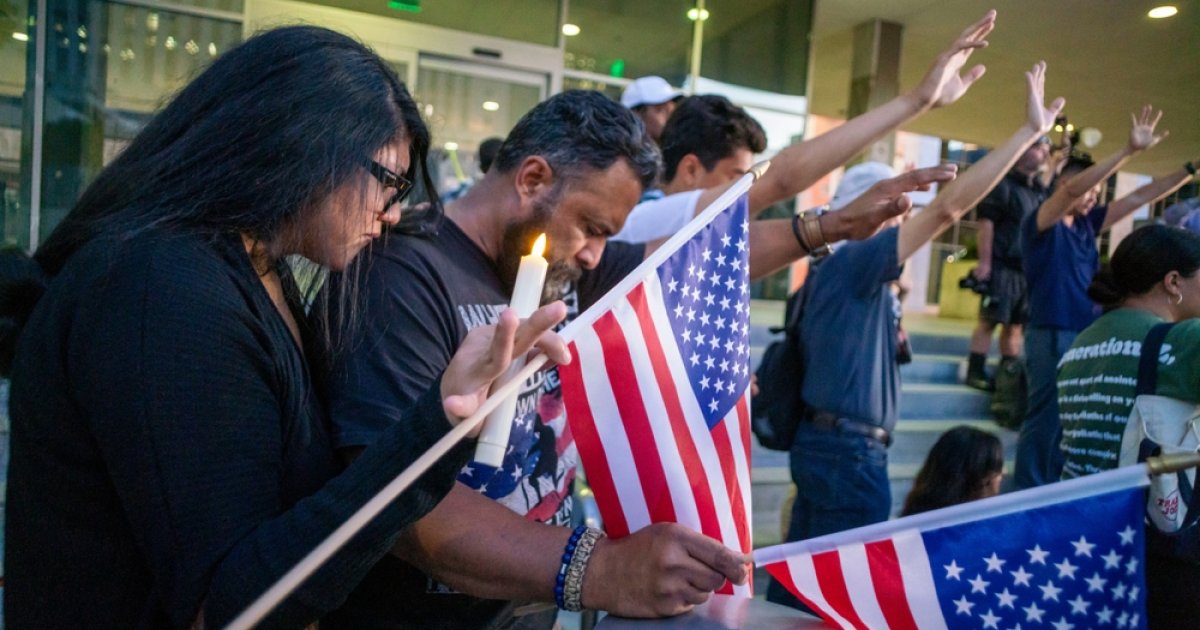
    Last week, an assassin silenced speech on a college campus. A family lost a father and a husband. As we have said without equivocation, political violence is never an acceptable response to free speech.

    Appropriately, we can expect colleges and universities to place even greater emphasis on safety and security ahead of outside speakers arriving on campus moving forward. They have a moral and legal obligation to redouble their efforts to protect free speech as well as their campus community. However, administrators must not pass those security costs along to speakers or use security concerns as pretext to cancel a speaker’s appearance. Rewarding threats of violence by taxing speech or silencing speakers will only invite more threats and more violence.

    Just as there is undeniable risk in hosting controversial speakers, there is infinite risk in surrendering the marketplace of ideas to the heckler’s veto.

    In Forsyth County v. Nationalist Movement (1992), the Supreme Court determined that government actors — like public college or university administrators — may not lawfully impose security fees based on their own subjective judgments about “the amount of hostility likely to be created by the speech based on its content.” Such fees amount to a tax on speech an administrator subjectively dislikes, or subjectively believes is likely to cause disruption or violence.

    “Speech cannot be financially burdened, any more than it can be punished or banned, simply because it might offend a hostile mob,” the Forsyth Court wrote, noting that “[t]hose wishing to express views unpopular with bottle throwers, for example, may have to pay more for their permit.”

    Over the years, FIRE has tracked far too many instances of campuses burdening controversial speech with hefty security fees. Some have resulted in First Amendment lawsuits, resulting in costly settlements for the institutions involved. FIRE has also often seen institutions use security concerns — without legitimate evidence — to silence expression on campus.

    Violence must never be a response to speech

    America must be an open society where we feel safe to share our ideas in the public square, not just from behind bulletproof glass and bulletproof vests.


    Read More

    Imposing exorbitant security fees due to the controversial nature of an event effectuates a heckler’s veto, as it allows an audience’s reaction to dictate the price a student group must pay to hold an event. This means that a student group could be priced out of holding a controversial event if the audience reaction is anticipated to be too disruptive. Just as there is undeniable risk in hosting controversial speakers, there is infinite risk in surrendering the marketplace of ideas to the heckler’s veto.

    So what should colleges do in the face of this challenge?

    First, they need to adopt and publish viewpoint- and content-neutral regulations on events. As we wrote in a 2022 letter to Pennsylvania State University, “Any administrative imposition of security fees on a student group must be guided by narrowly drawn, viewpoint- and content-neutral, reasonable, definite, and clearly communicated standards in order to comply with [the university’s]…obligations under the First Amendment.” FIRE’s Model Speech Policies for College Campuses include a security fee policy that other colleges can emulate to set themselves up for success.

    When universities silence controversy they silence opportunity — the opportunity to test ideas, sharpen arguments, and confront uncomfortable topics.

    Second, colleges must apply those regulations to make decisions about security measures on the basis of verified, specific safety concerns, rather than speculative assumptions on the basis of the speaker’s message or experiences at past events. And every effort should be made to ensure events that do present concerns are able to continue. Such strategies as increasing security, using metal detectors, and moving events online should be applied before cancellation.

    Third, colleges need to train staff to apply these standards properly to meet their dual obligations to ensure safety of attendees and the speaker during the event, and to uphold the ability of attendees to hear the speaker’s message. FIRE’s First Amendment Lessons for College Administrators can be a useful starting point for this work.

    Student acceptance of violence in response to speech hits a record high

    In 2020, just 1 in 5 students said it was acceptable to use violence to stop a speaker. Now it’s 1 in 3 — a nearly 80% jump in five years.


    Read More

    At the same time, colleges should educate students on freedom of speech: both its limits and its importance in our democracy. FIRE encourages colleges to begin this education on day one at orientation, guided by our Free Speech at Freshman Orientation programming. These lessons should provide students with better options for responding to disfavored speech than shoutdowns or violence. They should also reinforce why we’ve chosen in America to meet speech with which we disagree with more speech.

    When universities silence controversy they silence opportunity — the opportunity to test ideas, sharpen arguments, and confront uncomfortable topics. They must meet this challenging moment not with censorship but with empowerment of free expression.

    Source link

  • School districts grapple with ‘budgetary chaos’ in wake of federal funding freeze

    School districts grapple with ‘budgetary chaos’ in wake of federal funding freeze

    This audio is auto-generated. Please let us know if you have feedback.

    The U.S. Department of Education’s withholding of $6.2 billion in federal K-12 grants has local and state school systems scrambling to figure out how to make up for the budget shortages. It has also caused a swell of advocacy from families, lawmakers, educators and others across the nation.

    The withheld funds for fiscal year 2025 were expected to be released by the Education Department July 1. Programs at risk due to the funding hold include English learner services, academic supports, after-school programming and professional development. 

    The frozen funds represent at least 10% or more of states’ overall K-12 federal revenues if the money is not distributed, according to the nonpartisan Learning Policy Institute.

    At the local level, superintendents and principals are voicing concern about how the funding freeze will impact their school services, particularly those that serve English learners, homeless students and students from low-income families. 

    Chase Christensen, principal and superintendent of the 80-student Sheridan County School District #3 in rural Clearmont, Wyoming, said his district was expecting $30,000 in Title II and IV funding that is being withheld. 

    The district had nearly finalized its roughly $4 million budget for the upcoming school year when it learned of the federal funding freeze. It then adjusted the budget to remove those federal funds and is making up the difference by leaving a staffing position vacant.

    Although the budget adjustment means student services under those title programs can continue, Christensen said “every dollar of federal funding for education is impactful” at the individual student level.

    “When these funds are pulled, especially this late in the game for budget planning and everything else, students are going to be the ones that lose out,” Christensen said.

    Nationally, bigger districts have the largest funding gaps, according to a New America analysis of data from 46 states that had available funding figures. Those districts include Los Angeles Unified School District ($82 million), Florida’s Dade County School District ($38 million), and Nevada’s Clark County School District ($22 million).

    Advocacy groups and policymakers are calling on the Trump administration to restore the funds. The Boys and Girls Clubs of America, a nonprofit that supports afterschool programs, said the impact of the blocked funds will be “swift and devastating,” in a statement from President and CEO Jim Clark. 

    Clark said 926 Boys and Girls Clubs across the country could close, and 5,900 jobs would be lost if the funding is not released. “Afterschool and summer learning programs are cornerstones of academic success, public safety, and family stability for millions of young people — but right now, we stand at a dangerous tipping point,” Clark said. 

    The National English Learner Roundtable, a coalition of more than a dozen national and state-based organizations supportive of English learner services, said in a Thursday statement, “This unprecedented move by the Department has blindsided schools that have always been able to rely on these funds to support the start of the school year, and has created budgetary chaos for nearly every K-12 school district.” 

    On Thursday, 150 Democratic House lawmakers sent a letter to U.S. Education Secretary Linda McMahon and White House Office of Management and Budget Director Russell Vought demanding the title funds be released.

    This late-breaking decision, which provided no timeline for which states can expect a final decision, is leaving states financially vulnerable and forcing many to make last minute decisions about how to proceed with K12 education in this upcoming school year,” the letter said.

    The funding hold has already led to staff layoffs, program delays and cancellations of services, the House members said.

    Spending under review

    The withheld funds were appropriated by Congress and approved by President Donald Trump earlier this year. States expected to gain access to the monies starting July 1, as routine. But the day before, on June 30, the Education Department told grantees not to expect the funds while it conducts a review and referred questions to OMB.

    The specific grant funding being withheld includes:

    • Title II-A for professional development: $2.2 billion.
    • Title IV-A for student support and academic enrichment: $1.4 billion.
    • Title IV-B for 21st Century Community Learning Centers: $1.3 billion.
    • Title III-A for English-learner services: $890 million.
    • Title I-C for migrant education: $375 million.

    On Thursday, in a statement to K-12 Dive, OMB said no funding decisions have been made and that it is conducting a “programmatic review of education funding.”

    The office also said, “initial findings show that many of these grant programs have been grossly misused to subsidize a radical leftwing agenda.”

    OMB and the Education Department have not indicated a timeframe for the review of the frozen federal funds.

    Source link

  • Horizon Europe revisited in wake of Trump’s attacks on unis – Campus Review

    Horizon Europe revisited in wake of Trump’s attacks on unis – Campus Review

    Universities Australia (UA) has again called on the Albanese government to invest in research fund Horizon Europe amid growing uncertainty from the United States.

    Please login below to view content or subscribe now.

    Membership Login

    Source link

  • USyd bans ‘lecture-bashing’ in wake of Israel-Gaza protests – Campus Review

    USyd bans ‘lecture-bashing’ in wake of Israel-Gaza protests – Campus Review

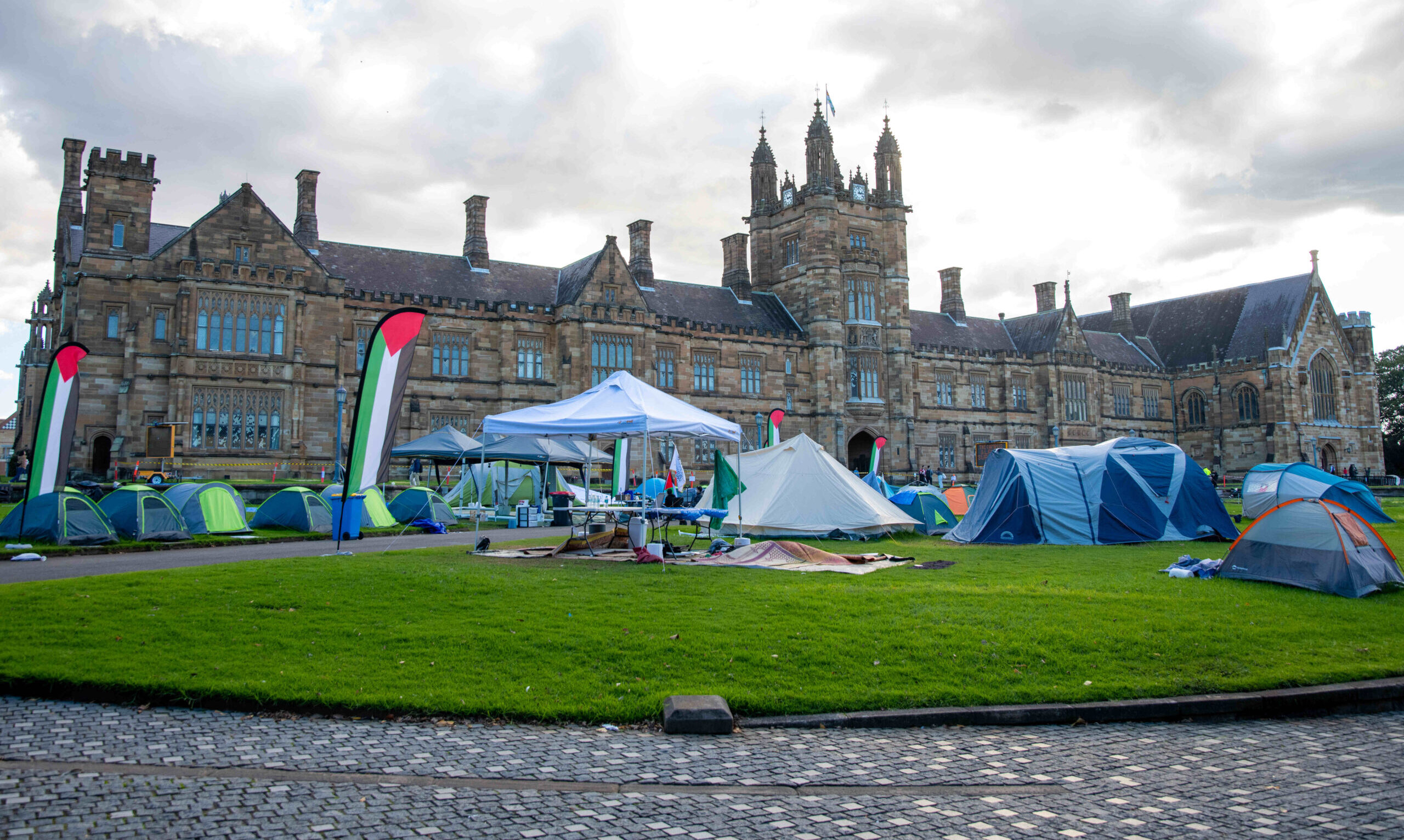
    University of Sydney (USyd) vice-chancellor Mark Scott on Monday wrote to students and staff to inform them that students will not be allowed to make non-course related announcements at the beginning of class.

    Please login below to view content or subscribe now.

    Membership Login

    Source link

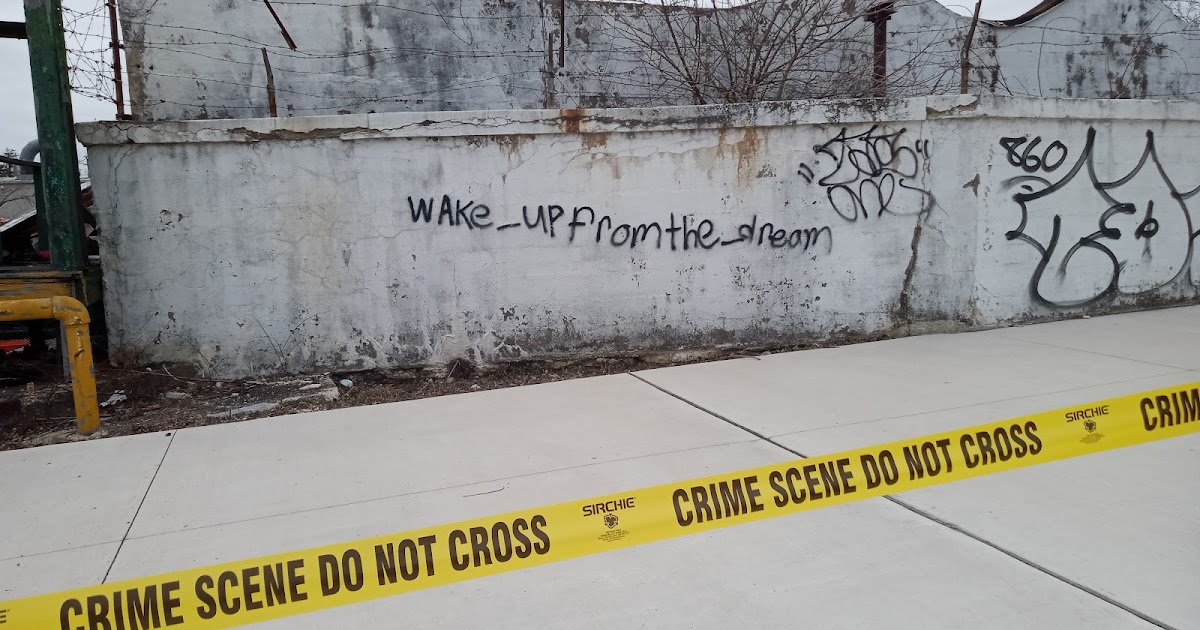
  • Wake up from the dream…

    Wake up from the dream…

    It’s April 1, 2025. And this is no joke. Under Donald Trump and his Republican government, the US is quickly headed down the wrong path, politically, economically, and socially, with little resistance. After three months of government disruption, there are still tens of millions of Americans that do not get what’s happening, and many more that do get it but are unwilling to act. 

    In history, we have seen moments very similar to this. This time, politicians, corporate CEOs, and higher education elites, who should know better, have largely stood on the sidelines. At their worst, these elites have systematically punished those who did have the courage to speak out, making others fearful of even nonviolent resistance. 

    This is nothing new: of nations and societies becoming less democratic, less responsive to the People. This move to the right has developed in a number of countries, and students of history know about the rise of authoritarian leaders in ancient Rome, medieval France and England, and modern Germany, Italy, Japan, and Russia.    

    Can we wake up from the dream before it’s too late? 

    Related links:

    Source link

  • Columbia University Faces $400 Million Federal Funding Cut in the Wake of Antisemitism Concerns

    Columbia University Faces $400 Million Federal Funding Cut in the Wake of Antisemitism Concerns

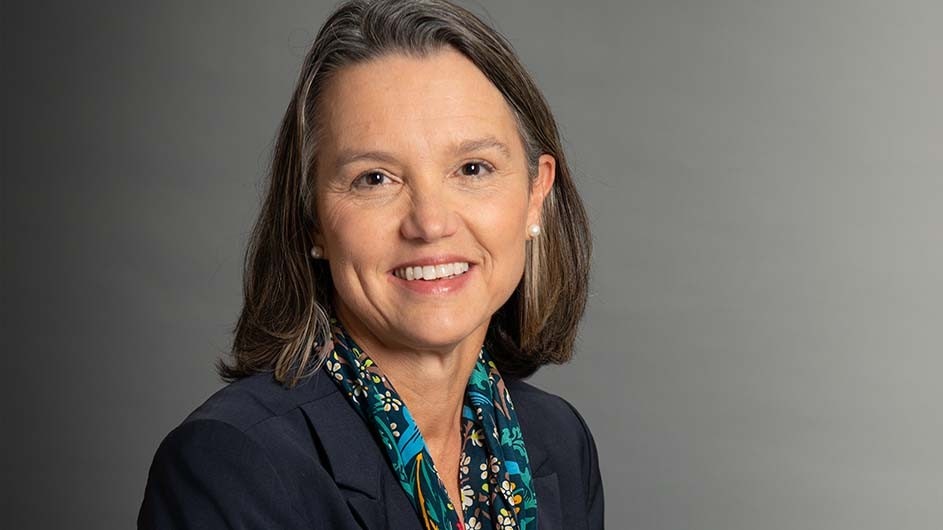
    Dr. Katrina ArmstrongColumbia University is grappling with significant financial challenges after the Federal Task Force to Combat Antisemitism announced $400 million in cuts to federal funding, a development that Interim University President Dr. Katrina Armstrong says will “touch nearly every corner of the University.”

    The task force described the cuts as a consequence of Columbia’s “continued inaction in the face of persistent harassment of Jewish students” and warned that this represents only the “first round of action,” with “additional cancellations” to follow.

    This announcement comes just four days after the task force revealed it would consider stop work orders for $51.4 million in contracts between Columbia and the federal government and conduct a “comprehensive review” of more than $5 billion in federal grant commitments to the institution.

    In her communication to the Columbia community, Armstrong acknowledged that the cuts would have an immediate impact on research and critical university functions, affecting “students, faculty, staff, research, and patient care.” Federal funding constituted approximately $1.3 billion of Columbia’s annual operating revenue in the 2024 fiscal year.

    “There is no question that the cancellation of these funds will immediately impact research and other critical functions of the University,” Armstrong wrote in en email to the campus community, while emphasizing that Columbia’s mission as “a great research university does not waver.”

    The situation at Columbia highlights the increasing tensions between academic institutions and the Trump administration, particularly regarding how universities respond to claims of antisemitism on campus. Since October 2023, Columbia has been at the center of pro-Palestinian student protests, drawing federal scrutiny, especially from the Trump administration.

    President Trump recently stated on Truth Social that “All Federal Funding will STOP for any College, School, or University that allows illegal protests.”

    Armstrong, who assumed her interim position following former University President Minouche Shafik’s resignation in August 2024, described Columbia as needing a “reset” from the “chaos of encampments and protests.” She emphasized that the university “needed to acknowledge and repair the damage to our Jewish students.”

    Armstrong affirmed the university’s commitment to working with the federal government on addressing antisemitism concerns, stating: “Columbia can, and will, continue to take serious action toward combatting antisemitism on our campus. This is our number one priority.”

    Armstrong, however, did not outline specific plans for how Columbia would adapt to the significant loss of federal funding, instead focusing on the university’s broader mission and values.

    “Antisemitism, violence, discrimination, harassment, and other behaviors that violate our values or disrupt teaching, learning, or research are antithetical to our mission,” Armstrong noted. “We must continue to work to address any instances of these unacceptable behaviors on our campus. We must work every day to do better.”

    The situation at Columbia raises important questions for higher education institutions nationwide about balancing free speech, campus safety, and federal compliance in the age of the Trump presidency. As universities increasingly face scrutiny over their handling of contentious social and political issues, the consequences—both financial and reputational—can be severe.

    Armstrong called unity within the Columbia community to maintain the university’s standing and continue its contributions to society.

    “A unified Columbia, one that remains focused on our mission and our values, will succeed in making the uncommonly valuable contributions to society that have distinguished this great university from its peers over the last 270 years,” she said. 

    Source link

  • Event Planning, Institutional Research, Museum, and Tutor Positions See Significant Growth in the Wake of the Pandemic – CUPA-HR

    Event Planning, Institutional Research, Museum, and Tutor Positions See Significant Growth in the Wake of the Pandemic – CUPA-HR

    by CUPA-HR | August 10, 2022

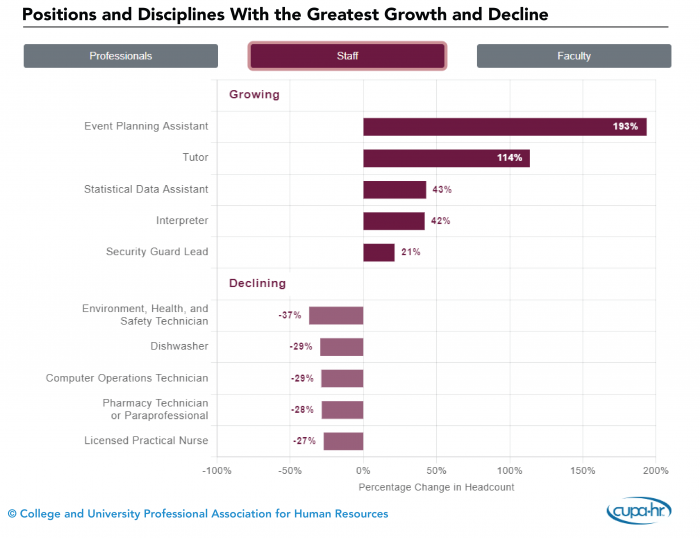
    According to data recently released by CUPA-HR, the higher ed workforce positions that saw the greatest growth from 2020-21 to 2021-22 were event planning assistant (up 193%), institutional research analyst (up 161%), head of campus museum (up 120%) and tutor (up 114%). These increases reflect an increase in the number of people hired to fill existing or newly created positions since 2020-21.

    The positions that saw the greatest decline in number of employees were environment, health and safety technician (down 37%), head of campus learning resources center (down 36%), online instruction operations manager (down 32%) and dishwasher (down 29%). These decreases reflect a decrease in the number of people in these positions since 2020-21, either because the institution has reduced the number of available positions or because those positions have unfilled vacancies.

    A new interactive graphic from CUPA-HR shows the Positions and Disciplines With the Highest Growth and Decline for higher ed professionals, staff and tenure-track faculty.

    The Ongoing Impact of COVID-19

    In many cases, the growth and decline in these positions over the past year reflect the impact of the COVID-19 recession that began in the spring of 2020. Like so many employers, institutions have experienced the effects of the Great Resignation and the subsequent challenges of talent recruitment amid the growing availability of remote and flexible work options.

    Other factors may also be at work. The return to in-person events, the growing demand for data to inform institutional decision-making, and the continued interest in honoring the cultural histories of institutions may have increased demand for the positions that saw the greatest increases. Also, as the high school graduates most impacted by the pandemic’s disruption of classroom learning make their way to college, more tutors may be needed to help them bridge anticipated gaps.

    Smaller Shifts in Faculty

    Overall, tenure-track faculty saw much smaller increases and declines in the years analyzed. Disciplines with the highest growth were Library Science (up 8.4%), Liberal Arts and Sciences (up 7.0%), and Area, Ethnic, Cultural, Gender and Group Studies (up 2.3%). Disciplines with the greatest declines were Communications Technologies (down 22%), Agriculture (down 9%) and Engineering Technologies and Technicians (down 6.4%).

    More About the Results

    The data for these results came from CUPA-HR’s annual Professionals in Higher Education Survey, Staff in Higher Education Survey and Faculty in Higher Education Survey. Analyses included more than 600 institutions that participated in each survey in both years of the comparison. For additional details, see the interactive graphic in the Research Center. These data and more are available through CUPA-HR’s DataOnDemand subscription service.


    Source link