

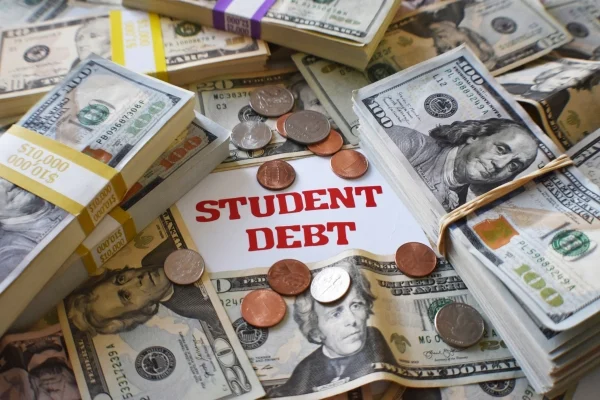
A new survey of federal student loan borrowers by the Institute for College Access and Success, a nonprofit focused on college affordability, found that about a fifth of borrowers are currently in either delinquency or default.
“These findings bring even greater urgency to ongoing concerns about a looming ‘default cliff,’ where an unprecedented number of borrowers struggle so much to repay their loans that they default on their payments in droves,” Michele Zampini, TICAS’s associate vice president for federal policy and advocacy, wrote in a blog post.
The Department of Education itself acknowledged a potential default cliff in an August data release, Zampini noted, writing that, although no new borrowers had defaulted since payments were paused in March 2020, many delinquent borrowers were in danger of defaulting after that pause ended.
Zampini also wrote that student loan default “comes with severe and punitive consequences.”
Just over half of respondents (52 percent) said their debt has negatively affected their ability to save for retirement, and 45 percent said the same about their ability to find and afford housing. Slightly fewer participants said that their student loan debt was “worth it”—41 percent—than said it wasn’t, at 48 percent. Advanced degree holders were more likely to consider their debt “worth it” than those with an associate or bachelor’s degree, as were male borrowers compared to female borrowers.

As part of its plan to grow the international education sector — which includes doubling its contribution to $7.2 billion and increasing international enrolments to 119,000 by 2034 — New Zealand has introduced new immigration changes.
The changes extend in-study work rights to all tertiary students on approved exchange or study abroad programs and clarify that most students who change providers or lower their study level will need a new visa.
Apart from these, eligible tertiary students in post-school education, such as universities and polytechnics, and secondary students in Years 12-13 can now work up to 25 hours a week. Secondary students will continue to require parental and school approval for in-study work.
The increased limit applies to all new visas granted from November 3, even if the application was submitted earlier.
Moreover, students already holding visas with a 20-hour work limit will need to reapply, either through a variation of conditions or by obtaining a new study visa, to access the increased allowance.
Stakeholders have noted the importance of making sure that the relaxed rules do not result in students being exploited for low-paid or exploitative work.
The increase to in-study work rights comes at a time when New Zealand has 40,987 study visa holders eligible to work, with 29,790 of those visas expiring on or before 31 March 2026 and 11,197 after.
The New Zealand government says the change will make the country “more competitive globally” and improve the overall student experience, at a time when international student satisfaction remains strong at 87%.
“International students make a significant contribution to the economy, with each student spending around $45,000 on average in 2024 – supporting local businesses, tourism, and job creation,” Jeannie Melville, deputy COO for immigration at the Ministry of Business, Innovation and Employment, told The PIE News.
“As part of the International Education Going for Growth Plan, changes were announced to immigration settings to support sustainable growth and enhance New Zealand’s appeal as a study destination. These changes aim to maintain education quality while managing immigration risk.”
International students have the same minimum employment rights as any other worker, including being paid at least the minimum wage and working within visa conditions
Jeannie Melville, Ministry of Business, Innovation and Employment
The rise in working hours is a “confidence signal” that will help with living costs and shows that New Zealand is welcoming, according to Frank Xing, director of marketing and operations at Auckland-based Novo Education Consulting.
But authorities are still expected to keep a close eye on the changes amid past concerns of international students working long hours for below-minimum wages, being denied sick leave, and struggling to find jobs.
The New Zealand government has taken steps to address workplace exploitation in the past, including launching the multilingual Introduction to Your Employment Rights module to help migrant workers understand their agreements and rights.
“International students have the same minimum employment rights as any other worker, including being paid at least the minimum wage and working within visa conditions. Exploitation, such as underpayment or forcing excessive hours, is a criminal offence under the Immigration Act and we do act against employers who exploit workers.
“Immigration New Zealand (INZ) has strengthened protections for migrant workers, including the Worker Protection Act that took effect in January 2024,” Melville said, adding that this allows authorities to issue infringement notices, publish the names of non-compliant employers, and stop them from supporting migrant visa applications for a period.
“We have also tightened visa settings and improved monitoring to reduce exploitation risks.”
According to ex and current international students The PIE spoke with, employers often pushed them to work beyond the weekly hour limit, and while students tried to balance extra hours by reducing them later or carrying them into holiday periods, any overtime during term time was usually unpaid until the breaks.
Some students also alleged mistreatment or harsh behaviour at their workplaces, though experiences varied by employer.
Despite these concerns, Melville noted that students can report any instances of exploitation by calling Crime Stoppers on 0800 555 111, which she described as “a confidential and safe way to make a report”.
According to Xing, the changes in working hours don’t replace core factors like academic fit, career pathways, and post-study visas that drive student applications but they will help international students avoid situations where they can be taken advantage of.
“Extending legal working hours should also reduce the temptation to accept low-paid, cash-in-hand jobs. Of course, vigilance is still needed,” he said.
He called for better student education on their employment rights, as well as stronger penalties for employers who break the rules and easier reporting channels for students.
“It’s early days since the rule took effect – around 10 days – but we’re already seeing more enquiries mentioning ‘25 hours’ alongside programme and city choice, especially as other destinations tighten settings,” Xing added, noting that current international students have also requested help from their Licensed Immigration Advisers to apply for a variation of conditions to move from 20 to 25 hours.
It’s early days since the rule took effect – around 10 days – but we’re already seeing more enquiries mentioning ‘25 hours’ alongside programme and city choice, especially as other destinations tighten settings
Frank Xing, Novo Education Consulting
The increase to 25 hours per week isn’t limited to students. New Zealand has also extended part-time work rights to dependent child visitor visa holders and skilled Migrant Category Interim visa holders.
The move comes as a record number of New Zealanders leave amid a weakening economy, with relaxed migrant work rules seen as a way to fill workforce gaps and support students’ transition into future employment.
“In certain professions, like healthcare, the number of hours of relevant work experience is a very important factor – it can directly affect your employability and career progression,” stated Vijeta Kanwar, director of operations, New Zealand Gateway.
“For example, some job vacancies specify that a candidate must have 100 or even 500 hours of work experience. In that context, gaining five extra hours a week over a year can significantly increase the total experience a student has, enhancing their opportunities when pursuing post-study work.”
“We’ve seen more enthusiasm from students, especially those looking to gain international work experience. They’re quite excited because, in many professions, the number of hours of work experience you gain, especially if it’s linked to your intended career, has huge importance.”
Just in June this year, New Zealand announced that degree holders from countries including India, France, Germany, Italy, Sri Lanka, Singapore, South Korea, Sweden, and Switzerland can now bypass the qualification assessment process for certain immigration categories.
Subject to New Zealand’s cabinet discussions, the government is also set to introduce a new short-term work visa for some vocational graduates and streamline visa processes, according to INZ.
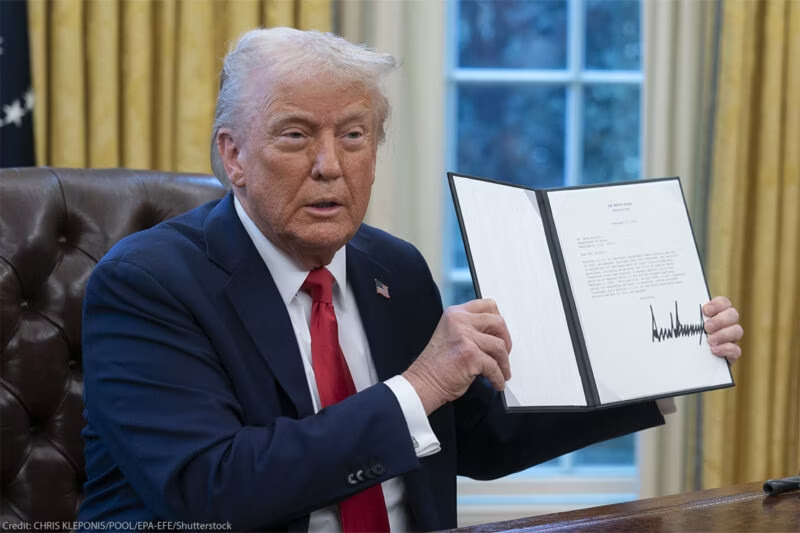
The report from The Education Trust examines state financial aid programs in Illinois, Indiana, and Minnesota, revealing that while some states are making progress, critical gaps remain in helping students who need assistance most.
“The role of states in ensuring postsecondary access and affordability is essential now,” the report states, citing the Trump administration’s July Supreme Court victory allowing it to proceed with layoffs that cut the Department of Education’s staff in half.
The staffing cuts, which disproportionately targeted financial aid personnel, come as congressional Republicans passed legislation in July 2025 that restricted Pell Grant eligibility, limited parent borrowing, and made student loan repayment more expensive.
The report documents a stark affordability crisis. For recent high school graduates in Illinois, the average cost of attending a public four-year college represents 63.2% of annual family income for Black students, compared to 25.8% for white students.
In Indiana, the gap is similarly wide: 58.8% for Black families versus 22.1% for white families. Minnesota shows comparable disparities at 57.1% and 22.9%, respectively.
“Despite the benefits of a college degree, most families cannot cover the costs,” according to the report, which notes that the average cost of tuition, room, and board at public four-year colleges rose from $8,984 in 1980 to $22,389 in 2023, adjusted for inflation.
Meanwhile, the Pell Grant — the nation’s primary need-based aid — has lost purchasing power dramatically. In 1975, it covered more than 75% of college costs; today it covers only about one-third.
The Education Trust analysis found significant problems with how states allocate financial aid:
Illinois dedicates 98.8% of its undergraduate aid to need-based programs, primarily through its Monetary Award Program. However, the grant functions as “first dollar” aid, meaning other assistance must be applied to tuition before MAP funds, potentially leaving low-income students with little support for non-tuition costs.
Indiana splits funding more evenly: 40% goes to its need-based Frank O’Bannon Grant, while 44% supports combination need-and-merit programs like the 21st Century Scholars Program. The O’Bannon Grant provides larger awards to students at private colleges than public institutions — a policy that researchers say “privileges students from higher-income and higher-asset families.”
Minnesota allocates 72% of aid to its need-based State Grant program. The state recently launched the North Star Promise Scholarship, which provides tuition-free education to families earning under $80,000, though as a “last-dollar” program, it may provide minimal assistance to the lowest-income students already receiving Pell Grants.
The report identifies numerous eligibility requirements that exclude vulnerable students:
The Education Trust urges states to redesign financial aid systems with ten key features:
“What’s more, policies that promote college attendance are crucial for reducing barriers to higher education,” the report states, highlighting that both Illinois and Indiana have FAFSA completion requirements and direct admission programs, while all three states offer dual enrollment opportunities.
The report highlights the economic benefits of state investment in higher education. Each college graduate in Illinois increases the state’s annual GDP by approximately $155,566 and generates 6.8 jobs. The state recoups its education investment in just 4.1 years of the graduate’s working life.
Bachelor’s degree holders earn $1.2 million more over their lifetimes than those with only high school diplomas, are 24% more likely to be employed, and are nearly five times less likely to be incarcerated.
“State policymakers have a vested interest in ensuring that recent high school graduates pursue higher education and stay in state to complete their education,” the report concludes.
The analysis comes as education advocates warn that the federal retreat from college affordability could reverse decades of progress in expanding access to higher education, particularly for students of color and those from low-income backgrounds.
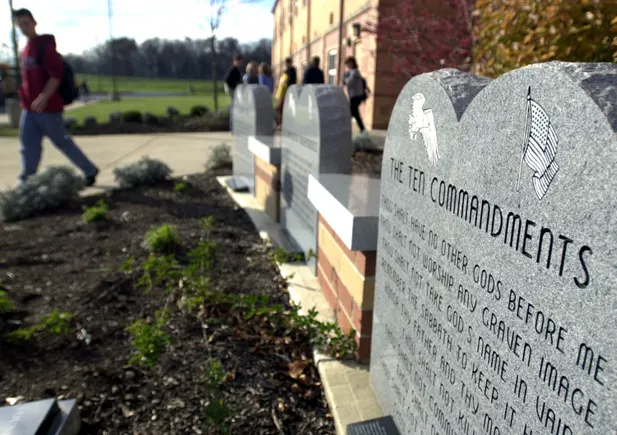
Ten Commandments laws are sweeping many of the same states that also passed “Don’t Say Gay,” parental choice and “anti-critical race theory” laws in recent years.
However, this particular wave of legislation has elicited ire from judges as lawsuits in all three states make their way through the court system.
The laws are “part of a coordinated strategy among several states to inject Christian religious doctrine into public-school classrooms,” said one Arkansas judge in August when blocking that state’s version in four school districts.
“These states view the past decade of rulings by the [U.S.] Supreme Court on religious displays in public spaces as a signal that the Court would be open to revisiting its precedent on religious displays in the public-school context,” said U.S. District Court Judge Timothy Brooks of the U.S. District Court for the Western District of Arkansas in his order.
However, this issue was already addressed by the Supreme Court in the 1980s with Stone v. Graham. That decision said that a Kentucky statute requiring a copy of the Ten Commandments in every public school classroom — similar to the laws being introduced now — violated the Constitution.
However, since that decision, the Supreme Court bench and its approach to the separation of church and state has changed — including the legal theory underlying the Stone decision, according to Supreme Court case experts.
In the meantime, however, ACLU has warned districts to take a step back from the state laws as a result of Brooks’ and other judges’ decisions to block them.
“Even though your district is not a party to the ongoing lawsuit, all school districts have an independent obligation to respect students’ and families’ constitutional rights,” an Aug. 21 letter from ACLU to Texas districts read. Any district that displays the Ten Commandments, even if the court order doesn’t apply to them, “will be violating the First Amendment and could be inviting additional litigation,” ACLU said.
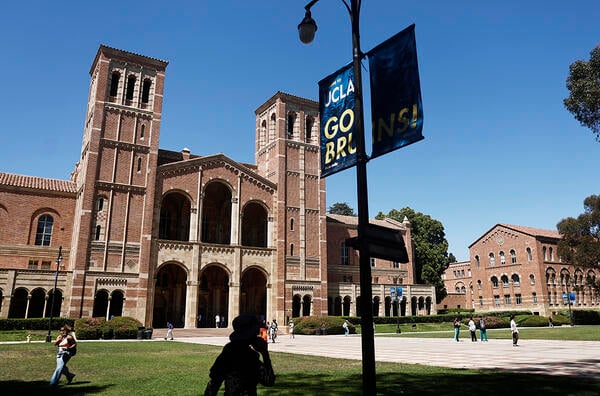
The Trump administration has already frozen $500 million in grant funding at UCLA.
The University of California system is warning state lawmakers that federal funding cuts could extend well beyond UCLA as tensions between the Trump administration and American colleges continue to rise.
UC president James B. Milliken wrote a letter to dozens of local elected officials Tuesday explaining that “the stakes are high and the risks are very real.” The system’s 10 institutions could lose billions of dollars in aid, forcing its leaders to make tough calls about staffing, the continuation of certain academic programs and more, he said.
President Trump has already frozen more than $500 million in grants at UCLA, allegedly because the Justice Department accused the university of violating Jewish students’ civil rights. The president demanded the university pay a $1.2 billion fine to unlock the funds, and system officials are worried that more funding cuts are likely. California lawmakers have repeatedly urged the UC system not to capitulate.
In an August letter, State Sen. Scott Wiener, a Democrat and chair of the Joint Legislative Budget Committee, and 33 other lawmakers told Milliken that Trump’s actions were “an extortion attempt and a page out of the authoritarian playbook,” the Los Angeles Times reported.
Milliken wrote in Tuesday’s letter that a loss in funding would “devastate” the system and harm students, among other groups.
“Classes and student services would be reduced, patients would be turned away, tens of thousands of jobs would be lost, and we would see UC’s world-renowned researchers leaving our state for other more seemingly stable opportunities in the US or abroad,” he wrote.
If the UC system loses federal funding, it would need about $4 to $5 billion a year to make up the difference, Milliken added. “That is what fighting for the people of California will take.”
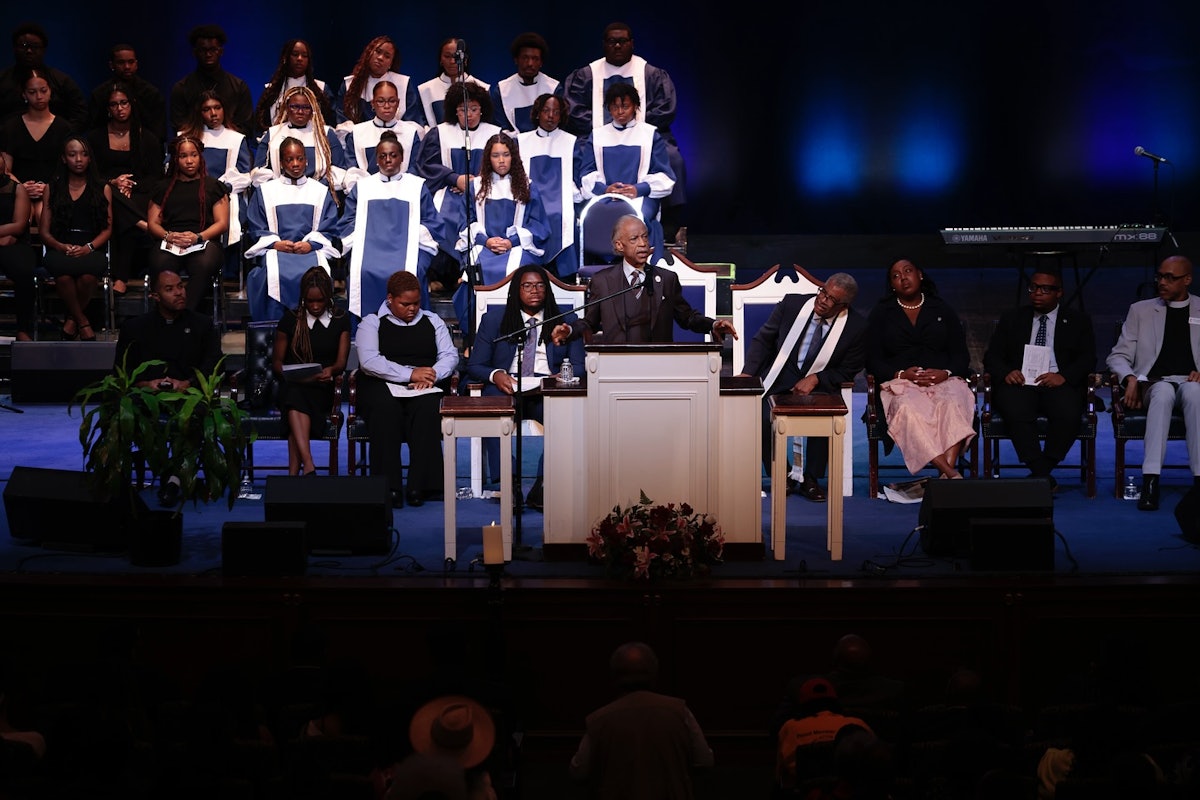
The gospel choir’s voices echoed through Cramton Auditorium, their blue and white robes swaying as they filled Howard University’s historic venue with spiritual melodies. Just a week after classes resumed at the prestigious HBCU, Rev. Al Sharpton took the stage to deliver a sermon that was equal parts spiritual guidance and a political rallying cry.
Rather than gathering in the nation’s capital this year, Sharpton announced that thousands of demonstrators—including college students from across the country—will converge on New York’s financial district this Thursday for a March on Wall Street, starting at 10 a.m. at the African Burial Ground and marching directly to Wall Street.
“The real people that are deferring the dream are on Wall Street,” Sharpton told the audience. “They’re the ones that are financing the moves for redistricting and robbing us of our right to vote and representation. So rather than come to Washington, we said, ‘We going to Wall Street this year, where they do business.’”
Using the biblical story of David facing Goliath as his central theme, Sharpton challenged the congregation to confront contemporary challenges with biblical courage.
The prominent civil rights leader was particularly pointed in his political criticism of President Donald J. Trump and his attacks on diversity, equity and inclusion and U.S. cities led by Black mayors.
Sharpton delivered some of his harshest criticism when addressing attempts to sanitize American history, particularly regarding slavery. He expressed outrage at what he described as efforts to downplay historical injustices.
“The fact that they are threatening institutions,” Sharpton said, his voice rising. “Can you imagine? It’s almost unthinkable to me that they’re saying that we are going through the Smithsonian Museum to make sure that they are in line with the feelings of one man at history.”
Sharpton said that he was incensed by suggestions that historical narratives should be altered and he chided the president who claimed that the museums focus too much on “how bad slavery was.”
In one of the sermon’s most powerful moments, Sharpton shared his family’s connection to slavery, describing how genealogical research in 2007 revealed that his great-grandfather had been enslaved on a South Carolina plantation owned by the late Senator Strom Thurmond’s ancestors.
“My great grandfather was a slave,” he told the audience. “And it occurred to me for the first time that my name Sharpton is really the owner’s name of my great grandfather. I don’t know my name, and you don’t know your name.”
Now, Sharpton added, is the time for Americans—particularly students—to fight back against the assault on history.
“If we are afraid to stand up, then we are not deserving of those that stood up and gave their lives so we could have a life worth living,” he said.
Howard University students, led by senior Tabia J. Lee, president of the school’s National Action Network chapter, will bring a delegation to participate in Thursday’s march. The student involvement, she said, represents Sharpton’s challenge that young people take a broader leadership role in today’s social justice movements.
Howard students noted that Sharpton’s visit to campus came as Howard University faces its own transition, with Dr. Ben Vinson announcing his resignation last week as president and former president Dr. Wayne A.I. Frederick returning to lead the storied institution on an interim basis.
Throughout the nearly hour-long address, Sharpton wove together themes of personal faith, historical memory, and political action. He reminded the audience of their ancestors’ resilience.
“Do you know when they walked off that plantation in 1863? After being in slavery 246 years, they had no money because they worked for no wages. They had no education; it was against the law for them to read or write… All you had is God.”
The March on Wall Street, he said, represents more than just a protest location change—it’s a strategic pivot toward confronting economic inequality at its source. And he challenged the college students to take their stand.
“Do you know in ’63 when they marched here in Washington? They were still segregated. They didn’t have the Civil Rights Act until ’64. People rode the bus all night, had chicken sandwiches in a paper bag, because there wasn’t a restaurant that would serve them on the way. Had to go in the woods to use the bathroom because they couldn’t use a rest stop, but they came anyhow,” he said. “And here you are, 60 years later, eating at any restaurant you want, checking into any hotel you want, living in any community you want, and somebody got to beg you to stand up? How broke down have we got?”
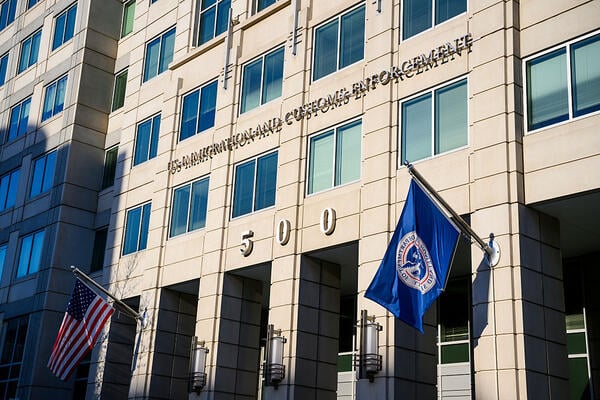
Immigration officials sent letters to international students on short-term work visas Thursday night, threatening to terminate their legal status in the Student Exchange and Visitor Information System and remove them from the country. The number of affected students is still unknown, but Inside Higher Ed can confirm at least 35.
It’s the first sign that the Trump administration is resuming its campaign to deport student visa holders, weeks after restoring the statuses of thousands of students. ICE recently released an updated policy that significantly expands the agency’s authority to terminate students’ SEVIS status and pave the way for deportation proceedings.
This time, they’re targeting students on Optional Practical Training visas, or OPTs, which allow international postgraduates the opportunity to work in a field relevant to their study on a short-term extension. Students on OPT are allowed a total of 90 days of unemployment every 12 months before falling out of compliance. It’s still not known whether any of the affected students were on a special visa extension known as OPT for STEM, awarded to graduates in high-demand technology, science and engineering fields.
One international student adviser, who spoke with Inside Higher Ed on the condition of anonymity, said 28 of his institution’s students on OPT received the letter in the past day, and he expects that number will grow.
In a copy of one letter received by an international student and obtained by Inside Higher Ed, Immigration and Customs Enforcement warned those who have not reported employment status within 90 days of starting their OPT visa that they must do so in 15 days. If they don’t, the Student Exchange and Visitor Program “will set your SEVIS record to ‘terminated,’” the letter reads, which “may result in the initiation of immigration proceedings to remove you from the United States.”
The letter is nearly identical to those sent by officials during the first Trump administration in 2020. The only difference: Back then, the Student Exchange and Visitor Program was the letter’s sole signatory. This time, ICE and the Department of Homeland Security are also named.
The 2020 letters were sent two years after officials issued an update to designated school officials informing them that the administration had begun a review of OPT students’ employment status to find noncompliant visa holders. But that notice also said SEVP would not automatically terminate students’ SEVIS status for going over the 90-day unemployment limit before notifying students.
It’s not clear whether immigration officials engaged in a review process before beginning to notify students of potential SEVIS terminations this week. Spokespeople for ICE and DHS did not respond to questions in time for publication.
It was also not immediately clear if OPT students’ SEVIS terminations would result in subsequent visa revocations, which are the purview of the State Department. A spokesperson for the State Department wrote in an email that they “cannot preview future visa-related decisions, which are made on a case-by-case basis, based on the individual facts relevant to the case,” and deferred other questions sent by Inside Higher Ed to DHS.
In an internal communication sent to international student advisers and support specialists, NAFSA, an organization of international educators, urged college officials to regularly check the SEVIS database for notices of OPT students’ compliance with “accrued unemployment days” and to reach out to any students who are over the 90-day limit as soon as possible.
Immigration officials began systematically terminating thousands of students’ SEVIS statuses along with their visas in late March, an unprecedented move that threw international student support offices into chaos and left students scrambling to avoid deportation.
Last month, immigration officials restored the SEVIS statuses of more than 5,000 international students after losing dozens of court cases challenging the legality of efforts to revoke foreign students’ legal residency at a breakneck pace.
The anonymous international student adviser said students on OPT often forget to report their employment details before the 90-day deadline. Many are distracted by graduations and finals well after they receive approval for the visa and forget, he said; in other cases, the lapse can be due to technical issues within SEVIS.
Because of that, they’re often given some leeway, and he said he’s never seen or heard of a student having their SEVIS status terminated for not reporting employment details on time, including the last time these letters were sent in 2020. Then again, much of the Trump administration’s treatment of student visa holders is unprecedented, and he’s worried this could be a real danger for them.
“There’s a lot of panic and uncertainty as our students are waiting to see what will happen, and we’re waiting to see if they’ll really go through with it,” he said. “I think this is the real deal.”
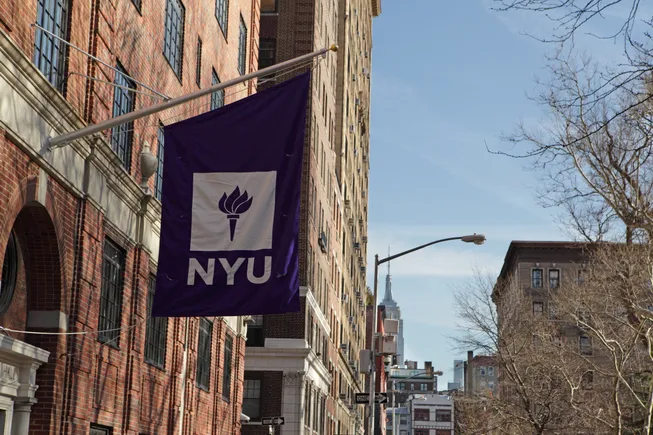
A prominent public health scholar warned of self-censorship and the chilling of free speech in higher education after New York University administrators in March abruptly canceled her presentation over what she described as concerns that certain material could be perceived as antisemitic and anti-government.
Joanne Liu — a physician, professor at McGill University and former head of the international humanitarian group Doctors Without Borders — said in an op-ed with French newspaper Le Devoir that she had been invited to speak at NYU nearly a year ago on challenges in humanitarian work.
Before the presentation, and after Liu uploaded it to a university platform, a representative at the private university’s health unit reached out to her with concerns from leadership, Liu said in recent media interviews.
Those concerns centered largely on a slide containing a table from the Aid Worker Security Database showing heavy casualties among humanitarian workers in Gaza amid Israel’s ongoing war with Hamas. The administrator shared concerns with Liu that the slide could be viewed as antisemitic, Liu said in her op-ed and media interviews.
Statistics from the database show 163 aid worker fatalities in Gaza in 2023, more than in all other global conflicts combined. The deaths were largely caused by airstrikes, according to AWSD.
In her account, Liu, who completed a medical fellowship at NYU in 1996, was told that the leadership didn’t understand why she discussed only the victims in Gaza.
Those leaders at NYU also raised issues with other slides referencing the Trump administration’s cuts to international aid, as well as a photo included in the presentation of President Donald Trump’s heated Oval Office meeting in February with Ukrainian President Volodymyr Zelenskyy, according to Liu. Administrators worried those might be considered anti-government, Liu said.
Liu offered to remove or alter the slides, ultimately offering to take out material that prompted concerns but leave a general slide about humanitarian war casualties.
“As long as I can keep the key, overarching message, I am fine. I can manage that,” Liu recalled in an interview Tuesday with the progressive media outlet Democracy Now!
Hours later, the NYU administrator informed Liu her presentation was canceled.
“I was stunned,” Liu told Democracy Now!, adding that her colleagues had expressed excitement over her talk ahead of it.
In her Le Devoir op-ed, Liu pointed to the Trump administration’s move to cancel $400 million in research grants and contracts at Columbia University on allegations that it allowed antisemitism to spread on campus, which led to major concessions by the Ivy League institution to the administration. Liu also pointed to other universities that the government has targeted.
In a Saturday interview with Canada’s CTV News, she noted a sense of vulnerability and fear among universities. “They are so scared that something could happen to their funds that they preventively over-self-censor themselves,” she said.
She discussed similar themes of chilled speech in the Trump era with Democracy Now!
“I truly and strongly believe that universities are the temple of knowledge, but, as well, of plurality of ideas,” she said. “And if we do not allow that, we are basically killing the essence of what university is about.”
A spokesperson for NYU’s health unit did not respond to Higher Ed Dive’s questions about who made the final decision to cancel Liu’s presentation or the reasons behind it.
“Guest speakers at our institution are given clear guidelines at the outset,” the spokesperson said. “Per our policy we cannot host speakers who don’t comply. In this case we did fully compensate this guest for her travel and time.”