Tag: waste

  • Former Emporia State Pres. to “Find Waste” at Kansas Colleges

    Former Emporia State Pres. to “Find Waste” at Kansas Colleges

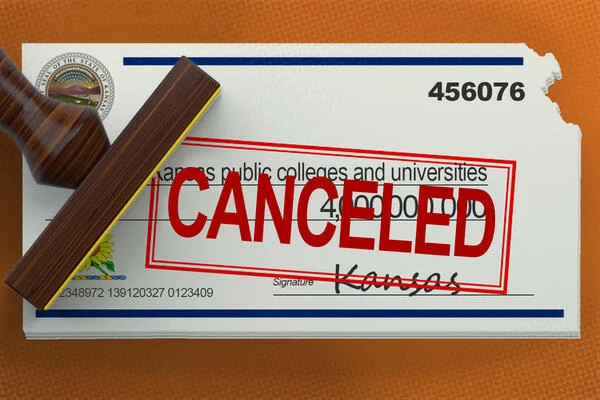
    Last week, Kansas legislative leaders met in a Statehouse committee room with a broad agenda item—to approve a higher ed budget consultant.

    Neither the name nor proposed pay for this consultant was listed. The person Republican leaders were planning to hire didn’t become clear until House Speaker Dan Hawkins began talking at the meeting.

    “We have an opportunity,” Hawkins told fellow members of the Legislative Coordinating Council, according to a video the Legislature posted. “One of the presidents of a university has retired. He has intimate insight into the higher ed budget arena. And, certainly, as everybody knows, we have to be very careful and prudent with the dollars in our budget.”

    “We really need to cut $200 million from our budget,” Hawkins said, adding that the consultant would help “find efficiencies—find any waste that we can find.”

    Within eight minutes—including brief objections from Democratic leaders in the room, one of whom said he was relying on “context clues” to guess whom the hiree would be—the lawmakers voted 5 to 2 to give Hawkins the power to hire this consultant. And, as The Kansas Reflector confirmed after the meeting, Hawkins is indeed planning to hire Ken Hush, who retired as president of Emporia State University last month, at a rate of $10,000 per month. Hush’s leadership of his own institution was controversial, including budget problems, tenured faculty layoffs and enrollment declines.

    Tom Day, Kansas’s director of legislative administrative services, told Inside Higher Ed in an email, “We are currently in communication with Mr. Hush putting a contract together,” and there are no documents showing what his “scope of work” will be. But Day said the payment will be “$50,000, over a 5-month period.” Hawkins gets to sign off on the final contract.

    Republicans’ hiring of Hush, who the Reflector noted is Hawkins’s former fraternity brother, to give advice on cutting other universities’ budgets has elicited criticism from those who say he wasn’t good at running one institution and suggest he’s benefiting from his political connection.

    “Ken Hush’s hiring was a sole-source backroom deal to give an old frat brother—who has a proven track record of being unable to run a university—a job,” Dinah Sykes, leader of the Senate Democrats, said in a statement.

    Under Hush’s leadership, Emporia State garnered national controversy after it laid off tenured faculty, saw a 12.5 percent enrollment plunge the next academic year and then defended its general counsel for writing a bill to eliminate tenure protections across public institutions statewide. The top administrator of the Kansas Board of Regents accused the university of breaking the board’s policy requiring preapproval of legislative proposals.

    (Emporia State spokesperson Gwen Larson said last year that its top lawyer’s “submission of this bill” was “a surprise to the university,” but defended his right to submit it to lawmakers. Hush had appeared to ask legislators to support such legislation a week before it appeared. The bill failed.)

    A lawsuit filed against Emporia State officials during Hush’s presidency also continues, despite his departure.

    In 2022, Emporia State abruptly told 33 employees—30 of whom were faculty members, 23 of them tenured professors—they were losing their jobs. The Board of Regents approved these layoffs under a policy that cited “extreme financial pressures” and declared, “Any state university employee, including a tenured faculty member, may be suspended, dismissed, or terminated.” Eleven tenured professors sued, saying they weren’t given due process.

    In addition, the American Association of University Professors placed Emporia State’s administration on its censure list and condemned it for “unilaterally terminating the appointments of 30 tenured and tenure-track faculty members.” Matthew Boedy, president of the Georgia Conference of the AAUP, was one of the three investigative committee members who wrote that report.

    “If the Kansas Republican lawmakers want to cut spending and gut higher education, they found their man in Ken Hush,” Boedy said. “He did exactly that at Emporia State by firing many a professor and upending the school in many ways.”

    Boedy added, “The ways in which Mr. Hush went about decimating Emporia State—if that’s to be replicated across the entire state, I would not want to be a student or professor in Kansas anymore.”

    But Larson, the university spokesperson, said this week that Emporia State “began to show material results of its turnaround” last fall. Among other things, she said, it eliminated a $19 million deficit, reduced deferred maintenance by 20 percent, saw enrollment rise 6 percent and went from a negative to a stable Moody’s rating.

    The Reflector reported that the Legislature gave the university $18 million in total “bailouts” in 2023 and 2024 as enrollment declined. Upon his retirement, Hush announced he was donating about $1.4 million, equivalent to the last four years of his salary, to the university.

    It’s unclear what kind of advice Emporia State’s former president will give lawmakers and what Republican lawmakers are looking to cut from universities. But their comments may give a clue.

    ‘Questionable Spending’

    During last week’s meeting, Senate president Ty Masterson expressed a general need to cut costs, partly because of the Legislature’s tax cuts.

    “All the stimulus money that happened through COVID … it’s now all dried up, it’s all gone,” Masterson said. “So we have to manage our budget back down to something that is normal. We’re also in a climate where some of the tax cuts that we were able to get through are being implemented, so I think it would be wise to bring on a consultant in that area.”

    But Blake Carpenter, the House speaker pro tem, said he’s targeting what he referred to as “questionable spending.” The Republican said he and his staff found around $100 million worth of this spending over the legislative interim period.

    Carpenter’s definition of questionable spending includes subjects conservatives have railed against. He listed just three examples: “$75,000 in travel reimbursements to a vanilla bean manufacturing tour guide in Africa,” “$96,000 to a nutritionist guru specializing in vegan cookbooks” and “$111,000 to a social justice headhunting firm specializing in placing executives into leadership positions in nonprofits.”

    “If we’re able to find about $100 million just on our own over the interim, with my staff and I looking through these line items, then I think it makes a lot of sense for us to hire an executive who has run one of these universities,” he said. “They know how they operate … I think the $100 million at this point is scratching the surface and we need to continue to dig.”

    (Carpenter, Masterson and Hawkins didn’t respond to requests for comment this week. Inside Higher Ed was unable to reach Hush.)

    Sykes, the Senate Democratic leader, objected during the meeting to hiring a consultant. “All the talk we have about finding efficiency in government … I think we keep growing government … and to pay $10,000 a month,” she said.

    “The first that I saw of this was when it was on the agenda item last night,” Sykes said.

    She continued her denunciation in a statement following the meeting. “Republicans’ hiring of Ken Hush is a part of a larger problem with the Legislative Coordinating Council of issuing no-bid contracts,” she said, adding that Republicans on that council “have been dealing out sole-source contracts left and right, acting like kids in a candy store.” She said Hush’s Emporia State presidency “was fraught with failures.”

    “If Hush can’t even create a proper plan for the ‘realignment’ of a single university, how could he ever properly identify areas of all of the state’s universities’ budgets to be cut?” Sykes asked.

    Mallory Bishop, past president of the Emporia State Faculty Senate, said Hush’s actions at the university shouldn’t be replicated across the state now because it’s too early to tell whether they turned the institution around.

    “He just ended his tenure a month ago,” said Bishop, a clinical instructor and program director at Emporia State.

    “Was it triage or was it just severing limbs?” she said. “I don’t know.”
    Source link

  • Are you storing toxic waste in your home or car?

    Are you storing toxic waste in your home or car?

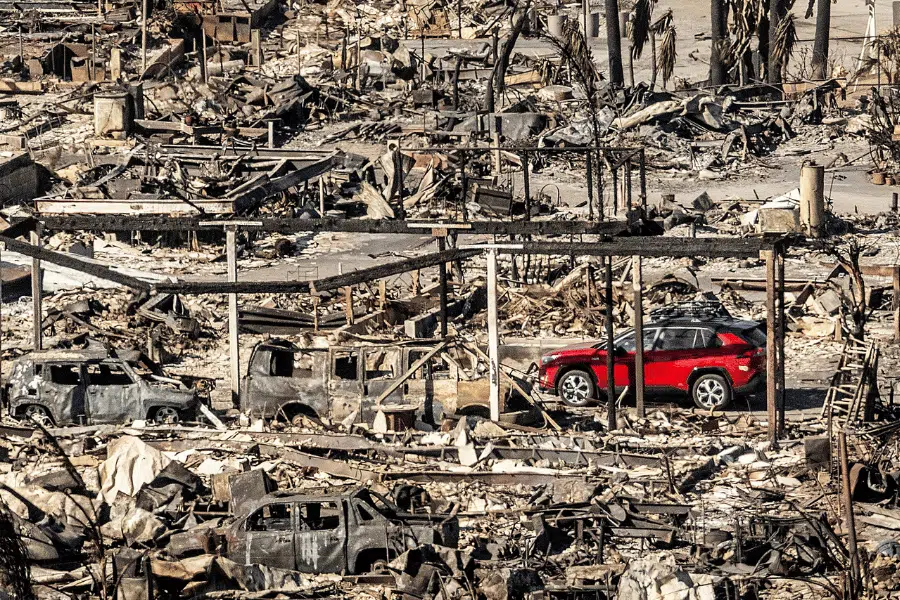
    Los Angeles, California has one of the largest economies in the world. It also has the largest concentration of electric vehicles in the United States. Los Angeles is my hometown and the same place where recent wildfires burned whole neighborhoods to the ground.

    With the fires came the destruction of thousands of lithium-ion batteries in cars, electronics and kitchen appliances.

    The fires started on 7 January 2025, and ended 24 days later. In October of 2025, police arrested a man from the state of Florida for starting the fire, but it was the near perfect environmental conditions that caused the fires to grow fast and move quickly. These fires are thought to have caused an estimated economic loss of between $28 billion and $53.8 billion, and have destroyed upwards of 16,000 structures.

    The fires wreaked havoc on my local community for an entire month. Just miles from my house, I witnessed the destruction these fires caused. Entire residential street blocks lined not with houses, but with rubble. I saw people milling about in front of houses, and I watched one woman stare with a stone-cold look on her face at the remains of a house burned to ashes.

    My family and many others were lucky we were far enough from the fires that we didn’t suffer any loss. Still, even those who didn’t lose their homes suffered from poor air quality.

    “Our business was down 75% immediately after the fires,” said Leila Jersualem, a local business owner. “Because soccer is an outdoor activity, air quality was a frequent concern voiced by our families.”

    Chemicals complicate cleanup.

    The fires also caused the release of many chemicals into the air. One of the most dangerous chemical transmitters, it turns out, are lithium-ion batteries that release toxic gases when burned and can explode when lit on fire.

    Due to this, the U.S. Environmental Protection Agency (EPA) had to safely remove more than a thousand burnt lithium-ion batteries from homes and vehicles, among other places.

    A schoolmate I interviewed at the time lived in the Pacific Palisades area. He told me he couldn’t enter his house due to toxic chemical residue from these destroyed batteries and other substances. He also didn’t think he’d ever move back in because of the dangers from these chemicals, which find their way onto household items and surfaces. Months later, he has still not moved back in.

    Cleanup from the Los Angeles fires has become an arduous task. Chris Myers, a lithium-ion battery tech specialist for the EPA, told reporter Erin Stone in nonprofit news site LAist that to clean up the batteries special teams collect them in sealed containers and take them to places where they can be discharged into a saltwater brine solution that extracts any remaining energy.

    The batteries are then crushed, and sent to a recycler who salvages critical minerals.

    The dangers from batteries are global.

    Myers told Stone that the heat from fires can cause a “thermal runaway” — the heat gets so intense that it causes a chemical reaction that creates more heat. When this happens, the batteries can emit toxic chemicals harmful to people in the area, and the chemicals, such as hydrogen chloride and hydrogen cyanide, can cause problems in the respiratory system.

    If a lithium-ion battery catches on fire, anyone within 25 meters has to evacuate and move out of the danger zone.

    Around the world, there were many incidents regarding the safety of lithium-ion batteries. In New York City, lithium-ion batteries were the leading cause of fire-related deaths in 2024. Additionally, lithium-ion batteries make up half of all garbage truck-related fires around the United States.

    One of the largest lithium battery storage and power plants caught on fire in Northern California in January 2025. The nonprofit news site Politico found that, in France, the number of fires at waste facilities caused by lithium batteries in common household items doubled between 2019 and 2023. In South Korea, more than 22 people were killed from a lithium battery explosion in a factory south of Seoul in June 2024.

    There are other problems with lithium ion batters. Conditions at lithium mines have raised some ethical questions, for example. In the U.S. state of Nevada, new lithium mines permitted by the Trump administration are preventing indigenous people from accessing sacred cultural areas, and raising fears of harm to drinking water and overall health of the local people.

    Do the benefits outweigh the danger?

    With all this danger, why are the batteries so prevalent in our homes? It is difficult to deny how useful they’ve been in humanity’s quest for clean energy.

    When comparing lithium-ion batteries to the internal combustion engine, we can see that over a car’s entire lifetime, ones with lithium-ion batteries will contribute less of a carbon footprint.

    It’s not far off to say that lithium-ion batteries have renovated our modern world.

    But even though there are many positives to using lithium-ion batteries, such as renewable energy, they’re only a small part of the actual solution and there are some alternatives.

    Vanadium flow batteries and sodium-ion batteries, for example, are considered viable alternatives to lithium-ion batteries. Sodium-ion batteries are faster to charge, and have a longer lifespan than lithium-ion batteries.

    Weighing alternatives

    The vanadium flow battery doesn’t decay and can contain the same level of recharge throughout the entire batteries’ lifetime. Also, unlike lithium batteries, vanadium flow batteries are non-flammable, making them much safer, especially in the event of fire.

    However, like lithium-ion batteries, they take significant resources to make, and their environmental and social impacts are high.

    When buying a car, getting a battery-powered car may be better for the environment, but consumers should be aware of the dangerous impacts of lithium-ion batteries.

    The effects of these batteries are felt everywhere, some good and some bad. The implications of them in the Los Angeles fires, however, raise questions on how safe they are to people and the environment.

    Further advancement of other parts of the climate solution must take place soon if we want to make a big impact in safer renewable energy.


    Questions to consider:

    1. What makes lithium-ion batteries dangerous?

    2. What alternatives to lithium-ion batteries are there for electric cars?

    3. What products do you use in your home that might contain a lithium-ion battery?

    Source link

  • Protecting Every Marketing Dollar: How Collegis Helped Block $2.2M in Ad Waste with CHEQ [CASE STUDY]

    Protecting Every Marketing Dollar: How Collegis Helped Block $2.2M in Ad Waste with CHEQ [CASE STUDY]

    CHEQ is trusted by more than 15,000 companies — from the Fortune 50 to emerging disruptors — to enable and protect each critical touchpoint in the evolving, human-AI customer journey. Powered by the only integrated Traffic, Threat, and Identity Intelligence Engine, CHEQ distinguishes legitimate users from bad actors — human, AI agent, or bot — and, in real-time, delivers granular, context-specific insights to marketing, commerce, and security platforms. With a best-in-class

    Source link

  • A Mind Is a Terrible Thing to Waste

    A Mind Is a Terrible Thing to Waste

    Since its founding in 1944, the United Negro College Fund (UNCF) has been a cornerstone of educational equity in the United States. Created to support historically Black colleges and universities (HBCUs), UNCF has helped hundreds of thousands of students access higher education and achieve their dreams.

    Public Service Announcement for the United Negro College Fund from 1977 features Ray Charles.

    UNCF’s mission is simple yet powerful: to increase the number of African American college graduates by providing scholarships, supporting HBCUs, and advocating for minority education. Each year, the organization awards more than 10,000 scholarships through over 400 programs, helping students overcome financial barriers and persist through college.

    The impact is measurable. UNCF scholarship recipients graduate at rates significantly higher than the national average for African American students. Its member institutions—37 HBCUs across the country—continue to produce leaders in every field, from science and medicine to the arts and public service.

    Beyond financial aid, UNCF has played a vital role in shaping public discourse around education. Its iconic slogan, “A mind is a terrible thing to waste,” introduced in 1972, remains one of the most recognized and enduring messages in nonprofit history. The phrase encapsulates the organization’s belief in the transformative power of education and the urgency of investing in young minds.

    Under the leadership of Dr. Michael L. Lomax, UNCF continues to evolve, expanding its reach through partnerships, fellowships, and policy advocacy. In an era of rising tuition and persistent inequality, UNCF remains a vital force—empowering students, strengthening institutions, and reminding the nation that talent is universal, but opportunity is not.

    Sources:

    • United Negro College Fund official website

    • UNCF Annual Reports and Impact Data

    • “A Mind Is a Terrible Thing to Waste” campaign history, Ad Council

    • Interview with Dr. Michael L. Lomax, The Chronicle of Higher Education

    Source link

  • HEDx Podcast: ‘Never waste a crisis’: CIO of Arizona State University – Episode 159

    HEDx Podcast: ‘Never waste a crisis’: CIO of Arizona State University – Episode 159

    Arizona State University (ASU) chief information officer Lev Gonick and Dave Rosowsky, senior advisor to the president of ASU, both believe universities can thrive in the age of AI by actively shaping how the technology is integrated into higher education.

    In this podcast, they share how ASU fosters innovation through bold leadership, a culture of rapid experimentation, and partnerships with over 300 tech companies.

    Get a sneak peek into the lessons they’ll be sharing at HEDx’s April conference in Melbourne, which will offer insights into how universities can “do the work to change the model” and embrace the transformative potential of AI.

    Read more:

    Do you have an idea for a story?
    Email [email protected]

    Source link