Get stories like this delivered straight to your inbox. Sign up for The 74 Newsletter
Some families enrolled in the Idaho Home Learning Academy public virtual charter school used state funding to pay for virtual reality headsets, hoverboards, hunting equipment, video games and video game controllers, paddleboards, smart watches, admission tickets to water parks and subscriptions to streaming services like Netflix and Hulu, according to a new state watchdog report released Tuesday.
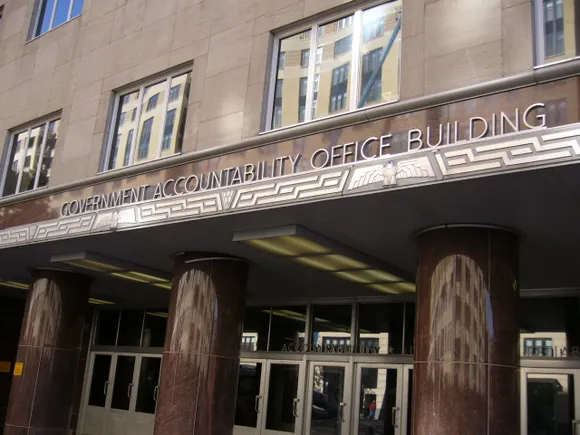
The nonpartisan Idaho Office of Performance Evaluations, which is commonly referred to as OPE, released the 129-page Idaho Home Learning Academy evaluation report Tuesday at the Idaho State Capitol after the release was authorized by the Idaho Legislature’s Joint Legislative Oversight Committee.
OPE released the evaluation report after multiple Idaho legislators signed a March 5 letter requesting the office study the Idaho Home Learning Academy’s finances, expenditures, policies, contracts and student achievement results.
The Idaho Home Learning Academy, or IHLA for short, is a rapidly growing public virtual charter school authorized by the small, rural Oneida School District.
There were about 7,600 online students enrolled at Idaho Home Learning Academy during the 2024-25 school year, many of which do not live within the traditional geographic boundaries of the Oneida School District.
New report raises questions about how supplemental learning funds are used by some families
As part of Idaho Home Learning Academy’s contract, its education service providers administer supplemental learning funds of $1,700 to $1,800 per student to families enrolled in IHLA that were paid for by Idaho taxpayer dollars, the report found. The money is intended to help pay families for education expenses, and the OPE evaluators found that the largest share of the funds were spent on technology expenses, such as computers, printers and internet access. Other significant sources of supplemental learning fund expenses went for physical education activities and performing arts expenses, the OPE report found.
However, OPE evaluators found that some families used their share of funding for tuition and fees at private schools and programs. Some families also used their funds for noneducational board games, kitchen items like BBQ tongs, cosmetics, a home theater projector screen, video games, Nintendo Switch controllers, a Meta Quest virtual reality headset, movie DVDs, weapons, sights lasers, shooting targets, remote controlled cars, hoverboards, action figures, smartwatches, water park tickets and the cost of registering website domain names, the OPE report found.
Families with students enrolled at Idaho Home Learning Academy are able to access the funds though both direct ordering programs and reimbursements. The OPE report found that Idaho Home Learning Academy’s three service providers (Braintree, Home Ed and Harmony) spent about $12.5 million providing supplemental learning funds for IHLA families during the 2024-25 school year. Service providers said that some families did not spend any or all of their supplemental learning funds, and the money was retained by the service providers, not returned back to the state or school district, the OPE report found.
Idaho governor, superintendent of public instruction respond to OPE report’s findings
Idaho Gov. Brad Little called the report’s findings “troubling” in a letter released with the report Tuesday.
“We also have an obligation to be responsible stewards of taxpayer dollars,” Little wrote. “The OPE report on IHLA is troubling, especially as it pertains to supplemental learning fund expenses, academic performance, supplemental curriculum and the funding formula that enables virtual programs to receive more funding than brick-and-mortar public schools. The OPE report reveals that statutory safeguards are insufficient, oversight is inconsistent and accountability measures have not kept pace with the fast expansion of the IHLA program.”
The OPE evaluation report findings come at a time when every dollar of state funding in Idaho is being stretched further amid a revenue shortfall. All state agencies outside of the K-12 public school system are implementing 3% mid-year budget holdbacks, and the state budget is projected to end fiscal year 2026 and fiscal year 2027 in a budget deficit, the Idaho Capital Sun previously reported.
Idaho Superintendent of Public Instruction Debbie Critchfield said the report raised concerns for her as well.
“(The OPE report) also raises important questions about whether direct and indirect payments to families are a proper and legal use of funds appropriated for public schools,” Critchfield wrote in a Nov. 26 letter to OPE leadership.
The OPE evaluation report found that limited oversight and accountability create uncertainty about how supplemental learning funds paid for with state taxpayer dollars are used and whether students’ curriculum choices align with state standards and transparency requirements.
Idaho state laws and administrative rules do not specifically allow or prohibit the use of supplemental learning funds, the OPE report found. That finding was one of several “policy gray areas” that the OPE evaluation report documented.
Little concluded his letter by saying he is ready to work with the Idaho Legislature, the Idaho State Department of Education and the Idaho State Board of Education to restore meaningful accountability for the use of taxpayer dollars.
“I have carefully reviewed the recommendations provided in this report and strongly encourage the Legislature to address the loopholes in state statute,” Little wrote.
Oneida School District superintendent stresses Idaho Home Learning Academy did not break state law
In response to the OPE report, Oneida School District Superintendent Dallan Rupp, who is also a member of the Idaho Home Learning Academy School board, emphasized that the report did not find that IHLA was guilty of any misconduct.
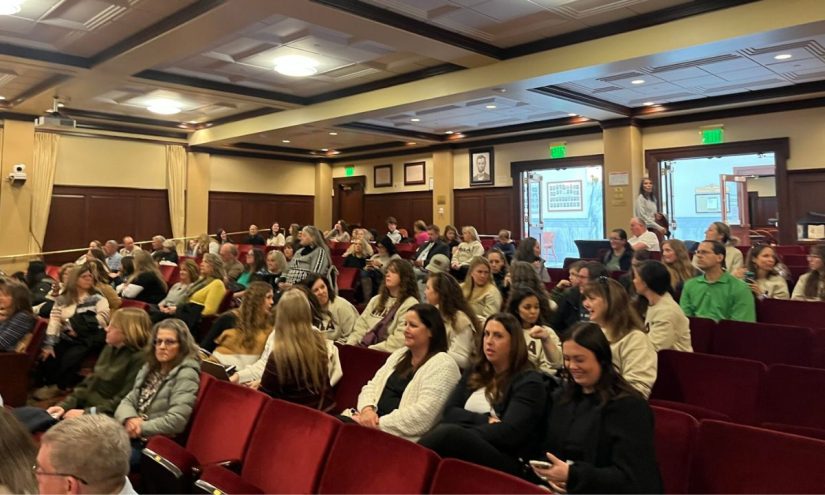
“Importantly, the OPE report did not identify any misconduct at IHLA,” Rupp said during a meeting Tuesday at the Idaho State Capitol in Boise. “This outcome underscores the effectiveness of Oneida School District’s oversight and reflects IHLA’s consistent compliance with Idaho’s laws, statutes, rules, regulations and procedures, as well as its cooperative relationship with the Idaho State Department of Education. We remain fully committed to operating within all established guidelines, just as we have in the past.”
Idaho Sen. James Ruchti, D-Pocatello, said it was beside the point that the school didn’t break any laws.
“I’m extremely concerned,” Ruchti said during Tuesday’s meeting at the Idaho State Capitol in Boise. “This is public money – public taxpayer money – and we have an obligation to make sure that it’s spent appropriately and with oversight. And so, yes, it may not have violated any statutory requirements at this point. But what I’m saying is that what I saw in that presentation caused me serious concerns about how IHLA and other online teaching institutions are able to spend public dollars in a way that was not intended.”
Idaho watchdog report found most online virtual teachers were part-time employees
OPE also found that most Idaho Home Learning Academy teachers were part-time, unlike traditional schools, and the Idaho Home Learning Academy spends much less on salaries and benefits than it receives from the state’s salary apportionment formula.
The report found IHLA was able to use the savings it realized in state funding provided to pay for staff salaries and health benefits to instead use at IHLA’s discretion or to pay its education service providers.
The OPE report found that most of IHLA’s teachers are part-time employees and do not provide full-time direct instruction to students. Instead, the report found that Idaho Home Learning Academy’s kindergarten through eighth grade instructional model relied heavily on parent-directed learning and that IHLA teachers typically offered feedback and oversight instead of direct instruction.
According to the report, IHLA reported $46.3 million in total expenditures from state funds during the 2024-25 school year. While traditional brick-and-mortar public schools’ largest expenditures are for staff salaries and benefits, the report found that only 36% of IHLA’s expenditures went to staff. A larger portion – 45% of IHLA’s total expenditures, or $20.6 million – went to paying education service providers.
The OPE report also found that Idaho Home Learning Academy’s students lagged behind statewide averages for scores on Idaho Standards Achievement Test, or ISAT. The OPE report found 42% of IHLA students were proficient in English language arts during the 2024-25 school year, compared to the statewide average of 52% of Idaho students.
The report also found just 25% of IHLA students were proficient in math during the 2024-25 school year, compared to the Idaho statewide average of 43%.
However, the OPE report highlighted that some IHLA families interviewed for the report said they do not believe statewide standardized tests are a good measure of student learning. The report also noted that many Idaho Home Learning Academy families identified themselves as homeschoolers and said they were using IHLA by choice because they were unhappy with the quality of education in traditional brick-and-mortar schools or felt that their child’s educational needs were not being met by more traditional public schools.
Idaho Capital Sun is part of States Newsroom, a nonprofit news network supported by grants and a coalition of donors as a 501c(3) public charity. Idaho Capital Sun maintains editorial independence. Contact Editor Christina Lords for questions: [email protected].
Did you use this article in your work?
We’d love to hear how The 74’s reporting is helping educators, researchers, and policymakers. Tell us how