
Tag: Wealth

  • Stephen Ashley’s Gift and the Reputational Laundering of Elite Wealth

    Stephen Ashley’s Gift and the Reputational Laundering of Elite Wealth

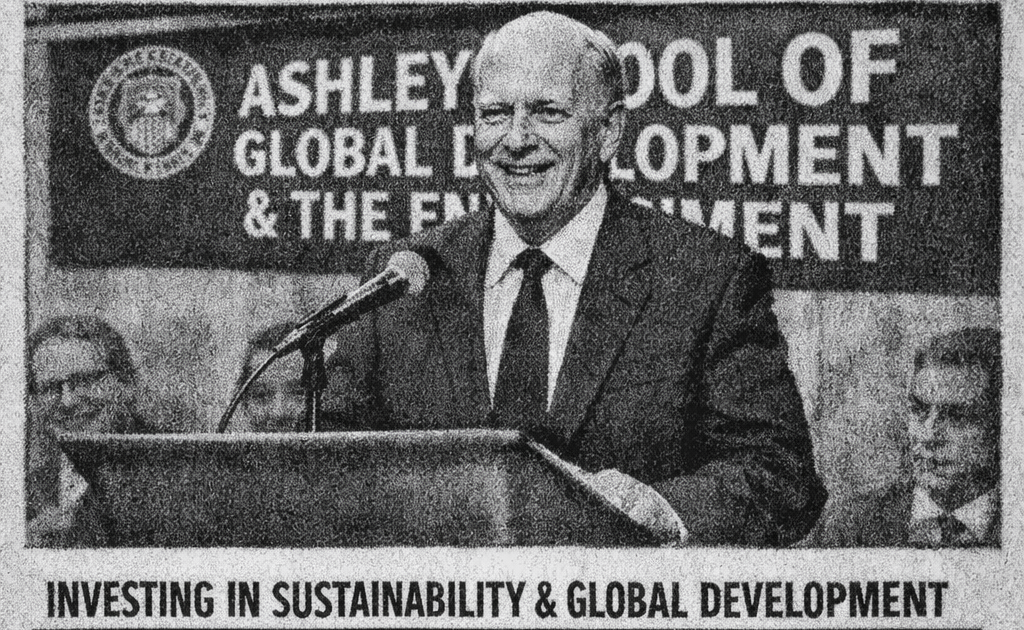
    In December 2025, Cornell University announced a $55 million gift from alumnus Stephen B. Ashley to endow the newly named Ashley School of Global Development and the Environment. The university presented the donation as a transformative investment in sustainability, global development, and interdisciplinary research. Yet behind the headlines of generosity lies a pattern that has come to define elite higher education: the use of philanthropy to launder reputations and sanitize wealth accumulated through systems that produce widespread harm.

    Ashley’s career exemplifies this dynamic. As a longtime real estate investor and head of The Ashley Companies, he amassed significant wealth. His tenure on the board of Fannie Mae, including as chairman in the mid-2000s, coincided with periods of accounting irregularities, risky mortgage practices, and systemic failures in governance. Fannie Mae’s collapse during the 2008 financial crisis devastated millions of Americans, particularly low-income and minority households, yet board members and executives largely escaped personal consequences. Ashley’s wealth, in part derived from this environment, is now being funneled into a university named for him — transforming historical responsibility into a narrative of generosity.

    The pattern extends beyond domestic finance. Ashley also serves on the Founders Council of the Middle East Investment Initiative (MEII), a nonprofit focused on private-sector development in the Middle East. While MEII frames itself as a promoter of economic growth and development, critics argue that such organizations operate within a global financial ecosystem that prioritizes investor stability and elite networks over democratic accountability or local economic agency. Participation in these initiatives may be legal, even philanthropic, but they reinforce Ashley’s image as a global benefactor without confronting the broader systemic power he wields.

    Cornell, like many elite institutions, accepts such gifts with minimal scrutiny, emphasizing the moral and intellectual good the donation enables while obscuring the histories of harm that made the wealth possible. Naming a school dedicated to equity, sustainability, and global development after a figure linked to financial crisis and speculative practices exemplifies the reputational laundering function universities serve for wealthy donors. The institution converts fortunes built in high-stakes, opaque, or socially harmful arenas into lasting prestige, moral capital, and scholarly legitimacy — all while reinforcing its own image as an engine of public good.

    This is not a question of legality. Ashley’s wealth is largely untarnished in the courts. It is a question of accountability, ethics, and institutional values. By turning wealth into permanent naming rights, universities like Cornell signal that elite power can be absolved through philanthropy, creating a structural dynamic where generosity replaces responsibility, and reputation is more durable than accountability.

    For students, faculty, and the public interested in environmental justice, social equity, and global development, the contradiction is stark. The same systems that generate inequality now fund the study and critique of inequality itself. Elite institutions benefit materially and symbolically from the work of those who profited from structural harm, even as the original consequences fade from public memory. Until universities confront this tension, higher education will continue to function as a reputational laundromat for elite wealth, transforming past systemic damage into present prestige.


    Sources

    Cornell University, “Historic Gift Endows New CALS School,” Cornell News

    Cornell Sun, coverage of the Ashley School announcement

    Federal Housing Finance Agency, Special Examination Reports on Fannie Mae (2005–2008)

    Financial Crisis Inquiry Commission materials on Fannie Mae governance

    Reuters, coverage of post-crisis shareholder litigation involving Fannie Mae board leadership

    Middle East Investment Initiative, Board and Founders Council listings

    Aspen Institute, background on MEII origins

    Source link

  • Massive Wealth Built on Soul-Crushing Student Loan Debt

    Massive Wealth Built on Soul-Crushing Student Loan Debt

    Todd S. Nelson rose from academic beginnings—a B.S. from Brigham Young University and an MBA from the University of Nevada, Reno—to dominate the for-profit higher education space. Over nearly four decades, Nelson has amassed vast personal wealth leading University of Phoenix, Education Management Corporation (EDMC), and Perdoceo Education, even as each institution left embattled students and regulatory fallout in its wake.

    Under Nelson’s leadership, Apollo Group (parent of University of Phoenix) mountains of revenue—$2.2 billion and over 300,000 students by 2006—coincided with a $41 million payday in that year alone. He resigned amid pressure over deceptive admissions practices.

    Nelson’s move to EDMC in 2007 triggered another enrollment explosion—from 82,000 to over 160,000 students by 2011—propelled by federal student aid. Annual revenues reached nearly $2.8 billion, even as employees were alleged to be encouraged to enroll “anyone and everyone” to meet quotas. This aggressive focus on recruitment came with enormous personal compensation—approximately $13.1 million annually—while students endured mounting debt and dwindling outcomes.

    A 2015 landmark settlement exposed EDMC’s alleged violations under the False Claims Act. The Justice Department accused the company of operating as a “recruitment mill,” illegally funneling federal funds through false certifications. EDMC agreed to pay $95.5 million in damages and forgive more than $102 million in student loans, affecting about 80,000 former students—averaging around $1,370 per student.Internal documents and court filings paint a grim picture: incentive-based pay for recruiters, breach of fiduciary duties, and a business model the trustee called “fundamentally fraudulent.”

    Nelson’s chapter at Career Education Corporation (later Perdoceo) echoed the same script. Campuses shuttered, including Le Cordon Bleu and Sanford-Brown, left students stranded with untransferable credits—and yet Nelson’s compensation remained soaring. In 2019, he earned $7.4 million and held about $12 million in equity.

    Whistleblower accounts from inside Perdoceo’s operations are damning. One former recruiter described pressure to enroll students “by any means necessary,” including coercive calls and emotional manipulation—often targeting vulnerable applicants with low income or lacking basic readiness. Despite those practices, Perdoceo reaped profits, with Nelson publicly touting revenue growth even as the Department of Education issued a formal notice in May 2021: thousands of borrower defense claims were pending against the company, alleging misrepresentations on credits, employment prospects, and accreditation.

    Further regulatory investigations deepened through early 2022, focusing on recruiting, marketing, and financial aid practices—yet no executive accountability has followed.

    The narrative that emerges is stark: Todd S. Nelson repeatedly led institutions to profit-fueled expansion using students’ federal dollars, while suppressing outcomes and exposing students to debilitating debt. Lawsuits, settlements, and investigative reports expose deceptive enrollment practices, false claims, and regulatory violations—but the executives—including Nelson—walk away with wealth and are rarely held personally responsible.


    Sources

    • Wikipedia: Todd S. Nelson—compensation figures and resignation amid scrutiny.

    • TribLIVE: Allegations of “anyone and everyone” being enrolled to meet quotas under Nelson’s reign at EDMC.

    • Career Education Review: Insights on quality decline amid enrollment growth at EDMC and Perdoceo.

    • Department of Justice and NASFAA: 2015 EDMC settlement—$95.5 million damages, $102 million in loan forgiveness for hundreds of thousands.

    • Bankruptcy court filings: Allegations of fraudulent business model and incentive-driven recruitment.

    • Republic Report & USA Today: Whistleblower testimony on Perdoceo’s predatory recruiting tactics.

    Source link