The University of Wollongong (UOW) and Western Sydney University (WSU) have confirmed job cut numbers, with a combined 351 staff to be cut from the institutions.
Please login below to view content or subscribe now.
Membership Login


The University of Wollongong (UOW) and Western Sydney University (WSU) have confirmed job cut numbers, with a combined 351 staff to be cut from the institutions.
Please login below to view content or subscribe now.

Western New Mexico University is looking to claw back $1.9 million in severance already paid to former president Joseph Shepard, who stepped down in January following a spending scandal.
Shepard, who led the university for nearly 14 years, resigned late last year in the aftermath of media reports that found he spent university funds to upgrade the president’s house with lavish furniture. Critics also raised questions about costly recruiting trips to Greece, Spain and Zambia that yielded very few enrollments from those countries. The Office of the State Auditor determined in November that Shepard “engaged in the waste of public funds” and found instances where his travel appeared to be “unrelated to official university business.”
But in December, after the damning details came to light, board members—some of whom had joined the president on international trips—gave Shepard nearly $2 million in severance, plus additional fringe benefits and a five-year faculty contract that required him to teach six credit hours a year, though he had the option to do so online. Shepard’s annual faculty salary is set at $200,000, down from the base salary of $365,000 he was making as president.
The agreement prompted outrage at WNMU, which is located in one of the nation’s poorest states and has many low-income students. Democratic governor Michelle Lujan Grisham subsequently demanded the resignation of the board, who complied, and has since appointed new members.
Last week, the new board voided Shepard’s separation agreement and terminated his teaching contract, arguing that the regents who struck the deal did so improperly and in violation of New Mexico’s Open Meetings Act. State officials have made similar arguments in a related lawsuit.
WNMU regents took up Shepard’s contract and separation agreement at a Thursday meeting.
John V. Wertheim, one of the new regents appointed by the governor in recent months, argued that the prior board failed to provide proper notice of the action items at the December meeting where they approved Shepard’s contract. Given the alleged failure of compliance with New Mexico’s Open Meetings Act, Wertheim argued that the board’s approval of the deal was invalid.
In two separate motions, the board unanimously agreed to invalidate the deal and terminate Shepard’s teaching contract. Board Chair Steven Neville said the agreement is now “in limbo.”
Wertheim noted that while WNMU’s board hired special counsel to advise them on the matter, there are outstanding questions, many of which he said regents would not be able to answer immediately due to both the legal complexity of the issue and because it is a personnel matter.
“I’m sure both the press and the public are going to have a lot of questions, and all I ask is that there be patience … because all of these detailed questions, we don’t necessarily have the answers today to give everyone, but we will, in due course,” Wertheim said at the meeting.
Following the vote, Shepard accused WNMU in an emailed statement to Inside Higher Ed of orchestrating a smear campaign against him.
“After serving 14 exemplary years of advancing the university, it’s troubling that this new, Governor-appointed Board has chosen this path. This is a matter before the courts. The Board’s desire to attempt to circumvent the legal process is telling in that they know they can’t win where facts matter and are doing all they can to prevent the truth from being shared,” Shepard wrote, calling the move an effort to destroy his reputation and career.
But the state’s governor praised the board’s decisions as the “right thing.”
“They recognized that public dollars must serve the public good, not pad executive pockets during difficult transitions,” Lujan Grisham wrote on social media. “This decision represents exactly the kind of fiscal responsibility and accountability New Mexicans deserve from their public institutions. Our students and their families work too hard and sacrifice too much to see their tuition dollars and taxpayer investments squandered on excessive golden parachutes.”
WNMU declined to provide a comment to Inside Higher Ed, noting the situation was a personnel matter. But according to board members’ remarks, a legal fight with Shepard is expected and a settlement remains a possibility.
Complicating the matter are two lawsuits brought by the state.
New Mexico attorney general Raúl Torrez filed a lawsuit earlier this year in an effort to void the contract and recover severance payments. Torrez argued regents breached their fiduciary duty by approving the costly agreement and violated open meeting laws at December’s meeting.
Torrez brought the initial complaint in January and amended it in February. While he initially attempted to block the payment, that effort was unsuccessful, as the funds had already been disbursed. The legal fight in that case is ongoing.
Then, in late June, the New Mexico State Ethics Commission also sued Shepard, accusing him of violating the Governmental Conduct Act, which applies to state employees. In addition to the prior complaints of lavish spending, the commission accused him of diverting $177,404 intended for an ADA-compliant walkway and ramp to instead construct a walkway and patio “for the purpose of hosting events related to his daughter’s wedding” held on campus.
(Shepard has denied that university funds were used to help pay for his daughter’s wedding.)
The lawsuit also alleges that as president, “Shepard had a practice of authorizing university expenditures from which he benefited that were only loosely connected to university purposes.”
The commission is seeking financial penalties and for Shepard to reimburse WNMU for the construction of the originally planned ADA-compliant ramp and walkway, which were not built.
Back at the university, board members say they are open to some financial compensation for the former president. Had Shepard been fired for cause, he would have received no severance. Had he been fired without cause, he would have received less than $600,000, per the contract he previously negotiated with the board in 2022.
Wertheim indicated at Thursday’s meeting a desire to reach a settlement.
“The best resolution for everyone is to get this in front of a retired judge or justice of the New Mexico Supreme Court to hammer out a fair, negotiated settlement,” he said at the meeting.
Before Thursday’s vote, Shepard was reportedly scheduled to teach two online classes this fall, including one on business ethics. However, Interim president Chris Maples told The Silver City Daily Press that he and other officials plan to meet to determine what will happen with those courses. And with the semester starting Aug. 15, they’ll need to make a decision soon.
“Whatever we do, we’ll do the best job we possibly can for our students,” he told the newspaper.

Western Sydney University (WSU) has doubled down on its commitment to make every year the ‘year of the student’ in its new 2030 strategic plan.
Please login below to view content or subscribe now.

Education Minister Jason Clare’s seat of Blaxland is considered safe, but the impacts of western Sydney’s “melting pot” population on this election remains to be seen.
Please login below to view content or subscribe now.
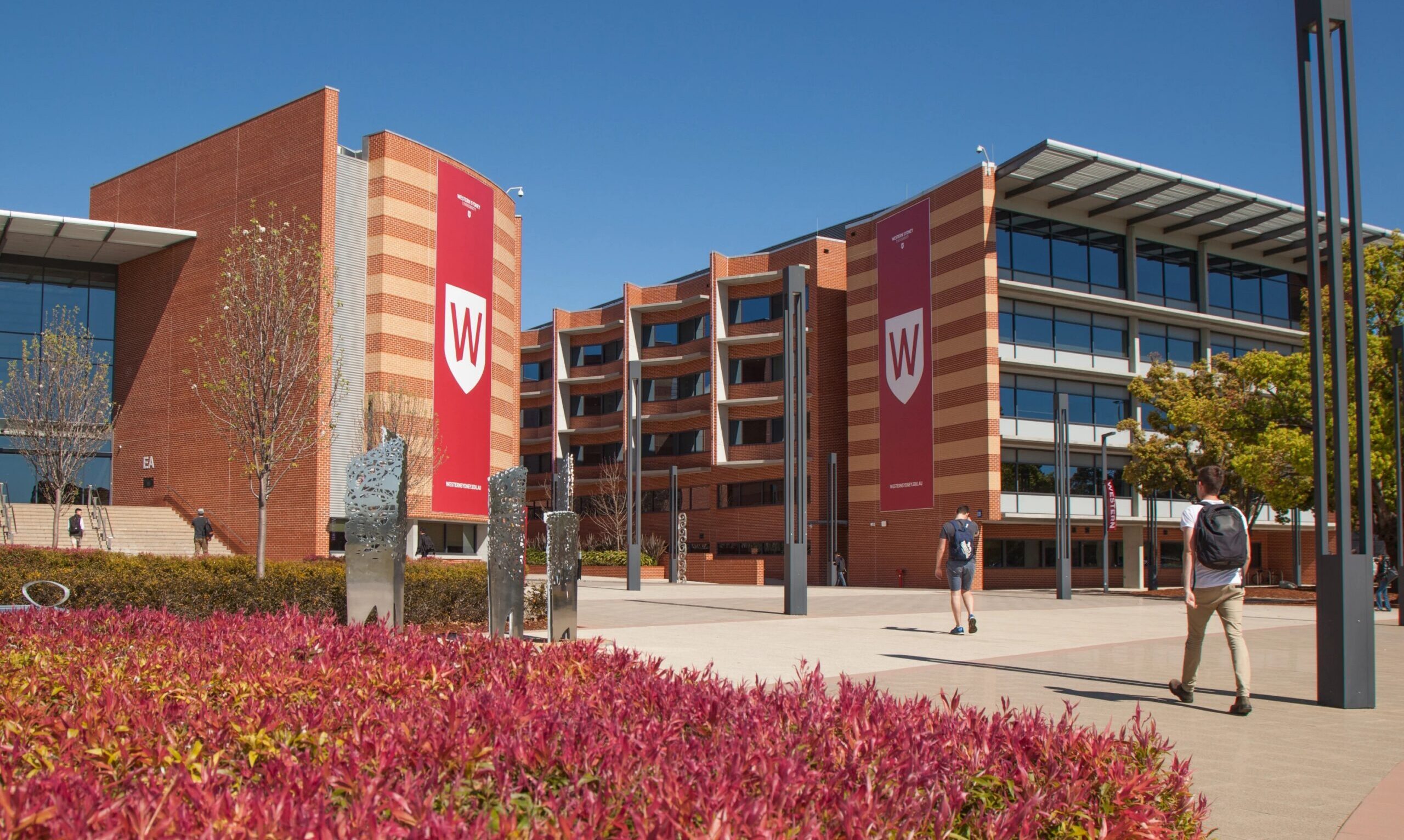
Students from Western Sydney University (WSU) have had their data accessed and likely posted to the dark web in a data breach event.
Please login below to view content or subscribe now.
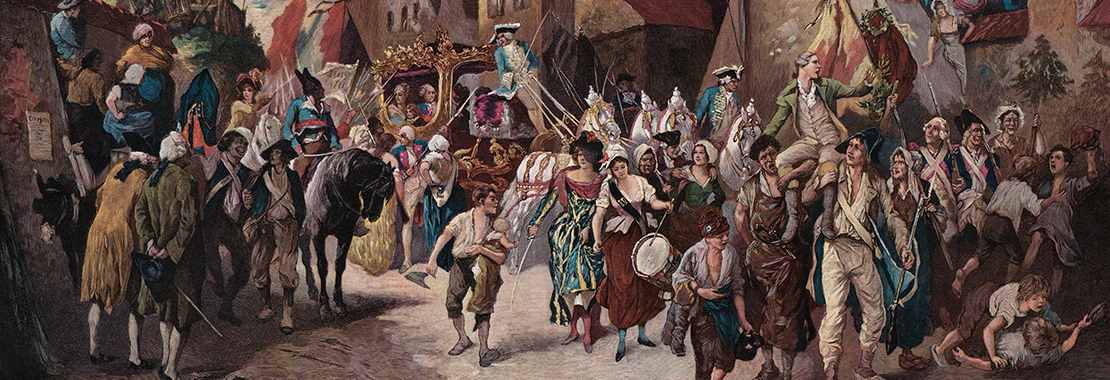
When my father, Jackson Spielvogel, first wrote the textbook, “Western Civilization,” now in its 12th edition, he hoped to craft a singular narrative that organized the complexities and contradictions of a vast historical legacy. Decades of teaching large survey courses at Penn State University led my father to value the power of primary sources in stimulating the imagination and critical faculties of his students. Today, over thirty years since the first edition of Spielvogel’s best-selling text, we launch “Major Problems in Western Civilization,” a new, first edition designed to enhance our understanding of Western Civilization at a time when its significance and relevance is being reevaluated.
With the advent of globalization, many have questioned the usefulness of historical models centered on the “West” — which often translates to Europe and the United States. While today’s scholars rightly emphasize global connections and diversity to combat historical biases and colonialist (imperialist) mindsets, the centrality of Western Civilization as a foundational model for human development cannot be overstated. The people, writings, and culture that formed the core of the “Western tradition” laid the foundation for many of today’s institutions and contemporary efforts to reshape them. The value in studying Western Civilization includes understanding the development of our current systems — political, judicial, economic, educational, religious, scientific, and cultural — and how they shape our lives, both in the United States and across the globe.
The legislative systems of the United States and European nations are governed by the rule of democracy, ideals formed to challenge historic power structures and hierarchies. New concepts of sovereignty were proposed during the Enlightenment and American and French revolutions, particularly the right of the people to govern themselves. The idea that a nation, itself a new concept in the nineteenth century, should be governed by the people and not by a divinely ordained hereditary kingship, and that individuals owned the right to participate in choosing who led their government, were radical ideas. These Western ideals led to the formation of nations supporting democratic norms, free and fair elections, capitalist economies, robust educational systems, freedom of speech and the press, fair judicial processes, religious tolerance, and open cultural expression.
However, despite the promise of freedom, many under the rule of European and American governments were forced to support the needs of the country, often suffering subjugation at the hands of racist ideologies and colonial networks. The provisional governments held by Western leaders in Southeast Asia, Asia, Africa, the Middle East, and Latin America further attest to the complexity of the Western Civilization narrative and problems inherent when freedom is not accessible to all.
In “Major Problems in Western Civilization,” students will explore the words of those who built these systems and institutions. They will learn to place people and places within historical contexts by reading first-hand accounts of those who shaped, and were shaped by, Western influence. Students will encounter poetry and art that portray the human condition, religious relics and structures embodying spiritual devotion, and texts and artworks that challenged political regimes and social norms. Letters to loved ones, tales of heroic feats, law codes and novels all capture the spirit of the age. This text introduces students to these primary sources, providing a greater understanding of how history has been crafted while stimulating a nuanced consideration of its legacy.
As students dive into this diverse narrative, they will be met by the contradictions of history. For example, while technology can advance humanity, it can also destroy it. Albert Einstein’s work on the atom revolutionized the way we viewed the world, but it also led to our greatest potential weapon, the atomic bomb. The Industrial Revolution of the eighteenth and nineteenth centuries gave us the combustible engine, allowing us to more easily travel and produce goods that have enriched many people’s lives. This economic system of mechanized production developed into a capitalist financial system that has dominated not only the West, but the entire planet.
What has been the cost of these developments on the environment, global economy, and public health? Western advancements in production, consumption, transportation, and communication have fueled globalization. However, we cannot understand the impact of these developments, or our current perspectives, without considering their origins. Similarly, the democratic ideals noted above represent attempts to ensure freedom from the tyranny that too often plagued human history.
Yet the idea of sovereignty remains contested today, and the importance of studying Western Civilization stems from its relevancy, particularly during a time when ideas of nationhood are constantly revised. What freedom looks like remains an open question for today’s students, and their role in defining freedom can only be accomplished by understanding the systems and factors that bore its very premise. “Major Problems in Western Civilization” aims to help students take a purposeful step towards reaching this goal.
Written by Kathryn Spielvogel, M.A. Pennsylvania State University, co-author of “Major Problems in Western Civilization,” 1e.
Kathryn Spielvogel earned a B.A. in history, and M.A. in Art History from The Pennsylvania State University. She continued her graduate studies in history at the University at Buffalo, SUNY, before working as a research editor on history textbooks for the past fifteen years. Passionate about historic preservation and economic development, Kathryn volunteers for several non-profit organizations while renovating historic homes and commercial buildings throughout Pennsylvania.

In late 2021, the College of Western Idaho (CWI) needed to address a consistent enrollment decline and improve student retention. With an ambitious vision to improve and optimize its technological infrastructure and student outreach, CWI sought to build a best-in-class system to enhance student engagement and elevate enrollment strategies. To ensure that data and technology were aligned with CWI’s growth objectives, the college partnered with Collegis Education to analyze their combined impact. Were its data and tech aligned for impact, or were gaps hindering progress and creating unnecessary burdens across the team?
CHALLENGES:
SOLUTIONS:
Collegis Education and CWI began collaborating on building a best-in-class student journey from the point of initial inquiry through graduation.
A comprehensive evaluation of existing CWI systems allowed Collegis to assess the college’s digital readiness, technology infrastructure, and enrollment ecosystem to understand how they aligned with its growth objectives. The partnership quickly proceeded from consultation to implementation.
Collegis prescribed a set of solutions to enhance student engagement from first contact and elevate the school’s enrollment strategies:
Collaborating closely with CWI, Collegis developed a well-defined student retention strategy that established meaningful student-advisor relationships early on, ensuring students felt supported from their first interaction onward.
By working with Collegis, CWI could focus on its student journey and how it could better use data and technology to deliver superior student engagements and reach its growth targets. This has helped not only stop, but reverse historical enrollment declines. In 2024, CWI projected year-over-year growth for the sixth consecutive academic term. The school has achieved an average year-over-year term growth of 5%, with a trendline for fall 2024 of over 9% growth.
“Our partnership with Collegis has provided expertise, speed, and flexibility in areas where we, as an institution of higher education, have been unable to improve so nimbly. Where most consultants provide an analysis and leave, Collegis follows through with ‘and this is how we’ll make that happen for you’. Trusting their recommendations is easy because I know they are signing themselves up to do the work with me.”
Tyler Brown, Associate Vice President Enrollment & Student Services, College of Western Idaho
Value-based conversations with prospective students have resulted in increased applications. Further, pre-start engagement from the advising and student success coaching teams has increased registrations from admitted students.
By fostering a culture of meaningful interaction and support for students, CWI paved the way for improved student retention. The LMS-based at-risk model has driven 19,000+ proactive student engagements and interventions in one academic year.
Within just one year of implementing these targeted strategies, CWI witnessed a remarkable in retention rates, all while alleviating the workload on faculty and staff. Similar retention strategies deployed by other Collegis partner institutions have yielded term-over-term retention rates exceeding 90%, underscoring the effectiveness of our approach.
“Whenever we want to try something new or have a challenge we need help with, my first thought now is let’s call Collegis and see if this is something they can help us with.”
Denise L. Aberle-Cannata, Provost, College of Western Idaho
With a proven retention strategy and access to a proactive model, CWI can now build out its internal retention capabilities and plans to take over the student success coaching function.
CWI’s commitment to embracing change and being agile is demonstrated by the school’s evolving partnership with Collegis to exceed industry best practices and realize sustained growth. Ongoing services and incremental work are targeting LMS initiatives to stabilize, standardize, optimize, and transform CWI’s instance of Blackboard Learn and redesign its new student orientation, among other things.