This audio is auto-generated. Please let us know if you have feedback.
WASHINGTON — The momentum for providing all students access to meaningful career and college pathways is growing, but hurdles such as funding, teacher training, reluctance to change and other factors stand in the way, said speakers at the National Pathways Summit on Thursday.
Experiential learning about careers is what students, families and educators want. Industry leaders also want to employ workers with job skills and essential abilities like problem solving, collaboration and resilience, the speakers told the 300 summit attendees.
And these skills and abilities are not just desirable, but critical to the health of the economy, said Stanley Litow, chair of the National Pathways Initiative, a bipartisan federation of students and leaders from education, business, government, politics and advocacy organizations that promote promising K-12 and higher education career and college preparation programs.
“From the business community standpoint, there is an enormous amount of pressure in the labor market around the skills area,” said Litow, a former deputy schools chancellor for New York City Public Schools and former president of the IBM Foundation. He is currently a professor at Columbia University’s School of International and Public Affairs.
Litow said that by 2030, over 70% of the new jobs created will require some form of postsecondary education, which includes credentials, apprenticeships, two-year and four-year degrees, and other continuing learning programs.
But to make career and college preparation successful for students and industries, the education and business communities need to partner to align their needs, Litow said. “We have to break down the barriers, we have to collaborate, we have to work together.”
Successes and challenges
Randi Weingarten, president of the American Federation of Teachers, and John B. King, Jr., chancellor of the State University of New York and a former U.S. education secretary, both noted that there’s a high level of agreement across the country that workforce preparation in K-12 and higher education is important.
They also pointed to several successful programs that are helping students gain the skills necessary for their chosen occupation. King, for example, highlighted the Real Life Rosies program at Mohawk Valley Community College in Utica, New York — a 12-week pre-apprenticeship program that helps women gain advanced manufacturing skills.
But Weingarten and King also noted obstacles that are stunting students’ access to skill-based learning.
For one, K-12 school systems “are really terrible at change,” Weingarten said, adding that they “only change when an accountability system changes. And so the problem is we have a really outdated accountability system.”
Weingarten also said that school systems tend to be risk-averse. “People get blamed” if an initiative isn’t 100% successful, she said. That’s why school accountability systems need to be revised, “to give people permission to do something different.”
King said one obstacle is that there’s a culture challenge. Some people think that a liberal arts education and career readiness preparation programs are in conflict with each other, he said. “Sometimes people react against talk of careers, because it seems that it is making education just about the job,” he said.
King also said leaders from all industry sectors need to voice support for education and prioritize learning as an investment, as well as work on solutions to barriers. “We need the business community nudging people on both sides of the aisle to stand up for education and stand up for this vision we’ve been talking about today,” he said.
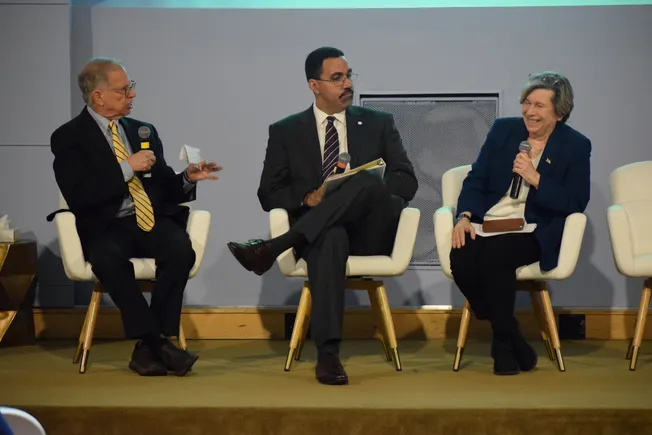
Reo Pruiett, Rashid Ferrod Davis and Don Haddad speak about the P-TECH approach to connecting K-12 students with college and career experiences during a panel at the National Pathways Summit at Gallaudet University in Washington, D.C., on May 8, 2025.
Permission granted by National Pathways Initiative
Two diplomas by high school graduation
Several speakers during another panel discussion highlighted one approach that is helping high school students graduate with both high school and associate degree diplomas while also gaining career skills and connections to potential employers through mentorships, paid internships, and other on-the-job experiences.
The P-TECH 9-14 school model was created by IBM to encourage public-private partnerships to give high school students specific workplace skills while they earn both diplomas. The first P-TECH school was launched in New York City in 2011.
Reo Pruiett, chief programs and engagement officer at Communities Foundation of Texas, focuses on improving K-12 and higher education outcomes. She calls the P-TECH approach “game changing.”
She said the program has helped students gain upward economic mobility and has “demystified” the college experience for students while they are still being supported as high schoolers.
“I think that’s one thing about P-TECH; It allows us to make sure our students are prepared to dream and not to just settle,” she said.
Don Haddad, superintendent of St. Vrain Valley School District in Colorado, credits the program for increases in the district’s graduation rates and reductions in the dropout rates, which now stands at 0.4%. He also cited an increase in the number of students participating in extracurricular activities. Students in the district have the opportunity to study career pathways for computer information systems, cybersecurity, medical and bio sciences, education and more.
“If you create the opportunities, every child is smart enough to systematically move through that system,” said Haddad, who is in his 17th year as the district superintendent.
But Pruiett, Haddad and Rashid Ferrod Davis, the founding principal of the Pathways in Technology Early College High School in New York City, said there are some pain points.
Pruiett said some Texas rural school districts don’t have access to a variety of business partners that some urban areas do, which can limit P-TECH students’ opportunities for on-the-job skill development. In those instances, some rural districts partner with each other to share industry partnerships and other resources.
Another workaround for the lack of business partners is to coordinate with other industries that may offer similar skill-building opportunities. For example, if there are no nearby hospitals, nursing homes may be able to offer related experiences to students interested in the medical sciences.
Likewise, hospitals may be ideal settings for on-the-job experiences for a variety of careers, such as medical sciences, hospitality and accounting. School districts are also potential partners for hosting interns, Pruiett said.
But the state, Pruiett said, is always looking for more partners to meet the demand for real-world job experiences for students. “So if you know someone in Texas, let us know.”
LOS ANGELES — Scattered among the shrubs on the southern border lie belongings migrants left behind — toothbrushes, water bottles, baseball caps. Some of the owners forged north, crossing the boundary undetected. Others were apprehended or succumbed to dehydration, drowning or one of the unimaginable dangers in the harsh desert that straddles Mexico and the United States.
Angélica Reyes survived. At nine months old, she made the journey that could have claimed her life just as it started.
Since 1994, approximately 10,000 migrants have died in the borderlands. That year, the North American Free Trade Agreement (NAFTA) took effect. Designed to open trade between the United States, Canada and Mexico, the now-defunct policy has faced criticism for depressing Mexican wages. Their income flatlining, Reyes said, her parents left the city of Guadalajara, in the western part of Mexico, and headed with her to Los Angeles. They did not have authorization to live in the United States.
Reyes is now 32, though she remembers knowing she was undocumented as early as first grade.
“My mom was very cognizant of the discrimination and the obstacles that I would face throughout my life,” she said. “She made it clear, like, ‘You can’t mess up. You need to be twice as good to get half of the respect. You need to really prove that you earned your spot.’”
To do that, Reyes earned the good grades that set her up to become a history teacher for the Los Angeles Unified School District. She is one of about 15,000 teachers — and among the more than 835,000 undocumented people — who have received temporary permission to live, work and study in the United States through an Obama-era program known as Deferred Action for Childhood Arrivals (DACA). Women represent over half of DACA recipients, whose future in this country has been under threat by legal challenges to the program’s existence and the anti-immigration agenda of President Donald Trump.
https://datawrapper.dwcdn.net/nA5Cv/10/
If DACA ends, the goal of ongoing litigation, 700 education personnel, including teachers and teacher aides, would lose their jobs each month for two years as their work permits are revoked, according to FWD.us, an immigration reform organization. In California, the state with the most DACA recipients, 200 educators would lose their jobs monthly. In Texas, 100 would.
DACA-recipient teachers relate firsthand to the estimated 620,000 undocumented K-1 2 students, who confide in them about their experiences in immigrant families. They show youth that regardless of legal status, it’s possible to attain one’s professional goals. Many of these teachers are also activists, fighting for their students, themselves and other marginalized people. They see themselves as assets to schools.
“My immigration status inspires both my undocumented and documented students because they know all the obstacles that are faced by folks with my immigration status can be overcome,” Reyes said. “They know that if I could do it, that’s something that they could do as well.”
Without undocumented teachers, educator shortages across states could worsen. California has spent about $1.6 billion since the 2016-17 school year to tackle its teacher shortage. Still, the state issued 11 percent fewer teaching credentials between the 2021-22 and 2022-23 school years. Last year, it enacted legislation to eliminate barriers to entry, dropping a standardized test teaching candidates had to pass to demonstrate competence in math, reading and writing. But since undocumented immigrants aren’t widely perceived to be career professionals, the fact that schoolchildren nationwide depend on them has received scant attention in the broader immigration debate.
Maria Miranda, elementary vice president of the United Teachers Los Angeles (UTLA) labor union, said undocumented teachers “bring a different perspective to the table, a different skill set.”
Randi Weingarten, president of the American Federation of Teachers, the nation’s second largest teacher labor union, said DACA recipients in classrooms have strengthened the United States.
“They are role models, like all teachers, and should be treated as such, but instead, they are made to feel uncertain and fearful as their protections are challenged in court and as the Trump administration promotes mass deportations, even from sensitive locations like schools that were once considered off limits,” Weingarten said. “Immigration reform can’t be used as an excuse to rip teachers out of classrooms, where they are so desperately needed.”
Reyes at 1 year old with her father. (Angelica Reyes)
When Reyes was about to register for the SAT during her senior year in high school, one misinformed guidance counselor asked her why she planned to take the college entrance exam, insisting that higher education was off limits to undocumented students.
“I was devastated. It broke my heart,” Reyes said. “I remember crying and telling my mom, ‘I worked hard, for what?’”
Since 2001, however, California has extended access to in-state college tuition to undocumented students who have lived there long term. Unaware of this law and under the assumption that her counselor was correct, Reyes missed the deadline for the SAT and for the application to University of California schools, so she enrolled in a community college she could afford, a common path for many undocumented immigrants.
Then, in 2011, a state law was enacted that made her cry tears of gratitude: the California DREAM Act. The policy allows undocumented immigrants who entered the United States before they were 16 to obtain financial aid if they’ve earned qualifying credits at California schools. These young people have been nicknamed Dreamers after the Development, Relief, and Education for Alien Minors (DREAM) Act, a 2001 federal bill that would have given them legal status had it succeeded.
Reyes said that when she decided to apply to the University of California, Los Angeles (UCLA), a community college counselor took in her light brown skin and wavy black mane and without so much as seeing the 4.0 GPA in her transcript, told her to apply somewhere less competitive.
“I’m a competitive student!” Reyes recalled balking. “She opened my chart and she was, like, ‘Oh, you actually are.’ Her tune changed so quickly. It was really infuriating because if I had believed her, like many students believe counselors, I would have not gone to UCLA.”
In college, Reyes had to make a choice about her career path. Her research project on youth activism at Abraham Lincoln High School, where she graduated in 2010, had drawn her to education. “I realized that’s where I was needed,” she said.
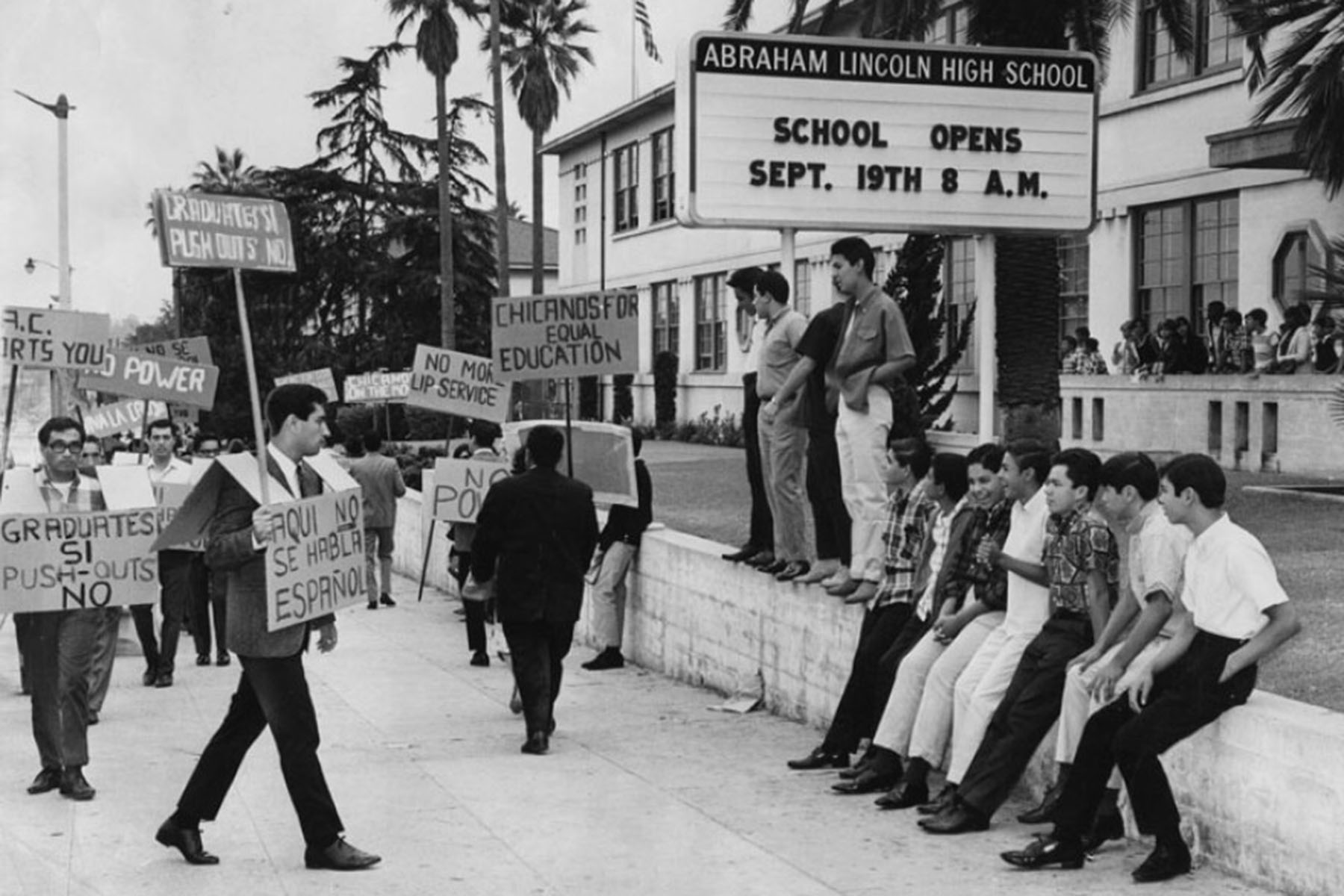
It was at Lincoln High in March 1968 that students spearheaded the protests known as the Chicano Blowouts or East Los Angeles Walkouts. With signs stating “School Not Prison” and “We Are Not Dirty Mexicans,” almost 15,000 youth from Lincoln and other schools in historically Mexican-American East L.A. walked out of classes for a week to protest their substandard education.
Chicano student walkouts in front of Abraham Lincoln High School in East Los Angeles during the 1968 blowouts. (LAPL)
Back then, students could be paddled for speaking Spanish, and with few advanced courses at Eastside schools, they were routinely steered to vocational classes like auto shop. These inequities contributed to a 60 percent dropout rate in the area. Jailed for their activism against these circumstances, the teenagers garnered community support that ushered in sweeping policy changes — bilingual instruction, ethnic studies and more Latino teachers.
Today, the carnicerías, bungalow homes and palm trees along North Broadway Avenue, leading to 93 acres of green hills, offer no hint of the past tumult, but a mural at Lincoln commemorates the walkouts of nearly six decades ago.
Through her research, which also explored youth activism of the 2010s, Reyes learned that contemporary Lincoln High students continued to have unmet needs, such as support applying for college financial aid or accessing legal services as members of immigrant households. So when Lincoln High teachers asked if she wanted to develop a space to serve students, Reyes threw herself into the effort. The Paula Crisostomo Dream Center — named after a lead activist of the Chicano Blowouts and the inspiration for the 2006 film “Walkout” — opened at Lincoln in 2015.
“We established programming for immigrant students, for immigrant parents. We did immigrant and educational history,” Reyes said. “It’s still a resource for students at Lincoln, and we’ve expanded it to several other schools.”
Working at the Dream Center for three years convinced her that teaching was the best way to reach undocumented and marginalized youth. Rather than dismiss them, as she had been dismissed by school counselors, she would inspire students to excel academically regardless of legal status. In 2012, four years before she graduated from UCLA with a bachelor’s degree in sociology and six years before she earned her master’s in education from the university, DACA enabled undocumented students like herself to become career professionals.
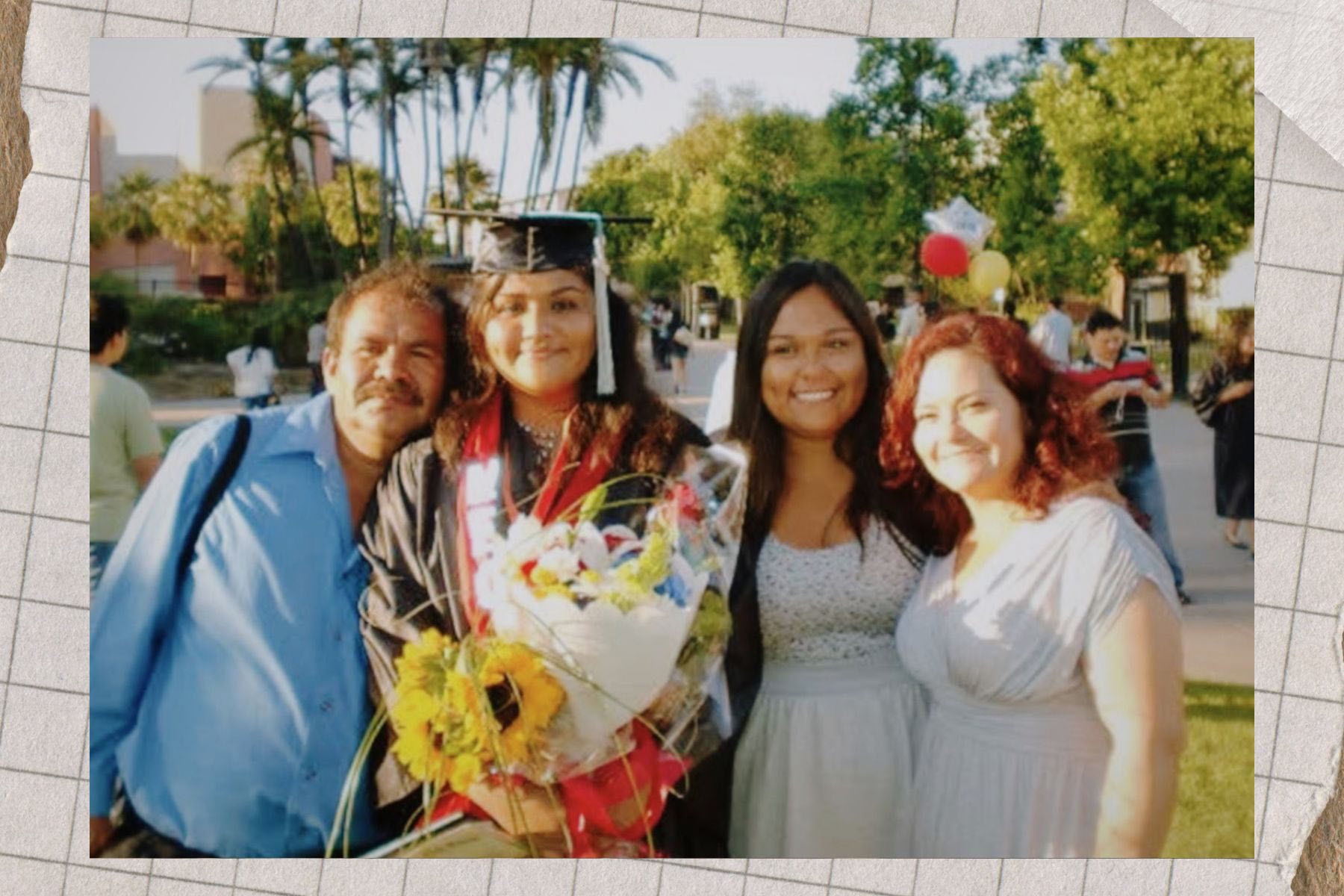
Reyes surrounded by family at her high school graduation. (Angelica Reyes)
It’s complicated: Those two words capture Reyes’ feelings about DACA. Although the program allowed her to teach, she has long viewed it as flawed, exploitative and a “constant reminder” she isn’t “fully accepted.”
DACA stems from the activism of undocumented college students frustrated that the DREAM Act failed and that their immigration status would limit their potential, said Jennifer R. Nájera, author of “Learning to Lead: Undocumented Students Mobilizing Education.” Fighting for immigrant rights, they found a purpose.
Like the DREAM Act, DACA was reserved for young people who came to the United States as children and didn’t have criminal histories. “They had to graduate from high school or college or go to the military, show ‘good moral character,’” said Nájera, an associate professor in the Department of Ethnic Studies at the University of California, Riverside. Instead of citizenship, Obama’s executive order “provided temporary relief from deportation, a two-year relief specifically, that could be renewed, and a work permit, which was a big deal.”
While DACA recipients cherished their professional opportunities, some contended that the policy cast them as second-class citizens, Nájera said.
That includes Reyes.
“I knew it was a Band-Aid,” she said. “In fact, when I first started teaching, my DACA expired because of an issue with the application. They had asked me if I was in a gang, and apparently I didn’t check off the X hard enough, so I wasn’t hired at the beginning of the year. I remember feeling this immense frustration.”
Los Angeles Unified employs about 300 DACA-recipient school personnel, according to Miranda of the UTLA labor union. As Reyes’ teaching career started, DACA weathered the first of multiple legal challenges. Trump rescinded the program during his first term, a move the Supreme Court later blocked; at the time, Reyes told her students about possibly losing her job. Since then, she has endured several other threats to DACA , though she’s now pained to tell her students that the program isn’t accepting new applicants.
DACA, she said, must be replaced with a sustainable alternative.
In a December interview, Trump said, “We’re going to have to do something with” DACA recipients. “They were brought into this country many years ago” and “in many cases, they’ve become successful.”
But that sympathy has been absent from his immigration policies since he resumed office. He has issued an executive order prohibiting undocumented college students from receiving in-state tuition. He has also lifted restrictions on immigration enforcement in “sensitive locations” such as churches, hospitals and schools, prompting parents nationwide to keep kids out of class.
A protester waves the Mexican flag during a demonstration for immigration rights outside Los Angeles City Hall on February 5, 2025. (Qian Weizhong/Getty Images)
“A lot of times, the children are U.S. citizens and the parents are concerned,” Reyes said. “But I’ve had students who shared that their parents are U.S. citizens, and they’re still scared because they know that U.S. citizens are also caught up in these raids. So, this isn’t about criminality. It’s about the targeting of Brown folks.”
Immigration and Customs Enforcement (ICE) agents and other federal authorities reportedly detained or deported at least 10 U.S. citizens, including children, in the first 100 days of Trump’s second term.
Last month, the California state superintendent presented Senate Bill 48 to limit ICE appearances at schools as absences have spiked — and schools could lose millions of dollars since their funding is tied to average daily student attendance. About half of California children belong to families that include at least one immigrant parent, while one in five live in mixed-status families with at least one undocumented parent.
“It’s very taxing emotionally for our members and our students,” Miranda said of ICE enforcement. “We have students at the elementary level who are terrified of seeing anyone in uniform. Some of them are so young that they don’t know the difference between the police and immigration. It’s a very scary moment.”
When Trump targeted DACA during his first term, Reyes warned in a Los Angeles Times opinion piece that disbanding the program could upend public education. But now she says her students deserve more than DACA’s “breadcrumbs.”
“We need to fight for something new because my kids want to be chefs and doctors and lawyers, but they’re being held back by their immigration status,” she said. “It’s excruciating in two ways: One, I want my students to have the opportunities that they deserve to serve the community. And, two, I don’t know when I’m going to be taken from them because of my own uncertainty.”
For now, she knows that her presence makes a difference at her high school. Los Angeles Unified has an immigrant student body of about 30,000 students, according to UTLA. Of those, one in four is undocumented. After Reyes shared her immigration status with students during a recent lunchtime conversation, she said a ninth grader confessed that she planned to quit school because she, too, is undocumented. Learning Reyes managed to become a teacher made the girl reconsider.
“It was really beautiful to see that, like it reignited her hope to have a bright future,” Reyes said.
Although the risks of revealing her status frighten her, her conscience compels her to, Reyes said. She quoted Mexican Revolution leader Emiliano Zapata: “It’s better to die on your feet than to live on your knees.”
Staying silent as the president attacks immigrants would make it hard for Reyes to face the youth in her life — her son, especially.
Reyes after receiving her master’s degree in education from UCLA. (Angelica Reyes)
Whenever a state turned red on Election Night, Nathan Reyes felt his anxiety shoot up. Still, he held out hope Kamala Harris would win. Then the Electoral College math made it plain: Donald Trump would be president again.
Although he’s a U.S. citizen, Nathan wondered what lay ahead for his undocumented relatives under a president promising mass deportations.
“I feel worried for them because if they get deported, what am I going to do?” he asked. “Where am I going to stay?”
So, he began to plan. He and his family would “have to pick our poison” — stay in a country hostile to their presence or self-deport together to Mexico regardless of citizenship status.
That her son, with a pile of ringlets and a round cherubic face, was even considering these options stunned Reyes. Nathan is in seventh grade.
“I was like, ‘Oh, my God, this kid is 12,’” Angélica Reyes said. “Why is he talking about this?’”
Rummaging through a bin of childhood possessions in her mother’s bedroom last year, Reyes found a poem she wrote in fourth grade about her fear of police. Her parents were street food vendors, an occupation California criminalized until 2018, so Reyes realized growing up that one brush with the law could have seen them deported.
Just as she did not have a childhood free of deportation fears, neither has her son.
Nathan, now 13, is hardly the only youth pondering the possibility of a relative’s departure, according to Lisette Sanchez, a psychologist in Long Beach, California. She said children are leaving school with “Know Your Rights” cards advising them of their civil liberties during ICE encounters, but they may not understand the information.
“They’re just feeling fear,” she said. “They’re being told something’s gonna happen. So mental health wise, you’re looking at chronic anxiety. You’re looking at hypervigilance.”
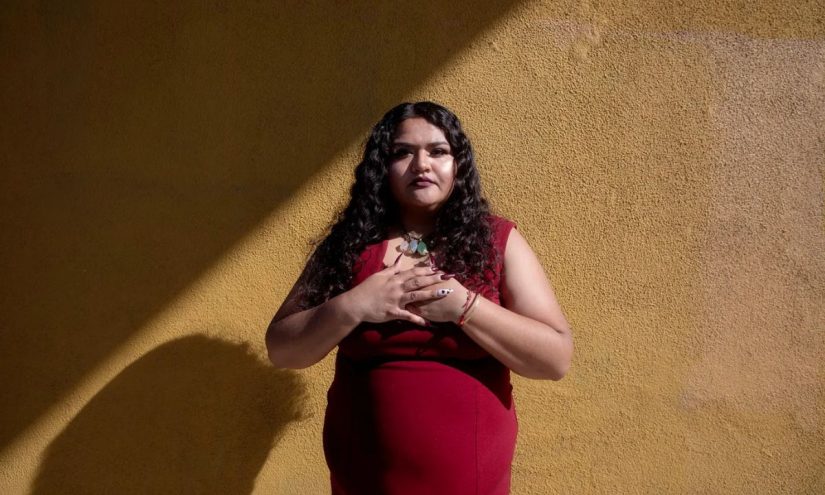
Angélica Reyes and her son Nathan Reyes in front of Abraham Lincoln High School in East Los Angeles, California, on February 9, 2025. (Zaydee Sanchez/The 19th)
To gain some sense of control, they may overconsume social media, leading to racing thoughts, rapid heart rate and sleeping difficulties.
“It’s this chronic nonstop anxiety because the state of uncertainty feels never-ending, and in many ways, it is not ending, right?” Sanchez said. “There’s different news every day.”
By speaking openly with children, parents can help them better manage stress, she said. Teachers, if they’re permitted, can broach the topic of immigration. Nathan appreciated how his Spanish teacher led a class discussion after the election.
“Sharing your feelings and emotions and finding that a lot of other people are feeling very similar can bring comfort to you,” he said.
Reyes gave birth to her son while she was in college and briefly wed to his father. She applied for legal status as an immediate family member of a U.S. citizen, her spouse. But years passed before the federal government responded to her request, she said. By then, her marriage had ended.
“I don’t think people understand how long the path to citizenship can be, what it looks like, how costly and time-intensive it is,” Sanchez said.
Reyes, who has not remarried, said being undocumented seeps into every aspect of her life, including romantic relationships. She feels obligated to tell prospective partners about her status.
“I remember to always be upfront, like, ‘Hey, I’m undocumented. I don’t want you to think I’m going to use you for papers,’” she said.
Reyes lives in one of the country’s 4.7 million mixed-status households, which include undocumented individuals and people with legal status or U.S. citizenship. If she gets deported, she has arranged for others to care for her son.
Her sister, two years younger, is a U.S. citizen. Asked if she resents that twist of fate, Reyes said, “I’m happy that she gets to be safe. I think that there’s a lot of pain and guilt for her.”
Her sister realizes, Reyes said, that her entire family could be taken away.
Reyes and her son Nathan doing a science experiment when he was little. (Angelica Reyes)
Should she be forced out of the only country she considers home, Reyes wants her son to know this: “I would never willingly leave you. I am dedicated to you. I love you, and I will always be working as hard as possible to get back to you.”
For Nathan, it is mind-boggling that anyone would want his mother out. He doesn’t understand why politicians demonize immigrants. Trump launched his first presidential campaign calling them criminals and continues to malign them.
“My mom has done a lot of good for her community,” Nathan said. “She has organized a finders keepers closet where people who don’t have some resources they need, like canned food or clothes, can take what they need.”
Just as Nathan defends her honor, Reyes vouches for her parents. Her mother is now a nail technician and her father is a food vendor. Growing up, she said, she watched them visit the sick, volunteer at churches and fundraise for the poor.
“Whenever they saw a need, they stepped up, and they didn’t wait for someone else to help,” she said.
She’s hurt when people sympathize with Dreamers while disparaging their parents, that the immigration system paints family members as saints or sinners. The DACA recipients she’s researched feel similarly, Nájera said.
“Many of the students that I interviewed were always talking about their parents,” Nájera said. “They did not want their stories to be divorced from their parents and their family stories. These families, they’re units.”
But the Dream Act caused a migrant generational divide, insinuating that those who arrived in this country as children deserve citizenship, while their parents and others who arrived as adults do not, Nájera said.
Angélica Reyes helped paint the red and yellow skulls on the mural across the street from Abraham Lincoln High School in East Los Angeles, where she graduated. (Zaydee Sanchez/The 19th)
Migration often occurs out of necessity. For example, after NAFTA took effect in 1994, U.S. agricultural exports flooded Mexico, displacing workers, according to Edward Alden, a distinguished visiting professor in the College of Business and Economics at Western Washington University. Four years earlier, over 4 million Mexican migrants were in the United States, a figure that ballooned to nearly 13 million — around 9 percent of Mexico’s population — by 2008.
Reyes said NAFTA crushed the bakery business her father’s side of the family owned because it could not compete with the U.S. companies that swooped in. Her parents migrated north to earn higher wages.
Today, economic instability is but one of the reasons that motivate migrants.
“A lot of the Venezuelans are leaving Venezuela because it’s a violent, dangerous place, and the government has destroyed the economy in different ways,” Alden said. “Same thing out of Central America. These are people who aren’t necessarily leaving for economic reasons. They’re doing it for personal safety reasons.”
Reyes said she has Central American students who fled horrors. She wants them to feel safe in the United States, and the fact Los Angeles Unified has pledged not to cooperate with immigration officials voluntarily provides some comfort. Run by a formerly undocumented superintendent, the sanctuary districtblocked Homeland Security agents from entering two schools in April.
The fear of raids on campuses has traumatized her students, Reyes said. “It’s so difficult to convince my students that they are worthy of love and that they’re worthy of respect and that they deserve civil rights.”
It is equally difficult to keep advocating for herself, she said. But as the threat of deportation looms, she has no choice but to keep fighting.
“It’s hard to know that I can’t earn citizenship and that I can’t give my kid stability or safety,” she said. “I feel like if I could earn it, I would have three citizenships. I would have put in the work.”
One of the realities of the Trump administration is that decisions with vast domestic and global consequences can be implemented and reversed at the drop of a hat. This has been the case with international trade. President Trump has imposed steep tariffs on other countries only to relent when the market takes a turn. It’s also been the case with staffing. Trump defended national security adviser Mike Waltz when it was revealed he accidentally added a journalist to an app chat about a military strike in Yemen. Weeks later, Trump removed Waltz and gave him another job.
This is also true for student visas. Trump has upended the academic world with his threats to Harvard and other universities, and the arrests of students for pro-Palestinian protests. Harvard was even forced to hand over information about international students to federal officials.
Trump has also cracked down on student visas. The Trump administration revoked more than 1,800 visas earlier this year, and many students went into hiding after the news broke. Federal officials restored roughly 1,200 visas after significant public pressure.
International students can expect more erratic decisions as the Trump administration moves past its first 100 days. These changes could cause significant stress and anxiety to both intentional students and administrators. I’ve designed a primer for both international students and administrators on what to expect as we move forward and how to prepare for a time when change is the only certainty.
Unpredictability Will Become The Norm: In the past, there was a defined process for becoming an international student. Students’ expectations have been upended in just a few months. This will make life difficult for universities and their staff; many international students, particularly those interested in medicine, may choose not to come to the United States due to these changes. This will have ripple effects across the academic world; research and innovation could stall without an infusion of the best and brightest; American companies could lose a pipeline to strong potential hires, and scientific and medical breakthroughs will decline.
International students can expect more erratic decisions as the Trump administration moves past its first 100 days
Shaun Carver, International House, UC Berkeley
Threats to Higher Education Will Upend Academic Life: Federal funding freezes are now a reality for higher education, particularly at schools with robust diversity, equity, and inclusion (DEI) initiatives. The administration just froze $1 billion for Cornell and $790 million for Northwestern. These support cuts will make American universities less attractive to global talent.
Preparing to Study in America Will Look Different: Moving to a different country has always been challenging. Students need to navigate a new culture, learn a different language, and handle tasks that are challenging for domestic students, such as finding housing and making social connections.
Students will now need to factor in other challenges, such as potential threats to their visa status, the risk of arrest or deportation for speaking their mind, and also distrust in a culturally divided country. International students should be aware of their legal rights before coming to the United States. Administrators should be prepared to support them and provide them with relevant legal resources.
STEM Could Be Hit Hard: In the past, federal regulators targeted humanities departments, perceiving them as liberal. Science, technology, or medicine were seen as essential to society and global status, and were shielded from scrutiny. The Trump administration had added science and technology disciplines to its target list and reduced grants for critical research.
Roughly 16% of Harvard’s total revenue comes from sponsored support, including grants and federal funding. But 53% of the revenue for the School of Public Health, 35% of the revenue for the School of Medicine, and 37% of the revenue for Engineering and Applied Sciences come from federal grants. Many of the funding cuts are for STEM research programs, including those related to artificial intelligence (AI). The administration is also slashing science-related funding at other schools. In addition to possible brain drain at universities, these changes could affect America’s ability to compete, keep pace with other countries that are embracing AI, maintain its populace’s health, and more.
The Big Picture:
It’s a tenuous time for both university administrators and international students. Despite these difficulties, American universities remain among the best in the world, and many have deep financial resources. Schools are getting creative; Harvard’s staff has agreed to a pay cut to support the university.
The best thing international students and administrators can do is ensure they are prepared, closely monitor changes and developments, and finally encourage those in power to make changes. Transparent and consistent policies, along with stronger protections, are needed now to restore confidence among international students and maintain US leadership in global education.
What’s Working in 2025 (From Both Sides of the Desk)
Ever wonder if enrollment professionals and students actually speak the same language? Fresh data from RNL’s 2025 Marketing and Recruitment Practices for Undergraduate Students and the forthcoming 2025 E-Expectations reports reveal some fascinating alignments (and a few mismatches) between how we recruit and how students actually make decisions.
The human touch still rules (surprise!)
Remember when we thought Zoom would replace campus tours? Well, the data tell a crystal-clear story that shows the importance of face-to-face connections.:
In-person meetings hit 100% effectiveness across all institution types
88% of students who visit campus find it helpful
College fairs are crushing it with 85% helpfulness ratings
Translation: In our AI-everything world, humans still want to talk to actual humans. Revolutionary, right?
Digital sweet spots (when we get it right)
Here’s where it gets interesting. Both students and enrollment leaders agree that digital works best when it’s personal and purposeful.
What’s working:
Mobile-responsive websites: 100% effectiveness at private institutions (but only 77% are using them – make it make sense!)
SMS messaging: 100% effectiveness across the board
Personalized videos: 96% effectiveness when used (but only 49% of private institutions are creating them)
Student connection platforms: Up to 100% effective when used properly
The email plot twist
Breaking news: Students read your emails!
89% engage with college emails
88% find them helpful
96-100% effectiveness rating from institutions
61% either like or expect personalized experiences
The secret sauce? Personalization that doesn’t feel like it came from a robot.
The AI elephant in the room
Some interesting gaps here:
AI chatbots: 74% of students find them helpful (and 68% are using them)
Live chat: 79% helpful (71% usage)
Digital advertising: Up to 100% effectiveness for institutions
Key insight: Students are more open to AI than we think—they just need to know these tools exist.
Your game plan: 3 key takeaways
Keep it human: Those perfect effectiveness ratings on in-person meetings aren’t accidents
Double down on digital personalization: But please, make it authentic
Mind the gaps: Your most effective tools are often your least used (looking at you, personalized videos)
Stop choosing between high-tech and high-touch—you need both. Just make sure your human connection has a mobile-responsive website to back it up. Because some things never change, and some things really, really need to.
Find out more in our reports and even more at the RNL National Conference
Our recent paper found substantial misalignment between state-school teachers and university admissions staff on what makes a high-quality UCAS personal statement.
In our study, 409 state school teachers were presented with ten paragraphs from UCAS personal statements and asked to select between two pieces of feedback. One ‘correct’ feedback was provided by an admissions tutor, and the one ‘incorrect’ feedback was supplied by another teacher. These paragraphs and feedback were all real-world examples derived from Steven Jones’ (2016) study, used as part of Causeway Education’s pre-training programme for state school teachers.
We found:
There was significant misalignment between teachers and admissions staff. In only 56.5% of cases did teachers select the ‘correct’ feedback response.
There are a number of pervasive myths regarding the UCAS personal statement. Teachers had a dual tendency to:
Advise for the incorporation of personal content that aimed to demonstrate a holistic view of the student rather than course-related competencies; and
Suggest reducing content that demonstrated course-related knowledge and skills.
To give one example, teachers were presented with the paragraph below and asked to choose between two pieces of feedback: (1) Strong reasons backed up by detailed examples; and (2) Too much detail; doesn’t give a sense of the student as an individual. The first of these is from an admissions tutor and the second from a teacher in Jones’ (2016) work.
My main reason for wanting to study Japanese is because I enjoy studying complex grammar rules to see how languages come together. This is why I chose to undertake Latin at A-Level as I enjoy translating pieces of complex texts. Analysing writers techniques in presenting ideas and characters is also interesting, in particular how Tacitus in Annals I, presents Tiberius as an unsuitable emperor by often comparing him to his father Augustus, an emperor who was deemed ‘an upholder of moral justice’.
In 58.4% of cases teachers selected the first ‘correct’ answer, and 41.6% selected the ‘incorrect’ second answer.
These findings should not be interpreted as a criticism of teachers. In the context of studies finding a considerable lack of transparency on how universities use the UCAS personal statement (Fryer et al., 2024), the burden of responsibility for misalignment falls primarily on universities. Without clear and transparent guidance, this misalignment between teachers and admissions staff is inevitable.
There is an important opportunity to address this situation, as many universities will currently be in the process of updating their public-facing guidance in response to the upcoming UCAS personal statement reform. The shift to three short questions for the 2025-26 application cycle and the corresponding need to update guidance present universities with an opportunity to address and counter the misalignments noted in our paper.
To support this goal, our paper contains a table of key implications (Table 5, pp.14-15), which can be downloaded directly from this link.
We hope this is of practical use to admissions staff in updating and developing guidance on the UCAS personal statement. We contend that this new guidance, alongside transparent explanations of how the personal statement is used in selection decisions, is crucial to enable UCAS’s reform to widen participation and address inequalities.
Some TikTok videos about health and fitness are hard to resist. People describe how they lost weight by eating only raw fruits and vegetables for a month or by substituting protein powder in place of flour or sugar. How many people take these recommendations to heart? What happens if they do?
Jason Wood was one of them. “I would sprinkle [protein powder] on top of a peanut butter sandwich or a yogurt just to make what I was eating seem healthier,” he said.
But Wood’s practice of adding protein powder to make his foods healthier wasn’t healthy. Eventually, Wood was diagnosed with orthorexia, an obsession with nutrition. Orthorexia is an eating disorder that differs significantly from better-known eating disorders like bulimia — bingeing and vomiting the food afterwards — and anorexia — not eating at all.
Studies in Australia, Turkey and the United States have found that the viewership of TikTok lifestyle influencers has led to an increase in orthorexia symptoms, which are not well understood by popular culture and are not explicitly defined in psychiatric textbooks.
Avoiding what’s bad isn’t always good.
Rachel Hogg, psychologist and researcher at Charles Sturt University School of Psychology in Australia, defines orthorexia as “the avoidance of foods that are unhealthy or impure.”
The term was first coined in 1996 by California doctor Steven Bratman after he decided to eat only clean, nutritious foods. Eventually his research led him to narrow his food options so much that he cut out entire food groups which caused him physical suffering.
Wood recalls being freezing cold in the middle of summer with his whole body hurting and frequent dizzy spells. Because it’s an outgrowth of healthy eating, the condition is difficult to identify, says Hogg, who calls it “the wolf in sheep’s clothing.”
Experts feel it is time people paid attention to the risk of developing orthorexia when exposed to high amounts of TikTok content.
Todd Minor Sr. lost his youngest son Matthew in 2019 to the TikTok “Blackout Challenge”; people who took the “challenge” would have themselves choked till they blacked out. In a January 2025 edition of Tech Policy Press, Minor called for social media warning labels as a public health tool. “These labels have a proven track record of raising awareness about the risks of dangerous products, especially among young people,” he wrote.
People don’t know what’s bad for them.
Warning labels inform the consumer of the potential risk of product use and advise limiting dangerous exposure to vulnerable groups of people to avoid premature death or disability. According to orthorexia experts, all of these needs exist when it comes to TikTok.
Hadassah Johanna Hazan, a licensed clinical social worker in Jerusalem, knows firsthand how the public is painfully unaware of the dangers of orthorexia from talking to her patients. She describes how over the last 10 years ideal beauty has increasingly been defined as a fit and toned physique for both men and women.
This has led people to normalize eating patterns that Hazan describes as “very limiting at best and very harmful and unhealthy at worst.” She said constant and regular avoidance of food groups such as carbs or regularly substituting protein powders for ingredients such as sugar become addictions that her patients do not know how to stop.
Even those who teach healthy eating can fall into the orthorexia trap. Research published in the June 2021 supplement of American Society of Nutrition by a group of researchers in the U.S. state of Washington indicated that knowledge of orthorexia was low both in the general public sample group and in the sample group of nutrition students.
In fairness to TikTok, the social media giant has established an eating disorder safety page but the term orthorexia is never mentioned and there is no mention of content on TikTok being linked to eating disorders.
A balanced diet is best.
Another group of people who seem ignorant of the risk is the group of TikTok health and fitness influencers who are the ones putting out #WIEIAD (What I Eat In A Day) video diaries and other similar content.
Elaina Efird, registered dietician nutritionist and TikTok body positivity influencer, said that influencers don’t realize how much they are entrenched in the problem. What motivates these influencers, she said, is that they either truly believe what they are advertising is healthy or they are so distressed by the alternative of being in a larger body that they overlook the harm in what they promote.
As a TikTok influencer, Efird creates a space where all body sizes are valued and she wants viewership of her positive message to grow. But as a provider of healthcare to eating disorder patients, she also recognizes her moral responsibility.
“I tell my clients that if they’re struggling, don’t be on TikTok,” she said. This insight comes from an understanding that certain groups of people are at a higher risk of being triggered by TikTok videos than others.
Hogg shares this understanding and even used it when co-designing a research study with fellow researcher Madison R. Blackburn that was published in the peer-reviewed journal PLOS One in August 2024.
Each participant was screened to make sure they did not have past or present eating disorders before being asked to watch up to eight minutes of TikTok content, which is the equivalent of just over 50 videos.
Algorithms don’t know what’s best for us.
Hogg said that the sad truth is that an eating disorder patient in remission might search for a body positive video but then suggestions pop up on the TikTok homepage, which is called #ForYou, that might tout orthorexia. She called the algorithm of TikTok a “blunt instrument.”
Another vulnerable population with strong connections to TikTok are teens and pre-teens. According to a Statistica 2022 survey, 68% of pre-teens were using social media applications and 47% of respondents ages 11–12 were using TikTok in particular. As Hogg put it, TikTok is powered by “young people creating content for young people.”
The disturbing reality known by psychiatrists is that pre-teens are at the highest risk of developing eating disorders because symptoms manifest typically during adolescence.
But what scares the public most about any disease is its lethality. According to an article published in February 2021 by the American Society of Nutrition, some 10,200 people die each year in the United States from eating disorders.
Even when death is avoided, an obsession with nutrition can lead to nutritional deficiencies, compromised bone mass, extreme weight loss and malnourishment, including brain starvation, even if that seems counterintuitive. And none of that even touches on the effects on mental or emotional wellbeing.
Now that Wood is in remission he wants the label “healthy” to be redefined to indicate support of mental, emotional, social and spiritual health and not just support of physical health.
Individuals, he said, should stick to positive reasons for engaging with social media such as community building and avoid using it to make harmful comparisons.
Questions to consider:
1. How do psychologists define orthorexia? 2. How does orthorexia differ from anorexia or bulimia? 3. Has social media influenced what you eat?
Media attention has emphasised that the financial issues facing universities continue to worsen. While research is a cornerstone and strength of the sector, it is often regarded as a cost, which leads to scrutiny as part of institutional savings targets. Despite calls to acknowledge the value of research, the focus understandably remains on research costs.
The focus of universities on the volume and cost of unfunded research, or more accurately, internally funded research, is a question that must be addressed. Institutions are reflecting on and revising internal research allowances as part of their efforts to achieve a more sustainable financial position, as the cross-subsidy from international student fees is no longer as viable as it once was.
The question of funded research, however, is a different matter. For quite some time, there have been questions about what constitutes the full economic cost (FEC) and how these costs are recovered when projects are funded. Both issues have once again come to the forefront in the current climate, especially as institutions are failing to recover the eligible costs of funded projects.
As part of the Innovation & Research Caucus, an investment funded by UKRI, we have been investigating why the recovery of UKRI-funded research is often below the stated rates. To put it simply, if the official recovery rate is 80 per cent FEC, why is 80 per cent not being recovered on UKRI-funded projects?
Understanding under-recovery
We conducted a series of interviews with chief financial officers, pro vice chancellors for research, and directors of research services across mission groups, the Transparent Approach to Costing (TRAC) group, and various geographic regions. They identified several key reasons why universities are not recovering the funding to which they are entitled.
Before exploring the causes of under-recovery on UKRI-funded projects, the project aimed to establish the extent to which TRAC data was curated and utilised. Notably, the study found that the data collected for TRAC does not exist within research organisations and would not otherwise be collected in this form if it were not for the TRAC reporting requirement.
While scrutinising TRAC data was less of a priority when the financial situation was more stable, in many institutions, it is now of interest to the top table and serves as the basis for modelling, projections, and scenario planning. That said, such analysis did not always recognise TRAC’s limitations in terms of how it was compiled and, therefore, its comparability.
In many of the research organisations consulted, the responsibilities for TRAC, project costing, and project delivery are distinct. Given the growing significance of TRAC data in influencing resource allocation and strategic decision-making, it is essential for research organisations to adopt a more integrated approach to compiling and utilising TRAC data to achieve improved outcomes.
Drivers of under-recovery
A wide range of factors explains why the cost recovered at the end of a funding grant is less than anticipated at the point of submission and award. Almost all respondents highlighted three factors as significant in low cost recovery:
Equipment and facilities costs were consistently cited as a factor, including issues associated with allocating and costing overheads and estates. Several institutions highlighted the difficulty in realistically costing equipment and facilities shared between research projects or between research projects and teaching.
Staff under-costing was frequently mentioned, as principal investigators (PIs) underestimated their own and their colleagues’ time commitment to projects. This ineffective practice was driven by a (mis)perception that lower costs will likely improve success rates – despite the emphasis being on value rather than cost within a specific funding envelope.
Inflation has been identified as a factor affecting all cost elements – from staff costs related to pay settlements and promotions to the rising expenses associated with consumables, equipment, and energy. This reveals a growing gap in applications, delivery, and reporting.
Beyond these top three, the report highlights the implications of the often “hidden” costs associated with supporting and administering UKRI grants, the perennial issues of match funding, and the often inevitable delays in starting and delivering projects – all of which add to the cost and increase the prospect of under-recovery.
In addition, an array of other contributing factors were also raised. These included the impact of exchange rates, eligibility criteria, the capital intensity of projects, cost recovery for partners, recruitment challenges, lack of contingency, and no cost extensions. While not pinpointing the importance of a single factor, the interplay and cumulative effect were considered to result in under-recovery.
Addressing under-recovery
Universities bear the cost of under-recovery, but funders and universities can take several actions to improve under-recovery – some of which are low- or no-cost, could be implemented in the short term, and would make a real difference.
Funders, such as UKRI, should provide clearer guidance for research organisations on how to cost facilities and equipment, as well as how to include these costs in research bids. Similarly, applicants and reviewers should receive clearer guidance regarding realistic expectations from PIs in leading projects, emphasising that value should be prioritised over cost. Another area that warrants clearer guidance is match funding, specifically for institutions regarding expectations and for reviewers on how match funding should be assessed. We are pleased to see that UKRI is already taking steps to address these points in its funding policies [editor’s note: this link will be live around 9am on Friday morning].
In the medium term, research funders could also review their approaches to indexation, which could help mitigate the impact of inflation in driving under-recovery, although this is, of course, not without cost. Another area worth exploring by both research organisations and funders is the provision of shared infrastructures and assets, both within and across institutions – again, a longer-term project.
We are already seeing institutions taking steps to manage and mitigate under-recovery, and there is scope to extend good practice. Perhaps the main challenge to improving cost recovery is better managing the link between project budgets – based on proposal costs – and project delivery costs. Ensuring a joined-up approach from project costing to reporting is important, but more important is developing a deeper understanding across these areas.
A final point is the need to ensure that academics vying for funding really understand the new realities of cost and recovery. This has not always been the case, and arguably still is not the case. These skills – from clarifying the importance of realistic staff costs to accurately costing the use of facilities to effectively managing project budgets – will help close the cost recovery gap.
The real FEC of research funding
The current project has focused on under-recovery in project delivery. The next step is to understand the real cost to research organisations of UKRI grant funding.
This means understanding the cost of developing, preparing and submitting a UKRI grant application – whether successful or not. It means understanding the costs associated with administering and reporting on a UKRI grant during and beyond the life of a project (think ResearchFish!).
For more information, please get in touch – or watch this space for further findings.
As higher education faces what experts call an “enrollment cliff,” with projections showing a potential 15% decline in traditional college-aged students, institutions are radically re-imagining their recruitment strategies. The latest data from RNL’s 2025 Marketing and Recruitment Practices For Undergraduate Students report reveals fascinating shifts in how different institutions connect with prospective students in this challenging landscape.
The human touch remains supreme
In an era dominated by digital technology, the enduring power of human connection stands out prominently in the data. Face-to-face interactions continue to be the most effective recruitment tool for both four-year private and public institutions while ranking as the second most effective strategy for two-year colleges. This finding reinforces what many enrollment professionals have long suspected: despite technological advances, students crave authentic, personal connections when making significant life decisions.
The effectiveness of in-person meetings spans various formats—from traditional campus tours to innovative “mini-sessions” with faculty and current students. These interactions provide prospective students with tangible experiences that digital alternatives cannot replicate. Recent research from Higher Education Marketing confirms that prospective students in 2025 seek personalized experiences that resonate with their individual aspirations and concerns.
Digital innovation takes center stage
While the human element remains crucial, the digital recruitment landscape has evolved beyond basic email campaigns into a sophisticated ecosystem of interconnected strategies. Two-year institutions are particularly notable for successfully adopting digital advertising as their primary recruitment tool, demonstrating how smaller institutions can effectively compete in the digital space.
Personalized videos have emerged as a powerful medium across all institution types, appearing in the top three most effective strategies for public universities and community colleges in the RNL Marketing and Recruitment report. These aren’t generic promotional videos—they’re customized content pieces that speak directly to individual student interests, academic goals, and career aspirations.
Text messaging has become a crucial communication channel, particularly for four-year institutions. This shift reflects the broader trend of meeting students where they are—on their mobile devices. Successful institutions are using texting not just for announcements but for meaningful engagement, including quick Q&A sessions, application status updates, and deadline reminders.
The advertising landscape
The advertising strategies employed by institutions reveal a nuanced understanding of their target audiences. Social media advertising dominates the scene for four-year private and two-year institutions, while public universities are finding success with a more diverse media mix, including television ads. This divergence suggests that different institutional types successfully identify and leverage the channels most effective for their specific audience segments.
Re-targeted ads have proven particularly effective in the top three strategies for private institutions and community colleges. This sophisticated approach indicates a deep understanding of the modern student’s digital journey—from initial awareness through the final enrollment decision. Video advertising’s strong performance across all categories underscores the growing importance of dynamic, visual content in capturing and maintaining student attention in an increasingly competitive digital landscape.
Digital strategy deep dive
Search engine optimization (SEO) has emerged as a cornerstone of digital strategy, particularly for private institutions. This emphasis on SEO reflects a fundamental truth about modern student behavior: the college search process overwhelmingly begins online. Institutions that excel at SEO are ensuring they’re visible at the crucial moment when students begin their higher education journey.
Request for information (RFI) forms continue to play a vital role, though their implementation has evolved significantly. The most successful institutions are now embedding RFI forms within interactive content experiences and using AI-powered chatbots to provide immediate, personalized responses. This shift toward automated yet personalized engagement represents a crucial evolution in how institutions manage initial student inquiries.
Management practices: The rise of AI and analytics
Behind the scenes, the most transformative changes occur in how institutions manage and analyze their recruitment efforts. The integration of AI in admissions has reached a tipping point, with eight in 10 colleges now utilizing some form of artificial intelligence in their processes. This technology is used for basic tasks, sophisticated predictive modeling, and personalized communication strategies.
Private institutions are leading the charge in leveraging AI for enrollment operations, while all institution types are embracing increasingly sophisticated tracking and analytics tools. Behavioral scoring and engagement tracking have moved from an innovative approach to an essential practice, indicating a decisive shift toward data-driven decision-making in enrollment management.
CRM systems have become particularly crucial for two-year institutions according to the RNL report, suggesting a growing emphasis on relationship management throughout the enrollment funnel. These systems are no longer simple contact databases but have evolved into comprehensive platforms that track, analyze, and optimize every student interaction.
Looking forward
These findings paint a picture of an industry in transition, balancing traditional high-touch approaches with innovative digital solutions. Success in 2025’s challenging enrollment landscape requires a sophisticated blend of:
Personal connection through face-to-face interactions
Strategic digital engagement across multiple channels
Data-driven decision-making powered by AI and analytics
Personalized communication at scale
For enrollment professionals, the message is clear: while the tools and techniques may evolve, the fundamental goal remains unchanged—connecting with prospective students in meaningful ways that address their individual needs and aspirations.
The institutions that will thrive can effectively combine the warmth of personal interaction with the efficiency of digital innovation, all while maintaining authentic connections with their prospective students.
The article reflects on the UK’s AI Opportunities Action Plan, aiming to position the country as a leader in AI development rather than merely a consumer. It highlights the crucial role of education in addressing AI skills shortages and emphasizes the importance of focusing both on the immediate needs around AI literacy, but also with a clear eye on the future, as the balance moves to AI automation and to a stronger demand for uniquely human skills.
These guidelines include recommendations for researchers, recommendations for research organisations, as well as recommendations for research funding organisations. The key recommendations are summarized here.
OpenAI has launched the ‘NextGenAI’ consortium, committing $50M to support AI research and technology across 15 institutions, including the University of Michigan, the California State University system, the Harvard University, the MIT and the University of Oxford. This initiative aims to accelerate AI advancements by providing research grants, computing resources, and collaborative opportunities to address complex societal challenges.
José Luis Cruz Rivera, President of Northern Arizona University, shares his AI exploration journey. « As a university president, I’ve learned that responsible leadership sometimes means […] testing things out myself before asking others to dive in ». From using it to draft emails, he then started using it to analyze student performance data and create tailored learning materials, and even used it to navigate conflicting viewpoints and write his speechs – in addition to now using it for daily tasks.
This study investigates the relationship between AI tool usage and critical thinking skills, focusing on cognitive offloading as a mediating factor. The findings revealed a significant negative correlation between frequent AI tool usage and critical thinking abilities, mediated by increased cognitive offloading. Younger participants exhibited higher dependence on AI tools and lower critical thinking scores compared to older participants. Furthermore, higher educational attainment was associated with better critical thinking skills, regardless of AI usage. These results highlight the potential cognitive costs of AI tool reliance, emphasising the need for educational strategies that promote critical engagement with AI technologies.
In this opinion piece, Simon Bates, Vice-Provost and Associate Vice-President for Teaching and Learning at UBC, reflects on how the ‘fricitonless efficiency’ promised by AI tools comes at a cost. « Learning is not frictionless. It requires struggle, persistence, iteration and deep focus. The risk of a too-hasty full scale AI adoption in universities is that it offers students a way around that struggle, replacing the hard cognitive labour of learning with quick, polished outputs that do little to build real understanding. […] The biggest danger of AI in education is not that students will cheat. It’s that they will miss the opportunity to build the skills that higher education is meant to cultivate. The ability to persist through complexity, to work through uncertainty, to engage in deep analytical thought — these are the foundations of expertise. They cannot be skipped over. »
The article discusses the increasing use of generative AI tools like among university students, with usage rising from 53% in 2023-24 to 88% in 2024-25. It states that instead of banning these tools, instructors should ofcus on rethinking assessment strategies to integrate AI as a collaborative tool in academic work. The authors share a list of activities, grounded in the constructivist approach to education, that they have successfully used in their lectures that leverage AI to support teaching and learning.
The authors share three reasons why AI tools are only deepening existing divides : 1) student overreliance on AI tools; 2) post-pandemic social skills deficit; and 3) business pivots. « If we hope to continue leveling the playing field for students who face barriers to entry, we must tackle AI head-on by teaching students to use tools responsibly and critically, not in a general sense, but specifically to improve their career readiness. Equally, career plans could be forward-thinking and linked to the careers created by AI, using market data to focus on which industries will grow. By evaluating student need on our campuses and responding to the movements of the current job market, we can create tailored training that allows students to successfully transition from higher education into a graduate-level career. »
In England the use of the title ‘university’ is regulated by law, a duty which now lies with the regulator, the Office for Students (OfS). When a new institution is created, or when an existing institution wishes to change its name, the OfS must consult on the proposed new name and may or may not approve it after consideration of responses to the consultation. The responsible agency for naming was once simply the Privy Council, a responsibility transferred to the OfS with the Higher Education and Research Act 2017. For existing older universities where legislative change is needed, the Privy Council must also still approve, but will only do so with a letter of support from the OfS. The arrangements were helpfully summarised in a blog by David Kernohan and Michael Salmon of Wonkhe on 8 April 2024, before most of the recent changes had been decided.
That which we call a university would probably not smell quite as sweet if it could not use the university title, and with its new power the OfS has made a series of decisions which risk putting it in bad odour. In July 2024 it allowed AECC University College to call itself the Health Sciences University. Although AECC University College was a perfectly respectable provider of health-related courses, this name change surely flew in the face of the many larger and prestigious universities which had an apparently greater claim to expertise in both teaching and research in health sciences. The criteria for name changes are set out by the OfS: “The OfS will assess whether the provider meets the criteria for university college or university title and will, in particular: … Determine whether the provider’s chosen title may be, or may have the potential to be, confusing.” It is hard to see how that criterion was satisfied in the case of the Health Sciences University.
Even worse was to come. In 2024 Bolton University applied to use the title University of Greater Manchester, despite the large and looming presence of both Manchester University and Manchester Metropolitan University. And the OfS said yes. If you google the names Bolton or Greater Manchester University you may even find the University of Bolton Manchester, which is neither the University of Bolton nor the University of Manchester, but is “Partnered with the University of Bolton and situated within the centre of Manchester” – indeed, very near the Oxford Road heartland location of Manchester and Manchester Metropolitan universities.
This is rather more confusing and misleading than University Academy 92, founded by a group of famous football team-mates at Manchester United, formed in August 2017 and based near Old Trafford. Wikipedia says that “the approval by the Department of Education (DoE) to allow UA92 the use of ‘University Academy 92’ was questioned with critics claiming the decision to approve the use of the name makes it ‘too easy’ for new providers to use ‘university’ in a new institution’s name”. This criticism continues to have some merit, but a high-profile football-related initiative, now broadened, is perhaps less likely to cause any confusion in the minds of its potential students. It may be significant that it was created at the same time as the HERA legislation was enacted, with government perhaps relaxing its grip in the last exercise of university title approval powers before the Privy Council handed over to the OfS. UA92 was and continues to be a deliverer of degrees validated by Lancaster University. In 2024 the OfS the University of Central Lancashire applied to be renamed the University of Lancashire, despite the obvious potential confusion with Lancaster University. And the OfS said yes.
It was not ever thus. The Privy Council would consult and take serious account of responses to consultation, especially from existing universities, as it did after the Further and Higher Education 1992 when 30 or so polytechnics were granted university title. A massive renaming exercise was carefully managed under the Privy Council’s watchful eye. As someone centrally involved in one such exercise, at Bristol Polytechnic, I know that the Privy Council would not allow liberties to be taken. The renaming exercise naturally stretched over many months; the Polytechnic conducted its own consultations both among its staff and students, but also much more widely in schools and other agencies across the South West region. Throughout that period, in a longstanding joke, the Polytechnic Director playfully mocked the Vice-Chancellor of Bristol University by suggesting that the polytechnic might seek to become the ‘Greater Bristol University’. It was a joke because all parties knew that the Privy Council, quite properly, would never countenance such a confusing and misleading proposal.
How would that name change play out now? In the words (almost) of Cole Porter: “In olden days a glimpse of mocking was looked on as something shocking, now heaven knows, anything goes.”
Rob Cuthbert is the editor of SRHE News and Blog, and a partner in the Practical Academics consultancy. He was previously Deputy Vice-Chancellor and professor of higher education management at the University of the West of England.