

Administrators at the University of Missouri told a student organization that it could not proceed with a “Black 2 Class Block Party” because the event qualified as “unlawful discrimination.” Is it possible that students who are not Black complained of being denied access to the annual event in prior years? Probably not. This cancellation is one of numerous examples of how institutions are attempting to comply with the Trump administration’s anti-DEI agenda, as Inside Higher Ed reporter Jessica Blake noted in an article last Friday.
U.S. Department of Education data shows that during the 2023–24 school year, 79 percent of undergraduates on the University of Missouri’s flagship campus were white. Black students were just 5 percent of the undergraduate student body. Put differently, nearly 19,000 students were white and fewer than 1,200 were Black. Numerically, there are not and have never been enough Black students there to create a climate of exclusion for their white counterparts. The same is true among professors—last school year, only 33 of 1,027 tenure-track faculty members at Mizzou were Black, according to statistics published online by the university’s Office of Institutional Research.
Given these demographics, it seems implausible that collegians in the minority have enough power to routinely and unlawfully discriminate against their peers who comprise the majority. This could be confirmed via systematic analyses of discrimination complaints submitted to the university in recent years. When disaggregated by race, the data is unlikely to show that it is overwhelmingly white students who most often experience racism. Surely few, if any, complaints are about encounters with discrimination at Black student organization events.
Activities like Mizzou’s annual welcome-week block party are important for Black students, as most will be expected to successfully navigate spaces where they are the only or one of just a few persons from their racial group in every course they take, sometimes in their entire academic majors. Some will be the lone Black students who live on their residence hall floors. In these and other spaces, too many will be met with racial stereotypes, microaggressions and, at times, explicit racial violence. Black student organization events afford them opportunities to meet others who can affirm their sense of belonging at the institution. They may also meet other Black students who can teach them how to navigate campus environments that are anti-Black and otherwise racist.
The inclusion of “Black” in its title is what made this year’s block party suddenly and presumably discriminatory. Like historically Black colleges and universities, Black culture centers, and African American studies courses, Black student organization events have neither historically nor contemporarily been proven to be spaces that exclude people from other races. Mizzou and universities like it are considerably more likely to find evidence of racial discrimination in predominantly white sorority and fraternity recruitment and member-selection activities, as well as at parties on frat row, than at a student organization event that amplifies black culture.
As previously noted, 5 percent of Mizzou undergraduates are Black. Noteworthy is that Black men are 2 percent of the student body, yet NCAA data shows that they comprised 62 percent of the football team and 56 percent of the men’s basketball team there last academic school year. Despite generating millions of dollars in revenue for the university, these student athletes and their same-race peers are not allowed to have events that have “Black” in the title.
“Black college football and basketball players are the most powerful people of color on campus,” I wrote in a Washington Post article 10 years ago. At that time, Black student athletes at Mizzou threatened to skip a football game that would have resulted in a loss of more than $1 million in revenue. This threat was in response to institutional inaction on racism that Black collegians had long experienced there. Within days, the system president and the chancellor of the Columbia campus both resigned.
Football and basketball players are as powerful there today as they were a decade ago. They can indeed resist anti-DEI efforts that disadvantage them and other students of color. But should they do so in response to a canceled welcome-week block party? Yes, because that one seemingly insignificant event is emblematic of a more expansive demonstration of anti-Blackness on their and other campuses at this time.
The elimination of culturally resonant programs, centers and institutes, and offices denies Black students access to valuable relationships and resources that bolster their first-year transition experiences, sense of belonging, classroom and out-of-class engagement, academic performance, and retention. Some of the most enduring and transformative advancements for Black collegians in U.S. higher education emerged from student activism. Student athletes, student organization leaders and everyday students who are Black, along with allies and supporters from other racial groups, ought to refuse to allow anyone to mischaracterize activities and spaces as discriminatory just because “Black” is in the title.
The directive follows President Donald Trump’s social media post attacking the Smithsonian museums as “OUT OF CONTROL,” claiming they focus only on “how horrible our Country is, how bad Slavery was, and how unaccomplished the downtrodden have been.” The White House subsequently ordered a full review of all archival materials to determine alignment with Executive Order 14235, aimed at “Restore Truth and Sanity to American History.”
“ASALH stands in fierce opposition to this latest directive and all efforts to erase or distort our history, to silence our voices, and to minimize our story,” said ASALH President Dr. Karsonya “Kaye” Wise Whitehead.
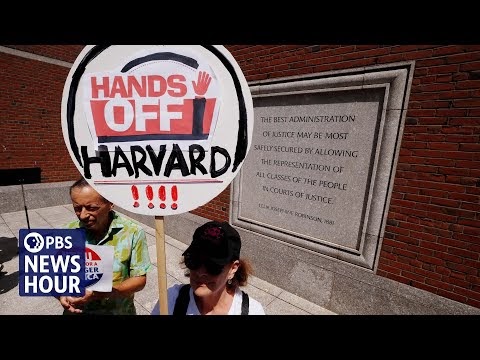
The 110-year-old organization, which founded Black History Month, partnered with the African American Policy Forum to co-lead a “Hands Off Our History” rally at the Smithsonian’s National Museum of African American History & Culture in Washington, D.C.
Whitehead characterized the museum review as part of a broader pattern of attacks on diversity and inclusion efforts. She cited the 2023 banning of over 10,000 books, many featuring people of color, and recent executive orders eliminating Diversity, Equity, and Inclusion programs in higher education, medicine, and K-12 history courses.
“These steps are veiled attempts to rewrite and distort the narrative by removing any mention of the racist actions, words, and deeds that have shaped American history,” Whitehead added.
The ASALH president described the current moment as part of an escalating campaign that began with what she termed the “whitelash election” of 2017, followed by increased white supremacy after George Floyd’s murder, and culminating in current efforts to “defund libraries, whitewash history curricula, zero-base the Department of Education.”
ASALH, founded in 1915, positions itself as a bridge between scholars and the public in preserving and promoting Black history. The organization is preparing for its annual conference in Atlanta, scheduled for September 24-28, 2025, which Whitehead said will serve as an opportunity to “organize and prepare ourselves to counter his next steps.”
The controversy highlights ongoing tensions over how American history is taught and presented in educational and cultural institutions, with particular focus on narratives involving slavery, civil rights, and systemic racism.
Whitehead added that the organization’s resistance draws inspiration from historical figures including Dr. Carter G. Woodson, Dr. W.E.B. Du Bois, and Harriet Tubman, stating: “Our work as truth seekers obliges us to ‘speak the truth to the people’ and demands that we stay ready.”
The Smithsonian Institution has not yet responded to requests for comment regarding the White House directive.

President Donald Trump issued an executive order in April promising to “elevate the value and impact” of the country’s historically Black colleges and universities—in part by selecting an executive director for the White House Initiative on HBCUs and a President’s Board of Advisors on HBCUs.
But four months later, eight months into his second term, these roles remain unfilled.
Some HBCU advocates say months-long waits are business as usual for these positions, and they remain confident in Trump’s support for HBCUs. Others worry that HBCUs lack their most direct line of communication to the White House at a time of rapid-fire higher ed policy changes.
Since the 1980s, the executive director of the HBCUs initiative, established by President Jimmy Carter, has been responsible for advocating for HBCUs’ federal policy interests. The President’s Board of Advisors offers guidance to government officials about how to better support and strengthen these institutions.
Appointees serve as HBCUs’ “in-house advocates,” said Ivory A. Toldson, a professor of counseling psychology at Howard University and editor in chief of The Journal of Negro Education. He served as deputy director of the White House Initiative on HBCUs from 2013 to 2015 and as executive director from 2015 to 2016 under former president Barack Obama. The director and board have historically sought out federal funding and partnership opportunities for these institutions and “made sure that executive-level priorities were shaped in a way that understood the needs of HBCUs.”
Toldson said there are likely to be “missed opportunities” for HBCUs during the limbo period before an executive director is chosen. He said it’s easy for federal agencies, like the National Science Foundation or the National Institutes of Health, to overlook smaller HBCUs for grants when no one is there to champion them.
“By them not having representation within the federal government, it becomes difficult for them to advocate effectively for their needs,” he said.
Robert Palmer, chair of the education department at Howard, said he worries HBCUs don’t have their “earpiece” to the Trump administration at a time when policy shifts, such as upcoming changes to the student loan program, will affect HBCU students.
The unfilled roles are “quite concerning,” Palmer said. “It almost makes you wonder, is it a priority for him? Because that’s what it signals—that it’s not a priority.”
Other HBCU advocates don’t see a problem. Lodriguez Murray, vice president of public policy and government affairs at the United Negro College Fund, which represents private HBCUs, said he isn’t troubled by the wait because organizations like his have still been able to have “high-power and high-level discussions” with the White House and Department of Education.
“We’ve been able to get every concern addressed. We’ve been able to get every email returned. We’ve been able to get every meeting request handled,” he said. “The house is not burning down for us. And I have seen no lack of continuity and engagement on our issues at the highest levels.”
He said it’s more meaningful to him that Trump issued an executive order reaffirming the White House Initiative on HBCUs within his first 100 days and fully funded HBCUs in his proposed budget. He’d also rather the administration take its time to pick “the right individuals” to fill these roles.
“There have been many individuals who have had the role of executive director of the White House initiative on HBCUs [who] have fallen below what the expectations are of this community,” Murray said. “And so, if the White House is attempting to find the right person to meet a moment and to meet expectations, that’s fine with me.”
Trump’s pick for executive director during his first term, speaker and consultant Johnathan Holifield, was met with mixed reactions by HBCU supporters because of his lack of prior experience with these institutions. Former president Obama also received criticism for some of his executive director choices, including multiple interim appointments between permanent directors.
Murray said he’s hoping for someone “with the president’s confidence” who can help bring Trump’s plans to support HBCUs to fruition and who can simultaneously “speak truth to power and express to the president the concerns of HBCUs.”
For Toldson, “institutional knowledge of HBCUs” and an “apolitical” approach will be critical to a new executive director’s success to avoid HBCUs getting mired in the anti-DEI crusade besieging other higher ed institutions.
“Regardless of who’s in office, we need representation, and I think that the right representation would be able to balance the needs of the HBCU community with the broader direction of the government,” Toldson said.
Harry Williams, president and CEO of the Thurgood Marshall College Fund, which represents public HBCUs, said the amount of time it takes for presidents to fill these roles has varied historically. HBCUs have often waited months for these appointments, so the current timeline isn’t out of the ordinary, he said. Former president Joe Biden didn’t officially name an executive director until February 2022, a little over a year after his inauguration.
Still, a long wait “creates uncertainty, and it creates anxiety,” Williams said.
“We’ve gotten good information that this is something that will happen, but the timing of it has always been the challenge,” he added. TMCF is reassuring campuses that the administration plans to fill these positions, “but we don’t know exactly when.”
David K. Wilson, president of Morgan State University, said he and other HBCU presidents are eager to get started on making the promises in Trump’s executive order a reality. They were glad to see the order call on federal agencies, businesses and foundations to partner with and invest more in HBCUs.
Wilson said he hopes to see these positions filled soon “so that we can begin to express directly to the White House what some of the opportunities are for continued investment in these institutions.”
“All of them will return unbelievable dividends to the nation,” he added.
Wilson noted that Howard University recently regained Research-1 status, the coveted Carnegie Foundation classification for universities with very high research activity. Other HBCUs, including Morgan State, are poised to follow in the coming years. He wants to see appointees in place who can help maintain that momentum.
“We can’t wait to see now what this next era of HBCU investments under the Trump administration will look like,” he said. “We were on a roll, and now the question is, can we roll faster?”

It is a year since the Labour Government was elected with a commitment to produce a post-16 skills and higher education White Paper by Summer 2025. In this article, we look at how changes in the UK’s economy and politics since July 2024 have altered what is likely to be in this policy statement and what might happen despite it.
Last September, the Minister of State for Skills, Jacqui Smith, drew attention to the enormous economic challenges and tough choices facing the Government, but stressed the administration’s commitment to a mission-led approach to create a new era of opportunity and economic growth within a fairer society for everyone. Two months later the Secretary of State for Education, Bridget Phillipson, wrote to vice chancellors outlining the Government’s expectation that universities will:
There were also subsequent calls for more effective higher education leadership, strong governance and a new business model for the sector. To support these changes, ministers provided an increase in the undergraduate home tuition fee of £285/year and an uplift to the maximum maintenance loan support of £414. For those concerned with institutional finances, this uplift in income was more than matched by higher costs due to increases in employers’ national insurance contributions, reductions in foundation year fees, withdrawal of level 7 apprenticeship funding and reduced capital allocations, among other things. To deal with these changes, most universities have sought to increase their international student recruitment and classroom-based home undergraduate students, as well as higher margin postgraduate provision. For some of the institutions denied these opportunities because of their market position the alternative has been to expand their franchise operations and transnational education and/or to reduce costs. As figure 1 illustrates, these changes in funding and activity have produced some significant changes in forecasts for the money flowing to colleges, independent training providers and universities.
Figure 1: Funding and Orientation Matrix
Looking at the balance between areas of activity which enhance prestige and those that support widening participation, when combined with those that are funded publicly or privately, reveals some big changes. The increase in undergraduate home student tuition fees has not been enough to stem the decline of overall funding from foundation years, postgraduate courses and research grants. The balance in government funding has shifted from these areas of activity towards schools, further education and apprenticeship provision. Meanwhile, although funding from private sources for international students taught in the UK and for transnational education overseas has expanded, UKRI funding for individual institutions has declined due to increases in the number of grant applications from a wider range of institutions and a larger number of researchers leading to a halving of the success rate compounded by changes to the treatment of what was and is now again EU research funding.
Despite Government Ministers’ declared ambitions for further and higher education last Autumn, the participation of students from lower socio-economic backgrounds has declined over the last three years as measured by the proportion who had previously received free school meals or were enrolled at a state school.
While further and higher education institutions are only one part of the influences on economic growth, the annual rate of change in productivity is negative at minus 0.2 per cent and GDP has declined for two months. The main contributors to this poor performance have been low levels of business investment, persistent skills shortages and low rates of innovation among domestic companies.
Meanwhile, the impact of universities and colleges on local communities has been a tale in two parts. The annual Higher Education / Business Community Interaction survey reveals small increases in business start-ups and spinouts as well as partnerships with small firms, but measures of the impact on local economies is more difficult to demonstrate. These issues are less pronounced with apprenticeship providers and further education colleges where local community engagements are key to engaging adult part-time learners.
The bright spot in recent activity has been the maintenance of high teaching standards in universities as recorded by the National Student Satisfaction Survey (NSS) and the Postgraduate Taught Experience Surveys (PTES), where between three-quarters and four-fifths of respondents are happy with their courses. More students see university education as providing value for money than do not, but there is pressure on students’ costs of living. These pressures stand behind the two-thirds of university students who indicate that they are working 10 to 15 hours per week part-time to generate the money they need to live. One fifth of students report working for more than 20 hours per week in paid employment and over a third indicate their income-generating commitments have a negative impact on their studies. There is also evidence of heightened competition for graduate jobs and a decline in the so-called ‘graduate premium’. This has doubtlessly contributed to the recent finding that 35% of graduates and 52% of postgraduates indicated that, with the benefit of hindsight, they would have made different higher education choices. There is no comparable recent education and outcome data for apprentices and further education students because the Further Education Choices Learner Satisfaction Survey was scrapped in 2020, but recent increases in the number of young people Not in Employment, Education or Training (NEET) suggests all is not well.
The Government has fared poorly in opinion polls over the last twelve months due to concern about the cost of living, immigration and the state of public services. This has prompted challenges from the political right and left. This is not confined to questions about tax, immigration and public spending, it has also extended to concerns about the role of universities and support for other forms of post-16 education. Across the voting population, recent private opinion polling has revealed that just over half of the electorate are questioning, sceptical or openly hostile to the role of universities in their communities. University research as an area of activity is poorly understood and where there is an appreciation of this activity, it is not automatically seen as meeting real-world needs. Meanwhile, among the leadership of many major civic and corporate organisations, universities are seen as profit-driven and not working in the public interest. In short, there is a lack of an emotional and relational connection between universities, local communities and national leaders.
It has been argued that university leaders need to respond to these adverse public perceptions by stating the virtues of higher education and research more clearly and advocating for universities more often. Pursuing this approach, it is argued, will open the door to greater trust, less regulation and improved funding. More recently, it has been argued that public opinion has changed to such an extent since the Covid pandemic that this approach will not work and there is now a need, quoting Robbie Burns, for university staff “to see ourselves as others see us”, before considering how best to respond. The priorities of these others are likely to become more visible over the summer months as they question the evidence of university contribution and those who champion the current arrangements in the wake of this year’s home and international student recruitment rounds.
The Autumn party conference season begins with the Liberal Democrats in Bournemouth (20 to 23 September), Labour in Liverpool (27 to 1 October), the Green Party in Bournemouth (3 to 5 October) and the Conservatives in Manchester (5 to 8 October). In today’s world of multi-party politics and jostling to define the public policy agenda, it is also important to note that the Reform Party conference will take place in Birmingham (5 to 6 September). Meanwhile, “Your Party”, the new left-wing party led by Jeremy Corbyn and Zarah Sultana, has not given a formal indication of its plans for an inaugural conference, but it seems likely that there will be events in early Autumn..
The conference season is normally a time when parties outline what is planned or hoped for in the future. Governments are not supposed to announce new initiatives outside of the House of Commons, and although they occasionally do, they are rebuked by the Speaker of the House of Commons, as the Secretary of State for Education and Chancellor of the Exchequer have found out in recent months. This year is likely to be more difficult than usual as pressures on the public purse raise questions about tax changes in the Autumn budget and raise the spectre of changes to expenditure plans to meet the Government’s spending rules and to provide for defence, health and welfare commitments.
Any post-16 education announcements are likely to be especially difficult because of the competition with other parties. The Reform party has promised to eliminate interest on student loans and to extend loan repayment periods (a graduate tax in all but name), as well as removing student loans for medical and STEM students and writing off the loans of long-serving NHS workers. There are also proposals to invest more in apprenticeships and technical education with an increase in publicly funded training courses.
Similar proposals were made by the Green Party in their 2024 General election manifesto with commitments echoing the 2019 Labour Party manifesto to scrap tuition fees, restore maintenance grants and increase investment in skills and lifelong learning. Meanwhile, for completeness, the Liberal Democrats pledged to improve financial support for disadvantaged students by reintroducing maintenance grants, in part modelled on the arrangements introduced by the Liberal Democrat minister, Kirsty Williams, while she oversaw higher education for the Welsh Government (2016-2021). These promises of increased spending on student maintenance are likely to be attractive to many young voters and particularly newly enfranchised 16–18-year-olds. These promises can also be made by parties that believe they are unlikely to find themselves in government in 2026. The problem for university leaders and staff with these proposals is that while they will help students, they won’t help institutions to pay their bills, except perhaps for students’ halls of residence.
Increased strain on university finances and growing pressure on the public purse, combined with demands for improved student maintenance funding, create a difficult context if anything unexpected goes wrong with the income and expenditure of individual institutions. These challenges have been added to by the publication of nine major Government strategy and policy papers with implications for post-16 education and training.
The five missions that the Government was elected to pursue have been added to by a plan for the NHS, an Immigration White Paper, five critical technologies, six milestones, seven chapters in the Get Britain Working white paper, the eight priority sectors in the industrial strategy white paper, the nine regions identified in the national infrastructure plan and 10 priority skills sectors identified by Skills England. All of these plans have local dimensions that are being developed with the 12 established Mayoral Strategic Authorities and 12 new regional bodies outlined in plans for devolution to 44 English regions which will combine with 38 Local Skills and Improvement Plans (LSIPs). The complexity associated with these arrangements means that there will, in practice, have to be some simplification.
It is reassuring to see this energy and commitment to change, but it is also a cause of concern that it is not clear how the various plans and governance arrangements will join up within Whitehall and across the regions. This may not be a problem in the largest city regions of Greater Manchester, Liverpool, London, North East, West Midlands and West Yorkshire. However, it is likely to be more of an issue in the less developed Mayoral regions of Cambridgeshire and Peterborough, the East Midlands, Sheffield, South Yorkshire, Tees Valle and West of England, not to mention the other 22 yet to be reorganised regions of the UK covering 50% of the population.
The challenges of developing joined-up plans are likely to become problems if the reputational and financial risks being experienced by cash-strapped colleges, independent training providers and universities materialise. Among universities 43% are currently forecasting a deficit and the most recent published figures for further education colleges in 2022/3 revealed a figure of 37%. As recent experience with the University of Dundee has illustrated, the short-term direct costs can exceed £100m, and the longer-term indirect costs are even greater. These additional costs are likely to be substantial as national regulators, regional officials and local providers wrestle with the challenge of developing the capacity, capability and courage needed to align provision with employer demand as well as student interest.
With low economic growth, high inflation and challenges to reductions in government expenditure and without additional funding for student maintenance and living expenses, it is difficult to see how universities will widen participation for students from lower socio-economic backgrounds. Without more funding for courses in the areas of skill shortage that underpin the eight industrial sectors and the requirements of the NHS and National Infrastructure Plan, it is difficult to see how local skills needs will be met and the improvements in productivity and economic growth achieved. Teaching quality might be maintained by a lower-paid and increasingly casualised workforce, but will the efficiency and effectiveness of institutions improve without support for the local coordination and rationalisation of activity?
Now that the anticipated publication of the Post-16 and Higher Education White Paper has been delayed until the Autumn it seems likely that it will be timed to coincide with the Budget in November. This Indian Summer schedule is needed to gain some certainty about the future funding position and associated changes to tax and spending decisions. So, what might be in the White paper? At present the following five strands of activity seem most likely.
Proposals for the development of regional education and skills pathways to support the introduction of the credit and modular funding arrangements that will be needed with the Lifelong Learning Entitlement in January 2027. Proposals for consultation on how institutions could be required to introduce bursary and scholarship arrangements if they fail to meet regionally agreed targets for widening participation and progression.
Proposals for consultation on how the 6% international student levy will be used to pay for the upskilling of domestic learners, rebalancing of funding towards institutions that have not recruited international students and underwriting of the costs of structural adjustments.
Outline of how Local Skills Improvement Plans will be developed by Skills England to ensure that Mayoral Strategic Authorities and other regional bodies have tools to influence education provision to respond to the 10 skills priorities and 5 critical technologies while meeting the needs of local employers and communities. This might include local independent careers, advice and guidance arrangements of the sort developed in Greater Manchester.
Announcement of the provisional findings from an internal review of the standards and regulations applied by the Office for Students including tightened controls over franchise and transnational education arrangements.
Changes to Competition and Market Authority guidance on regional institutional cooperation. The introduction of an insolvency and regime for higher education institutions to parallel arrangements for further education colleges and independent apprenticeship providers. This to include formal mechanisms for restructuring loans or similar transitional finance arrangements.
What is currently missing from these arrangements is a multi-year agreement on fees and funding or a plan for supporting English regions that are not part of the current plans for devolution. All major post-16 White papers in the past have included an explicit or tacit exchange of support for the UK economy locally and nationally with an agreement on longer-term funding and finance. To achieve this realistically in the future will require guidance on how regional and institutional leadership and governance will be aligned with national plans. The UK’s devolved governments and a few established Mayoral Strategic Authorities have mechanisms to bring colleges and universities together to discuss their plans and the opportunities for alignment. In many instances these arrangements span more than one MSA or its equivalent. Most of the other regions lack these arrangements and will need support to develop local officials, senior managers and governing bodies. Most importantly what should these groupings do if one or more institutions in their patch fail?
There is little appetite among the UK’s political parties and government departments for an independent review of higher education because of concern about the time this would take and the loss of control it would entail. However, the risks associated with current economic constraints and political polarisation pose substantial risks for local communities and regional economies in general and for the students and staff in individual institutions in particular. The summer months provide a useful time to reflect on these challenges and to consider how genuinely transformational change can be led and managed within city regions and rural combined authorities. For universities, further education providers and independent training providers and their representatives, this should involve more than improving their public affairs and relations and should consider how local and regional forms of organisation can be developed.

The Trump administration will release the remaining fiscal year 2025 K-12 grant funds that it had frozen — nearly $5 billion — to states and districts, the Office of Management and Budget confirmed Friday.
The funding for student academic supports, English learners, immigrant students and teacher training was supposed to be available July 1, but was not released pending a “programmatic review” by OMB, the White House’s budget arm.
That review was to ensure the grants align with Trump administration policies and priorities, OMB told K-12 Dive earlier this month. The office had said initial findings showed “many of these grant programs have been grossly misused to subsidize a radical leftwing agenda.”
On Friday, a senior administration official told K-12 Dive in an email, “Guardrails are in place to ensure these funds will not be used in violation of Executive Orders or administration policy.”
Earlier this week, OMB began releasing $1.3 billion it had withheld for after-school and summer programming under the 21st Century Community Learning Centers grant, according to the Afterschool Alliance.
The remaining funds to be released are:
Education officials, Republican and Democratic lawmakers, education organizations, parents and nonprofits had all urged OMB to release the funds that were approved by Congress in an appropriations bill that President Donald Trump signed in March. They said the weekslong delay in accessing the money was already causing “budgetary chaos” for schools, which began cancelling contracts, laying off staff and eliminating programs when the funds didn’t arrive as scheduled.
The disruption also spurred two lawsuits.
A survey by AASA, the School Superintendents Association, found that nearly 30% of districts said they needed access to the withheld funds by Aug. 1 to avoid cutting programs and services for students. By Aug. 15, survey respondents said they would have to notify parents and educators about the loss of programs and services. The survey was conducted earlier this month and drew responses from 628 superintendents in 43 states.
On Friday, David Schuler, AASA’s executive director, said in a statement that he was pleased the “critical” funds would now be available to schools.
Sen Patty Murray, D-Wash., vice chair of the Senate Appropriations Committee, said in a statement Friday, “There is no good reason for the chaos and stress this president has inflicted on students, teachers, and parents across America for the last month, and it shouldn’t take widespread blowback for this administration to do its job and simply get the funding out the door that Congress has delivered to help students.”
Randi Weingarten, president of the American Federation of Teachers, addressed the news during a keynote speech Friday at the Together Educating America’s Children conference in Washington, D.C., according to a press release.
“Today, they backed down: our lobbying, our lawsuits, and our advocacy for why these funds matter to kids, it worked.” Weingarten said.
Becky Pringle, president of the National Education Association, said in a Friday statement, “These reckless funding delays have undermined planning, staffing, and support services at a time when schools should be focused on preparing students for success.”

We’re back with Dr. Ruth C. White to talk about her life beyond academia. Join us for this conversation about why female academics suffered through the pandemic, and why they are feeling so burned out.
What is burnout? Why are women academics especially feeling it in 2025?
Ruth C. White, PhD, MPH, MSW, RSW is on a mission to help women find success that feels like them.
Dr. White’s career has taken a meandering path with success in many roles. She has worked as a social worker in the USA, Canada and the UK, and gave up tenure in the social work program at Seattle University to teach in the ground-breaking virtual program at the University of Southern California. Yes… She gave up tenure! Then she left academia for a role as a DEI executive at a Silicon Valley tech firm, and followed up with another DEI role in academia.
Ruth is the author of four books, and has written articles on mental health for Harvard Business Review, Fast Company, and Tracy Anderson Magazine. She built a consulting practice in DEI and mental health, with clients such as PwC, Indeed, JPMorgan Chase, Premera Blue Cross, Aetna, Applied Materials, Protiviti, Gainsight, among others. Since 2020, Dr. White has appeared 30+ times as a mental health commentator on KRON4-TV Bay Area, and she has also appeared as an expert on The Today Show, BBC, podcasts, and radio. Her groundbreaking research on the LGBTQ+ community in Jamaica, led her to be an expert witness in more than a dozen cases in collaboration with Yale, Columbia and NYU Law Schools, and advocacy groups across the USA.
In addition, Ruth has a modeling career, that has included major campaigns, and representation by agencies in Toronto, San Francisco, Paris and London. Recently she merged her love for words and travel to become an in-demand travel writer, with articles in CN Traveler UK & US editions.
And she accomplished all this as a mom with an atypical brain: one labeled with ADHD and bipolar disorder. Her sense of adventure has led to PADI diving certifications, kayaking across San Juan Islands and rapids on the White Nile and Pacuare, hiking solo up Mt. Ellinor, and racing sailing boats in the San Francisco Bay for several years. She is also competent with crochet hooks, knitting needles and sewing machines.

This week on the podcast we get across the government’s new immigration white paper. What does cutting the graduate route visa from two years to 18 months mean for international students and universities?
Plus we examine the proposed 6 per cent levy on international student fees and tighter compliance requirements that could put some institutions at risk.
We also discuss Skills Minister Jacqui Smith’s Telegraph op-ed criticizing universities for “losing sight of their responsibility to protect public money” – are her concerns reasonable?
With Smita Jamdar, Partner and Head of Education at Shakespeare Martineau, Roscoe Hastings, Director of Teaching Excellence and Student Experience at the University of Exeter, James Coe, Associate Editor at Wonkhe and presented by Jim Dickinson.
Everything in the immigration white paper for higher education
There are lots of ways to be more transparent about university finances
Lessons from innovating in our student support model
Euro visions: A playbook to fight the populists in the Netherlands

Last week, I arrived back in London on a high. I’d spent five weeks in India with British colleagues promoting the benefits of U.K. higher education in seven cities. My audience was some of the most talented and entrepreneurial young people in the world, and they have plenty of choices about where to follow their dreams. But I know from my decade as Chair of the U.K. National Indian Students and Alumni Union (NISAU) that British education is an extraordinary opportunity for Indian students and their host country. It’s a win-win if ever there was one in talent, skills, investment and friendship. And all this was topped off with the announcement of the long-awaited India-UK trade deal. We were filled with possibility.
Yet as soon as I stepped off the plane, I was faced with a barrage of news stories about the UK Immigration White Paper. Would all our hard work be put at risk? Surely we would not jeopardise the Graduate Route Visa so vital to Indian graduates and hard-won by many, including Indian students and alumni.
So now the White Paper is published, what is our take on it?
First, let’s be clear. Our worst fears were averted. NISAU genuinely welcomes the Government’s decision to retain the Graduate Route and acknowledges the significant engagement that has taken place with stakeholders across the sector. NISAU has worked extensively over the past decade — and particularly intensively in the last year — with policymakers across all major political parties, including many now in government, to advocate for the continuation of this essential route.
Of course, there are still worries. Any change is worrying when witnessed from thousands of miles away. So while we are relieved that the Graduate Route has been preserved — albeit with a modestly reduced duration — we urge that its implementation, and that of the wider reforms, be approached with care, clarity, and collaboration. Getting this right will shape the UK’s standing as a top destination for global talent in the years ahead.
But here’s the rub. Many of us feel the UK’s worries about immigration are being applied inappropriately. International students are a distinct, high-contribution, temporary category of migration. They fund their own education, power innovation in universities, sustain local economies and build enduring bilateral ties between the UK and countries around the world.
They (we) should be celebrated, not treated through the same policy lens as other forms of migration. Doing so risks undermining one of the UK’s most globally admired assets: its higher education sector.
Universities, too, are one of Britain’s most powerful strategic assets. They drive regional growth, advance global research, and help produce the high-skilled workforce the country urgently needs. Supporting them — and the students who choose them — must remain a national priority.
It’s an old argument, but worth repeating because it’s true. International students bring enormous benefits to the UK — to our high streets, workplaces, and campuses. They contribute billions to the UK economy each year, and the fees they pay help sustain vital subjects like Engineering and Medicine — courses which are essential to Britain’s long-term prosperity and global competitiveness.
International students also create employment and support domestic skills through their impact on the wider economy and the cross-subsidy they provide for UK teaching and research.
The White Paper talks about impact. But any local impact assessment or review of the domestic skills landscape should begin here — with a recognition that the presence of international students uplifts opportunities for UK nationals, not competes with them. And so we reiterate, no matter how often this request is dismissed, international students must be taken out of the net migration targets for purposes of robust policymaking and to ensure future efforts to reduce regular forms of migration don’t endanger this huge benefit.
The White Paper was aimed, naturally, at a domestic political audience, but the world was listening. International communication must be extensively managed and properly executed — proactively and urgently — especially during this peak recruitment period. Panic must not be allowed to set in among current and prospective students. Immediate clarity is needed on who is affected and how.
It’s easy to forget what this takes, and GREAT campaign funding, which promotes campaigns like Study London, has already been cut by 41%. How will the great stories we should be telling about global education reach the right students in an appropriate way?
Think of the impact of our recent debates on Indian students, the largest users of the Graduate Route. For 70% of Indian students, a strong post-study work offer is the single most important factor in deciding where to study abroad. The ability to gain significant international work experience is critical. As we told the Migration Advisory Committee, work is not the same as work experience.
What we need now are proactive, student-focused communications, delivered by those who understand how to engage students effectively. NISAU has already started evidence-based communications. We stand ready to scale our role in partnership with UK stakeholders, but we must be quick. Rumours and bad actors must not be allowed to shape the UK’s story and, as Mark Twain said, a lie will fly around the whole world while the truth is getting its boots on. So we encourage a joined-up national communications effort, led by government and supported by trusted sector voices like NISAU, to ensure international students receive accurate, timely and reassuring guidance.
Here we see real opportunity. We strongly support the Government’s move to align immigration policy with domestic skills development. This is not new to us. NISAU has long championed this principle. Our advocacy has enabled productive sectoral dialogue, including at our 2024 and 2025 national conferences, where we specifically advanced the case for better integration of immigration, training pipelines and national workforce planning. Now we look forward to working with stakeholders to ensure these reforms drive opportunity, not exclusion. International students and graduates should be part of this thinking, not passive recipients.
We should be afraid, though, of naming and fixing problems. NISAU has spent nearly a decade calling for tighter regulation of education agents, so we are pleased to see this now reflected in government policy. We, of all people, see the cost of this being done badly.
However, implementation is everything. We urge clarity and accountability in the system, and ask for specific answers to:
So we recommend the following actions to ensure transparency and integrity:
Agent reform must centre student welfare, market integrity, and institutional accountability.
And finally, we welcome the strengthening of the Global Talent, Innovator Founder, and High Potential Individual routes. These are important to the UK’s economic ambitions, especially in strategic sectors such as AI, deep tech, and life sciences. But talent does not always arrive ready-made. It is nurtured — often from within our international student community.
International graduates are a strategic talent pool that can help meet the UK’s workforce gaps, drive innovation in small and medium enterprises (SMEs) and build globally competitive businesses. Retaining them through structured graduate-to-founder pathways is not just in students’ interests — it is in Britain’s. We therefore urge:
Supporting graduate outcomes must also become a central focus across the UK higher education sector. A recent survey revealed that only 3% of international graduates found employment through their university careers service, highlighting a clear opportunity for improvement in how students are supported beyond the classroom.
This is not only a challenge for international students; domestic students, too, require more tailored and effective career support to meet the evolving demands of today’s job market.
NISAU has long championed the need for improved careers provision, including through regular engagement with universities and stakeholders, and as a central theme at both our 2024 and 2025 national conferences. At a plenary session during our 2025 conference in February, we demonstrated how the absence of structured university-led careers support has given rise to an unregulated ecosystem of social media ‘careers coaches’ — many of whom charge students significant fees, often without delivering meaningful outcomes. We recognise that many universities are already taking meaningful steps to enhance the student experience and graduate outcomes. From employability hubs to expanded industry partnerships, we welcome and encourage these efforts — and believe they can be further amplified through shared best practice, consistent investment, and greater collaboration with student-led organisations such as NISAU.
The White Paper on Immigration is challenging on skills. We call for a sector-wide paradigm shift — one that places measurable, inclusive, and industry-informed employability support at the heart of the student experience and ensures that students are not left to navigate their futures unsupported or exploited.
There is much more to say. We are concerned about a lack of clarity on graduate-level jobs and the financial impacts of all these changes on the universities that attract global students in the first place. Nor do we want to be seen only as investors. The ‘best and the brightest’ are not necessarily the ‘rich and the richest’.
We urge that any levies or associated costs placed on universities be ring-fenced for reinvestment into student support, careers, and compliance infrastructure, rather than passed on to students. Global education is changing. International students are discerning, strategic, and have options. If the UK offer weakens, the best talent will go elsewhere. The UK at the moment has a competitive advantage — that advantage must be protected through consistency, clarity, and commitment to the student experience. Let’s secure a UK that remains open, ambitious and globally competitive in higher education and in so many other ways.

Liberty University, one of the largest Christian universities in the world, presents a striking contrast between its largely white residential campus and a more diverse, working-class population studying online. This divide highlights ongoing questions about race, access, and culture in American higher education—especially in religious institutions that promote traditional values while navigating a changing demographic and social landscape.
As of 2021, Liberty’s Lynchburg, Virginia, residential campus remains overwhelmingly white. Seventy-four percent of students living and studying on campus are white, with only 4% identifying as Black or African American, 5% as Latino, and 2% as Asian or Pacific Islander. Less than 1% of residential students identify as Native American. In contrast to the national trend of increasing diversity on college campuses, Liberty appears to be growing whiter. In fact, the number of African American students on campus has declined in recent years, raising concerns about how welcoming the university is to students of color.
This demographic imbalance is not new. Liberty University has a long history of racial segregation and discrimination, particularly in its formative years under founder Jerry Falwell Sr., who defended segregation in the 1960s and opposed civil rights legislation. While Liberty’s public stance has changed over the decades, the legacy of those positions still casts a long shadow.
Meanwhile, Liberty University Online (LUO) paints a different picture. In 2017, only 51% of its undergraduate population identified as white, compared to 15.4% who were Black or African American. Hispanic and Latino students made up 1.7%, and students of two or more races, 2.3%. A significant 26.5% of LUO students were categorized as “race/ethnicity unknown,” potentially obscuring additional diversity. These students come from all 50 states, Washington, D.C., and 86 countries, with more than 30,000 military students and over 850 international students among them.
LUO students are also disproportionately older, more likely to be working full-time, and often seeking degrees for career advancement or personal growth rather than the traditional “college experience.” Many are first-generation college students or part of the educated working-class navigating life through faith, family, and financial constraints. In contrast to the traditional campus, LUO’s virtual classrooms are where Liberty more closely resembles the multiracial and socioeconomically diverse America it often claims to serve.
This bifurcation between Liberty’s on-campus and online populations underscores a larger tension within the university: a cultural and racial divide that mirrors the broader fissures in U.S. society. The residential campus, steeped in conservative Christian traditions and a homogeneous student body, promotes a culture aligned with white evangelicalism. Meanwhile, its online division serves a more varied student population—many of whom are drawn to Liberty for its affordability, flexibility, and religious identity, but may not share in the campus culture or feel represented by its leadership and branding.
Reports of problems faced by Black students on campus—including concerns over campus climate, lack of representation among faculty, and curriculum that minimizes racial history—suggest that Liberty’s commitment to diversity is uneven at best. While the university has made modest gestures toward inclusion, critics argue that these efforts are often performative and fail to address systemic issues rooted in the institution’s founding principles.
Liberty University’s dual identity—as a white-dominated, conservative campus and a more diverse, online workforce training hub—raises difficult but necessary questions about race, class, and the role of religion in higher education. For an institution that claims to train “Champions for Christ,” the challenge remains whether it can reconcile these differences or if the divide will only grow starker in the years ahead.
