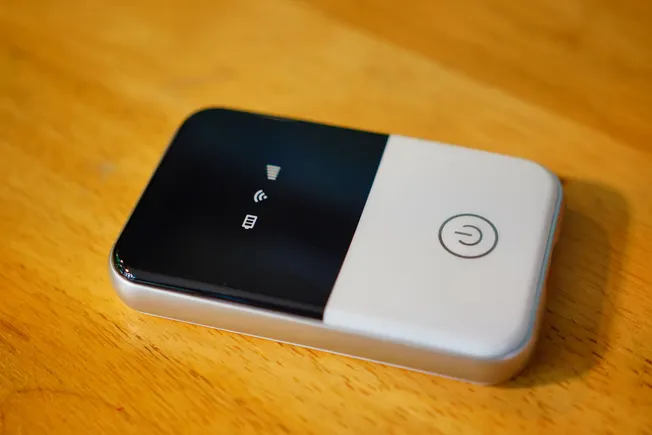
Tag: WiFi

  • VICTORY: Catholic University of America reverses Reddit ban on campus Wi-Fi

    VICTORY: Catholic University of America reverses Reddit ban on campus Wi-Fi

    Less than 24 hours after a student senate resolution asking the university to unban Reddit on campus Wi-Fi, the Catholic University of America has reversed course, restoring access to the forum-based website for all students and faculty on campus.

    The university’s IT department blocked the website, citing “certain content” and “phishing and malicious links” on the site’s forums.

    University attempts to restrict access to websites are nothing new. CUA banned 200 pornographic websites in 2019 at the behest of its student government — a ban FIRE opposes because it undercuts CUA’s stated commitments to free expression and academic freedom. (Bans on pornographic speech nearly always sweep into their ambit not just “hardcore pornography” but huge amounts of clearly protected expression.) It’s hardly just porn: campus messaging apps have been a frequent target of university administrators, from Yik Yak in 2017, to Fizz and Sidechat in recent months. But at public universities — and at private universities like CUA that choose to promise their students and faculty members expressive freedom — these bans are unacceptable incursions into free speech and academic freedom.

    Furthermore, such online platform bans are increasingly futile: they generally don’t keep students from accessing information the university doesn’t want them to see. It’s far too easy to turn off Wi-Fi or to fire up a VPN that allows students to bypass college-made content controls. Imposing a ban nonetheless sends a signal: some content is too dangerous for you to see, and we’re going to decide for you what that content might be. That message is antithetical to a university where students are supposed to learn how to work with others, find resources, and access information. 

    CUA says it is in the business of encouraging its students to engage with those on campus and across the world. But once you start down the road of banning websites based on their content, you face the same slippery slope to censorship as always. If CUA must ban porn sites because of their content, well, Reddit has objectionable content too. Doesn’t it need to be banned? What about X? Facebook? There is no natural limit to this principle, only the preferences of those in power at the time. 

    The university’s restrictions have a more pernicious effect on academic freedom, too. Online social media like Reddit have provided the basis for myriad forms of faculty research. Academics have studied how Reddit’s user-driven content-moderation influences political discourse and used its subreddits as a natural experiment on online social development. In other words, put hundreds of millions of people in one place, and researchers will want to study it. 

    Banning it from the campus network would demand they get awfully creative in order to do so. Though students can easily evade the ban by switching off Wi-Fi on their phones, faculty members may have a harder time using their personal hotspots to download petabytes of Reddit data to research. The result: academic research involving Reddit is chilled.

    And a Reddit ban cannot be plausibly based on security concerns. Though CUA vaguely referenced “phishing” content on Reddit, such content is present on any site where users interact with others, and students and faculty can still access X, Instagram, and myriad other social media sites where they are subject to such content. Not to mention email, which is by far the riskiest platform for phishing.

    CUA’s policy was both underinclusive in not targeting other, equally risky social media websites and overinclusive in targeting everything on Reddit, not only content threatening university network security. Such a double-bind is something we often see at FIRE. It almost always means policymakers aren’t thinking through the ripple effects of their rules.

    A culture of free expression demands more from university rulemakers than vague explanations and underexamined repercussions.

    Students at CUA expect more, too. They spoke up, calling on the university’s IT department to investigate its content controls to ensure a ban like this does not happen again. Hopefully, this abortive effort serves as a lesson to CUA administrators: the best way to avoid backlash for censorship is to never open the door to it in the first place.


    FIRE defends the rights of students and faculty members — no matter their views — at public and private universities and colleges in the United States. If you are a student or a faculty member facing investigation or punishment for your speech, submit your case to FIRE today. If you’re faculty member at a public college or university, call the Faculty Legal Defense Fund 24-hour hotline at 254-500-FLDF (3533).
    Source link

  • FCC proposal would disconnect school bus Wi-Fi, hotspots from E-rate coverage

    FCC proposal would disconnect school bus Wi-Fi, hotspots from E-rate coverage

    This audio is auto-generated. Please let us know if you have feedback.

    Dive Brief:

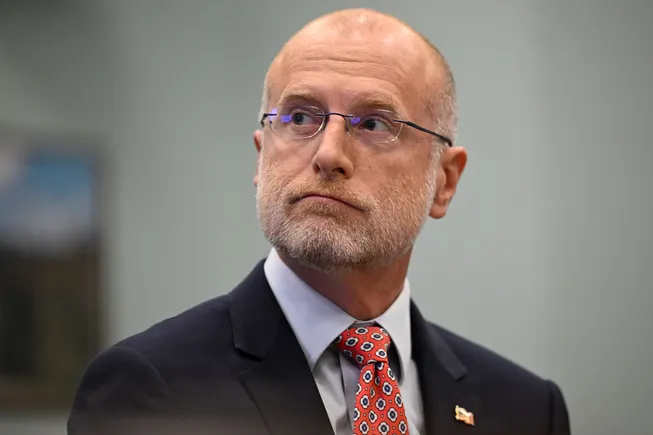
    • An E-rate expansion that allowed schools to use the program’s funds for school bus Wi-Fi and hotspots for students could soon be reversed, pending a vote called for by Federal Communications Commission Chairman Brendan Carr on Wednesday.
    • The vote on the proposal to reverse the Biden-era expansions is currently “on circulation” as of Friday, according to an FCC spokesperson. That means commissioners can vote on the matter outside of their open monthly meetings at their discretion. 
    • With a Republican majority among the three commissioners, it’s possible the E-rate expansion could be reversed.  

    Dive Insight:

    Carr’s proposal comes at a time of high demand among school districts to expand students’ internet access through school bus Wi-Fi and hotspots.

    Schools and districts have requested a total of $15.3 million in E-rate funds to pay for school bus Wi-Fi and $50.2 million for hotspots so far in fiscal year 2025, according to federal data. 

    E-rate, also known as the schools and libraries universal service support program, helps connect schools to affordable broadband. The federal program is administered by the nonprofit private corporation Universal Service Administrative Co., or USAC, under the FCC’s authority.

    If Carr’s proposal is approved, the FCC will direct USAC to deny the pending FY 25 requests to use E-rate funds for hotspots and school bus Wi-Fi services. 

    Millions of students and older adults rely on the expanded E-rate services for homework and telehealth services, said FCC Commissioner Anna Gomez, a Democrat, in a Wednesday statement. 

    “Now the FCC is moving to strip that connectivity away while doing nothing to make broadband more affordable,” Gomez said. “Their latest proposals will only widen the gap between those with access to modern-day tools and those left behind.”

    The commission approved the school bus Wi-Fi addition in 2023 and then voted to include hotspots the following year. Carr, a commissioner at the time, voted against both E-rate expansion measures.

    School bus Wi-Fi access is especially beneficial for students in rural areas with long commutes to school, said Andrew Jay Schwartzman, senior counselor at the Benton Institute for Broadband & Society, in a Wednesday statement. Carr’s push to reverse the use of E-rate funds for those services will “lock rural kids into dead zones,” he added.

    “Chairman Carr’s moves today are very unfortunate, as they further signal that the Commission is no longer prioritizing closing the digital divide,” Schwartzman said. 

    The Consortium for School Networking also released a statement Friday denouncing Carr’s plan. The expansion of the E-rate program has been “critical to closing the digital divide and ensuring every student can learn, both in school and where they live and learn.”

    In his announcement, Carr said the FCC violated Congress’ authority when it decided to broaden E-rate under the Biden administration. 

    “During COVID-19, Congress passed a law that expressly authorized the FCC to fund Wi-Fi hotpots for use outside of schools and libraries. When that program ended, so did the FCC’s authority to fund those initiatives,” Carr said. “Nonetheless, the Biden-era FCC chose to expand its E-Rate program to fund those initiatives long after the COVID-19 emergency ended.”

    Carr also praised Sen. Ted Cruz, R-Texas, for leading a Senate vote in May approving a repeal of the FCC’s decision to cover hotspots under E-rate. The bill is still awaiting action from the House.

    Source link

  • Senate approves repeal of E-rate Wi-Fi hotspots for schools, libraries

    Senate approves repeal of E-rate Wi-Fi hotspots for schools, libraries

    Dive Brief:

    • The end of E-rate eligibility for Wi-Fi hotspots came one step closer Thursday as the Senate voted 50-38 along party lines to overturn a 2024 expansion of the program overseen by the Federal Communications Commission.
    • A similar House resolution was introduced in February to strike down the recent inclusion of Wi-Fi hotspots in the E-rate program, which has helped connect schools and libraries to affordable telecommunications services for the last 29 years.
    • School districts have shown high demand for using E-rate funds to purchase Wi-Fi hotspots during fiscal year 2025, the first year for which the devices were eligible.  

    Dive Insight:

    In fiscal year 2025, schools and districts requested a total of $27.5 million for Wi-Fi hotspots alone. The devices are often used to help students who don’t have home internet access complete homework assignments that require digital connections.

    The FCC’s decision to expand E-rate to include hotspots followed the expiration of the Emergency Connectivity Fund established by the American Rescue Plan Act of 2021. The pandemic-era fund allocated $123 million to the FCC to purchase hotspots for schools and libraries.

    Both Senate and House measures were introduced by Republicans who say the FCC’s partisan move under the Biden administration to expand the E-rate program was overreach under the federal law that defined the Universal Service Fund’s E-rate program as intentionally providing discounts for broadband services only to “school classrooms” and libraries.

    Sen. Ted Cruz, R-Texas, introduced the resolution of disapproval in January under the Congressional Review Act, which gives federal lawmakers the authority to nullify a federal regulation. Cruz said in a January statement that the FCC regulation expanding E-rate “violates federal law, creates major risks for kids’ online safety, harms parental rights, and will increase taxes on working families.”

    “Every parent of a young child or teenager either worries about, or knows first-hand, the real dangers of the internet,” Cruz said. “The government shouldn’t be complicit in harming students or impeding parents’ ability to decide what their kids see by subsidizing unsupervised access to inappropriate content.”

    Before this week’s vote, several organizations representing school superintendents, K-12 business officials, rural educators, transportation providers and educational service agencies sent a letter on May 6 to Senate Majority Leader John Thune, R-S.D., urging him to vote against the resolution.

    The letter noted that nearly 20,000 schools and libraries are applying for several hundred thousand hotspots nationwide through the E-rate program. If passed, the education groups wrote, the resolution would “prevent millions of students and library patrons” from gaining internet access. 

    “We strongly disagree with the argument that allowing students and adults to access hotspots on buses or at home opens the door to them accessing inappropriate content online,” the letter said. “The rules adopted by the FCC require that all Wi-Fi hotspots include blocking and filtering of inappropriate material. Thus, any claim that providing home Internet access through these hotspots exposes children to pornography and other inappropriate content are completely untrue.”

    Hotspots particularly benefit low-income and rural students and educators who need internet access at home to complete homework assignments, the letter said. The groups added that passing such a resolution through the Congressional Review Act will prevent the FCC from ever approving an expansion of E-rate to include hotspots again. 

    With the end of the one-time influx of federal pandemic-era funds, a Consortium for School Networking survey released earlier this week found that 14% of district ed tech leaders said initiatives to fund broadband access off school campuses were at risk of losing future sustainable funding. 

    That same CoSN survey also revealed that most school districts are deeply concerned about the future of the E-rate program as a whole, given that the U.S. Supreme Court is expected to decide in the coming months whether the program’s funding mechanism is unconstitutional. Some 74% of district respondents told CoSN that should the justices strike down E-rate in FCC v. Consumers’ Research, the decision would have “catastrophic” or “major” effects for schools.

    Source link