Tag: wins

  • $1.2B Fine, Nix Trans Athlete Wins, More

    $1.2B Fine, Nix Trans Athlete Wins, More

    Juliana Yamada/Los Angeles Times/Getty Images

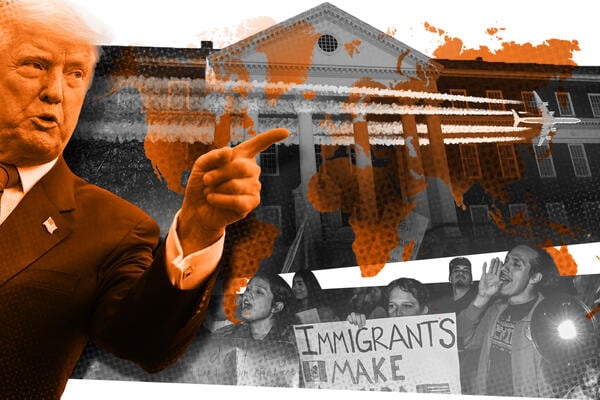
    The details of the Trump administration’s demands on the University of California, Los Angeles—in addition to the previously reported $1.2 billion payout the federal government asked for—have finally been revealed. A lawsuit by UC faculty unions forced the higher ed system to release a copy of a draft resolution agreement, shedding light on the terms UC was first faced with nearly three months ago.

    The Trump administration has demanded, among other things, that UCLA not enroll “foreign students likely to engage in anti-Western, anti-American, or antisemitic disruptions or harassment.” In the same paragraph, the proposed resolution agreement says UCLA would have to “socialize international students to the norms of a campus dedicated to free inquiry and open debate.”

    The federal government also demanded that UCLA ban overnight campus demonstrations and mandate that masked campus protesters reveal their identities when asked.

    Multiple provisions aim to limit transgender individuals’ rights. The document demands that UCLA’s medical school and affiliated hospitals stop “performing hormonal interventions and ‘transgender’ surgeries” on anyone under 18; stop allowing transgender women to play on women’s sports teams; strip records, awards and other recognition from transgender women athletes; and send personal apologies to the cisgender women who placed lower than trans athletes.

    California voters banned affirmative action in public education nearly 30 years ago, but the demand letter suggests the Trump administration doesn’t think UCLA has complied. It would require UCLA to bar providing “information about candidates’ race, sex, ethnicity, or other protected characteristics to faculty or other UCLA personnel with decision-making authority over hiring, retention, promotion or tenure.”

    Other provisions target affirmative action in hiring and student admissions, including a line that says, “UCLA shall discontinue race- and ethnicity-based scholarships.” The proposed agreement says “proxies used to effectuate race-based or sex-based outcomes” aren’t allowed in selecting for fellowship programs and also bans the use of such undefined proxies in hiring and admissions.

    The document’s release comes after UC said in early August that it would negotiate with the federal government, citing the estimated $584 million in funding that at least three different federal agencies had announced they were suspending. That funding freeze followed a July 29 letter to UC from the Department of Justice, which said its months-long investigations across the system had so far concluded that in its response to a pro-Palestinian protest encampment in spring 2024, UCLA violated the equal protection clause of the 14th Amendment and Title VI of the Civil Rights Act of 1964.

    It was yet another example of the Trump administration accusing a selective university of tolerating antisemitism and cutting off hundreds of millions of federal dollars. But, unlike Harvard and Columbia Universities, UCLA is a public institution, and its targeting by the federal government represents an expansion of the administration’s campaign to overhaul higher ed.

    Last week, the University of Virginia became the first known public institution to settle with the administration over discrimination allegations. That settlement didn’t require a payout, but among other things, UVA committed to not use proxies for race; to end all diversity, equity and inclusion programming; and to prohibit trans athletes from participating in sports.

    Media earlier reported some of the administration’s demands on UCLA, but university officials didn’t make the details public until Friday, when a lawsuit by the UCLA Faculty Association and Council of UC Faculty Associations forced them to.

    “Accession to these demands would be to undermine everything that has made the UC the successful engine of social mobility and economic might that it has been for our state,” Anna Markowitz, president of the UCLA Faculty Association, wrote in an email. “It will harm undergraduate learning opportunities, and hamper UC’s ability to be a scholarly leader on the international stage. It enshrines ideology at the heart of the institution rather than decades of empirical and scholarly understanding. We stand against this extortion effort.”

    Markowitz said the “UCLA FA and CUCFA have stood with our union colleagues in calling for no negotiations since the beginning.” The university administration “is under intense federal pressure,” she said, and she urged them to resist—“particularly because other faculty legal action has resulted in the restoration of nearly all of the temporarily suspended federal grants.”

    Indeed, Stett Holbrook, a UC spokesperson, wrote in an email to Inside Higher Ed Monday that “as for terminated federal research funds, that figure is in the tens of millions”—a far cry from the August estimate of $584 million.

    He provided a statement saying, “UC has been clear it must evaluate its response to the administration’s settlement proposal that, like all settlement communications, is confidential. As stated previously, the proposed $1.2 billion settlement payment alone would derail work that saves lives, grows our economy, and fortifies our national security. UC remains committed to protecting the mission, governance, and academic freedom of the University.”

    White House and DOJ officials didn’t respond to requests for interviews Monday or answer written questions.
    Source link

  • UC Berkeley Scientist Wins Nobel Prize for Chemistry

    UC Berkeley Scientist Wins Nobel Prize for Chemistry

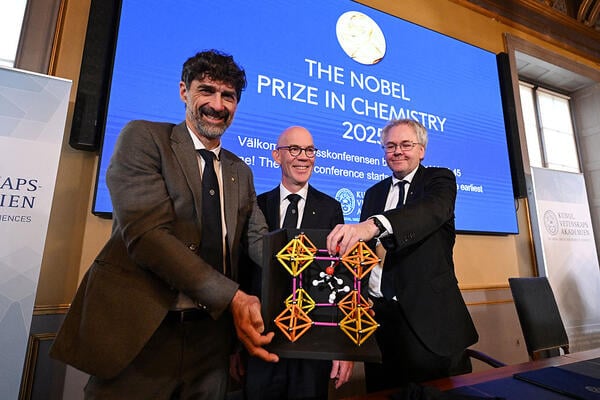
    A chemist from the University of California, Berkeley, was among the trio of scientists awarded the Nobel Prize for Chemistry on Wednesday.

    Omar Yaghi, the Berkeley professor; Susumu Kitagawa from Kyoto University in Japan; and Richard Robson from the University of Melbourne in Australia were recognized for their work since the 1990s to develop a new form of molecular architecture that combines metal ions and carbon-based molecules, according to a release from the Royal Swedish Academy of Sciences, which administers the Nobel Prize.

    The metal-organic frameworks can harvest water or store toxic gases. The release noted that the frameworks “may contribute to solving some of humankind’s greatest challenges.”

    The release says the frameworks are essentially “rooms” because of the large spaces that form in the structure. A Nobel committee member compared it to Hermione Granger’s magical bag in the seventh Harry Potter book, the Associated Press reported. Her small bag eventually contained a tent, books and other provisions. Likewise, the frameworks look small but can hold a lot.

    Since the trio’s discoveries, more than 100,000 metal-organic frameworks have been created, according to a news release from Berkeley.

    Source link

  • Wins and Losses of the Reconciliation Bill

    Wins and Losses of the Reconciliation Bill

    Kevin Dietsch/Getty Images

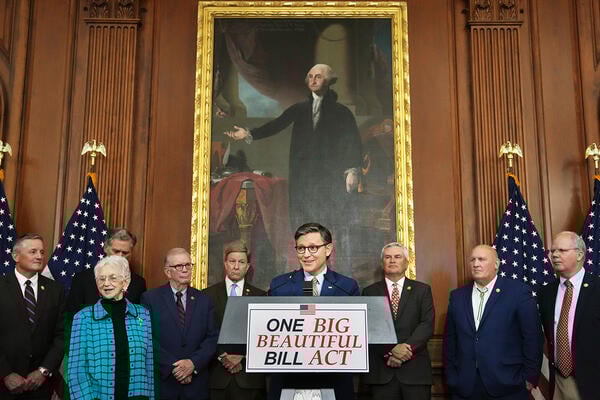
    It’s been six months since the second Trump administration took office, and in that time it has radically changed the policy around federal student loans, grants and college accountability. With the One Big Beautiful Bill Act now signed into law, Inside Higher Ed’s editor in chief, Sara Custer, spoke with news editor Katherine Knott about what’s in the bill and the outcome of the sector’s efforts to influence the massive piece of legislation. 

    In a recent episode of The Key, Inside Higher Ed’s news and analysis podcast, they also checked in on Harvard and Columbia’s negotiations with the administration and shared what they’ll be looking out for in the next six months. 

    Source link

  • WSU wins impact rankings for fourth year – Campus Review

    WSU wins impact rankings for fourth year – Campus Review

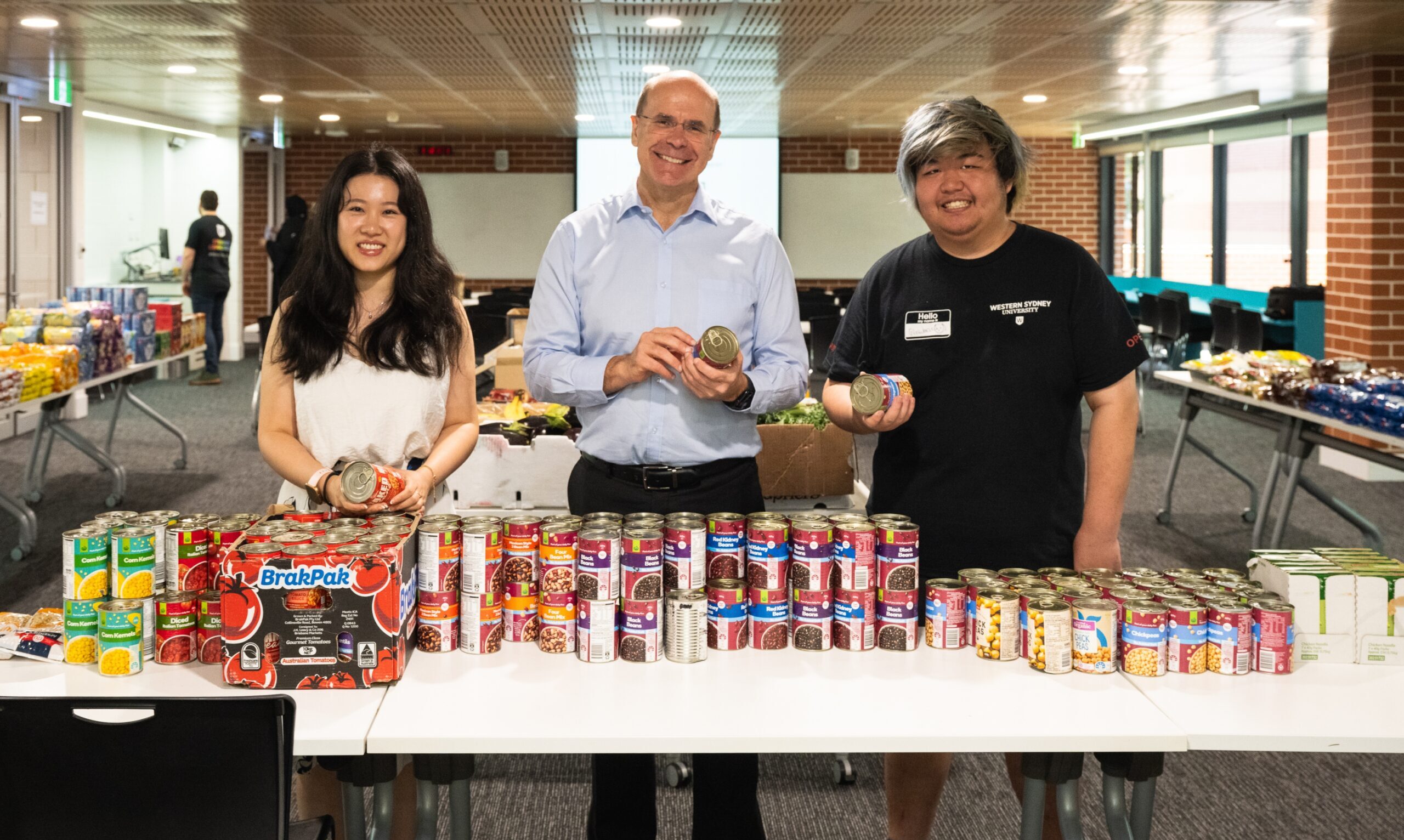
    Western Sydney University (WSU) has ranked first in the measure of delivering community impact out of over 2000 universities globally in the Times Higher Education Impact Rankings released Wednesday.

    Please login below to view content or subscribe now.

    Membership Login

    Source link

  • Harvard Wins Injunction to Protect International Enrollment

    Harvard Wins Injunction to Protect International Enrollment

    APCortizasJr/iStock Unreleased/Getty Images

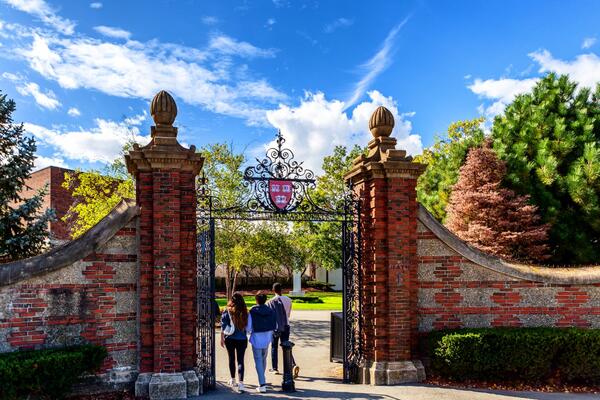
    Less than a day after having its ability to host international students revoked by the federal government, Harvard University successfully sued the Trump administration to block the move. A judge granted a temporary restraining order late Friday morning.

    Department of Homeland Security Secretary Kristi Noem announced Thursday afternoon that the Trump administration had stripped Harvard’s Student and Exchange Visitor Program certification in a letter that vaguely accused Harvard of a “failure to adhere to the law.” 

    However, the letter did not name any specific violations of the law by Harvard.

    On Friday morning, Harvard threw a legal counterpunch, filing a lawsuit challenging the revocation of SEVP certification and seeking a temporary restraining order to halt the action, which could cost Harvard to suddenly lose more than 6,000 students if they are unable to enroll. (International enrollment typically makes up about a quarter of Harvard’s head count.) Beyond blocking new enrollments, the revocation would require current international students to transfer. 

    Harvard president Alan Garber blasted the SEVP revocation as “unlawful and unwarranted” and said it was a punitive effort by the Trump administration in response to Harvard’s rejection of demands to reform governance, admissions, hiring processes and more following allegations of antisemitism and harassment that stemmed from pro-Palestinian protests last year. (Harvard filed a separate lawsuit pushing back on those demands last month, prompting the Trump administration to retaliate by freezing $2.7 billion in grants and contracts, or about a third of its federal research funding.)

    “It imperils the futures of thousands of students and scholars across Harvard and serves as a warning to countless others at colleges and universities throughout the country who have come to America to pursue their education and fulfill their dreams,” Garber wrote in a message to campus.

    He added, “We will do everything in our power to support our students and scholars.”

    Harvard’s lawsuit echoed Garber’s points in an even sharper tone, accusing the federal government of blatantly violating the First Amendment and Harvard’s due process rights.

    “With the stroke of a pen, the government has sought to erase a quarter of Harvard’s student body, international students who contribute significantly to the University and its mission,” lawyers representing Harvard argued in Friday’s early-morning legal filing.

    Harvard’s lawsuit named DHS, Noem and other officials within the department as defendants, as well as the U.S. Departments of Justice and State and agency leaders.

    Assistant DHS secretary Tricia McLaughlin fired back at Harvard in a response to Inside Higher Ed.

    “This lawsuit seeks to kneecap the President’s constitutionally vested powers under Article II. It is a privilege, not a right, for universities to enroll foreign students and benefit from their higher tuition payments to help pad their multibillion-dollar endowments. The Trump administration is committed to restoring common sense to our student visa system; no lawsuit, this or any other, is going to change that. We have the law, the facts, and common sense on our side,” she wrote.

    Another Legal Setback

    A judge swiftly agreed with Harvard’s argument, signing off on the temporary restraining order to prevent revocation of the university’s SEVP certification within hours of the lawsuit being filed.

    In a brief opinion, a district court judge in Massachusetts wrote in response to Harvard’s legal filing that the temporary restraining order was “justified to preserve the status quo.” The judge blocked DHS from stripping SEVP certification, at least temporarily, and granted a hearing. 

    A date for the hearing was not specified in court documents.

    The temporary restraining order is one of multiple legal setbacks the Trump administration has faced recently as it has sought to pull student visas over minor infractions (and for constitutionally protected speech), cap federal research funding reimbursement rates, and slash staff at the Department of Education and other agencies. Many of those efforts face ongoing challenges.

    On Thursday, for example, a federal judge barred the Trump administration from firing thousands of Department of Education employees as part of a sweeping reduction of force.

    The federal government has already appealed that decision.

    ‘Do This Everywhere’

    The Trump administration’s latest action against Harvard prompted broad condemnation from academics and free speech groups, who argued that the federal government did not follow legal processes for stripping SEVP certification and had ignored the university’s due process rights.

    “The administration has clearly targeted Harvard in recent months. In doing so, it has violated not only Harvard’s First Amendment rights, but also the rights of the university’s students and faculty,” the free speech group Foundation for Individual Rights and Expression wrote in a Friday social media post. “We commend Harvard for standing up for itself. Free speech and academic freedom are essential to higher education. They are values worth fighting for.”

    Despite widespread concerns from academics and lawyers that stripping Harvard’s SEVP certification is not legal, multiple Republican officials have endorsed Noem’s actions.

    Rep. Randy Fine, a Republican who represents Florida and a member of the House Education and the Workforce Committee, cheered on the move in a Friday appearance on FOX Business. Fine, a two-time Harvard graduate, said the Trump administration should “do this everywhere” amid concerns about antisemitic behavior and harassment on college campuses.

    Fine also took a dim view of international students exercising their First Amendment rights.

    “We should not be bringing people into America to get an education who hate us. They should be coming here to get an education, and frankly they should keep their mouths shut beyond that. I don’t go into someone else’s house and complain about it when I’m there,” Fine said.

    Source link

  • Otus Wins Gold Stevie® Award for Customer Service Department of the Year

    Otus Wins Gold Stevie® Award for Customer Service Department of the Year

    CHICAGO, IL (GLOBE NEWSWIRE) — Otus, a leading provider of K-12 student data and assessment solutions, has been awarded a prestigious Gold Stevie® Award in the category of Customer Service Department of the Year at the 2025 American Business Awards®. This recognition celebrates the company’s unwavering commitment to supporting educators, students, and families through exceptional service and innovation.

    In addition to the Gold award, Otus also earned two Silver Stevie® Awards: one for Company of the Year – Computer Software – Medium Size, and another honoring Co-founder and President Chris Hull as Technology Executive of the Year.

    “It is an incredible honor to be recognized, but the real win is knowing our work is making a difference for educators and students,” said Hull. “As a former teacher, I know how difficult it can be to juggle everything that is asked of you. At Otus, we focus on building tools that save time, surface meaningful insights, and make student data easier to use—so teachers can focus on what matters most: helping kids grow.”

    The American Business Awards®, now in their 23rd year, are the premier business awards program in the United States, honoring outstanding performances in the workplace across a wide range of industries. The competition receives more than 12,000 nominations every year. Judges selected Otus for its outstanding 98.7% customer satisfaction with chat interactions, and exceptional 89% gross retention in 2024. They also praised the company’s unique blend of technology and human touch, noting its strong focus on educator-led support, onboarding, data-driven product evolution, and professional development.

    “We believe great support starts with understanding the realities educators face every day. Our Client Success team is largely made up of former teachers and school leaders, so we speak the same language. Whether it’s during onboarding, training, or day-to-day communication, we’re here to help districts feel confident and supported. This recognition is a reflection of how seriously we take that responsibility and energizes us to keep raising the bar,” said Phil Collins, Ed.D., Chief Customer Officer at Otus.

    Otus continues to make significant strides in simplifying teaching and learning by offering a unified platform that integrates assessment, data, and instruction—all in one place. Otus has supported over 1 million students nationwide by helping educators make data-informed decisions, monitor progress, and personalize learning. These honors reflect the company’s growth, innovation, and steadfast commitment to helping school communities succeed.

    About Otus

    Otus, an award-winning edtech company, empowers educators to maximize student performance with a comprehensive K-12 assessment, data, and insights solution. Committed to student achievement and educational equity, Otus combines student data with powerful tools that provide educators, administrators, and families with the insights they need to make a difference. Built by teachers for teachers, Otus creates efficiencies in data management, assessment, and progress monitoring to help educators focus on what matters most—student success. Today, Otus partners with school districts nationwide to create informed, data-driven learning environments. Learn more at Otus.com.

    Stay connected with Otus on LinkedIn, Facebook, X, and Instagram.

    eSchool News Staff
    Latest posts by eSchool News Staff (see all)


    Source link

  • Higher Ed Wins a SEVIS Battle, Not the Visa War

    Higher Ed Wins a SEVIS Battle, Not the Visa War

    International students, colleges and advocates caught a break Friday after weeks of confusion and disruptions. After thousands of students had learned their Student and Exchange Visitor Program (SEVIS) status was revoked, they were relieved to hear that Immigrations and Customs Enforcement was restoring students’ statuses nationwide.

    “I was in class when the news broke, and there was a sense of relief,” said Chris. R Glass, a professor at Boston University’s Center for International Higher Education. “But it’s not the kind of relief that things are getting better, just that they’re not getting worse.”

    The Trump administration’s reversal was a key win in dozens of lawsuits across the country that argued that eliminating thousands of students’ SEVIS records without notice was unconstitutional. But threats against international students still loom large, experts say. The most pressing question: will this happen again?

    In its notice to a federal judge, the administration did not say that it was finished eliminating students’ SEVIS records, just that “ICE will not modify [a] record solely based on the NCIC [National Crime Information Center] finding that resulted in the recent SEVIS record termination,” according to the court filing. And ICE is working a policy framework for terminating SEVIS records.

    Reactivating students’ records doesn’t erase questions about the genesis of “this unlawful policy,” said Miriam Feldblum, co-founder, president and CEO of the Presidents’ Alliance on Higher Education and Immigration. “We need to understand why it happened and what is the policy structure.”

    The Presidents’ Alliance filed a lawsuit Thursday night, challenging the SEVIS record terminations, arguing that students “were stripped of valid status without warning, individualized explanation, and an opportunity to respond,” and that the government’s actions harmed member institutions’ ability to attract, retain and serve international students. The Presidents’ Alliance asks the court to enjoin DHS from future terminations affecting students at member institutions.

    “We are gratified to see this change of directions to restore records,” Feldblum said. “That does not erase the need for national, systemic litigation.”

    The Trump administration’s decision to reinstate student visas also does not negate the legal grounds for cases to continue, said Elora Mukherjee, Director of the Columbia Law School Immigrant Rights Center. Federal courts have the power to enjoin the executive branch on an issue that’s capable of repetition to stop the harm from occurring in the future, which in this case would be another sweeping removal of students’ legal standings, she added.

    The Presidents’ Alliance hopes to learn more about the administration’s intentions, policy structure and plans through its lawsuit, Feldblum said.

    Advocates for international students emphasized that while students may have regained legal standing to study and work in the U.S., the change in their status can have greater effects on their immigration status.

    The federal government said it would restore terminated SEVIS records, but some students had their visas revoked, said Fanta Aw, CEO and executive director of NAFSA, the association of international educators. Students will have to visit an embassy to receive their visa, facing long wait-times, and there’s no guarantee that they’ll be able to regain it.

    For those who didn’t lose their visas, terminations can have serious implications for students’ continuity of time in the U.S., Aw said. The stated reason for SEVIS termination and notation in their records can similarly have negative long-term consequences, Feldblum said.

    On campuses, administrators and students are still confused about what comes next, but there’s a clear feeling of relief, Feldblum and Aw said.

    As of Friday, Inside Higher Ed identified over 1,840 students and recent graduates from more than 280 colleges and universities who have reported SEVIS record shifts.

    Most institutions didn’t receive notification when students’ records changed initially, and they’re not getting notice when they’re reauthorized, Aw said. Just like with revocations, staff are checking SEVIS regularly to see if there’s been a status change.

    A few colleges—including Harvard University, Rice University, Stanford University, Tufts University, the University of Nebraska-Lincoln and the University of California, Berkeley—reported that some of their impacted students have had visas or SEVIS statuses restored. Some students still have terminated records.

    The slow restoration is possibly tied to the tedious nature of the work, Aw said, as federal workers have to manually restore each student’s status.

    NAFSA is starting to track visa restorations and will report numbers on Monday, Aw said, including the number of restorations and institution type.

    The Presidents’ Alliance will be in touch with member institutions to provide updated guidance on how to proceed, Feldblum said.

    This reversal doesn’t eliminate the harm the policy caused, experts noted. Students who left the country based on communication from the Trump administration or their own colleges and universities will possibly face challenges returning. Others were told to stop attending class, working or conducting research. With restored SEVIS records, students will be able to resume those activities, but it doesn’t fix everything.

    Over the past month, international students have experienced high levels of anxiety and stress and a lack of psychological safety, which can impact their personal well-being and retention in higher education.

    “You can’t get that time back, that lack of sleep back, that anxiety back,” Aw said. “Trust is broken for students that this is a system that is fair and consistent and transparent. I don’t have to tell you how hard it is to rebuild that.”

    Tonight, at least, some students can get a good night’s sleep, Aw said.

    Source link

  • Southwest Wisconsin Tech Wins Aspen Prize

    Southwest Wisconsin Tech Wins Aspen Prize

    The Aspen Institute announced Thursday that Southwest Wisconsin Technical College has won this year’s Aspen Prize for Community College Excellence, an honor bestowed on high-achieving community colleges that have made strides in their academic outcomes.

    The Aspen Institute commended the college for its high completion rates and wage outcomes. Southwest Wisconsin Tech’s 54 percent graduation rate exceeds the national average for community colleges by nearly 20 percentage points. The college also set a goal to reach 70 percent through various strategies, including creating career-aligned success plans for every student. Additionally, five years after graduation, alumni of Southwest Wisconsin Tech earn almost $14,000 more than new hires in the region on average.

    “Southwest Wisconsin Technical College inspires the field with how they connect every program to a good-paying job that regional employers need to fill,” Aspen Prize co-chair Tim O’Shaughnessy, CEO of Graham Holdings Company, said in a news release. “Their emphasis on work-based learning and hands-on training in every program shows how an engaging, high-quality education can change lives while strengthening a regional economy.”

    The college won $700,000 as a part of the prize. Two other institutions were recognized as finalists with distinction—San Jacinto College in Texas and South Puget Sound Community College in Washington State—for their transfer and workforce practices. Wallace State Community College–Hanceville in Alabama also earned Aspen’s Rising Star award for meaningful improvements in its student outcomes. These institutions will each receive $100,000.

    Source link

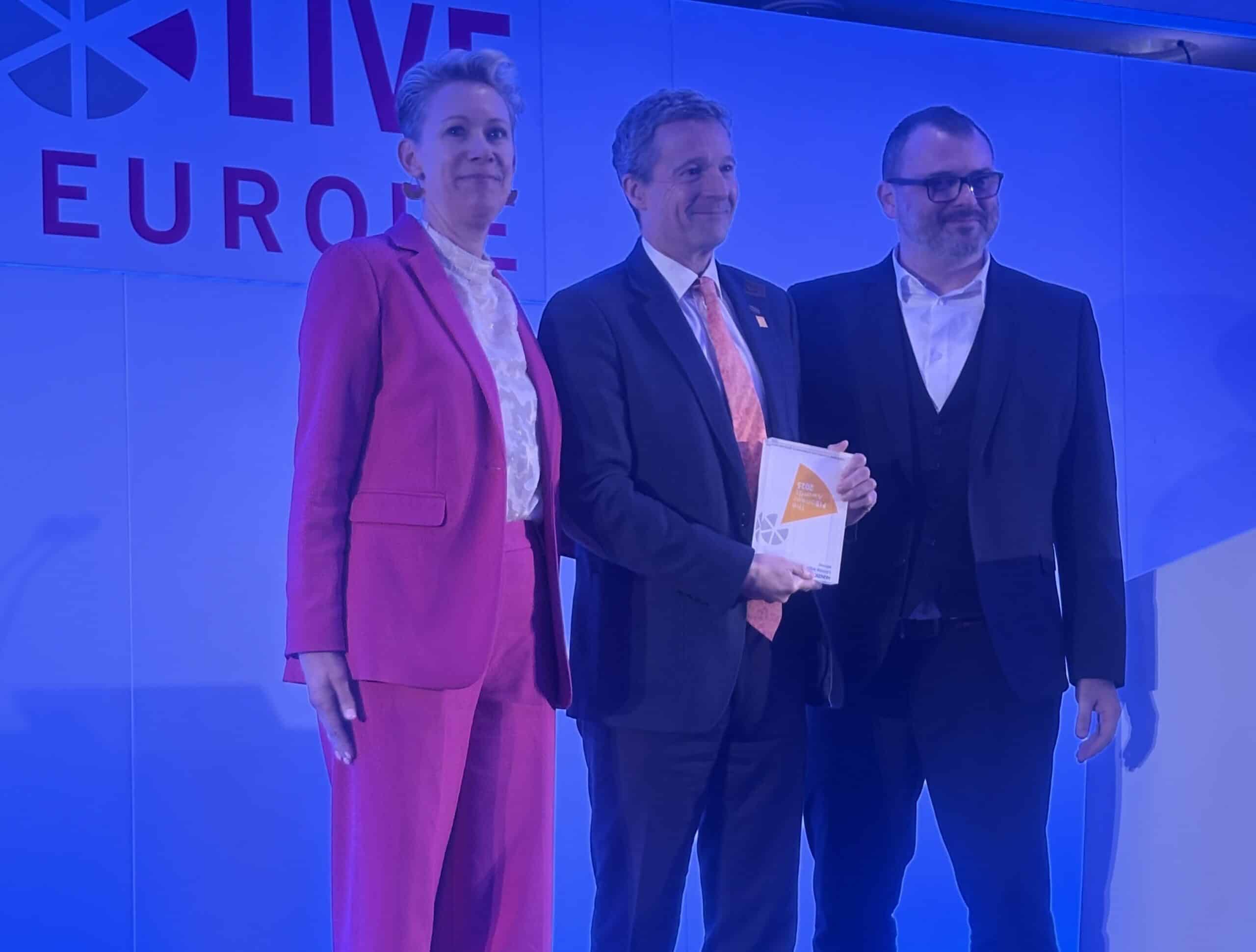
  • QS boss wins lifetime achievement award at PIE Live Europe 2025

    QS boss wins lifetime achievement award at PIE Live Europe 2025

    The PIE Live Europe, held between March 11-12 in central London, brought together leading figures in the international education sector. Delegates at the two-day conference heard key immigration updates, debated the future of the ELT sector and highlighted the value that international students bring to the UK.

    As the conference drew to a close, the winner of the event’s lifetime achievement award was revealed to be Nunzio Quacquarelli, who founded the global higher education and insights company QS in 1990.

    Famed for its university rankings, QS has expanded under Quacquarelli’s leadership to employ more than 900 people from over 30 countries.

    Quacqarelli said it was a “great feeling” to win the award, having been a supporter of The PIE since it was a “fledgeling business”.

    On what was next for QS, he added: “We’re really committed to providing trusted data and insights to the higher education sector and we really believe in the need for universities to transform, to adopt AI – so we’ve launched a responsible AI consortium with Imperial College.

    “And we really believe the need to deliver the emerging skills of the fifth industrial revolution, so we are developing huge amounts of insight on skills and occupations… to identify whatever skills are going to be demanded by employers of the future to guide curricular reform and university transformation.”

    You can watch his full interview in the video below.

    Source link