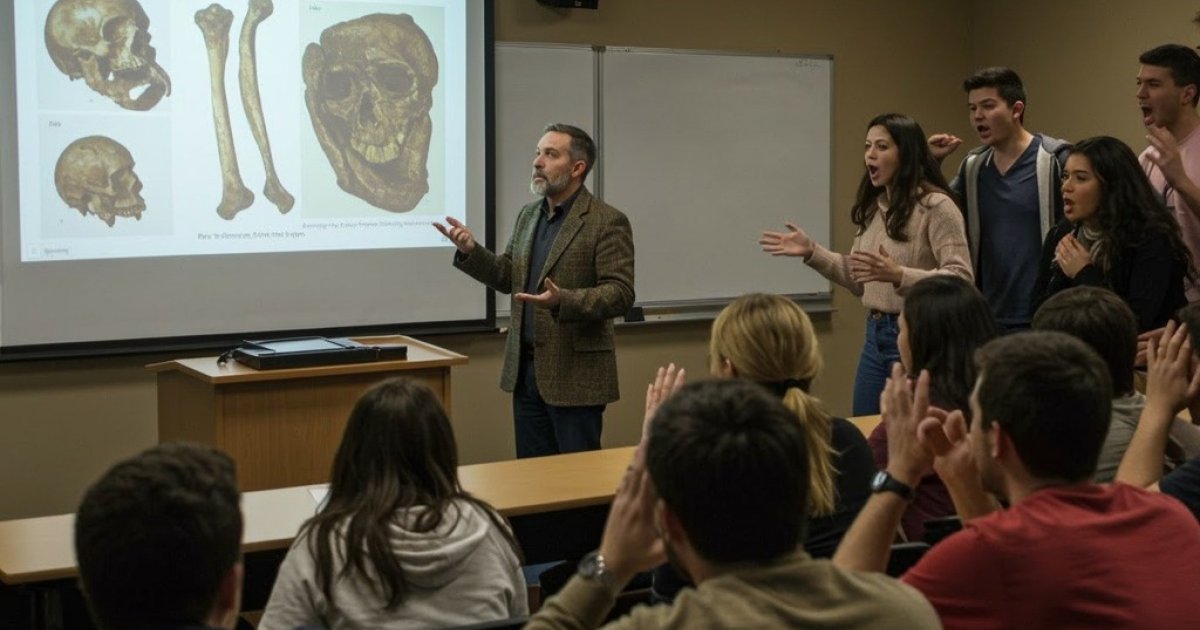
Nine out of ten undergrads believe that “words can be violence”
Differences in views becoming more stark between liberal and conservative students
PHILADELPHIA, Dec. 2, 2025 — Ninety one percent of undergraduate students believe that words can be violence, according to a new poll by the Foundation for Individual Rights and Expression and College Pulse.
The survey’s findings are especially startling coming in the wake of Charlie Kirk’s assassination — an extreme and tragic example of the sharp difference between words and violence.
“When people start thinking that words can be violence, violence becomes an acceptable response to words,” said FIRE Chief Research Advisor Sean Stevens. “Even after the murder of Charlie Kirk at a speaking event, college students think that someone’s words can be a threat. This is antithetical to a free and open society, where words are the best alternative to political violence.”
The new 21-question poll, conducted between Oct. 3-31 by FIRE and College Pulse, assessed free speech on campus in the wake of Kirk’s assassination at Utah Valley University on Sept. 10 and asked undergraduates about their comfort level with a number of controversial topics. The survey of 2,028 undergrads included an oversample of 204 students at Utah Valley, and has a margin of error of +/- 2%.
Half of students surveyed say that because of what happened to Kirk, they are now less comfortable attending or hosting controversial public events on their campus, and one in five say they are less comfortable attending class.
Other findings show stark differences between students at Utah Valley and other schools, as well as widening rifts between liberal and conservative students:
When asked whether the country is headed in the right or wrong direction for people’s ability to freely express their views, 84% of Utah Valley students said “wrong direction,” significantly higher than the 73% reported by students at other schools.
Moderate and conservative students across the country became significantly less likely to say that shouting down a speaker, blocking entry to an event, or using violence to stop a campus speech are acceptable actions. In contrast, liberal students’ support for these tactics held steady, or even increased slightly.
Among moderate and conservative students, opposition to controversial speakers generally declined. Opposition among liberal students, on the other hand, either held steady or increased for all of the controversial speakers compared to the spring.
The gaps between conservative and liberal students may be widening, but some concerns transcend politics. A majority of students of all persuasions (53%) say that political violence is a problem among all groups, considerably more than the 35% of Americans who recently said this in FIRE’s October National Speech Index.
“Students want to feel safe, and the killing of Charlie Kirk naturally eroded their sense of safety,” said Stevens. “What we want students to recognize is that the safest environment is one in which people can speak their minds without fear of censorship or violence.”
The Foundation for Individual Rights and Expression (FIRE) is a nonpartisan, nonprofit organization dedicated to defending and sustaining the individual rights of all Americans to free speech and free thought — the most essential qualities of liberty. FIRE educates Americans about the importance of these inalienable rights, promotes a culture of respect for these rights, and provides the means to preserve them.
Consensus is growing around the idea that words beget violence. Consider some of the things America’s political leaders have said in the wake of Charlie Kirk’s assassination last week at Utah Valley University:
“This kind of rhetoric is directly responsible for the terrorism we’re seeing in our country today.”
“He actively fans the flames of division . . . regularly advocates violence for political retribution, and in more than one case, declares we are at war, not with a foreign adversary, but with each other.”
“There are some deranged people in society, and when they see leaders using that kind of language so often now increasingly, it spurs them on to action.”
“They need to turn down the rhetoric.”
That is, in order, President Donald Trump, Democratic Illinois Gov. JB Pritzker on Trump’s response to political violence, Republican Speaker of the House Mike Johnson, and Democratic Massachusetts Rep. Seth Moulton on Republican leaders.
Throughout American history, especially during times of civil unrest, the government used the power of the state to criminalize what it perceived as advocacy of violence. For example, in 1927, the Supreme Court upheld Charlotte Whitney’s conviction for joining a socialist convention that advocated the overthrow of the government (Whitney v. California).
The Court reasoned that advocating violence could present “danger to the public peace and security,” and that the exercise of the state’s police powers therefore carries “great weight” in such instances. Similarly, Attorney General Pam Bondi recently suggested the federal government might bring “incitement” prosecutions of people who celebrate Charlie Kirk’s assassination.
As the potential for political violence increases, what prevents the government from taking us back to 1927? What prevents the authorities from taking advantage of our fears and criminalizing advocacy of violence or even fiery rhetoric?
BRANDENBURG v. OHIO
The Supreme Court held the government cannot punish incendiary speech unless the intent and likely outcome is to cause “imminent lawless action”.
Enter Brandenburg v. Ohio(1969), the landmark Supreme Court ruling on incitement. The state convicted a Ku Klux Klan leader for a speech saying, “it’s possible that there might have to be some revengeance taken” against the government if it continued to “suppress the white, Caucasian race.” The Supreme Court reversed the conviction, holding the First Amendment protects advocacy of violence unless it is “directed to inciting or producing imminent lawless action and is likely to incite or produce such action.”
Even if one assumes Brandenburg’s words called for violence, for the Supreme Court, his advocacy was too amorphous and the possibility of violence too remote for his prosecution to stay within constitutional bounds.
Similarly, in Hess v. Indiana(1973), the Court reversed an anti-Vietnam War demonstrator’s conviction stemming from his promise to “take the fucking street later” in connection with his arrest at a protest. The Court held these words fell well below the high Brandenburg standard. Hess did not direct his words toward anyone in particular, nor did they suggest a threat of immediate violence. In establishing this high bar, the Court rejected Whitney’s formulationthat advocacy of violence “at some indefinite future time” is punishable on grounds it might ultimately lead to violence.
The Court instead highlighted the difference between “mere abstract teaching of the moral propriety or even moral necessity for a resort to force” and actual preparation for violent action. Thomas Jefferson once said that “a little rebellion now and then is a good thing, and as necessary in the political world as storms in the physical.” Without the Brandenburg distinction, a speaker emulating Jefferson could face jail for recognizing a moral necessity for the resort to force.
Brandenburg’s brilliance is its recognition that political discourse is messy.
Without this distinction, Democratic states could criminalize calling pro-abortion politicians “murderers” on grounds such speech incites violence against those politicians. Republican states could criminalize calling President Trump a “Nazi” on the same grounds. Giving the government the power to lump such heated rhetoric together with speech advocating immediate lawlessness would grant it a cudgel against any speech it saw as threatening its own power — with free and passionate discourse becoming the ultimate victim. Brandenburg therefore allows breathing room necessary for robust public debate.
The Supreme Court made clear in NAACP v. Claiborne Hardware(1982) that “strong and effective rhetoric cannot be nicely channeled in purely dulcet phrases. An advocate must be free to stimulate his audience with spontaneous and emotional appeals for unity and action in a common cause.” In other words, it should not be up to the government to decide when rhetoric has gone too far. Brandenburg’s brilliance is its recognition that political discourse is messy: tone and language are deliberate choices integral to a speaker’s message.
Political leaders and citizens have every right to call out rhetoric that they believe is damaging to our public discourse. Brandenburg — and countless other First Amendment precedents — recognize that these calls, rather than the power of the state, are the most effective antidote to speech we find dangerous or offensive.
No fewer than three government ministers showed up to Universities UK annual conference – if you count science minister Patrick Vallance dialling in – all with only nice things to say about the importance of higher education.
From Patrick Vallance:
The work that you do now and your researchers and others do in the students at universities will, of course, define the shape of much of the country over the next several decades, and indeed probably for the next century.
From minister for skills, Jacqui Smith:
Thank you to those of you who are leading the sector and delivering all of that benefit in making our country richer, not just economically, important though that is, but socially and culturally as well.
And from (now, following a reshuffle over the weekend, former) Secretary of State for Science, Innovation and Technology Peter Kyle:
When I talk about being a champion in your corner, it comes from a place that is very deep, and very personal, and very conviction-oriented. It’s because a university education wasn’t a given for me – because I fought for it – that means that I always valued it so extremely highly.
As one vice chancellor commented to me privately, it’s like being briefly in a warm bath, or basking in the glow of a sunny morning to attend events where ministers say things like these – only to step back into the chilly reality of trying to deal with all the difficulties facing higher education institutions right now.
The weekend’s reshuffle saw Peter Kyle take the helm at the Department for Business and Trade, with Liz Kendall stepping in to replace him at the Department for Science, Innovation and Technology. Jacqui Smith retains her role as minister for skills, working across the Department for Education and the Department for Work and Pensions – either signalling a welcome opportunity for strategic join-up in a cross-government policy agenda, or a dog’s dinner waiting to happen.
Neither seems unlikely to materially change the policy agenda for higher education in England (no, not because there isn’t one, don’t be mean) – but it could slow it down even further while ministers get to grips with their new responsibilities and reporting lines. As MP for Leicester West, Kendall has been supportive of and engaged with the higher education institutions in her constituency, so there is no immediate cause for alarm in the appointment. But everything that follows gleaned from Universities UK should probably carry the caveat that we’ll need to see how much the world has changed in the interim before drawing any firm conclusions.
Yes, we are all individuals
Current policy in the mix includes work across DfE and DSIT to look at the sustainability of the higher education sector. Jacqui Smith hinted that there will be more clarity on future fee levels at the same time as the publication of the post-16 education and skills white paper, but was not able to speak in much more than broad strokes about the themes of the government’s plans for higher education – collaboration, coordination, economic growth and skills, and so on. Similarly, Vallance hinted without explicitly saying it that there is a view within government that the research budget is being spread too thinly and that the presumption of broad-based research taking place in most institutions may be in the cross-hairs.
Patrick Vallance, on the inadvisability of universities attempting to maintain a broad research base without the funding to support it:
We can’t end up with a very, very broad range of research going on everywhere. It speaks to the question of how you get specialisation behind this and it speaks to the question of how we deal with this full economic costing versus volume [of research].
“Specialisation” popped up elsewhere, too; witness Jacqui Smith:
We need a post-16 system that is more able to benefit from specialisation to really drive quality, where there is a bigger focus on collaboration – within the higher education sector, but also between the higher education sector and further education partnerships at at a civic and local level, with employers, with local government, with mayors…
And Peter Kyle:
One of the problems is that too many universities are competing for the same pool of students at the expense of playing to their relative strengths, or truly specialising to become the go-to authority in their field rather than a bit player. In many, this is having a real effect on how resources are being prioritised.
The theory is sound in the abstract – each institution focuses on doing the things they are already good at, and letting others do different things that they are good at, creating the space for a healthy diversity of mission, subject portfolio, and learning modality. You can even imagine the policies that might support such a shift: opening up bids for institutions to build on key specialisms or create consortia to grow demand for particular kinds of provision, for example. You could also take a stick-based approach, focusing on raising the bar to being allowed to provide in areas where the government thinks there is already over-provision.
But you would need deep policy focus, deeper pockets, and the metaphorical political hide of a rhinoceros to pull something like that off, not least because it goes strongly against the grain of the sector and would probably cause some institutions to fall over in the process.
Under financial pressure, vice chancellors are more likely to be thinking in terms of diversifying their offer to hedge against market instability, monitoring any signs of growth in market share among their competitors so they can do their best to grab some of it and, within course and subject areas, streamlining the offer to reduce overheads. Highly specialist provision is expensive and demand can be uncertain. And, as one vice chancellor noted privately, you don’t get the best from academics by not letting them do research, even if teaching might be considered your main strength.
Quid pro quo or true partnership
What strikes me in all this is that despite the warmth with which ministers talk about, and to, the sector, there is still quite a way to go to achieve the kind of partnership with government that is grounded in the will to find a common agenda and shared sense of purpose. Both sides can agree at a high level that higher education is terribly important for the country. Both, I think, can pretty much agree that while higher education as a sector continues to deliver some essential stuff for individuals, society and the economy, it would be much more optimal if the downsides of the marketised system – institutions on the financial brink, subject loss, aggressive (and sometimes predatory) recruitment behaviours, a greater degree of homogeneity of offer than might be desirable, (arguably) insufficient sensitivity of the demand-led system to the labour market – were to be reduced or disappear altogether.
But while the framing remains transactional ie “this is the deal we will give you in return for permission to raise fees” the prospect of a deeper alliance seems remote. This may in one sense be entirely appropriate – higher education institutions are autonomous from government for a reason. But in a time of crisis there might be a case to at the very least define some shared missions or priorities.
Jacqui Smith said that the forthcoming white paper will enact “a shift from that assumption of competition to an assumption of collaboration…[one that] requires us to think about where we put the incentives in order to promote collaboration rather than competition.” She added, in response to a question put to her by a vice chancellor, “without reverting to a sort of Soviet style planned model, the idea that there is some sort of market understanding, you described it as a “guiding mind” is something that I think we need to think hard about, and we will say more about in and post the white paper.”
If asked how to steer a path between adopting a “Soviet style planned model” and just trying to poke the market to see if it can be moved, I’d argue that you could do worse than defining some critical areas that would benefit from collaboration in the sector, and that would require some coordination with government to move forward, and setting up some “mission boards” to drive those forward. My list would include provision of information, advice and guidance about the relationship between HE choices and future career options; student health and wellbeing; credit transfer; HE cold spots and subject gaps, for starters.
Collaboration and coordination doesn’t come about because the government says we would like to see more of this; it happens because there is a value(s)-based rationale for it and some meaningful convening of activity. So maybe the forthcoming white paper could set out some of those agendas as a way of setting the government free from what is obviously a very difficult policy quandary. Or maybe, on the assumption the government probably doesn’t have the scale of will and bandwidth it might need to drive the changes it might, in principle like to see, the sector needs to take the lead and get on and do it anyway.
University governing boards are the black boxes of higher ed. As with marriages, the only people who know what they’re really like are the ones in the relationship. Sometimes not even them.
Like most faculty members, I knew almost nothing about the Board of Trustees at my regional public university, other than hearing my colleagues rail against their hiring decisions. In my nearly two decades on the faculty, we’ve had six presidents. That should tell you something.
After a no-confidence vote in a previous president, the board held a public Zoom session where faculty, students and community members gave them hell. I watched, embarrassed. At the board’s request for further comment, I wrote a letter explaining from my limited perspective how things had gotten so bad.
The next day, a trustee emailed to thank me and asked if I’d be willing to talk. I was. I knew some of my colleagues had go-out-drinking relationships with board members. I have never been cool, so I was, of course, flattered. (Frailty, thy name is Rachel.)
The trustee asked if there were other faculty members they could contact. I gave names. We kept in touch. Eventually, the board fired the president and hired someone new. The trustee would occasionally reach out. We’d talk about campus issues—but also books and dogs. Our conversations made me feel seen and valued—a rarity for me.
Only when I began writing a weekly newsletter for Inside Higher Ed, having confidential and off-the-record conversations with sitting presidents, did I realize that my friendly back channel might not have been entirely kosher. Recently, I finally looked at our board’s bylaws. They said, essentially, that trustees aren’t supposed to go around the president to make requests of university employees.
Oops.
That rule is there for a good reason. While it is theoretically great for trustees to be more knowledgeable about the institutions on whose boards they serve, their main functions are fiduciary and to hire and (increasingly often) fire the president, who is responsible in turn for educating them. Most faculty and staff will have plenty to say if asked (I sure did) but will have only a limited perspective on the administrative realities (which never stops us from opining). And some board members, like some of us faculty, just like to stir up shit.
That was not the case with the trustee at my university, who loved the institution, was smart and caring, and wanted only to understand and help make things better. But the reason for bylaws is because not everyone acts honorably. Or is even informed. One thing I’ve learned: Many board members (and some presidents) don’t pay much attention to those pesky board documents. And they’re rarely updated. I just heard from a current president that when he came into the job, the bylaws stated that documents were to be sent electronically. By telegram!
In the last two years, I’ve heard plenty of stories about good relationships between presidents and helpful boards working together to lead all sorts of different types of institutions. Those tales are happily dull.
Frequently, though, I’ve heard horror stories about board behavior. Trustees reliving their frat years, getting hammered and passing out on the president’s couch. Grabbing butts and commenting on legs. Weighing in on clothing and jewelry choices. But not all offenses are so blatant. More often, presidents tell me about covert alliances between trustees and executive team members who want to undermine the president—and get away with it because of personal relationships. Or the board members who go around the president to talk to faculty (um, right).
I have come to believe that many of the problems in higher ed are a result of the fact that there’s no real oversight of trustees, and often not even a shared understanding of what they’re supposed to be doing. There are associations and consultants, but the institutions that seek them out are the ones who already know they need help, and only because things are seriously messed up. Most “training” happens after everything goes pear-shaped and someone with a title and willingness to spend some coin brings in the consultants.
You’d think leaders would recognize a dysfunctional board. But as one of those consultants likes to say, when you’ve seen one board, you’ve seen one board. Many presidents don’t realize they are in an abusive relationship until they move on (by their own choice, or not) and realize that the next board isn’t like the last. That’s when it hits: Oh. That wasn’t normal.
Boards sometimes bring in a president to shake things up or solve a big problem (there’s no money in the budget). But when a place is used to doing things a certain way—especially if there’s been a long-serving president—the new person often ends up being blamed for making everyone feel uncomfortable. When trustees start hearing complaints from their golf buddies about how their alma mater is “changing too much” or faculty vote no confidence, guess who takes the hit?
Some say big boards are better—fewer people means fewer checks on the loudest voices. Most trustees are used to being in charge and seeing quick results. Higher ed doesn’t work that way. And we haven’t even started talking about shared governance. (That’s a whole other can of night crawlers.)
Presidents have to walk a fine line: Give the board enough information to fulfill their duties without overwhelming them. Some create board books of many hundreds of pages and hope no one reads too closely. Others spoon-feed just what’s needed so they can take advantage of the real expertise and wisdom of the board members. Good trustees are curious and thoughtful. But not all of them got the memo that this is a governing role, not a management one. (Same is true for shared governance.)
As with faculty development, those who are eager to get better at their jobs attend learning sessions and those who most need training rarely show up. The bullies call themselves “critical thinkers.” A former president–turned–consultant told me that in the old days, other board members would call out bad behavior. Now, she says, when the flamethrowers show up, everyone else suddenly finds their phones fascinating.
Good trustees know their role. One I’ve spoken to told his president, “If I ever feel like I’m running the place, I know it’s time to find a new president.” That’s what a good marriage sounds like—mutual trust, healthy boundaries, a sense of being on the same team without Monday-morning quarterbacking.
But like all relationships, presidencies can sour. Many presidents have had great relationships with strong, supportive board chairs. But then the chair rotates. Or a new crop of trustees arrives. Suddenly, everything changes. And there’s no way to explain what happened—only that it did.
That’s when we see the press release that says the president “resigned abruptly.” The board thanks them for their service, announces an interim and closes the door behind them. In a few recent cases, the interim is the board chair, who then takes over as president.
Which is why seasoned presidents negotiate their contracts like they’re signing a prenup. Because as with any marriage, you want to believe it’s forever—but you’d be wise to plan for the day one of you decides to walk away.
Rachel Toor is a contributing editor at Inside Higher Ed, where she writes and edits the Insider membership newsletter The Sandbox.
Congratulations on your recent graduation! All those years of hard work have paid off and have prepared you for the journey ahead. You should be incredibly proud of what you’ve accomplished, and I hope you are excited for what lies ahead.
I remember the mix of emotions: the excitement of stepping into something new, the fear of the unknown, and the deep hope that I’d somehow make an impact. Decades later, those same emotions are still relevant. And if I could go back in time and say a few words to the Kim who stood in her graduation robe, here’s what I’d say:
1. Reject the myth of instant gratification
The highlight reels you see on social media and the stories of overnight successes will undoubtedly tempt you to look for shortcuts. Don’t take the bait.
What appears to be instantaneous success is often built on years of hidden struggle. Success isn’t viral. It’s cumulative. It’s built on tenacity, late nights, and years of quiet persistence. One of the most critical lessons I learned, and one that consistently sets individuals apart, is the unwavering commitment to hard work — especially when no one is watching.
Your degree is a fantastic achievement, but it’s just the start. To truly excel, you must show up every day, both mentally and physically. Take on the unglamorous tasks, master the fundamentals, and keep doing the work, even if you are not getting immediate recognition.
Don’t misunderstand; this isn’t about being a workaholic. It’s about understanding that competence, professional and personal growth, and lasting success are forged through consistent, dedicated effort over time. If you chase shortcuts or expect quick wins, you will ultimately be disappointed. Instead, always strive to deliver more than what’s expected.
2. Don’t just seek opportunities, create them
There are very few golden tickets in this world, and if you’re waiting for a great opportunity to land in your lap, you might find yourself waiting for a long time.
Your education has provided you with a foundation — now it’s your responsibility to build upon it.
The most significant leaps in my career often came from identifying a gap or a need and then raising my hand to fill it, even if it meant stepping outside my job description. If you uncover a problem, bring forward a solution. Take the initiative and volunteer for projects in addition to your day-to-day responsibilities. You might just discover new areas of interest or open the door to work with different teams that can ultimately propel your career forward.
3. Embrace the ‘failure as fuel’ philosophy
Coming off an academic career, the term “failure” can be triggering. As students, we often fear failure more than anything. But the truth is that you will fail, and that’s OK. In fact, it’s a given. But failure, when used as a learning opportunity, is a jumping off point — not the end point.
Every misstep, every “no,” every project that does go as planned is not a sign of your inadequacy, but a data point. Think of it as your best instructor. An experiment that reveals what doesn’t work brings you closer to the solution that does. The only real failure in life is giving up, or worse, not trying at all.
When faced with a major setback, you have a choice: Get stuck or grow stronger. Take accountability but choose growth. If you can figure out how to convert setbacks into stepping stones, it can be your most potent superpower.
4. Never stop learning
You’re just getting started, and that’s exciting! Your degree is a testament to your ability to learn. But your degree represents only a starting point. In fact, many of you won’t end or even start your careers in the exact area you studied.
The pace of change in every industry is accelerating, and skills that are valuable today might be obsolete tomorrow, so you must constantly learn and stay current with advancements. AI is a powerful example. Those who spend the time to learn how to leverage AI to work smarter will thrive. Those who do not will be passed up. This is a fact for those starting their career as well as those decades in.
One of the most powerful sources of learning in my career has come from the many informal mentors I’ve had throughout my life. Build a network of good, smart people at all stages in their careers and invest in those relationships. You can learn just as much from someone only a few steps ahead of you as from someone with decades more experience.
5. Take risks
Comfort zones are cozy, but they are also dangerously limiting. Some of the best moves I’ve ever made started as risks that scared but also exhilarated me. But they were calculated risks, well thought through, and aligned with where I knew I could make a positive impact.
Don’t leap without a plan, but don’t freeze in fear either. The magic often lives on the other side of uncertainty. For what it’s worth, the biggest regrets usually come from the risks not taken. Opportunities rarely present themselves without an element of uncertainty. Your job is to discern which uncertainties are worth embracing.
Own your future, one bold move at a time
The recent college graduates I am blessed to know are some of the brightest, hardest working, most curious, ambitious, and wonderful people (yes, Emma, I am talking about you and all your amazing friends!) You all control your destiny. Your path will not be linear, but it will be yours. Own it. Shape it. And never stop evolving.
And most importantly, remember the wise words of Ferris Bueller, “Life moves pretty fast. If you don’t stop and look around once in a while, you could miss it!”
Innovation Starts Here
Higher ed is evolving — don’t get left behind. Explore how Collegis can help your institution thrive.
Additionally, the Trump administration has variously moved to cancel or suspend research contracts and grants at Columbia University, the University of Pennsylvania and most recently Princeton University as part of punitive actions tied to investigations of campus antisemitism or, in Penn’s case, the decision to allow a trans woman to compete on the women’s swim team three years ago. The administration also briefly froze (and then unfroze) United States Department of Agriculture funds for the University of Maine system after the state’s governor engaged in a tense exchange with President Trump at the White House.
Below, 15 researchers across nine different research areas who have had their federal grants terminated since the start of the Trump administration share just a few of the thousands of stories behind these cuts.
—Elizabeth Redden, opinion editor
Preventing Intimate Partner Violence
Prostock-Studio/iStock/Getty Images Plus
By Rebecca Fielding-Miller, Nicholas Metheny and Sarah Peitzmeier
Each year, more than 3,000 American women are murdered by their partners. Pregnancy and the postpartum period are high-risk periods for intimate partner violence (IPV), which is linked to negative maternal outcomes such as miscarriage, hemorrhage and postpartum depression. Perinatal IPV is also linked to worse infant health outcomes, such as preterm birth and low birth weight, and to adverse childhood experiences. This makes prevention of perinatal IPV crucial not just for the survivor but for the entire family.
Perinatal IPV and its cascade of negative outcomes are preventable—but only if we study the epidemiology and prevention of IPV as rigorously as we study hypertension or any other perinatal complication. A grant rescinded last month by the NIH would have trained a cohort of 12 early-career clinicians and researchers to learn how to study IPV as part of their ongoing research on pregnancy, birth and the postpartum period. We proposed training investigators working in diverse communities across the spectrum of America, with a commitment to including communities disproportionately impacted by IPV and maternal mortality, including Black and LGBTQ+ communities. To solve a problem with constrained resources, it is efficient to focus efforts on where the problem is most severe. While the termination letter named this targeting of training resources an “amorphous equity objective,” we call it a data-driven approach to rigorous science.
Training grants like this one help shift an entire field by giving young investigators the skills and knowledge to add a focus on IPV to their research for the next several decades. In addition to training these 12 young researchers, the grant would have also supported turning the mentorship curriculum we developed into an open-access online training for clinicians and researchers to access in perpetuity, multiplying the impact of the work to train even more investigators in the field. As with the approximately 700 other terminated NIH grants, cutting this work before our aims are realized but after significant costs have been incurred to establish the mentorship team and design the curriculum is the definition of government inefficiency and waste.
With this grant rescinded, none of the promised training will occur. Pregnant people and their babies from every community across America will continue to suffer, without the benefit of advances in the science of how we prevent these violence exposures. Our termination notice claims that the proposed trainings are “antithetical to the scientific inquiry, do nothing to expand our knowledge of living systems, provide low returns on investment, and ultimately do not enhance health, lengthen life, or reduce illness.” We could not disagree more. Anyone who has cared for a child or for the person who gave birth to them knows that preventing maternal and infant death and abuse should be a nonpartisan issue. The current administration is intent on making even this issue into “us” versus “them.” When it comes to public health, there is no such thing. American families deserve better.
Rebecca Fielding Miller is an associate professor of public health at the University of California, San Diego. Her research focuses on health disparities in infectious disease and gender-based violence.
Nicholas Metheny is an Atlanta-area scientist and registered nurse with clinical and research experience in the post-violence care of women and sexual and gender minority communities.
Sarah Peitzmeier is an assistant professor at the University of Maryland School of Public Health who develops and tests interventions to prevent gender-based violence. She is also a practicing birth doula and victim advocate.
Is Work-Study Working?
Okrasyuk/iStock/Getty Images Plus
By Judith Scott-Clayton
On March 7, at 9:49 a.m., I received an email with “GRANT AWARD TERMINATION” in all caps in the subject line. Attached to the email was a letter, addressed to me as project director and referring to our Department of Education grant by its award number. The letter was generic, virtually identical to three other termination letters received that day at the Community College Research Center at Columbia University’s Teachers College, where I am affiliated. It did not mention our project title nor provide any project-specific details to explain why our project, as the email states, “is now inconsistent with, and no longer effectuates, the Department’s priorities.” A few hours later, I received a formal notification that the grant end date was that day: March 7, 2025.
The project—a collaboration with Adela Soliz of Vanderbilt University and Tom Brock of CCRC—was titled “Does Federal Work-Study Work for Students? Evidence From a Randomized Controlled Trial.” The Federal Work-Study (FWS) program was created in 1964 as part of the Economic Opportunity Act and covers up to 75 percent of the wages of college students working part-time in mostly on-campus jobs, with colleges paying the rest. In a typical year, the program provides more than $1 billion in support to more than 450,000 college students with financial need at more than 3,000 institutions all across the country. Several states also have their own similar programs.
Our study would be the first to rigorously evaluate the causal impact of the program on students’ enrollment, employment, persistence and degree completion. We were also conducting interviews, focus groups and surveys to understand how students find FWS jobs, what kinds of work they do, what resources institutions devote to running the program and how much it all costs to operate, all with the goal of ensuring the program is delivering the maximum impact for every single student that participates and for every dollar spent.
At the time of its cancellation, we were about four and a half years into a six-year project. We were right in the middle of randomizing what would be the final cohort of our study sample and fielding the final round of a student survey. This final year is especially important, because the early cohorts were heavily impacted by the pandemic. For the past three weeks, we have been scrambling to pull together any other resources we could find to preserve our options and avoid losing this final cohort of participants. We have also been scrambling to figure out how to continue to pay critical staff and doctoral students involved in the project until we can figure out the next steps.
As for the broader impact of the termination: The Federal Work-Study program itself will keep on going, at least for now; we just won’t know whether it works or not. We hypothesize that it may provide valuable work-based learning opportunities that keep students engaged and give them advantages in the labor market after college, but it’s possible that it distracts students from their studies and hurts their academic performance. We may think that it helps students to afford college, but perhaps the complexity of finding a specific job and navigating all the necessary paperwork reduces its value for the students that need help the most. The next time the program is up for debate, policymakers will be flying blind: Without actual evidence all we can do is speculate.
Since 1964, the FWS program has disbursed more than $95 billion in awards. In comparison, our grant was less than three-thousandths of 1 percent of that amount, and the amount remaining to finish our work and share our findings with the public was just a fraction of that. Our project was motivated by a desire to help policymakers ensure that every dollar invested in financial aid has the maximum possible impact for low-income students. So it is discouraging to learn, so close to the finish line, that this first-of-its-kind evaluation of a major federal program is “now inconsistent with, and no longer effectuates, the Department’s priorities.”
Judith Scott-Clayton is a professor of economics and education at Teachers College, Columbia University, in the Department of Education Policy and Social Analysis, where she directs the Economics and Education Program and teaches courses on the economics of education, labor economics and causal inference.
Democracy Research
AlexeyPushkin/iStock/Getty Images Plus
By Rob Blair, Jessica Gottlieb, Laura Paler and Julie Anne Weaver
We lost funding for the Democratic Erosion Consortium (DEC) as part of the federal government’s recent cancellation of foreign assistance grants. Directed by scholars at Brown University, the University of Houston and American University, DEC works to make academic research on democratic backsliding accessible to policymakers and practitioners seeking evidence-based strategies to defend democracy around the globe.
Originally launched in 2017 on a shoestring budget, DEC began as an effort to improve pedagogy on a troubling trend observable both abroad and at home: the strategic dismantling of democratic norms and institutions by elected leaders with autocratic ambitions. In 2022, in line with the U.S. government’s dual interests in democratic resilience and evidence-based policymaking, we received a grant from the State Department to expand DEC’s work.
The State Department’s investment enabled us to grow our reach beyond the classroom and into the policy arena. We drew on an expanding network of scholars to synthesize evidence on urgent questions—such as how to reduce the spread of misinformation and measure democratic decline. We also built out a novel event data set on democratic erosion and trained partners around the world to use it in their own work.
The immediate consequences are clear: several full- and part-time staff lost funding for their jobs. But the long-term damage is hard to quantify. It’s difficult to argue for the value of evidence-based policymaking in foreign aid when the entire category of foreign assistance has effectively been gutted. More than that, the partnerships we built between academics, practitioners and policymakers were yielding real-time insights and responses—a rare example of successful research-policy collaboration. That infrastructure is now gone.
And at a moment when democratic backsliding is accelerating in many parts of the world, the U.S. government is stepping away from efforts to understand and counter it. Ending this grant not only weakens the ability to monitor democratic erosion globally, it also reduces public awareness and understanding of a phenomenon that is increasingly visible in the U.S. itself.
With the federal policy audience for our work largely gone, we are refocusing our efforts on our other two core constituencies: students and academics. We continue to support instructors engaged in teaching our democratic erosion course and to improve the Democratic Erosion Event Dataset. And in response to growing concern about democratic backsliding in the U.S., we’re developing a more robust domestic data-collection effort, paired with public engagement.
Given intense partisan disagreement around what even constitutes democratic erosion, we are seeking to increase the credibility of new evidence by capturing partisan-diverse perspectives and applying our established comparative framework to U.S. events. We are hoping to continue this work, despite the loss of our federal grant, because the political reality in the U.S. and around the world tells us we need to be worried about democratic erosion now more than ever.
Rob Blair is the Arkadij Eisler Goldman Sachs Associate Professor of Political Science and International and Public Affairs at Brown University.
Jessica Gottlieb is an associate professor at the University of Houston’s Hobby School of Public Affairs.
Laura Paler is an associate professor in the Department of Government in the School of Public Affairs at American University.
Julie Anne Weaver is the research director of the Democratic Erosion Consortium and a lecturer on government at Harvard University.
COVID-19 and Related Immunology Research
peterschreiber.media/iStock/Getty Images Plus
By Matthew Woodruff
On March 24, 2020, I stood in a Biosafety Level 2+ facility at Emory University with six colleagues being taught best practices for working with the largely unknown pathogen, SARS-CoV-2. Other unknowns included where we would get masks (N95s were unavailable), risks of infection to our young kids at home and who would pay for the experiments needed to gain insight into the deadly new virus sweeping across the nation.
That last question was answered relatively quickly. Rapid investment by the first Trump administration’s NIH launched SeroNet, a five-year effort across 25 institutions to “expand the nation’s capacity for SARS-CoV-2 serologic testing on a population-level and advance research on the immune response to SARS-CoV-2 infection and COVID-19 vaccination among diverse and vulnerable populations.” We did just that. Over the coming years, taxpayer dollars funded more than 600 peer-reviewed publications, reflecting significant advances in disease pathology, treatment strategies, disease impact in immunocompromised patients, vaccine testing and more.
Our team at Emory led projects dedicated to understanding the balance between productive and pathogenic immunity in hopes of alleviating disease. We discovered why your immune system sometimes turns on itself in the throes of severe infection, uncovered similarities between the immune responses of chronically autoimmune patients and those who were seriously ill with COVID-19, and documented continued disturbances in patients with long COVID. Importantly, we learned that these responses weren’t unique to COVID-19 and were broadly relevant to human health.
In 2022, I started my own lab founded on those concepts. We have been optimistic that the work we are doing will ultimately serve the American people in our shared desire to live longer, healthier lives.
But over the past months, that optimism has dissipated. Ham-handed targeting of “DEI” awards leaves us unable to understand how diverse human populations might respond differently to infection or develop different kinds of chronic diseases. Mistrust of the same vaccine programs that have halted the spread of measles globally has left us unable to test next-generation vaccines that might provide broad protection against emerging viral strains. And then, on March 24, it was announced that the five-year commitment that the first Trump administration made to our work would no longer be honored. Our COVID-related funding through SeroNet would be halted, effective immediately.
Our fledgling program, a few months ago extremely promising, is now on life support. My lab has invested heavily with our time and limited resources, which are now running thin, into promising new areas of clinically relevant immunology that suddenly look like financial dead ends. The decision to halt entire fields of study in what was previously highly fertile scientific space is as damaging as it is unprecedented, and our lab is left with a business model that is now fundamentally broken.
Matthew Woodruff is an assistant professor of immunology at the Emory University Lowance Center for Human Immunology. His lab studies antibody responses in the context of infection, vaccination and autoimmune disease.
Training Tomorrow’s Biomedical Workforce
Unaihuiziphotography/iStock/Getty Images Plus
By Samantha Meenachand Ryan Poling-Skutvik
On March 21, the NIH terminated our training grant award, which supported the Enhancing Science, Technology, Engineering, and Math Education Diversity (ESTEEMED) program at the University of Rhode Island. The mission of URI ESTEEMED was to increase the preparation of undergraduate students—freshmen and sophomores—to conduct biomedical research, enabling them to succeed in advanced research in preparation to pursue a Ph.D. in STEM. Our ultimate goals were to provide students who were from groups underrepresented in STEM or from disadvantaged economic backgrounds with academic enrichment, research and soft skills development, and a sense of community. NIH claims that our award “no longer effectuates agency priorities” and that it involves “amorphous equity objectives, [that] are antithetical to the scientific inquiry.”
While the language in the termination email itself was derisive and political, the fallout from the loss of this award will be felt for years to come. The state of Rhode Island immediately lost $1.2 million in direct economic activity, and an important workforce development initiative will end, significantly reducing state and regional competitiveness in a growing technological field. Like many other states, Rhode Island has a pressing need for professionals trained in biotechnology, and recruiting people to Rhode Island has often proven to be challenging. This challenge is exemplified by the recent establishment of the Rhode Island Life Sciences Hub with a specific mandate to grow the biotechnology sector in the state.
By contrast, there is a large untapped pool of talent within Rhode Island, who are limited by access to education and training in large part due to the financial pressures families face. Our URI ESTEEMED program recruited talented students who likely would not have had the resources necessary to enter these careers. While NIH would like to argue that ESTEEMED was used to “support unlawful discrimination on the basis of race and other protected characteristics,” ESTEEMED trainees were selected through a rigorous and competitive application process, making these awards merit-based. Without the financial support of this program, many of our trainees would not have been able to attend URI or would not have had the opportunity to focus on research.
URI ESTEEMED in its current form will cease to exist at the end of this semester. We are still figuring out to what capacity we can continue to recruit and train students, but without NIH funds, training programs such as ESTEEMED will not be able to alleviate the many pressures these students face. The political decision to terminate this grant inflicts direct financial pain on some of the most promising students, and these effects will reverberate for years to come.
Samantha Meenach is a professor in the Department of Chemical, Biomolecular, and Materials Engineering at the University of Rhode Island.
Ryan Poling-Skutvik is an assistant professor in the Department of Chemical, Biomolecular, and Materials Engineering and the Department of Physics at the University of Rhode Island.
Alzheimer’s and Dementia Research for Diverse Populations
By Jason D. Flatt
Research funding for diverse populations impacted by Alzheimer’s disease and related dementias (ADRD) is currently being terminated by the U.S. federal government. These terminations are attributed to the premise that the research is incompatible with agency priorities. For instance, funding for studies including older transgender individuals, as well as lesbian, gay, bisexual, queer, intersex and other LGBTQIA+ identities, has been terminated. In addition, funding decisions have been rescinded, and grants have been pulled from scientific review. The National Institutes of Health has stated, “Research programs based on gender identity are often unscientific, have little identifiable return on investment, and do nothing to enhance the health of many Americans. Many such studies ignore, rather than seriously examine, biological realities. It is the policy of NIH not to prioritize these research programs.”
To date, around 700 NIH grants have been terminated, including many important studies on HIV/AIDS, cancer, COVID-19 and ADRD. Of these, about 25 have focused on ADRD. Personally, I have lost nearly $5 million in research funding from the NIH and the Department of Defense because my ADRD research includes transgender people. My research focuses on the needs of LGBTQIA+ and non-LGBTQIA+ older adults, particularly those affected by ADRD and Parkinson’s disease, as well as their caregivers and health-care providers. Some have suggested that we remove or rephrase “forbidden” language in future grants and/or exclude transgender people from our studies, but I will not do that. It is not pro-science and will not ensure that all people benefit from our research. The current and future termination of grants and contracts will have a significant impact on the health of older Americans, slow our innovation, limit our ability to provide care and impede progress in finding a cure.
I am working to raise awareness about these terminations and find ways to either reverse the decisions or secure alternative funding for this vital research. This includes speaking with the press, informing policymakers, generating visibility on social media alongside colleagues and peers, consulting with legal experts, and engaging with community members. I am also deeply concerned about the future of early-career scientists, who are essential in leading efforts to find cures for diseases affecting our communities, especially as the baby boomer generation ages. Many of the grants that have been terminated were early-career awards for newly minted doctoral researchers and faculty, diversity supplements for doctoral students, and competitive NIH predoctoral and postdoctoral fellowships.
In light of today’s sociopolitical climate, it is more important than ever for our civic, academic and research communities to unite in advocating for inclusion, standing up for diverse groups, including LGBTQIA+ communities, and ensuring that early-career scholars and the broader aging population have opportunities for potential cures, treatments and health care.
Jason D. Flatt is an associate professor at the University of Nevada, Las Vegas, School of Public Health, in the Department of Social and Behavioral Health.
I have spent the past year and a half as a postdoc researching the effects of Virginia’s Get a Skill, Get a Job, Get Ahead (G3) initiative, a tuition-free community college program implemented in 2021. Similar to most statewide free college programs, G3 is a last-dollar scholarship program for state residents attending one of Virginia’s 23 community colleges, though students who already receive the maximum Pell Grant and enroll full-time are eligible for an additional living stipend to support the costs of books, transit and other expenses frequently incurred while enrolled. Virginia implemented the program as a bipartisan pandemic-recovery strategy to reverse steep enrollment declines in community colleges and boost credential completion in five high-demand workforce areas: early childhood education, health care, information technology, manufacturing and skilled trades, and public safety.
Like so many other critical research projects in education, our Institute of Education Sciences funding was terminated by the Trump administration’s ongoing efforts to gut the Department of Education and publicly funded research at large. The abrupt termination of the grant, which supports researchers at both the University of Pennsylvania and the Community College Research Center at Columbia University’s Teachers College, is a depressing way to finish out my postdoc. The project is part of a larger IES grant that established the Accelerating Recovery in Community Colleges network, a group of research teams focused on strategies to improve community college enrollment and student success. The loss of funding means canceled conference presentations and convenings; it means planned collaborations with other research teams in the network will not happen. We simply cannot accomplish all the things we set out to do without the resources provided by the grant.
The grant termination is demoralizing on multiple levels. It funded my postdoc, which has been an invaluable experience in developing my skills as an education policy researcher. While my position was nearing its end regardless, the ongoing forced austerity on public-facing research portends a future where these types of opportunities are not available to later generations of scholars. And on a less personal note, canceling education research, especially toward the end of its life cycle, is extremely wasteful and inefficient. It hinders the completion of projects that public money has already been invested in and limits dissemination efforts that help to drive the overwhelmingly positive return on investment from these types of research projects.
This is a real shame in the case of our work on G3. Our findings and planned future research on the policy hold critical implications for policymakers and institutions in Virginia and across the US. States like Arkansas, Indiana and Kentucky have similarly implemented workforce-targeted free college initiatives. And given the heightened attention from policymakers on career and technical education in recent years, it is reasonable to think more states will follow suit. Our work on G3 is in service of improving community college student outcomes so that more students have the resources and opportunities to pursue meaningful careers and life trajectories. Without any federal funding, it will only be more difficult to uncover the best ways to go about achieving these ends.
Daniel Sparks is a postdoctoral researcher in economics and education at the University of Pennsylvania’s Graduate School of Education.
Training Pediatric Physician-Scientists
FluxFactory/e+/Getty Images
By Sallie Permar
The NIH made the abrupt decision last month to terminate the Pediatric Scientist Development Program (PSDP), a long-standing initiative that has trained generations of physician-scientists dedicated to advancing child health. This decision was made without an opportunity for resubmission or revision, and it appears to be linked to diversity, equity and inclusion requirements in our renewal application, components we were previously required to include and encouraged to expand by our reviewers, and that were later weaponized as justification for defunding.
For more than 40 years, the PSDP has served as a critical pipeline for training pediatric physician-scientists. Through rigorous mentorship, research training and career development, the PSDP has trained more than 270 pediatric physician-scientists, helping launch the careers of child health researchers who have made groundbreaking discoveries in areas such as childhood cancer, genetic disorders, autoimmunity and infectious diseases. At a time when pediatric research faces increasing challenges, this decision further weakens an already fragile infrastructure. It is not merely an administrative setback; it has immediate and far-reaching consequences that will be felt across academic institutions and the future of the health of children and the adults they become. Pediatric research is the highest yield of all medical research, providing lifetimes of health.
Without federal funding, our health as Americans faces several dire immediate and long-term impacts:
Loss of training opportunities and career uncertainty for pediatric researchers: The PSDP was on track to expand through deepening of our public-private institutional partnership funding model, due to increasing interest across states and pediatric specialties. We received a record high number of talented applicants this year. Now we are now forced to determine how many, if any, new trainees can be supported. Additionally, the program serves as the critical bridge between physician-scientists’ clinical training and their ability to secure independent research grants. With NIH funding cut, current trainees will face financial instability, and prospective trainees might be forced to abandon their research, and their career aspirations, altogether.
Weakening of the pediatric research pipeline: The PSDP has been a key factor in addressing the national shortage of pediatric physician-scientists. Without it, fewer pediatricians will enter research careers, exacerbating an already urgent pediatric workforce crisis at a time when children are presenting with more complex health needs.
Children’s health in jeopardy: Cutting PSDP funding halts critical research on chronic childhood diseases like genetic conditions, asthma and obesity, leaving millions of children without hope for better treatments or cures, directly reducing their chance for health and quality of life.
The PSDP’s termination is not just a loss for academic medicine, it is a direct threat to the future of pediatric research and children’s health. Pediatricians pursuing research careers already face significant challenges, including limited funding opportunities and lower salaries compared to other medical specialties. By eliminating the PSDP, the NIH has removed one of the most effective mechanisms for supporting these researchers at a critical stage in their careers.
We call on academic leaders, policymakers and child health advocates to take immediate action. The future of children’s health research depends on our ability to reverse this decision and ensure that pediatric physician-scientists continue to receive the training and support they need to advance medical discoveries for the next generation.
Sallie Permar is the Nancy C. Paduano Professor and Chair at Weill Cornell Medicine and pediatrician in chief at New York–Presbyterian/Weill Cornell Medical Center.
Global Development and Women’s Empowerment
By Denise L. Baer
On Monday, Jan. 27, I received an email from local project staff in Guatemala canceling that day’s key informant interview due to the “review of cooperation projects by the United States government” and the request to “suspend activities” until further notice. This was the first notice that the evaluation of the Legal Reform Fund (LRF) project that I was conducting had been paused—and, in effect, permanently canceled. After checking in with the project implementer, the American Bar Association’s Rule of Law Initiative (ABA-ROLI), I received formal notification of the pause later that same day.
LRF provided contextualized expert legal technical assistance and training to partnering government agencies, parliamentarians, judges, court staff and women entrepreneurs to improve women’s access to land, property rights and credit in Guatemala, Indonesia, Mexico and Timor-Leste. I had been working on the evaluation for about two months, with the intent to complete all initial staff interviews before the end of January and then move on to field data collection. The evaluation had been approved last December by the Department of State, with approval of the inception report coming from the department’s Office of Global Women’s Issues just a week earlier. While I’d been tracking the flurry of executive orders, I doubted that this project would violate the new “two-gender” policy—after all, it was funded through the Women’s Global Development and Prosperity (W-GDP) Initiative created by President Trump himself during his first administration in 2019 and championed by his daughter Ivanka with great fanfare. The initiative aimed to help 50 million women in developing countries realize their economic potential by 2025; the LRF project was only one of many funded by W-GDP initially and later continued by the Biden administration.
The LRF project ended December 2024. Was it effective and efficient? Were the planned outcomes achieved? We will never know. Since I was paid by ABA-ROLI for the work conducted to date before the pause, the primary cost of this discontinuance is not to me personally, but to the American people, who funded this project. The call for this evaluation and the approval of my proposal was born of the government’s desire for efficiency and to ensure funded initiatives were going according to plan. Indeed, the Government Accountability Office had identified a less-than-robust implementation framework in many early W-GDP projects, and this evaluation was intended to provide critical evidence of whether processes had improved.
Now we will never know how strong the evidence base is for supporting women entrepreneurs through this initiative. It is profoundly stunning that not only would the Trump administration stop work midstream for so many projects, but they would also stop evaluations of project work already completed—even for programs they themselves created and supported. How does funding a project and then shutting down the work of determining how effective that project was fight waste, fraud and abuse?
Denise L. Baer is a scholar-practitioner fellow at the Graduate School of Political Management at George Washington University.
Additionally, the Trump administration has variously moved to cancel or suspend research contracts and grants at Columbia University, the University of Pennsylvania and most recently Princeton University as part of punitive actions tied to investigations of campus antisemitism or, in Penn’s case, the decision to allow a trans woman to compete on the women’s swim team three years ago. The administration also briefly froze (and then unfroze) United States Department of Agriculture funds for the University of Maine system after the state’s governor engaged in a tense exchange with President Trump at the White House.
Below, 16 researchers across nine different research areas who have had their federal grants terminated since the start of the Trump administration share just a few of the thousands of stories behind these cuts.
—Elizabeth Redden, opinion editor
Preventing Intimate Partner Violence
Prostock-Studio/iStock/Getty Images Plus
By Rebecca Fielding-Miller, Nicholas Metheny, Abigail Hatcher and Sarah Peitzmeier
Each year, more than 3,000 American women are murdered by their partners. Pregnancy and the postpartum period are high-risk periods for intimate partner violence (IPV), which is linked to negative maternal outcomes such as miscarriage, hemorrhage and postpartum depression. Perinatal IPV is also linked to worse infant health outcomes, such as preterm birth and low birth weight, and to adverse childhood experiences. This makes prevention of perinatal IPV crucial not just for the survivor but for the entire family.
Perinatal IPV and its cascade of negative outcomes are preventable—but only if we study the epidemiology and prevention of IPV as rigorously as we study hypertension or any other perinatal complication. A grant rescinded last month by the NIH would have trained a cohort of 12 early-career clinicians and researchers to learn how to study IPV as part of their ongoing research on pregnancy, birth and the postpartum period. We proposed training investigators working in diverse communities across the spectrum of America, with a commitment to including communities disproportionately impacted by IPV and maternal mortality, including Black and LGBTQ+ communities. To solve a problem with constrained resources, it is efficient to focus efforts on where the problem is most severe. While the termination letter named this targeting of training resources an “amorphous equity objective,” we call it a data-driven approach to rigorous science.
Training grants like this one help shift an entire field by giving young investigators the skills and knowledge to add a focus on IPV to their research for the next several decades. In addition to training these 12 young researchers, the grant would have also supported turning the mentorship curriculum we developed into an open-access online training for clinicians and researchers to access in perpetuity, multiplying the impact of the work to train even more investigators in the field. As with the approximately 700 other terminated NIH grants, cutting this work before our aims are realized but after significant costs have been incurred to establish the mentorship team and design the curriculum is the definition of government inefficiency and waste.
With this grant rescinded, none of the promised training will occur. Pregnant people and their babies from every community across America will continue to suffer, without the benefit of advances in the science of how we prevent these violence exposures. Our termination notice claims that the proposed trainings are “antithetical to the scientific inquiry, do nothing to expand our knowledge of living systems, provide low returns on investment, and ultimately do not enhance health, lengthen life, or reduce illness.” We could not disagree more. Anyone who has cared for a child or for the person who gave birth to them knows that preventing maternal and infant death and abuse should be a nonpartisan issue. The current administration is intent on making even this issue into “us” versus “them.” When it comes to public health, there is no such thing. American families deserve better.
Rebecca Fielding Miller is an associate professor of public health at the University of California, San Diego. Her research focuses on health disparities in infectious disease and gender-based violence.
Nicholas Metheny is an Atlanta-area scientist and registered nurse with clinical and research experience in the post-violence care of women and sexual and gender minority communities.
Abigail Hatcher is an associate professor at the University of North Carolina and University of the Witwatersrand, where she develops and tests health sector models for preventing violence in pregnancy.
Sarah Peitzmeier is an assistant professor at the University of Maryland School of Public Health who develops and tests interventions to prevent gender-based violence. She is also a practicing birth doula and victim advocate.
Is Work-Study Working?
Okrasyuk/iStock/Getty Images Plus
By Judith Scott-Clayton
On March 7, at 9:49 a.m., I received an email with “GRANT AWARD TERMINATION” in all caps in the subject line. Attached to the email was a letter, addressed to me as project director and referring to our Department of Education grant by its award number. The letter was generic, virtually identical to three other termination letters received that day at the Community College Research Center at Columbia University’s Teachers College, where I am affiliated. It did not mention our project title nor provide any project-specific details to explain why our project, as the email states, “is now inconsistent with, and no longer effectuates, the Department’s priorities.” A few hours later, I received a formal notification that the grant end date was that day: March 7, 2025.
The project—a collaboration with Adela Soliz of Vanderbilt University and Tom Brock of CCRC—was titled “Does Federal Work-Study Work for Students? Evidence From a Randomized Controlled Trial.” The Federal Work-Study (FWS) program was created in 1964 as part of the Economic Opportunity Act and covers up to 75 percent of the wages of college students working part-time in mostly on-campus jobs, with colleges paying the rest. In a typical year, the program provides more than $1 billion in support to more than 450,000 college students with financial need at more than 3,000 institutions all across the country. Several states also have their own similar programs.
Our study would be the first to rigorously evaluate the causal impact of the program on students’ enrollment, employment, persistence and degree completion. We were also conducting interviews, focus groups and surveys to understand how students find FWS jobs, what kinds of work they do, what resources institutions devote to running the program and how much it all costs to operate, all with the goal of ensuring the program is delivering the maximum impact for every single student that participates and for every dollar spent.
At the time of its cancellation, we were about four and a half years into a six-year project. We were right in the middle of randomizing what would be the final cohort of our study sample and fielding the final round of a student survey. This final year is especially important, because the early cohorts were heavily impacted by the pandemic. For the past three weeks, we have been scrambling to pull together any other resources we could find to preserve our options and avoid losing this final cohort of participants. We have also been scrambling to figure out how to continue to pay critical staff and doctoral students involved in the project until we can figure out the next steps.
As for the broader impact of the termination: The Federal Work-Study program itself will keep on going, at least for now; we just won’t know whether it works or not. We hypothesize that it may provide valuable work-based learning opportunities that keep students engaged and give them advantages in the labor market after college, but it’s possible that it distracts students from their studies and hurts their academic performance. We may think that it helps students to afford college, but perhaps the complexity of finding a specific job and navigating all the necessary paperwork reduces its value for the students that need help the most. The next time the program is up for debate, policymakers will be flying blind: Without actual evidence all we can do is speculate.
Since 1964, the FWS program has disbursed more than $95 billion in awards. In comparison, our grant was less than three-thousandths of 1 percent of that amount, and the amount remaining to finish our work and share our findings with the public was just a fraction of that. Our project was motivated by a desire to help policymakers ensure that every dollar invested in financial aid has the maximum possible impact for low-income students. So it is discouraging to learn, so close to the finish line, that this first-of-its-kind evaluation of a major federal program is “now inconsistent with, and no longer effectuates, the Department’s priorities.”
Judith Scott-Clayton is a professor of economics and education at Teachers College, Columbia University, in the Department of Education Policy and Social Analysis, where she directs the Economics and Education Program and teaches courses on the economics of education, labor economics and causal inference.
Democracy Research
AlexeyPushkin/iStock/Getty Images Plus
By Rob Blair, Jessica Gottlieb, Laura Paler and Julie Anne Weaver
We lost funding for the Democratic Erosion Consortium (DEC) as part of the federal government’s recent cancellation of foreign assistance grants. Directed by scholars at Brown University, the University of Houston and American University, DEC works to make academic research on democratic backsliding accessible to policymakers and practitioners seeking evidence-based strategies to defend democracy around the globe.
Originally launched in 2017 on a shoestring budget, DEC began as an effort to improve pedagogy on a troubling trend observable both abroad and at home: the strategic dismantling of democratic norms and institutions by elected leaders with autocratic ambitions. In 2022, in line with the U.S. government’s dual interests in democratic resilience and evidence-based policymaking, we received a grant from the State Department to expand DEC’s work.
The State Department’s investment enabled us to grow our reach beyond the classroom and into the policy arena. We drew on an expanding network of scholars to synthesize evidence on urgent questions—such as how to reduce the spread of misinformation and measure democratic decline. We also built out a novel event data set on democratic erosion and trained partners around the world to use it in their own work.
The immediate consequences are clear: several full- and part-time staff lost funding for their jobs. But the long-term damage is hard to quantify. It’s difficult to argue for the value of evidence-based policymaking in foreign aid when the entire category of foreign assistance has effectively been gutted. More than that, the partnerships we built between academics, practitioners and policymakers were yielding real-time insights and responses—a rare example of successful research-policy collaboration. That infrastructure is now gone.
And at a moment when democratic backsliding is accelerating in many parts of the world, the U.S. government is stepping away from efforts to understand and counter it. Ending this grant not only weakens the ability to monitor democratic erosion globally, it also reduces public awareness and understanding of a phenomenon that is increasingly visible in the U.S. itself.
With the federal policy audience for our work largely gone, we are refocusing our efforts on our other two core constituencies: students and academics. We continue to support instructors engaged in teaching our democratic erosion course and to improve the Democratic Erosion Event Dataset. And in response to growing concern about democratic backsliding in the U.S., we’re developing a more robust domestic data-collection effort, paired with public engagement.
Given intense partisan disagreement around what even constitutes democratic erosion, we are seeking to increase the credibility of new evidence by capturing partisan-diverse perspectives and applying our established comparative framework to U.S. events. We are hoping to continue this work, despite the loss of our federal grant, because the political reality in the U.S. and around the world tells us we need to be worried about democratic erosion now more than ever.
Rob Blair is the Arkadij Eisler Goldman Sachs Associate Professor of Political Science and International and Public Affairs at Brown University.
Jessica Gottlieb is an associate professor at the University of Houston’s Hobby School of Public Affairs.
Laura Paler is an associate professor in the Department of Government in the School of Public Affairs at American University.
Julie Anne Weaver is the research director of the Democratic Erosion Consortium and a lecturer on government at Harvard University.
COVID-19 and Related Immunology Research
peterschreiber.media/iStock/Getty Images Plus
By Matthew Woodruff
On March 24, 2020, I stood in a Biosafety Level 2+ facility at Emory University with six colleagues being taught best practices for working with the largely unknown pathogen, SARS-CoV-2. Other unknowns included where we would get masks (N95s were unavailable), risks of infection to our young kids at home and who would pay for the experiments needed to gain insight into the deadly new virus sweeping across the nation.
That last question was answered relatively quickly. Rapid investment by the first Trump administration’s NIH launched SeroNet, a five-year effort across 25 institutions to “expand the nation’s capacity for SARS-CoV-2 serologic testing on a population-level and advance research on the immune response to SARS-CoV-2 infection and COVID-19 vaccination among diverse and vulnerable populations.” We did just that. Over the coming years, taxpayer dollars funded more than 600 peer-reviewed publications, reflecting significant advances in disease pathology, treatment strategies, disease impact in immunocompromised patients, vaccine testing and more.
Our team at Emory led projects dedicated to understanding the balance between productive and pathogenic immunity in hopes of alleviating disease. We discovered why your immune system sometimes turns on itself in the throes of severe infection, uncovered similarities between the immune responses of chronically autoimmune patients and those who were seriously ill with COVID-19, and documented continued disturbances in patients with long COVID. Importantly, we learned that these responses weren’t unique to COVID-19 and were broadly relevant to human health.
In 2022, I started my own lab founded on those concepts. We have been optimistic that the work we are doing will ultimately serve the American people in our shared desire to live longer, healthier lives.
But over the past months, that optimism has dissipated. Ham-handed targeting of “DEI” awards leaves us unable to understand how diverse human populations might respond differently to infection or develop different kinds of chronic diseases. Mistrust of the same vaccine programs that have halted the spread of measles globally has left us unable to test next-generation vaccines that might provide broad protection against emerging viral strains. And then, on March 24, it was announced that the five-year commitment that the first Trump administration made to our work would no longer be honored. Our COVID-related funding through SeroNet would be halted, effective immediately.
Our fledgling program, a few months ago extremely promising, is now on life support. My lab has invested heavily with our time and limited resources, which are now running thin, into promising new areas of clinically relevant immunology that suddenly look like financial dead ends. The decision to halt entire fields of study in what was previously highly fertile scientific space is as damaging as it is unprecedented, and our lab is left with a business model that is now fundamentally broken.
Matthew Woodruff is an assistant professor of immunology at the Emory University Lowance Center for Human Immunology. His lab studies antibody responses in the context of infection, vaccination and autoimmune disease.
Training Tomorrow’s Biomedical Workforce
Unaihuiziphotography/iStock/Getty Images Plus
By Samantha Meenachand Ryan Poling-Skutvik
On March 21, the NIH terminated our training grant award, which supported the Enhancing Science, Technology, Engineering, and Math Education Diversity (ESTEEMED) program at the University of Rhode Island. The mission of URI ESTEEMED was to increase the preparation of undergraduate students—freshmen and sophomores—to conduct biomedical research, enabling them to succeed in advanced research in preparation to pursue a Ph.D. in STEM. Our ultimate goals were to provide students who were from groups underrepresented in STEM or from disadvantaged economic backgrounds with academic enrichment, research and soft skills development, and a sense of community. NIH claims that our award “no longer effectuates agency priorities” and that it involves “amorphous equity objectives, [that] are antithetical to the scientific inquiry.”
While the language in the termination email itself was derisive and political, the fallout from the loss of this award will be felt for years to come. The state of Rhode Island immediately lost $1.2 million in direct economic activity, and an important workforce development initiative will end, significantly reducing state and regional competitiveness in a growing technological field. Like many other states, Rhode Island has a pressing need for professionals trained in biotechnology, and recruiting people to Rhode Island has often proven to be challenging. This challenge is exemplified by the recent establishment of the Rhode Island Life Sciences Hub with a specific mandate to grow the biotechnology sector in the state.
By contrast, there is a large untapped pool of talent within Rhode Island, who are limited by access to education and training in large part due to the financial pressures families face. Our URI ESTEEMED program recruited talented students who likely would not have had the resources necessary to enter these careers. While NIH would like to argue that ESTEEMED was used to “support unlawful discrimination on the basis of race and other protected characteristics,” ESTEEMED trainees were selected through a rigorous and competitive application process, making these awards merit-based. Without the financial support of this program, many of our trainees would not have been able to attend URI or would not have had the opportunity to focus on research.
URI ESTEEMED in its current form will cease to exist at the end of this semester. We are still figuring out to what capacity we can continue to recruit and train students, but without NIH funds, training programs such as ESTEEMED will not be able to alleviate the many pressures these students face. The political decision to terminate this grant inflicts direct financial pain on some of the most promising students, and these effects will reverberate for years to come.
Samantha Meenach is a professor in the Department of Chemical, Biomolecular, and Materials Engineering at the University of Rhode Island.
Ryan Poling-Skutvik is an assistant professor in the Department of Chemical, Biomolecular, and Materials Engineering and the Department of Physics at the University of Rhode Island.
Alzheimer’s and Dementia Research for Diverse Populations
By Jason D. Flatt
Research funding for diverse populations impacted by Alzheimer’s disease and related dementias (ADRD) is currently being terminated by the U.S. federal government. These terminations are attributed to the premise that the research is incompatible with agency priorities. For instance, funding for studies including older transgender individuals, as well as lesbian, gay, bisexual, queer, intersex and other LGBTQIA+ identities, has been terminated. In addition, funding decisions have been rescinded, and grants have been pulled from scientific review. The National Institutes of Health has stated, “Research programs based on gender identity are often unscientific, have little identifiable return on investment, and do nothing to enhance the health of many Americans. Many such studies ignore, rather than seriously examine, biological realities. It is the policy of NIH not to prioritize these research programs.”
To date, around 700 NIH grants have been terminated, including many important studies on HIV/AIDS, cancer, COVID-19 and ADRD. Of these, about 25 have focused on ADRD. Personally, I have lost nearly $5 million in research funding from the NIH and the Department of Defense because my ADRD research includes transgender people. My research focuses on the needs of LGBTQIA+ and non-LGBTQIA+ older adults, particularly those affected by ADRD and Parkinson’s disease, as well as their caregivers and health-care providers. Some have suggested that we remove or rephrase “forbidden” language in future grants and/or exclude transgender people from our studies, but I will not do that. It is not pro-science and will not ensure that all people benefit from our research. The current and future termination of grants and contracts will have a significant impact on the health of older Americans, slow our innovation, limit our ability to provide care and impede progress in finding a cure.
I am working to raise awareness about these terminations and find ways to either reverse the decisions or secure alternative funding for this vital research. This includes speaking with the press, informing policymakers, generating visibility on social media alongside colleagues and peers, consulting with legal experts, and engaging with community members. I am also deeply concerned about the future of early-career scientists, who are essential in leading efforts to find cures for diseases affecting our communities, especially as the baby boomer generation ages. Many of the grants that have been terminated were early-career awards for newly minted doctoral researchers and faculty, diversity supplements for doctoral students, and competitive NIH predoctoral and postdoctoral fellowships.
In light of today’s sociopolitical climate, it is more important than ever for our civic, academic and research communities to unite in advocating for inclusion, standing up for diverse groups, including LGBTQIA+ communities, and ensuring that early-career scholars and the broader aging population have opportunities for potential cures, treatments and health care.
Jason D. Flatt is an associate professor at the University of Nevada, Las Vegas, School of Public Health, in the Department of Social and Behavioral Health.
I have spent the past year and a half as a postdoc researching the effects of Virginia’s Get a Skill, Get a Job, Get Ahead (G3) initiative, a tuition-free community college program implemented in 2021. Similar to most statewide free college programs, G3 is a last-dollar scholarship program for state residents attending one of Virginia’s 23 community colleges, though students who already receive the maximum Pell Grant and enroll full-time are eligible for an additional living stipend to support the costs of books, transit and other expenses frequently incurred while enrolled. Virginia implemented the program as a bipartisan pandemic-recovery strategy to reverse steep enrollment declines in community colleges and boost credential completion in five high-demand workforce areas: early childhood education, health care, information technology, manufacturing and skilled trades, and public safety.
Like so many other critical research projects in education, our Institute of Education Sciences funding was terminated by the Trump administration’s ongoing efforts to gut the Department of Education and publicly funded research at large. The abrupt termination of the grant, which supports researchers at both the University of Pennsylvania and the Community College Research Center at Columbia University’s Teachers College, is a depressing way to finish out my postdoc. The project is part of a larger IES grant that established the Accelerating Recovery in Community Colleges network, a group of research teams focused on strategies to improve community college enrollment and student success. The loss of funding means canceled conference presentations and convenings; it means planned collaborations with other research teams in the network will not happen. We simply cannot accomplish all the things we set out to do without the resources provided by the grant.
The grant termination is demoralizing on multiple levels. It funded my postdoc, which has been an invaluable experience in developing my skills as an education policy researcher. While my position was nearing its end regardless, the ongoing forced austerity on public-facing research portends a future where these types of opportunities are not available to later generations of scholars. And on a less personal note, canceling education research, especially toward the end of its life cycle, is extremely wasteful and inefficient. It hinders the completion of projects that public money has already been invested in and limits dissemination efforts that help to drive the overwhelmingly positive return on investment from these types of research projects.
This is a real shame in the case of our work on G3. Our findings and planned future research on the policy hold critical implications for policymakers and institutions in Virginia and across the US. States like Arkansas, Indiana and Kentucky have similarly implemented workforce-targeted free college initiatives. And given the heightened attention from policymakers on career and technical education in recent years, it is reasonable to think more states will follow suit. Our work on G3 is in service of improving community college student outcomes so that more students have the resources and opportunities to pursue meaningful careers and life trajectories. Without any federal funding, it will only be more difficult to uncover the best ways to go about achieving these ends.
Daniel Sparks is a postdoctoral researcher in economics and education at the University of Pennsylvania’s Graduate School of Education.
Training Pediatric Physician-Scientists
FluxFactory/e+/Getty Images
By Sallie Permar
The NIH made the abrupt decision last month to terminate the Pediatric Scientist Development Program (PSDP), a long-standing initiative that has trained generations of physician-scientists dedicated to advancing child health. This decision was made without an opportunity for resubmission or revision, and it appears to be linked to diversity, equity and inclusion requirements in our renewal application, components we were previously required to include and encouraged to expand by our reviewers, and that were later weaponized as justification for defunding.
For more than 40 years, the PSDP has served as a critical pipeline for training pediatric physician-scientists. Through rigorous mentorship, research training and career development, the PSDP has trained more than 270 pediatric physician-scientists, helping launch the careers of child health researchers who have made groundbreaking discoveries in areas such as childhood cancer, genetic disorders, autoimmunity and infectious diseases. At a time when pediatric research faces increasing challenges, this decision further weakens an already fragile infrastructure. It is not merely an administrative setback; it has immediate and far-reaching consequences that will be felt across academic institutions and the future of the health of children and the adults they become. Pediatric research is the highest yield of all medical research, providing lifetimes of health.
Without federal funding, our health as Americans faces several dire immediate and long-term impacts:
Loss of training opportunities and career uncertainty for pediatric researchers: The PSDP was on track to expand through deepening of our public-private institutional partnership funding model, due to increasing interest across states and pediatric specialties. We received a record high number of talented applicants this year. Now we are now forced to determine how many, if any, new trainees can be supported. Additionally, the program serves as the critical bridge between physician-scientists’ clinical training and their ability to secure independent research grants. With NIH funding cut, current trainees will face financial instability, and prospective trainees might be forced to abandon their research, and their career aspirations, altogether.
Weakening of the pediatric research pipeline: The PSDP has been a key factor in addressing the national shortage of pediatric physician-scientists. Without it, fewer pediatricians will enter research careers, exacerbating an already urgent pediatric workforce crisis at a time when children are presenting with more complex health needs.
Children’s health in jeopardy: Cutting PSDP funding halts critical research on chronic childhood diseases like genetic conditions, asthma and obesity, leaving millions of children without hope for better treatments or cures, directly reducing their chance for health and quality of life.
The PSDP’s termination is not just a loss for academic medicine, it is a direct threat to the future of pediatric research and children’s health. Pediatricians pursuing research careers already face significant challenges, including limited funding opportunities and lower salaries compared to other medical specialties. By eliminating the PSDP, the NIH has removed one of the most effective mechanisms for supporting these researchers at a critical stage in their careers.
We call on academic leaders, policymakers and child health advocates to take immediate action. The future of children’s health research depends on our ability to reverse this decision and ensure that pediatric physician-scientists continue to receive the training and support they need to advance medical discoveries for the next generation.
Sallie Permar is the Nancy C. Paduano Professor and Chair at Weill Cornell Medicine and pediatrician in chief at New York–Presbyterian/Weill Cornell Medical Center.
Global Development and Women’s Empowerment
By Denise L. Baer
On Monday, Jan. 27, I received an email from local project staff in Guatemala canceling that day’s key informant interview due to the “review of cooperation projects by the United States government” and the request to “suspend activities” until further notice. This was the first notice that the evaluation of the Legal Reform Fund (LRF) project that I was conducting had been paused—and, in effect, permanently canceled. After checking in with the project implementer, the American Bar Association’s Rule of Law Initiative (ABA-ROLI), I received formal notification of the pause later that same day.
LRF provided contextualized expert legal technical assistance and training to partnering government agencies, parliamentarians, judges, court staff and women entrepreneurs to improve women’s access to land, property rights and credit in Guatemala, Indonesia, Mexico and Timor-Leste. I had been working on the evaluation for about two months, with the intent to complete all initial staff interviews before the end of January and then move on to field data collection. The evaluation had been approved last December by the Department of State, with approval of the inception report coming from the department’s Office of Global Women’s Issues just a week earlier. While I’d been tracking the flurry of executive orders, I doubted that this project would violate the new “two-gender” policy—after all, it was funded through the Women’s Global Development and Prosperity (W-GDP) Initiative created by President Trump himself during his first administration in 2019 and championed by his daughter Ivanka with great fanfare. The initiative aimed to help 50 million women in developing countries realize their economic potential by 2025; the LRF project was only one of many funded by W-GDP initially and later continued by the Biden administration.
The LRF project ended December 2024. Was it effective and efficient? Were the planned outcomes achieved? We will never know. Since I was paid by ABA-ROLI for the work conducted to date before the pause, the primary cost of this discontinuance is not to me personally, but to the American people, who funded this project. The call for this evaluation and the approval of my proposal was born of the government’s desire for efficiency and to ensure funded initiatives were going according to plan. Indeed, the Government Accountability Office had identified a less-than-robust implementation framework in many early W-GDP projects, and this evaluation was intended to provide critical evidence of whether processes had improved.
Now we will never know how strong the evidence base is for supporting women entrepreneurs through this initiative. It is profoundly stunning that not only would the Trump administration stop work midstream for so many projects, but they would also stop evaluations of project work already completed—even for programs they themselves created and supported. How does funding a project and then shutting down the work of determining how effective that project was fight waste, fraud and abuse?
Denise L. Baer is a scholar-practitioner fellow at the Graduate School of Political Management at George Washington University.
This essay was originally published in Jewish Telegraphic Agency on March 14, 2025.
We can’t make antisemitism go away by censoring antisemites.
Nevertheless, the Trump administration has said it is combating antisemitism at Columbia University by canceling $400 million in funding and detaining a former student over what the president has vexingly called “illegal protests” against Israel. It is also making a host of additional demands of the university.
Some Jewish groups are applauding the effort. But as an American Jew and free speech lawyer, I can tell you that protest alone isn’t illegal — and that giving the government the power to punish hateful speech will only erode our own right to speak out against hate.
In the wake of the Oct. 7, 2023, attack led by Hamas on Israeli civilians and Israel’s military response, protests erupted on campuses nationwide. Some of the activities by student protesters were unlawful, like blocking fellow students from entering parts of campus or occupying buildings. But many students engaged in pure speech by marching, displaying signs, or shouting slogans. These are protected and celebrated forms of protest in our country. Whether in support of Israel, Palestine, or even Hamas, the First Amendment prevents the government from punishing or censoring them.
As a historically persecuted population, Jews have a vested interest in ensuring American civil rights protections remain in full force. The First Amendment guarantees not only the freedom to practice our religion in this country, but our ability to speak out when our rights and lives are in danger.
Our institutions of higher education are supposed to be a marketplace of ideas. Even if you think those ideas are bad, protecting all speech means your speech is protected, too.
In 1943, 400 rabbis marched on Washington to draw attention to the mass murder of European Jews, helping lead to the creation of an American War Refugee Board that saved thousands of Jewish lives. In 1963, American Jewish leaders like German-born Rabbi Joachim Prinz marched again, this time with Martin Luther King Jr. Speaking just before Dr. King’s “I Have a Dream” speech, Rabbi Prinz lamented that his former countrymen “remained silent in the face of hate” and pleaded that “America must not become a nation of onlookers. America must not remain silent.”
But we endanger the ability to speak out when we allow the government to erode our First Amendment protections. That’s why White House statements this week threatening punishment for anti-Israel speech should have all Americans concerned — even those of us who would appear, at first blush, to benefit.
Regarding the arrest of Palestinian protester Mahmoud Kahlil by U.S. Immigration and Customs Enforcement, President Trump said, “We will find, apprehend, and deport these terrorist sympathizers from our country — never to return again.” Secretary of State Marco Rubio posted an advisory from the Department of Homeland Security saying that Khalil had “led activities aligned to Hamas,” and has also claimed the power to deport a legal resident whose activities “would have potentially serious adverse foreign policy consequences for the United States.” But those justifications could merely describe Khalil’s on-campus protests, including his protected speech.
Threatening to deport Khalil without accusing him of any crimes chills speech. And that threat extends to everyone, no matter what side of the Israeli-Palestinian debate you are on, or whether you are promoting or combatting antisemitism. Would a green-card-holding Jew feel free to criticize special government employee Elon Musk for publicly supporting the far-right, German-nationalist AfD party, knowing our government could deem such criticism creates “adverse foreign policy consequences”? That standard is just too vague to risk deportation, and it permits the government to punish speech it just doesn’t like.
The Trump administration’s pledge to remove “pro-Hamas” students, coupled with Khalil’s arrest, make it hard to see the administration’s actions this week against Columbia and other institutions of higher education as anything other than attempts to police and punish campus speech.
To be sure, it has been a difficult year for Jewish college students, and there have been documented instances of bad actors preventing them from getting to class, or even assaulting them. Title VI requires colleges and universities that receive federal funding to ensure discriminatory harassment does not deprive Jewish students of an education, and it is possible Columbia has failed that obligation.
But protest alone is not grounds by itself for a Title VI violation. And the government did not make sure it was punishing only actionable misconduct before canceling Columbia’s funding, like it is supposed to. The Supreme Court rightly set a high bar for conduct that amounts to discriminatory harassment that is supposed to ensure pure speech rarely rises to that level.
And with good reason: Our institutions of higher education are supposed to be a marketplace of ideas. Even if you think those ideas are bad, protecting all speech means your speech is protected, too.
I’m no stranger to fear of the recent public increase in antisemitism. Last year, given online antisemitism approaching the anniversary of Oct. 7, my wife and I chose to keep our daughter home from her Chabad preschool that day. The current political moment terrifies me. Antisemitism is coming from both sides of the political spectrum, and it feels like there is nowhere to run. So instead, I think we should fight.
But allowing the government to ignore our rights to free speech would only deprive us of our most powerful weapon.
Those are just some of the terms colleges and universities are searching for in their databases to ensure compliance with federal DEI bans and similar directives from states and university systems.
Robin Goodman, distinguished research professor of English at Florida State University and president of the university’s chapter of United Faculty of Florida, said her institution is using a list of keywords to review webpages for DEI language in response to federal and state directives. While not all those terms were scrubbed, the list, which has circulated among faculty, disturbed her.
“From my point of view, those words are now dangerous words” that exacerbate a “culture of fear” on campus, she said.
She’s also mystified by which terms did and didn’t make it onto her university’s list, noting that the word “woman” is flagged, but not “man” or “sex.”
Campuses using keyword lists isn’t entirely new. Some state laws have pressured colleges to avoid using certain terms in the past, said Jon Fansmith, senior vice president of government relations and national engagement at the American Council on Education. But for most campuses, this is a “new space,” as some institutions scramble to comply with federal anti-DEI orders, like the Office for Civil Rights’ Dear Colleague letter, and try to mirror the ways grant-making federal agencies, like the National Science Foundation, have responded.
Colleges and universities are using the same tactics as many federal agencies parsing their grant projects and webpages to comply with federal anti-DEI directives. The National Science Foundation, which temporarily shut down grant reviews, searched for terms like “female” and “male-dominated” in its research grants. The Centers for Disease Control used a list of roughly 20 terms to guide choices about removing DEI-related language from its website. And the Defense Department reportedly flagged tens of thousands of images and web posts for removal because of alleged connections to DEI, including references to service members with the last name Gay and an image of the Enola Gay aircraft, which dropped the atomic bomb on Hiroshima during World War II.
Campus administrators taking this approach argue that, when tasked with reviewing massive numbers of webpages and programs, keywords make it easier to arrive at a smaller, more manageable pool to review. Faculty members, on the other hand, are baffled and outraged by the strategy. Some sympathize with campus leaders’ plight but argue it’s alarming to watch universities treat terms like “female” as red flags.
Fansmith doesn’t believe such lists are an ideal strategy.
Flagged word lists are “a very, very, very blunt tool” for “trying to understand academic content or the merits of research grants or projects,” he said.
‘Not a Perfect Approach’
University leaders recognize that devising keyword lists puts campuses on edge, but some argue it’s the most efficient way to respond to an onslaught of anti-DEI directives.
East Carolina University’s interim provost, Chris Buddo, explained at a recent Faculty Senate meeting that the Office of University Counsel crafted a list of terms over several months, initially used to review the university’s web presence to comply with the University of North Carolina system’s Equality Policy, which pared back DEI. (The North Carolina General Assembly also demanded an inventory of DEI trainings from the system in 2023, offering up a list of concepts and terms to guide the audit, including “accessibility,” “bias,” “racism” and “social justice.”)
Then, in February, a UNC system attorney issued a memo prohibiting campuses from mandating courses focused on DEI, referencing Trump’s January anti-DEI executive order. University officials again used a keywords list to search through the course catalog and ensure no general education or major requirements were focused on DEI.
Faculty at the meeting guffawed at some of the words flagged, including “cultural.”
“I know it’s been controversial, and I understand it is not a perfect approach,” Buddo told faculty. “But given the significant amount of content we are being asked to review, we started by using this blunt tool—and I recognize it is a blunt tool.”
He stressed that none of the words on the list are “inherently problematic.”
But “the list was developed as a way to cast the widest possible net, to make sure we could be aware of all the places that we might be viewed as being noncompliant,” he said.
Anne Ticknor, chair of the faculty and a professor in the College of Education at East Carolina University, said her institution has no choice but to comply with the system’s directives, though she tried to ensure that faculty had a say in any changes to course requirements.
“People were fearful that their academic freedom was being infringed upon, since faculty traditionally oversee curriculum, and that includes course titles, syllabus information, course descriptions, content—all of that is typically a faculty’s domain,” she said.
East Carolina officials told Inside Higher Ed in a statement that most courses flagged using the list were “false positives,” meaning that upon review, they weren’t required or didn’t relate to DEI.
Florida State University also emphasized in a statement to Inside Higher Ed that just because the university is using a list of key terms to review webpages and communications doesn’t mean those words or pages are necessarily being removed.
“For example, contrary to media reports, the words ‘woman’ and ‘women’ are easily found throughout the FSU website and have not been removed, nor are they being removed,” the statement read. “Florida State University, like all universities, routinely reviews its messaging to ensure information is up to date and compliant.”
Florida State president Richard McCullough recognized in a March 4 message to faculty and staff that they may have “feelings of uncertainty and concern.”
“While we are confident that our institution currently complies with the law, it is important that our messaging reflects new interpretations and priorities,” he told employees.
Some campus leaders said they crafted flagged-terms lists out of panic.
Officials at High Point University, a private institution in North Carolina, for example, told Inside Higher Ed in a statement that they created a keyword list in a moment of heightened worry last month after the U.S. Department of Education canceled three grants that supported graduate education programs, totaling $17.8 million. The Feb. 14 Dear Colleague letter, which gave institutions two weeks to rid themselves of race-conscious programming, exacerbated their concerns about losing federal funding for other programs.
According to The News & Observer, the university circulated a list of 49 terms, including “equality” and “gender,” and called for an audit of course descriptions and syllabi, student handbooks and webpages.
But officials quickly rescinded the move.
“Facing a 14-day deadline, we acted quickly based on our care and concern for students and faculty,” the statement from High Point read, “but clearly we overcorrected.”
Provost Daniel Erb sent an apology to academic leaders on March 2, saying he consulted with legal counsel and “there are no terms or words that you are required to change.”
“While many institutions were working towards removing certain terms and words from websites … our legal counsel has helped clarify that our priority should be on ensuring all our program qualifications and requirements do not discriminate on the basis of race, ethnicity, gender, religious beliefs, etc.,” Erb wrote. “Therefore, the concern about the language that is used is no longer a focus.”
ACE generally doesn’t recommend universities undertake such language reviews in response to the Office for Civil Rights’ anti-DEI directive, Fansmith said. He believes campuses’ usual processes for reviewing university communications and curricula should suffice.
“The administration has a view of what compliance with civil rights laws means,” which “I don’t think we necessarily believe the law itself supports,” he said.
The Ripple Effects
While harried administrators say the flagged terms are just a guidance tool, faculty members find the reviews burdensome and say they have a chilling effect in the classroom.
Margaret Bauer, professor of English, distinguished professor of arts and sciences and Rives Chair of Southern Literature at East Carolina University, said her department has a Multicultural and Transnational Literatures concentration. She hasn’t done a count, but she expects the word “cultural”—one of the words on the list—comes up in every course description in that concentration. She feels for her colleagues who’ve had to justify courses or explain why they’re false positives. (Bauer is also in the Faculty Senate but stressed that she’s speaking on her own behalf.)
“We’re already all overtaxed with so much bureaucracy,” she said. “Just to add something that’s so ridiculous—it’s really frustrating … We should have been grading or planning class, things that are productive. This was not productive.”
Bauer believes administrators are well intentioned and “want to protect us.”
But “I want them instead to push back … and say, ‘Curriculum is under faculty. And we don’t teach discrimination. We teach the history of it. We’re not doing anything wrong … These words are things our university believes in,’” she said.
Knowing the word list is out there makes concepts feel taboo in the classroom, she said.
“When I’m teaching Southern literature, I’m going to end up talking about the history of oppression, the history of discrimination … I can’t not talk about it,” she said, but she finds herself feeling “more self-conscious” about it. She worries faculty members without tenure might fear for their jobs if they “teach honestly.”
Goodman, of Florida State University, said she also can’t avoid the topics on her university’s flagged-term list.
“I’m a feminist theorist. I’ve written a lot of books, and they all have ‘feminism’ in the title,” she said. “So, I can’t backtrack it now. It’s all out there in the public.”
The flagged-words list—especially combined with recent Florida state laws allowing students to record professors in class and requiring professors to undergo post-tenure review—creates an environment where “faculty feel like they are being gagged in class, and they’re fearful,” she added.
Fansmith isn’t surprised faculty are worried.
Professors are used to “really complicated, detailed and multi-faceted levels of curriculum construction,” he said. “These are professionals who have spent their lives understanding those nuances, those details and why they matter,” so they’re concerned to see coursework in particular “reduced seemingly to a simplistic list of terms.”
He believes word lists are an acceptable, albeit not ideal, tool to use if they’re part of an internal review process “done with the care and attention that universities generally do with matters of curricular review and with respect for academic freedom.”
But “when it’s being mandated from the outside, by the federal government or a state and it’s getting into really perilous ideas of academic freedom and what can be taught, that’s when we start to really worry about what these lists mean and what they represent,” he said.
As Chief Dan George of the Tsleil-Waututh Nation aptly noted, “What you do not know, you will fear. What one fears, one destroys.” Unfortunately, the Los Rios Community College District of greater Sacramento, California, has an overly restrictive policy that risks making this a grim reality.
In an effort to respect Native American remains, the district enacted a broad “moratorium” — essentially a complete ban — on faculty and students displaying “images and reproductions of Native American human remains.” Even if well-intentioned, this policy creates some predictably absurd results that severely limit educational opportunities and make professors think twice before signing up to teach Native American history.
Sure, professors could dryly describe the objects in question rather than show their students images and replicas. But that approach is about as effective — and as likely to capture students’ attention — as merely describing the roundness of a globe or the wryness of Mona Lisa’s smile.
Take, for instance, the near-complete skeleton of a teenage girl who researchers named Naia, and who died while cave diving for water about 13,000 years ago. Naia’s skeleton has much to teach students, but thanks to the district’s ban, educators are now prohibited from using similar images of incredible archeological finds.
The First Amendment — which binds public colleges and districts like Los Rios — forbids such broad, content-based restraints on teachers instructing their students.
Courts have repeatedlyheld that the First Amendment protects faculty expression that is “related to scholarship or teaching” or “germane to the classroom subject matter,” including showing photographs that are relevant to the course material. Even more fundamentally, the First Amendment protects the display and communication of photos, videos, and recordings, provided there is no issue with intellectual property rights. But in LRCCD’s blatant overreach, the district doesn’t even try to make an argument about copyright protections.
What is left is an unconstitutional policy that drastically dulls the learning process. Sure, professors could dryly describe the objects in question rather than show their students images and replicas. But that approach is about as effective — and as likely to capture students’ attention — as merely describing the roundness of a globe or the wryness of Mona Lisa’s smile. Visuals are a vital learning aid, and a blanket ban on educational images is a disaster for academic freedom and student learning.
While it’s tempting to justify a ban as showing respect for Native American tribes, shunning these images is a funny way to show respect. Universities can best show respect by teaching about Native American cultural heritage using images and replicas. In any case, the government’s desire to show respect to a minority group doesn’t allow it to ban speech about that group.
Nor can the district justify the policy by appealing to the federal Native American Graves Protection and Repatriation Act or its California counterpart, which deal with the identification and repatriation of Native American remains or cultural items — not images or replicas. To its credit, Los Rios admits as much, even if it confusingly claims that the moratorium is “part of the District’s compliance” with NAGPRA.
Fortunately, there have been calls for reform. After we wrote to the district about this issue in August and yet again in October, the district Academic Senate released the draft of a new policy that leaves replicas and images out of any bureaucratic review process. FIRE attorney Daniel Ortner helped along this process by testifying in favor of the draft before the DAS.
But there’s a major roadblock holding up this promising new policy: FIRE was recently informed by Cosumnes River College Academic Senate President Jacob Velasquez that the district won’t change its existing policy until it gets the go-ahead from the district’s tribal partners. In other words, the ban on images and replicas is here to stay unless the district and its partners change their minds.
FIRE recently wrote to the district a third time, calling for an end to this speech-stifling policy. Until it listens, it’s lights out for free speech and academic freedom at the Los Rios Community College District.