Tag: work

  • Do They Work? How Can You Use These Questions For Your Organization?

    Do They Work? How Can You Use These Questions For Your Organization?

    One thing that I have recently become very interested in is – “stay interviews”.

    These types of interviews are very beneficial because they determine which factors keep a current employee engaged and which ones do not.

    Think about it. Why do you decide to remain at your current job? What would entice you to leave? Perhaps a better offer?

    This information is perfect for employers and who wish to attract millennials to their workplace.

    • Stay interviews are informal conversations
    • What to ask in a stay interview
    • Ask what would make your employee leave
    • How managers can stay accountable

    Question 1 – What do you look forward to each day when you commute to work?

    Question 2 -What are you learning here, and what do you want to learn?

    Question 3 – Why do you stay here?

    Question 4 – When is the last time you thought about leaving us, and what prompted it?

    Question 5 – What can I do to make your job better for you?

    This is especially important for rural workplaces where they struggle to attract and retain employees. It is especially difficult for rural employers. Let’s support them in any possible way we can.

    Now, I do not have any direct reports at this time, but I have had a wealth of organizational leadership experiences throughout my 20 years in higher education. As a employee, i would not like to answer these questions. I would suggest that leaders determine which questions are most appropriate for their teams. 

    We do not want these “stay interviews” to be the first interview on a short journey to an “exit interview”. 

    In the comment box, let us know which questions you would add and which questions you would delete.

    Jennifer

    ***

    Check out my book – Retaining College Students Using Technology: A Guidebook for Student Affairs and Academic Affairs Professionals.

    Remember to order copies for your team as well!


    Thanks for visiting! 


    Sincerely,


    Dr. Jennifer T. Edwards
    Professor of Communication

    Executive Director of the Texas Social Media Research Institute & Rural Communication Institute

    Source link

  • New & NOteworthy – work REadiness Bootcamp for Autistic Students

    New & NOteworthy – work REadiness Bootcamp for Autistic Students

    Colleges are enrolling more students on the autism spectrum. However, one-third of the graduates with autism are not finding jobs. Here is how Rochester Institute of Technology is trying to change that with their Career Ready Bootcamp.

    Source link

  • A fan of Einstein’s work? This is the book for you.

    A fan of Einstein’s work? This is the book for you.

    Please follow and like us:

    While new technological advancements grace humankind every day, it is astonishing that some long-gone scientists have produced research that is very much relevant today. As new research about the universe comes to light, we see that research done years ago is being proven right. One of these brilliant scientists that have stood the test of time is the great Albert Einstein. Unbelievable as it may be, the studies and theories put forth and born from his exceptional mind are still aiding scientists of today to understand the world better.

    Thus, his work holds imperative value and should be studied even today. Maybe that is why it was a great idea for Jeffrey O’Callaghan to write a book about it.

    Ever since I picked up “Einstein’s Explanation of the Unexplainable,” I’ve been completely engrossed and enraptured. While I always had a great admiration for Einstein and his work, I never really understood it on a fundamental level. This book helped me do just that. I must give credit where it’s due, of course. The author does a great job of explaining theories that would otherwise go above my head.

    The book is filled with the theories and works of Einstein’s life. But… they’re explained in a way that makes it easy for just about anyone to understand. That means you don’t need to be an expert in the field to grasp the concepts. You can just be curious or want to know more.

    For example, let’s discuss one of the topics mentioned in the book that captured my attention. In the very first article of the book titled, “Do the Laws of Physics Break Down in a Black Hole?”, he talks about one of the most important theories that have plagued many a scientist back in the day. This, of course, is the theory of general relativity.

    Black holes pose a concern because they are enormously large and incredibly remote. Our ability to see their backsides is obstructed, and the signals coming from that side are weak. This makes it challenging to explain and nearly impossible to observe the swirling, extremely hot materials pouring into them (the accretion disc).

    When Einstein first explained his theory of general relativity, it was considered extremely outlandish. What is the theory? Gravitational lensing is a phenomenon that amplifies light and causes it to move along a different trajectory than it might otherwise, each of which is caused by the distortion of space and time that large objects like black holes cause.

    The English astronomer Arthur Eddington and colleagues made the first recorded observations of this phenomenon during a full solar eclipse in 1919, which propelled Einstein and his untested hypothesis to notoriety. Normally, stars stay in one spot in the night sky, whereas during the eclipse, those that were behind the Sun looked to have moved because the Sun’s gravity altered the path that their light took to reach earth.

    In this chapter, he also answers the question posed in the chapter title itself, but I’ll leave that for you to discover.

    Later Jeff


    Amazon Barns and Noble Ebay

    Amazon     Barns and Noble     Ebay


    Please follow and like us:

    Source link

  • DHS to Temporarily Increase the Automatic Extension Period of Work Permits for Certain Visa Applicants – CUPA-HR

    DHS to Temporarily Increase the Automatic Extension Period of Work Permits for Certain Visa Applicants – CUPA-HR

    by CUPA-HR | May 4, 2022

    Effective May 4, U.S. Citizenship and Immigration Services (USCIS) announced a Temporary Final Rule (TFR) to increase the automatic extension period of expiring employment authorization documents (EADs) for certain renewal applicants from 180 days to 540 days.

    Specifically, the TFR applies to three groups of applicants in EAD categories currently eligible for the previous 180-day automatic extension of employment authorization and EAD validity. They are as follows:

    • Renewal applicants whose renewal Form I-765 application remains pending as of May 4, 2022, and whose EAD has not expired or whose current 180-day auto-extension has not yet lapsed.
    • New renewal applicants who file Form I-765 during the 18-month period following the rule’s publication to avoid a future gap in employment authorization and/or documentation.
    • Renewal applicants with a pending EAD renewal application whose 180-day automatic extension has lapsed and whose EAD has expired will be granted an additional period of employment authorization and EAD validity beginning on May 4, 2022, and lasting up to 540 days from the expiration date of their EAD.

    Categories that are eligible for the lengthened automatic extension can be found here and include refugees and asylees (a3 and a5), spouses of certain H-1B principal non-immigrants with an unexpired I-94 showing H-4 non-immigrant status (c26), and adjustment of status applicants (c9), among others.

    The TFR is part of a trio of efforts USCIS announced on March 29, 2022, to address the agency’s major backlogs and crisis-level processing delays. According to USCIS Director Ur M. Jaddou, “as USCIS works to address pending EAD caseloads, the agency has determined that the current 180-day automatic extension for employment authorization is currently insufficient,” and this temporary rule is necessary to “provide those non-citizens otherwise eligible for the automatic extension an opportunity to maintain employment and provide critical support for their families, while avoiding further disruption for U.S. employers.”

    CUPA-HR will continue to monitor the implementation of the new auto-extension period and keep members apprised of further developments.


    Source link

  • Award-Winning Work in Higher Ed HR – 2022 HR Excellence Award and Higher Ed HR Rock Star Award – CUPA-HR

    Award-Winning Work in Higher Ed HR – 2022 HR Excellence Award and Higher Ed HR Rock Star Award – CUPA-HR

    by CUPA-HR | May 3, 2022

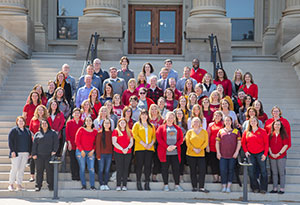
    From creating diversity efforts and development initiatives to leading change, human resources teams and HR practitioners across the country are doing great work every day.

    CUPA-HR’s regional Higher Education HR Awards program recognizes some of the best and brightest in higher ed HR and honors HR professionals who have given their time and talents to the association.

    Here are this year’s regional award recipients:

    HR Excellence Award

    Honoring transformative HR work in higher education and recognizing a team that has provided HR leadership resulting in significant and ongoing organizational change within its institution

    Office of Human Resources Management, Fordham University (Eastern Region)

    Fordham University’s office of human resources management has transformed from a primarily transaction-focused department to a strategic partner that is relied upon throughout the university. The department has demonstrated its strategic strength on multiple fronts including the management of the university’s COVID-19 shutdown and reopening, return-to-work policies, customer service, technology, communication with employees that resulted in increased engagement and trust, anti-bias training, professional development initiatives and the performance management process. Additionally, in keeping with and living Fordham’s Jesuit mission of Cura Personalis, “caring for the whole person,” the office developed and implemented programs to help employees maintain a healthy work-life balance. Some health and wellness services that were developed include back-up childcare support, on-site and virtual physical fitness classes, and behavioral health services, such as a registered dietician available to employees. In doing so, the HR team has distinguished itself as a trusted advisor to employees, managers and senior leaders alike.

    University Human Resources, Iowa State University (Midwest Region)

    In 2019, Iowa State University implemented a new financial management and human capital management system. In conjunction with the new system, finance and HR service delivery teams were developed, pulling distributed customer-facing finance and HR roles into two centralized teams. University human resources’ performance through this significant and ongoing organizational change has been positive for the entire campus community. The HR delivery model has led to increased consistency and standardization in delivery of services across the university. It has also created a more well-trained and cohesive team of professionals that work together up and down the chain to find creative solutions to HR challenges and opportunities. HR support for leaders across the institution has significantly improved through better access to accurate data, streamlined processes for workforce and position planning, compensation adjustments, support addressing low-preforming employees and behavioral issues, large-scale employee movement and reorganizations, and professional human capital consulting. The new HR delivery systems have resulted in a much more efficient, collaborative and cohesive HR unit that is better equipped to serve employees and supervisors. At the same time, employees and supervisors have benefitted from HR’s reliability, transparency, accountability and consistency in its efforts to support them.

    Talent and Culture Department, Broward College (Southern Region)

    Recognizing that HR alone cannot create culture but that it plays a critical role in ensuring the infrastructure is in place to support the cultural aspirations of an organization, the talent and culture department at Broward College has worked over the last several years to spearhead significant organizational change. Beginning in 2019, the university launched its three-year culture transformation plan. An integral step in the transformation process was the implementation of information-gathering discussions between the HR leadership team and employee groups comprised of administrators, faculty and professional technical staff, which provided substantive feedback on areas that needed the most attention. This organizational change, led by the talent and culture department, has resulted in more substantive collaboration; stronger relationships among faculty, staff and administrators; and greater trust and communication between employees and their supervisors. It has also served as a catalyst for innovative projects throughout the organization designed to maximize the experience of employees, students and the community. Some major initiative highlights include the creation of talent business partner roles, Leadership 360 Assessments, psychological safety workshops, employee resource groups, employee onboarding, and a leadership development program called BC LEAD that educates and empowers managers at all levels to rise to leadership excellence.

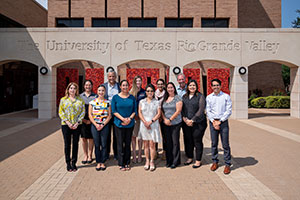
    HR Campus Climate Liaisons, The University of Texas Rio Grande Valley (Western Region)

    After implementing a strategic action planning process, led by an internal HR workgroup called Campus Climate Liaisons, The University of Texas Rio Grande Valley saw double-digit improvements in climate survey results within three years, all amid a pandemic. The liaison group consists of individuals from various HR areas, such as talent development, organizational development, employee wellness and employee relations/business partners. The group was trained to provide support to assigned departments with result-sharing, action-planning and ongoing progress-reporting. This method ensured that all departments received the same level of support and helped the HR team better track progress toward climate goals. It also helped empower all department leaders to have conversations about campus climate and department climate. The biggest improvements were seen in areas of faculty, administration and staff relations; senior leadership; and facilities. The campus climate liaison model has been so successful that it will continue to be used for future campus climate initiatives and to provide ongoing support to all departments.

    Higher Ed HR Rock Star Award

    This award recognizes an individual who is serving in the first five years of a higher education HR career who has already made a significant impact.

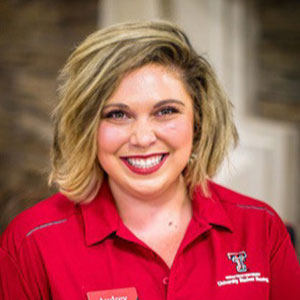
    Audrey Davis, Assistant Director of Personnel, Texas Tech University (Western Region)

    With her enthusiasm and inspirational demeanor, Audrey Davis has built strong and trusting relationships with each department she works with, not only within university student housing, but within each auxiliary services area at Texas Tech University. Since taking over the personnel team, Audrey has demonstrated continuous innovation and creative thinking, which has completely changed the way the student housing personnel team operates and provides services. After only two years in her role, she has identified and eliminated major gaps in the onboarding/offboarding processes. She has also developed a collaborative hiring system that allows hiring managers to communicate efficiently with the personnel team to discuss new hires, promotions and terminations. Audrey’s initiatives have resulted in university student housing being named a center for excellence for human resourcing by the assistant vice president for auxiliary services. Audrey continues to make a positive impact with her role and demonstrates her passion through advocacy, by fostering a welcoming work environment and by building confidence in her team to serve as a one-stop shop for personnel services.


    Source link

  • The Actual Work of an Edtech Sith Lord

    The Actual Work of an Edtech Sith Lord

    Coming to Terms With My Role as an Edtech Administrator and My Contribution to Education, Edtech, and Educators

    Recently, at the ISTE 2019 conference, I presented on building an educational technology professional development program on a budget. It was only the second time I had given this presentation and I was fortunate enough to be collaborating with my edtech sister, Kelly Martin. It was my first time presenting at what is the gold-standard conference in our field and I was feeling the incredibly trite combination of excited and nervous. Now that it is said and done, I’ve done a lot of thinking about the presentation, our message, the systems we have tried to build, and the pedagogical practice we have tried to improve. Our presentation, in many ways, speaks to a professional identity crisis I have been having since decided to cross over to the Dark Side and become an Edtech Sith Lord, an administrator.

    I came into edtech as a teacher coach. It was my job to be the expert on the tools AND to coach teachers. I would partner with them, build lesson plans and activities with them, and be in the room as support when we tested those lesson plans out with students. I loved it. If I am 100% honest with myself, after three years of being an administrator, I still miss it. In fact, I am going to commit a teaching taboo and admit: I think loved that job more than I loved my 14 years of being a classroom teacher, because the only thing I have loved more than helping middle school kids succeed by finding what they are capable of, is helping teachers succeed by finding what they AND their students are capable of.

    So when I became an administrator, when I made the conscious decision to join the Dark Side and trade my green lightsaber for a red one, I knew what it was I wanted to accomplish and why I was doing it. I wanted to build a great educational technology department in a district that was just starting out with edtech. I had had a great model at Fairfield-Suisun Unified School District, lead by Dr. Melissa Farrar. To this day, FSUSD still employs two of the best educational leadership role models I have met, Dr. Farrar and Kristen Witt. I was part of the team that first started the educational technology department in FSUSD, and naturally had some ideas on how I would do it “differently” or maybe “better.”

    I didn’t know how I was going to do it, but I had my what and my why in place. The how… well that has proved to be trickier, and more difficult than I expected. A thing I didn’t expect is how much being on The Dark Side was going to pull me farther and farther from direct contact with teachers. It has been a bit of a sacrifice, one that I am certain I would make again. Yet, it would have been easier if I had realized that going in.

    So now, after ISTE, after I have been allowed to represent myself as some sort of expert on building an educational technology department, I am reflecting even more on these questions: Am I effective? Am I an effective leader? What do I essentially do? How do I approach it? What do I believe in here?

    Teaching can be solitary work, but at least you have a whole school of other teachers, and a vast social media teacher community. One of the hardest things about my job is that to find a professional community you have to have friends outside of your district, because there’s only ever one of you. Even with that, I think what I still wrestle with most, having moved to the Dark Side, is missing teachers and classrooms.

    When I do get the chance to speak with men and women who do a similar job and we discuss how we interact with teachers and how we create professional development systems, there are common threads. What I have to say on this may not be terribly original. It could be summed up as “hire good people, and then get out of their way”, but since I have been reflecting on this, I thought I would share what the most important tasks of an Edtech Sith Lord are.

    Recruit Revolutionaries

    Every educational technology administrator I know in any public school district anywhere, who does not also have to do the IT portion of that work, is constantly messaging this to the entire organization: “We are not IT.” I like to tell people that IT works with boxes and wires, and edtech works with hearts and minds. Because we work with hearts and minds, we need the right people. Recruiting quality people is a quintessential part of building a good professional development program, educational technology or otherwise.

    One of the things you quickly find out when you’re recruiting for professional development is that even the best and most experienced teachers are not necessarily going to be the best professional developers. The skill-sets certainly overlap to a degree, the same way that there is overlap between pedagogy and andragogy, but they are not the same. Additionally, probably unsurprisingly, good teachers who are comfortable in front of a room full of second graders are not always comfortable in front of a room of their peers. So you do have to find people who are willing to do all the parts of the job. Good teachers are a must, but you cannot stop with that criteria.

    The reason I want to recruit “revolutionaries” is because an effective professional developer has to be willing to stand in front of a room full of teachers and say, “what you’re doing is good, but it could be great!” An effective professional developer is an agent of change. Being a champion of “it could be so much better” requires bravery, ardor, and perspicacity. Your people skills have to be on point. As a professional developer, you are yourself a recruiter. A recruiter to the cause of improved teaching practice, and you have to find a way to be both subtle and enthusiastic, to be a Pied Piper of teachers when you’re telling them “you can do better,” because that task is fraught with push back and hurt if you do it with a heavy hand. You must achieve a balance of gentle, yet relentless urging forward of your colleagues.

    Recruiting revolutionaries is no easy task, and they are usually in short supply. Another thing you have to be mindful of as a leader of revolutionaries, is that revolutionaries want change…and they want it now. Managing that expectation and engendering patience in them…also not easy. I wish I had better guidelines here, but I am not always patient myself, and sometimes my revolutionaries have had to teach me patience, but it is definitely a thing to think about. If you have done your recruiting right, you will find yourself being an Edtech Sith Lord who leads Edtech Jedi.

    Clear the Path

    The next thing I have learned over the last three years is that I need to clear the path for the revolution. In other words, I need to set up conditions so that my revolutionaries can get on with the work of proselytizing, being agents of change, and winning hearts and minds. What’s more, I need to ensure we don’t run out of the physical and emotional supplies they need to carry on. In short, you truly must support your revolutionaries in every conceivable way.

    Clearing the path can take many different forms. The most obvious is making sure that your team has the technology they need. You want them to be innovators and explorers so “standard issue” is often not enough. Hopefully, they will ask you, “Can we get some ____?” At first, or at least for me, my first compunction was to say, “yes.” But what you soon realize is that you are on the Dark Side, and you have peers and superiors on the Dark Side, and one of those higher Sith Lords is going to ask you why you spent $3,000 on 3D printers. You had better be ready to justify that cost using standards, superintendent goals, or board goals.

    In this case, one part of clearing the path is starting to ask your Jedi, your revolutionaries, “why,” and asking them to think about the pedagogical purpose for trying the cool new thing. Even when you yourself think it’s super cool and don’t want to ask why because you want to play with the new toys too, you have to ask that question. Another part of clearing the path is communicating and “educating” your peers and superiors behind the scenes to make connections between your experimental/innovative work and more conventional areas of education. If they already understand your department goals and vision to the point where they can guess why you’d be going to trainings or conferences, or purchasing technology they’re not themselves familiar with, then they’re less likely to question or push back.

    In fact, much of clearing the path is actually done away from your team. It might mean working with IT, principals, or union leaders. Sometimes clearing the path means finding paid professional development or peers for your Jedi and putting them in the same physical space to make connections and find support. And this last point, making sure your team has a professional community, is an example of clearing the emotional path for your team.

    I feel like, in order to do the work of professional development in education well, you have to really want to do it. If you have recruited revolutionary Jedi, and they are anxiously waiting to see change, then they might be in for some disappointment in the day-to-day. Especially in public education, changes are often incremental and slow. The word glacial comes to mind. However, if you can give your team a sense of belonging to something, remind and show them their accomplishments from time to time (hint: you will need this for yourself too as a Sith Lord) and provide opportunities for fun and bonding, then their emotional path will remain clear.

    Develop Your Developers

    This may not be as straightforward as it might sound. Obviously there is the normal goal-setting and driving people to develop their skills. In educational technology, we have the benefit of having many different certifications out there for our people to pursue. I work in a GSuiteEdu District, and I am very happy to say that we have added many Google Certified Trainers and Google Certified Innovators in our district, at all levels, and we have grown the number of Level 1 Google Certified Educators dramatically. This has been an outstanding achievement for our district, but this technical skill expertise is not enough.

    One of the things I have figured out, and it seems obvious when I read it, is to find out how people want to be developed, how they want to grow, and then find ways to grow them in those areas. This has two difficulties involved in it. The first difficulty is that sometimes you need to set aside how you want someone that you are leading to grow. Sometimes you have a need on your team, and you only have so many team members to fill it, and the team need can drive your actions in a way that isn’t always best for the person you’re trying to develop. There are, of course, certain basic team needs that must be fulfilled, but as new challenges or roles come along it’s good to be judicious and deliberate in assigning those roles and the accompanying development that goes along with them. The second difficulty comes when the team member isn’t really sure how they want to grow themselves. Allowing somebody the time and space for self-discovery and reflection can be difficult, especially if you are an impatient Sith Lord, but it will pay dividends in the long run.

    And then there’s this other thing, which seems to go opposite to the idea of developing people how they want to be developed. Sometimes you can see the potential for strengths in people; sometimes these strengths have no direct impact on the work of your team. Sometimes you can see that people are good at things even if they don’t know that they are good at those things, or, and this is a hard one, even if they don’t necessarily want to be good at those things.

    One of the members of my team is a natural diplomat, a clear-headed communicator, and has an overriding sense of fairness. It’s like he is a natural-born, level-headed leader. This is a role he shies away from. Every time he is in leadership he distinguishes himself so people keep asking him to do it. I think he would be a fabulous administrator, and it has taken me over a year to get him to a place to even consider it. For my part, I have had to be mindful and creative about how I use certain situations to help him see his strengths and the opportunities they might afford him.

    So in a way, being a Sith Lord is being a talent scout. This is pretty obvious at the recruiting phase when you’re looking for the initial attributes you want on your team. In addition, as you work with your individual team members–and you really should approach developing your team members as individuals–you need to be looking for their strengths so that you can build on them, and their areas of growth to mitigate them. The difficulty that comes as a team leader is when you know you need to push somebody up to a new position or a new challenge which will require them to leave your team. That can be hard, and downright annoying, but you develop yourself as a leader when you find new people to recruit and develop. You have to remember that teams succeed because of systems AND people. Build both, and in the long run the work will succeed, individuals will succeed, and the accomplishment will be satisfying.




    Source link