Tag: World

  • Importance of Media Training Students in Politically Charged World

    Importance of Media Training Students in Politically Charged World

    With student-led campus protests on the rise and polarization intensifying on both sides of the political spectrum, the need to have students media ready is mounting. For example, in recent weeks students rallied across the U.S. because of the Trump administration’s assault on higher education; protests broke out at the University of California, Berkeley, during an event held by Turning Point USA; and students at the University of Florida protested the university’s deal with ICE. Since October 2023, U.S. colleges and universities have seen 3,700 protest days across 525 campuses, including more than 130 encampments. In fact, one in three college students have been involved in a protest

    As a PR professional, you can equip students on your campus with the skills and confidence to excel in interviews. Here are four reasons why you should invest the time and resources in media training your students.

    1. It makes your life easier. When a reporter contacts you and asks for a student to weigh in on the news of the day or your institution’s latest initiative, you will have a pool of students to pick from at the ready rather than reaching out to deans or faculty to find a student and vet them that day.

    While it will make your life easier in the long run, it does require you to put in the time up front. Meet students on their timelines. Most student group meetings are outside of class time, so it might mean you are attending a student government association meeting at 8 p.m. or doing a Zoom training with the College Democrats or Republicans on your lunch break.

    1. It helps students and the community navigate crisis situations. With protests becoming regular occurrences on our campuses and in our communities, media training students will help them remain calm under pressure. When a reporter is looking for a comment, students won’t just say the first thing that pops into their mind. They will know how to get their key messages across to the audiences they are trying to reach.

    It’s not just national and local media students need to respond to; student reporters are often the first to approach peers for quotes. All student newspapers are online, can be accessed by anyone and are an extension of your institution and its values. Engaging with student media isn’t just a learning opportunity—it shows how students will represent themselves, which in turn has a direct impact on the reputation of your institution.

    Many students don’t know they can choose to not talk to the media or say no to interview requests. We’ve all seen the videos of reporters knocking on students’ doors and the students saying something unfavorable rather than just not opening the door in the first place, or of students having a microphone put in their face as they are walking to class to weigh in on a subject they don’t know about instead of saying, “I don’t know.” Media training can help students realize they have the option to respectfully decline interviews and interactions, which can help alleviate the pressure they might feel to respond in the moment.

    1. Students build career-ready competencies. Whether it’s an internship or job interview, being able to succinctly articulate their points will help students for the rest of their lives. From public speaking to leadership roles to internships, media training gives students skills for their future.

    We want our students to be able to weigh in on important issues, and media outlets are always looking for a student perspective. For example, my team was recently on campus for faculty and staff media and op-ed training when a professor asked if his students could sit in. Afterward, one student drafted an op-ed that she successfully placed. I’ve also provided op-ed writing training to seminar classes in which students learn the nuts and bolts of writing an op-ed and how to get published as an undergrad.

    1. Name, image and likeness (NIL) has changed the game for student athletes. It takes students out of the arena and into the public eye where their reputation will be on the line. If you are at a larger school, some of your student athletes may have their own publicist, but if you are not at school where the NIL money is flowing, media training helps prepare student athletes for local commercials, being the face of the pizza shop down the street or even a postgame interview.

    When a scandal occurs—a coach is fired, or student athletes are gambling or being hazed—you want students to know they can come to you for advice and guidance when reporters descend on campus.

    Students are the most prominent ambassadors of your institution. Media training isn’t about making them a professional correspondent; it’s about making them feel prepared when they are in the spotlight. Whether they are engaging in a protest, talking with a peer reporter at the school newspaper or navigating a postgame interview, media training can serve them in the moment and long term. It’s worth your time to engage with your best spokespeople.

    Cristal Steuer is associate vice president at TVP Communications, a national public relations and crisis communications agency solely focused on higher education.

    Source link

  • A partnership across the Atlantic to inform the world

    A partnership across the Atlantic to inform the world

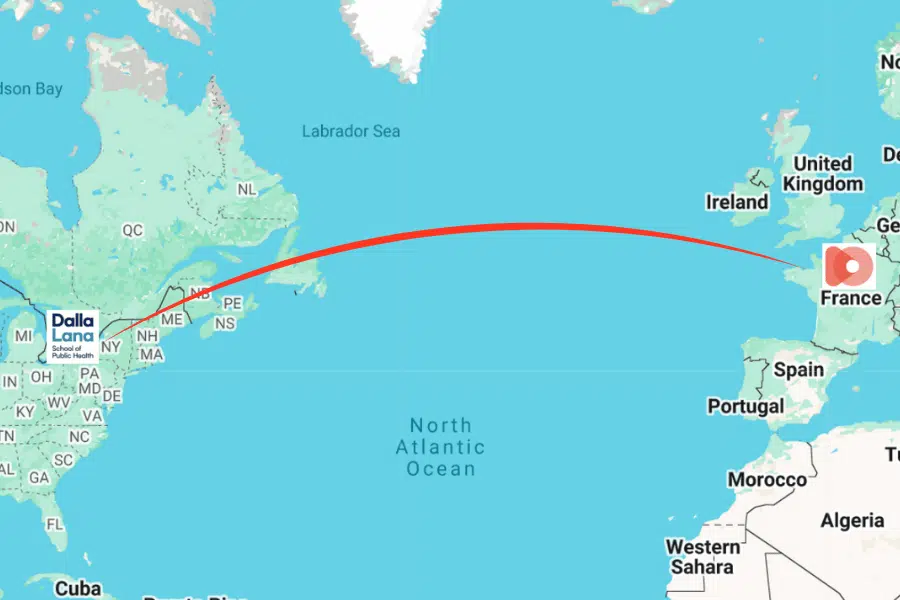
    Preety Sharma is a public health and development consultant currently based in Northern India, near the border with Nepal. She is also a News Decoder correspondent, one of dozens who came to News Decoder through a journalism fellowship at the Dalla Lana School of Public Health at the University of Toronto.

    For more than five years, the University of Toronto and News Decoder have partnered to help train health professionals in journalism, with the goal of meeting this need: Too much disinformation in the world about important health issues and too much factual information presented to the public in articles that are difficult to read.

    Under the program, mid-career professionals spend a year in journalism training at the University of Toronto and as part of the program, pitch stories to professional news organizations. But to get published, the articles must meet the strict standards of each news organization that accepts the story pitches.

    To publish on News Decoder, for example, the stories must be written in way that is accessible to young people and to those who read English as a foreign language. This is challenging for many professional journalists. The stories must also have a global angle and show how the problems in the stories play out in different parts of the world.

    Sharma’s first story for News Decoder was on how a relatively inexpensive food product made from algae could be the solution to ending world hunger. Another story she wrote, on the problem of plastics in children’s toys, became News Decoder’s most-read story of all time.

    “My first couple of stories were with News Decoder,” Sharma said. “I am glad to have had an opportunity to share it with a diverse and young audience globally.”

    Sharma is now a News Decoder correspondent, someone who writes periodically for the site.

    Bringing specialized knowledge to journalism

    Marcy Burstiner, News Decoder’s educational news director, has worked with Sharma on all her stories and thinks the Dalla Lana program and its partnership with News Decoder is unique and important. “When I taught university journalism, I often told science majors that they should consider going into journalism,” she said. “There are a thousand medical publications but they are not written with a general audience in mind and meanwhile most journalists lack the specialized knowledge to really understand and put into context what is happening in medicine and the hard sciences.”

    For News Decoder, this problem is particularly important, she said. “Health and science are two subjects that young people are hungry for information on and that’s our target audience,” Burstiner said. “But, because so much of the information is dense, they turn to sites on the internet that present pseudo science and they can’t tell the difference.”

    Sharma agrees. “In the age of fake news and social media information explosion, it is crucial to have a credible and trusted media outlet that can present complex issues, ideas and concepts to youth in a simple and educational style,” she said.

    News Decoder Founder Nelson Graves said that the partnership between the University of Toronto and News Decoder was a win-win proposition from the start. “Fellows at the Dalla Lana School of Public Health have a chance to publish stories examining some of the world’s most pressing issues on our global platform,” he said. “They benefit from editing by journalists with deep international experience.”

    The students in News Decoder’s global community and readers around the globe also benefit from the fellows’ reporting and insights, he said and that helps to maintain News Decoder’s breadth and depth.

    “News Decoder’s association with the University of Toronto encapsulates our nonprofit’s commitment to global citizenship and to fostering connections across borders and between generations,” Graves said.

    Connecting with young people

    Correspondent Norma Hilton also came to News Decoder through the University of Toronto’s fellowship in global journalism. Her first story was on K-Pop and social media influencers, a topic that’s important to News Decoder’s teen audience. Hilton said it was a great learning experience. “I’d never really written for a youth audience or taken more of an education angle to my stories before,” she said. “So, it was great to understand what young people want to hear about and write for them.”

    Hilton is also one of many University of Toronto fellows who have not only written stories for News Decoder, but become an integral part of the News Decoder team. She participated in workshops and cross-border roundtables with students and produced articles and videos that serve as journalism tutorials on such things as how to cover events, how to fact-check articles and how to cover traumatic situations.

    “I’ve never really thought I’d be on a panel of any kind, but being able to talk about my journalism experience and hopefully help younger people be interested in journalism and its power, has been the honour of a lifetime,” Hilton said.

    News Decoder Managing Director Maria Krasinski argued that the partnership with the University of Toronto is unique. “Neither of our organisations is a traditional journalism school,” she said. “Rather, we both recognize that learning journalism skills helps people, no matter their discipline or profession, communicate clearly and with impact.”

    She said that, for the students News Decoder works with, journalism is an entry point, a way to take action and engage with the issues affecting their communities and participate meaningfully in civic dialogue. “Young people discover that journalism isn’t just writing stories, it’s about learning to question, to listen and to make sense of the world,” she said.

    For the University of Toronto fellows, meanwhile, the journalism fellowship adds a powerful new skill to their already impressive toolkits. “It helps them translate their knowledge and expertise into stories that resonate beyond academic and industry circles,” Krasinski said. “Many of the fellows stay connected to News Decoder well after their fellowship ends. They are based all over the world and bring a diversity of perspectives and experience that enriches our news platform.”

    Source link

  • Students must intentionally develop durable skills to thrive in an AI-dominated world

    Students must intentionally develop durable skills to thrive in an AI-dominated world

    Key points:

    As AI increasingly automates technical tasks across industries, students’ long-term career success will rely less on technical skills alone and more on durable skills or professional skills, often referred to as soft skills. These include empathy, resilience, collaboration, and ethical reasoning–skills that machines can’t replicate.

    This critical need is outlined in Future-Proofing Students: Professional Skills in the Age of AI, a new report from Acuity Insights. Drawing on a broad body of academic and market research, the report provides an analysis of how institutions can better prepare students with the professional skills most critical in an AI-driven world.

    Key findings from the report:

    • 75 percent of long-term job success is attributed to professional skills, not technical expertise.
    • Over 25 percent of executives say they won’t hire recent graduates due to lack of durable skills.
    • COVID-19 disrupted professional skill development, leaving many students underprepared for collaboration, communication, and professional norms.
    • Eight essential durable skills must be intentionally developed for students to thrive in an AI-driven workplace.

    “Technical skills may open the door, but it’s human skills like empathy and resilience that endure over time and lead to a fruitful and rewarding career,” says Matt Holland, CEO at Acuity Insights. “As AI reshapes the workforce, it has become critical for higher education to take the lead in preparing students with these skills that will define their long-term success.”

    The eight critical durable skills include:

    • Empathy
    • Teamwork
    • Communication
    • Motivation
    • Resilience
    • Ethical reasoning
    • Problem solving
    • Self-awareness

    These competencies don’t expire with technology–they grow stronger over time, helping graduates adapt, lead, and thrive in an AI-driven world.

    The report also outlines practical strategies for institutions, including assessing non-academic skills at admissions using Situational Judgment Tests (SJTs), and shares recommendations on embedding professional skills development throughout curricula and forming partnerships that bridge AI literacy with interpersonal and ethical reasoning.

    Latest posts by eSchool Media Contributors (see all)

    Source link

  • With News Decoder, students explore their role in the world

    With News Decoder, students explore their role in the world

    Back in 2020, during the height of the Covid epidemic, high school students in the U.S. state of Connecticut sat down with News Decoder founder Nelson Graves to explore a number of thorny topics that ranged from the death penalty to whether animals should be kept in zoos.

    The students in “American Voices & Choices: Ethics in Modern Society” at Westover School had been working with News Decoder since the start of that academic year, mastering the process we call Pitch, Report, Draft and Revise — or PRDR — to identify topical issues at the intersection of ethics and public policy.

    They pitched ideas they wanted to report on: teen health; police brutality; abortion; economic privilege in the environmental movement; the risks of experimental vaccines; the impact of alcohol on youth.

    Later, each student received detailed feedback from a News Decoder editor, aimed at helping them narrow their research and produce original reporting.

    Westover was an early News Decoder school partner. Since our founding 10 years ago, News Decoder has worked with high school and university students in 89 schools across 23 countries.

    Decoding news in school

    Teachers have used us as part of their course curricula, as extra credit assignments and as standalone learning opportunities for their students.

    At Realgymnasium Rämibühl Zürich in Switzerland, teacher Martin Bott brings News Decoder in each year. In one weeklong workshop, students produced podcasts. Over five days, they pitched News Decoder stories about a problem they identified in their local communities, identified an expert to interview, found how that problem was relevant to people in other countries and then wrote a podcast script, revised it and recorded it. “[News Decoder] enabled me to do a few projects which really open up perspectives for the students, give them a taste of life beyond the classroom and of the world of journalism,” Bott said. 

    In another workshop for RGZH, News Decoder turned students into “foreign correspondents.” They were tasked with finding stories in Zurich that people in other countries would find interesting. Like the students in the podcasting workshop, they then found an expert to interview, wrote a draft and revised it with the goal of publishing it on News Decoder. 

    One student in the workshop noticed a demonstration of people with dogs and got up the nerve to talk to one of them. They were from an organization that rescued Spanish greyhounds and she decided it would be a good idea for a News Decoder story. The story she wrote ended up as one of News Decoder’s most-read stories of all time.

    Not only have Bott’s students been able to publish stories on News Decoder, many of these stories, including the article about the greyhounds, have won awards in our twice yearly global storytelling competition. 

    “We’ve been delighted to get so many of those stories published on News Decoder,” Bott said. “That’s very, very motivating for the students. And it’s a wonderful learning process for them because they realise it’s not just about school rules and so on out there.”

    Challenging students to do more

    Bott said that working with professionals at News Decoder gets the students to step up. “When you’re a journalist, you’ve got a responsibility,” he said. “That’s something we’ve been able to talk about with journalists who’ve met us from various parts of the world through News Decoder. And you’ve got real pressure as well. And they’re not, I think they’re not quite used to that. So it really opens their eyes.”

    At The Hewitt School in New York, 15 teens at the all-girls school meet once a month as a club. They read and discuss News Decoder stories and pitch their own stories. They also prepare for a cross-border webinar; each year they join with students from a News Decoder partner school in another country, and decide with those students on a topic to explore. 

    They then research the topic, interview experts and come together with the students from the other school to present their findings live in a video conference before an audience of people from the two schools.

    In 2024, students from The Thacher School in California worked with peers at the European School of Brussels II on a webinar on consumerism and the human impacts of climate change. 

    Russell Spinney is faculty adviser for News Decoder at Thacher. “The webinars really were kind of ways just to get to know each other, discover that we actually do have some common interests. But not only that, that we also have problems that are similar,” he said. 

    “News Decoder’s workshops,” he said, “get students to think of ways to communicate their research beyond the classroom and connect with what’s going on in the world.” News Decoder has partnered schools this way in some 50 school-school webinars. 

    Source link

  • Can the world wean itself off petroleum?

    Can the world wean itself off petroleum?

    It has been just six years since the Paris Climate Agreement set a race against time to rein in global heating. But the Earth is sending ever-harsher signals of alarm.

    When the accord was signed, we were on course for global heating of 4°C from the start of the industrial era to the end of this century. Now the figure is around 2.7°C. So something has been achieved, but relative safety comes at no more than 1.5°C.

    There is still a gap between the policies put in place over the past six years and what is needed to achieve that lower figure, the International Energy Agency (IEA) said in its annual outlook, published in October.

    Yet we know what to do: substitute renewable energy for the power we get from fossil fuels by mid-century; decarbonize industry and adapt land-use to trap carbon in soil and plants; adapt our means of transport and our growing cities to use less energy; and protect marine areas to enhance carbon absorption in oceans.

    “Two parallel and contradictory processes are in play,” wrote environmentalist and author George Monbiot in a Guardian opinion piece on November 3. “At climate summits, governments produce feeble voluntary commitments to limit the production of greenhouse gases. At the same time, almost every state with significant fossil reserves … intends to extract as much as they can.”

    Everything depends, he concluded, on which process prevails.

    Making strides in renewable energy

    Similar tensions are in play at industrial and economic levels. On the plus side, there is now a surprisingly strong backstory in renewable wind and solar energy, particularly solar, and particularly in the United States, the heaviest polluter historically per person, and China, the biggest polluter in absolute quantities of its emissions.

    The energy crisis resulting from Russia’s invasion of Ukraine last February has prompted policies that will boost clean energy, the IEA added in its World Energy Outlook, which projects trends out to 2030.

    While the crisis has created a temporary upside for coal, in the long run, production of renewable energy will outpace the production of energy derived from fossil fuels, the report said.

    Another positive sign is the nascent hydrogen industry.

    Widely occurring and carbon-free, this gas could decarbonize long-distance travel and industries that are heavy emitters. Producing it without carbon emissions implies using intermittent renewable energy when it is over-abundant, a virtuous circle.

    However, none of this is yet at industrial scale — barring a few hydrogen-powered trains. Not all claims for hydrogen can be borne out, and it is not yet a viable financial concern.

    There is a significant plus on the political front with the election of Luiz Ignácio Lula da Silva as Brazil’s next president. He promises to end the record deforestation of the Amazon under his predecessor, Jair Bolsonaro, and is to take office in January.

    But there is no slowdown in fossil fuels.

    Yet investment in fossil fuels still dwarfs cash flowing into renewables, even though they offer economic advantages. The United States, for example, has ploughed over $9 trillion into oil and gas projects in Africa since it signed the Paris Agreement, The Guardian found.

    Africa, a continent starved of cash for energy but with vast potential for solar power, is now under pressure — including from international oil companies operating in its national parks — to exploit its fossil fuel resources just to bring electric power to its people.

    The fossil fuel industry’s damage doesn’t end there. There has been drastic under-counting of carbon emissions, a new tracking tool backed by former U.S. Vice President Al Gore has found. Oil and gas companies have underestimated their emissions threefold, Gore said when launching the tool at the United Nations Climate Summit (COP 27) in Egypt this month.

    “For the oil and gas sector it is consistent with their public relations strategy and their lobbying strategy. All of their efforts are designed to buy themselves more time before they stop destroying the future of humanity,” The Guardian quoted Gore as saying.

    Investing in Africa

    Across the world, policies are in place to invest over $2 trillion in clean energy by 2030, half as much again as today, led by the United States and China, but also including the European Union, India, Indonesia and South Korea, according to the IEA.

    In the United States, solar was already becoming the star of the new energy scene, according to an annual report from Berkeley National Labs. The country added 1.25 terrawatts of solar capacity in 2021. That’s more than the installed solar capacity in the entire world, which reached 1 terrawatt in early 2022.

    That was before the Biden Administration enacted the Inflation Reduction Act, which brings extra impetus for the sector. The United States plans to add 2-1/2 times its existing solar and wind capacity every year between now and 2030 and grow its fleet of electric vehicles seven-fold, the IEA said.

    At the same time, Africa is desperate for energy investment.

    To provide access to electricity for its population, the continent would need $25 billion per year, the IEA said in its annual Africa Energy Outlook, published in June. “This is around 1% of global energy investment today, and similar to the cost of building just one large liquefied natural gas (LNG) terminal,” it said.

    The continent has 60% of the world’s best solar resources but only 1% of installed solar photovoltaic capacity. This is already the cheapest source of power in many parts of Africa and would outcompete all other energy sources across the continent by 2030, the IEA said.

    The energy watchdog projects that solar, wind, hydropower and geothermal energy would provide over 80% of new power generation capacity in Africa by 2030. No new coal-fired power plants would be built once those now under construction are completed. Half the cost of adding new solar installations out to 2025 could be covered by investments that would otherwise have gone into discontinued coal plants.

    Yet this assessment leaves out the plans for increased oil and natural gas developments on the continent.

    Pressure from energy companies

    A report just published by Rainforest UK and Earth Insight 2022 found that the area of land allocated across Africa for such developments is set to quadruple under existing plans. That report focuses on the Congo Basin, but in East Africa, French oil major TotalEnergies is pushing ahead with a large-scale oil project and trans-continental pipeline in Uganda.

    A first cargo of liquefied natural gas has just left Mozambique after multiple delays caused by an insurgency in the region of the gas field, in a venture involving several oil companies.

    These oil and gas projects would lock the continent into fossil fuels for decades to come and blow a hole in the bid to keep global heating to no more than 1.5°C.

    These energy projects have wide support among African leaders, who contrast the immediacy of such investments and their benefits for their countries with the reluctance of Western nations to put up the finance agreed over a decade ago for energy transitions and preservation of biodiversity.

    African environmentalists question the wisdom of this carbon bomb. But it is hard to dismiss the idea that broken promises by the countries that have caused the climate crisis has driven Africa into the arms of the fossil fuel industry.

    TotalEnergies’ CEO Patrick Pouyanné argues that the world cannot quit fossil fuels before it has alternative sources of energy.

    “The mistake being made now is to think that the solution for the climate is to abandon fossil fuels,” he said in an interview with French TV station LCI on November 17. “The solution is first to build the new decarbonized energies that we need.”

    “If you do both at the same time, what happens?,” Pouyanné said. “Exactly what you reproach us for — prices rise because of the rarity of supply, because the demand for oil is not falling.”

    The monopoly power of fossil fuel firms

    These energy companies have long fought the switch from fossil fuels to renewables.

    Half a century ago, Total concealed a report it had commissioned that clearly explained how burning fossil fuels would cause global heating and the consequences we are seeing today.

    Other oil and gas companies, notably Exxon, acted similarly and responded to their findings by funding climate-denying think tanks and political lobbyists.

    More recently, as the evidence mounted, they turned their attention to lobbying for exemptions, even though the scientific consensus demands that to achieve the 1.5°C limit on warming, there can be no new oil, gas or coal exploration or extraction.

    A record number of fossil fuel lobbyists attended this month’s climate summit in Egypt (see the graphic here).

    Fossil fuels no longer make economic sense.

    The sector is a good example of reality flouting economic theory, which teaches that if a new technology reaches a point where it outcompetes an existing one, the new technology will replace the older one.

    This should be happening with solar versus coal, oil and gas — and indeed is predicted to happen by 2050. Meanwhile, harmful emissions continue to rise.

    Energy markets and the fossil fuel firms themselves do not obey basic economics for the simple reason that they are monopolies with the power to skew conditions in their favor.

    The oil producers’ monopoly, in the form of OPEC, has controlled production to keep prices higher for decades. In the 1990s, the big Western oil companies went through a frenzy of mega-mergers that created today’s top five — Shell, ExxonMobil, BP, Chevron, and ConocoPhillips — whose sheer size gives them disproportionate bargaining and lobbying power.

    Now activists are trying to gain support for a Fossil Fuel Non-Proliferation Treaty as a way of reining in the root cause of the climate emergency. The initiative was put before the United Nations in September and the COP 27 climate summit in November.

    “Will you be on the right side of history? Will you end this moral and economic madness?” Ugandan climate activist Vanessa Nakate asked global leaders at the summit.

    On that, the jury is still out.

    Landmark deal opens way for loss and damage fund

    It has taken 27 climate summits, but the COP 27 in Egypt finally managed to pull out an agreement to set up a specific fund to aid poor countries hit by damage caused by climate disasters. The deal was approved on November 20 after a marathon negotiating session.

    The proposal had been fought tooth and nail by the rich industrialized countries whose emissions have fostered global heating, stirring resentment among poorer countries who have suffered the most extreme consequences and have the least ability to mitigate the damage. 

    Details will be hammered out over the coming year, and there is as yet no money in the fund. It was nevertheless a major step forward.

    However, the final agreement failed to call for phasing out all fossil fuels and for warming emissions to peak by 2025, both heavily opposed by oil-producing countries, raising fears that the goal of limiting warming to 1.5°C by mid-century will not be achievable.


    Questions to consider:

    1. Where is a major boom in solar energy taking place?
    2. What is Africa’s energy dilemma?
    3. Why do you think fossil fuel majors have so much influence?


    Source link

  • Preparing students for the world of work means embracing an AI-positive culture

    Preparing students for the world of work means embracing an AI-positive culture

    When ChatGPT was released in November 2022, it sent shockwaves through higher education.

    In response, universities moved at pace during the first half of 2023 to develop policy and good practice guidance for staff and students on appropriate use of GenAI for education purposes; the Russell Group’s Principles on the use of generative AI tools in education are particularly noteworthy. Developments since, however, have been fairly sluggish by comparison.

    The sector is still very much at an exploratory phase of development: funding pilots, individual staff using AI tools for formative learning and assessment, baseline studies of practice, student and staff support, understanding of tools’ functionality and utilisation etc. The result is a patchwork of practice not coherent strategy.

    Yet AI literacy is one of the fastest growing skills demanded by industry leaders. In a survey of 500 business leaders from organisations in the US and UK, over two-thirds respondents considered it essential for day-to-day work. Within AI literacy, demand for foundation skills such as understanding AI-related concepts, being able to prompt outputs and identify use cases surpassed demand for advanced skills such as developing AI systems.

    Students understand this too. In HEPI’s Student generative AI survey 2025 67 per cent of student respondents felt that it was essential to understand and use AI to be successful in the workplace whereas only 36 per cent felt they had received AI skill-specific support from their institution.

    There is a resulting gap between universities’ current support provision and the needs of industry/ business which presents a significant risk.

    Co-creation for AI literacy

    AI literacy for students includes defining AI literacy, designing courses aligned with identified learning outcomes, and assessment of those outcomes.

    The higher education sector has a good understanding of AI literacy at a cross disciplinary level articulated through several AI literacy frameworks. For example, UNESCO’s AI Competency Framework for Students or the Open University in the UK’s own framework. However, most universities have yet to articulate nuanced discipline-specific definitions of AI literacy beyond specialist AI-related subjects.

    Assessment and AI continues to be a critical challenge. Introducing AI tools in the classroom to enhance student learning and formatively assess students is fairly commonplace, however, summative assessment of students’ effective use of AI is much less so. Such “authentic assessments” are essential if we are serious about adequately preparing our students for the future world of work. Much of the negative discourse around AI in pedagogy has been around academic integrity and concerns that students’ critical thinking is being stifled. But there is a different way to think about generative AI.

    Co-creation between staff and students is a well-established principle for modern higher education pedagogy; there are benefits for both students and educators such as deeper engagement, shared sense of ownership and enhanced learning outcomes. Co-creation in the age of AI now involves three co-creators: students, educators and AI.

    Effective adoption and implementation of AI offers a range of benefits specific to students, specific to educators and a range of mutual benefits. For example, AI in conjunction with educators, offers the potential for significantly enhancing the personalisation of students’ experience on an on-demand basis regardless of the time of day. AI can also greatly assist with assessment processes such as marking turnaround times and enhanced consistency of feedback to students. AI also allows staff greater data-driven insights for example into students at risk of non-progression, areas where students performed well or struggled in assessments allowing targeted follow up support.

    There is a wealth of opportunity for innovation and scholarship as the potential of co-creation and quality enhancement involving staff, students and AI is in its infancy and technology continues to evolve at pace.

    Nurturing an AI-positive culture

    At Queen Mary University of London, we are funding various AI in education pilots, offering staff development programmes, student-led activities and through our new Centre for Excellence in AI Education, we are embedding AI meaningfully across disciplines. Successfully embedding AI within university policy and practice across the breadth of operations of the institution (education, research and professional practice), requires an AI-positive culture.

    Adoption of AI that aligns with the University’s values and strategy is key. It should be an enabler rather than some kind of add-on. Visible executive leadership for AI is critical, supported by effective use of existing champions within schools and faculties, professional services and the student body to harness expertise, provide support and build capacity. In some disciplines, our students may even be our leading institutional AI experts.

    Successful engagement and partnership working with industry, business and alumni is key to ensure our graduates continue to have the necessary skills, knowledge and AI literacy to achieve success in the developing workplace.

    There is no escaping the fact that embedding AI within all aspects of a university’s operations requires significant investment in terms of technology but also its people. In our experience, providing practical support through CPD, case studies, multimedia storytelling etc whilst ensuring space for debate are essential for a vibrant, evolving community of practice.

    A key challenge is trying to maintain oversight and co-ordinate activities in large complex institutions in a field that is evolving rapidly. Providing the necessary scaffolding in terms of strategy and policy, regulatory compliance and appropriate infrastructure whilst ensuring there is sufficient flexibility to allow agility and encourage innovation is another key factor for an AI-positive culture to thrive.

    AI is reshaping society and building an AI-positive culture is central to the future of higher education. Through strategic clarity and cultural readiness, universities need to effectively harness AI to enhance student learning, support staff, improve productivity and prepare students for a changing world.

    Source link

  • For World Space Week it’s time to look up

    For World Space Week it’s time to look up

    This week marks World Space Week, an international celebration of humankind’s last frontier launched by the United Nations in 1999. In more than 80 countries, people are celebrating through thousands of events.

    One of the goals of space week is to let people know how many of the products we depend on down on earth came out of space exploration programs: Life support systems for miners, memory foam mattresses, scratch-resistant lenses, nutritional supplements, cordless tools and freeze-dried food.

    Learning about outer space and space exploration excites young people and attracts them to science, technology, engineering and math fields.

    But for News Decoder, it is the international cooperation we see in space exploration programs that excites us. When we look to the moon, our galaxy and beyond, we see the possibility for peace and cooperation here on Earth.

    To celebrate World Space Week, check out some of the stories we’ve published about outer space and the people exploring it.


    Source link

  • U.S. Continues Decline in THE World University Rankings

    U.S. Continues Decline in THE World University Rankings

    Photo illustration by Justin Morrison/Inside Higher Ed | bingdian, cbarnesphotography and DNY59/iStock/Getty Images

    Even before U.S. universities lost billions of dollars in federal research funding and international students struggled to obtain visas, America’s dominance in research impact and global reputation was waning. According to the latest rankings from Times Higher Education, the U.S. has continued to cede influence to universities in Asia.

    For several years, the rankings from Inside Higher Ed’s parent company have documented a steady decline in the U.S.’s leadership in global higher education. The 2026 World University Rankings reflect that ongoing trend: Just 102 universities from the United States cracked the top 500—the lowest figure on record, down from a high of 125 in 2018. (The rankings started in 2004.)

    The downward trend is less apparent in the overall top 10, where seven U.S. institutions appear. The Massachusetts Institute of Technology is the highest-ranking American institution, coming in at No. 2, just behind the top-ranked University of Oxford. According to THE, Princeton University recorded an institutional best score to tie for third.

    But institutions farther down the list have slipped. Twenty-five colleges logged their worst-ever scores while 62 dropped in the rankings, which uses 18 measures to judge institutions on five areas including teaching, research quality and international outlook.

    The 2026 rankings of more than 2,100 institutions are based on data collected from 2022 and 2023 and don’t reflect the Trump administration’s push to reshape American higher education. They don’t show what impact cuts to research funding and the crackdown on international students might have on U.S. institutions’ position on the global stage. Those changes could lead to a further decline for U.S. institutions in the rankings, though Ellie Bothwell, THE rankings editor, said what future rankings might show is hard to predict.

    “Any country that cuts research funding, that limits internationalization of higher education, would be in danger of declining in the ranking,” she said. “Those are key things that we measure. Those are important things that universities do. There’s always going to be a risk if you cut those. There’ll be a decline, but it’s all relative, so it does also depend what goes on elsewhere.”

    Looking at the overall 2026 rankings, Bothwell called the decline for the U.S. “striking,” adding that the drop reflects increased global competition. American institutions on average received lower scores on measures related to research, such as citation impact, as well as research strength and reputation.

    Meanwhile, Asian universities continue to climb the rankings. Five universities from China are now in the top 40, and 18 achieved their highest ranks ever, according to THE.

    THE’s chief global affairs officer, Phil Baty, said in a statement that the latest data suggests higher ed is moving toward a new world order with an Eastern center of gravity.

    “This year’s rankings highlight a dramatic and accelerating trend—the shift in the balance of power in research and higher education excellence from the long-established, dominant institutions of the West to rising stars of the East,” Baty said.

    He predicted that U.S. institutions and those in Western Europe would continue to lose ground to their East Asian counterparts in the rankings. “This clear trend is set to persist as research funding and international talent attraction continue to be stymied in the West,” he added.

    Source link

  • College admissions in a rapidly evolving world

    College admissions in a rapidly evolving world

    The years ahead will be anything but boring for college admissions officers. From demographic changes and increasing college competition to budget cuts and evolving approaches for admissions requirements — not to mention tectonic federal policy shifts and the rapid proliferation of artificial intelligence — the field is as fluid as ever. 

    Those topics and more were under discussion at the Sept. 18-20 annual conference of the National Association for College Admission Counseling in Columbus, Ohio. 

    While there are many forces outside the control of the admissions office, attendees tuned into the internal challenges and opportunities they’re navigating. Panelists, for instance, dug into data on diversity in college enrollment, how to best prepare future students for college math classes and when to deploy AI in institutional operations. 

    Here’s an in-depth look at some of the most interesting conversations Higher Ed Dive heard at NACAC’s 2025 conference:

    Source link

  • 100 Ways the Trump Administration Has Undermined the Environment, Human Rights, World and Domestic Peace, Labor, and Knowledge

    100 Ways the Trump Administration Has Undermined the Environment, Human Rights, World and Domestic Peace, Labor, and Knowledge

    The Trump administration, since returning to power in 2025, has escalated attacks on the foundations of democracy, the environment, world peace, human rights, and intellectual inquiry. While the administration has marketed itself as “America First,” its policies have more often meant profits for the ultra-wealthy, repression for the working majority, and escalating dangers for the planet.

    Below is a running list of 100 of the most dangerous actions and policies—a record of how quickly a government can dismantle hard-won protections for people, peace, and the planet.


    I. Attacks on the Environment

    1. Withdrawing from the Paris Climate Agreement—again.

    2. Dismantling the EPA’s authority to regulate greenhouse gases.

    3. Opening federal lands and national parks to oil, gas, and mining leases.

    4. Gutting protections for endangered species.

    5. Allowing coal companies to dump mining waste in rivers and streams.

    6. Rolling back vehicle fuel efficiency standards.

    7. Subsidizing fossil fuel companies while defunding renewable energy programs.

    8. Suppressing climate science at federal agencies.

    9. Greenlighting pipelines that threaten Indigenous lands and water supplies.

    10. Promoting offshore drilling in fragile ecosystems.

    11. Weakening Clean Water Act enforcement.

    12. Dismantling environmental justice programs that protect poor communities.

    13. Politicizing NOAA and censoring weather/climate warnings.

    14. Undermining international climate cooperation at the UN.

    15. Allowing pesticides banned in Europe to return to U.S. farms.


    II. Undermining World Peace and Global Stability

    1. Threatening military action against Iran, Venezuela, and North Korea.

    2. Expanding the nuclear arsenal instead of pursuing arms control.

    3. Cutting funding for diplomacy and the State Department.

    4. Withdrawing from the World Health Organization (WHO).

    5. Weakening NATO alliances with inflammatory rhetoric.

    6. Escalating drone strikes and loosening rules of engagement.

    7. Providing cover for authoritarian leaders worldwide.

    8. Walking away from peace negotiations in the Middle East.

    9. Blocking humanitarian aid to Gaza, Yemen, and other war-torn areas.

    10. Expanding weapons sales to Saudi Arabia despite human rights abuses.

    11. Using tariffs and sanctions as blunt instruments against allies.

    12. Politicizing intelligence briefings to justify military adventurism.

    13. Abandoning refugee protections and asylum agreements.

    14. Treating climate refugees as security threats.

    15. Reducing U.S. participation in the United Nations.


    III. Attacks on Human Rights and the Rule of Law

    1. Expanding family separation policies at the border.

    2. Targeting asylum seekers for indefinite detention.

    3. Militarizing immigration enforcement with National Guard troops.

    4. Attacking reproductive rights and defunding women’s health programs.

    5. Rolling back LGBTQ+ protections in schools and workplaces.

    6. Reinstating bans on transgender service members in the military.

    7. Undermining voting rights through purges and voter ID laws.

    8. Packing the courts with extremist judges hostile to civil rights.

    9. Weaponizing the Justice Department against political opponents.

    10. Expanding surveillance powers with little oversight.

    11. Encouraging police crackdowns on protests.

    12. Expanding use of federal troops in U.S. cities.

    13. Weakening consent decrees against abusive police departments.

    14. Refusing to investigate hate crimes tied to far-right violence.

    15. Deporting long-term immigrants with no criminal record.


    IV. Attacks on Domestic Peace and Tranquility

    1. Encouraging militias and extremist groups with dog whistles.

    2. Using inflammatory rhetoric that stokes racial and religious hatred.

    3. Equating journalists with “enemies of the people.”

    4. Cutting funds for community-based violence prevention.

    5. Politicizing natural disaster relief.

    6. Treating peaceful protests as national security threats.

    7. Expanding federal use of facial recognition surveillance.

    8. Undermining local control with federal overreach.

    9. Stigmatizing entire religious and ethnic groups.

    10. Promoting conspiracy theories from the presidential podium.

    11. Encouraging violent crackdowns on labor strikes.

    12. Undermining pandemic preparedness and response.

    13. Allowing corporations to sidestep workplace safety rules.

    14. Shutting down diversity and inclusion training across agencies.

    15. Promoting vigilante violence through online platforms.


    V. Attacks on Labor Rights and the Working Class

    1. Weakening the Department of Labor’s enforcement of wage theft.

    2. Blocking attempts to raise the federal minimum wage.

    3. Undermining collective bargaining rights for federal workers.

    4. Supporting right-to-work laws across states.

    5. Allowing employers to misclassify gig workers as “independent contractors.”

    6. Blocking new OSHA safety standards.

    7. Expanding exemptions for overtime pay.

    8. Weakening rules on child labor in agriculture.

    9. Cutting unemployment benefits during economic downturns.

    10. Favoring union-busting corporations in federal contracts.

    11. Rolling back protections for striking workers.

    12. Encouraging outsourcing of jobs overseas.

    13. Weakening enforcement of anti-discrimination laws in workplaces.

    14. Cutting funding for worker retraining programs.

    15. Promoting unpaid internships as a “pathway” to jobs.


    VI. Attacks on Intellectualism and Knowledge

    1. Defunding the Department of Education in favor of privatization.

    2. Attacking public universities as “woke indoctrination centers.”

    3. Promoting for-profit colleges with predatory practices.

    4. Restricting student loan forgiveness programs.

    5. Undermining Title IX protections for sexual harassment.

    6. Defunding libraries and public broadcasting.

    7. Politicizing scientific research grants.

    8. Firing federal scientists who contradict administration narratives.

    9. Suppressing research on gun violence.

    10. Censoring federal climate and environmental data.

    11. Promoting creationism and Christian nationalism in schools.

    12. Expanding surveillance of student activists.

    13. Encouraging book bans in schools and libraries.

    14. Undermining accreditation standards for higher education.

    15. Attacking historians who challenge nationalist myths.

    16. Cutting humanities funding in favor of military research.

    17. Encouraging political litmus tests for professors.

    18. Treating journalists as combatants in a “culture war.”

    19. Promoting AI-driven “robocolleges” with no faculty oversight.

    20. Gutting federal student aid programs.

    21. Allowing corporate donors to dictate university policy.

    22. Discouraging international students from studying in the U.S.

    23. Criminalizing whistleblowers who reveal government misconduct.

    24. Promoting conspiracy theories over peer-reviewed science.

    25. Normalizing ignorance as a political strategy.        

    Source link