This op-ed originally appeared in The Dispatch on Dec. 30, 2025.
2025 was the worst year for campus censorship in decades, and that’s because it’s coming from every possible direction — especially the MAGAverse.
For most of my career, the biggest threat to free speech on campus came from inside higher education: the on-campus left (students, yes, but more importantly administrators) using the power of investigation and discipline to punish “wrongthink.” The right pushed, too, but those pushes overwhelmingly originated off campus. This makes sense, given that there simply aren’t that many conservatives in the student body, on the faculty, or — least of all — among administrators in higher education.
In 2025, what changed was the balance of power and the source of the pressure. The federal government and state governments, using the levers of state power, are now the leading forces behind attempts to punish campus speech. In the data my organization, the Foundation for Individual Rights and Expression, tracks — our Students Under Fire database — incidents involving censorship attempts from politicians or government officials jumped to roughly a third of all cases this year. In 2024, those incidents didn’t crack double digits.
It’s just as bad for faculty. This year, a record 525 Scholar Under Fire incidents occurred, far eclipsing the previous high of 203 in 2021. One mass-censorship incident at the U.S. Naval Academy accounts for almost three-fifths of the entries. However, even if we treat this event as a single incident, 2025 was still a record year in our Scholars Under Fire database, with 216 entries. Worse, from 2000 through the end of 2024, we recorded 102 entries with politicians as one of the sources of a cancellation campaign. This year alone, we recorded 114.
This produces the bleakest speech landscape imaginable: Government pressure is skyrocketing, while the internal campus coalition that helped create this vulnerability in the first place hasn’t disappeared — creating a worst-of-both-worlds squeeze on the expressive rights of students and faculty.
For years, the core campus free-speech problem wasn’t merely bureaucratic. It was an unholy alliance. Administrators, who had been a problem for my entire career (especially those whose job titles quietly evolved into ideological enforcement roles like “DEI dean”) joined forces with a wave of highly activist, more speech-ambivalent students that began hitting campuses around 2014. That was roughly when the first Gen Z students started to arrive on campus. This generation was more anxious and depressed than those that came before it (at least since World War II and the GI bill expanded the availability of higher education), and colleges either fed or accommodated these problems with trigger warnings, safe spaces, a hunt for microaggressions, and the blurring of the line between speech and violence.
That is where campus free speech is now: not just arguments about campus codes, but fights about whether the government can use its most coercive tools to enforce ideological conformity.
The alliance between righteous students and crusading administrators drove some warranted investigations, yes, but it also got people sanctioned, suspended, disinvited, and fired. It made dissent from orthodoxy professionally radioactive. It turned higher education into a place where the easiest way to survive was to self-censor or seek employment elsewhere.
That problem persists, but 2025 added something more dangerous: politicians and government agencies increasingly driving, directing, and escalating punishment campaigns from outside the university.
That distinction matters because the government’s tools are not a dean’s tools. Government can threaten funding, immigration status, research grants, and institutional survival itself.
You can see it in the Trump administration’s campaign against elite universities, especially Harvard. This year, the Department of Homeland Security moved to revoke Harvard’s certification to enroll international students, and a federal court blocked that move while litigation proceeds. The White House then issued a proclamation suspending entry for foreign nationals seeking to study at Harvard, framed as a national-security measure.
We can debate Harvard’s sins — there are plenty. But what should not be debatable is that targeting a specific institution with immigration authority as leverage is not normal governance in a liberal democracy. It’s political payback that may be fun for some people in the administration, but probably won’t even fix anything.
Three takeaways from Harvard’s victory over the Trump administration’s funding freeze
If the government is going to punish universities for violating the law, then it must do so lawfully.
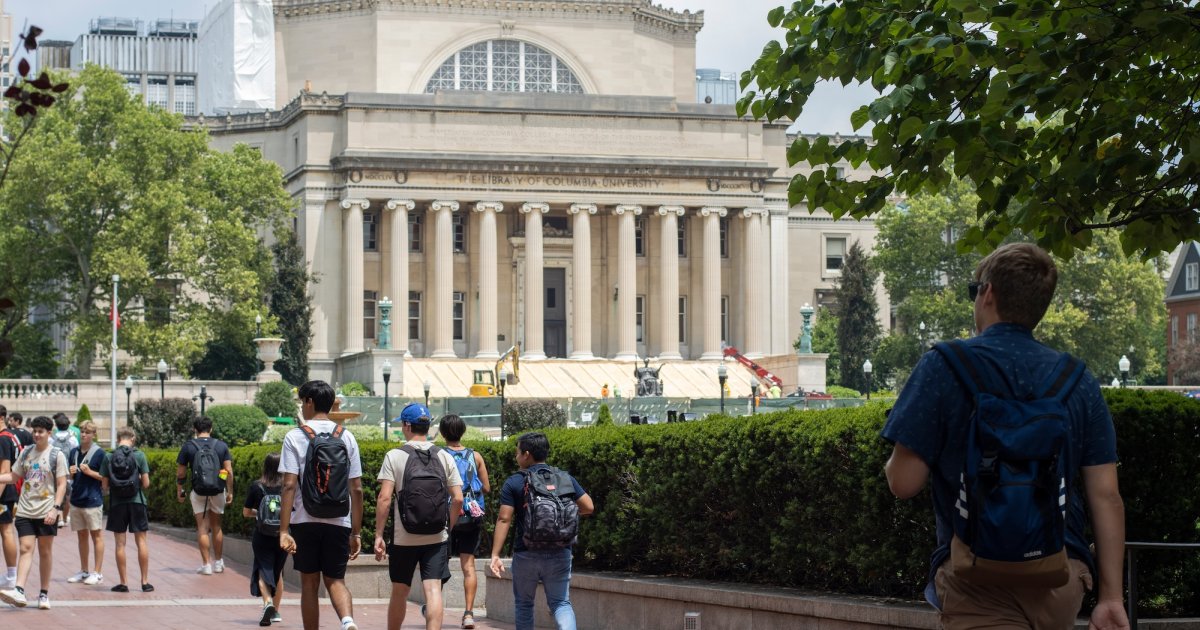
Sadly, Harvard isn’t the only example. The administration has used frozen funds, threatened cancellations, and “make a deal or else” tactics against schools around the country — turning what should be a debate about institutional reform into a contest of political submission. Columbia, for example, saw hundreds of millions in federal funds cut and then faced enormous pressure to reach a settlement to restore support. Brown University and Northwestern University cut deals to restore research funding.
Once this becomes the model — political leverage first, negotiated compliance second — universities are no longer institutions that argue and persuade. They’re institutions that bargain to survive.
The Trump administration even tried to formalize this approach through a so-called “higher education compact” — a document that asked universities to pledge support for a menu of administration priorities in exchange for federal benefits. It was stuffed with unconstitutional conditions, and it sent the message loud and clear: We will decide the price of doing business in American higher education.
At the individual level, the chill becomes something else entirely — especially when immigration authority gets involved. Take Rümeysa Öztürk, a Turkish Ph.D. student at Tufts. In March, after the government revoked her student visa, masked plainclothes federal agents detained her on a Somerville, Massachusetts, street and put her into an unmarked vehicle, after which she was quickly moved to an ICE facility in Louisiana — over her lawyers’ objections and amid litigation over where her case should be heard.
The core speech at issue wasn’t a threat, a crime, or some exotic incitement. It was an op-ed she co-authored in a student newspaper arguing that Tufts should divest from Israel. You don’t have to agree with it — that’s not the point of free speech. The point is that in the United States, it should not be the case that a person here on a student visa can be detained and threatened with deportation for writing a political opinion that could have run in any mainstream newspaper in the country.
And notably, when a federal judge later ordered her release, he described her detention as unlawful and tied it directly to First Amendment concerns. This is also why my organization sued Secretary of State Marco Rubio this year, challenging immigration law provisions we argue are being used to punish protected speech by legal immigrants.
That is where campus free speech is now: not just arguments about campus codes, but fights about whether the government can use its most coercive tools to enforce ideological conformity.
Now, some readers will object: “What about Obama and Biden?”
Fair point. Prior administrations helped create the modern campus speech mess, and not only through cultural encouragement. They often worked more indirectly, through the Department of Education and its civil-rights enforcement machinery — guidance letters, compliance regimes, and expansive theories of harassment that were then eagerly operationalized by sympathetic campus administrators.
We fought that too at FIRE, even when nobody cared.
Years ago, for example, my organization criticized federal “blueprints” that encouraged universities to stretch harassment definitions in ways that risked swallowing protected speech. This wasn’t a partisan hobby. It was the same principle: The government should not be in the business of pressuring universities into punishing speech, whether it’s done through backchannel regulatory guidance or through overt political threat.
But 2025’s shift is that the pressure is more direct, more punitive, and more personalized — less “guidance,” more “kneel before Zod!”
And here’s the part I’m done being delicate about: For 25 years, we documented the free-speech crisis on campus while a lot of higher education either denied it, rationalized it, or treated it as a moral victory. We warned that turning universities into ideological enforcement machines would generate backlash. Not because we wanted backlash, but because anyone with eyes could see that a system that punishes dissent while claiming to pursue truth is not stable. It was going to trigger a reaction.
The more higher education demonstrates it understands its own legitimacy crisis and is willing to reform, the less political oxygen there is for escalating reprisals from increasingly powerful state actors.
Now I keep hearing a question — sometimes asked fairly, sometimes in a way that assumes the problem came from talking about it — along the lines of: “Don’t you feel guilty for contributing to the backlash?”
No, because I did no such thing.
Reporting on a crisis did not create it. Documenting censorship did not cause it. Warning about backlash did not summon it. The people who should feel guilty are the ones who are responsible: the administrators, faculty, and students who let the craziness on campus become normal and then acted shocked when the bill came due.
And the bill is measurable. Public confidence in higher education has fallen dramatically over the last decade. Pew recently reported that 70 percent of Americans now say higher education is headed in the wrong direction, up from 56 percent just a few years ago. Gallup’s long-running confidence measure tells a similar story. Even after a recent uptick, only 42 percent of Americans say they have “a great deal” or “quite a lot” of confidence in higher education — still far below the 57 percent who said so when Gallup first asked in 2015.
Those numbers should have been a wake-up call. Instead, much of the higher-ed establishment has treated the credibility crisis as a conspiracy theory: a “moral panic,” a hoax, a right-wing plot, an exaggeration. We’ve seen this posture from influential voices who insist the last decade’s free-speech crisis was mostly manufactured — just a media obsession built from anecdotes. Professor Jason Stanley, formerly of Yale and now at the University of Toronto, has used exactly that frame. The American Association of University Professors and other gatekeepers have often treated calls for viewpoint diversity and institutional neutrality as hostile demands rather than basic components of truth-seeking.
And you can see it in leadership rhetoric, too: the tendency to describe political attacks in vivid detail while taking almost no responsibility for the internal failures that made universities such an easy political target. When prominent university leaders frame the story as, “We are innocent, and this is being done to us,” they’re not just refusing accountability. They’re handing the backlash more fuel.
Meanwhile, some of the behavior that helped bring us here continues — right out of 2021.
Consider what happened at the University of Virginia Law School. Professor Xiao Wang helped win a unanimous Supreme Court decision in a case involving a legal standard that put a heavier burden on straight people to prove employment discrimination. In a healthy university, the response would have been to read the briefs, argue about the doctrine, debate the consequences, and learn something.
Instead, Wang faced a wave of backlash that treated the case not as a legal question but as a moral betrayal — complete with pressure campaigns and demands that looked like ideological loyalty tests. That’s not a glitch. It’s a reminder: The internal coalition that drove the last decade’s crisis has not disappeared. It’s simply been joined by a much more aggressive external force.
That brings us to the hard truth nobody wants to say out loud: Higher education really does need reform, and some of that reform will have to involve the federal government and state governments — because the government helped build the incentive structure that produced this mess, and because public universities are state actors. There are plenty of constitutional reforms available. Colleges can enforce viewpoint-neutral rules, strengthen due process in discipline, demand transparency, stop outsourcing institutional governance to ideological offices, and require that speech protections be real rather than a branding exercise.
Why FIRE is now judging bias-reporting systems more harshly — and why I changed my mind
Neighbors turning in neighbors for wrong-think cultivates the habits of an unfree society. We shouldn’t train students to do it—and we certainly shouldn’t build hotlines for it.
But there is also a difference between constitutional reform and a rampage. Universities have been strangely lucky so far that many of the administration’s most extreme tactics are the kind that courts can — and often will — stop. For FIRE’s part, we’ll keep fighting them whenever they cross the line into infringing on expressive rights. But universities need to do their share, too: Admit they have a problem, and start fixing it seriously.
The more higher education demonstrates it understands its own legitimacy crisis and is willing to reform, the less political oxygen there is for escalating reprisals from increasingly powerful state actors. The more it stays in denial — insisting this vast, wealthy industry has nothing to fix, that the last decade of cancel culture and ideological conformity was mostly a hoax, and that the critics are all acting in bad faith — the more likely the backlash becomes uglier, broader, and harder to stop.
Things that will not bend will break. And if higher ed stays in denial, it may find that 2025 wasn’t the bottom, but rather an alarm call. And if 2026 is worse, it won’t be able to say it wasn’t warned.