Tag: Youth

  • Empowering youth through environmental storytelling

    Empowering youth through environmental storytelling

    Through storytelling, we can bring climate-related data to life. Through storytelling, young people can use their voice and the voices of those around them to turn something complex, global and overwhelming, into something local, tangible and meaningful. Through storytelling, young people can help shift narratives and bring to the forefront stories of action and of hope.

    This is the idea behind the EYES climate storytelling curriculum.

    Now available on the eyesonclimate.org website, the curriculum is the culmination of the Empowering Youth through Environmental Storytelling project (EYES), an Erasmus+ co-funded project by News Decoder, The Environment and Human Rights Academy (TEHRA) and Young Educators European Association.

    The Climate Change 101 unit begins with the basics: human activities driving climate change and what temperature increase means for our planet. Students are tasked with producing an article that explains the topic to a younger audience.

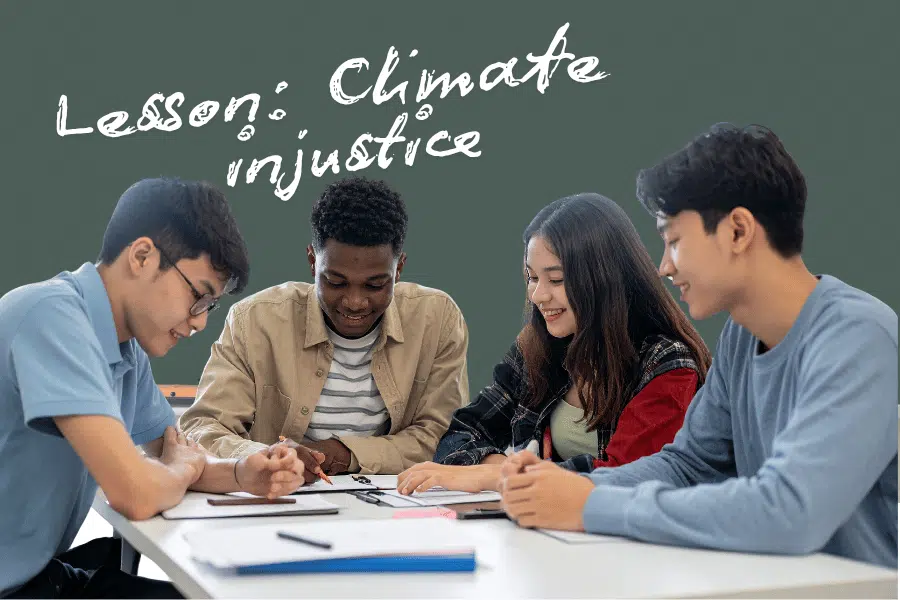
    A unit on Climate Injustice walks students through the uncomfortable reality that those causing climate change are suffering the least from its impacts. Those who have contributed the least? They tend to be in the grip of climate change.

    Human stories from a man-made disaster

    We know that learning about the devastations of the climate crisis can leave young people feeling anxious and angry. We also know from the teachers who piloted the EYES curriculum that it’s important to localise these topics.

    So in the Climate Injustice unit, students are tasked with finding a human story: someone to illustrate climate injustice at play in their local area or region.

    Hearing stories about people lets us understand the reality of an issue. Telling these stories gives young people a device for meaning-making and a platform for agency.

    In our Systemic Change unit, students learn about the interconnected mechanisms that keep our economy rooted in endless economic growth and fossil fuel use. They learn about the ‘deep’ leverage points for making change — the rules, the goals and the mindset of a system. They research case studies on commodity supply chains and form their questions into a story pitch.

    Our curriculum runs across school subjects for students between 15 and 18 years of age. Other units include: Tipping Points, Planetary Boundaries, Human–Nature Connection, The Carbon Budget, Doughnut Economics and a Climate Justice Case Study.

    Solutions are out there.

    In Systemic Solutions to the Climate Crisis, we showcase seven inspiring examples of climate solutions from around the world, from local projects such as community-owned solar panels in Mexico to the transition to renewables in Uruguay, to global movements such as recognising the rights of nature or degrowth in the Global North.

    Meaningful action can happen at any scale. By engaging with these case studies, students can see that stories of just and transformative systems change happen all around them.

    There are so many stories yet to be told, and that in itself is empowering.

    To bolster student projects, the curriculum includes units on journalism and storytelling: The Principles of Journalism, Fact Checking and Misinformation, Interviewing and How to Write a Pitch, Write an Article and Produce a Podcast.

    “Storytelling can turn young people into active users of climate knowledge, and even change makers,” said Andreea Pletea, The Environment and Human Rights Academy programme manager. “Students can even help shift dominant narratives by bringing to the surface systemic solutions to the environmental crises that also address inequalities.”

    Causes and systems

    Aside from storytelling, the main focus of the EYES curriculum is on systems thinking and climate injustice.

    “We invite learners to go upstream to the root causes of the crises we face, and question why, despite increasing awareness, meaningful action often lags behind,” Pletea said. “Seeing the big picture particularly through systems thinking and global justice can also help young people make sense of what’s going on in their own local context.”

    Pletea said that ultimately, the goal is to plant a seed. “That all of us, including young people, are more than consumers,” she said. “We are citizens with a voice and power to act and demand change, and especially when we come together.”

    The EYES project itself began as a seed. TEHRA and News Decoder came together to improve climate change education through storytelling, and created a set of materials that were piloted in multiple education contexts across Europe, Africa and Latin America.

    The seeds to stories

    In Slovenia, Kenya and Colombia, pilot students exchanged letters on their local experiences of climate change. In Kosovo, a Roma community of young people visualised their personal experience of climate change through art.

    At a summer camp in Belgium, students played climate change games, pulled apart the individual carbon footprint and were guided through a nature meditation. In Kenya, students visited the precious Karura national park and wrote stories about tipping points and the value of forests.

    The feedback from students and educators, including at a three-day educators workshop in Brussels in October, helped shape and restructure the curriculum. It evolved into a set of off-the-shelf resources that can be used by multiple teachers in one school or independently by learners.

    If you are an educator, we invite you to dive into climate change with your students and use the EYES curriculum. Students need to learn about the root causes of the climate crisis so that they know in which direction to head — in their future careers as much as in their personal set of values.

    Through storytelling, young people can engage with the reality that is climate change, both as authors and as listeners. Storytelling is the way we understand ourselves: why we act the way we do and how together we can solve the problems that humankind has caused.


    Questions to consider:

    1. How can storytelling can turn someone into an active user of climate knowledge?

    2. What types of climate activities did students in different countries do through the EYES lessons?

    3. What stories about climate change have you found interesting to read or hear about?


    Source link

  • How to amplify youth voice? Bring teens into the pressroom.

    How to amplify youth voice? Bring teens into the pressroom.

    Each year, Global Youth & News Media recognizes news organizations that are innovating in ways that include or help young readers and young journalists. 

    The France-based nonprofit, founded in 2018, seeks to reinforce connections between young people and news media. 

    This year, it held a global competition to find projects that could show how young people are helping news organizations survive in a world where too many of them are shutting down. 

    “I was looking at who was helping local news for a different project and noticed that nearly every journalism-related NGO I knew was doing something to help local news survive,” said Aralynn McMane, executive director at Global Youth & News Media. “And new nonprofits were emerging only for that purpose.”

    The problem, though, was that she didn’t see much sharing of that knowledge. So one of the aims of the competition was to create cross-pollination — highlight projects that could be replicated by other organizations elsewhere and provide a forum for the sharing of lessons learned. 

    “This was a particularly satisfying competition for us because we found so many great win-win cases of meaningful youth-local news collaborations from all over the world with lessons for newsrooms most anywhere,” McMane said.

    Can we fertilize the news deserts?

    News Decoder is deeply concerned about the emergence of “news deserts”: localities that no longer have any news outlets as profit-driven corporate owners pull the plug on local newspapers.

    A study in 2023 found that more news outlets in the UK were closing than were being launched. In Canada, between 2008 and 1 April 2025, more than 500 local news outlets closed in some 370 communities across the country, according to the Local News Map crowd-sourcing data initiative. Meanwhile, a report from the Brookings Institution found that in the United States in 2023, some 2.5 local news outlets folded every week.  

    That’s why I was honored to serve as one of 26 judges from 17 countries in the competition. While the entries taken as a whole gave me reason to hope, the winners left me inspired. 

    The competition found dozens of collaborations across six continents. They served to remind us of the vital public service mission local news organizations perform when they have the resources to do so. 

    Consider The Westsider in Melbourne, Australia. The staff there recognized the need for voters to be informed about the candidates in local elections and how they stand on important local issues. But to chase down dozens of candidates takes staffing that The Westsider doesn’t have. So with a small grant from a local journalism organization, the paper recruited 72 students from RMIT University to chase down every candidate running for a local office and ask them a series of questions. From that funding the paper produced a non-partisan voter’s guide. 

    Youth can tell important local stories.

    Another standout was Phralipen of Croatia, who collaborated with Youth Roma Congress to produce stories about the Roma community through reporting, multilingual content and participatory journalism.

    Then there was the Contra Costa Youth Journalism program in Northern California, a collaboration between the Contra Costa County Office of Education and Bay City News/Local News Matters, a news organization based in Berkeley, California. The program recruits and trains young people from underserved communities to be journalists and has published more than 70 stories from these areas as a result. 

    Katherine Rowlands, the founder and publisher of Bay City News and Local News Matters, said programs that bring young people into journalism are important.

    “It is critical to train and inspire the next generation of journalists so we create a pipeline of future reporters to inform, question and make sense of the world,” Rowlands said. “It is also really important for us to include these younger voices in the journalism we do now so that we more accurately reflect our communities and bring their issues to the forefront.”

    From Pakistan to Botswana, Bolivia to Tanzania, the competition identified news organizations finding ways to bring young people into their newsrooms to ensure that what young people do, and the issues that are important to them, are not left out of local news coverage. In the process, they are finding that for organizations that are short-staffed and short of funds, young people are a key resource that has been long overlooked.

    The entries were graded on the impact on the local community and transferability — whether the project could easily be replicated by other news organizations in other places. 

    One thing we’ve learned at News Decoder — and which the results of this competition clearly showed — is that young people are eager to have their voices heard and see journalism as an effective way to do that. 

    News organizations can benefit from their passion and energy and also from the perspectives they bring. 

    The full list of winners

    GOLD AWARD (most transferable, clearest on impact)

    • The Westsider with RMIT University (Australia)
    • Stamp Media (Belgium)
    • Phralipen and the local Roma community (Croatia)
    • The Greenline (Canada)
    • Časoris and Črni Vrh primary school (Slovenia)
    • Landshuter Zeitung/Mediengruppe Attenkofer podcast mies keck (Germany)
    • Bay City News Foundation with Contra Costa Youth Journalism (United States)
    • The Spotlight News with The University at Albany (United States)

    SILVER AWARD (transferability and clarity of impact)​

    • Casa de Nadie (Bolivia)
    • Nyugat.hu (Hungary)
    • Cable Newspaper Journalism Foundation (Nigeria)
    • Univerzitetski Odjek (Serbia)
    • Orkonerei FM Radio (Tanzania)
    • The Jersey Bee (United States)

    COMMUNITY AWARD (potential for community impact)

    • Daily News (Botswana)
    • Thinking Abyss (Greece)
    • Kashmir Times (Kashmir)
    • Risala Today (Pakistan)
    • SF Channel Bitegeere (Uganda)

    Full list of winners available on the Global Youth & News Media website.


    Source link

  • L.A. County’s Failure to Educate Incarcerated Youth is ‘Systemic – The 74

    L.A. County’s Failure to Educate Incarcerated Youth is ‘Systemic – The 74


    Get stories like this delivered straight to your inbox. Sign up for The 74 Newsletter

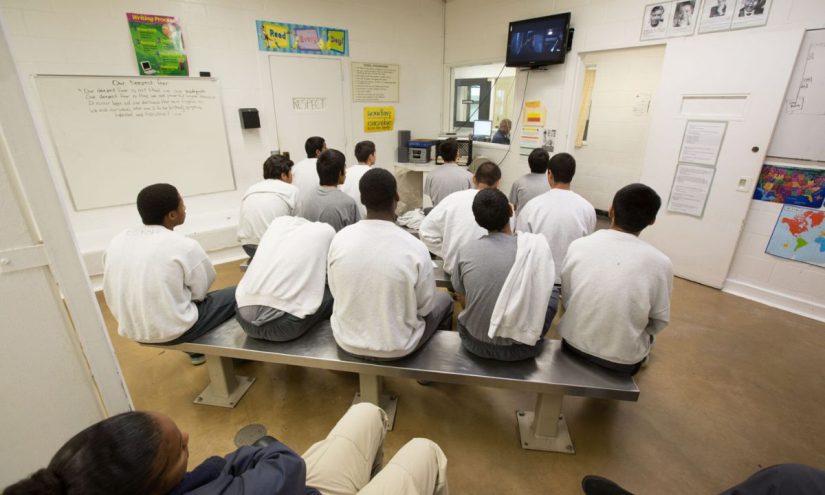
    Local government agencies in charge of youth violated the educational and civil rights of students in Los Angeles County’s juvenile justice facilities for decades by punting responsibility and inaction, according to a report released Wednesday.

    Who has the power? Chronicling Los Angeles County’s systemic failures to educate incarcerated youth” blames the disconnected, vast network of local and state agencies — from the board of supervisors to the local probation department to the county office of education and more — that play one role or another in managing the county’s juvenile legal system, for the disruption in the care and education of youth in one of the nation’s largest systems.

    “This broken system perpetuates a harmful cycle of ‘finger-pointing,’ often between Probation and Los Angeles County Office of Education, which hinders the resolution of issues that significantly affect the education of incarcerated youth,” wrote the Education Justice Coalition, authors of the report.

    The coalition includes representatives from Children’s Defense Fund-California, ACLU of Southern California, Arts for Healing and Justice Network, Disability Rights California, Youth Justice Education Clinic at Loyola Law School, and Public Counsel.

    The authors listed three demands for the board of supervisors, including reducing youth incarceration by way of implementing the previously approved Youth Justice Reimagined plan, providing access to high-quality education, and adopting transparency and accountability measures.

    Decades of documented rights violations

    A timeline outlines repeated student rights violations, some of which have resulted in class-action lawsuits and settlements requiring the county to be monitored by the federal and state departments of justice for years at a time.

    Since 2000, the timeline notes that Los Angeles County has faced:

    • A civil grand jury report calling on the board of supervisors to “improve collaboration” between the probation and education departments in order to address unmet educational needs
    • An investigation by the federal Department of Justice — and subsequent settlements — found significant teacher shortages, lack of consistency in daily instruction, and issues with support for students with special needs
    • A class action lawsuit against the county office of education and the probation department
    • An investigation by the state Department of Justice, followed by settlements, found excessive use of force and inadequate services
    • Multiple findings by a state agency of L.A. County juvenile facilities being “unsuitable for the confinement of minors”

    Most recently, the state attorney general has requested receivership, which would mean full state ownership of the county’s juvenile halls.

    The Los Angeles Board of Supervisors, the probation department, and the Office of Education did not immediately respond to a request for comment.

    The lasting impact of academic disruptions

    Dovontray Farmer experienced the mismanaged system when he entered Los Padrinos Juvenile Hall a second time as a 10th grader. Now 24 and serving as a youth mentor with the Youth Justice Coalition, Farmer said that his time in L.A. County facilities “played a major role in not being able to get properly educated — I felt betrayed, honestly.”

    Returning to school after being released was difficult, he said, because he quickly realized he was several grade levels below his classmates at his local high school.

    He’d also been part of his school’s football team before his detention at Los Padrinos when he was 17, and said he tried returning to the team once released but wasn’t allowed back.

    He said the disruption to his education and participation on the football team, which he saw as a positive influence, affected how he viewed his life.

    “There was nothing I really could do, so I was really giving up,” he said. “Like, everything that I really cared for was already gone.”

    The environment at the juvenile facilities didn’t help matters. 

    Los Padrinos recently came under fire after a video published by the Los Angeles Times showed probation officers standing idle as detained youths fought. Thirty officers have been indicted on criminal charges for encouraging or organizing gladiator-style fights among youths.

    Farmer said he was put through those same types of fights when he was at Los Padrinos as a teenager.

    “A lot of the coverage recently has been about the recent gladiator fights in 2023, but clearly this is a very systemic issue that even when a problem is resolved in the short term, we’re uncovering that it’s really indicative of a larger systemic problem,” said Vivian Wong, an education attorney and director of the Youth Justice Education Clinic at Loyola Law School, whose recent clients have included Los Padrinos students.

    Education data across several years backs Farmer’s experiences while detained.

    The most recent state data available when Farmer was detained at Los Padrinos is from 2018, when 39% of students were chronically absent, less than 43% graduated, and 12% were suspended at least once.

    That same year, the state’s average was 9% for chronic absenteeism, 83.5% for graduation, and 3.5% for suspension.

    Ongoing education concerns

    The report’s authors note that students across several facilities have lost thousands of instructional minutes, with a “lack of transparency and concrete planning to ensure that the missed services are adequately made up for, leaving students at risk of falling further behind educationally.”

    While compensatory education has typically been used to resolve instructional minutes owed, “I am not sure that’s the most realistic way to remedy the injustice that young people face, because they have endured so much abuse in these facilities,” said Wong. “It’s much more than just a loss of instruction.”

    A more appropriate response to the loss of instructional time would be a consistent investment in avoiding detention and keeping young people in their communities to maintain school stability, she added.

    Past attempts at reform have often been “done without community input or leadership, both in the design and in the implementation of those reforms,” Wong said.

    The new report, she added, is meant to be a tool toward implementing Youth Justice Reimagined, or YJR, a model against punitive measures that was largely developed with input from community organizations to restructure the local juvenile legal system.

    Three demands

    Youth Justice Reimagined, approved by the Los Angeles County Board of Supervisors in November 2020 to reform the local juvenile legal system, would move the county away from punitive approaches, such as detention, and toward rehabilitative support through counseling, family and vocational programming, small residential home placements, and more.

    Youth detention results in “severe disconnection from and disruption to their education trajectory,” wrote the report’s authors, as they urged the board to address abysmal educational access and achievement by fully funding and implementing YJR.

    The disconnect, they added, is exacerbated by delayed school enrollment when detained and upon release, the constant presence of probation officers, and turnover of educators and classmates.

    These common experiences are particularly difficult for students with learning disabilities or a history of trauma, they wrote.

    “After more than a decade of incremental reform, it is time for the County to truly reimagine youth justice,” wrote Supervisors Sheila Kuehl and Mark Ridley-Thomas in their November 2020 motion to approve YJR. “In the same way that the Board has embraced a care first, jail last approach to the criminal justice system, it is incumbent upon the Board to embrace a care first youth development approach to youth justice.”

    Despite the approval, a report published in August 2024 by the state auditor found that less than half of the YJR recommendations had been implemented by mid-2024.

    To address the high rates of chronic absenteeism, poor testing results and instructional minutes owed, the Education Justice Coalition’s second demand is to adapt educational opportunities “to address the unique and significant needs of the court school population.”

    They listed 18 actions the county probation and education departments should work together on, including:

    • Appropriate education support for students with disabilities 
    • Access to A-G approved courses for every student in a juvenile facility
    • Classrooms led by educators, rather than probation officers
    • Appropriately credentialed and culturally competent educators
    • Education access that is not disrupted due to probation staffing issues

    The coalition’s third demand centered on transparency and accountability measures by providing families with access to education planning for their children and establishing work groups that include community members.

    This story was originally published on EdSource.


    Get stories like these delivered straight to your inbox. Sign up for The 74 Newsletter

    Source link

  • An award recognizes the importance of youth journalism

    An award recognizes the importance of youth journalism

    On 18 July, U.S. legislators voted to rescind more than one billion dollars in funding previously allotted to the Public Broadcasting Service (PBS), a nonprofit network of television and radio stations partly funded by the U.S. government.  

    The cuts put at risk educational and training programs geared to young people across the country. 

    That’s why an award from Global Youth & News Media to PBS News Student Reporting Labs is so significant. 

    Student Reporting Labs (SRL) is a U.S.-based journalism training program for young people and their educators. On 23 July, Global Youth & News Media, a France-based nonprofit dedicated to encouraging and honoring news media engagement with the young, awarded SRL its Prize for Outstanding Achievement in Journalism.

    “This award is in recognition of the program’s impactful history and determination to continue its unmatched work to introduce young people throughout the United States to local broadcast journalism,” said Aralynn McMane, executive director of Global Youth & News Media. “In voting to bestow this award, our board was unanimous and adamant about the need to shine a spotlight on Student Reporting Labs to remind the world of what short-sighted politics risks destroying in the wake of defunding public broadcasting.”

    The importance of youth journalism

    This is only the second time the Global Youth & News Media board has bestowed such an honorary award. The first was in 2018 for joint live coverage of the March For Our Lives anti-gun demonstration by The Guardian US with Eagle Eye News student reporters from Marjory Stoneman Douglas High School in Florida, which had seen the killing of 18 people at the school just three weeks prior. 

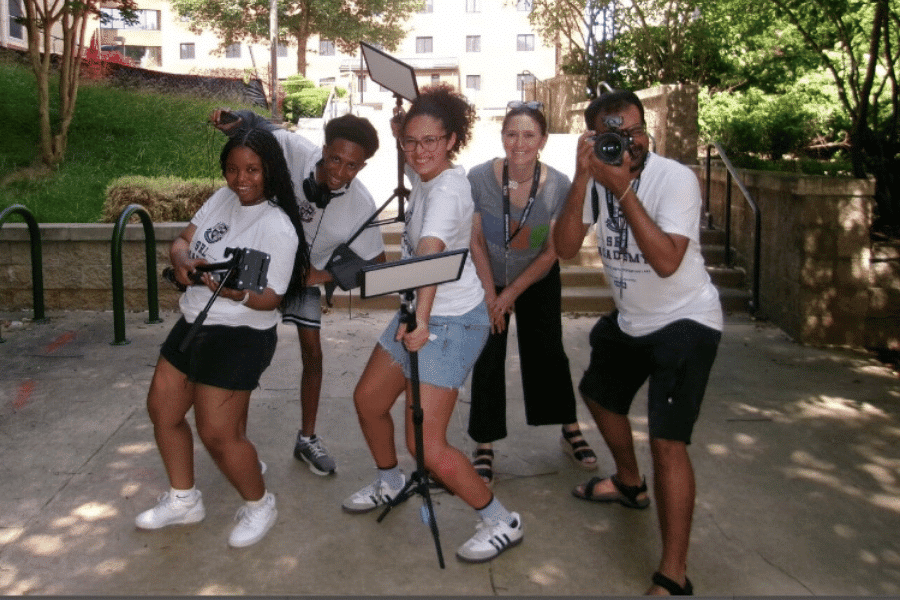
    Founded in 2009 by Leah Clapman, then the managing editor of education at PBS NewsHour, Student Reporting Labs has helped build broadcast and journalism programs in thousands of secondary schools across all 50 states. 

    The program connects them with over 40 public television stations and local news organizations to bring their story to local audiences. SRL empowers the next generation of storytellers by providing free training fellowships and workshops to students and educators across the country and around the world. In all, more than 125,000 students have participated in the program. 

    SRL also reaches more than 10,000 educators via a free learning platform StoryMaker. StoryMaker provides teachers with instruction materials and lessons to help students think critically, explore their curiosity about the world and engage in their communities. 

    The SRL program was established “on the premise that some stories are best told by young people,” Clapman, now full-time executive director of SRL, wrote in a briefing last week. ”This is especially true in this moment of rapid change and disruption. In this challenging time, we’re leaning in to perseverance and service rather than despair.”

    Mentoring teens to tell important stories

    Clapman wrote that newsrooms can benefit from the important perspectives, experiences and insights that teens have and that these perspectives can help news organizations tell more nuanced and complete stories about issues that affect students.

    One such teenager that the Student Reporting Labs trained was award-winning alumna Mary Williams, who joined the program in 2015 and interned at her local PBS station in Ohio. 

    “Now when I see the news, it’s personal,” she said. “The economy, education system and the Earth’s current state aren’t just my parents’ problems to worry about. They’re mine, too.”

    The Global Youth & News Media Prize for journalism this year focused on youth collaborations that help local news media survive. The rest of the laureates were chosen by an international expert jury and will be announced in the coming weeks. News Decoder, which trains and encourages young people to develop global perspectives in storytelling, is a partner in the award and helped judge the entries. 

    News Decoder Educational News Director Marcy Burstiner said that it is more important than ever to recognize the important work young journalists are doing. 

    “It seems that in the United States and elsewhere there is a war on journalism and truth telling,” Burstiner said. “I used to tell my students that it was a myth that you needed a thick skin to be a journalist. But these days, you do.”

    But every year, News Decoder finds more and more young people stepping up to the challenge, Burstiner said. 

    “They aren’t afraid to tell the important stories that need to be told,” she said. “But people need to support the organizations like PBS News Student Reporting Labs that help and encourage young people to be truth tellers.”

    Source link

  • Savvy Cyber Kids Appoints New Members to Board of Directors

    Savvy Cyber Kids Appoints New Members to Board of Directors

    Atlanta, Georgia,(GLOBE NEWSWIRE) — Savvy Cyber Kids, a 501(c)(3) non-profit organization, appointed new members to the Board of Directors starting July, 1, 2025. 

    Joining the Board of Directors for Savvy Cyber Kids are James Azar, Anne-Marie Brockwell, Jason Cenamor, Nelson Soares, and Dr. Jasyn Voshell. 

    Savvy Cyber Kids enables youth, families and school communities empowerment through technology by providing age-appropriate cyber safety, cyber ethics and digital parenting resources and education starting at three years old.

    ———-

    “As a father, cybersecurity practitioner, and advocate for creating a safer digital environment for all children, I was compelled to join the board of Savvy Cyber Kids,” states James Azar, CISO and Host, CyberHub Podcast. “The organization’s mission, under the leadership of Ben Halpert, deeply resonates with me. Promoting responsible internet use begins at home, and Savvy Cyber Kids equips parents with the guidance and talking points they need to raise digitally aware and cyber-safe children.”

    James Azar is a dedicated cybersecurity practitioner and CISO in industries like FinTech, Banking, Energy and Oil and Gas with over 20 years of experience. He has a passion for aligning security and business goals, believing that innovation and creative thinking are key to solving today’s security challenges. As the host of the CyberHub Podcast, James enjoys sharing insights and fostering conversations around cybersecurity, technology, and business. He’s had the privilege of speaking at industry-leading events like RSA and CyberTech Israel and contributing to well-known publications. When not immersed in security, James enjoys espresso, good food, and a fine whiskey.

    ———-

    “I’m thrilled to join the board of Savvy Cyber Kids, where I can further my commitment to empowering families, educators, and students with the knowledge to navigate the digital world safely and responsibly,” states Anne-Marie Brockwell, Account Executive, Microsoft. “Through my advocacy for proactive digital learning and community engagement, I aim to expand awareness and foster a more inclusive, ethical online future. I look forward to using my network to amplify this vital mission.”

    Anne-Marie Brockwell is a seasoned Account Executive and strategic education leader with a deep commitment to empowering learners and advancing digital citizenship. At Microsoft, she leads partnerships with premier higher education institutions across New England, helping them accelerate AI innovation, modernize infrastructure, transform data strategies, and strengthen cybersecurity postures—all in service of their ultimate stakeholders: the students. With over a decade of experience spanning education technology and enterprise sectors, Anne-Marie brings a global, cross-industry perspective shaped by leadership roles at Rosetta Stone, Sanofi/Genzyme, Imagine Learning, and Deloitte. Her career has consistently focused on consulting selling, strategic partnerships, and operational excellence, underpinned by a passion for equity, access, and innovation in education.

    ———-

    “As technology becomes increasingly more prominent in our everyday lives, so does the need for increased education around cybersecurity,” states Jason Cenamor, Founder, Confide Group and The CISO Society. “Like all important things, cybersecurity education starts at the grassroots, and organizations like Savvy Cyber Kids will ensure cyber safety becomes as natural as looking both ways before you cross the road. Witnessing so many people fall victim to bad actors every day, I could not be more passionate about ensuring the next generation is prepared to navigate the new world equipped with the knowledge and tools to avoid the same fate.”

    Jason is the Founder and CEO of Confide Group – a cybersecurity advisory firm, and the Founder and Chief Community Officer of The CISO Society – a private community where members collaborate and share expertise on security strategy, project roadmaps, technology partners, CISO jobs, talent acquisition, industry news, and more. As a community figurehead and advocate, Jason possesses a passion for relationship building, networking, events, and providing an environment for security leaders to connect and learn from one another.

    ———-

    “As a father, cybersecurity advocate, and entrepreneur passionate about digital education, I’m honored to join the Board of Directors at Savvy Cyber Kids,” states Nelson Soares, Founder & CEO, C-Vision International and CEO, NS Advisory Group Inc. “Today’s children are growing up in a world shaped by rapid technological change—one that demands both awareness and resilience. I’ve spent my career helping organizations navigate innovation responsibly, and I believe there’s no greater mission than empowering our youth to do the same. I look forward to contributing to this critical cause and supporting Savvy Cyber Kids in building a safer digital future for families everywhere.”

    Nelson Soares is a dynamic entrepreneur and executive with deep expertise in leadership, consulting, and go-to-market strategy. As the Founder & CEO of C-Vision International, he has played a pivotal role in producing global thought leadership experiences for C-suite executives. He is also the CEO of NS Advisory Group Inc., where he advises startups and enterprise technology providers on scale, sales, and strategic growth. Nelson’s work bridges innovation and executive influence, particularly in cybersecurity and enterprise software, and his network spans the U.S., EMEA, LATAM, and APAC. He also serves on the board of Pocket Security, a nonprofit. A proud husband and father of two daughters, Nelson brings a personal and professional commitment to helping the next generation thrive in the digital age.

    ———-

    “I’ve had the privilege of knowing and working with Ben Halpert for over 20 years, including some of his earliest projects in cybersecurity education,” states Dr. Jasyn Voshell, Senior Director, Products and Solutions Security, Zebra Technologies. “Joining the Savvy Cyber Kids Board is especially meaningful to me as an uncle to nieces and nephews who are growing up in a world where digital technology is ever-present. Being part of an organization that empowers families to navigate the online world safely and confidently is both a personal passion and professional commitment I hold close to my heart.”

    Dr. Jasyn Voshell is the Senior Director of Products and Solutions Security at Zebra Technologies, where he leads the global Product & Solutions Security Program. He is responsible for the strategy, planning, and execution of Zebra’s enterprise-wide security initiatives across all products and solutions. Jasyn works closely with engineering and business teams to ensure security is embedded throughout the product lifecycle—secure by design, secure in use, and secure through trust. Jasyn was instrumental in establishing the Product Security Organization at Zebra, significantly reducing risk exposure while reinforcing customer trust in Zebra’s solutions. Under his leadership, the organization has delivered measurable improvements in secure software development practices, vulnerability management, and risk governance across the product portfolio. He holds bachelor’s degrees in Mathematics and Physics, a master’s degree in Applied Mathematics and Computer Information Systems, and a doctorate in Civil Law and Cybersecurity. Jasyn also maintains numerous industry-recognized certifications in cybersecurity and audit.

    ———-

    “Our children are frontline warriors pitted against threats delivered by today’s latest technology they can’t even comprehend,” states Ben Halpert, Founder, Savvy Cyber Kids. “Parents and schools unwittingly place the children they are responsible for up against harms they are not equipped to triumph over in their daily battles, both physically and mentally.” 

    Making meaningful, long term, generational change for the world’s most vulnerable population which is young children, takes dedication. “In today’s reality of youth sextortion related suicide, AI suicide encouragement, 24/7 cyberbullying, and the realization of harms against our children delivered through technology, educating young children starting at age three is paramount,” said Ben Halpert.

    “Most people want to believe quick fixes will work; when it comes to shaping human behaviors to build individual resilience, that is not the case. Our dedicated team looks forward to expanding our reach for the benefit of the world’s children,” said Ben Halpert.

    Learn more about the Board of Directors and their passion for Savvy Cyber Kids at https://savvycyberkids.org/about/board-of-directors/

    Savvy Cyber Kids is grateful for the ongoing support of its sponsors: CISO Horizon, C-Vision International, VIPRE Security Group, PWC US, Yass Partners, Jodi Fink Halpert Berkshire Hathaway HomeServices Georgia Properties, Vercel,and SecurityScorecard.

    About Savvy Cyber Kids

    Savvy Cyber Kids (SCK), a 501(c)(3) nonprofit organization whose mission is to enable youth, families, and school communities to be empowered by technology, recognizes that children may be Digital Natives but are also “Digital Naives”, who, without intervention, completely lack understanding of the implications of their digital actions. Founded in 2007 by noted speaker and author Ben Halpert, Savvy Cyber Kids resources are used in 50 states and 54 countries around the world to help parents and teachers educate today’s youth on cyber safety and cyber ethics topics of cyberbullying, digital reputation, technology and screen-time balance, mental health, body and self-image, physical safety, sexting, privacy, gaming, child sexual predators, and more starting at 3 years old.

    eSchool News Staff
    Latest posts by eSchool News Staff (see all)

    Source link

  • The crisis in the youth sector is a big problem for universities

    The crisis in the youth sector is a big problem for universities

    It is hard for universities to see beyond their own sector crisis right now, but the crisis facing the youth sector today will be the problem of universities tomorrow.

    The youth sector in the UK greatly contributes towards supporting students and graduates of the future, but it is currently under threat and the deepest impact will come for those young people who face the highest barriers to accessing higher education.

    The youth sector engages young people to develop their critical skills for life, including how to build relationships with peers; resilience and developing social and emotional skills; and how to integrate into a community. Many within the higher education sector will recognise these as areas which students and graduates are also struggling with.

    At a time where universities are being called upon to widen access for young people, the reality is young people are facing narrower opportunities than ever. The challenge for widening participation teams will be multifaceted, including supporting attainment raising in schools; tackling entrenched views from schools and families of expectations of what their children can achieve; and providing the support needed for widening participation students to progress well once in higher education.

    So how can the higher education sector help ensure that the challenges the youth sector are facing today don’t become a nightmare for widening participation teams to tackle in the future?

    What is happening in the youth sector?

    The youth sector includes large organisations such as UK Youth, Scouts and Girlguiding, to smaller grassroots organisations who run clubs and activities in and out of schools and community centres across the country.

    There are many similarities between the crises facing the higher education sector and that of the youth sector. Much like universities, the youth sector has faced years of substantial defunding. A YMCA England and Wales report on The state of funding for youth services found that “local authority expenditure on youth services has fallen 73% in England and 27% in Wales since 2010-11” which “represents a real-term cut of £1.2bn to youth services between 2010-11 to 2023-24 in England, and £16.6m in Wales.”

    At the same time as these cuts, the rate of young people who are NEET (not in education, employment or training) is growing, with 13.2 per cent of 16-24 year olds reported as NEET in 2024, and 15.6 per cent of 18-24 year olds NEET. Both figures have increased compared to previous years, particularly in young men. These young people need support and youth services are increasingly unable to provide it.

    Organisations and charities who have been supporting the youth sector are closing at a rapid rate. The National Citizen Service (NCS), a national youth social action programme which has been running since 2009, has been cut by the Labour Government. Student Hubs, the social action charity I worked with which supported students to engage in social and environmental action, has closed. YMCA George Williams College, an organisation which supported the youth sector to improve monitoring, evaluation and impact of their activities closed on 31 March 2025 to the shock of many across the youth sector.

    Whilst the Government’s National Youth Strategy announced in November 2024 is welcome, it will not fix years of systematic underfunding of youth sector services.

    How will this crisis impact universities?

    David Kernohan’s analysis of the UCAS 2025 application figures shows that applications are down, with only applicants from the most advantaged quintile, IMD quintile 5, having improved. We are in the midst of what could be a big decline in the rate of students coming from disadvantaged backgrounds entering higher education, despite the transformative opportunities it provides.

    This comes at a time where there is greater expectation by the government and the regulator for universities to be proactive in supporting students’ and young people’s skills, learning and access to opportunity. In February the Office for Students announced successful providers in their latest funding round to deliver projects which tackle Equality of Opportunity Risk Register areas. The register supports universities to consider barriers in the student life cycle and how they might mitigate against these.

    Seeing the range of projects which have been awarded funding, it is clear that universities are being pushed to go further in imagining what their role is in shaping the lives of the students they engage, and it starts significantly earlier than freshers’ week. This funding shows that more emphasis is being put on universities to address barriers to participation by the Office for Students, and with the youth sector in crisis, this may need to become even wider if universities are to fulfil their access missions.

    Thankfully, there are actions universities can take now which will make a difference both to young people and widening participation teams.

    Tackling the problems together

    The youth sector cannot afford to wait. If universities want to be ready to meet the challenges of tomorrow, they need to build strong collaborative relationships with organisations already situated in communities whilst they are still here. Partnership with the youth sector offers an opportunity to enhance university strategic activity whilst making genuine social and economic impact.

    Universities could be doing more to provide expertise on monitoring and evaluation of youth activities, enhancing quality of local activities, and conducting research to support future outcomes. There’s an opportunity for universities to learn from these partnerships too, particularly because the youth sector has a range of expertise which is highly applicable to the work the sector is doing in broadening their widening participation and civic strategies. These partnerships will sometimes be informal and sometimes they might be formalised through knowledge exchange programmes like student consultancy.

    Students can play a big role in linking universities and youth services. Research conducted by the National Youth Agency in 2024 found “that fewer than seven per cent of respondents to a national survey of youth workers are under 26 years old”. There is a desperate need for youth workers and particularly under-30s to support the sector. Student Hubs’ legacy resources detail the approach we took to supporting students to volunteer in local schools, libraries and community centres to provide free support to young people as part of place-based programmes with universities.

    Universities and students’ unions have spaces they are looking to commercialise, whilst also trying to give students jobs on campus. Universities and students’ unions could work collaboratively with community groups to use spaces on campus, provide student work through staffing them, and in turn support young people and families to access campus facilities.

    The time is now

    One of the hallmarks of a crisis is communities coming together to meet challenges head on, and universities shouldn’t wait to be invited. Trust will need to be built and relationships take time to forge.

    The best time to start is now. Universities should mobilise whilst there is still a youth sector left to support, or the void left by the lack of youth services means universities’ involvement in young people’s lives is going to become even larger.

    Source link

  • UK has “no plans” for EU Youth Mobility Scheme, despite reports

    UK has “no plans” for EU Youth Mobility Scheme, despite reports

    A report in The Times had suggested that the UK is set to table a deal for a reciprocal scheme that will see young EU citizens, aged 18-30, able to live and work in the UK for up to three years.

    However, the government has since insisted it has no plans for such a scheme.

    “We do not have plans for a youth mobility agreement,” a spokesperson told The PIE News on February 21.

    “We are committed to resetting the relationship with the EU to improve the British people’s security, safety and prosperity. We will of course listen to sensible proposals. But we have been clear there will be no return to freedom of movement, the customs union or the single market.”

    The Labour government has previously dismissed proposals for such a scheme, but recent reports had suggested new plans could contain a cap on the number of young people allowed into the UK through the scheme and could therefore alleviate concerns from UK government as it seeks to curb migration.

    The UK government has previously made it clear its preference to do deals with individual member states, but subsequently rejected deals proposed by countries such as Spain.

    The UK already has a Youth Mobility Scheme with a number of countries including Australia, New Zealand, Japan and Canada that allow individuals to study and work in the country for up to two years, with the possibility of extensions for some countries.

    The membership body for English language schools in the UK, English UK, has been campaigning for an EU Youth Mobility Scheme since Brexit.

    “We welcome reports that the government plans to negotiate a youth mobility deal with the EU,” Huan Japes, membership director, English UK, told The PIE.

    “For young people in Europe and the UK to have the opportunity to live, work and study in each others’ countries will have immense benefits – not only for the young people themselves but also for language teaching centres and other educational organisations, the hospitality industry and for the UK’s future relations with the EU.”

    “And this kind of time-limited, mutually beneficial immigration has broad support from the British public,” said Japes, who added that he would like to see a scheme with “a generous allocation of places so that this scheme can really make a difference to young people’s lives.”

    According to advocacy group European Movement UK, mobility for young people could be a gateway to much closer ties with neighbouring European countries.

    European Movement UK CEO, Nick Harvey, said the government’s hostility to the idea “could not be justified” when the benefits of such a scheme are so obvious.

    “After all, the UK has youth mobility schemes with 13 other countries – including Australia and Japan – so it makes sense to have one with our nearest neighbours and closest partners,” said Harvey.

    “Dismissing the idea of reciprocal youth mobility simply meant letting down British young people who face all sorts of economic difficulties, and have seen their horizons curtailed by Brexit. Young people want and deserve the chance to study or work in Europe. The government owes it to them to make sure they get that chance.”

    We need to start pulling this country out of the no-growth quagmire of Brexit and start giving people hope for a better, brighter future
    Mike Galsworthy, chair of European Movement UK

    Similarly, Mike Galsworthy, chair of European Movement UK, is calling for a deal to be made.

    “We need to start pulling this country out of the no-growth quagmire of Brexit and start giving people hope for a better, brighter future,” he said.

    “Liberating our youth and small businesses alike to engage is an important start. Hopefully the government will now see that being bold, hopeful and engaged with Europe brings a sigh of relief from the public and a more positive outlook for the UK.”

    Writing in her column for The PIE last week, outgoing London Higher CEO Diana Beech mused on a refreshed relationship for the UK and the EU and what it might mean for the sector.

    “The process of resetting the UK-EU relationship by the spring is one to watch for the UK’s higher education sector,” she wrote.

    “This is because, while the EU has the power to ease restrictions on UK businesses to improve British trade prospects, the UK also has something that many in the EU want in return: namely the power to reinstate a youth mobility scheme between the UK and the EU.

    “At its most ambitious, such a scheme could allow young people from the UK and Europe the freedom to travel across countries to study and work as was the norm before Brexit.

    “A curtailed version could at least see mobility enacted for shorter, time-limited placements. Either way, UK universities could find themselves becoming an important bargaining chip in any future renegotiations,” wrote Beech.

    Beech considered that previously, the UK higher education sector would have “been first to welcome” the return of a Youth Mobility Scheme such as Erasmus+. But financial woes facing the sector are “likely to dampen university managers’ enthusiasm” for such measures, considering EU students would once again be regarded as ‘home’ students, thereby capping the fees they pay.

    Source link