
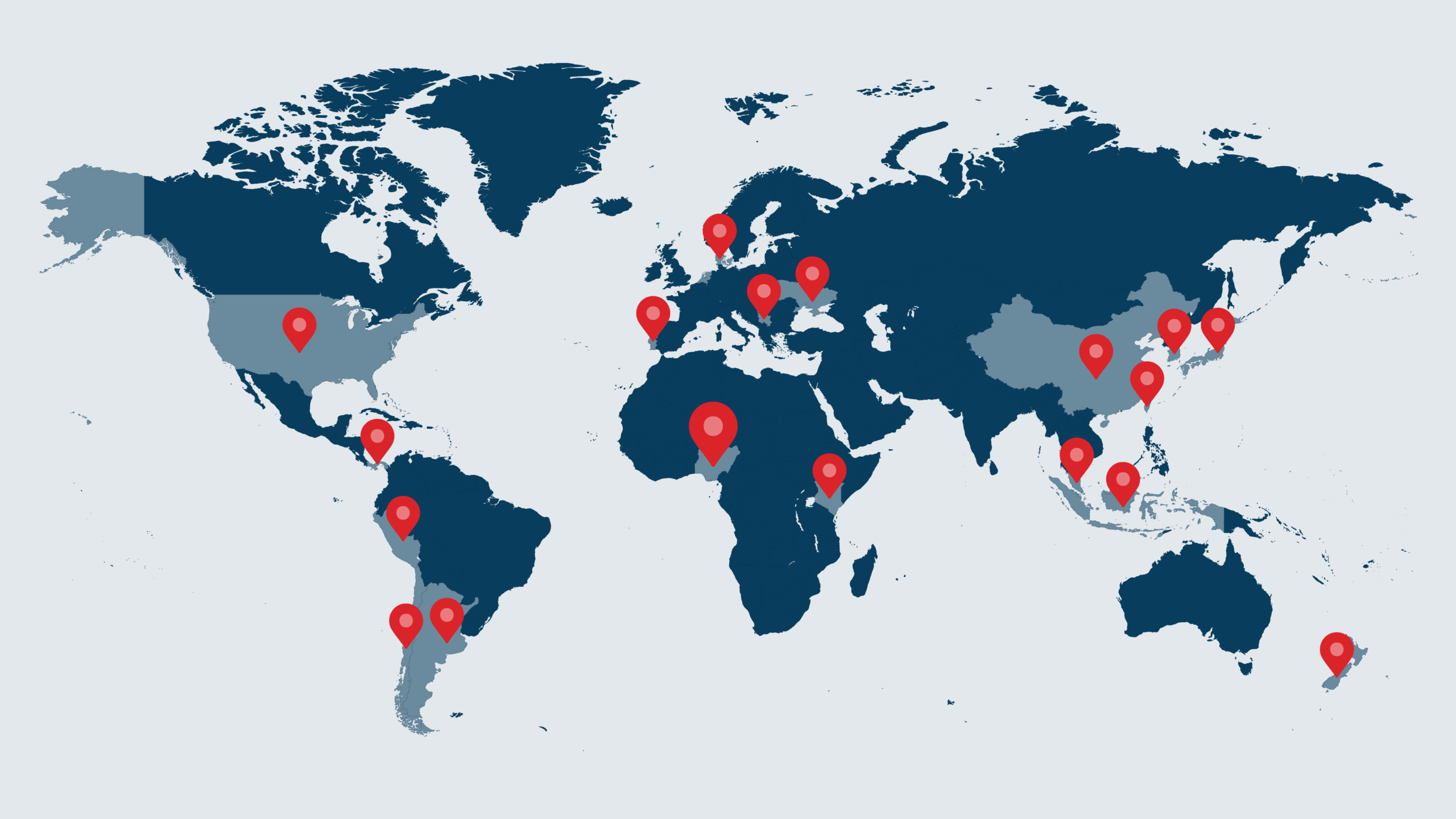
Welcome back to year two of the Fifteen. I think I’ve got the hang of this finally, so I think this will be a much better product now. Without further ado then, some of the world’s biggest higher ed stories from the last three weeks or so.
- Another back-to-school season, another set of stories about demographic decline from East Asia. Numbers are predictably down in Taiwan, Japanese private universities are having trouble hitting their numbers, and in South Korea, a law has been passed which allows the government to shut down “zombie universities”.
- Government cuts back on university funding and so institutions start raising tuition – a lot – because how is all that research going to get done without money? Sound familiar? It should, except this time it’s happening in China – and some people are getting antsy about top research universities creating financial barriers to study.
- Remember all those stories from last year about Kenyan universities being broke? Well, the auditor general has looked into it, and it’s much worse than expected. System-wide institutions are in debt to the tune of about a year and a half’s worth of government grants (the Canadian equivalent would be $45B). So, what does the government do? It cuts tuition fees because popularity. It’s hard to see a way out of this situation.
- In Chile, the government is replacing interest-bearing student loans with a system called the Fondo de Educación Superior (FES). Under this program, the government gives money for tuition (if the student is not eligible for gratuidad) and living expenses, and in return the student pays the government a percentage of their post-graduate income for a limited number of years. A graduate tax, basically. I haven’t seen numbers on this one, but I’d bet it’s expensive.
- New Zealand commissioned an expert study (the “University Advisory Group” on higher education over a year ago. The report has now been released and the government immediately rejected some of the biggest recommendations.
- Crazy-pants moment for the Trump administration: seemingly off-the-cuff, Cheeto Jesus – whose main contribution to internationalization in higher education, hitherto, has been to deport international students – suddenly began musing in public about more than doubling the number of Chinese students in American universities. Leave aside the question of whether that many Chinese students are even interested anymore. Is this a change of heart? Or just something to distract attention away from new visa rules that put a four-year maximum on student visas, making doctoral degree attainment very difficult.
- Malaysian public universities have been getting better at attracting international students (are they chasing international rankings? Yes. Yes, they are.) That is upsetting the balance of domestic higher education. Ethnic Malays are deliberately a majority at public universities, which means ethnic Chinese students often have to go to private universities. Now, the Malaysian Chinese Association is accusing the government of allowing “domestic” students (implicitly, non-ethnically Malay domestic students”) to be pushed out by foreigners. The government denies it. This story seems like it could run for quite a while.
- Here are some interesting statistics on Ukrainians moving abroad to study. 11% of all Ukrainian students are now outside the country (personally, I was surprised it was that low).
- Policy whiplash in Nigeria. Earlier in the year, Parliament was discussing opening as many as 200 new universities to meet growing demand. Now the President has decreed a 7-year moratorium on new Federal universities. The President’s allies are encouraging State-level governments to do the same. Unions wonder why the moratorium doesn’t cover private universities as well.
- Nigeria is without a doubt the country with the worst record of university-labour relations in the world: since 2009, the Academic Staff Union of Universities has been on strike eight times for a total of 39 months. Now we seem to be on the verge of another strike, this time over complaints that the government has not implemented some aspects of an agreement reached in 2009. Seems to me they have some cause: the idea of a government setting up a loan fund for academic staff to cover shortages of pay seems frankly insulting.
- After two years of nearly relentless government cutbacks to universities, the Argentinian Senate defied President Milei by passing a law requiring the government to spend the equivalent of 1% of GDP on public higher education. It was seen as a rare legislative loss for the President, who seems likely to veto the measure (join us in a couple of weeks on the podcast when Marcelo Rabossi will be joining me to discuss this issue).
- Applications to Portuguese universities have fallen by 15% since last year. Danish universities have also seen smaller slide, albeit probably for different reasons. Does this have anything to do with a drop in the value of degrees? An interesting question…
- Student protests are still on in Serbia, but still seemingly as far away from regime change as ever. Meanwhile, in Indonesia, students protesting inflation and corruption have been in violent confrontations with police, which has left one student dead.
- In parts of Latin America, there is a lot of fuss about allowing elected rectors to serve more than one term. Panama wants to change rules in order to ban the practice. Peru wants to change rules so as to permit it.
- Finally, back to Lagos for a second. Nigerian comedians have been making up fictitious universities on social media as a way to satirize higher education. Nigerian universities, humorlessly, want them shut down claiming unauthorized use of the term “university”.
That’s all folks. See you back here in two weeks.