
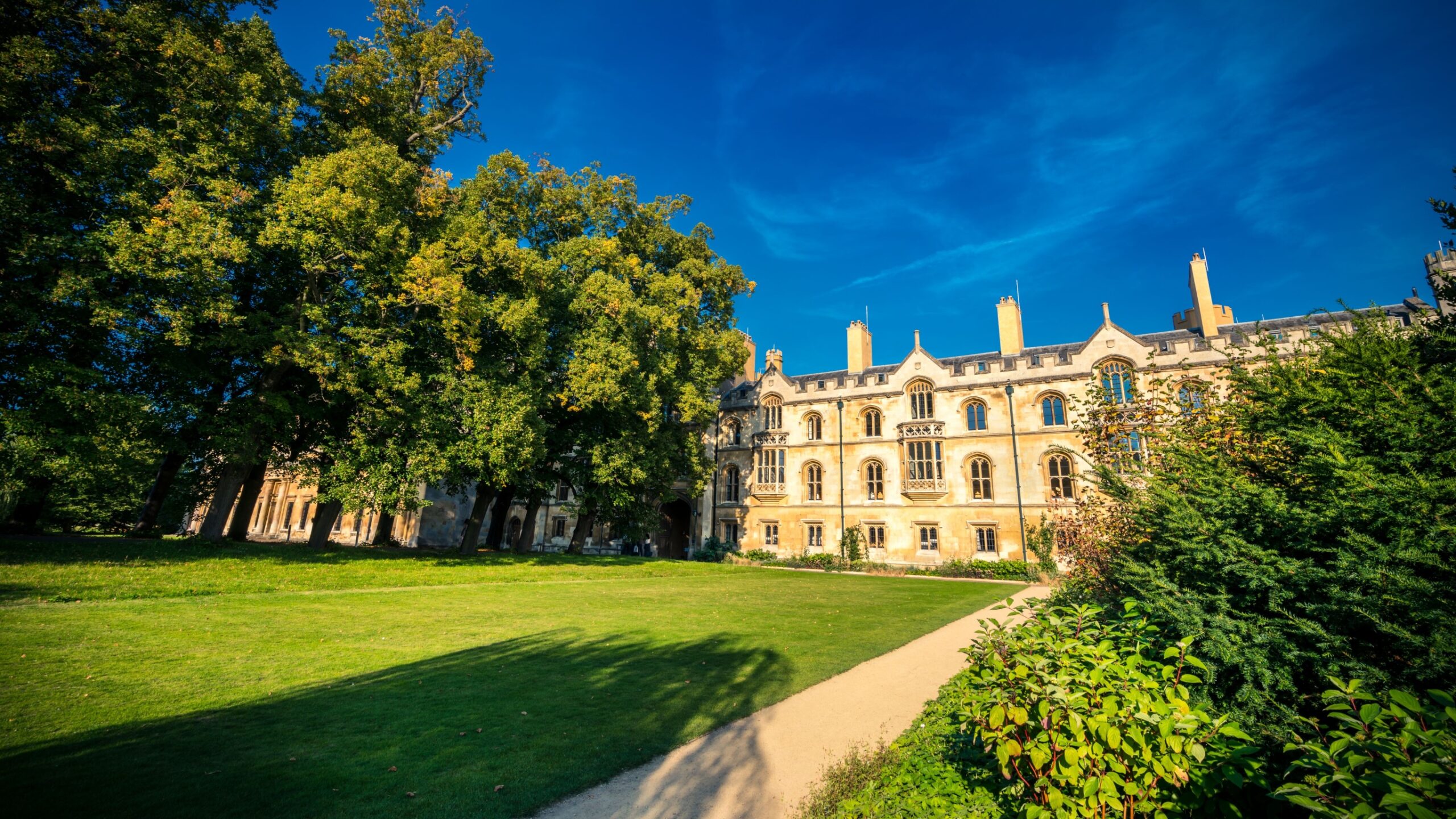
The Guardian has reported that Cambridge college Trinity Hall is to target “elite private schools” for student recruitment.
To the disquiet of many college fellows a memo from director of admissions Marcus Tomalin, argues that:
The best students from such schools arrive at Cambridge with expertise and interests that align well with the intellectual demands of Tripos courses
specifically including subjects including languages, music, and classics.
He recommends that the college develops a “targeted recruitment strategy” for UK independent schools that focus on these (and a handful of other) subjects where the university already sees more than 40 per cent of applications come from independent schools, and that these efforts are further reinforced by a specific concentration on specific schools that have “sent plausible applicants to Cambridge” in the past.
To be very clear, there is nothing in the memo to suggest that this will be done to the detriment of other students. And the interventions recommended – contacting the schools to let them know about what Trinity Hall offers for these subjects, creating webinars or other social media material for those subjects and alerting those schools – are hardly evidence of discriminatory behaviour.
Reading between the lines, this is less an effort to get more independent school kids into Cambridge and more an attempt to encourage the ones that are applying for these subjects anyway to consider Trinity Hall rather than one of the other 28 available colleges.
Applying for these courses
Music at Cambridge more generally is a very specialised endeavor. Applicants require either A level music or a grade 8 music qualification at merit or above, with those seeking to make a “strong application” recommended to add other A levels in English, history, mathematics, or (“ancient or modern”) languages. All this is on top of “general requirements” that include an acquaintance with the standard (classical) musical repertory, play to a grade 5 or above standard at the (piano) keyboard, and some basic knowledge of counterpoint.
Your application will include the submission of two school essays in music and two harmony exercises. If shortlisted for interview, you would be required to take a written assessment (harmonisation of a chorale melody, recognition of musical forms, and chord analysis). All this for a chance at one of the one to three places a year available at Trinity Hall.
For the three year course in classics you would instead need an A level in Latin (“if you do not study Latin but instead study Classical Greek, please contact us for advice”). There are between two and four places on the course available each year.
The other route mentioned in the memo, the four year modern and medieval languages course (incorporating a year abroad), is much larger than these more specialised subjects – with between six and eight places available every year at Trinity Hall. Candidates for this four year course need an A level in at least one of the languages they want to study, and a “strong application” would have another. A portion of the interview would be conducted in one of these languages.
By the numbers
I mention all this to illustrate just how few students these measures would potentially have an impact on. The numbers of students that would meet the entry requirements for these courses are vanishingly low – and the subset of those that would consider the course at this particular Cambridge college as their first choice is even lower.
In 2025 just two students applied to music at Trinity Hall (four were accepted, the college clearly topped up via the winter pool). Six applied to the three year classics programme (two offers, two acceptances), while twelve applied to modern and medieval languages (six offers, four acceptances).
Overall, Trinity Hall saw 617 applications in 2024 (the last year of data available at this resolution), made 139 offers, and accepted 107 students. This is at the lower end of Cambridge colleges For independent schools, the numbers were 118, 31, and 28 – for UK maintained (state) schools it was 281, 78, and 53. Less than ten of these state school acceptances were in the music, classics, or languages courses we are concerned with – based on a very low level of applications to these courses from such backgrounds (we’re facing the HESA-esque rounding to the nearest five for low numbers problem here).
A failure?
It would be tempting to make an argument that this represents a failure in access and participation. But it is also very possible that this is not a failing on behalf of the university. There are very few schools (independent or otherwise) that can prepare people for these particular entry requirements, and that’s before we get into family and social backgrounds that are able to support sustained musical practice, or learning multiple (ancient or modern) languages.
This isn’t the case for all courses. Trinity Hall (like other selective, prestigious providers) does a huge amount of work in broadening access and participation to undergraduate study. It works with potential applicants from underrepresented ethnic groups, and works particularly with schools in Bristol and the South West.
A Trinity Hall spokesperson told me that:
There has been no change to Trinity Hall’s widening participation policy. This modest additional activity is aimed at ensuring we get the best applications from talented students from all backgrounds. The college is very proud of the progress it has made in widening access. Average admissions from state schools at the college in the past 3 years has been 73 per cent and Trinity Hall admitted 20.4 per cent of its UK students from the most disadvantaged backgrounds last year, an increase on previous years.
Language about “reverse discrimination” is unhelpful. If there really is reverse discrimination a look at recruitment to these courses at Cambridge suggests it isn’t working very well. As applicant numbers are falling, to various degrees, for classics, languages, and (classical) music across the sector, Trinity Hall (like providers of all types) is looking to maximise recruitment by making an effort to encourage students already likely to apply – in this case, students almost certain to apply to Cambridge in the hope they would choose Trinity Hall rather than St John’s or Clare.
This is not a replacement for broader and more sustained work on access: it is simply evidence that recruitment pressures (and the linked financial pressures) are everywhere.