
Multiple public and private universities announced job and program cuts, as well as other money-saving measures, last month in response to financial challenges driven by a range of factors.
Some institutions noted the loss of federal research funding, while others cited declining international enrollment amid the Trump administration’s crackdown on foreign students. Still others pointed to sectorwide challenges, including the worsening public perception of higher education. And some colleges cut low-demand programs to comply with state laws such as Ohio’s Senate Bill 1.
Here is a look at job and program cuts as well as other moves announced last month.
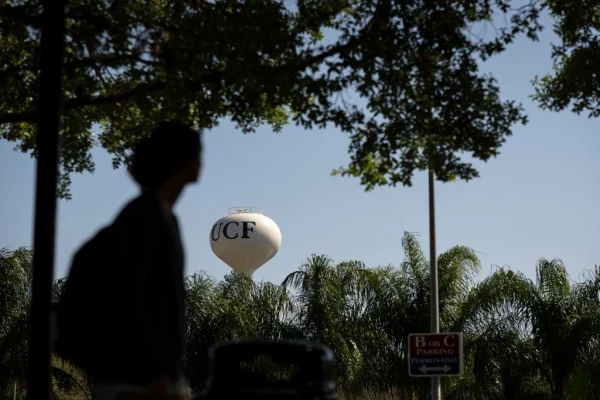
University of Central Florida
The public university cut 65 jobs last month, 57 of them at the affiliated Florida Solar Energy Center, Central Florida Public Media reported.
The center has been the state’s designated energy research institute since 1975.
UCF officials told the news outlet in a statement that the university “made the difficult but necessary decision to reduce staffing at the Florida Solar Energy Center to ensure responsible stewardship of university and state resources,” noting that the center was not financially sustainable.
University officials also cited a decline in external funding, which hampered research activities, as well as “recent shifts in federal funding priorities in energy research, including reductions and cancellations of key programs that historically supported the center’s research activities.”
In addition to cuts at the Florida Solar Energy Center, UCF also laid off six employees in its technology department and two workers at the UCF Arboretum, The Orlando Sentinel reported.
Lewis University
Citing a significant decline in international students, the private university in Illinois is cutting 10 percent of its workforce through a combination of layoffs and buyouts, Shaw Local reported.
Altogether, 63 people are on the way out.
The university reportedly laid off 17 staff members and 16 professors and eliminated some vacant roles. Some eligible employees opted into early retirement programs offered by the university.
Lewis officials told the news outlet that international enrollment has collapsed, dropping from a peak of 1,417 students to just 847 this fall. That decline comes amid a flurry of action at the federal level, where the Trump administration has sought to limit international enrollment and increased scrutiny of foreign college applicants as it takes a hard line on immigration policy over all.
Calvin University
The private Christian university in Michigan is shedding jobs and programs as part of a restructuring that will see multiple faculty members laid off over two years, MLive reported.
Calvin is cutting 12.5 percent of the faculty. While the university did not specify a precise head count, it employed 363 faculty members last fall, 197 of whom were full-time, according to its Common Data Set. Based on those numbers, Calvin appears poised to cut as many as 45 professors.
University officials declined to provide the exact number of jobs cut to Inside Higher Ed.
“Most of these departures are voluntary (e.g., retirements, voluntary exit incentive packages, etc.), and many were identified during budget planning that occurred within the academic division last year,” President Greg Elzinga wrote in an email to the campus community last month announcing the changes. “Involuntary departures will amount to approximately 3% of our current full-time faculty workforce, and those impacted have already been notified.”
Elzinga also told MLive that Calvin’s finances remain strong and it is on track for a balanced budget for the current academic year, despite sectorwide challenges such as diminishing public confidence in higher education and international enrollment declines stemming from federal policy changes. Visa processing delays reportedly cost Calvin 65 international students who were unable to make it to campus.
Rider University
The private university in New Jersey announced last month that officials plan to lay off 35 to 40 full-time faculty members, cut salaries by 14 percent and enact other cost-cutting measures as it navigates financial challenges.
President John R. Loyack wrote in a letter to the campus community that the university was taking steps to address “the financial risks that have grown increasingly serious in recent years and have intensified in severity in recent months.” He noted that the university faces “a significant cash shortfall” due to “new and unforeseen developments” and could run out of money “to meet its payroll and other obligations before the end of the current fiscal year.”
Rider also plans to indefinitely suspend retirement contributions, increase faculty workloads, end faculty tuition remission benefits and cut some senior administrative roles, among other moves.
The university was placed on probation by its accreditor, the Middle States Commission on Higher Education, in late October due to compliance concerns related to financial standards.
Keene State College
Grappling with a $4 million budget deficit, the public college in New Hampshire is cutting 25 staff positions and offering voluntary separation agreements to faculty, The Keene Sentinel reported.
Of the 25 staff positions cut last month, eight were reportedly vacant.
So far, 12 faculty members have accepted buyouts, reportedly in line with the goal of 12 to 15; eight of those professors will exit after the fall semester and four will leave in the spring.
Roger Williams University
The private university in Rhode Island is mandating unpaid furloughs for up to half of its full-time workforce in an effort to shrink a projected $3.5 million budget gap, The Boston Globe reported.
According to the newspaper, layoffs are not currently being considered.
A university statement described the mandatory, unpaid one-week furloughs as a “temporary measure that will allow the university to preserve positions, wage increases, and healthcare benefits for our dedicated staff and faculty, while maintaining the student experience.”
University of Providence
A split from the Providence Health System has prompted officials at the private Catholic university in Great Falls, Mont., to ask its Board of Trustees to declare financial exigency, NBC Montana reported.
While Providence Health has provided financial support, that arrangement is reportedly set to end in December 2027 and the university must become financially independent, which means plugging an $8 million budget shortfall. University officials told NBC Montana that it previously relied on $8 million or more in health system support to balance its budget.
Layoffs and program cuts are expected to be part of the financial recovery plan.
Cornell College
Multiple programs are set to be eliminated at the private liberal arts college in Iowa, a process that officials said in a statement last month was driven by student enrollment data and interest.
Majors being cut include classical studies, French and Francophone studies, German studies, religion, Spanish, and multiple music programs. Students enrolled in those majors will be able to complete their degrees through teach-out plans, according to the announcement.
An unspecified number of job cuts will accompany the program eliminations.
The New School
The private university in New York City announced last month that it is offering faculty buyouts, freezing hiring for certain positions, cutting pay for some employees and pausing retirement contributions for up to 18 months, among other changes, in an effort to balance its budget.
Further, the New School plans to pause admission to most doctorate programs for next year. Program closures are also expected.
President Joel Towers wrote last month, “The New School continues to face serious and persistent financial deficits that require immediate decisive action.” Now the university is offering early retirement packages to professors and voluntary separation packages to employees, as well as cutting top salaries by 5 to 10 percent. Still, he wrote that job cuts “will very likely be necessary” depending on “participation in voluntary programs” and “progress toward our budget goals.”
University of Lynchburg
Faculty buyouts are on the table at the private liberal arts college in Virginia as it seeks to reduce a persistent budget deficit it has been whittling down for the past three years, Cardinal News reported.
That deficit has reportedly dropped from $12 million in late 2022 to about $2.7 million currently.
Ohio State University
The public flagship is eliminating eight programs to comply with Senate Bill 1—controversial and sweeping legislation that has forced higher ed cuts across the state—The Columbus Dispatch reported.
Programs on the chopping block, all at the undergraduate level, include an integrated major in math and English, medieval and Renaissance studies, music theory, and musicology, among others. Students currently enrolled will be able to complete those programs before they are terminated.
Signed into law earlier this year, SB1 bans diversity efforts in higher education and requires colleges to drop undergraduate programs that yield fewer than five degrees annually, averaged over a three-year period. However, colleges can ask the Ohio Department of Education for waivers to keep such programs, which Ohio State has done for a dozen offerings.