Author: admin

  • The Unsustainable Nature of University-Related Health Care

    The Unsustainable Nature of University-Related Health Care

    University-related health care has become a sprawling and increasingly unsustainable enterprise. What began as a mission to train doctors, nurses, and medical researchers in service of the public good has morphed into a vast, profit-driven complex. Tied to the branding of universities, the financial imperatives of Big Medicine, and the precarious economics of higher education, this “Medugrift” reflects many of the same dysfunctions we see across American higher ed.

    The University as Health Care Conglomerate
    Major research universities often operate sprawling medical centers that rival Fortune 500 corporations in both revenue and expenses. Academic health systems like those at Johns Hopkins, Duke, Michigan, or USC bring in billions annually. Yet despite this scale, their finances are increasingly fragile. They rely heavily on a combination of government reimbursements, philanthropy, and sky-high tuition from medical students—many of whom graduate with debt loads exceeding $200,000.

    For universities, medical schools and hospitals serve as prestige engines and revenue streams, but they also drain resources, saddle institutions with debt, and expose them to scandals involving fraud, patient neglect, or mismanagement.

    The Student and Worker Burden
    The workforce supporting university health systems—residents, nurses, adjunct faculty, contract staff—often face long hours, low pay relative to the work demanded, and little job security. Meanwhile, students in health care disciplines are treated less as apprentices of the healing profession and more as revenue sources for both the university and affiliated corporations.

    Many young doctors-in-training are funneled into a system where their debt and exhaustion make them more compliant with the corporatization of medicine. Universities profit from this cycle, while students and patients carry the costs.

    Ballooning Costs and Broken Promises
    Despite claims of providing cutting-edge care and serving communities, university health systems often contribute to the nation’s crisis of affordability. Hospital charges at university facilities are often higher than at non-teaching hospitals, reflecting not only the real costs of research and training but also the administrative bloat, marketing budgets, and executive compensation packages that mirror the rest of higher ed.

    Patients face sticker shock, insurers pass costs to the public, and communities are left to wonder whether these “nonprofit” institutions are truly accountable.

    Medugrift and the Future
    The term Medugrift captures the contradictions: universities use the prestige of medical schools and hospitals to attract funding and political clout, but the system feeds on debt, underpaid labor, and inflated costs. It is not financially or ethically sustainable.

    As university debt rises and student loan defaults grow, the Medugrift may become a central fault line in the higher education crisis. Already, some universities have been forced to sell or spin off their hospitals. Others double down, betting on health care revenue streams to subsidize declining undergraduate enrollments.

    But this path cannot hold indefinitely. Like the broader higher education bubble, the university health care complex rests on fragile assumptions: endless student demand, limitless patient reimbursements, and unquestioned public trust. If those foundations crack, the consequences for both higher education and health care will be profound.

    Source link

  • WEEKEND READING: University Collaboration – the case for admissions and professional registration  

    WEEKEND READING: University Collaboration – the case for admissions and professional registration  

    This HEPI guest blog was kindly written by James Seymour, who runs an education consultancy focusing on marketing, student recruitment, admissions and reputation and Julie Kelly who runs a higher education consultancy specialising in registry and governance challenges. Julie and James have worked for a range of universities at Director level in recent years.  

    The Challenge  

    All through August and September, many admissions and faculty/course teams have been working hard to get thousands of new students over the line and onto the next stage of their lives. It is more than just their UCAS application, interview, selection and firm acceptance or journey through Clearing – they have to actually enrol and succeed too.  

    Many of these students are training to be nurses, teachers, paramedics, social workers and doctors amongst many other allied health professional and education courses. They all need to go through essential and important Professional, Statutory and Regulatory Body (PSRB) requirements and additional compliance checks, from passports, to Disclosure and Barring Service questionnaires, to health questionnaires and more. Many are mature students who must demonstrate GCSE or equivalent competency at Grade C/4 or above. They are less likely to have support navigating this process as they are less likely to be in full-time education.  

    Most of these applicants have already been interviewed, attended selection days or Multiple Mini Interviews – MMIs (like selection speed dating) involving lots of competency stations.  

    These health students also must apply for their Student Finance loans in good time to trigger the all-important £5K+ NHS learning support fund – essential to enable them to succeed and even get to their clinical placements via bus, train or car.  

    It’s a very onerous process for applicants, their supporters, and the academic, admissions, and compliance teams, who must arrange and record all of this.  

    Clearly, getting all this information recorded and verified is important, but does it have to be so admin-heavy and time-consuming? Are we putting up barriers and disincentives deterring students from starting their studies?  

    At present, we have an inconsistent mess, often involving email and incessant chasing.  

    There has to be a better way  

    Over the last 10 years we have been involved in a number of process improvement/student journey projects at a number of UK universities.  In our experience it takes at least five times longer to admit a Nurse compared to a Business, Law or English student, and at least twice as long compared to a creative arts student who submits their portfolio for interview and review. Data from The Student Loans Company indicates that at least 25% of all new students only apply for their loans on or after results day in August – presenting real risk of delays in getting their money in time for enrolment.  

    Typically, only 85-90% of Nurses and other key NHS-backed students who have a confirmed UCAS place in August actually enrol in September. Another 3-5% have left before January.  

    This is not all about motivation or resilience – part of the issue is linked to getting these students over the line with all the additional hoops they have to jump through.  

    Another issue is around wasted resource across the sector and a poor student experience.  A student typically applies to their five UCAS choices, and many universities undertake the additional PSRB checks during the admission process.  A student is therefore having to supply their information to multiple institutions, which then need to be processed for students who may never actually enrol.  Surely it is better for students to supply this information once during the initial application stage? 

    Postgraduate Teachers including PGCE and Teach First students have to navigate a gov.uk application process (rather than UCAS) which feels like completing your tax return. A daunting and clunky first step to train in one of the most important careers any of us will ever do. They also only get three choices for courses that start in early September – only 2-3 weeks after many final year degree results are confirmed, putting undue pressure both on students, schools and institutions alike. 

    It’s clear that in the context of improving efficiency, eventual enrolment and reducing stress for all, a more collaborative approach across UK HE and professional training would be a real win. The same issues apply for onboarding, applications and selection for degree and higher apprenticeships.  

    The NHS workforce plan signals a clear need to train more Nurses and other key NHS staff and we know that teacher recruitment targets have been missed again this year.  

    Solutions and Future Projects 

    In the context of collaboration between universities, NHS, UKVI, UCAS and DfE we propose some key, essential ways to improve the process and increase the pipeline of future health and education professionals.  

    1. Create a safe, secure one-stop shop for PSRB checks, uploads and compliance so that students do it once and can be shared with all their university choices and options. There are a number of Ed Tech companies as well as UCAS, providing portals for applicants and the Gov.uk system is already improving each year.  
    1. As well as the process, revisit the timeline for applications and compliance for NHS and other PSRB courses – if this is all checked and ready by April-May and directly linked up to Student Finance Applications and/or NHS bursary support – far more students would be able to enrol, train and be ready to learn.  This would require proper process mapping and joined up thinking across different government departments, UCAS and universities themselves.  
    1. The HE sector and NHS should collectively review the factors, groups and critical incidents affecting non-enrolment and first year drop out – nationally and across all PSRB courses – and work at pace to ‘fix the leaks’ accordingly. At present these data sets are not shared or acted upon across the UK but only via individual universities, trusts and occasionally at conferences and sector meetings.  
    1. UCAS and exam boards need to urgently bring forward automatic sharing of GCSE results via the ABL system so that universities and applicants can be assured of level 2 qualifications.  
    1. Look at alternatives to the ‘doom loop’ of GCSE Maths and English retakes and essential requirement for entry to NHS and other professional courses. There are already alternative qualifications including Functional Skills and these need to be amplified, so more students are able to get over the line and start training.  
    1. Universities should work together not against each other. Each university or training provider spends many tens of thousands each year on recruitment campaigns.  For Nursing degrees alone, we estimate this to be at least £1M per year; pooling just 10% of this figure to ensure a consistent brand and overarching campaign would widen the pool of applicants rather than pit universities against each other.  
    1. Review the application process for Postgraduate Teacher Training – consider whether it should be given back to UCAS or another tech platform to improve visibility, choice, applicant journey and eventual enrolment figures.  Clearly only three choices is not enough with some providers being more efficient than others in responding to applicants and dealing with application volumes. The resulting bottlenecks impact on applicant confidence in the system. The early September start date for PG teaching courses also needs a review.  Apart from the application time pressure, these students are also starting before the campus (and school?) is truly ready for the start of term.  Why not start with the rest of their peers at the end of September and also introduce a January start point as an option? 
    1. Make funding more consistent and long term – at present universities are only paid to train students based on first year intake each year, leading to short term decisions, volatility and competition. The LLE due in 2027 is unlikely to lead to flexibility in PSRB course transfer. Giving universities and health trusts a 3-4 year funding model would iron out that volatility, encourage new entrants and provide certainty to invest in facilities, staff and support to train those students.  

    Conclusion and next steps  

    As the HE sector looks back on admission and enrolment for the 2025/26 academic year and prepares for 2026/27 entry we feel that something must change to enhance the admission process for PSRB courses, all of which are critical to the future of the UK.  

    The practical steps and ideas included within the article are all deliverable but need joined-up thinking across different parts of the process. We propose establishing a working group or task force to address quick wins and consider a roadmap for addressing longer-term solutions. 

    Source link

  • Building and rebuilding trust in higher education

    Building and rebuilding trust in higher education

    Trust is fundamental to all of our relationships, and it is vital for meaningful relationships.

    It can be an anchor in uncertain times, as explored in this special edition of the International Journal of Academic Development. Within higher education, trust underpins our diverse institutional relationships with students, and their families, friends and supporters; colleagues, regulatory bodies, employers, trade unions, students’ unions, prospective students and schools, international partners as well as local communities and many other groups. These individual interactions combine to build a complex matrix of relationships in which trust originates, takes form or develops.

    Or sometimes, it doesn’t. Uncertainty and complexity can stifle relationships, suppressing trust as partners hold back or withdraw, leading to a crisis in confidence. A lack of trust can derail any relationship, well intended institutional narrative or strategy.

    Having trust often means believing that you matter in some way to a person, or to the people working in an organisation, or system, enough for them to care about your experiences and feelings. It’s possible to trust without being highly engaged, but it’s difficult to get engaged without having trust.

    Trust matters in higher education because universities are there to support individuals to achieve their goals, whether these are in teaching or research. Those individuals need to feel that people and systems are designed to include and support them. Trust has to be earned and it can easily be lost. Reflecting on the many challenges for the UK higher education sector and the multifaceted priorities and constraints it will be impossible to meet the expectations and aspirations of our students, colleagues and partners unless there is trust at every level.

    When we encounter media articles like this one from the Guardian, we are asked to consider the possibility that trust in the whole system of higher education is beginning to fail – perhaps a consequence of massification and a loss of faith in education for its own sake, rather than as a passport to a shrinking pool of traditional jobs. We need to talk about why higher education remains worthwhile, and how we can work together to maintain trust in it and to ensure that students feel their own value as part of its systems.

    Nurturing relationships

    When we build trust we are also building partnerships. When we recognise an institution as trustworthy, we are frequently noting that it delivers on what it has promised and that it values relationships with its stakeholders; it holds itself accountable. And it is not just about the large-scale sector wide challenges, it is also about considering how we build trust through the average everyday experiences of our diverse student and colleague communities.

    Creating trustful spaces in the classroom is one element of this. Teachers’ perception of trust-building has shown that trust is based on teachers’ care and concern for students as much as on their subject knowledge and teaching ability. Research on how students in engineering perceive trust-building efforts also shows that they value attention to them as individuals most highly. They also use their trust in the institution to mitigate perceived problems with individual colleagues or services, believing that the university, or their department, makes student-centred decisions with respect to recruiting and training lecturers and professional services staff, and accepting that occasionally, they may not find an individual teacher trustworthy.

    Trust and accountability also underpin meaningful cultural change in uncomfortable spaces and sensitive areas. When we trust each other we can have difficult conversations and begin to accept the existence of hidden barriers across our diverse colleague and student groups. Inside the university, teams must trust each other, empathising with each other’s views and values – 2024’s report from AdvanceHE and Wonkhe showed that trust is paramount when leading strategic change in challenging times. Because of this, trust underpins institutional sustainability; particularly within a sector that is currently responding to rising costs and income constraints.

    Nurturing relationships through difficult choices about resources and provision requires a fine balance, transparency, and accountability if trust is to be maintained and difficult decisions explained. Few people would continue a relationship in which trust has broken down or with someone or something that they would describe as untrustworthy, but many of use will recognise the situation where this has happened and all parties feel powerless to rebuild the trust.

    What can individuals and leaders do?

    Trust can be expressed in many forms: You can trust me, I trust you, you can trust yourself, you can trust each other. Within a complex array of opportunities and challenges which call for attention, HE institutions will benefit from finding the most appropriate strategies, performance indicators and (regulatory) endorsements which will create trust and accountability in their provision to build their reputation. As leaders, how do we show colleagues that we trust them? How do we encourage others to show that they trust us? What do we do to ensure that we are trustworthy?

    At a larger scale, a trustworthy research partner shares ideas, makes it easy to distribute funding between institutions, invites contributions from stakeholders, colleagues working in the field, and students. A trustworthy community partner supports students and employees from the local area, ensuring that they feel welcome and valued, and uses local services. A trustworthy internationalised university supports cultural diversity and makes both moving to and working with research and teaching easier by explaining practical and organisational differences. By considering how long-term relationships are built and maintained, we can develop a track record of ‘quality’ provision and demonstrate that they are ‘worth it’ to students, colleagues, funders, regulatory bodies, employers and other partners.

    When trust in leaders or institutions is lost, the response is often rapid and drastic, with changes in staff and policies having the potential to create further turbulence. As the research with students showed, trust in institutions and systems can survive individual lapses. Maybe a first step should always be to try to rebuild relationships, making oneself, the university, or the system slightly vulnerable in the short term as we work to show that higher education is a human activity which may sometimes not work out as planned, but which we believe in enough to repair.

    We can work at all kinds of levels to build and foster trust in our activities. Public engagement has the power to counter hostile narratives and build trust and so does effective partnership work with our local communities, students and Students’ Unions. Working together, listening to and valuing our partners’ perspectives enables us to identify and mitigate the impacts of challenges and take a constructive and nuanced approach to build both trust and inclusive learning communities. If we are to tackle our current pressing sector challenges and wicked problems such as awarding gaps when trust in public institutions is low, it has never been more important to collaborate with our partners, be visibly accountable and focus on equity.

    So how can we work together to offer a holistic view of the benefits and value that focusing on trust building can bring? We are keen to build a community of practice to systematically strengthen trust across the HE sector. Join us to develop a trust framework which will explore environments that increase or decrease trust across stakeholder groups and consider how to encourage key trust behaviours such as sharing, listening, and being accountable in a range of professional contexts.

    If you are interested, get in touch and let us know what trust in higher education means to you: Claire Hamshire Rachel Forsyth. Claire and Rachel will be speaking on this theme at the Festival of Higher Education on 11-12 November – find out more and book your ticket here

    Source link

  • University of South Dakota must reinstate professor on leave over Kirk comments, judge orders

    University of South Dakota must reinstate professor on leave over Kirk comments, judge orders

    This audio is auto-generated. Please let us know if you have feedback.

    Dive Brief:

    • A federal judge has ordered leaders at the University of South Dakota to temporarily reinstate Phillip Michael Hook, a tenured art professor it sought to fire over a social media post critical of Charlie Kirk.
    • On Sept. 12, the university notified Hook he would be placed on administrative leave and that it intended to terminate his contract over a private Facebook post he shared criticizing Kirk the day of the conservative firebrand’s killing. 
    • Hook is suing university leaders, alleging they unconstitutionally retaliated against him over his political speech. The professor’s case has a “fair chance of prevailing,” U.S. District Judge Karen Schreier said Wednesday in granting the temporary restraining order.

    Dive Insight:

    Hook is just one of an increasing number of college employees who have been reprimanded or fired over their speech about Kirk following his killing on Sept. 10. And a growing number of the educators affected are taking their cases to court. Schreier’s ruling this week represented one of the first court actions in such a lawsuit.

    The federal judge said Hook must prove he made his comments as a citizen on “a public matter of concern” and that the University of South Dakota’s actions came as a result of that speech.

    Hours after Kirk was killed, Hook said on his private Facebook account that he had no “thoughts or prayers” for Kirk.

    In 2012, Kirk founded Turning Point USA, a conservative advocacy group geared toward young people, and became a prominent figure on college campuses in the process. Many of his political beliefs — such as opposition to race-conscious college admissions and gun control — fell in line with those of the conservative movement more broadly. 

    But his comments on some issues regularly prompted significant outcry and backlash, such as when he called Supreme Court Justice Ketanji Brown Jackson a “diversity hire” and said “prowling Blacks go around for fun to go target White people.” He also espoused the great replacement theory, which labels immigration policies as part of a plot to undermine the power and influence of White people.

    “I’m sorry for his family that he was a hate spreading Nazi and got killed. I’m sure they deserved better,” Hook said in his Facebook post. “But geez, where was all this concern when the politicians in Minnesota were shot? And the school shootings? And Capitol Police?”

    A few hours later, Hook deleted the post and shared “a public apology to those who were offended” by it on the same account. He published both posts while he was off work, according to court documents. 

    However, Hook’s original comments gained significant attention after conservative politicians shared a screenshot of them online.

    Jon Hansen, the Republican speaker for South Dakota’s House and a 2026 candidate for governor, on Sept. 12 called Hook’s speech disgusting and “unbecoming of someone who works for and represents our University.”

    “Yesterday, after seeing the post, I immediately reached out to USD President Sheila Gestring and called on the professor to be fired. I understand that the professor is likely to be terminated from his position,” Hansen said on social media.

    A few hours later, South Dakota Gov. Larry Rhoden said Hook’s post made him “shaking mad” and that the South Dakota Board of Regents intended to fire the professor, a decision he applauded.

    The same day, Hook received a letter from Bruce Kelley, the university’s fine arts dean, notifying him of the university’s “intent to terminate” his employment. 

    The letter alleged that Hook had violated two university policies, according to court documents. 

    One bans “neglect of duty, misconduct, incompetence, abuse of power or other actions” that diminish trust in faculty or prevent them from doing their job. The other requires that faculty “at all times be accurate, show respect for the opinions of others and make every effort to indicate when they are not speaking for the institution.”

    University of South Dakota officials said this week that, over the two days between Hook’s post and Kelley’s letter, the university and the South Dakota Board of Regents received hundreds of messages criticizing Hook’s comments and calling for his removal. They confirmed that one such call came from Hansen.

    However, the federal judge who ordered Hook’s temporary reinstatement said the officials failed to show that the reaction to the professor’s private comments disrupted his lessons or the university’s operations.

    The Sept. 12 letter “identifies Hook’s social media post as the single piece of evidence it used to support its decision to terminate Hook’s position,” Schreier wrote. 

    Kelley had placed Hook on administrative leave until Sept. 29, when a personal conference was to be held to “discuss this matter and intended disciplinary action.”

    Hook sued Kelley and Gestring, along with board president Tim Rave, on Tuesday seeking to have their decision ruled unconstitutional.

    Schreier’s order will remain in effect until Oct. 8, when the court is scheduled to hear arguments over a more permanent preliminary injunction. The temporary restraining order allows for the Sept. 29 meeting to still occur, should the defendants choose.

    Source link

  • NJ Governor Hopefuls Split on Forcing School Districts to Merge – The 74

    NJ Governor Hopefuls Split on Forcing School Districts to Merge – The 74


    Get stories like this delivered straight to your inbox. Sign up for The 74 Newsletter

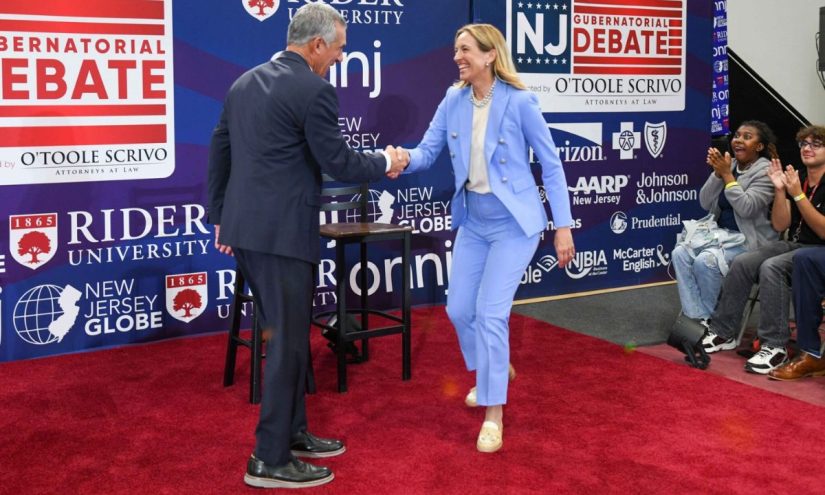
    New Jersey’s gubernatorial candidates both want school districts to consolidate as a cost-saving maneuver, but they differ on whether the state should force districts to merge with their neighbors.

    Rep. Mikie Sherrill, the Democratic gubernatorial nominee, said during Sunday’s gubernatorial debate that she would first incentivize mergers but added that compulsory consolidation was an option.

    “I’d start by offering the carrot to help the areas that want to consolidate, but when there are areas that are not putting enough money into students, into educators, into the buildings, and then they are taking a lot of money in property taxes and from the state level, then we’ll have to start to look at compulsory movements,” Sherrill said.

    Republican Jack Ciattarelli, a former assemblyman, likewise said he would seek to boost incentives and assistance to municipalities and school districts seeking mergers, but he pledged not to force them.

    “I do not believe that our state government should force consolidation. That’s up to the locals,” he said. “But I’ll tell you what, if you do consolidate or you do regionalize, Governor Ciattarelli will help incentivize that to make it easier.”

    Sherrill and Ciattarelli are vying to succeed Gov. Phil Murphy, a Democrat who cannot seek a third term in November.

    Officials have long hailed school consolidation as a means of easing local property taxes by reducing duplicative administrative and facilities costs, but uptake has been slow.

    New Jersey had 590 operating school districts during the 2024-2025 school year, according to state data, down from 599 in the 2020-2021 school year.

    The number of non-operating districts — districts that have a board of education but send all their students to schools in outlying districts — fell from 17 to 16 over that same time period. Sherrill signaled those districts could be the first merged if she wins the governor’s race.

    “We have some school districts who have the whole administrative cost, all of the buildings, and yet they’re not even running a K-12 school system, so we do need to merge some of these school districts,” she said.

    Schools consume a majority of local property taxes — 52% of all those collected in 2024, according to property tax tables published by the Department of Community Affairs — and the more than $15.1 billion in school aid approved in the current state budget accounted for more than a quarter of all spending approved in the annual appropriations bill for the current July-to-June fiscal year. That total includes more than $4 billion in combined special education, transportation, and other categories of aid separate from the state’s school funding formula.

    Ciattarelli suggested school vouchers — which allow property tax dollars to follow a student to a private school, a public school outside their district, or a charter school — could be a fix for ailing districts.

    “When a school system is failing — and there’s some reasonable metrics that tell us whether or not a school system is failing — there’s got to be choice,” he said. “That choice comes in the form of vouchers. That choice comes in the form of charter schools.”

    Because vouchers typically draw from school district funding, they could cause funding to decline at in-district public schools as students seek education elsewhere.

    New Jersey lawmakers have considered compelling school district mergers or shared service agreements, but to date, such mergers have been entirely voluntary.

    Murphy, who has generally favored school mergers, last year said he was “not wild about compulsory” consolidation, cautioning that home rule, a constitutional framework that gives local governments broad authority over the administration of school and other municipal services, could limit forced mergers.

    A law he signed in 2022 created grants for districts to study whether consolidation was feasible, though only a handful of districts have explored such mergers since.

    Cape May City Elementary School and West Cape May Elementary School are the latest to receive grants to explore a merger. Together, the two Cape May County schools have just 241 students.

    New Jersey Monitor is part of States Newsroom, a nonprofit news network supported by grants and a coalition of donors as a 501c(3) public charity. New Jersey Monitor maintains editorial independence. Contact Editor Terrence T. McDonald for questions: [email protected].


    Get stories like these delivered straight to your inbox. Sign up for The 74 Newsletter

    Source link

  • UK’s international fee levy could slash enrolments by over 77k

    UK’s international fee levy could slash enrolments by over 77k

    Some 16,100 international students could be deterred from studying in the UK in the first year universities are levied 6% of all their international student fees, comes the stark warning from a new report from the think tank Public First.

    Should the government make good on the proposal – outlined in the immigration white paper earlier this year – this figure could rocket to more than 77,000 students in the first five years of its implementation, the report predicts.

    The government expects universities to pass the increased costs onto international students themselves by raising fees. But Public First cautioned that such a move would have catastrophic consequences by driving international students away, hitting the UK’s economy by £2.2 billion over five years and leading to a reduction of 135,000 university places for domestic students.

    The think tank projected that a 6.38% international student fee increase – necessary for universities to pass on the entire cost of the levy – would have a far greater impact on students’ decision to study in the UK than the government has anticipated.

    This is because the government’s forecasts were based on data for EU students. However, Public First noted that price elasticity of demand for non-EU students is greater than their EU counterparts – meaning they would be more likely to be look elsewhere if they found UK fees too expensive.

    Jonathan Simons, partner at Public First and author of the report, noted that the projected impact of the levy “is much more severe than had been predicted previously”.

    It is not widely understood just how much our economy is supported by international students and it’s really crucial that any policy that could affect international student numbers is considered through this lens

    Jonathan Simons, Public First

    “This, of course, will hit our universities, around 40% of whom are already in deficit, and that could lead to a further loss of jobs, a loss of university places for UK students and a loss of vital research investment,” he added.

    “Perhaps even more significant, though, is the hit an international student levy could cause to local, regional and national economies across the UK. It is not widely understood just how much our economy is supported by international students and it’s really crucial that any policy that could affect international student numbers is considered through this lens.”

    Henri Murison, chief executive of the Northern Powerhouse Partnership and chair of the Growing Together Alliance, said that the levy was opposed by all of England’s major regional employer organisations “because the resulting decline in international students would be hugely damaging to all the regions of the country”.

    “The Chancellor should take note of the economic damage of this policy which undermines a critical UK export and we have requested an urgent meeting to raise our concerns,” he said.

    The proposed levy has been widely criticised by higher education institutions.

    Last month, a HEPI analysis predicted that UK universities could take a £621m hit if the policy goes ahead, with those situated in big metropolitan cities set to be the worst affected.

    Source link

  • Tina Hennessey | The EDU Ledger

    Tina Hennessey | The EDU Ledger

    Tina HennesseyTina Hennessey has been named vice president for university advancement and president and CEO of the BGSU Foundation at Bowling Green State University.

    Hennessey held multiple leadership roles at Penn State, where she most recently served as Penn State’s senior assistant vice president for principal gifts. In that role, she led the university’s donor strategies and closed or supported a record of more than $275 million in principal-level commitments in less than two years.

    Hennessey also held roles as assistant vice president for development, executive director for development, senior director of development for the College of Liberal Arts, gift planning officer, and director of major gifts for the College of Engineering.

    A first-generation graduate of Penn State, Hennessey holds an MBA with distinction from Arcadia University. Before her work in higher education, she spent more than a decade as a journalist and launched a media and public relations company.

    Source link

  • Why Some Colleges are Thriving While Others Are Falling Behind 

    Why Some Colleges are Thriving While Others Are Falling Behind 

    The New Reality of Enrollment Management 

    For many colleges, the fall 2025 enrollment numbers brought a mix of emotions. While some institutions are celebrating record-breaking classes and hitting their targets, others—equally committed to their mission—fell short. This stark contrast isn’t just a symptom of demographic shifts; it reveals a deeper, more urgent truth: the status quo is failing higher education.

    Many institutions are struggling not just because of demographics, but because of outdated, fragmented enrollment strategies. They are kept in silos—admissions, marketing, financial aid—creating an inconsistent student experience that leads to missed starts, early attrition and lost potential.

    Today’s Modern Learners are more discerning than ever. They expect speed, personalization and transparency, making fragmented approaches not only ineffective but unsustainable. The future of higher education does not belong to those defending the past. It belongs to institutions bold enough to build what’s next—a unified, data-informed strategy that transforms these challenges into opportunities for sustainable growth.

    Missed Starts: The Silent Threat to Student Recruitment  

    Enrollment managers face a stark reality: the decision-making window has never been shorter. Students aren’t shopping around like they once did. Students are making decisions faster than ever. According to our latest Engaging the Modern Learner Report, 67% inquire at only one or two institutions, and 45% apply to just one. This is a fundamental shift. In 2015, only 43% of learners would enroll at the first school that contacted them. By 2025, that figure has skyrocketed to nearly three in four. For your institution, this is a wake-up call. The window to turn interest into enrollment is closing, and any delay, inconsistent follow-up or fragmented outreach means you lose students before they even begin their journey.

    Speed and consistency are not just critical—they are the price of admission. Slow, fragmented communication—whether through delayed responses, inconsistent messaging, or glaring gaps across departments—is not an inefficiency. It is a direct cause of a hemorrhaging enrollment funnel. The only way to transform this challenge is with a unified enrollment management approach.

    Think of the bright prospective student who loves your campus culture after a visit. The prospective student sends a follow-up email with a simple question about a scholarship deadline, but the admissions team is swamped, and a response is delayed. Meanwhile, another school sends a personalized text message with the needed information, along with a link to a testimonial from a student in the desired major. This prospective student’s trust is built and stolen by the competing school, and your school is now completely out of the consideration mix—not because of your academics or campus life, but because of a missed connection.

    The Four Pillars of Strategic Enrollment Management

    The path to reversing missed starts and early attrition isn’t guesswork—it’s a disciplined, coordinated approach. The Four Pillars of Strategic Enrollment Management give institutions a clear framework to turn insights into action, strengthen recruitment and improve student success. By combining brand alignment, AI-driven analytics, full-funnel marketing and student-centric engagement, campuses can act decisively, close gaps in the enrollment process, and ensure every touchpoint moves students toward enrollment and persistence. 

    Strategic Brand Alignment for Student Recruitment 

    In a crowded market, a compelling and authentic brand is not optional—it’s the foundation of any winning student recruitment strategy. Reputation drives decisions more than ever, with 31% of all applicants and 51% of traditional undergraduates ranking it among their top factors for choosing a school. Most Modern Learners start their search with the institution itself rather than a specific program, which means that without a strong, visible brand, your institution risks being overlooked before the conversation even begins. For marketing and enrollment leaders, this makes it clear that visibility and authenticity are essential for influencing enrollment outcomes.

    Brand is also about proving value. Affordability remains important, but today’s Modern Learners are increasingly focused on career outcomes and program benefits in addition to cost. Messaging must clearly convey the tangible return on investment and the real-world impact of a degree to resonate with prospective students. By aligning programs with student aspirations and demonstrating clear student success outcomes, institutions can create meaningful, personalized engagement that drives enrollment forward.

    AI-Powered Analytics and Performance Optimization 

    Data alone won’t drive results; insights must inform every decision. Integrating AI into your enrollment strategy isn’t a strategy of the future—it’s a strategy of now. Competitive institutions use predictive insights to identify which students are most likely to apply, enroll and persist, turning complex data into actionable strategies. By analyzing engagement, inquiries, social sentiment and historical trends, enrollment managers can uncover funnel leaks, prioritize outreach, and allocate resources effectively. 

    At EducationDynamics, we combine AI-driven insights with human expertise to ensure recommendations are contextually grounded. This lets teams act quickly, maintain consistency and optimize every touchpoint. Integrated with targeted marketing insights, these analytics help institutions reach the right students with personalized messaging, strengthening enrollment management and driving long-term success. 

    Full-Funnel Marketing for Student Recruitment and Retention 

    Modern Learners move seamlessly across digital, social, email, and traditional channels—and they expect institutions to meet them wherever they are. A full-funnel marketing approach ensures every interaction reinforces the institution’s brand while delivering timely, personalized and meaningful engagement. 

    Now more than ever, students’ attention spans are short and their decision-making windows are fast. Consistent, relevant communication at every stage of the journey is critical: it keeps prospects engaged, strengthens trust, and positions your institution as a top choice. By aligning program-specific messaging with the broader institutional brand, enrollment managers create a unified narrative that drives conversions, builds credibility, and strengthens student engagement across the entire enrollment journey. 

    Every touchpoint—from initial awareness to follow-up engagement—works in concert to reduce lost starts, increase inquiry-to-application conversion and support long-term student success. This integrated approach ensures your marketing investments deliver measurable results while keeping prospective students moving efficiently through the enrollment funnel. 

    Student-Centric Enrollment and Retention for Student Success 

    Personalized engagement is a critical pillar in turning prospects into enrolled students and lifelong advocates. Students expect timely guidance, responsiveness and a sense that their individual goals are understood and valued. AI tools, including chatbots and virtual assistants, provide 24/7 support for routine questions, ensuring no inquiry is left unanswered. While technology handles the routine, your team’s expertise remains the essential ingredient. It’s the human connection—the empathy, the guidance and the personal touch—that ultimately drives commitment. Technology amplifies your reach; your team delivers the relationships.

    A student-centric approach ensures every touchpoint aligns with the learner’s journey, making communications, guidance, and support feel relevant and meaningful. With the right tools, data, and training, campuses can anticipate student needs, address obstacles proactively, and build confidence early in the enrollment process. This approach strengthens trust, boosts engagement, improves persistence, and turns every interaction into an opportunity to reinforce your institution’s brand while driving measurable student success.

    Uncover the Student Experience 

    By now, it’s clear: fragmented enrollment strategies and inconsistent outreach cost institutions students. Modern Learners expect speed, personalization and clarity—anything less, and they move on. The challenge for enrollment managers is not just knowing where students drop off, but having the tools to act before interest is lost.

    Mapping the student journey provides that clarity. By tracing the entire enrollment process from inquiry to start, it uncovers friction points—broken links, slow follow-up, confusing financial aid—that silently derail prospects. Enrollment teams can pinpoint exactly where disengagement happens, intervene strategically and ensure every touchpoint reinforces your brand promise while supporting student success.

    To take it a step further, you can secretly shop your own institution to reveal how your enrollment experience truly feels to the student. Delayed responses, generic messaging or unhelpful chat functions aren’t just minor inefficiencies—they signal misalignment and break trust. By uncovering these gaps, this process informs targeted improvements in communication, staff workflows and recruitment strategies, keeping your institution competitive in a fast-moving market.

    Together, these tools offer a concrete roadmap to unify brand, marketing and engagement efforts—turning insights into action, closing gaps before students disengage, and ensuring every interaction drives measurable enrollment and student success.

    In today’s competitive landscape, the institutions winning enrollment aren’t just reacting—they’re thinking bigger. They recognize that success comes from cross-functional collaboration, where departments work together to deliver cohesive, personalized experiences for Modern Learners.

    A Unified Enrollment Strategy turns isolated efforts into a coordinated system designed to:

    • Capture student intent faster
    • Reduce missed starts
    • Increase retention
    • Strengthen long-term student success

    This is more than efficiency—it’s a strategic mindset. By aligning every department around the student journey, anticipating needs, and curating experiences that reflect the expectations of Modern Learners, institutions build trust, enhance engagement and position themselves for sustainable growth and measurable outcomes.

    Transform Your Enrollment Strategy 

    The status quo won’t carry institutions into 2026 and beyond. To stay competitive, enrollment leaders must move beyond fragmented processes and adopt integrated strategies that deliver speed, personalization, and authenticity at scale. At EducationDynamics, we do more than unify departments—we help institutions transform scattered efforts into a cohesive system that drives measurable student success. 

    Don’t let a fragmented strategy define your future. It’s not too late to turn things around. We help institutions move beyond the status quo to build a unified system that fixes funnel leaks, increases retention and delivers measurable student success. 

    Source link

  • Kentucky Reaches Tentative Settlement Over In-State Tuition Policy for Undocumented Students

    Kentucky Reaches Tentative Settlement Over In-State Tuition Policy for Undocumented Students

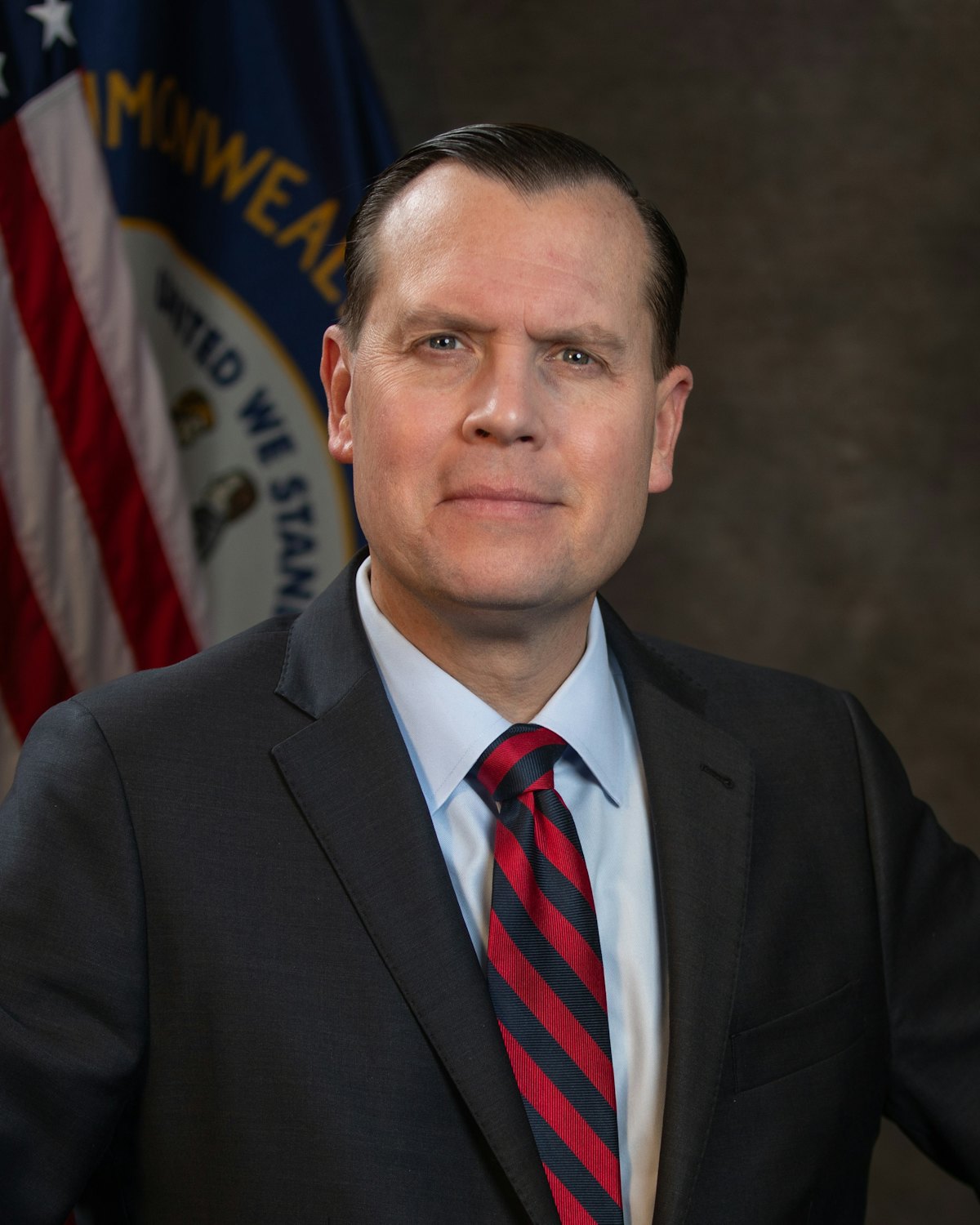
    Kentucky Attorney General Russell ColemanThe U.S. Department of Justice and the Kentucky Council on Postsecondary Education have reached a preliminary settlement agreement that would end the state’s policy of offering in-state tuition rates to undocumented students who graduate from Kentucky high schools.

    The agreement comes after the DOJ filed a federal lawsuit in June challenging Kentucky’s practice of extending in-state residency status—and the accompanying lower tuition rates—to any student who completes high school in the state, regardless of immigration status. The Justice Department argued this policy creates unequal treatment by providing financial benefits to undocumented immigrants while denying the same rates to U.S. citizens living in other states.

    “No state can be allowed to treat Americans like second-class citizens in their own country by offering financial benefits to illegal aliens,” Attorney General Pamela Bondi said in announcing the federal lawsuit.

    The legal challenge reflects broader federal immigration enforcement priorities under the Trump administration, which has issued executive orders aimed at preventing undocumented immigrants from accessing taxpayer-funded benefits or preferential treatment in government programs.

    Kentucky’s Republican Attorney General Russell Coleman has supported the federal position, arguing that state policy conflicts with federal law prohibiting undocumented immigrants from receiving college benefits unless identical benefits are available to all U.S. citizens. In July, Coleman urged the Council on Postsecondary Education to voluntarily withdraw the regulation rather than pursue costly litigation.

    “The federal government has set its immigration policy, and the Council must regulate in accordance with it,” Coleman wrote to the CPE. “To that end, I urge the Council to withdraw its regulation rather than litigate what I believe will be, and should be, a losing fight.”

    Under the tentative settlement terms, the Kentucky Council on Postsecondary Education has acknowledged that its tuition policy violates federal law and agreed to terminate it immediately. However, the agreement remains pending approval from U.S. District Court Judge Gregory Van Tatenhove in the Eastern District of Kentucky.

    The Kentucky case mirrors a similar federal challenge resolved earlier this year, when Texas reached a settlement with the DOJ over comparable in-state tuition policies for undocumented students.

    The Mexican American Legal Defense and Educational Fund (MALDEF), a prominent Latino civil rights organization, has filed a motion seeking to intervene in the Kentucky lawsuit on behalf of affected students. The motion remains under judicial review. MALDEF was previously denied intervention rights in the parallel Texas case.

    The policy change could significantly impact college affordability for undocumented students who have spent their formative years in Kentucky’s educational system. In-state tuition rates are typically substantially lower than out-of-state rates, making higher education more accessible for students from families with limited financial resources.


    Source link