Author: admin

  • Snitch hotlines for ‘offensive’ speech were a nightmare on campus — and now they’re coming to a neighborhood near you

    Snitch hotlines for ‘offensive’ speech were a nightmare on campus — and now they’re coming to a neighborhood near you

    We know the term “Orwellian” gets thrown around a lot these days. But if a government entity dedicated to investigating and even reeducating Americans for protected speech doesn’t deserve the label, nothing does.

    This step towards the Stasi isn’t hypothetical, either. It’s real. The governing bodies in question are called bias reporting systems, and the odds are they’re already chilling free expression on a campus near you. What’s worse, they aren’t staying there — now municipalities and states are using them, too.

    In this explainer, we’ll break down what bias reporting systems are, how they’ve spread beyond campus, and why they’re a threat to free speech.

    What are bias reporting systems?

    If you’ve been on campus in the last decade, you’ve likely heard of bias reporting systems — or, as they’re sometimes called, bias response teams. Their structure and terminology vary, but FIRE defines a campus bias reporting system as any system that provides:

    1. a formal or explicit process for or solicitation of
    2. reports from students, faculty, staff, or the community
    3. concerning offensive conduct or speech that is protected by the First Amendment or principles of expressive or academic freedom.

    Bias reporting systems generally solicit reports of bias against identity characteristics widely found in anti-discrimination laws. Western Washington University, for example, defines a “bias incident” as “language or an action that demonstrates bias against an individual or group of people based on actual or perceived race, color, creed, religion, national origin, sex, gender identity or expression, disability, sexual orientation, age, or veteran status.” Some systems also invite reports of bias against traits like “intellectual perspective,” “political expression,” and “political belief,” or have a catch-all provision for any other allegedly biased speech.

    Many colleges have bias response teams that consist not only of administrators but law enforcement. They often investigate complaints and summon accused students and faculty to meetings.

    The ability to speak freely is core to our democracy. Any system or protocol that stifles or inhibits free expression is antithetical to the principles and ideals of our institutions of higher education and our republic. 

    You might be wondering, “Don’t civil rights laws already cover this sort of thing?” Well, not quite. Bias reporting systems cover way more expressive ground than civil rights laws do, which puts these systems at odds with First Amendment protections. They generally define “bias” in such broad or vague terms that it could be applied to basically anything the complainant doesn’t like, including protected speech. This is doubly so when a school includes that vague and subjective word “hate” as another form of language or behavior worth reporting.

    That’s a problem at public colleges, which are bound by the First Amendment, and also at private colleges that voluntarily adopt First Amendment-like standards. Bias reporting systems completely ignore the fact that “hate speech” has no legal definition, and that unless a given expression clearly falls into one of the clearly-defined categories of unprotected speech, like true threats or incitement to immediate violence, it is almost certainly protected by the First Amendment. This remains so regardless of how anyone might feel about the speech itself.

    Bias Response Team Report 2017

    Reports

    The posture taken by many Bias Response Teams is likely to create profound risks to freedom of expression and academic freedom on campus.


    Read More

    These initiatives incentivize and in many cases encourage people to report each other for disfavored expression. As you can imagine, these systems often lead to unconstitutional infringements on protected student and faculty speech and chill expression on campus.

    For example, after the University of California, San Diego received bias incident reports about a student humor publication that satirized “safe spaces,” administrators asked the university’s lawyer to “think creatively” about how to address the newspaper, which they felt “crosse[d] the ‘free speech’ line.” And at Connecticut College, pro-Palestinian students were reported for flyers mimicking Israeli eviction notices to Palestinians, prompting an investigation by a dean.

    These are just a couple of instances where bias reporting systems have crossed the line. Sadly, there are plenty more, spanning FIRE’s research and commentary going back as far as 2016 — and none of them are good news.

    Sound Orwellian enough for you yet? Wait until you hear how bias reporting systems work off campus.

    Bias reporting systems have graduated from campus into everyday life

    Exporting campus bias reporting systems to wider society is a disastrous idea. No state should be employing de facto speech police. But of course, that hasn’t stopped state and city governments from trying.

    Bias reporting systems have been popping up in one form or another across more than a dozen state and city municipalities in the last four years, usually consisting of an online portal or telephone number where citizens are encouraged to submit reports.

    If you’re thinking this is just like the hate crime hotlines that many states have had for years, there is one important difference: namely, the word “crime.” While the new bias reporting systems will similarly accept reports of criminal acts, they also actively solicit reports of speech and behavior that are not only not crimes, but also First Amendment-protected expression.

    They know this, too.

    Vermont state police protocol, for instance, describes the information it compiles as being on “biased but protected speech.” This raises the obvious question of why the police are concerning themselves with Americans lawfully exercising their fundamental rights, and opens the door to police responses that violate those rights.

    Wherever they’ve popped up, these bias reporting systems have been bad news. Washington Free Beacon journalist Aaron Sibarium’s research has turned up a number of alarming examples. In Oregon, citizens can report “offensive ‘jokes’” and “imitating someone’s cultural norm or practice.”

    Meanwhile, in Maryland, the attorney general’s office states on its website that “people who engage in bias incidents may eventually escalate into criminal behavior,” which is why “Maryland law enforcement agencies are required by law to record and report data on both hate crimes and bias incidents.” But these speculative concerns do not justify the chilling effect bias reporting systems create. Not only do these systems solicit complaints about protected speech, they also cast an alarmingly wide net. It’s hard to believe, for instance, that many “offensive jokes” are reliable signs of future criminal activity.

    At this point you’d be forgiven for thinking that “Orwellian” is an understatement.

    But that’s not the worst of it. In Philadelphia — home of FIRE, the Liberty Bell, and the Constitution — authorities fielding “hate incidents” can now ask for exact addresses and various identifying details about the alleged offending party, including their names. According to Sibarium, city officials will in some cases “contact those accused of bias and request that they attend sensitivity training.”

    You heard that right. If you’re reported for a “non-criminal bias incident” in the city of Philadelphia, the city may request that you take a course meant to teach you the error of your ways. “If it is not a crime, we sometimes contact the offending party and try to do training so that it doesn’t happen again,” Saterria Kersey, a spokeswoman for the Philadelphia Commission on Human Relations, told Sibarium.

    The training is voluntary, but it reflects an unsettling level of government interference in the thoughts and opinions of the public.

    At this point you’d be forgiven for thinking that “Orwellian” is an understatement.

    Bias reporting systems are a threat to free speech on and off campus

    Thankfully, there has been some considerable pushback on bias reporting systems — though not entirely successful. Washington, for example, introduced a bill to create a statewide bias reporting system, but it failed to advance out of the Senate Ways and Means committee. However, a new version of the bill passed in March of 2024, and Washington is now set to establish a bias reporting system this year.

    The threat remains real, and the consequences of these speech-chilling initiatives are further-reaching than it might seem at first glance.

    On campus, the mere existence of bias reporting systems threatens one of the purposes of higher education, if not the purpose: the free exchange of ideas. Some courts have recognized that bias reporting systems may chill protected speech to such a degree that they violate the First Amendment.

    Bias reporting systems fundamentally undermine the First Amendment rights of not just students and faculty, but also ordinary citizens.

    The state-level reporting systems raise similar First Amendment issues — especially when law enforcement is involved. Like their campus counterparts, the state systems use expansive definitions of “bias” and “hate” that could encompass a vast range of protected expression, including speech on social or political issues.

    However, unconstitutionality isn’t the only concern. Even a bias reporting system that stays within constitutional bounds can deter people from freely expressing their thoughts and opinions. If they are afraid that the state will investigate them or place them in a government database just for saying something that offended another person, people will understandably hold their tongues and suppress their own voices. Moreover, the lack of clarity around what some states actually do with the reports they collect is itself chilling.

    The ability to speak freely is core to our democracy. Any system or protocol that stifles or inhibits free expression is antithetical to the principles and ideals of our institutions of higher education and our republic. In both word and deed, bias reporting systems fundamentally undermine these principles — and now seriously threaten the First Amendment rights of not just students and faculty, but also ordinary citizens.

    Source link

  • Trump’s stated promise: ‘Stop all government censorship’ and his free speech Executive Order — First Amendment News 454

    Trump’s stated promise: ‘Stop all government censorship’ and his free speech Executive Order — First Amendment News 454

    Unprecedented.

    Let’s begin with President Donald Trump’s second inaugural address (Jan. 20), if only to contrast it with last week’s condemnation of his lawsuit against J. Ann Selzer, the Des Moines Register, and its parent company Gannett (see also FAN 451449 and 436). 

    Ready? Here it goes: 

    After years and years of illegal and unconstitutional federal efforts to restrict free expression, I will also sign an executive order to immediately stop all government censorship and bring back free speech to America.

    Never again will the immense power of the state be weaponized to persecute political opponents, something I know something about. We will not allow that to happen. It will not happen again. Under my leadership, we will restore fair, equal, and impartial justice under the constitutional rule of law.

    Never againIt will not happen againStop all government censorship

    And there’s more: When it comes to free speech, all views will be treated with “impartial justice.” Against that promissory note, let us turn to his unprecedented executive order as discussed below.

    Executive Order: Jan. 20, 2025

    By the authority vested in me as President by the Constitution and the laws of the United States of America, and section 301 of title 3, United States Code, it is hereby ordered as follows:

    What follows is a brief description of the Executive Order along with some preliminary comments.

    Section 1. Purpose

    This section opens with an attack on the Biden administration’s alleged “trampl[ing of] free speech rights” when it comes to “online platforms.” Such abridgments, it is asserted, were done in the name of combating “misinformation,” “disinformation,” and “malinformation” in order to advance the Biden administration’s “preferred narrative.” 

    Note at the outset that this section is primarily addressed to reversing the Biden administration’s apparent censorship of online expression. Even so, there is a generalized statement: “Government censorship of speech is intolerable in a free society.”

    Keep that in mind when it comes to what is set out in Section 4 below.

    Section 2. Policy

    This section focuses on four commitments: (i) securing free speech rights of all “American[s]”; (ii) mandating that “no [federal] agent engages in or facilitates” abridgments of free speech; (iii) ensuring that no “taxpayer resources” are used to abridge free speech; and (iv) identify and correct any past federal abridgments of free speech.

    Unlike Section 1, the explicit focus of this section is not confined to any free speech abridgments committed by the previous administration. The focus is on securing free speech rights of “citizens.” Hence, the policy is directed to an affirmative obligation of the Executive branch to protect free speech rights. The operative action words are “secur[ing],” “ensur[ing],” and “identify[ing].”

    Thus, there is a duty to ensure that no federal officers are used or taxpayer dollars expended in violation of the Speech Clause of the First Amendment. Also, unlike Section 1, much of Section 2 applies to all free speech rights and not those confined to social media. There is also a promise to investigate for any and all existing abridgments of free speech committed by “past misconduct by the Federal Government.”

    Section 3. Ending Censorship of Protected Speech

    Like Section 1, this section focuses on the actions of the past administration (i.e., abridgments committed “over the past four years”). This section, unlike section 2, explicitly applies to federal departments and agencies, though it also applies to federal officers, agents and employees. Such agencies and departments must comply with the requirements of Section 2.

    The second portion of this section deals with the investigative powers of the attorney general working “in consultation with the heads of executive departments and agencies.” Again, this investigation is confined to wrongs committed by the past administration. Following such investigations, a “report” shall be submitted to the President suggesting “remedial actions.”

    Much of this section seems repetitive of what is set out in Section 2, save for the references to federal departments and agencies and the need for investigation followed by a report to the President. Note that under Section 3, remedial action is suggested, whereas under Section 4, per this Executive Order, remedial action against the United States and its officers is prohibited.

    Section 4. General Provisions

    In order to appreciate the import of this clause, it is best to quote the final provision (sub-section (c) it in its entirety (with emphasis added):

    This order is not intended to, and does not, create any right or benefit, substantive or procedural, enforceable at law or in equity by any party against the United States, its departments, agencies, or entities, its officers, employees, or agents, or any other person.

    The opening provisions of this Section refer to authorizations of grants of executive power. The Order is to be implemented consistent with the “applicable law and subject to the availability of appropriations.”

    Importantly, While the First Amendment is a prohibition against the federal government and all its officers, this Executive Order:

    1. applies to free speech wrongs committed during “the last 4 years” or “past misconduct by the Federal Government” or abridgments occurring “over the last 4 years,” though there is a passing mention of securing the free speech rights of all “American[s].” 
    2. Yet even as against such past alleged free speech wrongs, the sole remedy is by way of corrective action taken by the Executive Branch. 
    3. If such corrective action, or any other actions taken by Executive officials in pursuance of this Executive Order, themselves abridge First Amendment rights, there is no independent remedy secured by the Order.

    Related

    FIRE weighs in with its own free speech recommendations to the President

    Below are the four general categories of recommendations made (see link above for specifics):

    1. Support the Respecting the First Amendment on Campus Act
    2. Address the abuse of campus anti-harassment policies
    3. Rein in government jawboning
    4. Protect First Amendment rights when it comes to AI

    “As president, Trump inherits the privilege and the obligation to defend the First Amendment rights of all Americans, regardless of their viewpoint — and FIRE stands ready to help in that effort.”

    Justice Ketanji Brown Jackson in free expression mode at the Inauguration?

    Justice Ketanji Brown Jackson at Trump Inauguration in 2024 wearing a distinctive collar adorned with cowrie shells, which are believed to offer protection from evil.

    Justice Ketanji Brown Jackson at the inauguration of Donald Trump on Jan. 20, 2024. (Imagn Images)

    According to Christopher Webb, such “a distinctive collar adorned with cowrie shells . . . are believed to offer protection from evil in African traditions.” (See also, Josh Blackman, “Justice Jackson Did Not Wear a Dissent Collar To The Inauguration. She Apparently Wore a Talisman To Ward Off Evil,” The Volokh Conspiracy (Jan. 21))

    Excerpts from Virginia Court of Appeals decision in Patel v. CNN, Inc.

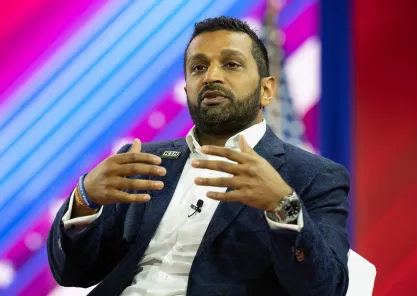
    Kash Patel at the 2023 Conservative Political Action Conference

    Kash Patel, seen here at the 2023 Conservative Political Action Conference, is President Donald Trump’s nominee to head the FBI. (Consolidated News Photos / Shutterstock.com)

    An excerpt from today’s Virginia Court of Appeals decision in Patel v. CNN, Inc., decided by Judge Rosemarie Annunziata, joined by Judge Vernida Chaney (the opinions weigh in at over 12,000 words, so I only excerpt some key passages).

    Abortion picketing case lingers on docket

    The cert. petition in the abortion picketing case, with Paul Clement as lead counsel, has been on the Court’s docket since July 16 of last year. It has been distributed for conferences seven times, the last being Jan. 21. In his petition, Mr. Clement (joined by Erin Murphy) explicitly called on the Court to “overrule Hill v. Colorado.” (See FAN 433, July 31, 2024))

    Paul Clements and Erin Murphy

    Paul Clements and Erin Murphy

    More in the News

    2024-2025 SCOTUS term: Free expression and related cases

    Cases decided 

    • Villarreal v. Alaniz (Petition granted. Judgment vacated and case remanded for further consideration in light of Gonzalez v. Trevino, 602 U. S. ___ (2024) (per curiam))
    • Murphy v. Schmitt (“The petition for a writ of certiorari is granted. The judgment is vacated, and the case is remanded to the United States Court of Appeals for the Eighth Circuit for further consideration in light of Gonzalez v. Trevino, 602 U. S. ___ (2024) (per curiam).”)
    • TikTok Inc. and ByteDance Ltd v. Garland (The challenged provisions of the Protecting Americans from Foreign Adversary Controlled Applications Act do not violate petitioners’ First Amendment rights.)

    Review granted

    Pending petitions

    Petitions denied

    Last scheduled FAN

    FAN 453: “‘The lawsuit is the punishment’: Reflections on Trump v. Selzer

    This article is part of First Amendment News, an editorially independent publication edited by Ronald K. L. Collins and hosted by FIRE as part of our mission to educate the public about First Amendment issues. The opinions expressed are those of the article’s author(s) and may not reflect the opinions of FIRE or Mr. Collins.

    Source link

  • Leverage Student Ambassadors and UGC in Education Marketing

    Leverage Student Ambassadors and UGC in Education Marketing

    Reading Time: 11 minutes

    Authenticity has become a cornerstone of successful education marketing campaigns. Nothing speaks louder to prospective students than real experiences shared by current students. That’s why we recommend the combined use of two powerful tools: student ambassador programs and user-generated content (UGC). 

    These strategies harness the voices of your students to create compelling, authentic narratives that resonate. In this blog, we’ll explore the enrollment-boosting potential of student ambassadors and UGC for education marketing, the benefits they offer, and actionable steps to integrate them into your strategy. Let’s get started!

    Struggling with enrollment?

    Our expert digital marketing services can help you attract and enroll more students!

    Understanding the Role of a Student Ambassador

    What is a student ambassador? A student ambassador is a current student who represents your institution in various capacities, from marketing and recruitment to campus events. These individuals are typically chosen for their enthusiasm, communication skills, and ability to connect with diverse audiences. 

    What do student ambassadors do? As the face of your school, student ambassadors embody its culture and values, offering prospective students and their families an authentic glimpse into campus life. 

    The roles of student ambassadors are varied. They may host campus tours, participate in Q&A sessions during open houses, or even create content for your social media platforms. By sharing their personal experiences, they help humanize your institution, breaking down barriers and building trust.

    HEM Image 2HEM Image 2

    HEM Image 3HEM Image 3

    Source: University of Waterloo

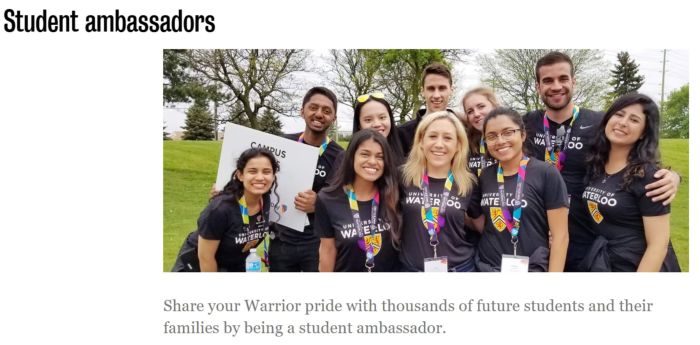
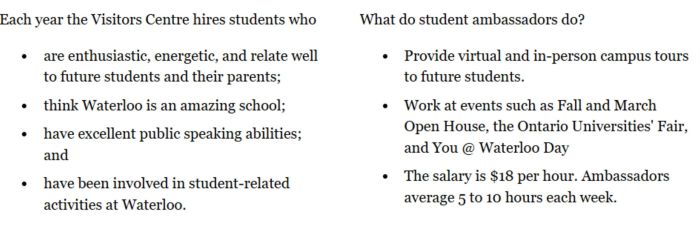
    Example: On its website, the University of Waterloo has a dedicated page for members of its community who are interested in its student ambassador program. This page details the role of a student ambassador, the requirements for candidates, their workload, and compensation. When you launch your student ambassador program, use site content to provide vital information to potential candidates and the students they’ll support in their roles. Use social media to keep your audience updated on the application process and involve student ambassadors in content creation to establish a relationship between them and the rest of your student body. 

    Reach out for help implementing effective enrollment-boosting digital marketing strategies! 

    What Is User-Generated Content (UGC)?

    User-generated content (UGC) refers to any content created by your students, alumni, or even staff, rather than your marketing team. This can include photos, videos, testimonials, social media posts, or blogs that showcase their authentic experiences. Unlike polished advertising campaigns, UGC is often raw and unfiltered, making it highly relatable and trustworthy.

    Now that audiences are bombarded with promotional material, UGC stands out. It delivers a level of authenticity that professionally crafted content simply cannot replicate. For prospective students, seeing someone “just like them” thriving at your institution can be the deciding factor in their enrollment journey.

    HEM Image 4HEM Image 4

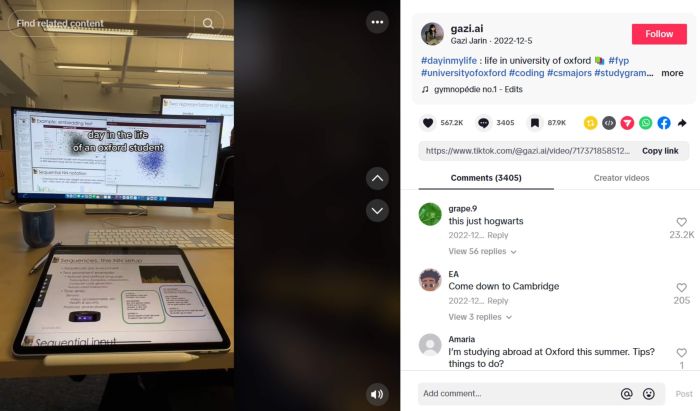
    Source: University of Oxford | TikTok

    Example: Take a look at the comments on this TikTok video. The bottom one shows how many prospective students are turning to current students for advice and insights into their journey with your institution. This “day in the life” video from a University of Oxford student offers a glimpse into campus life from a personal perspective. Videos shared on a student’s personal page often feel more genuine since they don’t come across as promotional content.

    That’s not to say your school shouldn’t engage with these posts! Use hashtags, like #universityofoxford, to find UGC created by your community and reshare it on your school’s profile. To encourage more of this content, promote specific hashtags and even run contests or challenges to inspire creativity and engagement.

    The Benefits of Student Ambassadors and UGC

    Though their methodology is different, both student ambassador programs and UGC help to tell your school’s unique story authentically.

    These methods are particularly effective at humanizing your school’s brand. Discover some more of the unique benefits you can see when you combine these strategies correctly.

    • Authenticity and Trust: Both student ambassadors and UGC provide unfiltered insights into your institution. Prospective students are more likely to trust the words of a peer than a marketing brochure. When real students share their stories, it creates a sense of transparency and trust.
    • Increased Engagement: Content created by student ambassadors and peers often performs better on social media platforms. Audiences are more likely to engage with posts that feel genuine and relatable. This increased engagement can translate to higher visibility for your institution.
    • Cost-Effectiveness: Leveraging the voices of your students can reduce the need for extensive advertising budgets. While there may be costs associated with training or compensating ambassadors, the return on investment through increased applications and enrollment often outweighs the initial expenditure.
    • Community Building: By involving students in your marketing efforts, you foster a sense of pride and belonging. Ambassadors feel more connected to your institution, and their enthusiasm is infectious, positively influencing both their peers and prospective students.

    How to Build a Successful Student Ambassador Program

    Building a student ambassador program involves creating a structured initiative that aligns with your school’s marketing goals and fosters authentic engagement. A successful program requires careful planning, clear objectives, and ongoing support to empower ambassadors as true representatives of your institution. Here, we’ll walk you through the essential steps to design and implement a program that connects with prospective students and amplifies your school’s story.

    Define Clear Objectives

    Clear objectives are the cornerstone of a student ambassador program, aligning with your marketing goals and guiding ambassadors toward success. Start by clearly outlining the program’s purpose. For example, increasing applications, enhancing campus tour experiences, or boosting social media engagement. 

    This clarity of intent should be paired with measurable goals, to help ambassadors understand what success looks like. Measurable goals could be increasing tour attendance by 20% or generating a set number of social media posts each month 

    Tailor these objectives to match the unique strengths of each ambassador, assigning roles that play to their talents, such as public speaking for campus tours or storytelling for blog posts and videos. Providing a clear role description that details their responsibilities, tasks, and time commitments is equally critical to avoid confusion and set expectations. 

    To foster motivation, explain the “why” behind their tasks, helping them see how their efforts impact prospective students, build trust in the institution, and contribute to enrollment goals. Regular check-ins or feedback sessions can also ensure ambassadors stay on track, allowing for adjustments and maintaining engagement. With clearly defined objectives and the right support, ambassadors can confidently represent your institution and drive meaningful results.

    Recruit the Right Ambassadors

    Select ambassadors who reflect the diversity and values of your institution. Look for individuals who are enthusiastic, articulate, and comfortable sharing their experiences. Peer recommendations, faculty referrals, and application processes can help identify the best candidates.

    Foster Collaboration

    Facilitate collaboration between ambassadors and your marketing team. Regular meetings can help align their content with your broader campaigns while maintaining authenticity. Ambassadors should feel supported but not micromanaged.

    HEM Image 5HEM Image 5

    Source: University of Windsor

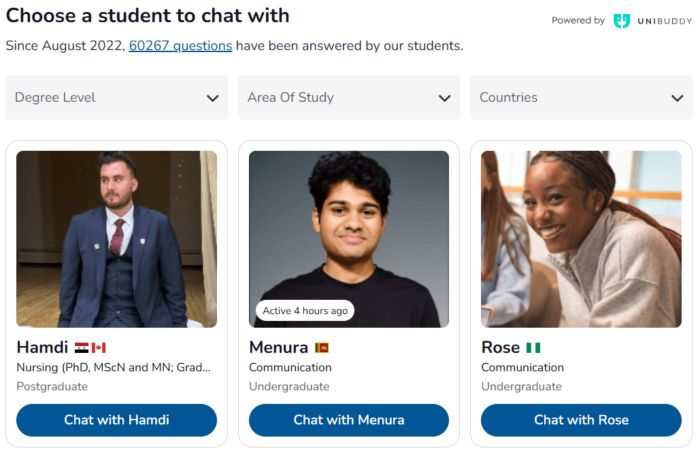
    Example: The University of Windsor demonstrates trust in its student ambassadors with a unique feature on its website. It allows current and prospective students to select an ambassador to chat with for answers to their school-related questions. To replicate this success, implement a comprehensive training program to ensure consistency and quality. Clear expectations enable your ambassadors to take on key responsibilities confidently, delivering a strong return on your investment.

    Provide Comprehensive Training

    • Familiarize Ambassadors with Your Institution’s Key Messaging and Values
      Begin by familiarizing ambassadors with your institution’s key messaging and values. This includes providing them with a clear understanding of your school’s mission, vision, and what sets it apart from competitors. Equip them with talking points about academics, extracurricular offerings, campus facilities, and student life, ensuring consistency in how they communicate your brand. Role-playing exercises can be particularly effective here, helping ambassadors practice delivering messages in a variety of scenarios, such as open houses, campus tours, or online Q&A sessions.
    • Train Ambassadors on Social Media Best Practices
      Training should also include social media best practices, especially if ambassadors are creating content for your platforms. Teach them how to craft posts that are engaging and aligned with your school’s tone and style. Provide guidelines on appropriate language, photo and video quality, and compliance with privacy policies.
    • Develop Public Speaking Skills
      Since many ambassadors will engage with prospective students and families in person, public speaking training is invaluable. Help them refine their communication skills with workshops that focus on clarity, confidence, and storytelling. Encourage them to share personal anecdotes about their experiences at your school, as these authentic stories are often the most memorable. Practice sessions with constructive feedback can significantly boost their comfort in delivering presentations or handling impromptu questions.
    • Build Soft Skills for Diverse Audiences
      Effective training also involves building soft skills like empathy, adaptability, and cultural awareness, especially for ambassadors interacting with diverse audiences. 

    Include scenarios that challenge them to navigate different cultural perspectives or address sensitive questions tactfully. By fostering these skills, you ensure ambassadors can create welcoming and inclusive experiences for prospective students and their families.

    • Incorporate Interactive Training Methods
      To make training engaging and practical, use a mix of interactive methods such as role-playing, group discussions, and hands-on activities. Incorporate real-world examples and success stories from past ambassadors to inspire new recruits and show them what’s possible. Providing a training manual or digital resource hub can also serve as a handy reference for ambassadors as they grow into their roles.
    • Provide Ongoing Support and Refreshers
      Finally, ongoing support and refreshers are critical. Schedule periodic check-ins to provide additional guidance, address challenges, and celebrate successes. The more prepared they are, the more effectively they’ll represent your school.

    Empower Ambassadors to Create

    Empowering student ambassadors to create their own content is one of the most effective ways to showcase the authentic, lived experiences that resonate with prospective students. By trusting ambassadors with creative freedom, you enable them to craft content that feels genuine and relatable—qualities that polished marketing campaigns often struggle to replicate.

    Start by encouraging ambassadors to focus on their personal experiences and unique perspectives. Heartfelt testimonials are another powerful form of content. Whether it’s a written story, a video, or a social media post, ambassadors sharing their personal journeys—why they chose your school, how it’s impacted their lives, and what they’ve learned—can create an emotional connection with viewers. 

    To provide inspiration and structure, consider giving student ambassadors a content calendar – a detailed content plan that outlines the where, what, and when of your posts. Highlighting diverse voices within your ambassador team ensures a broad range of experiences and perspectives are represented, appealing to a wider audience.

    Celebrate Their Contributions

    Recognize and reward your ambassadors for their efforts. This can range from financial compensation to exclusive perks like access to networking events or career development opportunities. Publicly celebrating their work reinforces their value and motivates others to get involved.

    HEM Image 6HEM Image 6

    Source: New York University

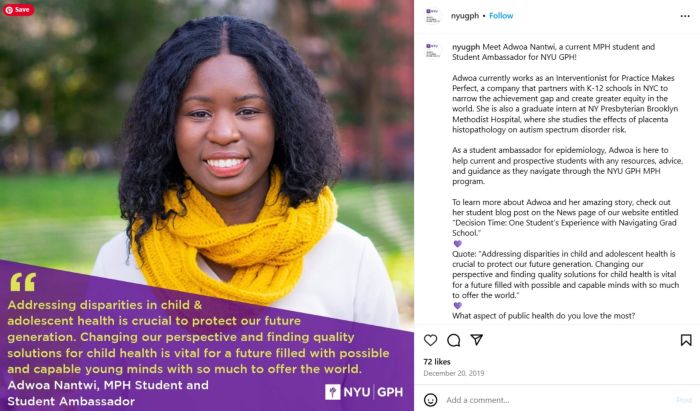
    Example: Here, New York University’s School of Global Public Health welcomes a new student ambassador, celebrating her accomplishments in the field, describing her role in the NYU community, and directing the audience to her student blog post. In addition to monetary rewards, student ambassadors appreciate public acknowledgments of their contributions. 

    Measure Success

    Track the impact of your ambassador program using metrics such as social media engagement, website traffic, and application rates. Use this data to refine your approach, ensuring continuous improvement.

    Incorporating UGC into Your Marketing Strategy

    A UGC marketing campaign can be a goldmine for schools looking to leverage their communities to tell their story. By encouraging students to share their experiences, you tap into a wealth of relatable and engaging material that resonates with prospective students. Let’s explore how to integrate UGC into your marketing strategy for maximum impact.

    Create Opportunities for UGC

    Encourage your students to share their experiences by hosting contests, themed hashtag campaigns, or student takeovers on social media. The more accessible you make the process, the more likely students are to participate.

    HEM Image 7HEM Image 7

    Source: Caleontwins | TikTok

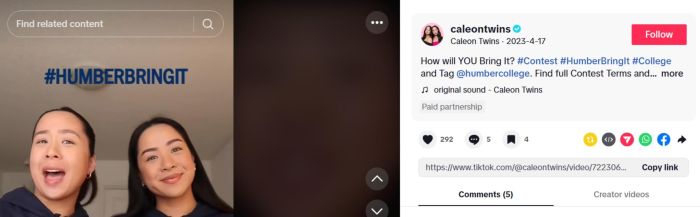
    Example: Here, Humber College has paid well-known influencers to promote a contest called Humber Bring It. The aim was to showcase all the unique skills students brought to their community. In their video, the Caleon twins shared all the essential details of the contest such as the deadline, prizes for winners (a 5000 dollar tuition credit or a laptop), and the hashtag that each contestant should use. Contests like this are the perfect way to create a UGC buzz around your institution. 

    Showcase UGC Across Platforms

    To maximize the impact of user-generated content (UGC), feature it prominently across your marketing platforms. Incorporate student stories, photos, and videos on your website’s homepage, within program pages, and in blog posts to provide a genuine glimpse into campus life. Social media channels are another natural home for UGC, where they can drive engagement and create relatable touchpoints with prospective students. Consider integrating this content into admissions brochures, emails, and campus tour presentations to ensure consistent messaging.

    Before sharing any UGC, prioritize student consent. Always seek permission from contributors, clearly explaining where and how their content will be used. Providing written guidelines and gaining explicit agreement ensures transparency and builds trust. By celebrating your students’ experiences respectfully and prominently, you showcase your school’s vibrant community and also create a foundation of authenticity and ethical storytelling that resonates with your audience.

    Maintain Quality Control

    While UGC is inherently less polished, maintaining a level of quality ensures it aligns with your institution’s values and messaging. Begin by establishing clear guidelines for students contributing content. 

    These guidelines should outline your school’s tone, branding, and expectations for appropriateness, while still encouraging creativity and individuality. For example, provide tips on photography and video basics, such as lighting and framing, to enhance visual appeal without compromising authenticity.

    Review content before publication to ensure it represents your school positively. This doesn’t mean heavily editing or sanitizing the material—rather, it’s about ensuring the content reflects your institution’s culture, is free of inappropriate language or imagery, and avoids unintentional misrepresentation.

    Offering feedback to students can also be a valuable learning experience, helping them refine their work while staying true to their voice. By balancing authenticity with quality, you showcase the best of your community in a way that’s both relatable and professional.

    Engage with UGC Creators

    Show appreciation for students who contribute content by engaging with their posts, sharing their work, or even spotlighting them in dedicated campaigns. This not only boosts their morale but also encourages others to participate.

    Use UGC to Tell Stories

    Go beyond individual posts by weaving UGC into cohesive narratives. For example, compile videos and testimonials into a series showcasing different aspects of campus life. Storytelling adds depth and emotional resonance to your campaigns.

    Bringing It All Together

    Student ambassador programs and UGC are avenues for building authentic connections with your audience. By leveraging the voices of your students, you showcase your institution’s unique story in a way that resonates deeply with prospective students and their families.

    At Higher Education Marketing, we specialize in helping schools like yours unlock the potential of these strategies and many others. Whether you’re just starting or looking to refine your approach, our expertise ensures your campaigns drive meaningful engagement and results.

    Your students are your greatest storytellers. Let their voices elevate your brand and inspire the next generation to join your community.

    Struggling with enrollment?

    Our expert digital marketing services can help you attract and enroll more students!

    Frequently Asked Questions 

    What is a student ambassador

    A student ambassador is a current student who represents your institution in various capacities, from marketing and recruitment to campus events.

    What do student ambassadors do? 

    As the face of your school, student ambassadors embody its culture and values, offering prospective students and their families an authentic glimpse into campus life.

    Source link

  • Trump Issues Executive Order to Restrict Gender Ideology in the Federal Government

    Trump Issues Executive Order to Restrict Gender Ideology in the Federal Government

    by CUPA-HR | January 22, 2025

    On January 20, the Trump administration issued an executive order (EO) titled, “Defending Women from Gender Ideology Extremism and Restoring Biological Truth to the Federal Government.” The EO was one of several executive orders and actions published by the Trump administration on its first day in office.

    The EO states that the United States government will recognize only two sexes — male and female — and defines sex as “an individual’s immutable biological classification as either male or female.” The definition continues to say that sex is “not a synonym for and does not include the concept of ‘gender identity.’” The executive order also defines “woman” and “girl” and “man” and “boy” to be adult and juvenile human females and males, respectively.

    The EO orders the secretary of health and human services to provide guidance expanding on the definitions established in the EO. It also directs all federal agencies to use the definitions set forth in the order “when interpreting or applying statutes, regulations, or guidance and in all other official agency business, documents, and communications.” All federal agencies will also be directed to use the term “sex” and not “gender” when administering or enforcing sex-based distinctions in applicable federal policies and documents.

    It also appears that the Trump administration hopes to codify these definitions into law through Congressional action. Specifically, the EO directs the assistant to the president for legislative affairs to provide the president proposed bill text to codify the definitions set in the order within 30 days.

    The EO also discusses the Supreme Court’s decision in Bostock v. Clayton County, which held that Title VII of the Civil Rights Act of 1964 protects employees from discrimination on the basis of sexual orientation or gender identity. The EO states that the Biden administration argued that the Bostock decision “requires gender identity-based access to single-sex spaces under, for example, Title IX of the Educational Amendments Act,” which the Trump administration states is “legally untenable.” As such, the EO directs the U.S. attorney general to issue guidance to federal agencies to “correct the misapplication” of Bostock to “sex-based distinctions in agency activities.” The EO also directs the attorney general to issue guidance and assist federal agencies in protecting sex-based distinctions.

    The EO directs all federal agencies to submit an update to the Trump administration on implementation of this order within 120 days. The update is required to include information on changes to agency documents and agency-imposed requirements on federally funded entities, including federal contractors, that were implemented to comply with the order. The head of each federal agency is also directed to rescind all guidance documents inconsistent with the requirements of the order, and the EO includes a partial list of documents that the administration deems as inconsistent, including several Department of Education guidance documents on Title IX and the Equal Employment Opportunity Commission’s 2024 Enforcement Guidance on Harassment in the Workplace.

    Finally, the EO directs agencies to take “all necessary steps, as permitted by law, to end the federal funding of gender ideology” and to “assess grant conditions and grantee preferences” to “ensure grant funds do not promote gender ideology.”

    Federal agencies will soon begin to take action and announce guidance to comply with the EO requirements. Institutions should therefore be aware of forthcoming guidance from the Department of Education on Title IX as a result of this EO. There could also be future ramifications for institutions that receive federal funds, including grants and contracts. CUPA-HR will continue to monitor for agency actions as well as any additional updates from the Trump administration as it relates to sex and gender-related policy.


    Source link

  • Invisible labour: visible activism | SRHE Blog

    Invisible labour: visible activism | SRHE Blog

    by Sarah Montano, Inci Toral and Sarah Percy

    Behind many academic success stories lies an untold narrative of invisible labour – a hidden force driving progress but often overlooked or undervalued. From providing emotional support to sitting on committees, the silent effort sustains institutions yet leaves many working tirelessly in the background on non-promotable tasks. Only when invisible labour is met with visible activism, can change begin.

    As a group of academics over the years we became conscious of a phenomenon that affected not only ourselves but many of our colleagues. We particularly noticed that women* were increasingly being asked to take on emotional labour and tasks that, when it came to promotions were classified as “Non-Promotable Tasks” yet were essential to institutional practices. We concluded that this form of emotional labour was a form of wife work, work that is essential to the running of the home (aka Higher Education Institutions (HEIs)) yet often undervalued and the person carries the mental load. We use the term wife work due to the pejorative nature of wife work in the media and the value placed on such work in wider society. Using a feminist collaborative autoethnographic approach we explored invisible and emotional labour among female academics. Therefore, at the 2024 SRHE conference we delivered our paper on ‘Invisible Labour: Visible Activism’ and argued that it is only such activism that will help to end the inequities in HEIs.

    *we acknowledge that invisible and emotional labour can affect any academic of any gender, particularly those on education/ teaching focussed contracts.

    Shining a light on invisible labour

    Despite the increase in women’s participation in the workforce and in academia, there is still a significant gender pay gap and to compound the issue, this gap widened in 2021 and 2022 in 20/33 OECD countries. As noted by Stephenson (2023), in HE only 28% of professors are female despite women making up 43% of the academic workforce leading to a pay gap of 11.9%. We acknowledge that the reason for such pay gaps and gender biases are complex and multi-factorial (Westoby 2021), thus we focus specifically on the issue of the “gender unequal distribution” of academic labour (Järvinen and Mik-Mayer 2024:1).

    There is much discussion on the mental load outside the workplace; therefore, our focus is on the unpaid or unrewarded workload inside the workplace. As universities have new developed pathways to promotion (e.g. education or impact), citizenship has become less important, yet it is critical work that still needs to be done. However, the result of shifting paths to tenure/promotion means that women are carrying out “Non-Promotable Tasks” (Babcock et al, 2022: 15), which are institutionally important yet will not help career success.

    Wife work defined

    Wife work tasks include: writing references for students; mentoring; assisting students with emotional problems or recruitment; careers advice; taking on someone’s admin work whilst they gain awards; and committee work, effectively comprising what is known as service work. Importantly, a significant component of wife work is emotional labour. Emotional labour involves managing emotions and interactions in the academic setting without formal recognition or workload compensation. These emotional labour tasks may include student emotional support, listening, supporting colleagues, helping people or just always being nice. Such wife work occurs due to societal and institutional expectations that prompt women to take on such wife work, yet this labour whilst maintaining the organisation’s reputation and can lead to emotional dissonance and burnout (Grandey, 2013).

    Making the invisible visible

    Drawing on institutional theory​, feminist theory and theory of gendered organizations we explore how universities, embedded in social norms and values, perpetuate traditional gender roles and expectations. Our research specifically focuses on the “Non-Promotable Tasks,” which are essential for institutional functioning but do not contribute to career success and are undervalued and unrecognised. We highlight patterns about gender distinctions that lead to advantages or exploitations of academics and how these create differing identities and expectations within academia.​

    How we uncovered the invisible

    Our research has two stages. In the first stage, we used a feminist collaborative autoethnographic approach to explore invisible and emotional labour among female academics (Rutter et al, 2021)​. This method allowed for an in-depth examination of personal and shared experiences within our academic community (Akehurst and Scott, 2021)​. As the research subjects, we are comprised of female academics from the same department across international campuses, reflecting on our experiences with non-promotable tasks, emotional dissonance, mental load, and burnout (Grandey, 2013; Lapadat, 2017; Babcock et al, 2022)​. We go beyond individual experiences to co-construct the meaning of invisible and emotional labour collectively​.

    Findings that shape our understanding of invisible labour

    We identified the following categories of “wife-work”:​

    • Mentoring support (outside normal expectations or workload) ​
    • Administrative and Logistical Tasks/ Roles​
    • Recruitment and Outreach ​
    • Committee Work
    • Supporting Career Development
    • Academic and Professional Development​
    • Volunteering and Institutional Presence​
    • Helping people​
    • Taking on someone else’s role while they work on “important stuff”​
    • Listening​
    • Being kind ​

    Using the institutional framework, in which the institutional norms shape the undervaluation of service work (Palthe, 2014), we argue that the regulative, normative, and cognitive-cultural elements of institutional theory contribute to the gendered division of labour.  Through the application of these key dimensions, our findings can be categorised under three dimensions:

    1. Institutional Dimension, underpinned by the explicit rules, laws, and regulations that constrain and guide behaviour such as academic quality assurance and behavioural expectations within HEIs.

    2. Social Dimension, encompassing implicit values, norms, and expectations that define acceptable behaviour within a society or organization such as social expectations around punctuality, dress codes, and academic etiquettes in HEIs.

    3. Individual Dimension, which involves implicit but shared beliefs and mental models shaping how individuals perceive and interpret their environments. These are often taken for granted and operate at a subconscious level.

    Using this framework our findings are categorised accordingly to these elements outlined in Figure 1 below.  

    Figure 1:  Invisible Labour: Visible Activism Findings. Source: Developed by the authors

    It’s time for change

    We recognise that the critical issue is, as Domingo et al (2022) highlighted, the significance of recognising and valuing women’s work within institutions, and stress that the real issue lies within organisational practices rather than women themselves. Addressing emotional labour is vital for a supportive and equitable work environment. The burden of responsibility is deeply embedded into the societal norms and often acts as a catalyser for such responses by female academics (Andersen et al, 2022). ​As organisations shift their focus towards formal progress procedures that undervalue volunteerism and emotional labour (Albia and Cheng, 2023), there is a pressing need for activism to ensure equitable recognition and valuation of women’s contributions within academia.

    A path forward – from silence to solidarity

    Invisible labour has long been an unseen and unrecognised necessity in academia, but we argue that it need not, and should not be this way. Acknowledging and recognising the existence and value of invisible and emotional labour will ensure these ‘non-promotable’ tasks become more visible.  Therefore, there is a pressing need for activism to ensure equitable recognition and valuation of women’s contributions within academia. We emphasise the necessity of addressing these systemic issues to foster a more inclusive and supportive academic environment for all individuals involved. Change starts with awareness, so we hope this is a step in the right direction.

    Professor Sarah Montano is a Professor of Retail Marketing at Birmingham Business School. She was awarded a National Teaching Fellowship in 2023. Her research interests are primarily authentic assessments, digital education and retail as a place of community. She is an engaging and skilled communicator and regularly appears in the media on the subject of retail industry change.

    Dr Inci Toral is an Associate Professor at the University of Birmingham, Business School and she is the Business Education Research and Scholarship (BERS) Convenor at Birmingham Business School. Her work revolves around digital marketing, retailing, creativity and innovation in retail education and authentic assessments. 

    Dr Sarah Percy is an Assistant Professor in Marketing at Birmingham Business School, University of Birmingham, with a special interest in authentic assessments.

    Author: SRHE News Blog

    An international learned society, concerned with supporting research and researchers into Higher Education

    Source link

  • Trump Signs Executive Order Ending DEI Programs Including Affirmative Action

    Trump Signs Executive Order Ending DEI Programs Including Affirmative Action

    by CUPA-HR | January 22, 2025

    On January 22, President Trump signed an executive order (EO) titled “Ending Illegal Discrimination and Restoring Merit-Based Opportunity.” The EO directs all federal agencies to “terminate all discriminatory and illegal preferences, mandates, policies, programs, activities, guidance, regulations, enforcement actions, consent orders, and requirements,” to enforce “longstanding civil rights laws,” and to “combat illegal private-sector DEI preferences, mandates, policies, programs, and activities.” The White House also published a fact sheet to supplement the order.

    The EO lists several other executive orders that the Trump administration is revoking. Notably, the Trump EO revokes executive order 11246, titled “Equal Employment Opportunity,” which has required federal contractors to have affirmative action plans since 1965. Additionally, the EO orders the Office of Federal Contract Compliance Programs (OFCCP) at the Department of Labor (DOL) to immediately cease “promoting diversity,” “holding federal contractors and subcontractors responsible for taking ‘affirmative action,’” and “allowing or encouraging federal contractors or subcontractors to engage in workforce balancing based on race, color, sex, sexual preference, religion, or national origin.” Both of these actions are explained by the EO to streamline the federal contracting process “to enhance speed and efficiency, reduce costs, and require federal contractors and subcontractors to comply with our civil rights laws.”

    The EO also directs each federal agency to include in every federal contract or grant award a term requiring a contractual counterparty or grant recipient to agree that it is in compliance with all applicable federal anti-discrimination laws and a term requiring the counterparty or recipient to certify that it does not operate “any programs promoting DEI that violate any applicable federal antidiscrimination laws.”

    The EO also includes orders to encourage the private sector to cease DEI programs and initiatives. Specifically, the EO directs the attorney general, in consultation with other relevant agencies, to promulgate a report with recommendations to enforce civil rights laws and encourage the private sector to end DEI practices. The report is required to identify “the most egregious and discriminatory DEI practitioners in each sector of concern.” It also requires each agency to identify up to nine potential civil compliance investigations as a way to deter DEI programs or principles. The EO lists institutions of higher education with endowments over $1 billion as potential targets for the civil compliance investigations.

    Finally, the EO directs the attorney general and secretary of education to issue guidance to state and local educational agencies and institutions of higher education that receive federal dollars or participate in the Title IV federal student loan assistance program regarding “the measures and practices required to comply with Students for Fair Admissions, Inc. v. President and Fellows of Harvard College.”

    The EO will have widespread implications for federal contractors in the higher education community. CUPA-HR will share further developments on this EO as they are released.


    Source link

  • Trump Signs Executive Order Ending DEI Programs Including Affirmative Action

    Trump Signs Executive Order Ending DEI Programs Including Affirmative Action

    by CUPA-HR | January 22, 2025

    On January 22, President Trump signed an executive order (EO) titled “Ending Illegal Discrimination and Restoring Merit-Based Opportunity.” The EO directs all federal agencies to “terminate all discriminatory and illegal preferences, mandates, policies, programs, activities, guidance, regulations, enforcement actions, consent orders, and requirements,” to enforce “longstanding civil rights laws,” and to “combat illegal private-sector DEI preferences, mandates, policies, programs, and activities.” The White House also published a fact sheet to supplement the order.

    The EO lists several other executive orders that the Trump administration is revoking. Notably, the Trump EO revokes executive order 11246, titled “Equal Employment Opportunity,” which has required federal contractors to have affirmative action plans since 1965. Additionally, the EO orders the Office of Federal Contract Compliance Programs (OFCCP) at the Department of Labor (DOL) to immediately cease “promoting diversity,” “holding federal contractors and subcontractors responsible for taking ‘affirmative action,’” and “allowing or encouraging federal contractors or subcontractors to engage in workforce balancing based on race, color, sex, sexual preference, religion, or national origin.” Both of these actions are explained by the EO to streamline the federal contracting process “to enhance speed and efficiency, reduce costs, and require federal contractors and subcontractors to comply with our civil rights laws.”

    The EO also directs each federal agency to include in every federal contract or grant award a term requiring a contractual counterparty or grant recipient to agree that it is in compliance with all applicable federal anti-discrimination laws and a term requiring the counterparty or recipient to certify that it does not operate “any programs promoting DEI that violate any applicable federal antidiscrimination laws.”

    The EO also includes orders to encourage the private sector to cease DEI programs and initiatives. Specifically, the EO directs the attorney general, in consultation with other relevant agencies, to promulgate a report with recommendations to enforce civil rights laws and encourage the private sector to end DEI practices. The report is required to identify “the most egregious and discriminatory DEI practitioners in each sector of concern.” It also requires each agency to identify up to nine potential civil compliance investigations as a way to deter DEI programs or principles. The EO lists institutions of higher education with endowments over $1 billion as potential targets for the civil compliance investigations.

    Finally, the EO directs the attorney general and secretary of education to issue guidance to state and local educational agencies and institutions of higher education that receive federal dollars or participate in the Title IV federal student loan assistance program regarding “the measures and practices required to comply with Students for Fair Admissions, Inc. v. President and Fellows of Harvard College.”

    The EO will have widespread implications for federal contractors in the higher education community. CUPA-HR will share further developments on this EO as they are released.


    Source link

  • National Advisory Committee on Institutional Quality and Integrity Meets February 19-20. (US Department of Education)

    National Advisory Committee on Institutional Quality and Integrity Meets February 19-20. (US Department of Education)


    Education Department

    Hearings, Meetings, Proceedings, etc.:

    National Advisory Committee on Institutional Quality and Integrity

    FR Document: 2025-01459
    Citation: 90 FR 7677 PDF Pages 7677-7679 (3 pages)
    Permalink
    Abstract: This notice sets forth the agenda, time, and instructions to access or participate in the February 19-20, 2025 meeting of NACIQI, and provides information to members of the public regarding the meeting, including requesting to make written or oral comments. Committee members will meet in-person while accrediting agency representatives and public attendees will participate virtually.

    Source link

  • Laken Riley Act passes Senate

    Laken Riley Act passes Senate

    The House is preparing to take up the Laken Riley Act later this week after the Senate passed the bill Monday, Politico reported.

    Twelve Democrats joined all of the higher chamber’s Republicans to vote for the immigration bill, named for a 22-year-old woman killed by an undocumented immigrant in Georgia last year. Immigration policy experts say the bill could have consequences for international students applying to study in the U.S.

    The bill would primarily force harsher detention policies for undocumented immigrants charged with crimes, but it also expands the power of state attorneys general, allowing them to sue the federal government and seek sweeping bans on visas from countries that won’t take back deportees. 

    The Department of Homeland Security has said the bill would require billions of dollars in additional funding to enforce.

    The legislation now goes back to the House, which passed a similar but not identical bill earlier this month. If it passes the House a second time, it would then land on President Donald Trump’s desk, providing an early win on one of his highest-priority issues, immigration.

    Source link

  • The rise of multidisciplinary research stimulated by AI

    The rise of multidisciplinary research stimulated by AI

    AI research tools such as OpenAI o1 have now reached test score levels that meet or exceed the scores of those who hold Ph.D. degrees in the sciences and a number of other fields. These generative AI tools utilize large language models that include research and knowledge across many disciplines. Increasingly, they are used for research project ideation and literature searches. The tools are generating interesting insights to researchers that they may not have been exposed to in years gone by.

    The field of academe has long emphasized the single-discipline research study. We offer degrees in single disciplines; faculty members are granted appointments most often in only one department, school or college; and for the most part, our peer-reviewed academic journals are in only one discipline, although sometimes they welcome papers from closely associated or allied fields. Dissertations are most commonly based in a single discipline. Although research grants are more often multidisciplinary and prioritize practical solution-finding, a large number remain focused on one field of study.

    The problem is that as we advance our knowledge and application expertise in one field, we can become unaware of important developments in other fields that directly or indirectly impact the study in our chosen discipline. Innovation is not always a single-purpose, straight-line advance. More often today, innovation comes from the integration of knowledge of disparate fields such as sociology, engineering, ecology and environmental developments, and expanding understanding of quantum physics and quantum computing. Until recently, we have not had an efficient way to identify and integrate knowledge and perspectives from fields that, at first glance, seem unrelated.

    AI futurist and innovator Thomas Conway of Algonquin College of Applied Arts and Technology addresses this topic in “Harnessing the Power of Many: A Multi-LLM Approach to Multidisciplinary Integration”:

    “Amidst the urgency of increasingly complex global challenges, the need for integrative approaches that transcend traditional disciplinary boundaries has never been more critical. Climate change, global health crises, sustainable development, and other pressing issues demand solutions from diverse knowledge and expertise. However, effectively combining insights from multiple disciplines has long been a significant hurdle in academia and research.

    “The Multi-LLM Iterative Prompting Methodology (MIPM) emerges as a transformative solution to this challenge. MIPM offers a structured yet flexible framework for promoting and enhancing multidisciplinary research, peer review, and education. At its core, MIPM addresses the fundamental issue of effectively combining diverse disciplinary perspectives to lead to genuine synthesis and innovation. Its transformative potential is a beacon of hope in the face of complex global challenges.”

    Even as we integrate AI research tools and techniques, we, ourselves, and our society at large are changing. Many of the common frontier language models powering research tools are multidisciplinary by nature, although some are designed with strengths in specific fields. Their responses to our prompts are multidisciplinary. The response to our iterative follow-up prompts can take us to fields and areas of expertise of which we were not previously aware. The replies are not coming solely from a single discipline expert, book or other resource. They are coming from a massive language model that spans disciplines, languages, cultures and millennia.

    As we integrate these tools, we too will naturally become aware of new and emerging perspectives, research and developments generated by fields that are outside our day-to-day knowledge, training and expertise. This will expand our perspectives beyond the fields of our formal study. As the quality of our AI-based research tools expands, their impact on research cannot be overstated. It will lead us in new directions and broader perspectives, uncovering the potential for new knowledge, informed by multiple disciplines. One recent example is Storm, a brainstorming tool developed by the team at Stanford’s Open Virtual Assistant Lab (OVAL):

    “The core technologies of the STORM&Co-STORM system include support from Bing Search and GPT-4o mini. The STORM component iteratively generates outlines, paragraphs, and articles through multi-angle Q&A between ‘LLM experts’ and ‘LLM hosts.’ Meanwhile, Co-STORM generates interactive dynamic mind maps through dialogues among multiple agents, ensuring that no information needs overlooked by the user. Users only need to input an English topic keyword, and the system can generate a high-quality long text that integrates multi-source information, similar to a Wikipedia article. When experiencing the STORM system, users can freely choose between STORM and Co-STORM modes. Given a topic, STORM can produce a structured high-quality long text within 3 minutes. Additionally, users can click ‘See BrainSTORMing Process’ to view the brainstorming process of different LLM roles. In the ‘Discover’ section, users can refer to articles and chat examples generated by other scholars, and personal articles and chat records can also be found in the sidebar ‘My Library.’”

    More about Storm is available at https://storm.genie.stanford.edu/.

    One of the concerns raised by skeptics at this point in the development of these research tools is the security of prompts and results. Few are aware of the opportunities for air-gapped or closed systems and even the ChatGPT temporary chats. In the case of OpenAI, you can start a temporary chat by tapping the version of ChatGPT you’re using at the top of the GPT app, and selecting temporary chat. I do this commonly in using Ray’s eduAI Advisor. OpenAI says that in the temporary chat mode results “won’t appear in history, use or create memories, or be used to train our models. For safety purposes, we may keep a copy for up to 30 days.” We can anticipate these kinds of protections will be offered by other providers. This may provide adequate security for many applications.

    Further security can be provided by installing a stand-alone instance of the LLM database and software in an air-gapped computer that maintains data completely disconnected from the internet or any other network, ensuring an unparalleled level of protection. Small language models and medium-size models are providing impressive results, approaching and in some cases exceeding frontier model performance while storing all data locally, off-line. For example, last year Microsoft introduced a line of SLM and medium models:

    “Microsoft’s experience shipping copilots and enabling customers to transform their businesses with generative AI using Azure AI has highlighted the growing need for different-size models across the quality-cost curve for different tasks. Small language models, like Phi-3, are especially great for:

    • Resource constrained environments including on-device and offline inference scenarios
    • Latency bound scenarios where fast response times are critical.
    • Cost constrained use cases, particularly those with simpler tasks.”

    In the near term we will find turnkey private search applications that will offer even more impressive results. Work continues on rapidly increasing multidisciplinary responses to research on an ever-increasing number of pressing research topics.

    The ever-evolving AI research tools are now providing us with responses from multiple disciplines. These results will lead us to engage in more multidisciplinary studies that will become a catalyst for change across academia. Will you begin to consider cross-discipline research studies and engage your colleagues from other fields to join you in research projects?

    Source link