Author: admin

  • President Biden Nominates Deputy Secretary Julie Su to Head the DOL – CUPA-HR

    President Biden Nominates Deputy Secretary Julie Su to Head the DOL – CUPA-HR

    by CUPA-HR | February 28, 2023

    On February 28, President Biden announced he would nominate Julie Su to lead the Department of Labor (DOL). Su is currently the deputy secretary of labor under Marty Walsh, who announced he would leave the agency mid-March to head the National Hockey League Players’ Association.

    Given previous opposition during her nomination to become deputy secretary, Su will likely face a difficult nomination process. In 2021, Su was confirmed into her current position by a 50-47 vote with no Republican support. Republican criticism during her nomination process arose from her prior role as secretary of the California Labor and Workforce Development Agency. During her tenure in California, the agency handled oversight and enforcement of the state-passed bill, Assembly Bill 5 — a controversial law regarding independent contractor status and misclassification. Additionally, the agency oversaw COVID-19 pandemic relief and dealt with subsequent issues, including unemployment insurance fraud.

    President Biden said in his statement “It is my honor to nominate Julie Su to be our country’s next secretary of labor. Julie has spent her life fighting to make sure that everyone has a fair shot, that no community is overlooked and that no worker is left behind. Over several decades, Julie has led the largest state labor department in the nation, cracked down on wage theft, fought to protect trafficked workers, increased the minimum wage, created good-paying, high-quality jobs, and established and enforced workplace safety standards.”

    Su is backed by many Democrats and Asian American members of Congress as well as several labor unions, including the Service Employees International Union.

    Regardless of how her nomination goes, Su is in line to become the acting secretary of labor once Walsh leaves office. There are no limitations on what an acting secretary can do leading the agency, leaving Su with full authority over the DOL while her nomination is pending. Regulations anticipated in the near future, including the Wage and Hour Division’s overtime exemption rulemaking, will likely not be delayed as a result of this nomination.

    CUPA-HR will keep members apprised of major updates at the Department of Labor and any significant guidance or regulations released by the agency.


    Source link

  • Supreme Court: Highly Compensated Employee Entitled to Overtime Because Employer Did Not Pay on a Salary Basis – CUPA-HR

    Supreme Court: Highly Compensated Employee Entitled to Overtime Because Employer Did Not Pay on a Salary Basis – CUPA-HR

    by CUPA-HR | February 23, 2023

    On February 22, the U.S. Supreme Court issued its decision in Helix Energy Solutions, Inc. v. Hewitt, finding that an employee making over $200,000 per year was entitled to overtime pay under the Fair Labor Standards Act (FLSA) because he was not paid on a salary basis. The case is a reminder that exempt status depends not only on how much the employee is paid, but also on how they are paid. Employers may want to be particularly careful when providing exempt employees — including part-time exempt employees — with different weekly pay based on hours worked.

    Under U.S. Department of Labor (DOL) regulations, an employee must meet the following three requirements to be considered an executive, administrative or professional employee exempt from the FLSA’s overtime pay mandates: (1) perform duties consistent with those exempt categories as set forth by the DOL, (2) be paid a minimum salary (currently set at $684 per week), and (3) be paid on a salary basis. The employer in the case argued that the employee was exempt because he was paid $963 per day, therefore making at least the minimum salary of $684 per week, and he met the duties test for an executive.

    The court found, however, that the employee was not paid on a salary basis as set forth in Section 541.602 of DOL regulations and was therefore not exempt. Section 541.602 requires exempt employees to receive the full pre-determined salary for any week in which they perform any work without regard to the number of days or hours worked. Specifically, the court said the employee “did not get a salary (of $963 or any other amount) because his weekly take-home pay could be as little as $963 or as much as $13,482, depending on how many days he worked.” The court did say, however, that daily-rate workers could qualify as paid on a salary basis if the pay met the conditions set out in DOL regulations §541.604(b).

    In a dissenting opinion, Justice Brett Kavanaugh contended that the salary threshold and salary basis test — both of which DOL created through regulations — may not be consistent with the FLSA itself. Specifically, Kavanaugh said:

    “The Act focuses on whether the employee performs executive duties, not how much an employee is paid or how an employee is paid. So it is questionable whether the Department’s regulations — which look not only at an employee’s duties but also at how much an employee is paid and how an employee is paid — will survive if and when the regulations are challenged as inconsistent with the Act. It is especially dubious for the regulations to focus on how an employee is paid (for example, by salary, wage, commission, or bonus) to determine whether the employee is a bona fide executive. An executive employee’s duties (and perhaps his total compensation) may be relevant to assessing whether the employee is a bona fide executive. But I am hard pressed to understand why it would matter for assessing executive status whether an employee is paid by salary, wage, commission, bonus, or some combination thereof.”

    Since the employer in this case failed to raise the challenge to the regulations properly, the issue was not considered before the court.  As such, it remains unclear how many justices agree with Kavanaugh and whether the majority of the court would overturn the DOL’s salary basis and threshold tests.

    CUPA-HR continues to monitor all updates relating to the FLSA and its implementing regulations and will keep members apprised of significant news with respect to the overtime issue.


    Source link

  • Sharing Your Book On Social Media for Professors

    Sharing Your Book On Social Media for Professors

    If you’re writing a book and you want people to read it, watch this. Dr. Jane Jones invited me to talk about how to share your book on social media for academic authors.

    Who is your reader? Who’s interested in reading your monograph, edited collection, or academic book? How do you get a bigger audience for your book as an academic? You deserve a stronger online presence for your book. Let’s talk about finding your book’s audience on social media.

    This interview is about how to spread word about your book and attract readers. Watch the replay on Instagram.

    Jane Jones, PhD is a book coach. Here’s her featured interview on writing your book for minoritized women academis.

    Find articles and interviews about books and authors on The Social Academic.


    Source link

  • Einstein on the internal structure of protons and neutrons

    Einstein on the internal structure of protons and neutrons

    Please follow and like us:

    Einstein’s Explanation of the Unexplainable

    It can be shown Einstein may have been able to derive the internal structure of protons and neutrons if he was aware they had one before he died.  This is because he was the first to define the flexibility of the spatial dimensions when he defined the force of gravity in terms of a curvature in them.

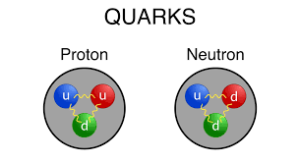
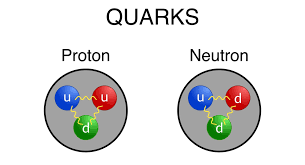
    Observations of hadrons such as protons and neutrons confirmed they are made up of distinct components called quarks of which there are six types, the UP/Down, Charm/Strange and Top/Bottom. The Up, Charm and Top have a fractional charge of 2/3. While the Down, Strange and Bottom have a fractional charge of -1/3. However, no one has been able to define their internal structure in terms of observations.

    However, another property of quarks defined by Quantum Chromodynamics (QCD), is their color charge which are red, green, and blue. It assumes each one is made up of three different colors of quarks red, blue and green and only the combinations of the colors that produce “white” can be found in a stable particle.

    It will be shown the color charge of each quark represents orientation of three two-dimensional plane (xy, yz, xz) of three-dimensional space responsible of its charge.

    For example, red would represent the xy plane green, the yz, and blue xz. The fact that three-dimensional space contains only one of each explains why particle must be composed of one each color to be stable.

    However, before we begin, we must first define how and why the color charge of a quark is related to the two-dimensional planes mentioned earlier

    As was shown in Article 12 (page 61) the alternating charge of an electromagnetic wave are the result of displacement in the two-dimensional planes of space that it is moving on. .

    Briefly it showed the electric and magnetic components of an electromagnetic wave are the result of a spatial displacement in the two-dimensional “surface” of three-dimension space.

    One can understand the mechanism responsible by using the analogy of how a wave on the two-dimensional surface of water causes a point on that surface to become displaced or rise above or below the equilibrium point that existed before the wave was present.

    The science of wave mechanics tells us a force would be developed by these displacements which would result in the elevated and depressed portions of the water moving towards or becoming “attracted” to each other and the surface of the water.

    Similarly, an energy wave on the “surface” of the two spatial dimensions that are perpendicular to the axis of gravitational forces would cause a point on that “surface” to become displaced or rise above and below the equilibrium point that existed before the wave was present.

    Therefore, classical wave mechanics, if extrapolated to the properties of two of the three spatial dimensions of our universe tell us a force will be developed by the differential displacements caused by an energy wave on it which will result in its elevated and depressed portions moving towards or become “attracted” to each other as the wave moves through space.

    This would define the causality of the attractive electrical fields associated with an electromagnetic wave in terms of a force caused by the alternating displacements of a wave moving with respect to time on a “surface” of the two spatial dimensions which are perpendicular to the axis of gravitational forces.

    However, it also provides a classical mechanism for understanding why similar electrical fields repel each other. This is because observations of waves show there is a direct relationship between the magnitude of a displacement in its “surface” to the magnitude of the force resisting that displacement.

    Similarly, the magnitude of a displacement in a “surface” of the two spatial dimensions will be greater than that caused by a single one. Therefore, they will repel each other because the magnitude of the force resisting the displacement will be greater than it would be for a single one.

    One can also derive the magnetic component of an electromagnetic wave in terms of the horizontal force developed along the axis that is perpendicular to the displacement caused by its peaks and troughs associated with the electric fields. This would be analogous to how the perpendicular displacement of a mountain generates a horizontal force on the surface of the earth, which pulls matter horizontally towards the apex of that displacement.

    Even though the above explanation of how a charge is related to an alternating displacement in the “surface” of three-dimensional space it also can explain a static one in terms of their relative positions in.

    For example, Einstein showed us if a two-dimensional plane is displaced with respect to another in three-dimensional space a force responsible for static charge would be developed similar as was shown earlier to how the peaks and valleys of an electromagnetic did.

    As was mentioned earlier Einstein define forces such as gravity in terms of the flexibility of the spatial dimensions.

    However, one can derive the internal structure of protons and neutrons if one assumes orientation of the color charges of quarks are the result of the flexibility of the two-dimensional planes which earlier were defined as being responsible for them.

    This is because for a proton or neutron to be stable in three-dimension space the orientation of the xy, yz, and xz dimensional planes must perpendicular to each other

    If they are not, they will be unstable.

    For examine the two up quarks of proton each with a color charge of two would contain 4 two-dimensional planes (one for each charge).  However, according to Einstein each dimensional plane has the flexibility to orient itself to oppose or cancel the charge of another one.  Therefore, when up quark combines with a down quark the two-dimensional plane that define its charge can orient itself to oppose or cancel one of the charges of the up quarks.  This means it will have forces only 3 of 4 dimensional planes associated with the 2 up quarks

    This will form a stable structure in three-dimensional space because it contains the (xy, yz, xz) planes which can be perpendicular to each other.

    Neutrons on the other hand contains one up quark and two down quarks.  It is neutral because the 1/3 charge on each of the two down quarks cancel the 2/3 charge of the up quark.

    But it also consists four two dimensional planes which means it cannot exist in three-dimensional space.

    However, when close enough to a proton it can borrow enough binding energy required to cause its two down quarks to line up along the same two-dimensional plane of three-dimension space. This will result in that plane having the opposite color charge of two down quarks which will result in a neutron having no charge when it interacts with the two charges of the up quark This also means the xy, yz, xz planes would define the three-dimensional volume of a neutron it because they do not have any of the forces that define it color charge. This is true even though one may have twice the color charge of the other two. This will result in it being stable when near enough to borrow some binding energy from proton

    However. when a neutron it is not the two two-dimensional planes that define the color charges of the down quarks will not line up resulting in it having 4 dimensional planes resulting in it being unstable and decaying in a proton electron and neutrino.

    As was mentioned earlier a stable electric charge is the result of a static spatial displacement in a two-dimensional plain of the three-dimensional space.

    This suggests one could describe their geometry in terms of how those planes are oriented.

    For example, if a proton is made up two up quarks each with a positive charge of 2/3 and its charge is the result of a displacement in dimensional plane of three-dimensional space each one would contain 2 and combined would contain 4.

    However, this means a proton would consist of four spatial dimensions which could not exist in our three-dimensional universe.  Therefore, to correct that it attracts a down quark which has a negative or opposite spatial displacement with respect to one of those dimensional planes.  This would reduce its spatial properties to three allowing it to exist in our universe.

    However, it also would change their orientation with respect each other. Instead of being perpendicular it would be 60-degree. This is because as was just mentioned the 2 up quarks of a proton would contain 4 dimensional planes creating four-dimensional spatial object which cannot exist in three-dimensional space.  However, when it combines with the negative dimensional energy Einstein would have associated a down quark it cancels out one of the four dimensional planes associated with the 2 up quarks of a proton leaving only three which can exist in three-dimensional space.

    But when one removes one side of a square it allows one of three sides to connect to one of the others to form an equilateral triangle This suggest the energy associated with the rearraigning the orientation of dimensional planes from 90 degrees to 60 creating the object which is responsible for both the positive charge and stability of a proton. I believe Einstein would have come to this conclusion if he as was mentioned earlier, he had known protons had an internal structure.

    Amazon

    Please follow and like us:

    Source link

  • DOL Wage and Hour Division Publishes First Opinion Letter Under Biden Administration, Regarding FMLA Leave – CUPA-HR

    DOL Wage and Hour Division Publishes First Opinion Letter Under Biden Administration, Regarding FMLA Leave – CUPA-HR

    by CUPA-HR | February 21, 2023

    On February 9, the Department of Labor’s Wage and Hour Division (WHD) issued an opinion letter stating that employees with chronic serious health conditions may use Family and Medical Leave Act (FMLA) leave to reduce work hours indefinitely. The WHD opinion letters serve as a means by which the public can develop a clearer understanding of what FMLA compliance entails. This particular letter is the first issued by the Biden administration.

    The letter from the WHD and Acting Administrator Jessica Looman comes in response to an employer’s letter asking whether “an employee may use FMLA leave to limit their work schedule for an indefinite period of time if the employee has a chronic serious health condition and a healthcare provider certifies that the employee has a medical need to limit their schedule.” The question only applies to employees who are regularly scheduled to work more than eight hours per day.

    The opinion letter specifies that if an employee is regularly scheduled to work more than eight hours per day but has an FMLA-qualifying condition that grants them to take FMLA leave, then the employee is entitled to use the 12 weeks of FMLA leave to reduce their work hours to eight hours per day. It adds that an employee may indefinitely reduce their work hours so long as they don’t surpass the 12 weeks of FMLA leave in a 12-month period that they are entitled to under the law.

    The letter also addresses concerns from the employer that the need for a work day limited to eight hours may be “better suited” as a reasonable accommodation granted under the Americans with Disabilities Act (ADA). The letter states that the requirements and protections of the FMLA and ADA are separate and distinct, and that employees may be entitled to use protections granted under both laws at the same time. It further states that an employee who has exhausted all of the afforded FMLA leave for a 12-month period may have additional rights granted under the ADA to continue to work at the reduced level, but it clarifies that the WHD does not “interpret or provide any advice for” the ADA and its requirements.

    Finally, the letter states that employees are entitled to the equivalent of 12 standard workweeks of FMLA leave, which may be more than 480 hours (equivalent to working 40 hours per week for 12 weeks) if the regular schedule of the employee is greater than 40 hours per week. The letter uses an example of an employee regularly working 50 hours per week, in which case the employee would be entitled to 600 hours of FMLA leave.

    It’s worth noting that the content of the letter is consistent with long-standing guidance and enforcement of the FMLA. The letter may draw increased attention to the issue, however, since the letter is the first provided by the Biden administration’s WHD.

    CUPA-HR will continue to monitor for any future WHD opinion letters and will keep members apprised of any significant updates in the future.


    Source link

  • New & NOteworthy – work REadiness Bootcamp for Autistic Students

    New & NOteworthy – work REadiness Bootcamp for Autistic Students

    Colleges are enrolling more students on the autism spectrum. However, one-third of the graduates with autism are not finding jobs. Here is how Rochester Institute of Technology is trying to change that with their Career Ready Bootcamp.

    Source link

  • Journal of Open, Flexible and Distance Learning (JOFDL) Vol 22(2) – Sijen

    Journal of Open, Flexible and Distance Learning (JOFDL) Vol 22(2) – Sijen

    It is my privilege to serve alongside Alison Fields as co-editor of the Journal of Open, Flexible and Distance Learning, an international high-quality peer-reviewed academic journal. I also have a piece in this issue entitled ‘Definitions of the Terms Open, Distance, and Flexible in the Context of Formal and Non-Formal Learning‘.

    Issue 26 (2) of the Journal of Open, Flexible and Distance Learning (JOFDL) is now available to the world. It begins with an editorial looking at readership and research trends in the journal post-COVID, followed by a thought-provoking Invited Article about the nature of distance learning by Professor Jon Dron. This general issue follows with 7 articles on different aspects of research after COVID-19.
    Alison Fields and Simon Paul Atkinson, JOFDL Joint Editors. 

    Editorial

    Post-pandemic Trends: Readership and Research After COVID-19

    Alison Fields, Simon Paul Atkinson

    1-6

    Image of Jon Dron

    Invited Article

    Technology, Teaching, and the Many Distances of Distance Learning

    Jon Dron

    7-17

    Position Piece

    Definitions of the Terms Open, Distance, and Flexible in the Context of Formal and Non-Formal Learning

    Simon Paul Atkinson

    18-28

    Articles – Primary studies

    Images of Hulbert and Koh

    The Role of Non-Verbal Communication in Asynchronous Talk Channels ‎

    Image of Leomar Miano

    An An Initial Assessment of Soft Skills Integration in Emergency Remote Learning During the COVID-19 Pandemic: A Learners’ PerspectiveA Learners Perspective

    Image of small child at a laptop

    Supporting English Language Development of English Language Learners in Virtual Kindergarten: A Parents’ Perspective

    Image of Lockias Chitanana

    Parents’ Experience with Remote Learning during COVID-19 Lockdown in Zimbabwe

    Image of Martin Watts & Ioannis Andreadis

    First-year Secondary Students’ Perceptions of the Impact of iPad Use on Their Learning in a BYOD Secondary International School

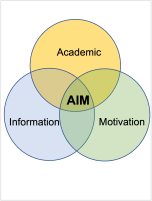
    venn diagram for AIM

    Teaching, Engaging, and Motivating Learners Online Through Weekly, Tailored, and Relevant CommunicationAcademic Content, Information for the Course, and Motivation (AIM)


    Source link

  • Workforce Innovation and Opportunity Act Reauthorization Prospects for the 118th Congress – CUPA-HR

    Workforce Innovation and Opportunity Act Reauthorization Prospects for the 118th Congress – CUPA-HR

    by CUPA-HR | February 15, 2023

    In the 118th Congress, bills will likely be introduced to reauthorize the Workforce Innovation and Opportunity Act (WIOA), which includes programs used by community colleges and other higher education institutions pursuing their own workforce development agendas. Passed in July 2014, the WIOA is the primary federal law to increase access to and coordination between workforce development and other related programs. This blog post provides context on what the WIOA accomplishes and highlights recent attempts to reauthorize the law.

    Background

    There are four major components to the WIOA:

    • Title I includes programs related to workforce development activities and authorizes three formula grants through federally-funded, state- and locally-administered delivery systems that are administered by the Department of Labor.
    • Title II enacts the Adult Education and Family Literacy Act (AEFLA), which authorizes programs for adult education up to the secondary level, as well as English training, and is administered by the Department of Education.
    • Title III amends the Wagner-Peyser Act, which authorizes the Employment Service formula grant program that is essential to the WIOA for planning and accountability purposes.
    • Title IV amends the Rehabilitation Act of 1973 and provides funding to state agencies to support employment-related services to individuals with disabilities, among other smaller programs.

    The WIOA originally funded its programs from fiscal year 2015 to fiscal year 2020 after most WIOA programs went into effect July 2015. Appropriations authorization for the WIOA was set to expire after fiscal year 2020, but Congress has extended authorization through the annual appropriations process since fiscal year 2021. Despite the extended authorization, Congress has tasked itself with producing a reauthorization of the WIOA that will extend appropriations for another five or more years and help modernize its workforce development programs. We will likely see reauthorization legislation in the House and/or Senate before the current term ends in 2025.

    WIOA Reauthorization Attempt in the 117th Congress

    In the 117th Congress, House Education and Labor Committee Chair Bobby Scott (D-VA) and 17 committee Democrats introduced the Workforce Innovation and Opportunity Act of 2022 (H.R. 7309, “WIOA reauthorization bill”) and sent it to the House floor for a vote. According to a Congressional Research Service (CRS) report on H.R. 7309, the bill “would retain the general structure and systems established by the WIOA” and would “authorize appropriations for fiscal years 2023 through 2028, increasing funding for existing systems and establishing several new programs.” The CRS report specifies that the WIOA reauthorization bill focused mostly on amending Title I of the law.

    On May 17, 2022, the House passed the WIOA reauthorization bill and sent it to the Senate where the bill stalled in the Senate Help, Education, Labor and Pensions (HELP) Committee until the 117th Congress adjourned. The WIOA reauthorization bill passed the House among mostly partisan lines with 216 Democrats and four Republicans voting in favor of the bill and 196 Republicans voting against it.

    House Republicans criticized Scott and other Democrats on the Education and Labor Committee for failing to collaborate with Republicans to create a bipartisan bill prior to its introduction and during the committee markup. Prior to its final House vote, Education and Labor Committee Ranking Member Virginia Foxx (R-NC) spoke out against the bill on the House floor stating that the Democrats’ bill did not create a workforce development system that prepares workers for in-demand skills.

    Potential for WIOA Reauthorization Attempts in the 118th Congress

    Given a divided House and Senate, both chambers will have to work together to pass any meaningful legislation for a WIOA reauthorization. Democrats and Republicans may be incentivized to produce a consensus WIOA reauthorization bill to address the record labor shortages and resulting open positions that employers are struggling to fill across the country. With Foxx now serving as the chair of the House Education and the Workforce Committee and her interest in WIOA reauthorization during the last Congress, we believe she and other House Republicans will introduce a new bill, though it’s unknown whether they’ll be able to come to an agreement with Democrats in both the House and Senate to finalize and pass a new reauthorization bill.

    Without knowing how or when Congress will consider WIOA reauthorization, we are more certain of members who may be House champions of such a bill. In addition to Full Committee Chair Foxx and Ranking Member Scott, House Higher Education and Workforce Development Subcommittee leaders Burgess Owens (R-UT) and Frederica Wilson (D-FL) will be involved in WIOA reauthorization bills that are introduced in this Congress. Less certain is where new Senate HELP leaders Bernie Sanders (I-VT) and Bill Cassidy (R-LA) will stand on this particular issue given the Senate’s lack of action in the last Congress and each senator’s new ascension to top leadership positions of the HELP Committee.

    CUPA-HR will monitor WIOA reauthorization bills this Congress and keep members apprised of any new developments.


    Source link

  • When is an extracurricular good enough? Part 2 – Four Years Later!

    When is an extracurricular good enough? Part 2 – Four Years Later!

    By Tim Parros

    I wrote an article four years ago about the importance of extracurriculars in the college admission process (read it here)

    Interestingly enough, it still rings true and is even more critical going into the 2023/2024 admission cycle. As a result, we see our students reaching for many colleges that take a deep look into the extracurriculars; after all, colleges want students to better their communities, and students with experience in this are very attractive to them.

    The admissions landscape continues to evolve, and schools seek students with more than perfect test scores and top grades. There are so many students with perfect scores and outstanding academics, which is still essential, but most schools take a holistic approach to the admissions process. They want students with diverse interests and backgrounds who will be a good fit for the school outside of academics. Your extracurriculars help them determine if you will be equipped to make your mark at their college in a positive and influential way.

    So why is this important again?

    Because it tells admissions more about you as a person. By looking at your activities in your free time, they learn about your interests and the key qualities you possess.

    Essentially, your extracurriculars are one of the application components (along with your college essays and letters of recommendation) that they feel determines the characteristics that you will add to their student body. Different schools may value different traits, but they all value leadership, social responsibility, commitment, drive, and determination. Many other traits will be apparent to them as they review your application. It is also true that extracurriculars make for some great essays when it comes time to apply to college.

    Generally speaking, the quality and the duration of your commitment to your extracurricular activity seem more important than how many you have on your list. The commitment you show in your extracurriculars for college over a more extended period is more impactful than being a member of many clubs for a short period. Even more important in this category is showing them what you learned, how you’ve grown, and how you will interact with their student body.

    When we have students considering some of the top colleges in the US, we start early in helping them identify extracurriculars that they are passionate about. This is critical. I will end with the same advice from 4 years ago.

    Here are some questions to ask yourself about your activities:

    1. Does it benefit your community?

    2. Could it lead to any awards?

    3. Is it possible to write about it and have it published?

    As we discuss extracurricular activities with our students, we try to get them to think outside the box and go beyond with their peers are doing. We’re not encouraging students to give up activities they enjoy, but we hope that asking these questions will spark something and stretch the student in what activities they spend their time on. 

    We want to discuss this and explore how we can help you in your college planning journey.

    Source link

  • Why is Heterosexism favored in India?

    Why is Heterosexism favored in India?

    The same reason why you or I won’t accept marriages between brothers and sisters. (At least in most cultures)

    As society progresses, our values change. We might consider inter-sibling marriages a regular thing in a few hundred years.

    If you are conditioned to believe something, you treat that as the absolute right to wrong.

    We think that siblings can’t have a sexual relationship/marriage and don’t see that as a good thing because our society has taught us so from the beginning.

    Similarly, LGBTQ+ rights were really not a topic of discussion during our parent’s/grandparent’s times. so they are conditioned to believe that same-sex couples are not a ‘good’ thing.

    However, your thought process can change. How fast that changes totally depends on the person. Some parents have started supporting and accepting LGBTQ+ as a norm, but others might take some time.

    Changing people’s thought processes, significantly if the person has grown up believing something, takes time.

    Source link