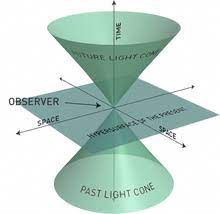
When Einstein defined the equivalence between mass and energy, he also defined what “support the geometry of space…
In his General Theory of Relativity, he defined the force of gravity in terms of the energy density of space. This implies the mass and energy associated with it supports the geometric structure space because the equation E=mc^2 tell us when energy is concentrated in the form of mass it causes the geometry of space to contract creating the curvature he associated with gravity.
Additionally, the Big Bang’s assumption the universe expansion is the result of the energy associated with its origin can only be explained by assuming it is pushing on its boundaries.
Additionally, we have observed that the CBM (cosmic background radiation) imparts the energy associated with its 2.725 Kelvin temperature to even perfectly “empty” space devoid of all gas, dust, and particular matter.
The fact that concentrating energy in the form of mass results in space contacting while increasing it by releasing the energy contained in mass cause it to expand support the assumption space that does not contain any particular mass is not empty but contains energy.
Therefore because, Einstein’s equation E=mc^2 tells us space without any particular matter is not empty but contains the mass equivalent of the CBM defined by that equation.
The mechanism responsible would be analogous to how the volume of a balloon is supported by the air inside of it.
For example, if the air pressure increases its volume will expand while if it decreases it will contract.
Yet it also tells us how one can explain the quantum properties of energy and mass in terms of it being an emergent property of space if it contains a continuous field of energy.
For example, by using the science of wave mechanics and the fact that Relativity tells us energy would move through space on a continuous field of energy such as the one provided by the cosmic background radiation unless it is prevented from doing so by someone or something interacting with it. This would result in it being confined to three-dimensional space. The science of wave mechanics also tells us the three-dimensional “walls” of this confinement will result in its energy being reflected back on itself thereby creating a resonant or standing wave in three-dimensional space. This would cause the energy of an energy wave to be concentrated at the point in space were a quantized particle would be found.
Additionally, wave mechanics also tells us the energy of a resonant system such as a standing wave can only take on the discrete or quantized values associated with its fundamental or a harmonic of its fundamental frequency.
This explanation of why mass and energy are quantized is consistent with the observations of the environment defined by quantum mechanics in that the mathematical properties associated with the wave function will continue to evolve as a wave moving through space and only reduces of “collapses” to a quantized packed of energy when it is observed or encounters an object.
This defines how Einstein could have explain what an “empty” volume of space contains AND the observations associated with its quantization in terms of it being an emergent property of the continuous energy field or space as defined by him.
This also answers the question of how an electromagnetic wave can propagate though seeming “empty space because as was shown above what appears to be empty space is not empty but contains continuous field of energy which, it can propagate similar to how wave propagates on water
After a month in session, the U.S. House of Representatives and Senate are finalizing their committee and subcommittee membership rosters. Of particular significance are the House Education and the Workforce Committee and Senate Health, Education, Labor and Pensions (HELP) Committee, which have jurisdiction over higher education and many labor and employment issues, including overtime, paid leave, occupational safety and health and employment-based discrimination.
House Education and the Workforce Committee and Subcommittees
The House Education and the Workforce Committee will be comprised of 25 Republicans and 20 Democrats with Rep. Virginia Foxx (R-NC) serving as chairwoman and Rep. Bobby Scott (D-VA) serving as ranking member of the full committee. Both Foxx and Scott served as their party’s committee leader in the previous Congress when Democrats held the majority, but Foxx was notably able to secure a waiver granting her exemption from House Republican-imposed committee leadership term limits that would have prohibited her from serving a fourth consecutive term as Republican leader on the committee.
Foxx has publicly stated her priorities for the committee, citing oversight of the Biden administration, Department of Labor and Department of Education as a top concern for the committee. Having previously taught at two institutions of higher education and served as president at Mayland Community College, Foxx also has a particular interest in higher education. With divided control of Congress and Democrat control of the Senate, however, it is unlikely that Foxx will be able to pass any meaningful legislation that would garner support from the Senate and the president.
In addition to the full committee roster, the Education and the Workforce Committee has also finalized their subcommittee rosters.
Subcommittee on Workforce Protections
The Subcommittee on Workforce Protections has jurisdiction over issues relating to wages, hours of workers and overtime, including the Fair Labor Standards Act (FLSA); workers’ compensation, including the Family and Medical Leave Act (FMLA); issues relating to immigration and employment; and occupational safety and health, including the Occupational Safety and Health Administration (OSHA).
Freshman Rep. Kevin Kiley (R-CA) will serve as chairman of the subcommittee and Rep. Alma Adams (D-NC) will serve as ranking member after serving as chair of the subcommittee last Congress. The subcommittee will made be up of six Republicans, including Glenn Grothman (R-WI), James Comer (R-KY), Mary Miller (R-IL) and Eric Burlison (R-MO), all who did not serve on the subcommittee in the previous Congress; and four Democrats, all who served on the subcommittee in the last Congress.
Subcommittee on Higher Education and Workforce Development
The Subcommittee on Higher Education and Workforce Development has jurisdiction over the following areas: postsecondary student assistance and employment services, and the Higher Education Act; postsecondary career and technical education, apprenticeship programs, and workforce development; and science and technology programs.
Rep. Owen Burgess (R-UT) will serve as chairman of the Subcommittee on Higher Education and Workforce Development, while Rep. Frederica S. Wilson (D-FL) will serve as ranking member of the subcommittee after serving as chair of the subcommittee in the 117th Congress. The makeup of the subcommittee will include 13 Republicans, including Reps. Glenn Thompson (R-PA), Lloyd Smucker (R-PA), Nathaniel Moran (R-TX), John James (R-MI), Lori Chavez-DeRemer (R-OR), Erin Houchin (R-IN) and Brandon Williams (R-NY) as new members; and 11 Democrats, including Reps. Lucy McBath (D-GA), Gregorio Kilili Camacho Sablan (D-Northern Marina Islands) and Alma Adams (D-NC) as new members.
Subcommittee on Health, Employment, Labor and Pensions
The Subcommittee on Health, Employment, Labor and Pensions’ jurisdiction involves “matters dealing with relations between employers and employees,” including to the National Labor Relations Act (NLRA) and employment-related health and retirement security, such as pension, health and other employee benefits and the Employee Retirement Income Security Act (ERISA).
The subcommittee will see Rep. Bob Good (R-VA) serve as chairman and Rep. Mark DeSaulnier (D-CA) serve as ranking member after previously serving as chair in the 117th Congress. The subcommittee will be composed of 12 Republicans, including Reps. James Comer (R-KY), Lloyd Smucker (R-PA), Michelle Steele (R-C), Aaron Bean (R-FL), Eric Burlison (R-MO), Lori Chavez-DeRemer (R-OR) and Erin Houchin (R-IN) serving as new members; and 10 Democrats, including Reps. Pramila Jayapal (D-WA), Jahana Hayes (D-CT), Ilhan Omar (D-MN) and Kathy Manning (D-NC) serving as new members.
Senate Health, Education, Labor and Pensions Committee
The Senate HELP Committee is the Senate counterpart to the House Education and the Workforce Committee. Chair Bernie Sanders (I-VT) will be replacing former Chair Patty Murray (D-WA), who is now the chair of the Senate Appropriations Committee, and Ranking Member Bill Cassidy (R-LA) will be replacing former Ranking Member Richard Burr (R-NC), who retired at the end of the 117th Congress. Democrats will have 11 members and Republicans will have 10 members on the committee. Subcommittees have not yet been finalized, though we expect to see membership lists soon.
Sanders staffers have stated that, as chair, he will “focus on universal healthcare, lowering the cost of prescription drugs, increasing access to higher education and protecting workers’ rights on the job.” As previously mentioned, however, the divided Congress and Republican control of the House will likely prevent meaningful legislation from moving to President Biden’s desk for his signature.
CUPA-HR will be monitoring committee activity and will keep members apprised of any major hearings or updates that come out of the committees.
Each month, CUPA-HR General Counsel Ira Shepard provides an overview of several labor and employment law cases and regulatory actions with implications for the higher ed workplace. Here’s the latest from Ira.
Supreme Court May Consider the Propriety of the Court-Created “Adverse Employment Action” Rule, Limiting Title VII Complaints
The Supreme Court has asked the U.S. government (the Department of Justice and the Equal Employment Opportunity Commission) to weigh in on whether it should hear two cases challenging the court-created “adverse employment action” rule, which limits consideration of Title VII complaints to those involving an “adverse employment action.”
The first case involves a female police officer who alleged that she was transferred out of her department because of her sex. The 8th U.S. Circuit Court of Appeals (covering Minnesota, Iowa, Missouri, Arkansas, North Dakota, South Dakota and Nebraska) affirmed the dismissal of the case because it found no adverse employment action where the transfer did not involve a loss of pay and rank or level of responsibilities.
The second case involves a former head of an Alabama legal services group who challenged the decision of the 11th U.S. Circuit Court of Appeals (covering Alabama, Georgia and Florida), which affirmed the dismissal of his case on “adverse employment action” grounds where the suspension challenged because of his race was a suspension with pay, and did not involve the loss of any wages or benefits.
Both plaintiffs claim that the “adverse employment action” requirement was court-created and not part of the actual Title VII statute. They both claim that the change in job status, which was the subject of their complaint, was involuntary, not to their liking, and based on their protected-class status. Therefore, they claim it should be actionable under terms of the Title VII statute. Both defendants oppose, claiming there is no conflict between the circuits.
Professor’s Bias Case Dismissed for Failure to Establish “Pervasive” Harassment, and HR Warning Not a “Substantial Adverse Employment Action”
A Texas Court of Appeals recently overruled a trial court and dismissed a professor of Indian descent’s bias claims filed under the Texas state anti-discrimination statute. The appellate court concluded that the professor’s complaints of coworker comments reflecting negatively on his national origin did not rise to the level of “pervasive” harassment. Additionally, his complaint that he received a warning from HR about a complaint, which was previously closed, did not rise to the level of a “substantial adverse employment action,” and therefore was not actionable (Texas Southern University v. Nayer (Tex. App. 1st Dist. No. 01-21-00497-CV, 1/10/23)).
The plaintiff, who is originally from India, was hired by the university in 2009 as an assistant professor in the administration of justice department. He was promoted to associate professor, received tenure and was appointed interim department chair in 2016. The professor alleged that coworkers used the term “you people” as a racial epithet to address him in emails and that he had received a warning from HR relating to a complaint which had been closed. While the trial court ruled he was entitled to a jury trial over his discrimination claims, the appellate court reversed the ruling and dismissed the case for failure to establish “pervasive” harassment and failure to raise a “substantial adverse employment action.
In 2022, U.S. Labor Unions Engaged in the Most Strikes Since 2007, With Education Service Employees the Majority of Employees Engaged in Strike Activity
More than 225,000 employees engaged in 314 strikes last year, more strikes than in any year since 2007. Education service employees accounted for three out of every five of those workers, according to an analysis report by Bloomberg News. The largest strike of the year was at the University of California, where approximately 48,000 graduate student workers were on strike for six weeks demanding increased wages and changes to working conditions. This strike was the largest strike occurring at any college or university since 1990, according to the Bloomberg database. The graduate student workers were represented by the United Auto Workers Union.
The American Federation of Teachers and the National Education Association engaged in the second highest number of work stoppages during 2022, surpassed only by the Service Employees Union. Collectively, these two unions had the largest share of union members involved in strike activity in 2022. Analysts conclude that dual economic factors in 2022 led to the increase in strike activity. The factors noted were a very tight labor market and rising inflation. Union leaders also claim that many other contract negotiations narrowly avoided strike situations as a result of diligent negotiation activity on both sides of the table.
Nonetheless, overall union membership dropped to a historic low percentage of the U.S. workforce in 2023. The unionized percentage of the American workforce dropped to 10.1 percent, lower than the previous low of 10.3 percent, recorded in 2019. While union membership actually increased in 2022 by some 273,000 employees, it was not enough to keep pace with the even larger growth on non-union jobs in 2022. These numbers are a continuation of the long-term slide in union membership in America. In 1983, the first year the government began collecting these numbers, the percentage of overall union membership in the U.S. was over 20 percent of the total American workforce.
Professor’s Race Discrimination Claim Based on Disparate Treatment of Student Complaints Moves Forward
A former medical professor’s lawsuit survived a motion for summary judgement filed by her former university employer following allegations that non-minority professors were not terminated following student complaints. In allowing the case to proceed to discovery, the federal court judge concluded that the plaintiff “barely” raised enough facts to allow the case to proceed (Miller-Sethi v. City University of New York et al (S.D.N.Y. No. 21- cv- 08591, I/26/23)).
The medical school professor’s contract was not renewed following a complaint from a student that the professor criticized her following the student’s refusal to continue working at a site which she was not comfortable working in because of the racial makeup of the area. The university argued that the comparators had received complaints regarding course evaluation or teaching techniques, which were not comparable to plaintiff’s situation. The judge ordered further discovery on the issue.
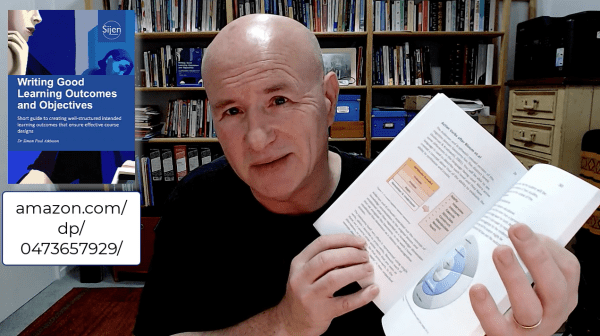
Introducing a short guide entitled: “Writing Good Learning Outcomes and Objectives”, aimed at enhancing the learner experience through effective course design. Available at https://amazon.com/dp/0473657929
The book has sections on the function and purpose of intended learning outcomes as well as guidance on how to write them with validation in mind. Sections explore the use of different educational taxonomies as well as some things to avoid, and the importance of context. There is also a section on ensuring your intended learning outcomes are assessable. The final section deals with how you might go about designing an entire course structure based on well-structured outcomes, breaking these outcomes down into session-level objectives that are not going to be assessed.
Employee learning and development (L&D) offerings at higher ed institutions have changed significantly over the last three years. To find out what other institutions are doing in this area, Krista Vaught, assistant director of employee learning and engagement at Vanderbilt University, conducted a survey in the summer of 2022. Survey responses from L&D professionals at 115 institutions reveal the following trends in program delivery, attendance, topics and outcomes.
Program Delivery
Since 2020, synchronous online sessions have been offered by most (89) institutions, followed by self-paced modules (85). Some institutions indicated that at certain points, employees were limited to online learning and self-paced only, as they did not host live workshops.
Prior to the pandemic, synchronous, in-person workshops were the primary delivery method at most institutions. Now, synchronous online is the primary method at 35 percent of institutions surveyed, asynchronous online at 30 percent of institutions, synchronous in-person at 18 percent of institutions and hybrid at 17 percent of institutions.
Attendance
Attendance and participation have fluctuated. In the early 2020 shift to remote work, there was a sense that employees had newfound time to pursue L&D, at least initially. From March 2020 to December 2021, 31 percent of institutions surveyed saw increased participation, while 27 percent said it was mixed or hard to tell. Eighteen percent said it increased then decreased, and 17 percent said it decreased.
What did institutions see in 2022? Results were mixed again. Twenty five percent said attendance and participation were about the same as prior to 2022, 23 percent said it decreased, 21 percent said it increased and 27 percent said it was mixed or hard to tell.
What’s causing the fluctuations and challenges in attendance and participation?
Time and availability
Burnout
Increased workload as employees transition back to more on-campus work or take on additional responsibilities because of turnover, leaving less time to pursue learning
Unsupportive supervisors who see learning as taking away time from work rather than part of work
Employee preference for different delivery methods (in-person versus virtual)
Learning opportunities are not always prioritized, resulting in last-minute no-shows
Topics
According to respondents, the most popular workshop topics fall under management and leadership, and wellness and communication.
Assessing Outcomes
Follow-up surveys are the most popular tool for assessing outcomes of workshops, followed by attendance and participation numbers.
Prioritizing Learning and Development
In the ongoing competition for talent, L&D can be a game changer, both in attracting new talent and retaining the talent you already have. By investing in and prioritizing programs to support managers, develop leaders and promote better communication, institutions can create a workplace that’s hard to leave.
To learn how one institution launched a multi-faceted retention initiative, including manager and leadership development opportunities, watch the recording of the recent CUPA-HR webinar Solving the Retention Puzzle.
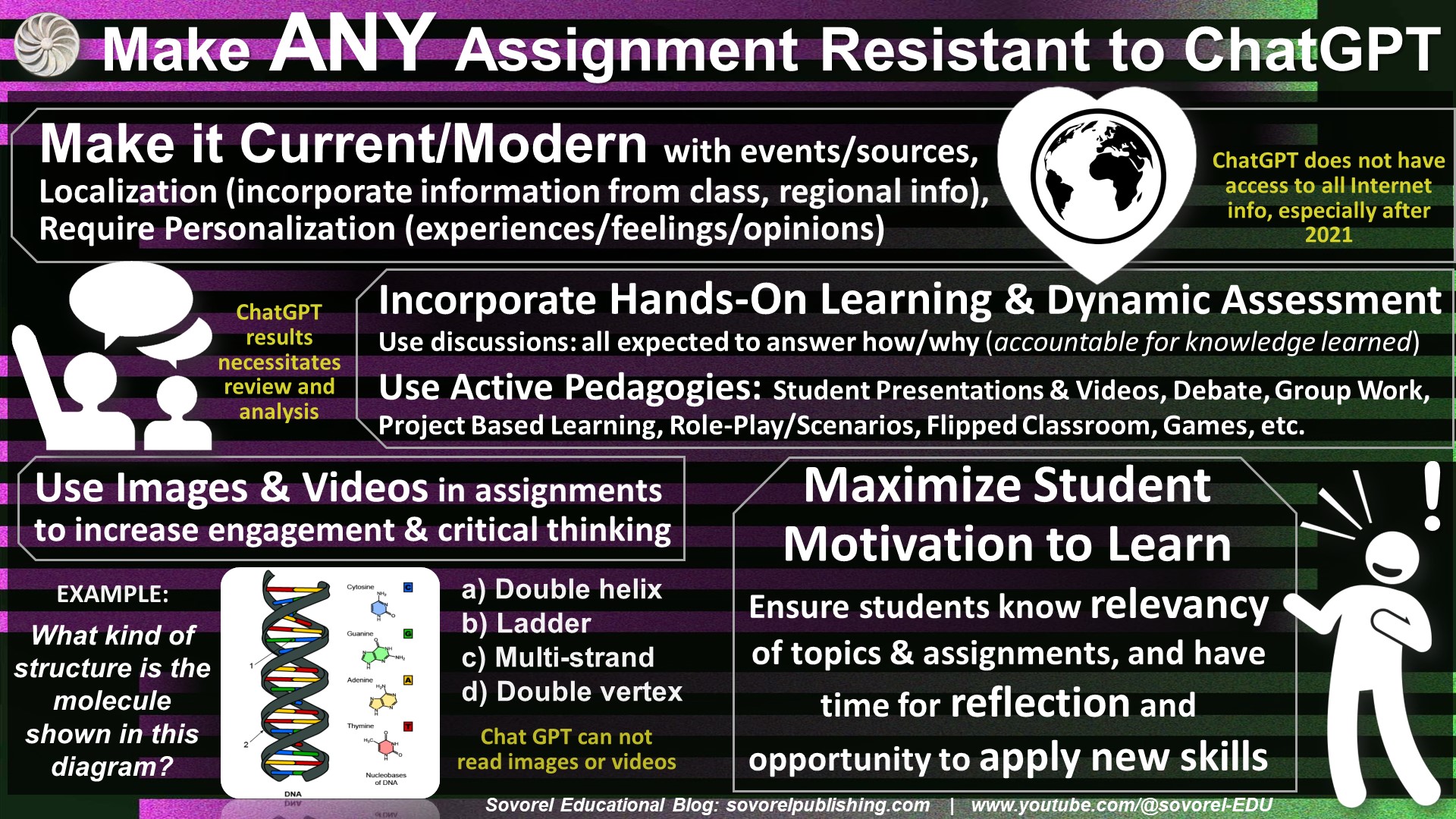
The great thing about this #ChatGPT infographic “Make ANY Assignment resistant to ChatGPT,” is that it simply describes a great way to make your course and your assignments, regardless of #AI use, better by being more active and hands-on.
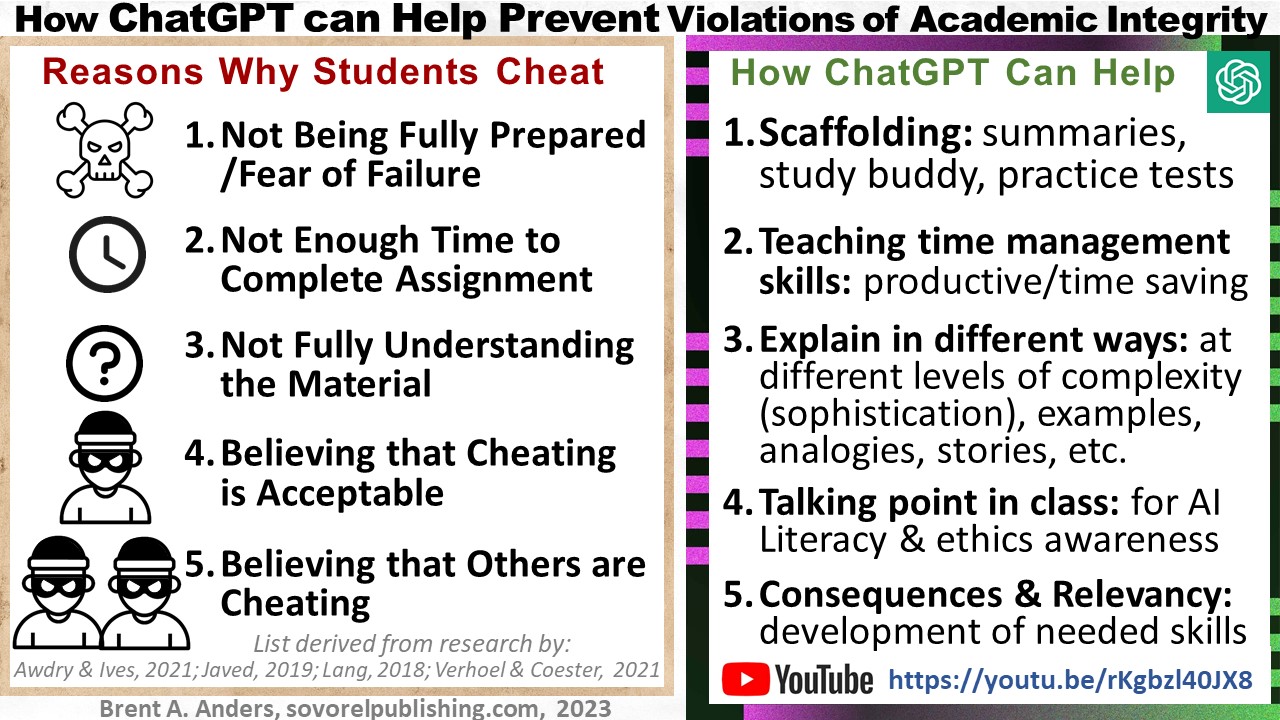
For specific help regarding essay writing and use of ChatGPT AI see the following infographic:
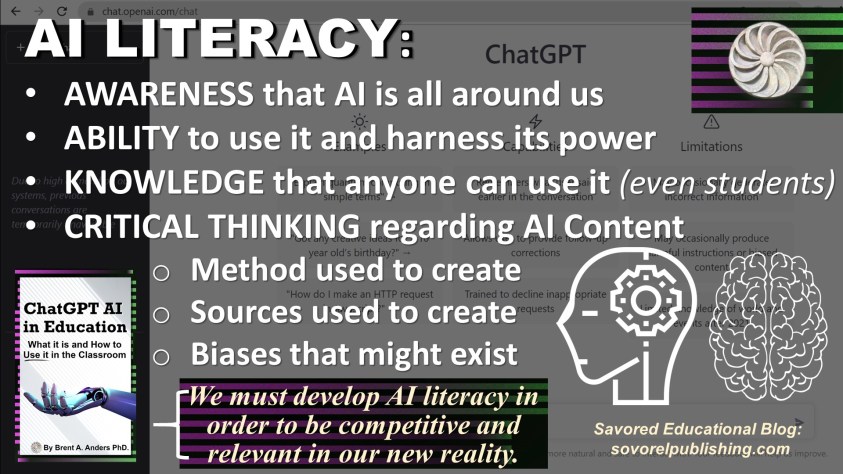
Another very important aspect that must always be developed by both instructors and students is AI Literacy:
I recently published a book to help all educators deal with the new technological phenomenon which came about on 30 November 2022 known as ChatGPT by OpenAI (https://chat.openai.com). My book, ChatGPT AI in Education: What it is and How to Use it in the Classroom, available as a paperback or ebook on Amazon at https://www.amazon.com/ChatGPT-AI-Education-What-Classroom-ebook/dp/B0BRWXPVB7 covers all of the main aspects of this AI as applied to education. Here is the book’s Table of Contents:
What is AI and ChatGPT
AI What is ChatGPT
Exactly What Can ChatGPT Do?
ChatGPT Limitations
How Can ChatGPT Be Used in Education
How to Use ChatGPT in the Classroom
Use ChatGPT as an Essay/Assignment
Creation Checker
Prompt Skill Development Competition
Reflect and Improve
In-Class Preparatory Process
Full Incorporation Option
Reflection of Why
Maximize the Localization and Personalization of the Assignment
What can we learn from watching reality tv? Well, quite a bit. Today I’m going to talk about 7 things you can learn from The Circle, a reality television show about social media on Netflix.
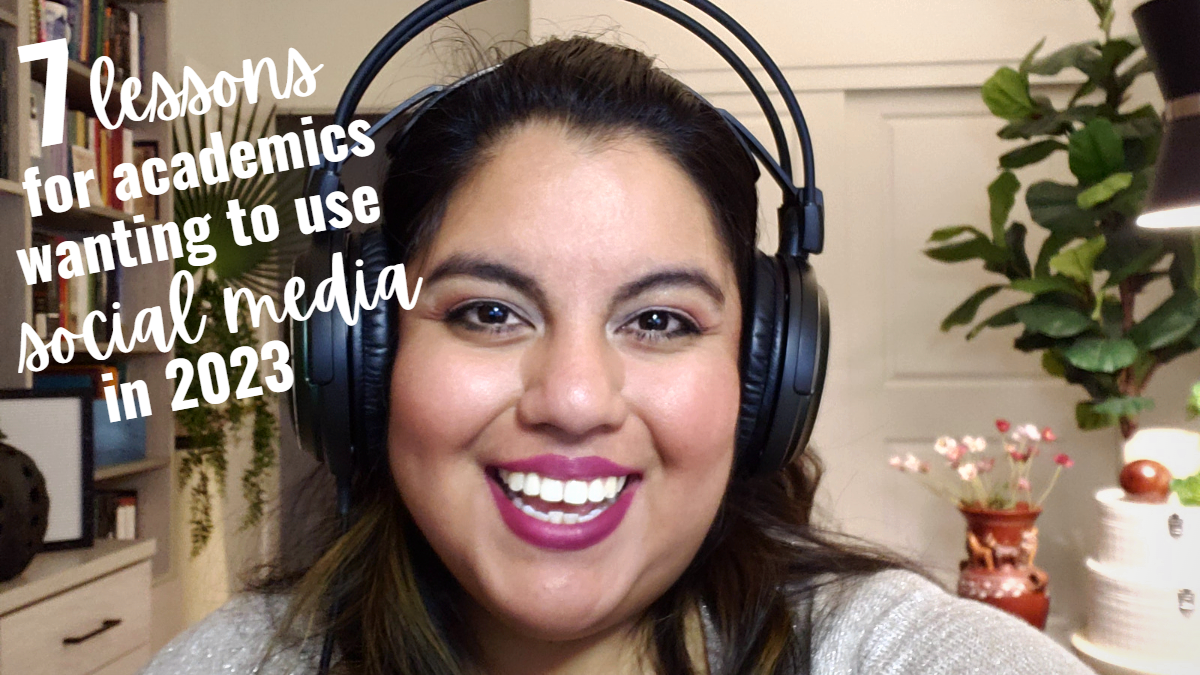
Hi there, I’m Jennifer van Alstyne. I help professors feel confident when showing up online. I empower them to build an online presence so they can help more people with their research and teaching. Welcome to The Social Academic, my podcast about your digital footprint as a professor in Higher Education.
Now, if you’re on my mailing list you may have seen my email about my application to be on The Circle Netflix. If you’re watching the new season, you already know that I did not make the cut. But I love this show, and learn so much from watching it. So, I’m excited to talk with you about The Circle today. I still have my fingers crossed that I’ll appear on a future season. Seriously, my goal is to be on a Netflix show in my lifetime.
What is your online presence? It’s what people can find about you when searching your name online. It’s what people can discover about your research and the work you most care about. I’d love to help you have the online presence you deserve in 2024. Let’s talk about working together on your website, social media, or bio writing.
First, let me tell you a little bit about The Circle because I know some of you may not have watched this show before. By the end of this episode of The Social Academic podcast, you’re going to go and watch The Circle. This is one of my favorite shows, and I hope you love it too.
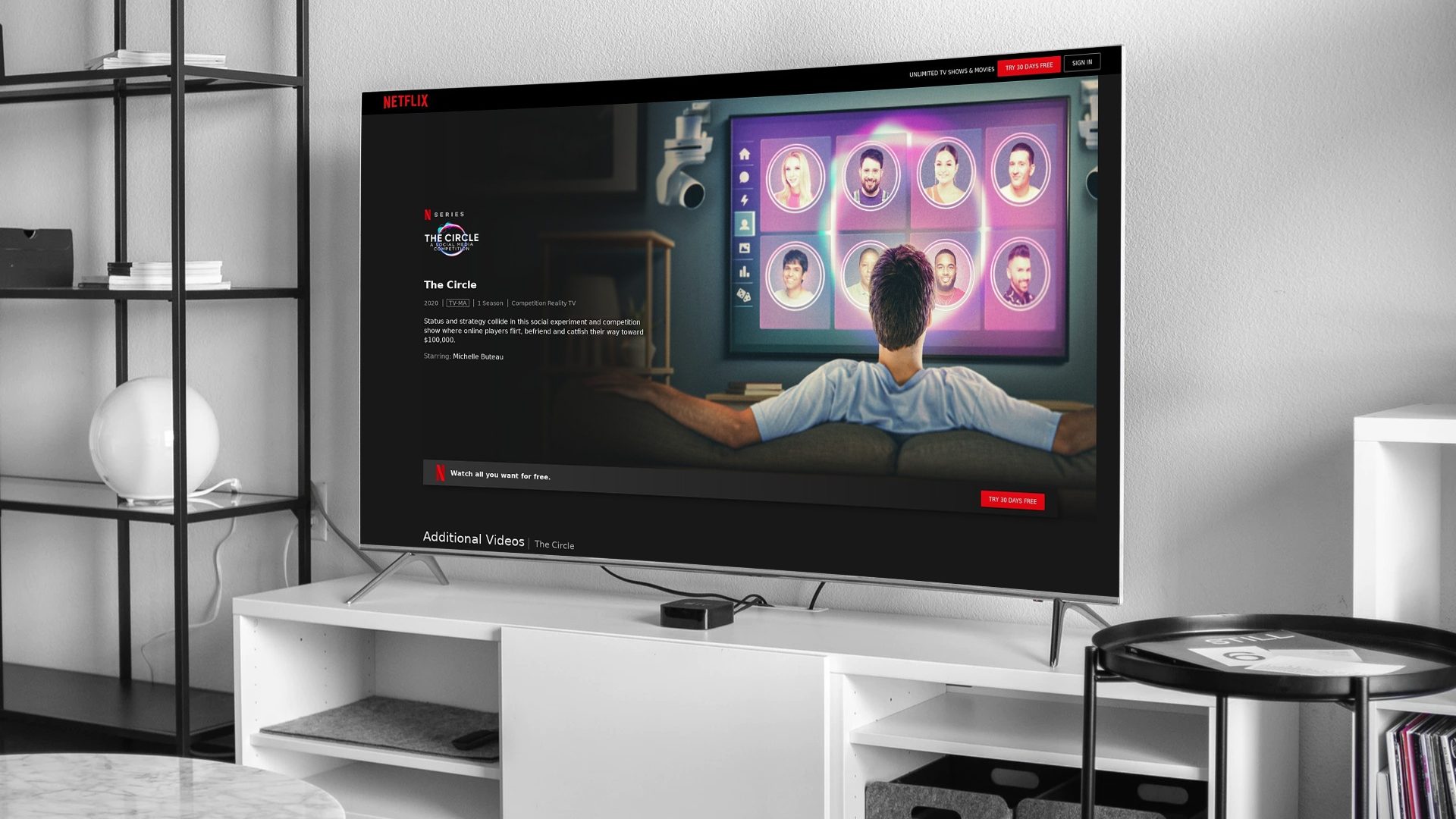
The Circle Netflix is a competition reality show where strangers move into an apartment building where they can only communicate with each other through a closed social media network called The Circle. Each person gets their own Circle profile where they can share a bio and a profile photo. Here’s the thing, if you’re in The Circle there’s no way to tell if the other contestants you see there are real, or if they’re catfish. Some people enter The Circle as themselves. Other people enter The Circle with a fake profile they think will advance them further in the game. The winner of The Circle gets a cash prize and bragging rights.
I love reality television. I especially enjoy watching The Circle because contestants build real relationships through chat, interactive games, and virtual parties. Because contestants interact with The Circle by speaking their messages out loud (it’s a voice-activated social media network), we get to see their reaction to the Circle Chat when a new post is shared. They also verbalize their thinking before sharing their own messages in the chat.
This will be a fun episode of The Social Academic, so pop some popcorn, take a seat, and listen up. We’re about to dive into 7 things you can learn about social media and building relationships from watching The Circle on Netflix.
1. People don’t know anything about you when they come across your profile for the 1st time. Have photos on your profile that show your personality.
When you enter The Circle you don’t know anything about the other contestants. If you’re coming on the show, you’re aware that there are other people in the same apartment building you are. But, each of you walk into your own uniquely designed apartment. You get a few minutes to explore before The Circle sends you an Alert.
The 1st Alert invites contestants to set up their profile on The Circle. That way, other contestants in the building can learn a little bit about them when they engage in conversations in the Circle Chat.
Choosing what to include on your profile is so important. The people who are visiting your profile don’t know anything about you. The first thing that you can learn from watching The Circle on Netflix is that having photos on your profile that show your personality makes a big difference. Your photo is the first thing that people see about you on social media.
I love getting to hear contestants talk about which profile photo they’re choosing. When you’re looking at your photos trying to decide which one to use as your profile photo, think about which shows your personality best. What are you trying to communicate with your profile? Think about the outfit that you’re wearing, what kind of expression is on your face, and what’s in the background.
When you have a profile photo that shares your personality, people learn a little bit more about you instantly. Your profile photo leaves a lasting impression on social media.
For academics, sharing a photo of yourself on social media helps people recognize you. If you’re headed to a conference and tweet about your talk, you want your fellow conference attendees to be able to learn a bit about you. And it’s great if they can see a photo of your smiling face.
2. Remember things about the people you talk with to help you have deeper conversations.
The Circle on Netflix is a closed social media platform. You might compare it to Slack or MightyNetworks. You can only engage in conversations with people through the general Circle Chat and through direct messages, messages which can be with one or more people.
Having conversations with people in The Circle is the only way to build your relationships. And yes, this does advance you in the game. But it also deepens your relationships in real life. Whether these people, the other contestants in The Circle, are catfish or not, the conversations you have with them are real.
The only way that you can learn about the people in The Circle is by having conversations with them. My second tip is that remembering things about the people you talk with helps you have deeper conversations. What do I mean by deeper? Well, more meaningful, lasting, and relationship-building conversations.
For the competition in The Circle on Netflix, this makes a lot of sense. When people give you more information, they might slip up and let you know that they’re a catfish. They might let you know about who their friends are and who they are most loyal to. They also might share a story that you can relate to, something that tells you about who they are, what they care about, and why they are here. What you share with people in The Circle, can help the influencers each week decide if you should stay or be voted out of The Circle.
Whether you’re on a closed social media platform like Slack, or a public network like LinkedIn, Remembering the conversations you have will help you have deeper, more meaningful relationships. Networking is all in the details.
Academics, you have so much to remember, I get it. I’m not saying memorize what people tell you. One way to help you remember the details about the people you meet is to see if you can find 1 way you connect with them. One thing you have in common. Maybe it’s a shared research interest. Maybe you both like dogs. You’re more likely to remember something you share, something you have in common, so that’s my tip for you!
3. People can tell when you’re not being yourself online.
I realize I just mentioned catfish in The Circle and I didn’t quite explain what that is. A catfish is someone on social media who is pretending to be not themselves. Someone is “catfishing” when they have a profile on social media that does not reflect who they are in real life.
This is different from an anonymous account, where a person chooses not to share their real name. “Catfishing” is intentionally appearing as a different person. The term grew in popularity after the MTV show Catfish Began in 2008. The show is now on its 8th season where the show’s hosts uncover fake profiles of people in romantic relationships where one person is catfishing the other online. One thing I find notable about the show Catfish, is that many of the people who have fake profiles have real feelings. Even though the person is fake, oftentimes the relationship is based in real emotion.
On The Circle Netflix, being a catfish might help you make a lot of money if you make it to the end of the game. However, it can also hurt you to be a catfish. This is because of tip number 3. People can tell when you’re not being yourself online.
And yeah, okay, in real life this is a little bit easier now that we have video chat. But in The Circle on Netflix, you don’t have this option. You can’t see if someone’s real. You can’t even hear their voice. You can only go by what they share with you in the chat and on their profile.
At some point on every season of The Circle, some contestants hunt catfish. They’re looking for fake profiles. It’s an easy reason to vote someone off of the game. And may help you determine if you can trust someone to be loyal to you (or not). So if you are thinking about applying to be on The Circle you can totally be a catfish. You’ll probably have a fun time playing. Just know that it’s hard to convince people you’re someone you’re not. Authenticity shines through. People want to see you. And they get suspicious if they can’t tell who you are.
One of my professor clients wanted to know if they should have an anonymous account on social media. When I asked why, she said, “I’m not sure if I’m allowed to have a social media account. But I don’t want to miss out.” It’s not the 1st time I’ve heard this from an academic, so I said, “That’s probably not the case, but since you’re worried, let’s figure out who to ask.” Luckily her university had a great social media manager who had contact information accessible on the university website. When they got back to the professor, she learned that the university would love for her to be on social media. I was delighted! Of course I wanted her to be on social media. But I don’t recommend anonymous social media profiles if you can help it because people just aren’t sure who you are. They want you to be yourself.
4. Nothing builds loyalty and friendship like opening up about yourself.
What really sets the good catfish apart from the catfish who get caught on The Circle is how they open up about themselves. Tip number 4 is that nothing builds loyalty and friendship like opening up about who you are and what you care about.
The season finale aired today. Yes! I watched it before recording this episode. I won’t tell you who won. At the end of the show everyone from the season, including eliminated players, return to meet in person in a luxurious lounge with host of The Circle, Michelle Buteau. Two of the players take a quick moment for an aside. Tom Haughton, a British comedian, thanks his fellow player, Chaz Lawry, a Los Angeles entrepreneur, by saying: “You were the 1st person to show me that being open is key to forming relationships.”
People get pretty deep on The Circle on Netflix. People have conversations about life defining moments, loss, trauma, family, and the values that matter most to them. The friendships that you make in The Circle determine how well you do in the game. The deeper your friendships are, the more likely you are to stay in the game.
When academics open up about their research, they can only help more people. When you share your story, you invite people to engage deeper. You invite people to care.
When you open up about yourself, and tell your friends and colleagues about yourself, it makes a big difference for your real life. This is because people will better know what you care about, how to help you, and how you can help others.
5. Your friends will stick up for you and go to bat to protect you.
That loyalty brings us to tip number 5. Your friends will stick up for you. They’ll go to bat to protect you. The deeper your relationship is with your friend, the more likely they are to protect you with everything they can. Spoiler alert.
On The Circle Netflix, contestants build alliances with each other to help their friends stay in the game. Sometimes, the game forces you to do something you might not otherwise. For instance on this season an O.G. player, Shubham Goel, AKA “Shooby,” who was a fan favorite from season 1, returned. Pretending to be a sexy young woman named Sasha, Shooby made the mistake of trying to start a “rebellion” of the newer players in The Circle.
His reasoning was that the players on The Circle who arrived on day one, had more opportunity to build loyalty with each other, over the newer players. So, the new players should bad together to ensure their spot at the final table.
Why did this backfire? When Shooby was first on The Circle, he was loved by all the players. He was so nice, open, and thoughtful, that people loved who he was. Even though he didn’t win his season of The Circle, Shooby is one of the most well-known personalities because of his authenticity. When Shooby asked to return to The Circle this season, the producers said yes, but he had to be a catfish. Not being able to be his authentic self hurt Shooby in the game. He didn’t have the social capital it takes, the loyalty needed for a rebellion.
You see, other people in the Rebellion Chat had already built up loyalty with their other friends in The Circle. People they met before Shooby’s fake profile, “Sasha” entered the game. This meant that by the time Shooby approached them for the rebellion these Circle contestants were no longer interested in turning on their friends.
Shooby thought that his Rebellion would create new loyalties based on shared goals to do everything it takes to win. But doing what would have worked best for these players in the game, joining the Rebellion of new players, didn’t happen because people felt loyal to their original alliances. Your friends will stick up for you and go to bat to protect you when given the opportunity.
This is true in real life too. You may have seen on Twitter that one of my tweets at the end of 2022 went viral. Let me tell you, people had a lot of opinions. And they shared their opinions with me. Many of their feelings were negative. People didn’t like what I had to say.
There’s a cute coffee mug from Social Media Tea that reads,” you can’t handle going viral, I promise.” That’s me. I couldn’t handle going viral. At least, I felt that way at the time. I was getting dozens of notifications every minute with people angry at me for speaking the truth. For sharing something that was important to me because of equity, which I value highly.
Here’s the thing, I could handle going viral. I could handle it because of my friends. I got more messages of support from people who care about me, from friends, from people who read The Social Academic, and clients whose lives I’ve transformed. In 2 days, I got more messages of support than I’ve ever gotten in my life. Even from strangers who saw my viral tweet and felt empowered to ask for equity in pay for their speaking engagements for the 1st time. The outpouring of love and support made going viral bearable. And, people were open that they were reporting some of the disgusting, racist tweets people said to me. Friends told me that what I do matters. That I’m helping the world. I could handle going viral, because of them. The support of people you care about means so much more than the anger of people you don’t know. At least, that’s how it was for me.
In the weeks following my viral tweet, I saw not one but five friends and former clients, people I truly admire, go viral in a negative way for something they shared. If this happens to you mute that conversation. Take care of yourself. And, ask your friends for help. People can only help if you open up to them.
On The Circle Netflix, your friends want to stick up for you and help however they can. If you ask for help, they’ll be better aware and will help if they are able.
For academics, making friends can help your career. For many of my featured interview guests here on The Social Academic, the people they’ve met through social media and having an online presence has quite literally been life changing.
6. Seeing what you create is fun (even when it’s not very good) – Think “Nailed it!”
There are fun games on The Circle. Some games are meant to help you learn more about your contestants, so you can make more informed decisions when ranking your fellow players. You see, the ranking determines who is an influencer that week. And it’s the influencers who decide who goes home.
I love that on The Circle one of the activities they get to do is crafting! In past years, contestants have decorated a cake and drawn portraits of each other. This year they got to design their own outfit on a mannequin. Their outfit was meant to express their personality. The judge for this design activity was Tan France from Queer Eye For The Straight Guy. And people had fun with it! During the judging the contestants had big smiles, thinking about the friends they’ve grown close to wearing some of the over-the-top outfits that fit their personalities to a T.
What you share about yourself doesn’t have to be a text-only post on social media. When you add a photo or video of something that you’re up to, especially something you create, people get really engaged.
People love seeing what you make, even if it’s not very good. You might have heard of another popular Netflix show called Nailed It! where contestants try and fail in incredibly hilarious ways to make impossible desert creations from Jacque Torres.
Seeing what you create is fun, especially when it’s not very good. I want you to apply this thought to social media. Stop trying to get the perfect selfie. Your video is never going to be perfect. People want to see your messy desk, your haphazard office bookshelf, not a picture perfect ‘magazine’ shot of your space. They want to see your struggles and failures if you’re willing to share them. They’ll relate to any post that is authentically you.
7. More people know about you / care about you than you might think.
On this new season of The Circle Netflix, Shooby returned as a catfish. And after the rebellion, it was no surprise that Shooby was voted out of The Circle. The influencers saw through him and felt that he didn’t make a convincing woman teacher named Sasha. They thought he was a catfish. And they were right.
When you’re eliminated from The Circle on Netflix, you get the opportunity to visit one other contestant in The Circle. You get to see the person behind the profile and have a candid conversation about the competition. Shooby thought hard about who he should visit before leaving The Circle. He chose to visit another player called Jennifer.
I’m telling you about this episode because I thought it was really cute. Shooby expected Jennifer to be a middle-aged blonde woman. Much to his surprise, Jennifer turned out to be not one, but two players staying in the same apartment and sharing the Jennifer profile. Shooby discovered that the two players pretending to be Jennifer had been the first to be eliminated from this season of The Circle, on Day 1. They were subject of a double elimination, and given the opportunity from The Circle to come back as a catfish, named Jennifer. Their real names behind the Jennifer profile are Brett and Xanthi.
You might know Brett Robinson if you’re a fan of the reality competition show, Big Brother. Earlier in this season of The Circle, Brett was talking with Xanthi about Shooby. He said, “Shooby can’t possibly be as nice as he seems in real life.”
If you haven’t watched Season 1 of The Circle, Shooby comes across as the sweetest person. He doesn’t like social media. If you look at his Instagram profile, he shares low resolution selfies and photos of his family. Even though he came in last in the rankings on Day 1, he made it to the end of the game being himself. So this season when Brett said, “Shooby can’t possibly be as nice as he seems,” it was because Shooby seemed SO NICE. Maybe even too nice. Like it was maybe too good to be true?
Well, they came face to face when Shooby chose to visit Jennifer before his exit from season 5 of The Circle. It was an interaction full of excitement and open admiration. Brett and Xanthi got super excited to see a player they were fans of. They enthusiastically shared their own journey in The Circle with Shooby.
Tip number 7 is that more people know about you and care about you than you think. When Shooby entered the apartment to meet Jennifer, he recognized the man standing in front of him and said, “Brett! I’m a fan.”
Brett’s face when he realized Shooby knew who he was – it was adorable! The recognition and admiration was real between the two. And when Shooby finally made his departure from The Circle, Brett jumped up and down and said, “He knew who I was! Shooby knew who I was, did you see that?” Brett and Shooby were reality stars on separate shows. And, they were fans of each other without knowing it.
More people know who you are than you might think. More people care about you, and your research, and what you share on social media than you know.
Don’t hesitate to reach out to the people you admire most. Tell them why you care about them. Tell them how they touched your life. Nothing bad can come from telling someone they matter to you.
One of my clients, an amazing professor, was catching up with me on Zoom. He said he’d just come home from an academic conference and more than one person introduced themselves to him. And they had read his bio, explored his website, and even read his research. He was literally recruited for a job at the conference because someone was able to learn about him and his research. They were excited to meet him. Your online presence invites more people to know about you, and to care about your research.
I could talk about The Circle all day. It was hard to narrow my list down to just 7 tips to share with you. I’m going to run through the full list for of tips for you now:
People don’t know anything about you when they come across your profile for the 1st time. Have photos on your profile that show your personality.
Remember things about the people you talk with to help you have deeper conversations.
People can tell when you’re not being yourself online.
Nothing builds loyalty and friendship like opening up about yourself.
Your friends will stick up for you and go to bat to protect you.
Seeing what you create is fun (even when it’s not very good) – Think “Nailed it!”
More people know about you / care about you than you might think.
The conversations you have online build real relationships with real people, people that can impact your life. People that can help you, people who you can help. The Circle is just a reality show on Netflix, but it can teach us so many things about creating deeper relationships on social media. And, in real life.
I hope that you watch an episode of The Circle. Or, binge watch the whole series! If you do, let me know. Maybe you’re a super fan like me! If you’ve watched The Circle before, but you didn’t pay close attention, go back and watch an episode to see what people say about the posts they read. I love seeing their reactions to what they see in the Circle Chat, and hearing what they think about what they’ll say in the chat, before they say it. What I noticed each season is that you can’t control what other people think about what you say. You can control what you say, when you say it, and how open you are with what you share.
I hope you love The Circle as much as me. Thanks for listening to this episode. If you’re ready to take control of your social media life, I would love to talk with you. My online presence services for professors are here to help you make greater impact with your research and teaching in efficient ways that fit into your busy life. I want you to feel confident when talking about yourself online. I want you to feel your authentic self is enough, that you are who people want to see.
I have so many amazing Ideas to share with you on The Social Academic podcast this year. So, please subscribe to the podcast, blog, or YouTube channel. If what I’m sharing resonates with you, please share it with a friend. And do reach out to me! I would love to hear from you. You can find me on social media @HigherEdPR.
What can we learn from watching reality tv? Well, quite a bit. Today I’m going to talk about 7 things you can learn from The Circle, a reality television show about social media on Netflix.
Hi there, I’m Jennifer van Alstyne. I help professors feel confident when showing up online. I empower them to build an online presence so they can help more people with their research and teaching. Welcome to The Social Academic, my podcast about your digital footprint as a professor in Higher Education.
Now, if you’re on my mailing list you may have seen my email about my application to be on The Circle Netflix. If you’re watching the new season, you already know that I did not make the cut. But I love this show, and learn so much from watching it. So, I’m excited to talk with you about The Circle today. I still have my fingers crossed that I’ll appear on a future season. Seriously, my goal is to be on a Netflix show in my lifetime.
What is your online presence? It’s what people can find about you when searching your name online. It’s what people can discover about your research and the work you most care about. I’d love to help you have the online presence you deserve in 2024. Let’s talk about working together on your website, social media, or bio writing.
First, let me tell you a little bit about The Circle because I know some of you may not have watched this show before. By the end of this episode of The Social Academic podcast, you’re going to go and watch The Circle. This is one of my favorite shows, and I hope you love it too.
The Circle Netflix is a competition reality show where strangers move into an apartment building where they can only communicate with each other through a closed social media network called The Circle. Each person gets their own Circle profile where they can share a bio and a profile photo. Here’s the thing, if you’re in The Circle there’s no way to tell if the other contestants you see there are real, or if they’re catfish. Some people enter The Circle as themselves. Other people enter The Circle with a fake profile they think will advance them further in the game. The winner of The Circle gets a cash prize and bragging rights.
I love reality television. I especially enjoy watching The Circle because contestants build real relationships through chat, interactive games, and virtual parties. Because contestants interact with The Circle by speaking their messages out loud (it’s a voice-activated social media network), we get to see their reaction to the Circle Chat when a new post is shared. They also verbalize their thinking before sharing their own messages in the chat.
This will be a fun episode of The Social Academic, so pop some popcorn, take a seat, and listen up. We’re about to dive into 7 things you can learn about social media and building relationships from watching The Circle on Netflix.
1. People don’t know anything about you when they come across your profile for the 1st time. Have photos on your profile that show your personality.
When you enter The Circle you don’t know anything about the other contestants. If you’re coming on the show, you’re aware that there are other people in the same apartment building you are. But, each of you walk into your own uniquely designed apartment. You get a few minutes to explore before The Circle sends you an Alert.
The 1st Alert invites contestants to set up their profile on The Circle. That way, other contestants in the building can learn a little bit about them when they engage in conversations in the Circle Chat.
Choosing what to include on your profile is so important. The people who are visiting your profile don’t know anything about you. The first thing that you can learn from watching The Circle on Netflix is that having photos on your profile that show your personality makes a big difference. Your photo is the first thing that people see about you on social media.
I love getting to hear contestants talk about which profile photo they’re choosing. When you’re looking at your photos trying to decide which one to use as your profile photo, think about which shows your personality best. What are you trying to communicate with your profile? Think about the outfit that you’re wearing, what kind of expression is on your face, and what’s in the background.
When you have a profile photo that shares your personality, people learn a little bit more about you instantly. Your profile photo leaves a lasting impression on social media.
For academics, sharing a photo of yourself on social media helps people recognize you. If you’re headed to a conference and tweet about your talk, you want your fellow conference attendees to be able to learn a bit about you. And it’s great if they can see a photo of your smiling face.
2. Remember things about the people you talk with to help you have deeper conversations.
The Circle on Netflix is a closed social media platform. You might compare it to Slack or MightyNetworks. You can only engage in conversations with people through the general Circle Chat and through direct messages, messages which can be with one or more people.
Having conversations with people in The Circle is the only way to build your relationships. And yes, this does advance you in the game. But it also deepens your relationships in real life. Whether these people, the other contestants in The Circle, are catfish or not, the conversations you have with them are real.
The only way that you can learn about the people in The Circle is by having conversations with them. My second tip is that remembering things about the people you talk with helps you have deeper conversations. What do I mean by deeper? Well, more meaningful, lasting, and relationship-building conversations.
For the competition in The Circle on Netflix, this makes a lot of sense. When people give you more information, they might slip up and let you know that they’re a catfish. They might let you know about who their friends are and who they are most loyal to. They also might share a story that you can relate to, something that tells you about who they are, what they care about, and why they are here. What you share with people in The Circle, can help the influencers each week decide if you should stay or be voted out of The Circle.
Whether you’re on a closed social media platform like Slack, or a public network like LinkedIn, Remembering the conversations you have will help you have deeper, more meaningful relationships. Networking is all in the details.
Academics, you have so much to remember, I get it. I’m not saying memorize what people tell you. One way to help you remember the details about the people you meet is to see if you can find 1 way you connect with them. One thing you have in common. Maybe it’s a shared research interest. Maybe you both like dogs. You’re more likely to remember something you share, something you have in common, so that’s my tip for you!
3. People can tell when you’re not being yourself online.
I realize I just mentioned catfish in The Circle and I didn’t quite explain what that is. A catfish is someone on social media who is pretending to be not themselves. Someone is “catfishing” when they have a profile on social media that does not reflect who they are in real life.
This is different from an anonymous account, where a person chooses not to share their real name. “Catfishing” is intentionally appearing as a different person. The term grew in popularity after the MTV show Catfish Began in 2008. The show is now on its 8th season where the show’s hosts uncover fake profiles of people in romantic relationships where one person is catfishing the other online. One thing I find notable about the show Catfish, is that many of the people who have fake profiles have real feelings. Even though the person is fake, oftentimes the relationship is based in real emotion.
On The Circle Netflix, being a catfish might help you make a lot of money if you make it to the end of the game. However, it can also hurt you to be a catfish. This is because of tip number 3. People can tell when you’re not being yourself online.
And yeah, okay, in real life this is a little bit easier now that we have video chat. But in The Circle on Netflix, you don’t have this option. You can’t see if someone’s real. You can’t even hear their voice. You can only go by what they share with you in the chat and on their profile.
At some point on every season of The Circle, some contestants hunt catfish. They’re looking for fake profiles. It’s an easy reason to vote someone off of the game. And may help you determine if you can trust someone to be loyal to you (or not). So if you are thinking about applying to be on The Circle you can totally be a catfish. You’ll probably have a fun time playing. Just know that it’s hard to convince people you’re someone you’re not. Authenticity shines through. People want to see you. And they get suspicious if they can’t tell who you are.
One of my professor clients wanted to know if they should have an anonymous account on social media. When I asked why, she said, “I’m not sure if I’m allowed to have a social media account. But I don’t want to miss out.” It’s not the 1st time I’ve heard this from an academic, so I said, “That’s probably not the case, but since you’re worried, let’s figure out who to ask.” Luckily her university had a great social media manager who had contact information accessible on the university website. When they got back to the professor, she learned that the university would love for her to be on social media. I was delighted! Of course I wanted her to be on social media. But I don’t recommend anonymous social media profiles if you can help it because people just aren’t sure who you are. They want you to be yourself.
4. Nothing builds loyalty and friendship like opening up about yourself.
What really sets the good catfish apart from the catfish who get caught on The Circle is how they open up about themselves. Tip number 4 is that nothing builds loyalty and friendship like opening up about who you are and what you care about.
The season finale aired today. Yes! I watched it before recording this episode. I won’t tell you who won. At the end of the show everyone from the season, including eliminated players, return to meet in person in a luxurious lounge with host of The Circle, Michelle Buteau. Two of the players take a quick moment for an aside. Tom Haughton, a British comedian, thanks his fellow player, Chaz Lawry, a Los Angeles entrepreneur, by saying: “You were the 1st person to show me that being open is key to forming relationships.”
People get pretty deep on The Circle on Netflix. People have conversations about life defining moments, loss, trauma, family, and the values that matter most to them. The friendships that you make in The Circle determine how well you do in the game. The deeper your friendships are, the more likely you are to stay in the game.
When academics open up about their research, they can only help more people. When you share your story, you invite people to engage deeper. You invite people to care.
When you open up about yourself, and tell your friends and colleagues about yourself, it makes a big difference for your real life. This is because people will better know what you care about, how to help you, and how you can help others.
5. Your friends will stick up for you and go to bat to protect you.
That loyalty brings us to tip number 5. Your friends will stick up for you. They’ll go to bat to protect you. The deeper your relationship is with your friend, the more likely they are to protect you with everything they can. Spoiler alert.
On The Circle Netflix, contestants build alliances with each other to help their friends stay in the game. Sometimes, the game forces you to do something you might not otherwise. For instance on this season an O.G. player, Shubham Goel, AKA “Shooby,” who was a fan favorite from season 1, returned. Pretending to be a sexy young woman named Sasha, Shooby made the mistake of trying to start a “rebellion” of the newer players in The Circle.
His reasoning was that the players on The Circle who arrived on day one, had more opportunity to build loyalty with each other, over the newer players. So, the new players should bad together to ensure their spot at the final table.
Why did this backfire? When Shooby was first on The Circle, he was loved by all the players. He was so nice, open, and thoughtful, that people loved who he was. Even though he didn’t win his season of The Circle, Shooby is one of the most well-known personalities because of his authenticity. When Shooby asked to return to The Circle this season, the producers said yes, but he had to be a catfish. Not being able to be his authentic self hurt Shooby in the game. He didn’t have the social capital it takes, the loyalty needed for a rebellion.
You see, other people in the Rebellion Chat had already built up loyalty with their other friends in The Circle. People they met before Shooby’s fake profile, “Sasha” entered the game. This meant that by the time Shooby approached them for the rebellion these Circle contestants were no longer interested in turning on their friends.
Shooby thought that his Rebellion would create new loyalties based on shared goals to do everything it takes to win. But doing what would have worked best for these players in the game, joining the Rebellion of new players, didn’t happen because people felt loyal to their original alliances. Your friends will stick up for you and go to bat to protect you when given the opportunity.
This is true in real life too. You may have seen on Twitter that one of my tweets at the end of 2022 went viral. Let me tell you, people had a lot of opinions. And they shared their opinions with me. Many of their feelings were negative. People didn’t like what I had to say.
There’s a cute coffee mug from Social Media Tea that reads,” you can’t handle going viral, I promise.” That’s me. I couldn’t handle going viral. At least, I felt that way at the time. I was getting dozens of notifications every minute with people angry at me for speaking the truth. For sharing something that was important to me because of equity, which I value highly.
Here’s the thing, I could handle going viral. I could handle it because of my friends. I got more messages of support from people who care about me, from friends, from people who read The Social Academic, and clients whose lives I’ve transformed. In 2 days, I got more messages of support than I’ve ever gotten in my life. Even from strangers who saw my viral tweet and felt empowered to ask for equity in pay for their speaking engagements for the 1st time. The outpouring of love and support made going viral bearable. And, people were open that they were reporting some of the disgusting, racist tweets people said to me. Friends told me that what I do matters. That I’m helping the world. I could handle going viral, because of them. The support of people you care about means so much more than the anger of people you don’t know. At least, that’s how it was for me.
In the weeks following my viral tweet, I saw not one but five friends and former clients, people I truly admire, go viral in a negative way for something they shared. If this happens to you mute that conversation. Take care of yourself. And, ask your friends for help. People can only help if you open up to them.
On The Circle Netflix, your friends want to stick up for you and help however they can. If you ask for help, they’ll be better aware and will help if they are able.
For academics, making friends can help your career. For many of my featured interview guests here on The Social Academic, the people they’ve met through social media and having an online presence has quite literally been life changing.
6. Seeing what you create is fun (even when it’s not very good) – Think “Nailed it!”
There are fun games on The Circle. Some games are meant to help you learn more about your contestants, so you can make more informed decisions when ranking your fellow players. You see, the ranking determines who is an influencer that week. And it’s the influencers who decide who goes home.
I love that on The Circle one of the activities they get to do is crafting! In past years, contestants have decorated a cake and drawn portraits of each other. This year they got to design their own outfit on a mannequin. Their outfit was meant to express their personality. The judge for this design activity was Tan France from Queer Eye For The Straight Guy. And people had fun with it! During the judging the contestants had big smiles, thinking about the friends they’ve grown close to wearing some of the over-the-top outfits that fit their personalities to a T.
What you share about yourself doesn’t have to be a text-only post on social media. When you add a photo or video of something that you’re up to, especially something you create, people get really engaged.
People love seeing what you make, even if it’s not very good. You might have heard of another popular Netflix show called Nailed It! where contestants try and fail in incredibly hilarious ways to make impossible desert creations from Jacque Torres.
Seeing what you create is fun, especially when it’s not very good. I want you to apply this thought to social media. Stop trying to get the perfect selfie. Your video is never going to be perfect. People want to see your messy desk, your haphazard office bookshelf, not a picture perfect ‘magazine’ shot of your space. They want to see your struggles and failures if you’re willing to share them. They’ll relate to any post that is authentically you.
7. More people know about you / care about you than you might think.
On this new season of The Circle Netflix, Shooby returned as a catfish. And after the rebellion, it was no surprise that Shooby was voted out of The Circle. The influencers saw through him and felt that he didn’t make a convincing woman teacher named Sasha. They thought he was a catfish. And they were right.
When you’re eliminated from The Circle on Netflix, you get the opportunity to visit one other contestant in The Circle. You get to see the person behind the profile and have a candid conversation about the competition. Shooby thought hard about who he should visit before leaving The Circle. He chose to visit another player called Jennifer.
I’m telling you about this episode because I thought it was really cute. Shooby expected Jennifer to be a middle-aged blonde woman. Much to his surprise, Jennifer turned out to be not one, but two players staying in the same apartment and sharing the Jennifer profile. Shooby discovered that the two players pretending to be Jennifer had been the first to be eliminated from this season of The Circle, on Day 1. They were subject of a double elimination, and given the opportunity from The Circle to come back as a catfish, named Jennifer. Their real names behind the Jennifer profile are Brett and Xanthi.
You might know Brett Robinson if you’re a fan of the reality competition show, Big Brother. Earlier in this season of The Circle, Brett was talking with Xanthi about Shooby. He said, “Shooby can’t possibly be as nice as he seems in real life.”
If you haven’t watched Season 1 of The Circle, Shooby comes across as the sweetest person. He doesn’t like social media. If you look at his Instagram profile, he shares low resolution selfies and photos of his family. Even though he came in last in the rankings on Day 1, he made it to the end of the game being himself. So this season when Brett said, “Shooby can’t possibly be as nice as he seems,” it was because Shooby seemed SO NICE. Maybe even too nice. Like it was maybe too good to be true?
Well, they came face to face when Shooby chose to visit Jennifer before his exit from season 5 of The Circle. It was an interaction full of excitement and open admiration. Brett and Xanthi got super excited to see a player they were fans of. They enthusiastically shared their own journey in The Circle with Shooby.
Tip number 7 is that more people know about you and care about you than you think. When Shooby entered the apartment to meet Jennifer, he recognized the man standing in front of him and said, “Brett! I’m a fan.”
Brett’s face when he realized Shooby knew who he was – it was adorable! The recognition and admiration was real between the two. And when Shooby finally made his departure from The Circle, Brett jumped up and down and said, “He knew who I was! Shooby knew who I was, did you see that?” Brett and Shooby were reality stars on separate shows. And, they were fans of each other without knowing it.
More people know who you are than you might think. More people care about you, and your research, and what you share on social media than you know.
Don’t hesitate to reach out to the people you admire most. Tell them why you care about them. Tell them how they touched your life. Nothing bad can come from telling someone they matter to you.
One of my clients, an amazing professor, was catching up with me on Zoom. He said he’d just come home from an academic conference and more than one person introduced themselves to him. And they had read his bio, explored his website, and even read his research. He was literally recruited for a job at the conference because someone was able to learn about him and his research. They were excited to meet him. Your online presence invites more people to know about you, and to care about your research.
Wrap up
I could talk about The Circle all day. It was hard to narrow my list down to just 7 tips to share with you. I’m going to run through the full list for of tips for you now:
People don’t know anything about you when they come across your profile for the 1st time. Have photos on your profile that show your personality.
Remember things about the people you talk with to help you have deeper conversations.
People can tell when you’re not being yourself online.
Nothing builds loyalty and friendship like opening up about yourself.
Your friends will stick up for you and go to bat to protect you.
Seeing what you create is fun (even when it’s not very good) – Think “Nailed it!”
More people know about you / care about you than you might think.
The conversations you have online build real relationships with real people, people that can impact your life. People that can help you, people who you can help. The Circle is just a reality show on Netflix, but it can teach us so many things about creating deeper relationships on social media. And, in real life.
I hope that you watch an episode of The Circle. Or, binge watch the whole series! If you do, let me know. Maybe you’re a super fan like me! If you’ve watched The Circle before, but you didn’t pay close attention, go back and watch an episode to see what people say about the posts they read. I love seeing their reactions to what they see in the Circle Chat, and hearing what they think about what they’ll say in the chat, before they say it. What I noticed each season is that you can’t control what other people think about what you say. You can control what you say, when you say it, and how open you are with what you share.
I hope you love The Circle as much as me. Thanks for listening to this episode. If you’re ready to take control of your social media life, I would love to talk with you. My online presence services for professors are here to help you make greater impact with your research and teaching in efficient ways that fit into your busy life. I want you to feel confident when talking about yourself online. I want you to feel your authentic self is enough, that you are who people want to see.
I have so many amazing Ideas to share with you on The Social Academic podcast this year. So, please subscribe to the podcast, blog, or YouTube channel. If what I’m sharing resonates with you, please share it with a friend. And do reach out to me! I would love to hear from you. You can find me on social media @HigherEdPR.