Category: gender

  • Colleges add sports to bring men, but it doesn’t always work

    Colleges add sports to bring men, but it doesn’t always work

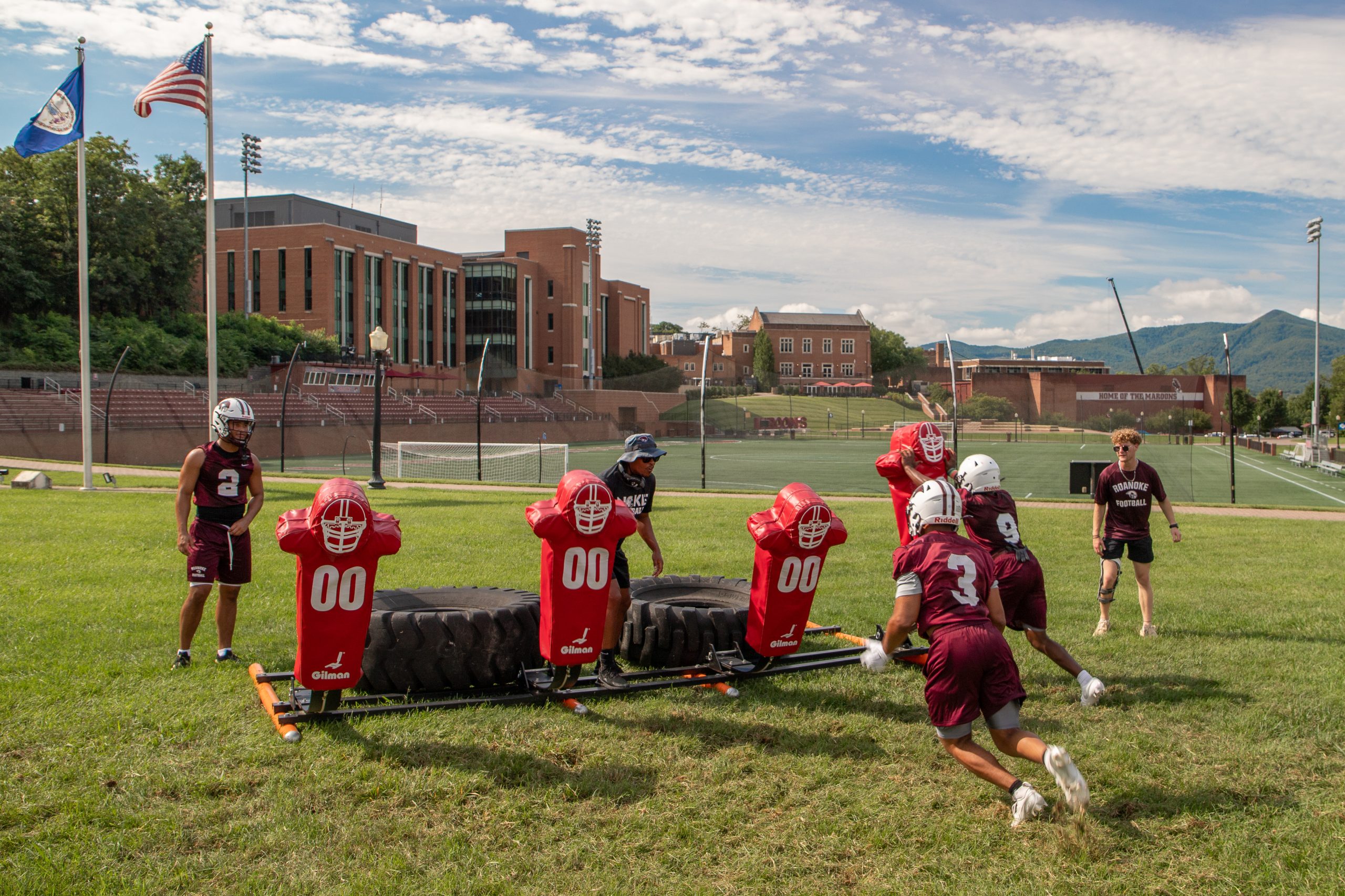
    SALEM, Va. — On a hot and humid August morning in this southwestern Virginia town, football training camp is in full swing at Roanoke College. Players cheer as a receiver makes a leaping one-handed catch, and linemen sweat through blocking drills. Practice hums along like a well-oiled machine — yet this is the first day this team has practiced, ever.

    In fact, it’s the first day of practice for a Roanoke College varsity football team since 1942, when the college dropped football in the midst of World War II. 

    Roanoke is one of about a dozen schools that have added football programs in the last two years, with several more set to do so in 2026. They hope that having a team will increase enrollment, especially of men, whose ranks in college have been falling. Yet research consistently finds that while enrollment may spike initially, adding football does not produce long-term enrollment gains, or if it does, it is only for a few years.

    Roanoke’s president, Frank Shushok Jr., nonetheless believes that bringing back football – and the various spirit-raising activities that go with it — will attract more students, especially men. The small liberal arts college lost nearly 300 students between 2019 and 2022, and things were likely to get worse; the country’s population of 18-year-olds is about to decline and colleges everywhere are competing for students from a smaller pool.  

    “Do I think adding sports strategically is helping the college maintain its enrollment base? It absolutely has for us,” said Shushok.  “And it has in a time when men in particular aren’t going to college.”   

    Women outnumber men by about 60 percent to 40 percent at four-year colleges nationwide. Roanoke is a part of this trend. In 2019, the college had 1,125 women students and 817 men. 

    This fall, Roanoke will have 1,738 students altogether, about half men and half women. But the incoming freshman class is more than 55 percent male. 

    Sophomore linebacker Ethan Mapstone (26) jogs to the sideline at the end of a drill. Mapstone said he hadn’t planned to play college football until Roanoke head coach Bryan Stinespring recruited him. Credit: Miles MacClure for The Hechinger Report

    “The goal was that football would, in a couple of years, bring in at least an additional hundred students to the college,” said Curtis Campbell, Roanoke’s athletic director, as he observed the first day of practice. “We’ve got 97 kids out there on the field. So we’re already at the goal.”

    That number was 91 players as the season began, on Sept. 6 — and the Maroons won their first game, 23-7, over Virginia University of Lynchburg, on what Shushok called “a brilliant day full of community spirit and pride.”

    “Our students were out in force, side by side with community members spanning the generations,” he said via email. “In a time when we all need more to celebrate and opportunities to gather, it is easy to say our first football game since 1942 was both historic and invigorating.”

    Related: Interested in more news about colleges and universities? Subscribe to our free biweekly higher education newsletter.

    In the NCAA’s Division III, where Roanoke teams compete, athletic scholarships are not permitted. Athletes pay tuition or receive financial aid in the same way as other students, so adding football players will add revenue. For a small college, this can be significant. 

    Shushok said it’s not just about enrollment, though: He wants a livelier campus with more school spirit. Along with football, he started a marching band and a competitive cheerleading team. 

    “It plays to something that’s really important to 18- to 22-year-olds right now, which is a sense of belonging and spirit and excitement,” said Shushok, who came to Roanoke after being vice president of student affairs at Virginia Tech. Its Division I football team plays in a 65,000-seat stadium where fans jump up and down in unison to Metallica’s “Enter Sandman” as the players take the field. 

    The Maroons play in the local high school stadium — it seats 7,157 — and pay the city of Salem $2,850 per game in rent. The college raised $1.3 million from alumni and corporate sponsors to get the team up and running. 
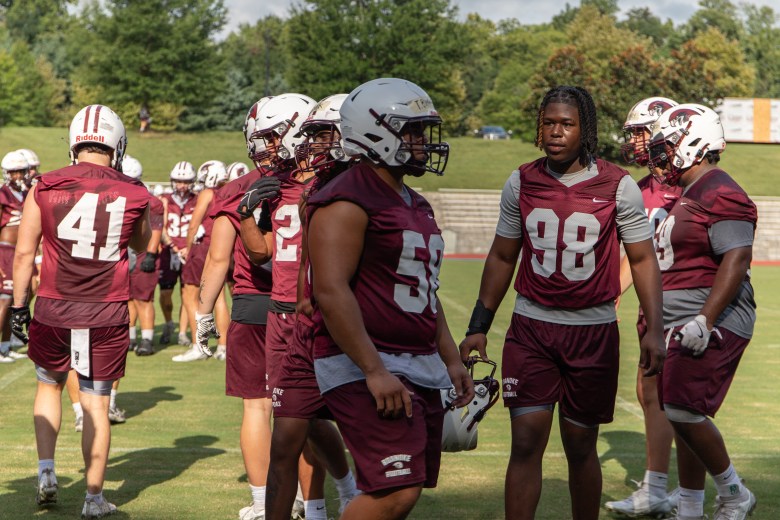
    Roanoke College players gather on the sidelines during practice. Credit: Miles MacClure for The Hechinger Report

    Despite the research showing limited enrollment gains from adding football, colleges keep doing it. About a dozen have added or relaunched football programs in the last two years, including New England College in New Hampshire and the University of Texas Rio Grande Valley. Several more plan to add football in 2026, including Chicago State University and Azusa Pacific University in California. 

    Related: Universities and colleges search for ways to reverse the decline in the ranks of male students

    Calvin University in Michigan recently added football even though the student body was already half men, half women. The school wanted to broaden its overall appeal, Calvin Provost Noah Toly said, citing “school spirit, tradition, leadership development,” as well as the increased enrollment and “strengthened pipelines with feeder schools.”

    A 2024 University of Georgia study examined the effects of adding football on a school’s enrollment.

    “What you see is basically a one-year spike in male enrollment around guys who come to that school to help be part of starting up a team, but then that effect fades out over the next couple of years,” said Welch Suggs, an associate professor there and the lead author of that study. It found early modest enrollment spikes at colleges that added football compared to peers that didn’t and “statistically indistinguishable” differences after the first two years.

     ”What happens is that you have a substitution effect going on,” Suggs said. “There’s a population of students that really want to go to a football school; the football culture and everything with it really attracts some students. And there are others who really do not care one way or the other. And so I think what happens is that you are simply recruiting from different pools.” 

    Today, college leaders value any pool that includes men. Most prefer the campus population to be balanced between the sexes, and, considering the low number of male high school graduates going to college at all (39 percent in the last Pew survey), many worry about too few men being prepared for the future workforce.

    “ I don’t know that we have done a good job of articulating the value, and of programming to the particular needs that some of our young men are bringing in this moment,” Shushok said. “I think it’s pretty obvious, if you read the literature out there, that a lot of men are feeling undervalued and perhaps unseen in our culture.”

    Roanoke College President Frank Shushok Jr. in his office. Shushok said he brought football back to Roanoke to boost enrollment and create a livelier campus. Credit: Miles MacClure for The Hechinger Report

    Shushok said that Roanoke’s enrollment-building strategy was not centered on athletics. The college has also forged partnerships with local community colleges, guaranteeing students admission after they complete their associate degree, and has added nine new majors in 2024, including cannabis studies. Shushok pointed out that while freshman enrollment is down slightly this year, the community college program has produced a big increase in transfer students, from 65 in fall of 2024 to 91 this fall.

    About 55 percent of Roanoke’s students come from Virginia, but 75 of the football team’s 91 players are Virginians. The head coach, Bryan Stinespring, a 61-year-old Virginia native, knows that recruiting territory, having worked on the coaching staffs at several Virginia universities in his career. 

    Related: College Uncovered podcast: The Missing Men

    When Stinespring took over as head coach in 2023, hoping to inspire existing students and potential applicants to join his new team, there was no locker room, no shoulder pads or tackling dummies, no uniforms. 

    “The first set of recruits that came on campus, we ran down to Dick’s, got a football, went to the bookstore, got a sweatshirt,” said Stinespring, referring to a local Dick’s Sporting Goods store. “These kids came on campus and they had to believe in the vision that we had.” 

    Students bought into that vision; 61 of them joined a club team last fall, which played four exhibition games in preparation for this year. The community bought in, too; 9,200 fans showed up to the first club game, about 2,000 of them perched on a grassy hill overlooking the end zone. 
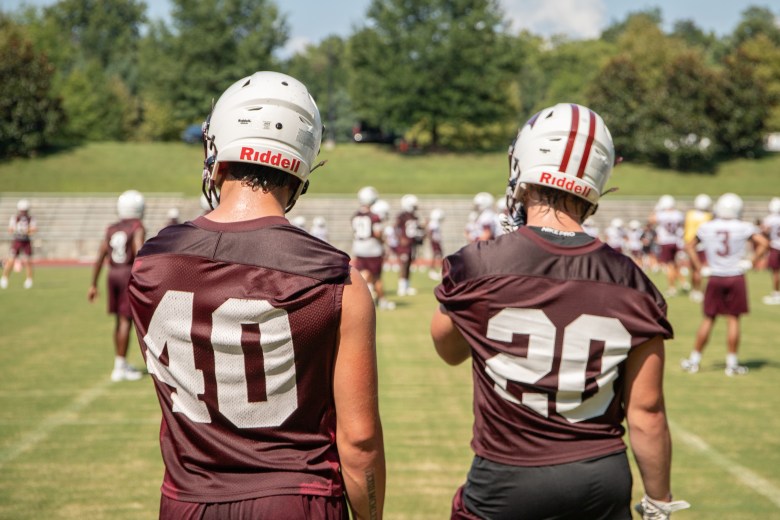
    Linebackers Connor Cox (40) and Austin Fisher (20) look on from the sidelines. Credit: Miles MacClure for The Hechinger Report

    Before Ethan Mapstone, a sophomore, committed to Roanoke, he was on the verge of giving up football, having sustained several injuries in high school. Then Stinespring called. 

    “I could hear by the tone of his voice how serious he meant everything he was saying,” said Mapstone, a 6-foot-1-inch linebacker from Virginia Beach. “I was on a visit a week later, committed two weeks later.”  

    To him, the football leaders at Roanoke seemed to be “a bunch of people on a mission ready to make something happen, and I think that’s what drove me in.” 

    Related: Even as women outpace men in graduating from college their earnings remain stuck 

    KJ Bratton, a junior wide receiver and transfer student from the University of Virginia, said he was drawn to Roanoke not because of football but because of the focus on individual attention in small classes. “You definitely get that one-on-one attention with your teacher, that definitely helps you in the long run,” said Bratton.  

    Jaden Davis, a sophomore wide receiver who was an honor roll student in high school, said, “ The staff, they care about all the students. They’ll pull you aside, they know you personally, they’ll send you emails, invite you to office hours, and they just work with you to do the best you can.” 

    Not everyone was on board with football returning to the college when the plan was first announced. Some faculty and administrators were concerned football would change the campus culture, said Campbell, the athletic director. 
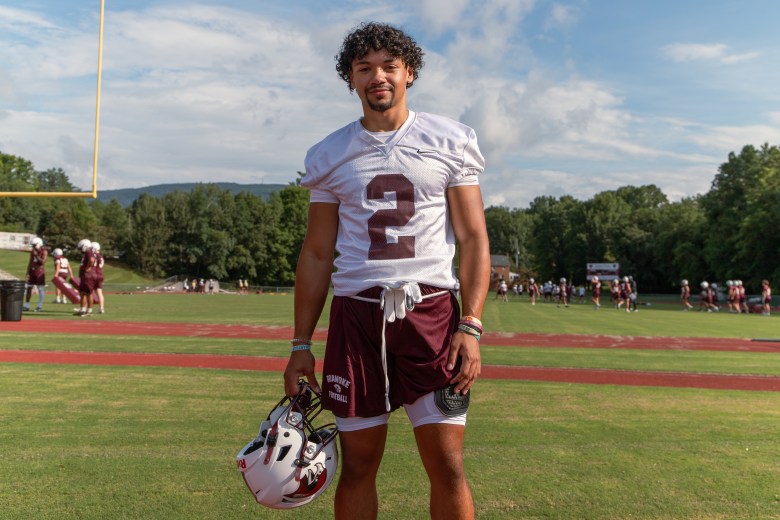
    Sophomore wide receiver Jaden Davis poses for a photograph before the first practice of the season. Davis said the individual attention he could get from professors is what attracted him to Roanoke. Credit: Miles MacClure for The Hechinger Report

    “There were just stereotypes about football players,” he said. “You know, they’re not smart, they’re troublemakers. They’re gonna do this and they’re gonna do that, be disruptive.” 

    But the stereotypes turned out to be unwarranted, he said. When the club team started, he said, “I got so many compliments last year from faculty and staff and campus security about how respectful and polite and nice our students were, how they behaved in the classroom, sitting in the front row and just being role models.”

    Payton Rigney, a junior who helps out with the football team, concurred. “All the professors like them because they say ‘yes, sir’ and ‘no, ma’am,’” she said.

    Like most Division III athletes, the Roanoke players know that they have little chance of making football a professional career. Mapstone said there are other reasons to embrace the sport. 

    “It’s a great blessing to be able to do what we do,” he said. “There’s many people that I speak to who are older and, and they reminisce about the times that they had to play football, and it’s very limited time.

    “And even though there’s not a future for it, I love it. It’s a Thursday, my only problem in the world is that there’s dew on my shoes.”  

    Contact editor Lawrie Mifflin at (212) 678-4078 or [email protected].

    This story about college football was produced by The Hechinger Report, a nonprofit, independent news organization focused on inequality and innovation in education. Sign up for the Hechinger higher education newsletter.

    The Hechinger Report provides in-depth, fact-based, unbiased reporting on education that is free to all readers. But that doesn’t mean it’s free to produce. Our work keeps educators and the public informed about pressing issues at schools and on campuses throughout the country. We tell the whole story, even when the details are inconvenient. Help us keep doing that.

    Join us today.

    Source link

  • A gender gap in STEM widened during the pandemic. Schools are trying to make up lost ground

    A gender gap in STEM widened during the pandemic. Schools are trying to make up lost ground

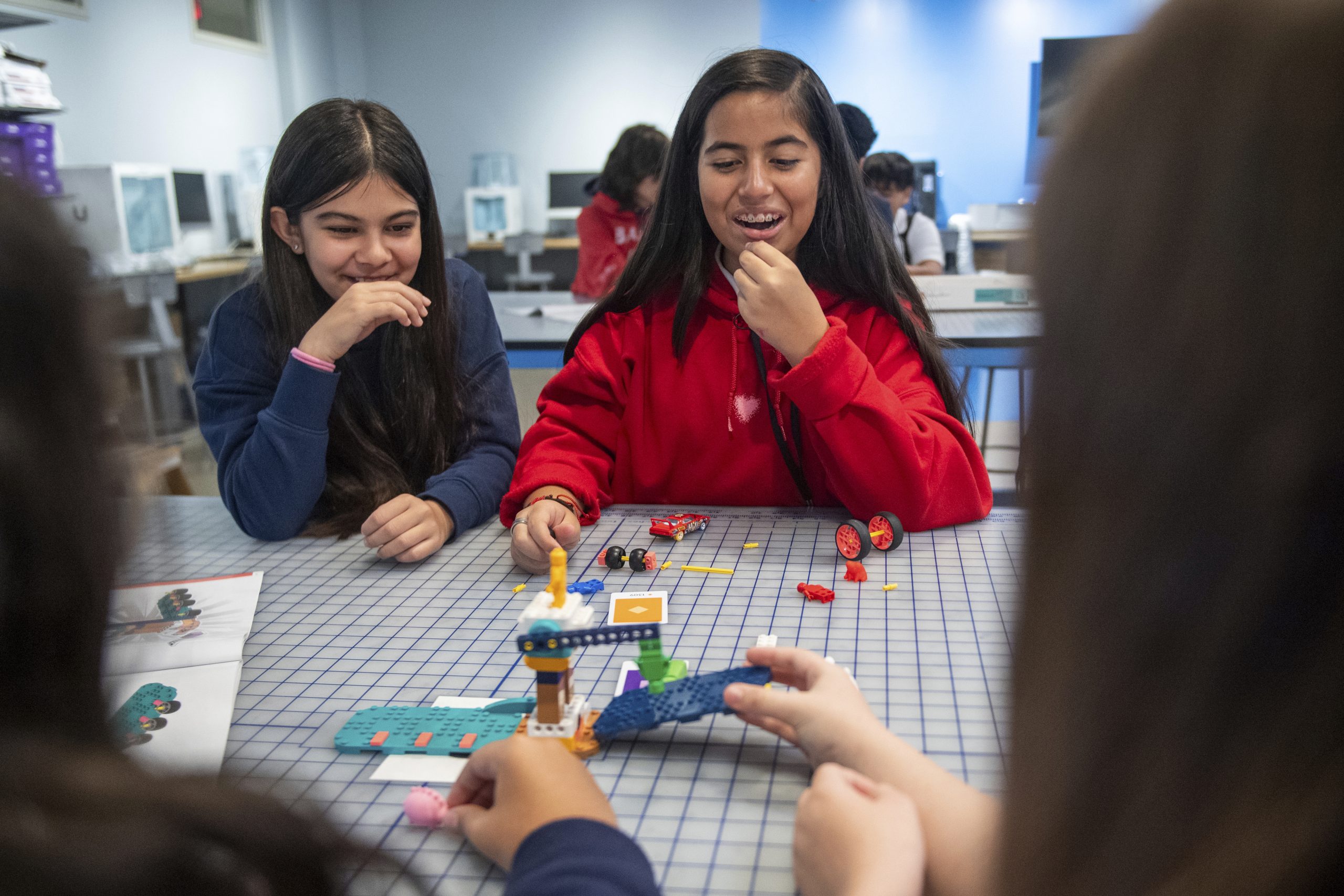
    IRVING, Texas — Crowded around a workshop table, four girls at de Zavala Middle School puzzled over a Lego machine they had built. As they flashed a purple card in front of a light sensor, nothing happened. 

    The teacher at the Dallas-area school had emphasized that in the building process, there are no such thing as mistakes. Only iterations. So the girls dug back into the box of blocks and pulled out an orange card. They held it over the sensor and the machine kicked into motion. 

    “Oh! Oh, it reacts differently to different colors,” said sixth grader Sofia Cruz.

    In de Zavala’s first year as a choice school focused on science, technology, engineering and math, the school recruited a sixth grade class that’s half girls. School leaders are hoping the girls will stick with STEM fields. In de Zavala’s higher grades — whose students joined before it was a STEM school — some elective STEM classes have just one girl enrolled. 

    Efforts to close the gap between boys and girls in STEM classes are picking up after losing steam nationwide during the chaos of the Covid pandemic. Schools have extensive work ahead to make up for the ground girls lost, in both interest and performance.

    In the years leading up to the pandemic, the gender gap nearly closed. But within a few years, girls lost all the ground they had gained in math test scores over the previous decade, according to an Associated Press analysis. While boys’ scores also suffered during Covid, they have recovered faster than girls, widening the gender gap.

    As learning went online, special programs to engage girls lapsed — and schools were slow to restart them. Zoom school also emphasized rote learning, a technique based on repetition that some experts believe may favor boys, instead of teaching students to solve problems in different ways, which may benefit girls. 

    Old practices and biases likely reemerged during the pandemic, said Michelle Stie, a vice president at the National Math and Science Initiative.

    “Let’s just call it what it is,” Stie said. “When society is disrupted, you fall back into bad patterns.”

    Related: A lot goes on in classrooms from kindergarten to high school. Keep up with our free weekly newsletter on K-12 education.

    In most school districts in the 2008-09 school year, boys had higher average math scores on standardized tests than girls, according to AP’s analysis, which looked at scores across 15 years in over 5,000 school districts. It was based on average test scores for third through eighth graders in 33 states, compiled by the Educational Opportunity Project at Stanford University. 

    A decade later, girls had not only caught up, they were ahead: Slightly more than half of districts had higher math averages for girls.

    Within a few years of the pandemic, the parity disappeared. In 2023-24, boys on average outscored girls in math in nearly 9 out of 10 districts.

    A separate study by NWEA, an education research company, found gaps between boys and girls in science and math on national assessments went from being practically non-existent in 2019 to favoring boys around 2022.

    Studies have indicated girls reported higher levels of anxiety and depression during the pandemic, plus more caretaking burdens than boys, but the dip in academic performance did not appear outside STEM. Girls outperformed boys in reading in nearly every district nationwide before the pandemic and continued to do so afterward.

    “It wasn’t something like Covid happened and girls just fell apart,” said Megan Kuhfeld, one of the authors of the NWEA study. 

    Related: These districts are bucking the national math slump 

    In the years leading up to the pandemic, teaching practices shifted to deemphasize speed, competition and rote memorization. Through new curriculum standards, schools moved toward research-backed methods that emphasized how to think flexibly to solve problems and how to tackle numeric problems conceptually.

    Educators also promoted participation in STEM subjects and programs that boosted girls’ confidence, including extracurriculars that emphasized hands-on learning and connected abstract concepts to real-life applications. 

    When STEM courses had large male enrollment, Superintendent Kenny Rodrequez noticed girls losing interest as boys dominated classroom discussions at his schools in Grandview C-4 District outside Kansas City. Girls were significantly more engaged after the district moved some of its introductory hands-on STEM curriculum to the lower grade levels and balanced classes by gender, he said.

    When schools closed for the pandemic, the district had to focus on making remote learning work. When in-person classes resumed, some of the teachers had left, and new ones had to be trained in the curriculum, Rodrequez said. 

    “Whenever there’s crisis, we go back to what we knew,” Rodrequez said. 

    Related: One state tried algebra for all eighth graders. It hasn’t gone well

    Despite shifts in societal perceptions, a bias against girls persists in science and math subjects, according to teachers, administrators and advocates. It becomes a message girls can internalize about their own abilities, they say, even at a very young age. 

    In his third grade classroom in Washington, D.C., teacher Raphael Bonhomme starts the year with an exercise where students break down what makes up their identity. Rarely do the girls describe themselves as good at math. Already, some say they are “not a math person.” 

    “I’m like, you’re 8 years old,” he said. “What are you talking about, ‘I’m not a math person?’” 

    Girls also may have been more sensitive to changes in instructional methods spurred by the pandemic, said Janine Remillard, a math education professor at the University of Pennsylvania. Research has found girls tend to prefer learning things that are connected to real-life examples, while boys generally do better in a competitive environment. 

    “What teachers told me during Covid is the first thing to go were all of these sense-making processes,” she said. 

    Related: OPINION: Everyone can be a math person but first we have to make math instruction more inclusive 

    At de Zavala Middle School in Irving, the STEM program is part of a push that aims to build curiosity, resilience and problem-solving across subjects.

    Coming out of the pandemic, Irving schools had to make a renewed investment in training for teachers, said Erin O’Connor, a STEM and innovation specialist there.

    The district last year also piloted a new science curriculum from Lego Education. The lesson involving the machine at de Zavala, for example, had students learn about kinetic energy. Fifth graders learned about genetics by building dinosaurs and their offspring with Lego blocks, identifying shared traits. 

    “It is just rebuilding the culture of, we want to build critical thinkers and problem solvers,” O’Connor said.

    Teacher Tenisha Willis recently led second graders at Irving’s Townley Elementary School through building a machine that would push blocks into a container. She knelt next to three girls who were struggling.

    They tried to add a plank to the wheeled body of the machine, but the blocks didn’t move enough. One girl grew frustrated, but Willis was patient. She asked what else they could try, whether they could flip some parts around. The girls ran the machine again. This time, it worked.

    “Sometimes we can’t give up,” Willis said. “Sometimes we already have a solution. We just have to adjust it a little bit.” 

    Lurye reported from Philadelphia. Todd Feathers contributed reporting from New York. 

    The Associated Press’ education coverage receives financial support from multiple private foundations. AP is solely responsible for all content. Find AP’s standards for working with philanthropies, a list of supporters and funded coverage areas at AP.org.

    The Hechinger Report provides in-depth, fact-based, unbiased reporting on education that is free to all readers. But that doesn’t mean it’s free to produce. Our work keeps educators and the public informed about pressing issues at schools and on campuses throughout the country. We tell the whole story, even when the details are inconvenient. Help us keep doing that.

    Join us today.

    Source link

  • Effect of Institutional Autonomy on Academic Freedom in Higher Education Institutions in Ghana

    Effect of Institutional Autonomy on Academic Freedom in Higher Education Institutions in Ghana

    By Mohammed Bashiru and Professor Cai Yonghong

    Introduction

    The idea of institutional autonomy in higher education institutions (HEIs) naturally comes up when discussing academic freedom. These two ideas are connected, and the simplest way to define how they relate to one another is that they are intertwined through several procedures and agreements that link people, institutions, the state, and civil society. Academic freedom and institutional autonomy cannot be compared, but they also cannot be separated and the loss of one diminishes the other. Protecting academic freedom and institutional autonomy is viewed by academics as a crucial requirement for a successful HEI. For instance, institutional autonomy and academic freedom are widely acknowledged as essential for the optimization of university operations in most African nations.

    How does institutional autonomy influence academic freedom in higher education institutions in Ghana?

    In some countries, universities have been subject to government control, with appointments and administrative positions influenced by political interests, leading to violations of academic autonomy and freedom. Autonomy is a crucial element in safeguarding academic freedom, which requires universities to uphold the academic freedom of their community and for the state to respect the right to science of the broader community. Universities offer the necessary space for the exercise of academic freedom, and thus, institutional autonomy is necessary for its preservation. The violation of institutional autonomy undermines not only academic freedom but also the pillars of self-governance, tenure, and individual rights and freedoms of academics and students. Universities should be self-governed by an academic community to uphold academic freedom, which allows for unrestricted advancement of scientific knowledge through critical thinking, without external limitations.

    How does corporate governance affect the relationship between institutional autonomy and academic freedom?

    Corporate governance mechanisms, such as board diversity, board independence, transparency, and accountability, can ensure that the interests of various stakeholders, including students, faculty, and the government, are represented and balanced. The incorporation of corporate governance into academia introduces a set of values and priorities that can restrict the traditional autonomy and academic freedom that define a self-governing profession. This growing tension has led to concerns about the erosion of academia’s self-governance, with calls for policies that safeguard academic independence and uphold the values of intellectual freedom and collaboration that are foundational to higher education institutions. Nonetheless, promoting efficient corporate governance, higher education institutions can help safeguard academic freedom and institutional autonomy, despite external pressures.

    Is there a significant difference between the perceptions of males and females regarding institutional autonomy, academic freedom, and their relationship?

    The appointment process for university staff varies across countries, but it is essential that non-academic factors such as gender, ethnicity, or interests do not influence the selection of qualified individuals who are necessary for the institution’s quality. Unfortunately, studies indicate that women are often underrepresented in leadership positions and decision-making processes related to academic freedom and institutional autonomy. This underrepresentation can perpetuate biases and lead to a lack of diversity in decision-making. One solution to address these disparities is to examine gender as a factor of difference to identify areas for improvement and promote gender equality in decision-making processes. By promoting diversity and inclusivity, academic institutions can create a more equitable environment that protects institutional autonomy and promotes academic freedom for everyone, regardless of their gender.

    Methodology and Conceptual framework

    The quantitative and predictive nature of the investigation necessitated the use of an explanatory research design. Because it enabled the us to establish a clear causal relationship between the exogenous and endogenous latent variables, the explanatory study design was chosen. The simple random sample technique was utilised to collect data from an online survey administered to 128 academicians from chosen Ghanaian universities.

    The conceptual framework, explaining the interrelationships among the constructs in the context of the study is presented. The formulation of the conceptual model was influenced by the nature of proposed research questions backed by the supporting theories purported in the context of the study.

    Conclusions and Implications

    Institutional autonomy significantly predicts academic freedom at a strong level within higher education institutions in Ghana. Corporate governance can restrict academic freedom when its directed to yield immediate financial or marketable benefits but in this study it plays a key role in transmitting the effect of institutional autonomy. Additionally, there is a significant difference in perception between females and males concerning the institutional autonomy – academic freedom predictive relationship. Practically, higher education institutions, particularly in Ghana, should strive to maintain a level of autonomy while also ensuring that academic freedom is respected and protected. This can be achieved through decentralized governance structures that allow for greater participation of academics in decision-making processes. Institutions should actively engage stakeholders, including academics, in discussions and decisions related to institutional autonomy and academic freedom. This will ensure that diverse perspectives are considered in policy development.

    This blog is based on an article published in Policy Reviews in Higher Education (online 02 January 2025) https://www.tandfonline.com/doi/full/10.1080/23322969.2024.2444609

    Bashiru Mohammed is a final year PhD student at the faculty of Education, Beijing Normal University. He also holds Masters in Higher education and students’ affairs from the same university. His research interest includes School management and administration, TVET education and skills development.

    Professor Cai Yonghong is a professor at Faculty of Education, Beijing Normal University. She has published many articles and presided over several domestic and international educational projects and written several government consultant reports. Her research interest includes teacher innovation, teacher expertise, teacher’s salary, and school management.

    References

    AAU, (2001). ‘Declaration on the African University in the Third Millennium’.

    Akpan, K. P., & Amadi, G. (2017). University autonomy and academic freedom in Nigeria: A theoretical overview. International Journal of Academic Research and Development,

    Altbach, P. G. (2001). Academic freedom: International realities and challenges. Higher Education,

    Aslam, S., & Joshith, V. (2019). Higher Education Commission of India Act 2018: A Critical Analysis of the Policy in the Context of Institutional Autonomy.

    Becker, J. M., Cheah, J. H., Gholamzade, R., Ringle, C. M., & Sarstedt, M. (2023). PLS-SEM’s most wanted guidance.

    Hair, J., Hollingsworth, C. L., Randolph, A. B., & Chong, A. Y. L. (2017). An updated and expanded
    assessment of PLS-SEM in information systems research. Industrial management & data
    systems,

    Lippa, R. A. (2005). Gender, nature, and nurture. Routledge.

    Lock, I., & Seele, P. (2016). CSR governance and departmental organization: A typology of best practices. Corporate Governance: The International Journal of Business in Society.

    Neave, G. (2005). The supermarketed university: Reform, vision and ambiguity in British higher education. Perspectives:.

    Nicol, D. (1972) Academic Freedom and Social Responsibility: The Tasks of Universities in a Changing World, Stephen Kertesz (Ed), Notre Dame, University of Notre Dame Press.

    Nokkala, T., & Bacevic, J. (2014). University autonomy, agenda setting and the construction of agency: The case of the European university association in the European higher education area..

    Olsen, J. P. (2007). The institutional dynamics of the European university Springer Netherlands.

    Tricker, R. I. (2015). Corporate governance: Principles, policies, and practices. Oxford University Press, USA.

    Zikmund, W.G., Babin, B.J., Carr, J.C. & Griffin, M. (2012). Business Research Methods. Boston: Cengage Learning.

    Zulu, C (2016) ‘Gender equity and equality in higher education leadership: What’s social justice and substantive equality got to do with it?’ A paper presented at the inaugural lecture, North West University, South Africa

    Author: SRHE News Blog

    An international learned society, concerned with supporting research and researchers into Higher Education

    Source link

  • Invisible labour: visible activism | SRHE Blog

    Invisible labour: visible activism | SRHE Blog

    by Sarah Montano, Inci Toral and Sarah Percy

    Behind many academic success stories lies an untold narrative of invisible labour – a hidden force driving progress but often overlooked or undervalued. From providing emotional support to sitting on committees, the silent effort sustains institutions yet leaves many working tirelessly in the background on non-promotable tasks. Only when invisible labour is met with visible activism, can change begin.

    As a group of academics over the years we became conscious of a phenomenon that affected not only ourselves but many of our colleagues. We particularly noticed that women* were increasingly being asked to take on emotional labour and tasks that, when it came to promotions were classified as “Non-Promotable Tasks” yet were essential to institutional practices. We concluded that this form of emotional labour was a form of wife work, work that is essential to the running of the home (aka Higher Education Institutions (HEIs)) yet often undervalued and the person carries the mental load. We use the term wife work due to the pejorative nature of wife work in the media and the value placed on such work in wider society. Using a feminist collaborative autoethnographic approach we explored invisible and emotional labour among female academics. Therefore, at the 2024 SRHE conference we delivered our paper on ‘Invisible Labour: Visible Activism’ and argued that it is only such activism that will help to end the inequities in HEIs.

    *we acknowledge that invisible and emotional labour can affect any academic of any gender, particularly those on education/ teaching focussed contracts.

    Shining a light on invisible labour

    Despite the increase in women’s participation in the workforce and in academia, there is still a significant gender pay gap and to compound the issue, this gap widened in 2021 and 2022 in 20/33 OECD countries. As noted by Stephenson (2023), in HE only 28% of professors are female despite women making up 43% of the academic workforce leading to a pay gap of 11.9%. We acknowledge that the reason for such pay gaps and gender biases are complex and multi-factorial (Westoby 2021), thus we focus specifically on the issue of the “gender unequal distribution” of academic labour (Järvinen and Mik-Mayer 2024:1).

    There is much discussion on the mental load outside the workplace; therefore, our focus is on the unpaid or unrewarded workload inside the workplace. As universities have new developed pathways to promotion (e.g. education or impact), citizenship has become less important, yet it is critical work that still needs to be done. However, the result of shifting paths to tenure/promotion means that women are carrying out “Non-Promotable Tasks” (Babcock et al, 2022: 15), which are institutionally important yet will not help career success.

    Wife work defined

    Wife work tasks include: writing references for students; mentoring; assisting students with emotional problems or recruitment; careers advice; taking on someone’s admin work whilst they gain awards; and committee work, effectively comprising what is known as service work. Importantly, a significant component of wife work is emotional labour. Emotional labour involves managing emotions and interactions in the academic setting without formal recognition or workload compensation. These emotional labour tasks may include student emotional support, listening, supporting colleagues, helping people or just always being nice. Such wife work occurs due to societal and institutional expectations that prompt women to take on such wife work, yet this labour whilst maintaining the organisation’s reputation and can lead to emotional dissonance and burnout (Grandey, 2013).

    Making the invisible visible

    Drawing on institutional theory​, feminist theory and theory of gendered organizations we explore how universities, embedded in social norms and values, perpetuate traditional gender roles and expectations. Our research specifically focuses on the “Non-Promotable Tasks,” which are essential for institutional functioning but do not contribute to career success and are undervalued and unrecognised. We highlight patterns about gender distinctions that lead to advantages or exploitations of academics and how these create differing identities and expectations within academia.​

    How we uncovered the invisible

    Our research has two stages. In the first stage, we used a feminist collaborative autoethnographic approach to explore invisible and emotional labour among female academics (Rutter et al, 2021)​. This method allowed for an in-depth examination of personal and shared experiences within our academic community (Akehurst and Scott, 2021)​. As the research subjects, we are comprised of female academics from the same department across international campuses, reflecting on our experiences with non-promotable tasks, emotional dissonance, mental load, and burnout (Grandey, 2013; Lapadat, 2017; Babcock et al, 2022)​. We go beyond individual experiences to co-construct the meaning of invisible and emotional labour collectively​.

    Findings that shape our understanding of invisible labour

    We identified the following categories of “wife-work”:​

    • Mentoring support (outside normal expectations or workload) ​
    • Administrative and Logistical Tasks/ Roles​
    • Recruitment and Outreach ​
    • Committee Work
    • Supporting Career Development
    • Academic and Professional Development​
    • Volunteering and Institutional Presence​
    • Helping people​
    • Taking on someone else’s role while they work on “important stuff”​
    • Listening​
    • Being kind ​

    Using the institutional framework, in which the institutional norms shape the undervaluation of service work (Palthe, 2014), we argue that the regulative, normative, and cognitive-cultural elements of institutional theory contribute to the gendered division of labour.  Through the application of these key dimensions, our findings can be categorised under three dimensions:

    1. Institutional Dimension, underpinned by the explicit rules, laws, and regulations that constrain and guide behaviour such as academic quality assurance and behavioural expectations within HEIs.

    2. Social Dimension, encompassing implicit values, norms, and expectations that define acceptable behaviour within a society or organization such as social expectations around punctuality, dress codes, and academic etiquettes in HEIs.

    3. Individual Dimension, which involves implicit but shared beliefs and mental models shaping how individuals perceive and interpret their environments. These are often taken for granted and operate at a subconscious level.

    Using this framework our findings are categorised accordingly to these elements outlined in Figure 1 below.  

    Figure 1:  Invisible Labour: Visible Activism Findings. Source: Developed by the authors

    It’s time for change

    We recognise that the critical issue is, as Domingo et al (2022) highlighted, the significance of recognising and valuing women’s work within institutions, and stress that the real issue lies within organisational practices rather than women themselves. Addressing emotional labour is vital for a supportive and equitable work environment. The burden of responsibility is deeply embedded into the societal norms and often acts as a catalyser for such responses by female academics (Andersen et al, 2022). ​As organisations shift their focus towards formal progress procedures that undervalue volunteerism and emotional labour (Albia and Cheng, 2023), there is a pressing need for activism to ensure equitable recognition and valuation of women’s contributions within academia.

    A path forward – from silence to solidarity

    Invisible labour has long been an unseen and unrecognised necessity in academia, but we argue that it need not, and should not be this way. Acknowledging and recognising the existence and value of invisible and emotional labour will ensure these ‘non-promotable’ tasks become more visible.  Therefore, there is a pressing need for activism to ensure equitable recognition and valuation of women’s contributions within academia. We emphasise the necessity of addressing these systemic issues to foster a more inclusive and supportive academic environment for all individuals involved. Change starts with awareness, so we hope this is a step in the right direction.

    Professor Sarah Montano is a Professor of Retail Marketing at Birmingham Business School. She was awarded a National Teaching Fellowship in 2023. Her research interests are primarily authentic assessments, digital education and retail as a place of community. She is an engaging and skilled communicator and regularly appears in the media on the subject of retail industry change.

    Dr Inci Toral is an Associate Professor at the University of Birmingham, Business School and she is the Business Education Research and Scholarship (BERS) Convenor at Birmingham Business School. Her work revolves around digital marketing, retailing, creativity and innovation in retail education and authentic assessments. 

    Dr Sarah Percy is an Assistant Professor in Marketing at Birmingham Business School, University of Birmingham, with a special interest in authentic assessments.

    Author: SRHE News Blog

    An international learned society, concerned with supporting research and researchers into Higher Education

    Source link

  • Collaboration is key when it comes to addressing harassment and sexual misconduct

    Collaboration is key when it comes to addressing harassment and sexual misconduct

    In all of the noise about the OfS’s new regulation on harassment and sexual misconduct there’s one area where the silence is notable and disappointing – sector collaboration.

    Back in 2022, the independent evaluation of the OfS statement of expectations on harassment and sexual misconduct made a clear recommendation that OfS and DfE “foster more effective partnership working both between HE providers and with those external to the sector. Now, having published details of the new condition E6 and the accompanying guidance, this seems to have been largely forgotten.

    There’s a nod to the potential benefit of collaboration in OfS’s analysis of consultation responses, but it only goes as far as to say that providers “may wish to identify collective steps” – with little explanation of what this could look like and no intention or commitment to proactively support this.

    This feels like a significant oversight, and one that is disappointing to say the least. It’s become clear from our work with IHE members that collaboration needs to be front and centre if we have any hope as a sector of delivering in this area. Without it, some providers – especially smaller ones – will not be able to meet the new requirements, creating risk and failing to achieve the consistency of practice and experience that students expect. This feels even more true given the current context of widespread financial insecurity. Any new regulation ought to be presenting mechanisms and incentives to collaborate – and reduce costs in doing so.

    Working together for a stronger sector – or only sometimes?

    The silence around collaboration is also surprising, given that in other spheres it is seen to be – and in many cases is – the solution to institutions meeting regulatory requirements and student expectations. John Blake’s latest speech on a regional approach to access and participation is just one example of this. There is implicit recognition that in this era of “diminishing resources”, working together is the solution. There’s also the recognition that partnership working needs funding – more on that later.

    It’s also surprising given that OfS has made clear that both providers in any academic partnership are responsible for compliance with the new condition, including where there’s a franchise arrangement. This seems like an open door for collaborative approaches, given that over half the providers on the register do not have their own degree awarding powers. However, as usual, it is unclear what this means in practice. There is no reference in the regulation to how the OfS would view any collaborative efforts, or examples of what this might look like in practice.

    Academic partnerships make logical collaborators

    IHE’s recent project on academic partnerships demonstrates the potential of such arrangements for collaboration that benefits both providers and their students. Our research found a number of innovative models where awarding institutions facilitated collaboration with and between their academic partners in areas including shared learning opportunities and use of shared platforms.

    There’s a clear opportunity here when it comes to staff training. All institutions need to have staff who are “appropriately trained”. Training in areas such as receiving disclosures and conducting investigations benefits from group delivery – where staff can learn from each other. A small provider might only have one or two staff who require it, meaning they are unlikely to draw much benefit from this. It would also make such training prohibitively expensive. It’s likely to need to be delivered by an external organisation (to ensure the “credible and demonstrable expertise” required) and such solutions aren’t scaled to an institution with just a handful of relevant staff. Awarding institutions sharing such group training would solve this – and also benefit shared processes in that staff across both institutions have the same level of knowledge and competence.

    A further benefit of shared training would be that partners could share staff when investigations need greater independence than a small provider can offer. This could be staff from the awarding partner, or another academic partner. This would effectively bring together useful knowledge of institutional context, policies and processes with the necessary external objectivity to run a credible investigation.

    Another opportunity for collaboration is in shared online reporting tools. These can be an effective way of encouraging disclosure, but such systems are often not scaled for small institutions. As well as being more cost-effective, sharing these could lead to greater confidence of students reporting in the independence of tool and the process that follows.

    Think local – for everyone’s sake!

    Regional or local collaboration is the other area with the potential to benefit students, providers, and other services supporting those who experience harassment or sexual misconduct.

    Local or regional collaboration on reporting and investigation can support disclosure by creating more independence in the system. The independent evaluation spoke specifically of this, recommending the facilitation of

    formal or informal shared services, such as regional support networks, and in particular regional investigation units or hubs.

    And it would enable more effective partnerships with external support services. Rather than every provider trying to establish a partnership with a local service (putting a greater burden on groups who are often charities or not-for-profits), group collaborations could streamline this. This needs to include all types of provider, including small providers and FE colleges delivering HE. This would be more efficient, reduce unhelpful competition for the limited resource of the service, and ensure that all students have access to these support services irrespective of their place of study.

    Where there aren’t local services, providers could pool resource and expertise to develop and deliver these. This would reduce competition for specialist staff in the same geographic location, and again ensure parity of support for students across providers.

    It’s important that such collaborations involve all parts of the sector, including small providers – with the burden of their participation reflective of their smaller size. This is vital to ensure that collaborative models are cost effective for everyone.

    Getting it right on student engagement

    Collaborative approaches are also going to be critical to make sure we get it right on student engagement. The OfS expectation is clear that providers work with students and their representatives to develop policies and procedures. But what happens when an institution doesn’t have an SU, or a formal representative structure, or the necessary experience in student engagement to do this? There’s a risk that it won’t be done properly or be done at all.

    We need to consider how we facilitate students to support each other to engage in co-production. This could include sharing staff or exploring the development of local student union services that bring in smaller providers or FE colleges without the means to partner with students in the way that is needed.

    Making it happen

    The sort of collaboration outlined above will need more than just the goodwill of institutions to make it happen. It needs regulatory backing, with more explicit recognition of the value of these approaches and guidance on what this might look like in practice. We also need to recognise that it’s costly.

    Catalyst funding, like that provided back in 2019, would represent far better value to the sector than asking individual providers to fund collaboration. The risk is that without it, the burden of developing a system that works for all students at all providers will be left to the smallest institutions who need these collaborative options the most. Funding would also boost evaluation and resource sharing across the sector. It could consider the benefits of collaborative approaches between awarding and teaching institutions as well as regional structures which ensure a greater parity of support across providers large and small.

    Somewhere on this path to regulation we lost the perspective that harassment and sexual misconduct is a societal issue. What we do now to educate, prevent harm to and support students will have a lasting impact on the future as students become employees, employers, parents and educators themselves. It is not a task to be shouldered alone.

    Source link