Category: higher education

  • Second-generation student borrowers | SRHE Blog

    Second-generation student borrowers | SRHE Blog

    by Ariane de Gayardon

    Since the 1980s, massification, policy shifts, and changing ideas about who benefits from higher education have led to the expansion of national student loan schemes globally. For instance, student loans were introduced in England in 1990 and generalized in 1998. Australia introduced income-contingent student loans in the late 1980s. While federal student loans were introduced in the US in 1958, their number and the amount of individual student loan debt ramped up in the 1990s.

    A lot of academic research has analysed this trend, evaluating the effect of student loans on access, retention, success, the student experience, and even graduate outcomes. Yet, this research is based on the choices and experiences of first-generation student borrowers and might not apply to current and future students.

    First-generation borrowers enter higher education with parents who have either not been to higher education, or who have a tertiary degree that pre-dates the expansion of student loans. The parents of first-generation borrowers therefore did not take up loans to pay for their higher education and had no associated repayment burden in adulthood. Any cost associated with these parents’ studies will likely have been shouldered by their families or through grants.

    Second-generation borrowers are the offspring of first-generation borrowers. Their parents took out student loans to pay for their own higher education. The choices made by second-generation borrowers when it comes to higher education and its funding could significantly differ from first-generation borrowers, because they are impacted by their parents’ own experience with student loans.

    Parents and parental experience indeed play an important role in children’s higher education choices and financial decisions. On the one hand, parents can provide financial or in-kind support for higher education. This is most evident in the design of student funding policies which often integrate parental income and financial contributions. In many countries, eligibility for financial aid is means-tested and based on family income (Williams & Usher, 2022). Examples include the US where an Expected Family Contribution is calculated upon assessment of financial need, or Germany where the financial aid system is based on a legal obligation for parents to contribute to their children’s study costs. Indeed, evidence shows that parents do contribute to students’ income. In Europe, family contributions make up nearly half of students’ income (Hauschildt et al, 2018). But the role of parents also extends to decisions about student loans: parents tend to try and shield their children from student debt, helping them financially when possible or encouraging cost-saving behaviour (West et al, 2015).

    On the other hand, parents transmit financial values to their children, which might play a role in their higher education decisions. Family financial socialization theory states that children learn their financial attitudes and behaviour from their parents, through direct teaching and via family interactions and relationships (Gudmunson & Danes, 2011). Studies indeed show the intergenerational transmission of social norms and economic preferences (Maccoby, 1992), including attitudes towards general debt (Almenberg et al, 2021). Continuity of financial values over generations has been observed in the specific case of higher education. Parents who received parental financial support for their own studies are more likely to contribute toward their children’s studies (Steelman & Powell, 1991). For some students, negative parental experiences with general debt can lead to extreme student debt aversion (Zerquera et al,2016).

    As countries globally rely increasingly on student loans to fund higher education, many more students will become second-generation borrowers. Because their parents had to repay their own student debt, the family’s financial assets may be depleted, potentially leading to reduced levels of parental financial support for higher education. This is likely to be even worse for students whose parents are still repaying their loans. In addition, parental experiences of student debt could influence the advice they give their children with regard to higher education financial decisions. As a result, this new generation of student borrowers will face challenges that their predecessors did not, fuelled by the transmitted experience of student loans from their parents (Figure 1).

    Figure 1 – Parental influence on second-generation borrowers

    As the share of second-generation borrowers in the student body increases, the need to understand the decision-making process of these students when it comes to (financial) higher education choices is essential. Although the challenges faced by borrowers will emerge at different times and with varying intensity across countries — depending in part on loan repayment formats — we have an opportunity now to be ahead of the curve. By researching this new generation of student borrowers and their parents, we can better assess their financial dilemmas and the support they need, providing further evidence to design future-proof equitable student funding policies.

    Ariane de Gayardon is Assistant Professor of Higher Education at the Center for Higher Education Policy Studies (CHEPS) based at the University of Twente in the Netherlands.


    Author: SRHE News Blog

    An international learned society, concerned with supporting research and researchers into Higher Education

    Source link

  • Small College America Podcast Returns for a New Season – Edu Alliance Journal

    Small College America Podcast Returns for a New Season – Edu Alliance Journal

    Dean Hoke and Kent Barnds Relaunch Acclaimed Series to Explore the Future of Small Colleges

    Bloomington, Indiana – February 3, 2025 – Small College America, the podcast dedicated to exploring the strengths, challenges, and future of small colleges, is officially relaunching with a new season. The series is co-hosted by Dean Hoke, Managing Partner of Edu Alliance Group and former President/CEO of the American Association of University Administrators, and Kent Barnds, Executive Vice President for Strategy and Innovation at Augustana College in Rock Island, Illinois.

    Both Hoke and Barnds are passionate advocates for small colleges, having graduated from Urbana University (OH) and Gettysburg College (PA), respectively. Their personal experiences and professional expertise have shaped their commitment to highlighting the vital role these institutions play in American higher education.

    “The landscape for small colleges is shifting rapidly, and we believe now is the time to amplify the conversation about their future,” said Kent Barnds. ” Dean and I are both passionate advocates for these institutions because we’ve experienced firsthand the impact of a small college education.”  Dean Hoke stated, “The first season of Small College America confirmed that there is a deep need for dialogue about the opportunities and challenges facing these schools. With this new season, we aim to engage with higher education leaders to explore innovative strategies that will help small colleges not just survive but thrive in an evolving higher education environment.”

    The original four-part series first aired on January 10, 2023, and was hosted by Dean Hoke and Tom Davisson, who now serves as Charter Commissioner for the National Association for Academic Excellence (NAAE). The inaugural season featured insightful conversations with small college presidents, including:

    • Dr. Barry Ryan, Former President of Woodbury University (Burbank, California)
    • Stefanie Niles, President of Cottey College (Nevada, Missouri)
    • Ryan Smith, President of the University of Rio Grande and Rio Grande Community College (Rio Grande, Ohio)
    • Janelle Vanasse, President of Alaska Pacific University (Anchorage, Alaska)

    The new season of Small College America will continue its mission of bringing critical discussions to the forefront by interviewing higher education leaders, policy experts, and innovators. The podcast will delve into the evolving role of small colleges, their economic impact, innovative strategies for sustainability, and how they can continue to provide a highly personalized educational experience.

    Season Two will begin weekly on March 11th at 11AM Eastern. More details, including upcoming, will be announced soon.

    For updates, visit [Podcast Website] or follow Small College America on [Social Media Links].

    About the Hosts

    Kent Barnds is the Executive Vice President for Strategy and Innovation at Augustana College, where he has been a senior administrator since 2005. A recognized thought leader in enrollment management and institutional strategy, Barnds is deeply invested in the success of small colleges and the students they serve.

    Dean Hoke is Managing Partner of Edu Alliance Group, a higher education consultancy, and formerly served as President/CEO of the American Association of University Administrators (AAUA). With decades of experience in higher education leadership, consulting, and institutional strategy, he brings a wealth of knowledge on small colleges’ challenges and opportunities.

    ### END ###

    Source link

  • Becoming a professional services researcher in HE – making the train tracks converge

    Becoming a professional services researcher in HE – making the train tracks converge

    by Charlotte Verney

    This blog builds on my presentation at the BERA ECR Conference 2024: at crossroads of becoming. It represents my personal reflections of working in UK higher education (HE) professional services roles and simultaneously gaining research experience through a Masters and Professional Doctorate in Education (EdD).

    Professional service roles within UK HE include recognised professionals from other industries (eg human resources, finance, IT) and HE-specific roles such as academic quality, research support and student administration. Unlike academic staff, professional services staff are not typically required, or expected, to undertake research, yet many do. My own experience spans roles within six universities over 18 years delivering administration and policy that supports learning, teaching and students.

    Traversing two tracks

    In 2016, at an SRHE Newer Researchers event, I was asked to identify a metaphor to reflect my experience as a practitioner researcher. I chose this image of two train tracks as I have often felt that I have been on two development tracks simultaneously –  one building professional experience and expertise, the other developing research skills and experience. These tracks ran in parallel, but never at the same pace, occasionally meeting on a shared project or assignment, and then continuing on their separate routes. I use this metaphor to share my experiences, and three phases, of becoming a professional services researcher.

    Becoming research-informed: accelerating and expanding my professional track

    The first phase was filled with opportunities; on my professional track I gained a breadth of experience, a toolkit of management and leadership skills, a portfolio of successful projects and built a strong network through professional associations (eg AHEP). After three years, I started my research track with a masters in international higher education. Studying felt separate to my day job in academic quality and policy, but the assignments gave me opportunities to bring the tracks together, using research and theory to inform my practice – for example, exploring theoretical literature underpinning approaches to assessment whilst my institution was revising its own approach to assessing resits. I felt like a research-informed professional, and this positively impacted my professional work, accelerating and expanding my experience.

    Becoming a doctoral researcher: long distance, slow speed

    The second phase was more challenging. My doctoral journey was long, taking 9 years with two breaks. Like many part-time doctoral students, I struggled with balance and support, with unexpected personal and professional pressures, and I found it unsettling to simultaneously be an expert in my professional context yet a novice in research. I feared failure, and damaging my professional credibility as I found my voice in a research space.

    What kept me going, balancing the two tracks, was building my own research support network and my researcher identity. Some of the ways I did this was through zoom calls with EdD peers for moral support, joining the Society for Research into Higher Education to find my place in the research field, and joining the editorial team of a practitioner journal to build my confidence in academic writing.

    Becoming a professional services researcher: making the tracks converge

    Having completed my doctorate in 2022, I’m now actively trying to bring my professional and research tracks together. Without a roadmap, I’ve started in my comfort-zone, sharing my doctoral research in ‘safe’ policy and practitioner spaces, where I thought my findings could have the biggest impact. I collaborated with EdD peers to tackle the daunting task of publishing my first article. I’ve drawn on my existing professional networks (ARC, JISC, QAA) to establish new research initiatives related to my current practice in managing assessment. I’ve made connections with fellow professional services researchers along my journey, and have established an online network  to bring us together.

    Key takeaways for professional services researchers

    Bringing my professional experience and research tracks together has not been without challenges, but I am really positive about my journey so far, and for the potential impact professional services researchers could have on policy and practice in higher education. If you are on your own journey of becoming a professional services researcher, my advice is:

    • Make time for activities that build your research identity
    • Find collaborators and a community
    • Use your professional experience and networks
    • It’s challenging, but rewarding, so keep going!

    Charlotte Verney is Head of Assessment at the University of Bristol. Charlotte is an early career researcher in higher education research and a leader in within higher education professional services. Her primary research interests are in the changing nature of administrative work within universities, using research approaches to solve professional problems in higher education management, and using creative and collaborative approaches to research. Charlotte advocates for making the academic research space more inclusive for early career and professional services researchers. She is co-convenor of the SRHE Newer Researchers Network and has established an online network for higher education professional services staff engaged with research.

    Author: SRHE News Blog

    An international learned society, concerned with supporting research and researchers into Higher Education

    Source link

  • What’s New at InsightsEDU 2025? Key Updates You Won’t Want to Miss

    What’s New at InsightsEDU 2025? Key Updates You Won’t Want to Miss

    With InsightsEDU 2025 just around the corner, we’re excited to share some of the key updates and new features coming to this year’s conference, happening February 12-14, 2025 in New Orleans, Louisiana. As the premier conference for higher education marketing and enrollment management, this year’s event promises to be our most engaging yet. Attendees can expect immersive experiences, innovative sessions, and exceptional speakers, all aimed at equipping higher education leaders with the skills and strategies needed to serve today’s Modern Learners. From the welcome reception to our new customized workshop experience, InsightsEDU 2025 is full of exciting opportunities. Read on to see what’s in store!

    This year, we’re embracing the vibrant culture of New Orleans with the Bourbon Street Bash, a celebration that will give attendees the perfect opportunity to unwind, network, and experience NOLA in style. The evening will kick off with a second-line parade, leading attendees through the historic streets of New Orleans to the iconic Bourbon Vieux venue. With a live jazz performance, this event promises to be a memorable way to start an exciting conference experience with the higher ed community.

    For the first time, InsightsEDU is offering a hands-on, interactive workshop led by Dr. Jodi Blinco, Vice President of Enrollment Management Consulting at EducationDynamics.

    The workshop, “Unlocking Enrollment Success: A Customized Consulting Workshop Experience,” is designed specifically for higher education leaders who want to explore the complexities of enrollment models. The workshop provides an opportunity to enhance strategies for attracting, enrolling, and retaining students.

    This session will foster focused discussions, tailored insights, and actionable takeaways, allowing attendees to apply the knowledge gained from the conference directly to their own enrollment strategies.

    This year, we are excited to welcome Po-Shen Loh, an acclaimed entrepreneur, mathematician, and Carnegie Mellon University professor, to the InsightsEDU stage.

    His keynote session, “The Power of Reinvention: Unlocking Innovation to Inspire Action,” will challenge attendees to rethink problem-solving, leadership, and innovation in the ever-evolving higher education landscape. Drawing from his diverse experiences in academia and social entrepreneurship, Po-Shen Loh will explore how institutions can apply startup strategies to innovate and create programs that resonate with students’ needs. His unique experiences throughout higher ed and entrepreneurship make him uniquely qualified to address the conference’s innovative goals and inspire strategies for institutions looking to drive meaningful change.

    Expect to hear from top industry leaders at InsightsEDU, with companies such as EY Parthenon, Slate, Google, Meta, and Reddit, joining to share their expertise in digital engagement, advertising, and marketing strategies. These sessions will help institutions stay ahead of emerging trends, enhance their online presence, and develop strategies to connect with students in innovative ways. Attendees will gain exclusive insights into how leading platforms are shaping the future of student engagement and higher education marketing.

    With RW Jones Agency recently becoming a part of the EducationDynamics team, InsightsEDU 2025 will feature even more expert-led sessions and strategic insights. RW Jones Agency’s expertise in public relations, crisis communications, and higher education marketing is sure to provide valuable perspectives for attendees.

    Here are some of the key sessions featuring RW Jones Agency’s team:

    • A Roadmap to Marketing Transformation: Learn how to implement a marketing maturity model to enhance strategy, optimize resources, and gain real results for your MarCom division. This session will provide insights from experienced professionals who have successfully implemented maturity models to drive impactful results at institutions.
    • A Behavior-Informed Approach to Prospective Student Engagement: Discover how student personas can transform outreach efforts. Building on insights from a recent nationally representative survey of high schoolers, this session explores students’ primary motivations and factors surrounding decision making, offering key insights for higher ed marketers, communicators, and enrollment leaders.
    • Lights, Camera, Connections: How to Produce Compelling Videos That Connect: Join Karolyn Pearson, a former network news producer, and Morgan Aguilar, a former TV reporter, for an exciting session on crafting engaging and authentic visual storytelling to captivate student audiences and enhance your institution’s brand.
    • The Art and Science of Why People Care: Learn how to create audience-centered messaging that aligns with students’ values, increases engagement, and builds lasting relationships while authentically marketing your brand.
    • From Interest to Enrollment: Building Real Student Connections on Social Media: Explore the latest tactics and insights to address an evolving social media landscape and cater to Gen Z and Millennial audiences. This session will explore the latest trends, engagement strategies, and creative tools to foster meaningful interactions on social media that lead to enrollment.

    With an impeccable lineup of sessions, RW Jones Agency’s expertise will provide valuable new perspectives at InsightsEDU 2025, ensuring that attendees leave with actionable strategies to better connect and serve Modern Learners.

    With immersive experiences, groundbreaking discussions, and an incredible lineup of speakers and sessions, this year’s conference is shaping up to be the best one yet. Whether you’re looking to refine your enrollment strategy, explore new marketing tactics, or simply connect with industry leaders, InsightsEDU 2025 is the place to be for higher education professionals.

    We look forward to seeing you at InsightsEDU 2025!

    Source link

  • What the federal freeze on spending means for education 

    What the federal freeze on spending means for education 

    UPDATE: After a federal judge temporarily blocked the Trump administration from freezing federal grants and loans, the White House rescinded its request that distribution of those grants and loans freeze should be paused. 

    A late-night directive from the White House budget office Monday that appeared to freeze streams of federal dollars that pay for everything from school lunches to university research is facing immediate legal challenges — after first stunning the education world.

    “There is no question this policy is reckless, dangerous, illegal, and unconstitutional,” said New York Attorney General Leticia James, one of the first to announce a lawsuit against the Trump administration freeze. “When Congress dedicates funding for a program, the president cannot pull that funding on a whim.” 

    After widespread confusion, the administration clarified that some education aid would not be affected, specifying Pell Grants and federal student loans. In addition, according to Education Department spokeswoman Madi Biedermann, the pause does not affect Title I funding that supports K-12 schools with many low-income students, IDEA grants for students with disabilities or other so-called formula grants.

    Many questions are still unanswered, however. What triggered the confusion: a two-page memo sent to government agencies late Monday by Matthew J. Vaeth, acting director of the White House Office of Management and Budget. It said federal agencies must pause distributing grant or loan money until after they review that spending to ensure it does not run afoul of the executive orders President Donald Trump has issued since he took office last week. Agencies have until Feb. 10 to report back on spending that runs counter to the executive orders, “including, but not limited to, financial assistance for foreign aid, nongovernmental organizations, DEI, woke gender ideology, and the green new deal.”

    Related: Become a lifelong learner. Subscribe to our free weekly newsletter featuring the most important stories in education.

    White House spokeswoman Karoline Leavitt later said federal money sent directly to individuals — in the form of Medicare, Social Security benefits, food stamps and welfare benefits, among other aid — also would not be affected by the pause.

    Biermann, the Education spokeswoman, said the department “is working with OMB to identify other programs that are not covered by the memo.”

    The Hechinger Report is working to decipher some of the effects of the pause. This article will be updated. Send your questions to [email protected].

    Is Head Start affected?

    The federal grant that funds early childhood programs for low-income children is not at risk under the freeze, according to a memo issued on Tuesday by the Office of Management and Budget and reported by Bloomberg News and other outlets. The clarification ended several hours of speculation and fear among advocates and program officials that the federally-funded early learning program would be cut off from funding.

    Still, several Head Start providers who logged into their payment system Tuesday morning found a message that warned payments could be delayed due to “potentially unallowable grant payments,” according to The Huffington Post. But later Tuesday, the National Head Start Association said “Head Start agencies are not included in the list of federal grants and loans whose funds are frozen. Agencies have been able to access funds through the Payment Management System.”

    Read more: The Hechinger Report wrote about how Head Start programs are still funded by a formula set in the 1970s.

    What does this mean for Child Care and Development Block Grants (CCDBG)?

    It is unclear whether the block grant — which provides federal funding for states to improve child care quality and run subsidy programs to help low income families pay for care — will be touched by the freeze. The Administration for Children and Families did not address the question in response to a request for comment.

    Some early childhood experts suspect the grant will be affected, which could have repercussions for the children and programs that rely on those funds. “Trump and his administration are going out of their way — even circumventing the law — to deprive children and the people who care for them the resources they need to ensure safe and nurturing environments for our kids,” said Julie Kashen, director of women’s economic justice and senior fellow at The Century Foundation, in a statement.

    Read more: The Hechinger Report examined how child care block grant funds are stretched too far to help all the families that are eligible. 

    What about school lunch?

    School cafeterias rely on monthly payments from the federal government to cover the cost of food labor and supplies. It isn’t clear whether those payments will be affected, the School Nutrition Association, an organization that represents people who work in school cafeterias, said. It was hoping for more clarity from the U.S. Department of Agriculture. Grants do pay for other types of school food programs, such as the Farm to School Program, which incorporates local foods into school meals.  

    Does the pause affect student loans or Pell grants? What about federal Work Study?

    Loans and Pell Grants are not affected by the funding pause because their funding goes directly to individual students, according to Biedermann, the U.S. Department of Education spokeswoman.

    But Ted Mitchell, president of the American Council on Education, which represents more than 1,600 colleges and universities, told the Boston Globe that his team believes that work-study programs are included in the freeze. Many students rely on these programs to earn money to help pay for college.

    What about grants for HBCUs and MSIs (Minority Serving Institutions)? 

    The Education Department said the freeze will not affect grant programs for historically Black colleges and universities and predominantly Black institutions, the Washington Post reported. The federal government provides these colleges with money for a host of programs, including graduate education, science programs and infrastructure.

    A department spokesperson told the Post that “the administration strongly supports HBCUs and MSIs [Minority Serving Institutions]. Funds flowing under those grant programs will not be paused, but we will work to ensure the programs are in line with the President’s priorities.”

    Read more: The Hechinger Report dug into schools where Pell Grant recipients have a track record of success.

    This story about the federal freeze was produced by The Hechinger Report, a nonprofit, independent news organization focused on inequality and innovation in education. Sign up for the Hechinger newsletter.

    The Hechinger Report provides in-depth, fact-based, unbiased reporting on education that is free to all readers. But that doesn’t mean it’s free to produce. Our work keeps educators and the public informed about pressing issues at schools and on campuses throughout the country. We tell the whole story, even when the details are inconvenient. Help us keep doing that.

    Join us today.

    Source link

  • OfS with their heads: is Cromwell to blame?

    OfS with their heads: is Cromwell to blame?

    by Paul Temple

    If you’ve been watching the BBC adaptation of Hilary Mantel’s Wolf Hall: The Mirror and the Light, you may like me have been surprised by how little higher education featured in the story. (All right, they couldn’t cover every aspect of sixteenth-century English life, but still.) England’s two universities at that time (Scotland of course had four by the end of the sixteenth century) had essential roles as the principal providers of the skilled workforces that expanding commercial, administrative, and legal functions needed – although where Thomas Cromwell himself (played by Mark Rylance) gained his legal and administrative skills remains a mystery: presumably they were picked up during his travels as a young man around Europe. As a study covering a slightly earlier period put it, the medieval university professionalized knowledge, with increasingly specialised courses fitting students for careers in secular professions (Leff, 1968). Religious instruction, sometimes assumed to be the main function of the pre-modern university, was largely undertaken in separate monastic and cathedral schools. These might have developed into universities with secular roles, but instead in England largely faded away.

    The significance of England’s two universities is indicated by the powers that Cromwell took to control them in his ascent through English government in the 1530s. At Oxford, he saved the institution that his patron Cardinal Wolsey had established as Cardinal College and turned it into Christ Church College; and in 1534 “wrested the Visitorship of New College [by then 155 years old] from its customary holder as Bishop of Winchester, Stephen Gardiner” (MacCulloch, 2018: 275) – Cromwell’s implacable enemy, played creepily in the series by Mark Gatiss. This created another grudge that Gardiner held against Cromwell, and which he would repay with interest. Tensions surrounding what we would now call the governance of higher education had surprisingly important ramifications in the politics of the Tudor court. (Wolsey also established in 1528 a college in Ipswich, his place of birth, but for a number of complicated reasons it was short-lived, and so never, as it presumably might have done, became England’s third university.)

    Medieval and early-modern Oxford University was continually engaged in disputes, sometimes violent ones, with the city, and Cromwell was apparently regularly called in to arbitrate. This was the man at the very centre of the administration of the English state: if the Cabinet Secretary dropped in to help your University sort out a planning problem with the local council, it would indicate, I think, that we were looking at a big deal nationally. (We may gain a sense of the scale of these town vs gown disputes by referring to what are known as the St Scholastica’s Day riots of 1354 which led to the deaths of 62 Oxford scholars. As Oxford student numbers have been estimated at around 1,500 at this time, this implies a remarkable death toll of about 4% of the student population. Not for the last time in troubles involving university students, drink seems to have been implicated.)

    It seems that Cambridge University felt that they were getting a bit left out, and so in 1534 offered Cromwell the position of High Steward and a year later elected him Chancellor, in place of Bishop John Fisher, who was executed that year – although not, it seems, as a result of any failures in university leadership (MacCulloch, 2018: 276); so unfortunately we cannot properly read this as a warning about the risks involved in university management. It seems that Cromwell’s first job at Cambridge was to deal with the town vs gown hostilities centred around the annual fair held on Stourbridge Common: presumably he was by now something of an expert in managing these conflicts. He was also, it seems, interested in what we would now call curriculum reform, despite having no personal experience of university study: as MacCulloch remarks, under Cromwell’s direction, this was the first time “government had intruded on the internal affairs of Oxford and Cambridge, an interference that has never thereafter ceased” (306). Some of the blame for the activities of the Office for Students must therefore be traceable back to Thomas Cromwell: how did Hilary Mantel miss this plot angle?

    References

    Leff, G (1968) Paris and Oxford Universities in the Thirteenth and Fourteenth Centuries New York, NY: Wiley

    MacCulloch, D (2018) Thomas Cromwell: A Life London: Allen Lane

    Dr Paul Temple is Honorary Associate Professor in the Centre for Higher Education Studies, UCL Institute of Education.

    Author: SRHE News Blog

    An international learned society, concerned with supporting research and researchers into Higher Education

    Source link

  • Hoke’s Notes – The Plight of Small Colleges – Edu Alliance Journal

    Hoke’s Notes – The Plight of Small Colleges – Edu Alliance Journal

    January 27, 2025

    It has been two years since I last wrote a blog post for the Edu Alliance Journal. During that time, I took on the role of President/CEO of the American Association of University Administrators (AAUA) and dedicated myself fully to the organization. I set ambitious goals, including:

    1. Launching a marketing and branding campaign to elevate AAUA’s visibility,
    2. Increasing institutional and individual membership,
    3. Establishing a high-profile multi-day conference, and
    4. Stabilizing the organization’s finances to allow the hiring of a paid executive director.

    While I initially anticipated achieving these milestones within three years, the board and I managed to accomplish them in just 18 months.

    Reaching these goals was a significant achievement, and it signaled to me that it was time to focus on other priorities. As such, I submitted my resignation, effective January 1st, and “retired” from my leadership role at AAUA. However, I’ve always felt that retirement, in the traditional sense, isn’t for me. At 74, I still have ideas to share and contributions to make in the field of higher education.

    I aim to address several projects and issues moving forward, such as returning to my work as an international higher education consultant and re-launching two podcast series. However, one other area is especially close to my heart: the plight of small colleges.


    The Plight of Small Colleges

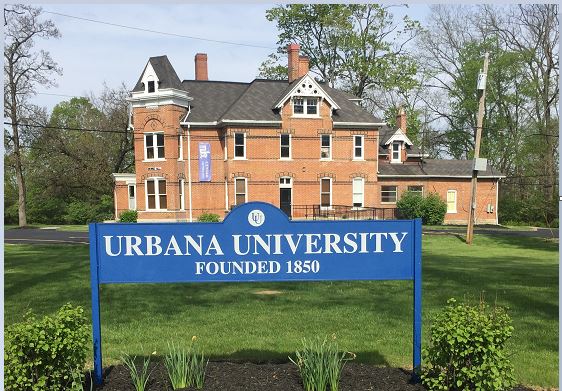
    If you’ve followed my journey, you know that I earned my undergraduate degree from Urbana University, a small private college in Urbana, Ohio—a city with a current population of 11,161. In 1975, I designed my own major in College Administration, combining courses in business, history/political science, and psychology. During my senior year, I also completed a year-long internship in admissions.

    As a nontraditional student (having started at the University of Dayton in 1968), it took me 6 ½ years and over 30 part-time jobs to complete my degree. Urbana gave me the opportunity to figure out what I wanted to do and how I could contribute to the world. It taught me adaptability and the goodness in people, which led me to the field I love—higher education.

    Unfortunately, Urbana University didn’t survive. After being acquired by Franklin College in 2014, it closed its doors in May 2020 due to challenges brought on by the coronavirus pandemic and years of low enrollment.

    Urbana had been an integral part of the community since 1850, serving as a significant economic engine. A 2017 study by the Southwestern Ohio Council for Higher Education estimated that Urbana contributed over $60 million annually to the economies of Champaign and Logan counties and employed 111 full-time staff during the 2015-2016 academic year. Its closure was devastating—not only for the university but also for the local businesses that depended on the foot traffic of students, visitors, and sports spectators.

    Rural colleges like Urbana serve as vital economic and social hubs for their communities. However, the increasing trend of college closures poses significant risks, including economic downturns, reduced social engagement, and the loss of cultural identity.


    Moving Forward

    To address this issue, I’m developing a funding proposal to analyze the multifaceted impacts of struggling colleges in rural areas. My goal is to propose actionable solutions and share findings that empower policymakers and community leaders. By combining innovative research, advocacy, and problem-solving, this initiative seeks to provide practical tools for fostering resilient rural communities.

    The research will focus on rural communities in Indiana, Ohio, and Pennsylvania. I’ve already received encouragement from regional leaders and am optimistic about finding partners to support this initiative. I’m seeking foundations, corporations, and government agencies to help fund this project, which aims to mitigate the ripple effects of college closures in rural America.

    If you have thoughts or suggestions on this topic—or know of potential funders—please feel free to contact me at [email protected].

    Stay tuned for updates on this and other projects I’m passionate about.


    Dean Hoke is Co-Founder and Managing Partner of Edu Alliance, an international higher education consultancy and podcast co-host of Higher Ed Without Borders and Small College America. He recently served as President/CEO of the American Association of University Administrators.

    Dean began his professional career in 1975 with Bellarmine University, working in a variety of roles, including Admissions and External Relations. In 1983, he entered the broadcasting field, serving as a senior executive for Public Broadcasting System stations and a cable network. In 1998, he co-founded The Connected Learning Network, a full-service online learning company. In 2009, he accepted an invitation to move to the United Arab Emirates, serving in senior positions at Higher Colleges of Technology and Khalifa University before co-founding Edu Alliance in Abu Dhabi in 2014.

    Hoke is passionate about advancing academic excellence and innovation worldwide.  He participates in numerous advisory and consulting projects on international branch campuses, marketing/branding, and business intelligence. Dean has consulted, presented, and written on leadership, higher education, and distance learning in the United States, Bahrain, Kazakhstan, Lebanon, Oman, Nigeria, Spain, and the United Arab Emirates.

    Hoke has a B.A. from Urbana University, an M.S. from the University of Louisville, and a Certificate in Executive Management from the University of Pennsylvania Wharton School. Dean currently resides in Bloomington, Indiana.

    Source link

  • As diversity rates at elite colleges hang in the balance, some students still face increased exclusion and barriers

    As diversity rates at elite colleges hang in the balance, some students still face increased exclusion and barriers

    Diversity rates at several elite colleges and universities have plummeted, a little over a year after the Supreme Court’s restriction on race-conscious admissions. It’s a divisive but unsurprising blow to historically underrepresented students seeking educational opportunity and access.

    While demographic data is still forthcoming, the challenges these students face to attend certain colleges continue to build. MIT, Amherst College, and Tufts have already seen sharp declines in the diversity of their student populations.

    But not all is lost. Ethnically diverse students have options to express their full identities, and organizations providing services to them have options to support these students’ overall success through postsecondary pathways.

    While assessing the state of race in higher education admissions, we cannot ignore its historical context in colleges in America. Colleges and universities were built by and explicitly served the educational needs of wealthy white men. For too long, the only people of color on campus were the (often enslaved) servants of white students.

    We should also bear in mind that, at elite universities today, the students who are overlooked in favor of race-neutral policies are not the only ones who miss out — students already on campus lose out on the richness that having a diverse array of educational experiences can provide, with their opportunities to encounter alternative viewpoints limited.

    Related: Interested in innovations in the field of higher education? Subscribe to our free biweekly Higher Education newsletter.

    Oftentimes, first-generation, Black, Hispanic and Native American students experience an inherent and often unspoken isolation on campus at predominantly white institutions.

    As a Black Chicana, I vividly remember being the singular student of color in my freshman-year seminar at Michigan State. My experience was not without the awkwardness of questioning my own merit and if I belonged there in the first place. We traveled to Ireland, and due to the humidity, I put on my silk bonnet to protect my hair. It was met with questions and stares.

    Here we are in 2025, discussing the all-too-familiar concept of racial bias in America, while institutions are bound by new laws that result in restricted access for the students whose right to educational access has historically been systematically denied. So what can we do?

    While it requires creativity, students can still highlight who they are in their applications by foregrounding their lived experiences outside of their grades, test scores and academic histories. For example, students can share the intricacies of being a historically marginalized person in America — from being asked to speak English to being pulled over for driving while Black. They can write about their experiences and identities in personal statements and on their resumes and through discussions of their community involvement. Students owe it to themselves to share their personal moments of overcoming barriers in everyday life.

    Related: What’s a college degree worth? States start to demand colleges share the data

    Institutions can ask essay questions that provoke such responses and allow students to share without prejudice or fear of reprisal. Students’ insightful perspectives should be applauded by educational institutions, and the power of their words should be respected.

    Underrepresented students also have options other than the traditional elite universities. Historically Black colleges and universities (HBCUs) and Hispanic-serving institutions (HSIs) are an alternative to predominantly white institutions like the ones mentioned above. Students can make the college experience what they want and need, and it is no different at smaller institutions like Lane College, an HBCU, or Colorado State University, Pueblo, an HSI.

    At these schools, a student’s culture and identity are revered and shared. Educational institutions that see the value in diversity should be reconsidered as the best option for ethnically diverse students.

    And, as educational institutions grapple with the effects of the Supreme Court ruling, they should support the students from historically marginalized populations already on their campuses to ensure that they feel welcome, supported and valued. Building robust affinity groups not only provides current students with communities they can co-create and adapt to their needs, but also demonstrates that the institutions are committed to creating spaces for all students.

    Scholarship providers and organizations that support underrepresented students will continue to play a vital role in fostering diversity on college campuses. Mission-driven organizations like the one I work for, the Sachs Foundation, still help Black students who lack the financial capacity or easy access to attend elite schools like MIT and Brown.

    Students deserve to have their whole selves valued, welcomed and supported when applying for higher education.

    Pamela Roberts-Mora is the chief operations officer at the Sachs Foundation, serving Black youth from Colorado through educational and community programs. She was a first-generation college student.

    Contact the opinion editor at [email protected].

    This story about college diversity was produced by The Hechinger Report, a nonprofit, independent news organization focused on inequality and innovation in education. Sign up for our higher education newsletter. Listen to our higher education podcast.

    The Hechinger Report provides in-depth, fact-based, unbiased reporting on education that is free to all readers. But that doesn’t mean it’s free to produce. Our work keeps educators and the public informed about pressing issues at schools and on campuses throughout the country. We tell the whole story, even when the details are inconvenient. Help us keep doing that.

    Join us today.

    Source link

  • Invisible labour: visible activism | SRHE Blog

    Invisible labour: visible activism | SRHE Blog

    by Sarah Montano, Inci Toral and Sarah Percy

    Behind many academic success stories lies an untold narrative of invisible labour – a hidden force driving progress but often overlooked or undervalued. From providing emotional support to sitting on committees, the silent effort sustains institutions yet leaves many working tirelessly in the background on non-promotable tasks. Only when invisible labour is met with visible activism, can change begin.

    As a group of academics over the years we became conscious of a phenomenon that affected not only ourselves but many of our colleagues. We particularly noticed that women* were increasingly being asked to take on emotional labour and tasks that, when it came to promotions were classified as “Non-Promotable Tasks” yet were essential to institutional practices. We concluded that this form of emotional labour was a form of wife work, work that is essential to the running of the home (aka Higher Education Institutions (HEIs)) yet often undervalued and the person carries the mental load. We use the term wife work due to the pejorative nature of wife work in the media and the value placed on such work in wider society. Using a feminist collaborative autoethnographic approach we explored invisible and emotional labour among female academics. Therefore, at the 2024 SRHE conference we delivered our paper on ‘Invisible Labour: Visible Activism’ and argued that it is only such activism that will help to end the inequities in HEIs.

    *we acknowledge that invisible and emotional labour can affect any academic of any gender, particularly those on education/ teaching focussed contracts.

    Shining a light on invisible labour

    Despite the increase in women’s participation in the workforce and in academia, there is still a significant gender pay gap and to compound the issue, this gap widened in 2021 and 2022 in 20/33 OECD countries. As noted by Stephenson (2023), in HE only 28% of professors are female despite women making up 43% of the academic workforce leading to a pay gap of 11.9%. We acknowledge that the reason for such pay gaps and gender biases are complex and multi-factorial (Westoby 2021), thus we focus specifically on the issue of the “gender unequal distribution” of academic labour (Järvinen and Mik-Mayer 2024:1).

    There is much discussion on the mental load outside the workplace; therefore, our focus is on the unpaid or unrewarded workload inside the workplace. As universities have new developed pathways to promotion (e.g. education or impact), citizenship has become less important, yet it is critical work that still needs to be done. However, the result of shifting paths to tenure/promotion means that women are carrying out “Non-Promotable Tasks” (Babcock et al, 2022: 15), which are institutionally important yet will not help career success.

    Wife work defined

    Wife work tasks include: writing references for students; mentoring; assisting students with emotional problems or recruitment; careers advice; taking on someone’s admin work whilst they gain awards; and committee work, effectively comprising what is known as service work. Importantly, a significant component of wife work is emotional labour. Emotional labour involves managing emotions and interactions in the academic setting without formal recognition or workload compensation. These emotional labour tasks may include student emotional support, listening, supporting colleagues, helping people or just always being nice. Such wife work occurs due to societal and institutional expectations that prompt women to take on such wife work, yet this labour whilst maintaining the organisation’s reputation and can lead to emotional dissonance and burnout (Grandey, 2013).

    Making the invisible visible

    Drawing on institutional theory​, feminist theory and theory of gendered organizations we explore how universities, embedded in social norms and values, perpetuate traditional gender roles and expectations. Our research specifically focuses on the “Non-Promotable Tasks,” which are essential for institutional functioning but do not contribute to career success and are undervalued and unrecognised. We highlight patterns about gender distinctions that lead to advantages or exploitations of academics and how these create differing identities and expectations within academia.​

    How we uncovered the invisible

    Our research has two stages. In the first stage, we used a feminist collaborative autoethnographic approach to explore invisible and emotional labour among female academics (Rutter et al, 2021)​. This method allowed for an in-depth examination of personal and shared experiences within our academic community (Akehurst and Scott, 2021)​. As the research subjects, we are comprised of female academics from the same department across international campuses, reflecting on our experiences with non-promotable tasks, emotional dissonance, mental load, and burnout (Grandey, 2013; Lapadat, 2017; Babcock et al, 2022)​. We go beyond individual experiences to co-construct the meaning of invisible and emotional labour collectively​.

    Findings that shape our understanding of invisible labour

    We identified the following categories of “wife-work”:​

    • Mentoring support (outside normal expectations or workload) ​
    • Administrative and Logistical Tasks/ Roles​
    • Recruitment and Outreach ​
    • Committee Work
    • Supporting Career Development
    • Academic and Professional Development​
    • Volunteering and Institutional Presence​
    • Helping people​
    • Taking on someone else’s role while they work on “important stuff”​
    • Listening​
    • Being kind ​

    Using the institutional framework, in which the institutional norms shape the undervaluation of service work (Palthe, 2014), we argue that the regulative, normative, and cognitive-cultural elements of institutional theory contribute to the gendered division of labour.  Through the application of these key dimensions, our findings can be categorised under three dimensions:

    1. Institutional Dimension, underpinned by the explicit rules, laws, and regulations that constrain and guide behaviour such as academic quality assurance and behavioural expectations within HEIs.

    2. Social Dimension, encompassing implicit values, norms, and expectations that define acceptable behaviour within a society or organization such as social expectations around punctuality, dress codes, and academic etiquettes in HEIs.

    3. Individual Dimension, which involves implicit but shared beliefs and mental models shaping how individuals perceive and interpret their environments. These are often taken for granted and operate at a subconscious level.

    Using this framework our findings are categorised accordingly to these elements outlined in Figure 1 below.  

    Figure 1:  Invisible Labour: Visible Activism Findings. Source: Developed by the authors

    It’s time for change

    We recognise that the critical issue is, as Domingo et al (2022) highlighted, the significance of recognising and valuing women’s work within institutions, and stress that the real issue lies within organisational practices rather than women themselves. Addressing emotional labour is vital for a supportive and equitable work environment. The burden of responsibility is deeply embedded into the societal norms and often acts as a catalyser for such responses by female academics (Andersen et al, 2022). ​As organisations shift their focus towards formal progress procedures that undervalue volunteerism and emotional labour (Albia and Cheng, 2023), there is a pressing need for activism to ensure equitable recognition and valuation of women’s contributions within academia.

    A path forward – from silence to solidarity

    Invisible labour has long been an unseen and unrecognised necessity in academia, but we argue that it need not, and should not be this way. Acknowledging and recognising the existence and value of invisible and emotional labour will ensure these ‘non-promotable’ tasks become more visible.  Therefore, there is a pressing need for activism to ensure equitable recognition and valuation of women’s contributions within academia. We emphasise the necessity of addressing these systemic issues to foster a more inclusive and supportive academic environment for all individuals involved. Change starts with awareness, so we hope this is a step in the right direction.

    Professor Sarah Montano is a Professor of Retail Marketing at Birmingham Business School. She was awarded a National Teaching Fellowship in 2023. Her research interests are primarily authentic assessments, digital education and retail as a place of community. She is an engaging and skilled communicator and regularly appears in the media on the subject of retail industry change.

    Dr Inci Toral is an Associate Professor at the University of Birmingham, Business School and she is the Business Education Research and Scholarship (BERS) Convenor at Birmingham Business School. Her work revolves around digital marketing, retailing, creativity and innovation in retail education and authentic assessments. 

    Dr Sarah Percy is an Assistant Professor in Marketing at Birmingham Business School, University of Birmingham, with a special interest in authentic assessments.

    Author: SRHE News Blog

    An international learned society, concerned with supporting research and researchers into Higher Education

    Source link

  • Writing notes instead of typing pits scholars against each other

    Writing notes instead of typing pits scholars against each other

    Imagine you’re a student in high school or college. Class is about to start. You are faced with a notable dilemma: Should you whip out a notebook or a laptop to take notes?

    The answer is not so simple. A year ago, paper and pen seemed to be the winner when the journal Frontiers in Psychology published a Norwegian study that documented how different areas of the brain were communicating more frequently when students were writing by hand. When students were typing, the brain was not nearly so active. This extra brain activity, the neuroscientists wrote, is “beneficial for learning.” 

    The study ricocheted around the world. Almost 200 news stories promoted the idea that we remember things better when we write them down by hand instead of typing. It confirmed what many of us instinctively feel. That’s why I still take notes in a notebook even though I can hardly read my chicken scratch.

    Yet earlier this month, the same academic journal published a scathing rebuttal to the handwriting study. A pair of scientists in Spain and France pointed out that none of the Norwegian college students was asked to learn anything in the laboratory experiment. “Drawing conclusions on learning processes in children in a classroom from a lab study carried out on a group of university students that did not include any type of learning seems slippery at best,” the critics wrote.

    The Norwegian study asked 36 college students in their early 20s to write words from the game Pictionary using either a digital pen on a touchscreen or typing on a keyboard. The participants wore stretchy hair nets studded with electrodes to capture their brain activity. The scientists documented the differences between the two modes of writing. 

    Neither mode approximated real life conditions. The students were instructed to write in cursive without lifting the stylus from the screen. And they were only allowed to type with their right index finger.

    The critics also questioned whether elevated brain activity is proof of better learning. Increased brain activity could equally be interpreted as a sign that handwriting is slower and more taxing than typing. We don’t know.

    I contacted Audrey van der Meer, one of the co-authors of the Norwegian study who runs a neuroscience lab at the Norwegian University of Science and Technology in Trondheim. She pointed out that her critics promote the use of keyboards in education, and so they may not be unbiased. But she admitted that her study didn’t test whether students learned anything. 

    Van der Meer is conducting a fresh experiment that involves actual learning with 140 teenagers. She had the high school students watch a recorded lecture. Half of them were randomly assigned to take notes by hand, using a digital pen and touchscreen, and the other half typed their notes. Afterward, they all took the same exam graded by teachers at the school. 

    So far, she’s noticed clear differences in note-taking styles. Those who typed their notes wrote significantly more words, often transcribing parts of the lecture verbatim. They didn’t make any drawings. Those who used a digital pen mainly wrote key words and short sentences and produced two drawings, on average. 

    According to van der Meer, students who use the keyboard are writing down everything the teacher says “because they can.” But, she said in an email, “the information appears to be coming in through the ears and, without any form of processing, going out through the fingertips.” She added that when taking notes by hand, “it is impossible to write down everything, so students have to process the incoming information, summarize it, and link it to knowledge they already have.” That helps the “new information to stick better, resulting in better retention.”

    Van der Meer said she could not yet share the exam results with me as she is still analyzing them. She explained that there are “many confounding variables” that make it difficult to tell if those who used handwritten notes performed better on the exam.

    Even the pro-typing scientists admit that handwriting is important. Previous research has shown that writing letters by hand, compared to typing them, helps young children learn their letters much better. A 2015 study found that adults were better able to recall words in a memory game when they wrote them down by hand first instead of typing them. And a 2010 book chapter documented positive associations between writing words and being able to read them. 

    While there’s fairly compelling evidence that handwriting can help children learn their letters and new words, there’s less proof that handwriting helps us absorb new information and ideas. That’s not to say the Norwegian neuroscientists are wrong. But we still need the proof.

    I’d also add that not all learning is the same. Learning to write is different from learning Spanish vocabulary. There may be times when typing is the ideal way to learn something and other times when handwriting is. Also, learning something involves far more than either typing or handwriting, and the method we use to take notes might ultimately be of small importance compared to how we study our notes afterwards. 

    In the meantime, where did I put my notebook?

    Contact staff writer Jill Barshay at 212-678-3595 or [email protected].

    This story about handwriting versus typing was written by Jill Barshay and produced by The Hechinger Report, a nonprofit, independent news organization focused on inequality and innovation in education. Sign up forProof Points and other Hechinger newsletters.

    The Hechinger Report provides in-depth, fact-based, unbiased reporting on education that is free to all readers. But that doesn’t mean it’s free to produce. Our work keeps educators and the public informed about pressing issues at schools and on campuses throughout the country. We tell the whole story, even when the details are inconvenient. Help us keep doing that.

    Join us today.

    Source link