Category: Student Engagement

  • Beyond Syllabus Week: Creative Strategies to Engage Students from Day One – Faculty Focus

    Beyond Syllabus Week: Creative Strategies to Engage Students from Day One – Faculty Focus

    Source link

  • Increasing Classroom Engagement – Faculty Focus

    Increasing Classroom Engagement – Faculty Focus

    Source link

  • The Power of Students’ Stories – Faculty Focus

    The Power of Students’ Stories – Faculty Focus

    Source link

  • The Power of Students’ Stories – Faculty Focus

    The Power of Students’ Stories – Faculty Focus

    Source link

  • The higher education sector needs to come together to renew its commitment to enhancing student engagement

    The higher education sector needs to come together to renew its commitment to enhancing student engagement

    “Engagement, to me, is probably…getting the most out of university…taking and making the most of available opportunities.”

    This quote, from Queen’s University Belfast students’ union president Kieron Minto sums up a lot of the essential elements of what we talk about when we talk about student engagement.

    It captures the sense that the higher education experience has multiple dimensions, incorporating personal and professional development as well as academic study. Students will be – and feel – successful to the extent that they invest time and energy in those activities that are the most purposeful. Critically, it captures the element of student agency in their own engagement – higher education institutions might make opportunities available but students need to decide to engage to get the most from them.

    In recent years “student engagement” has suffered from the curse of ubiquity. Its meanings and applications are endlessly debated. Is it about satisfaction, academic success, personal growth, or a combination of factors? There is a wealth of examples of discrete projects and frameworks for thinking about student engagement, but often little read-across from one context to another. We can celebrate the enormous amount of learning and insight that has been created while at the same time accepting that as the environment for higher education changes some of the practices that have evolved may no longer be fit for purpose.

    Higher education institutions and the students that are enrolled in them face a brace of challenges, from the learning and development losses of the Covid pandemic, to rising costs and income constraints, to technological change. Institutions are less able to support provision of the breadth of enriching opportunities to students at the same time as students have less money, time, and emotional bandwidth to devote to making the most of university.

    The answer, as ever, is not to bemoan the circumstances, or worse, blame students for being less able to engage, but to tool up, get strategic, and adapt.

    Students still want to make the most of the opportunities that higher education has to offer. The question is how to design and configure those opportunities so that current and future students continue to experience them as purposeful and meaningful.

    Fresh student engagement thinking

    Our report, Future-proofing student engagement in higher education, brings together the perspectives of academic and professional services staff, higher education leaders, and students, all from a range of institutions, to establish a firm foundation of principles and practices that can support coherent, intentional student engagement strategies.

    A foundational principle for student engagement is that students’ motivations and engagement behaviours are shaped by their backgrounds, prior experiences, current environments, and hopes and expectations for their futures – as explained by Ella Kahu in her socio-cultural framework for student engagement (2013).

    It follows that it is impossible to think about or have any kind of meaningful organisational strategy about student engagement without working closely in partnership with students, drawing on a wide range of data and insight about the breadth of students’ opinions, behaviours, and experiences. Similarly, it follows that a data-informed approach to student engagement must mean that the strategy evolves as students do – taking student engagement seriously means adopting an institutional mindset of preparedness to adapt in light of feedback.

    Where our research indicates that there needs to be a strategic shift is in the embrace of what might be termed a more holistic approach to student engagement, in two important senses.

    The first is understanding at a conceptual level how student engagement is realised in practice throughout every aspect of the student journey, and not just manifested in traditional metrics around attendance and academic performance.

    The second is in how institutions, in partnership with students, map out a shared strategic intent for student engagement for every stage of that journey. That includes designing inclusive and purposeful interventions and opportunities to engage, and using data and insight from students to deepen understanding of what factors enable engagement and what makes an experience feel purposeful and engaging – and ideally creating a flow of data and insight that can inform continuous enhancement of engagement.

    Theory into practice

    Our research also points to how some of that shift might be realised in practice. For example, student wellbeing is intimately linked to engagement, because tired, anxious, excluded or overwhelmed students are much less able to engage. When we spoke to university staff about wellbeing support they were generally likely to focus on student services provision. But students highlighted a need for a more proactive culture of wellbeing throughout the institution, including embedding wellbeing considerations into the curriculum and nurturing a supportive campus culture. Similarly, on the themes of community and belonging, while university staff were likely to point to institutional strategic initiatives to cultivate belonging, students talked more about their need for genuine individual connections, especially with peers.

    There was also a strong theme emerging about how institutions think about actively empowering students to have the confidence and skills to “navigate the maze” of higher education opportunities and future career possibilities. Pedagogies of active learning, for example, build confidence and a sense of ownership over learning, contributing to behavioural and psychological engagement. Developing students’ digital literacy means that students can more readily deploy technology to support connection with academics and course peers, make active critical choices about how they invest time in different platforms, and prepare for their future workplace. Before getting exercised about how today’s students do not arrive in higher education “prepared to engage,” it’s worth remembering just how much larger and more complicated the contemporary university is, and with these, the increased demands on students.

    While there is a lot that institutions can do to move forward their student engagement agenda independently, there is also a need for a renewed focus on student engagement from the higher education sector as a whole. The megathemes contributing to shifting student engagement patterns are shared; they are not distinctive to any institution type, geography, or student demographic.

    The promise of higher education – that you can transform your life, your identity and your future through a higher education experience – only holds true if students are willing and able to engage with it. This demands a unified effort from all involved.

    Institutions must prioritise student engagement, placing it at the heart of their strategies and decisions. Furthermore, the higher education sector as a whole must renew its focus on student engagement, recognising its fundamental role in achieving the goals of higher education. Finally, as regulatory bodies evolve their approach to the assessment and enhancement of academic quality, student engagement must once again be put front and centre of the higher education endeavour.

    This article is published in association with evasys. You can download a copy of Future-proofing student engagement here.

    Source link

  • Welcome Visible Body to Cengage

    Welcome Visible Body to Cengage

    Reading Time: 2 minutes

    At Cengage, creating quality learning experiences is a priority. Our goal is to put the learner at the center of these experiences to help them prepare for the future, especially in much-needed fields like health care, biology and life sciences.

    And so, to enhance learner engagement and deepen students’ understanding of key science concepts, we’re excited to welcome Visible Body to Cengage and our science offerings.

    Introducing Visible Body

    Visible Body is a leading provider of interactive apps and software used by over a million students, educators and health care/biomedical professionals around the world. Visible Body provides highly detailed 3D visuals, micro-lessons and game-like interactivity to make studying anatomy and biology easier and more engaging.


    Cengage and Visible Body deepen science learning

    By teaming up, we can provide expanded science offerings to more learners and educators — boosting engagement, improving problem-solving skills and strengthening students’ grasp of key science concepts.

    Visible Body adds to the variety of ways we can support learning. For science courses like anatomy and physiology and biology, it is vital that students gain a deep understanding of the human body and are given a hands-on way to engage with the concepts and processes.

    With accurate visual representations, anatomically correct 3D models and immersive activities, learners can master the concepts quickly, while gaining access to real-world scientific experiences and practicing essential skills for the workforce. AR and mixed reality bring learning to life, enabling students to engage with scenarios typically limited to lab environments. This approach empowers institutions, especially those strained for resources, to deliver high-quality, engaging education without labs.

    What’s in the future for science teaching and learning?

    Visible Body will be available with Dr. Liz Co’s “Anatomy & Physiology” later this spring with plans to add it to even more Cengage higher ed and K-12 science resources soon.


    Interested in learning about Liz Co’s “Anatomy & Physiology” — along with the addition of Visible Body? Fill out the form to find out more.

    Source link

  • Graduate Student Insights and Perspectives

    Graduate Student Insights and Perspectives

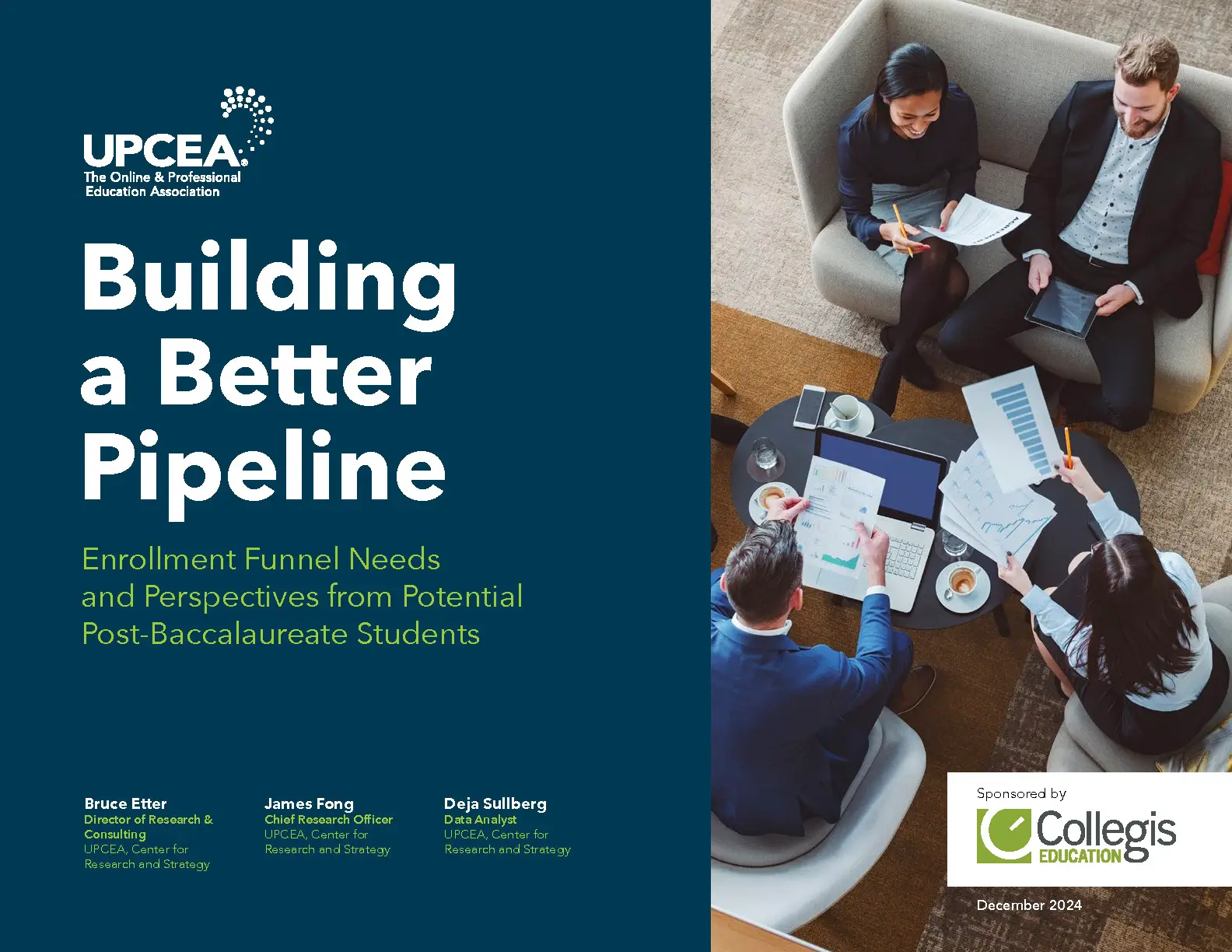
    Report Title: Building a Better Pipeline: Enrollment Funnel Needs and Perspectives from Potential Post Baccalaureate Students

    Author: Collegis Education + UPCEA

    Published: December 2024

    Key points addressed

    In this ebook, you’ll learn more about prospective graduate students’ needs and expectations as they move through the enrollment funnel, including:

    • The level of degree desired, as well as the preferred learning format
    • Factors that cause disengagement during the inquiry and application processes
    • Prospective students’ communication preferences and application expectations
    • How institutions can tailor recruitment strategies accordingly

    Overview

    While higher education institutions face tightening budgets, demographic cliffs, and other market headwinds, many schools see graduate enrollment growth as a critical strategy despite the increasingly competitive landscape. Strategic investments in outreach have never been more vital.

    With more and more programs sharing similarities in their structure than differences, one way schools can win is by delivering frictionless and exceptional student experiences, using prospective graduate students’ preferences, behaviors, and other insights to personalize engagements and outreach.

    By understanding these preferences, institutions can better tailor their recruitment strategies and allocate resources more effectively in an increasingly competitive landscape.

    Source link

  • Building a Better Transfer Experience for Modern Learners 

    Building a Better Transfer Experience for Modern Learners 

    In 2022, 36.8 million students under the age of 65 fell into the category of Some College, No Credential (SCNC)–a population that grew by nearly 3% year-over-year by 2024. These learners, who started but did not complete a credential, represent a growing population with significant potential for re-enrollment. Understanding their needs is essential to support their return to higher education.  

    For SCNC students, one key factor can significantly influence their decision to re-enroll—transfer credit policies. The Education Reengagement Report, conducted in collaboration with DegreeSight, provides a comprehensive overview of this subset of modern learners, uncovering key strategies to re-engage these students by addressing their unique needs, particularly surrounding maximization of previously earned credits and awareness of credit transfer policies. Explore the report’s findings to gain deeper insights into how institutions can effectively engage and support SCNC students on their path to completion.  

    Who are Some College, No Credential (SCNC) Modern Learners? 

     SCNC students represent a noteworthy portion of the Modern Learner population, and their unique profile merits deep consideration when developing approaches to re-engagement. For more insights into the challenges faced by stopped-out students and strategies to support their return, read our previous article on addressing their barriers. In the context of the Education Reengagment Report, SCNC students are defined as those seeking reenrollment or who have already reenrolled elsewhere.  Their experiences and motivations reflect diverse life experiences, making them a unique yet significant audience for higher education institutions.  

    SCNC students comprise of diverse demographic and professional profiles. Most are aged between 25-29 (66%), and a significant portion (33%) identify as first-generation college students. Their employment status also varies, with 59% working full-time, 20% employed part-time, and 16% not currently employed. Many SCNC students were previously enrolled in associate degree programs (43%), while others sought bachelor’s degrees (57%), reflecting a broad range of academic aspirations.  

    SCNC students pursue a wide range of academic interests, with certain fields emerging as particularly popular. The areas of study with the highest levels of enrollment for SCNC students include Business (24%), IT, Computers, and Technology (20%), and Health-related fields (13%). Additionally, learning format preferences reveal a demand for flexibility, with 47% favoring on-campus programs, 29% opting for hybrid options, and 20% preferring fully online programs. These findings emphasize the need for flexible program offerings to meet SCNC students’ varying needs and schedules. 

    Career advancement is a primary motivation for SCNC students when initially enrolling. Sixty percent enrolled in an undergraduate program to improve their earning potential or launch a new career, while 40% sought careers better aligned with their interests. Additionally, 30% pursued a degree as a next step following high school or technical school.  

    However, financial challenges, competing responsibilities, and various program limitations are common reasons for stopping out. Survey results show that the main barrier to continuing education for SCNC students is cost, with 32% citing it as their primary reason for stopping out. Other reasons include Covid-19 related reasoning (20%), lack of flexibility in the program (19%), and inability to use federal financial aid (15%).  Understanding these critical factors is essential for institutions looking to reengage this population. By addressing the root causes of their stop-outs, institutions can better connect with SCNC students and deliver personalized solutions to them. 

    The report surveyed both SCNC and transfer students. While these groups differ in some ways, they share similarities in their focus on career outcomes and expectations for the enrollment process.  

    The key difference to keep in mind include: 

    • Age: SCNC students tend to be older, with a median age of 37 compared to 31 for Transfer students  
    • Motivation: Transfer students top motivation stems from their career aspirations, while SCNC students place greater emphasis on program affordability 
    • Level of study: Transfer students are more likely to pursue bachelor’s degrees, while SCNC students often have a mix of associate and bachelor’s degree goals 

    Despite these differences, both groups share a unifying goal to leverage their existing credits to further their higher education career and achieve their personal and professional goals, making them a significant opportunity for higher education institutions.  

    Why are Transfer Credit Policies So Important for SCNC Modern Learners?

    Many SCNC students have already earned a decent number of college credits, with 32% having completed 16 to 30 credits, indicating that they have completed at least one semester of coursework. This progress underscores the importance of transfer credit policies easing their return to higher education. With the many notable reasons for stopping out, the barrier to re-entry only rises without clear credit transfer or support systems in place. For these students, the financial burden of repeating coursework and the desire for swift completion of their degrees are top priorities.  

    Survey data highlights the overwhelming importance students place on credit transfer policies. Ninety-three percent of SCNC students say that the number of transferrable credits impacts their enrollment decision, with 55% indicating it as a primary factor. Additionally, 36% of students rank credit acceptance as a key consideration in their reenrollment decision, second only to tuition cost (44%) and closely followed by the availability of online programs (35%).  

    Clear and favorable transfer credit policies not only can alleviate the financial pressures of reenrollment but can also expedite the path to graduation. However, navigating these policies is not a simple process for many students. Thirty-five percent of students report that understanding transfer credit policies is the most difficult part of the enrollment process, followed by getting previous credits transferred (34%) and completing financial aid forms (34%). Institutions should view this as a call to action to refine their policies and streamline processes, addressing these critical pain points to better meet student needs and enhance both enrollment and retention outcomes. 

    How Can Institutions Better Support SCNC Modern Learners with Transfer Credits?

    Supporting SCNC students requires institutions to prioritize transparency, personalized support, and flexibility—particularly where transfer credits are concerned.  Many SCNC students face unnecessarily complicated processes during their reenrollment processes, making it imperative for institutions to make their policies accessible.  

    To better meet this demographics’ varied needs, institutions can implement the following strategies to support SCNC students: 

    • Promote Transparent Transfer Policies

    Institutions should make transfer credit policies easy to understand and accessible across websites, marketing materials, and additional platforms. Clearly communicating how previous credits apply to degree requirements empowers students to make informed decisions.  Online tools like credit transfer calculators, chatbots for common inquiries, and infographics can further empower students to understand their credit situation and feel confident making enrollment decisions.  

    • Highlight Cost Savings and Financial Support: 

    To address cost barriers, institutions should clearly communicate how credit transfers reduce tuition expenses and emphasize available financial aid options. Offering flexible payment plans helps students manage their finances more readily, allowing them to focus on their education without financial stress. 

    • Provide Comprehensive Support Services: 

    Having a dedicated credit transfer advisor can make a pivotal difference in the SCNC enrollment experience. These advisors can help guide students in navigating complex processes, equipping them with vital information on financial aid options, available transferrable credits, and program pathways.  Support can be offered through online channels, advising, and assistance with application and registration processes. Partnering with EducationDynamics’ Enrollment Management Team can help institutions scale this support effectively. 

    • Expand Flexible Learning Options: 

    Expanding online and hybrid program offerings is crucial to supporting the growing SCNC population. These flexible formats can better serve SCNC lifestyles, as these students often juggle work and family responsibilities in addition to their course load. Flexible online and hybrid-based programs are imperative to be promoted to this population, as many have changed their learning modality from classroom-based to online or hybrid. By assessing current offerings and identifying areas of expansion, institutions can better support the needs of Modern Learners.  

    Unlock Opportunities for SCNC Student Success

    SCNC students have spoken—there is a clear need for institutions to adapt their policies and support services to meet their unique needs. By prioritizing clear transfer credit policies, personalized support, and flexible learning options, universities can attract this demographic while helping them achieve their academic goals. As institutions continue to navigate evolving enrollment challenges, adapting to the needs of SCNC students will be instrumental in building success and shaping the future of higher education.  

    Ready to reengage SCNC students? Explore how EDDY’s market research services help your institution effectively reach SCNC students and create successful pathways from re-enrollment to graduation.  

    Source link

  • Acing Your Year: How You Used Top Hat in 2024

    Acing Your Year: How You Used Top Hat in 2024

    As the year draws to a close, we are once again excited to celebrate your commitment to equitable, personalized and AI-rich learning. We’re thrilled to unveil this year’s Top Hat Graded: our annual report that looks at how you and your students used our engagement platform and Ace, our AI-powered teaching and learning assistant, to your advantage. Let’s dive in.

    Giving new meaning to student engagement

    Click on target. Multiple choice. Fill-in-the-blank. It’s clear you wanted to shake up the standardized quiz this year. We’re honored to be along for the ride! You created more than 9.6 million multiple choice questions and 1.7 million long answer questions this year. But that’s not all. You also designed more than 985,000 fill-in-the-blank questions using our interactive platform. Our engaging formative assessment questions helped students stay focused before, during and after class when tackling their homework. Simply put, more questions posed meant more reason for students to complete their readings and attend class.

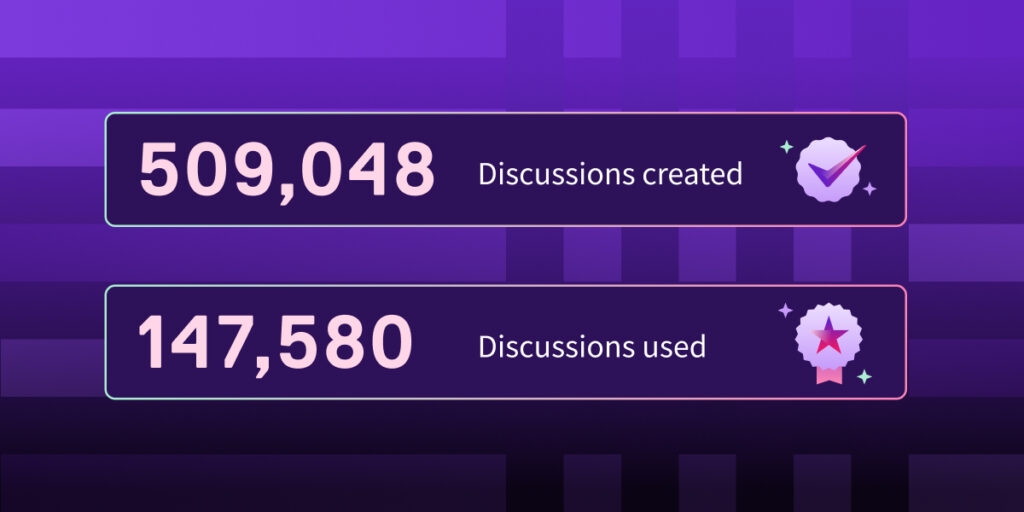
    We also recognize that a good debate or small group discussion can help students shape their understanding of a new topic. While Gen Z might call it a vibe check, we’re filing this under your commitment to giving every student an equal voice. You created more than 509,000 discussions this year—interspersed within your lectures, readings and assignments. In turn, more than 147,000 discussions were used by students to assess their comprehension along the way.

    Harnessing AI for good in the higher ed classroom

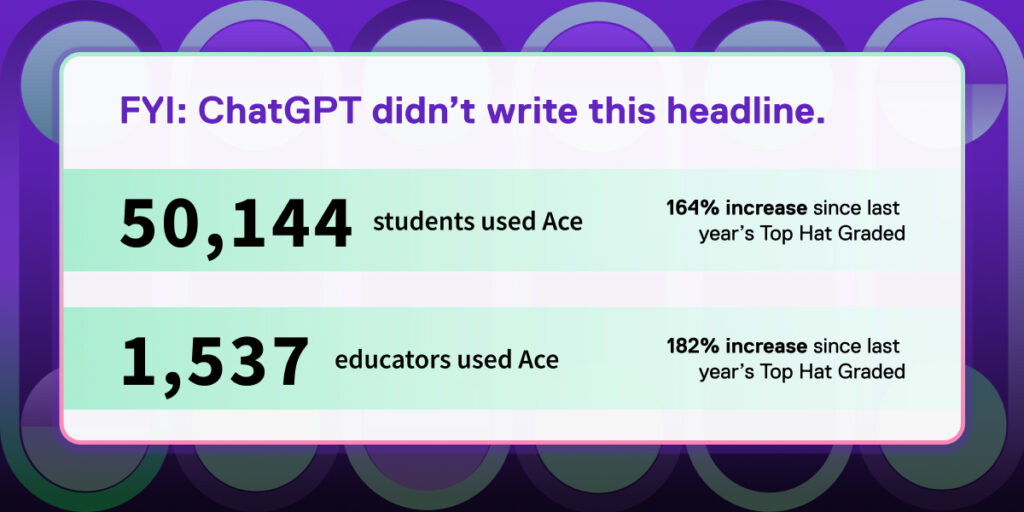
    Artificial intelligence has, once again, been a hot topic in higher education. This past year, you viewed Ace under a refreshing light. More than 50,100 students relied on Ace for course-specific study assistance and AI-powered practice quizzes. In turn, learners also received immediate feedback rooted in the context of their course to guide their future studying efforts.

    Now, let’s turn to you. More than 1,500 of your fellow faculty members used Ace this past year. Educators especially valued being able to add AI-generated questions into their slides using our Lecture Enhancer feature. Not only do our AI-powered features for educators save time during the question creation stage, Ace generates hints and explanations that allow students to identify their own misconceptions. Even better, we’ve charted a 182 percent increase in Ace usage among professors since our 2023 summary—speaking to the benefit of incorporating AI into the classroom.

    Using Ace to spark active learning and higher-order thinking

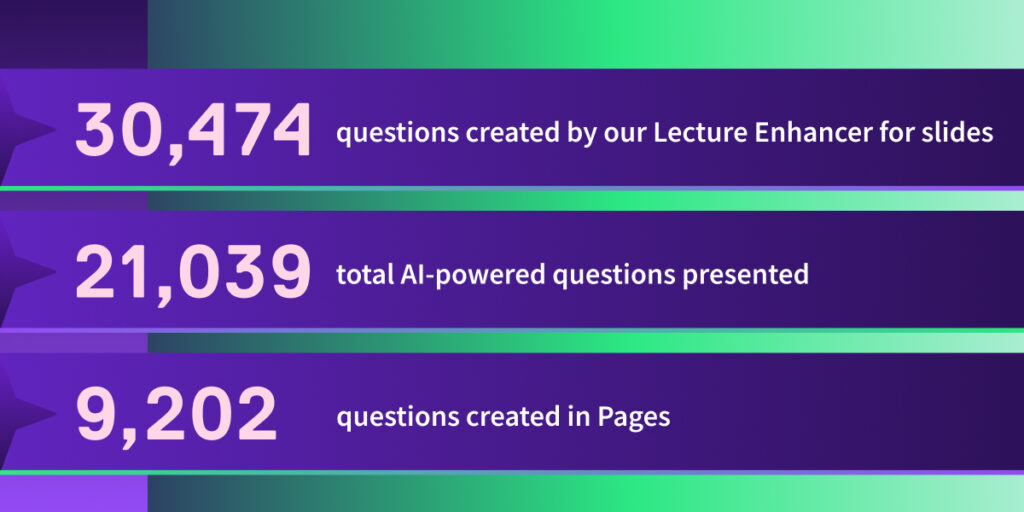
    Once again, you found a way to assess student comprehension without the extra time commitment. You created more than 30,400 questions using Ace’s Lecture Enhancer. Whether you wanted to drill into students’ understanding of mitosis in your biology course or Victorian architecture in your art history class, Ace offered tailored questions in response to the context of your material. Faculty also designed more than 9,200 questions using Top Hat Pages. That meant students were given yet another opportunity to assess their learning during textbook readings and homework.

    We thank you for your investment in AI-powered, active learning for every student. We wish you a successful start to the new semester!

    Source link

  • The Sky Is The 300 Character Limit: Bluesky

    The Sky Is The 300 Character Limit: Bluesky

    In the ever-evolving landscape of social media, platforms rise and fall as quickly as trends shift. Twitter, now known as X, has undergone significant changes, from its approach to verified accounts and content insights to the way it handles ad space. This volatility has paved way for competitors to emerge, and among them, Threads, but now Bluesky is rapidly gaining traction in the digital atmosphere.

    Recently surpassing 15 million users, Bluesky has positioned itself as a serious contender in the micro-blogging arena, offering users a fresh take on short-form content, photo sharing, video creation, and community-based content. 

    What is Bluesky?

    Bluesky is the first app to dethrone Twitter at the top of app store charts. Founded in 2019 by former Twitter employees, it was initially developed to complement the platform we all know but has since carved out its own identity. After operating on an invite-only basis through 2023, Bluesky is now fully open to the public. This was vital to the growth of the platform, as they attempted to appeal to users wanting to “flee” Twitter/X for a different space to share insights or cat memes.  

    At its core, Bluesky focuses on community-driven sharing, allowing users to interact in familiar ways—through likes, replies, reposts, and follows.

    The Advertising-Free Zone

    Currently, Bluesky operates without any advertising, offering a purely organic experience for its users. While this will likely change in the future, the ad-free environment has contributed to its appeal among users seeking a more authentic and less commercialized space. Users want a space where they can gather information or converse without the never-ending interruption ads that have come to populate X and other platforms. Users know ads will eventually be introduced, but the joy of new social platforms is how authentic and organic the space feels. It is a way to build authentic and personal connections in a completely curated feed, which is what users are looking for in a new space.  

    Unique Features That Set Bluesky Apart

    The most revolutionary feature is Bluesky’s decentralized model. Users can host their servers, storing data independently and setting their own rules, much like the structure of Discord. Here are a few of the other Bluesky features that make the platform stand out for many users:  

    • Content Detachment: Unlike other platforms, users can detach their accounts from content when it is reshared or quoted by others, giving them greater control over their posts. 
    • Zero Tolerance for Hate Speech: The platform is committed to fostering a safe environment, with a dedicated team actively monitoring content for hate or extremist behavior. 
    • Greater Control: BlueSky offers users the ability to control their feeds, and even manage multiple streams of content. Users can set up custom feeds or join public feeds tailored to topics of their choosing.  

    Additionally, Bluesky allows users to create unique domain-based handles (e.g., @username.sky), providing a distinctive identity for individuals and organizations alike. Universities could use .edu handles to strengthen their community presence and allow outsiders to know instantly where the server will focus.  

    Threads or Bluesky: Which Platform Should You Choose? 

    Both. It would help if you grabbed those handles when you can. Even if you don’t plan to post right away, it is a good plan of action to have them in your marketing department’s back pocket. You want to avoid becoming part of those challenges where others have your user and will make you purchase it. Think about the efforts you wish to make. What is the University’s voice for this style of media? Do you want to share updates and insights or try the latest catchphrases to meet your students? It could be a combination of all of this and figuring it out, seeing how your students interact, and making content to fit their needs. Threads right now does provide more insight, but it has yet to find it’s right footing within the world of short text. Bluesky seems to be excelling on that front.  

    What Does Bluesky Mean for Universities? 

    Bluesky’s rise signals a shift in how people want to consume media. Twitter/X has faced criticism for its unpredictable algorithms, ad policies, and evolving identity. In contrast, Bluesky promises a return to chronological timelines, community-building, and user-driven experiences. It is saying all the right words to users, and it will be interesting to see if it can keep its promises.  

    For universities and brands, this is a chance to establish a presence on a platform designed for engagement and conversation. Early adoption could secure valuable handles and position organizations to connect with students, parents, alums, and stakeholders in a more meaningful way. Bluesky’s community-first approach means content should be both informative and approachable, bridging gaps and fostering connections. Universities, for example, could use the platform to quickly share updates, create dialogues, and build a sense of belonging among their audiences. 

    How Will Bluesky Impact the Digital Landscape?

    Bluesky is more than just another social media platform; it’s a reflection of changing user expectations. As it continues to grow, universities and brands should take note and prepare for a potential shift in how they communicate in the digital space. With its decentralized foundation, focus on community, and fresh approach to micro-blogging, Bluesky is paving the way for a new era of social media.

    At EducationDynamics, we pride ourselves on staying at the forefront of social media trends. We are committed to exploring how organic platforms like Bluesky can help institutions engage new students and cultivate thriving online communities. For ongoing support and insights, connect with our organic social team and elevate your strategy.  

    Source link