
Category: Thoughts

  • Enroll in the Beatles MA Online: Study Music History

    Enroll in the Beatles MA Online: Study Music History

    I recognise that specialist courses, ‘Star Wars’ Studies, or Soap Opera Studies, often attract significant criticism from discipline purists. However, having a focus, a passion, and a shared point of reference that engages students across a range of disciplines, including cultural studies, sociology, anthropology, and economics, is a way to engage interest and ensure motivation—exposing students to academic perspectives while having them study something that they’re already passionate about. One has to wonder why there aren’t more programmes like this, particularly at the postgraduate level.


    Get ready, Beatles fans! Soon, students will be able to ‘come together’ with fellow enthusiasts and scholars from around the world to study the Fab Four. The University of Liverpool is reviving its unique Master of Arts course on the Beatles, and this time, it will be offered fully online.

    Launching in September 2026, the part-time MA in The Beatles, Heritage, and Culture programme will delve deeply into the band’s lasting cultural and economic influence on Liverpool and its surrounding areas.

    This course isn’t just about the songs. It explores how the Beatles’ legacy continues to shape everything from urban planning and civic design to heritage, tourism, and the creative industries in their hometown. Students get a chance to see how four lads from Liverpool changed not only music but also the very landscape of their city.

    While the program is online, students have the option to add a special two-week experience in Liverpool. This module includes daily lectures and site visits to iconic Beatles locations. It’s presented as students’ chance to interact with lecturers, peers, and industry professionals, and see the history they’re studying firsthand.

    Dr. Holly Tessler, the Program Director, offering the program online will allow people from all over the globe to “study Liverpool’s unique Beatles environment, history and heritage from scholars and practitioners who are immersed in this work.”

    The University of Liverpool is a leading authority on the academic study of the Beatles. The university’s Department of Music staff are part of the City of Liverpool’s Beatles Legacy Group, where they help shape local policy on Beatles heritage and tourism. Dr. Tessler herself is the co-editor of The Journal of Beatles Studies, so students will be learning from those who literally write the book on the subject.

    Applications for the programme will open in October 2025.

    Here a link for more information: https://news.liverpool.ac.uk/2025/08/26/liverpools-beatles-ma-returns-in-distance-learning-format/
    Source link

  • Flexible Learning and Policy Challenges

    Flexible Learning and Policy Challenges

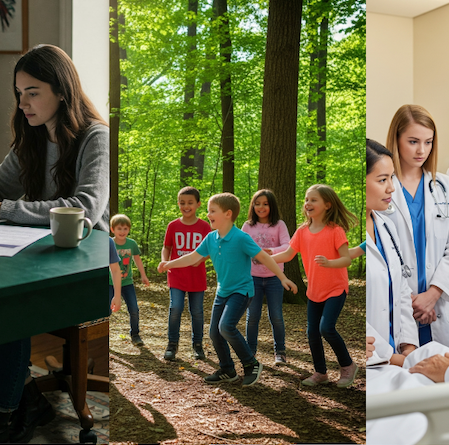
    What impact is flexible learning having on learners from K-12 through to professional development?

    New Zealand has remarkably high levels of digital access across the population. Why aren’t we out performing other countries in educational measurements?

    This piece serves to introduce a series of six challenges faced by policy makers around flexible learning.

    These six challenges are:

    1. Unequal Access to Technology and Connectivity
    2. Socioeconomic Disparities
    3. Digital Literacy and Skills Gaps
    4. Quality Assurance and Consistent Experience
    5. Teacher Preparedness and Support
    6. Policy and Funding Models

    In this first piece I want to establish what I mean by ‘flexible learning’.

    Like many I struggle to have a single, concise, and consistent “definition” of flexible learning. I would say that flexible learning is a model of delivery that offers learners agency and control over various aspects of their learning experience. Flexible learning is a spectrum. Formal learning courses exist on a continuum between “rigid” and “flexible” delivery. The more control and choice given to the learner, the more flexible the learning experience.

    Flexible learning aims to “empower the student to choose what learning should be studied face-to-face and that which should be studied online, and how to go about engaging with that learning” (2022). This Means empowering the learner to make choices regarding:

    • When: synchronous or asynchronous learning, pace-mandated or self-paced progression.
    • Where: Learning in different locations (home, campus, workplace, etc.).
    • How: Different modes of engagement (online, in-person, blended, hybrid, hyflex).
    • What: Some degree of choice over content or learning pathways, though this is often more associated with “open learning.” Indeed in a world where students are overwhelmed with choices, there are strong arguments that having a prescriptive programme serves students well.

    In my article “Definitions of the Terms Open, Distance, and Flexible in the Context of Formal and Non-Formal Learning,” (2023) I argued that flexible learning is a model of delivery, rather than a fundamental mode of learning. I posit that there are only two core modes of learning: in-person (or face-to-face) and distance learning. Flexible learning then emerges from various combinations and approaches to curriculum design that empower learners to choose amongst these two modes

    As education has a habit of inventing new terms for marginally different practices it might be worth just pointing out the relationship I think exists between flexible learning and forms of Blended, Hybrid, and HyFlex learning. I perceive blended, hybrid, and HyFlex learning as specific models of delivery that fall under the umbrella of flexible learning. They all aim to give agency to the learner regarding how they engage with the material, combining elements of in-person and distance learning.

    I believe that designing for flexible learning means considering the learner’s context and perspective, and creating learning experiences that are relevant, meaningful, motivating, realistic, and feasible within an agreed timeframe. This also involves careful consideration of learning outcomes and assessment in diverse delivery contexts. This means course creators need clarity about learning design principles in relation to flexible approaches, such as working with Notional Study Hours (2020a) and the importance of Learning Outcomes (2020b).

    Based on my broad definition thatFlexible Learning refers to educational approaches and models of delivery that provide learners with a significant degree of choice and control over the time, place, pace, and mode of their learning, leveraging combinations of in-person and distance learning to enhance accessibility and cater to diverse learner needs, how do we face those six policy challenges?

    Watch this space…

    Atkinson, S. P. (2020a, April 14). Working with Notional Study Hours (NSH) or “How much is enough?” Simon Paul Atkinson. https://sijen.com/2020/04/14/working-with-notional-study-hours-nsh-or-how-much-is-enough/

    Atkinson, S. P. (2020b, April 4). Designing Courses: Importance of Learning Outcomes. Simon Paul Atkinson. https://sijen.com/2020/04/04/designing-courses-importance-of-learning-outcomes/

    Atkinson, S. P. (2022a, July 15). How do you define hybrid, or hyflex, learning?. Simon Paul Atkinson. Retrieved from https://sijen.com/2022/07/15/how-do-you-define-hybrid-or-hyflex-learning/

    Atkinson, S. P. (2023). Definitions of the Terms Open, Distance, and Flexible in the Context of Formal and Non-Formal Learning. Journal of Open, Flexible, and Distance Learning, 26(2).3 Retrieved from https://jofdl.nz/index.php/JOFDL/article/view/521

    Source link

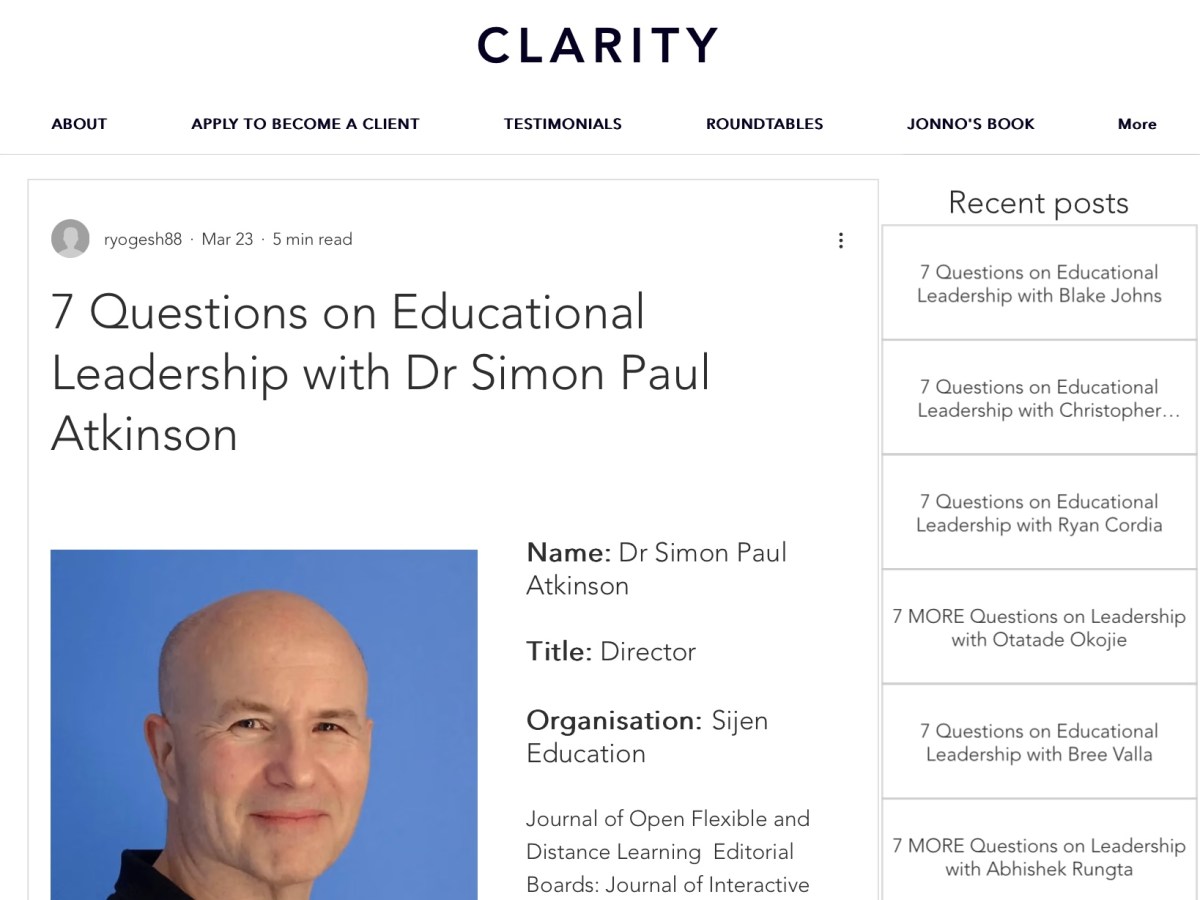
  • 7 Questions with Dr. Simon Atkinson

    7 Questions with Dr. Simon Atkinson

    Leave a Reply

    Your email address will not be published. Required fields are marked *