
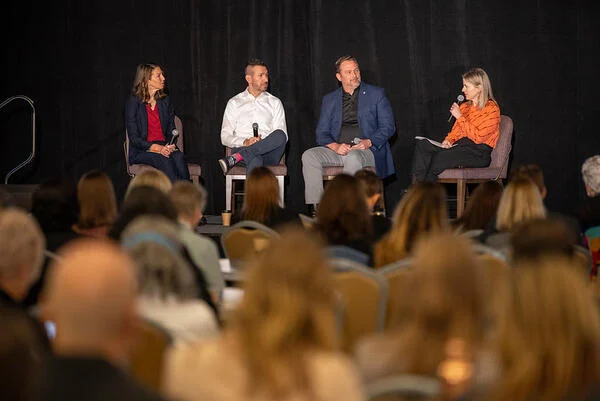
The latest episode of The Key, Inside Higher Ed’s news and analysis podcast, features a discussion between higher ed leaders and IHE editor in chief Sara Custer on how colleges can harness data to better support students.
Speaking at the Student Success 2025 event in November, Courtney Brown, vice president of strategic impact and planning at the Lumina Foundation; Elliot Felix, higher education advisory practice lead at Buro Happold; and Mark Milliron, president of National University, offered unique perspectives to the question of how institutions can be data-driven and student-centered.
“You are not going to serve a student population well unless you do your data work,” said Milliron. The “data work” includes establishing good data governance and data mapping, building a data warehouse, and facilitating data integration across support platforms such as a learning management system and student information systems, he said.
Putting processes and best practice in place is what allowed National to expand its capacity, he said. “I don’t think we could’ve scaled some of the strategies we’ve done unless we did the plumbing work upfront.”
On the question of scale, Felix encouraged institutions to combine their resources to serve more students. “How many institutions are creating their own, bespoke AI policy when they can do [it] as a group or borrow from Educause? There are so many ways to work together to go farther, to go faster.”
While colleges might be teeming with data, Felix encouraged institutions to look at external sources to gain a clearer picture of students’ learning journeys. “I do think more data beyond the walls—employer data, labor market data, employment outcomes—would be really helpful.”
Meanwhile, Brown argued that the needs of the modern-day student are varied and institutions must adapt to their students, rather than students adapting to colleges. Institutions that use data to understand whom today’s students are will be better placed to support their success, she said. “[Students] are parents, they are working, they are financially independent from their own parents. But most policymakers and others don’t think about that. So we need to understand who they are and then transform the system to better serve [them].”
Listen to the full episode here.