
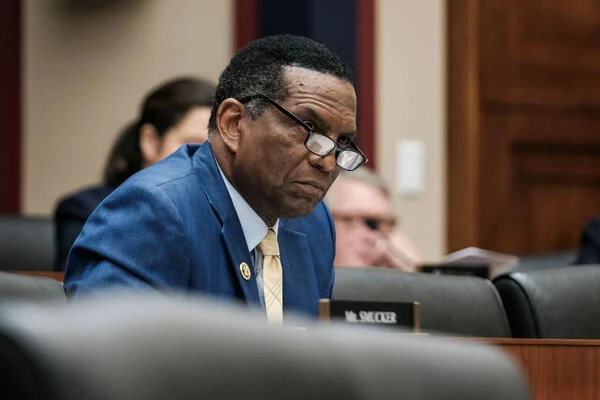
Republicans and Democrats showed rare agreement in a House committee meeting on Wednesday, putting their support behind digital skills transcripts that they say will make the economy more efficient and make education more skills-centered.
“This is a game changer,” said Rep. Burgess Owens, the Utah Republican who chairs the subcommittee.
The hearing shined a spotlight on the wonky world of learning and employment records, or LERs, and explored how to ensure they are available nationwide. It also progressed the conversation on workforce readiness, a bipartisan topic and an issue that has received heightened attention from House Republicans.
Students in the U.S. have access to more than 1.8 million credentials, but navigating those options can be challenging. At the same time, employers say they are struggling to find workers with the right skills for open jobs.
Although they are not a new idea, more associations, states and experts are turning to LERs as a way to better connect job seekers and employers. For instance, Western Governors University, which has had an LER platform since 2019, recently announced the WGU Achievement Wallet to help students track their skills and connect those to available jobs. A skills-based transcript is at the core of a new platform from the Educational Testing Service that Brandeis University and California State University campuses are piloting. To help boost adoption of LERs, the American Association of Collegiate Registrars and Admissions Officers last year launched the LER Accelerator Coalition.
These LERs “enable career mobility based on proven ability, not pedigree,” Western Governors president Scott Pulsipher told lawmakers at the hearing.
“When readiness is signaled through verified skills, opportunities expand to include those who might have been overlooked,” he said. “Few things are more profoundly human than enabling individuals to pursue a self-determined life. LERs, while seemingly abstract, exist for that purpose. They translate what individuals know and can do into real opportunity.”
Other witnesses said Congress can better help grow LERs by providing funding and encouraging states to create them. They also want lawmakers to require common open data standards, so the LERs are transparent and can be used across platforms.
“LERs only matter if people can use them,” said Scott Cheney, the CEO of Credential Engine. “If they’re trapped in proprietary systems, they do little for learners, workers or employers.”
Hearings like this offer some insight into lawmakers’ priorities and can lead to legislation. Since passing a landmark bill to overhaul student loans, the House education committee has delved into college pricing, alleged bias in the Truman scholarship, innovation in higher ed and campus antisemitism.
For Republicans, the LERs are a way to build on the One Big Beautiful Bill Act, which expanded the Pell Grant to short-term job training programs, and to support efforts to drop degree requirements.
Owens noted that short-term credentials, work-based learning and apprenticeships are increasing “as we shift away from the ‘college-for-all’ mentality and toward a skills-first approach.”
“LERs are the future,” said Owens, who played a video he narrated that explained how digital transcripts work.
Democrats pointed to the need to help workers advance their skills and navigate the labor market, citing rising unemployment numbers and slow job growth.
“LERs have the potential to make our economy more efficient, more equitable and more productive,” said Rep. Alma Adams, a North Carolina Democrat who serves as the subcommittee’s ranking member. “Employers are becoming overwhelmed with job applications containing limited information about the candidates’ skills, all of which can be hard to verify. Far too many employers have fallen into the habit of requiring college degrees for jobs that do not necessarily require them, effectively shutting out talented and qualified individuals who have the skills but not the diploma.”
But Adams and other Democrats worried about the data privacy in these online systems and said they want to see safeguards to protect workers. They also want to guarantee that workers have control over their data.
“We must ensure that a shift to learning and employment records does not enable an infringement on worker rights, increase discrimination or widen achievement and income gaps,” Adams said.