
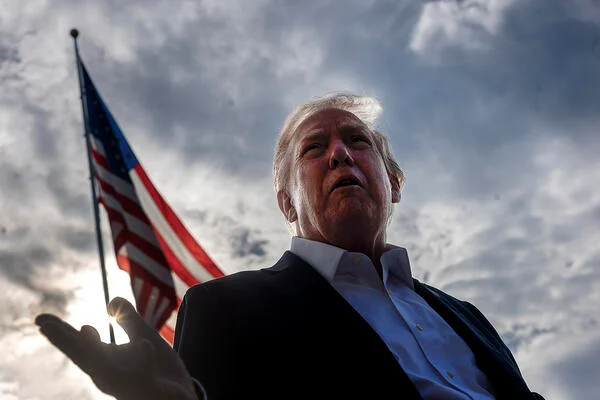
Trump officials have said that colleges could receive some benefits, such as preferential treatment for grant funding, if they agreed to the compact, which required several policy changes.
Kevin Dietsch/Getty Images
Apparently emboldened after cutting deals with several universities last year, Trump administration officials are reworking their controversial compact for higher ed that many institutions rejected outright, The New York Times reported.
Education Secretary Linda McMahon backed up the Times report in an interview with The Daily Signal published Wednesday. She told the conservative outlet that the administration is “working on developing the right kind of compact with some input that we’re already getting.”
“So I expect that once that’s done, we’ll see a lot more people signing up, a lot more universities signing up for that,” said McMahon, adding that she expected the universities that gave input will be “even more pleased with” the final version. She didn’t give a timeline for when a second version would be released.
The administration sent a draft of the compact to nine universities—Brown University; Dartmouth College; the Massachusetts Institute of Technology; the Universities of Arizona, Pennsylvania, Southern California and Virginia; Vanderbilt University; and Washington University in St. Louis—on Oct. 1 and asked them for feedback, though McMahon and other officials said the document was “largely in its final form.”
Of the initial nine, most declined to sign the compact, which would have required signatories to make policy changes to admissions, hiring and other areas in order to receive preferential treatment for grant funding. In her response to the government, MIT president Sally Kornbluth said, “The document also includes principles with which we disagree, including those that would restrict freedom of expression and our independence as an institution.”
Vanderbilt University and Arizona State University have said they would provide the requested feedback and haven’t ruled out signing on to the compact. Meanwhile, New College of Florida, Saint Augustine’s University and Valley Forge Military College have indicated interest.
According to the Times, the administration is looking for ways beyond the compact to bring change to colleges. For instance, the State Department is prioritizing visa requests at universities where undergraduate international students make up 15 percent or less of the student body, the Times reported. (The first draft of the compact required signatories to cap their international student enrollment at 15 percent.)