Almost all staff who participated in a ballot have voted no confidence in the vice-chancellor of the University of Technology Sydney, Andrew Parfitt.
Please login below to view content or subscribe now.
Membership Login


Almost all staff who participated in a ballot have voted no confidence in the vice-chancellor of the University of Technology Sydney, Andrew Parfitt.
Please login below to view content or subscribe now.

The last 12 months has marked a period of profound change and ongoing scrutiny for Australia’s higher education sector.
Please login below to view content or subscribe now.

Some Australian universities handle student attrition rates very well, and model examples all institutions should undertake to retain students.
Please login below to view content or subscribe now.

For instructors, it’s clear when student engagement strategies are needed, especially when facing blank stares, eyes focused on cell phones, and a lack of participation. These are telltale signs that students are not engaged during class. But why is student engagement so important? Student engagement is a broad concept that encompasses both the physical and psychological energy students dedicate to learning, as well as their motivation and emotional connection to academic material.
This article covers 34 student engagement strategies suitable for any college-level course, intended for instructors seeking practical tips and research-backed guidance on building classroom engagement. As a comprehensive guide to boosting student engagement, it highlights collaborative learning and digital interaction as key approaches to increase participation, understanding and enjoyment in both online and traditional educational settings.
Audience: This guide is designed for college instructors and educators who want to address disengagement and improve learning outcomes in their courses.
Why strategies matter: Student engagement is crucial for academic success and overall learning outcomes. Higher levels of student engagement are associated with improved academic performance. Engaged students are more likely to persist in their studies and achieve their educational goals. Engagement in learning activities enhances students’ motivation to learn—and students who are engaged in their learning are more likely to develop critical thinking skills.
Key benefits of student engagement:
In an era where technology permeates virtually every aspect of our lives, distractions are an ever-present concern. And this means that engagement strategies for students are becoming even more essential in modern college courses. So how do instructors build learning environments that are engaging, lively and motivated? They have to incorporate strategies to build community, connection and a love of learning.
Engaged students are typically more curious about a subject—perhaps even more passionate about it. Encountering new ideas can spark motivation and lead to deeper engagement, as students find joy in exploring innovative concepts and approaches. Increasing student engagement is crucial for enhancing students’ confidence, comprehension, and overall learning experiences. While some students may be motivated primarily by the pursuit of good grades, true engagement involves a desire to learn for its own sake and a deeper sense of intrinsic motivation. Increasing engagement can help improve student motivation and, in turn, boost student progress and achievement.
Student engagement is closely linked to student achievement. Numerous studies have found that when instructors use strategies that are explicitly designed to get students’ attention—and to actively engage them in the learning process, including quick, low-order activities to hold students attention during brief periods of inactivity—test scores and graduation rates increase, and learning objectives are more likely to be met, which makes understanding how to engage students even more important for instructors.
Here, we provide 34 strategies to bring creativity, collaboration and participation to your classroom.
In a classroom where engagement is emphasized, students are asked to participate more rigorously in the learning process and sometimes even in course design. Lectures still exist, but they now incorporate multimedia, technology and class participation. In hybrid and online learning environments, this can mean polling, classwide discussions and competitive activities. Integrating digital tools such as laptops, tablets and videos directly into lesson content can further enhance student engagement and make lessons more dynamic and relevant to digitally literate students. These approaches are highly effective for boosting student engagement by increasing participation, understanding and enjoyment in both online and traditional educational settings. These engaging, relevant activities for students can energize your classroom and take learning to a new level, wherever it takes place.
By engaging in hands-on activities, students learn to support, trust and listen to each other, while developing important skills like collaboration and communication—skills that can’t be learned from a textbook, interactive or not. Learning to get along with peers, for example, isn’t something you can pick up through memorization.
Transition: Next, we’ll define what student engagement strategies are and explore key terms and approaches that underpin effective engagement in the college classroom.
Student engagement strategies are activities, tactics and approaches that serve as a core educational practice for effective teaching. Educators can leverage these strategies during and after class to keep students invested in their learning. They can be used to increase active learning, participation and collaboration in the classroom—and can be everything from simple changes made in your next class to a complete revamp of your curriculum, course delivery and assessment methods.
Key definitions and interconnections:
The following strategies are effective methods for engaging diverse learners and can be adapted to fit various educational settings. Here are some creative strategies for engaging students in learning—ranging from small changes to more substantial pedagogical shifts.
Transition: With these definitions in mind, let’s look at how to create a positive classroom environment as the foundation for engagement.
A positive classroom environment is the foundation for promoting student engagement and building a thriving learning community. When students feel welcomed, respected and supported, they are more likely to participate actively and take ownership of their learning.
Teachers can foster this environment by thoughtfully arranging the classroom to encourage collaboration—such as grouping desks for small group work or creating spaces for student-led discussions. Displaying inspirational quotes and showcasing student work on classroom walls not only celebrates achievements but also helps students feel valued and connected to the learning process.
Encouraging collaborative learning is another key strategy. By providing opportunities for students to work together in small groups, teachers promote active participation and help students develop strong relationships with their peers. This sense of community makes students more comfortable sharing ideas and taking academic risks.
Teachers who model positive interactions and set clear expectations for respectful communication further contribute to a supportive classroom environment. Ultimately, a positive classroom climate is essential for keeping students engaged, motivated and eager to learn.
Transition: Once a positive environment is established, instructors can implement specific engagement strategies in their teaching practice.
1. Active learning: Create a teaching and learning environment primed for student participation, such as calling on students to answer a question, individual reflection and group problem-solving. Encourage students to take on active roles in collaborative learning environments, where they can teach or practice concepts with their peers. When students explain concepts to other students, it not only reinforces the explainer’s understanding but also benefits the rest of the class by clarifying ideas and promoting inclusive participation. Incorporate open-ended questions that may have more than one correct answer, allowing students to demonstrate comprehension beyond simple recall. Be mindful that distractions and feelings of exclusion can impact students’ working memory and learning outcomes.
Use case: Donna Smith, Instructor of Mathematics at Sierra College, used Top Hat to create a connected, engaging learning experience for students learning asynchronously. Leveraging Top Hat’s streamlined platform with features to customize course content, Smith uses more than 14 different question types to assess student learning as the course progresses. Next term, she plans to embed interactive questions between lecture videos, so students have the opportunity to practice course concepts right after learning them. Key takeaway: Flexibility and anonymity in questioning can support first-generation students and encourage participation.
2. Participatory teaching: This student-centered approach to pedagogy accounts for the different skills, backgrounds and learning styles of students. The focus of participatory teaching is on self-regulation and self-reflection; specific strategies include using different teaching methods and varying means of assessment, which adds a greater level of flexibility, a key part of any engagement strategies for online learning. When asking questions, provide wait time to allow students to think and formulate thoughtful responses, which can enhance participation and engagement.
3. Flip the classroom: Flip the traditional lecture-homework relationship. Students study the subject matter independently and outside class through tools such as pre-recorded videos. Class is then spent on student-centered learning such as working through problems, debating or group work. When engaging in group work, encourage students to collaborate on the same topic to enhance understanding and ensure everyone is included. After posing questions, allow students sufficient wait time to reflect before responding, which supports deeper engagement.
4. Technology in the classroom: Students expect to be constantly connected and want immediate feedback. Online and mobile technology can be used to provide active learning activities and to keep students engaged outside the classroom.
5. Classroom management strategies: Classroom strategies help instructors build a distraction-free environment. As an instructor, you can build in student engagement by asking learners to help shape classroom rules. As an activity in the first week of classes, decide on a set of shared values and create a set of guidelines, like active listening, what respectful disagreements look like and how to create a safe space for questions. Incorporate physical activity into the classroom to maintain engagement and alertness. Structure participation in such a way as to promote inclusivity and equitable involvement from all students. Design classroom environments to support students and their individual needs, ensuring everyone has the opportunity to succeed. Using humor throughout lessons lightens the mood and makes for a more enjoyable learning experience.
6. Writing: Exercises such as journaling and one-minute papers can help keep students engaged in class as well as improve thinking skills. These activities allow students time to reflect and engage more deeply with the material.
7. Culturally responsive teaching: This strategy ensures students see themselves reflected in course readings, activities and lesson plans. Faculty might bring in diverse guest speakers to give a lecture on a niche topic. Alternatively, educators might ensure a certain percentage of their required readings are authored by scholars from under-represented populations. Use relevant examples from students’ cultural backgrounds and real-life experiences to illustrate concepts and promote engagement.
Transition: With foundational teaching strategies in place, the next step is to align engagement activities with your curriculum for maximum impact.
Instructors can start lessons with engaging hooks to capture students’ interest and set the stage for active participation throughout the session.
8. Set expectations: At the beginning of a course, ask students what they expect from you and then try to meet those expectations. Students are more engaged when they have a good relationship with the instructor. It’s also important to recognize and engage individual students, considering their unique learning experiences, characteristics and needs to promote equitable learning outcomes.
9. Integrated curriculum: Combine disciplines rather than compartmentalizing subjects. Some medical schools, for example, have moved away from teaching subjects in isolation such as physiology and anatomy and moved toward studying organ systems where students learn the physiology and anatomy associated with that system.
Use case: John Redden, Associate Professor of Physiology and Neurobiology at the University of Connecticut, is a long-time Top Hat user and has leveraged the platform to offer a consistent and equitable hybrid learning experience. Key takeaway: Giving students control over their schedules and diversifying teaching and assessment methods supports engagement and equity.
10. Think-pair-share: Think-pair-share encourages students to work together to solve problems.
11. Make the course relevant: Students want courses to be relevant and meaningful. Use real-world examples to teach. Where the course is relevant to a specific occupation, ensure it’s aligned with the current needs of the occupation.
12. Cooperative learning: Encourage students to work together by arranging them in partners or small groups to help them achieve learning goals. Group work can include assignments, discussions, reviews and lab experiments—even having students discuss a lesson with their peers.
13. Authentic learning experiences: Encourage active engagement in the classroom by having students tackle real-world problems and attempt to come up with a solution through methods such as inquiry and experimentation. Ideally, the solution will benefit others or the community. Experiential learning—when students learn from reflecting on their real-world learning experience—is a further development of this, and is an effective teaching strategy.
14. Social media: Potential uses for social media include sharing relevant content, posting instructional videos on YouTube and facilitating ongoing discussion groups. However, strict guidelines for use must be put in place and enforced.
15. Quick writes: During each lesson, ask students to write down their questions, thoughts and points of clarification. This is an easy-to-implement way to encourage students to think critically and analytically about the course content.
Transition: To further promote higher-order thinking, the next section focuses on engagement strategies for critical thinking.
Promoting critical thinking in the classroom is essential for deeper learning and academic achievement. Engagement strategies that encourage students to analyze, evaluate and synthesize information help them move beyond surface-level understanding.
By requiring students to engage in thoughtful dialogue and collaborative problem-solving, teachers help them develop the critical thinking skills needed for success in the modern age. These strategies not only increase student engagement but also foster a classroom culture where deeper learning and meaningful academic achievement are the norm.
Transition: Empowering students with autonomy is another powerful way to enhance engagement, as explored in the next section.
Empowering students with autonomy is a powerful way to enhance student engagement and motivation. When students are given choices in their learning process—such as selecting topics for projects, choosing how to present their work, or setting personal learning goals—they feel a greater sense of ownership and investment in their education. This sense of agency encourages students to take an active role in their learning environment, leading to deeper learning and understanding.
Transition: Assessment is another key area where engagement strategies can make a significant difference, as detailed in the following section.
16. Prepare for class before class: Students get more out of class time if they’re familiar with the material before they arrive. Exercises such as pre-class quizzes ensure they’re knowledgeable enough to contribute.
17. Assess early and often: Frequent quizzes for formative assessment (for “fun”) work well alongside traditional midterm and final exams. Frequent testing reduces the temptation for students to cram and forces them to space out their learning, which leads to better retention. Having the first test within the first few classes also helps prevent students from falling behind—boosting student achievement early. Use formative assessments to hold students accountable for their learning, encouraging consistent participation and responsibility.
18. Assess attendance: Student attendance can improve grades as well as engagement. Consider making attendance part of their overall assessment. Many learners enter university without proper study skills and first-year students can benefit from the structure of mandatory attendance.
19. Problem-based or project-based learning: Students are tasked with solving a problem or completing a project, but the focus is on the end product, allowing students to determine what resources are needed to solve the problem or complete the project.
Instructors should also regularly self assess their use of student engagement strategies, using tools like self-assessment tables, to identify which approaches they currently use and which could be adopted to improve classroom inclusion.
Transition: Presentation skills and classroom delivery also play a vital role in engaging students, as discussed next.
20. Use visual representations: Engage students with animations, 3D representations and concept maps, all of which can help them visualize complex subjects. Instructors should also focus on paying attention to individual students’ engagement and needs when using visual tools, ensuring that every learner benefits from these strategies.
21. Inquiry-based learning: To answer questions posed by the instructor or by the students themselves, a learner undertakes his or her own research to arrive at an answer. Inquiry-based learning can be as simple as watching video lectures, or more involvement could come from designing and performing an experiment. Encouraging participation from one student at a time during inquiry-based activities helps foster an inclusive environment where each individual feels valued and supported.
22. Use simulations: Games or role-playing place students in an imaginary setting defined by the instructor, providing for an interactive, participatory learning experience.
23. Tell stories: Wherever possible, tell stories to illustrate concepts when giving lectures. This helps students to process course concepts in their own words and move past rote memorization. For example, you might ask them to paraphrase a story or definition, explain a concept in their own words, tell a story that relates to it, or provide analogies to further illustrate a course concept. Encouraging one student at a time to share their perspective or story can promote inclusivity and ensure that every voice is heard.
Use case: Steve Joordens, Professor of Psychology at the University of Toronto, has devoted much of his career to the issue of student distraction and its ephemeral counterpart, student engagement. And if he’s learned one thing about engagement, it’s that there’s more than one way to foster it. So he set about trying to name the different techniques, which led Joordens to create a taxonomy of student engagement, complete with its own handy label: RIFS, an acronym for “Relevant, Interesting, Fun, Social.”
Key takeaways:
Transition: Technology is another powerful tool for enhancing engagement, as explored in the next section.
Integrating technology into the classroom is a highly effective way to boost student engagement and promote deeper learning. Technology offers students interactive and immersive experiences, such as virtual field trips, simulations, and educational games, which make learning more dynamic and memorable.
By leveraging digital tools, teachers can create a learning environment that supports student engagement, fosters deeper learning and prepares students for success in the modern age.
Transition: Collaboration is also essential for engagement—let’s look at strategies that encourage students to work together.
24. Snowball discussions:
25. Philosophical chairs:
26. Affinity mapping:

27. Concentric circles:
28. Make it personal:
29. Socratic seminar:
Transition: Communication skills are also vital for student success; the next section highlights strategies to build these skills.
30. Brainwriting:
31. Concept mapping:
32. Debate:
33. Compare and contrast:
34. Assess/diagnose/act: This activity helps strengthen students’ problem-solving abilities and can spur more dynamic discussions. Propose a topic or controversial statement, then follow the steps below to start a discussion:
Transition: To ensure these strategies lead to meaningful learning, it’s important to focus on fostering deeper understanding, as described in the next section.
To foster deeper learning and understanding, teachers must go beyond surface-level instruction and create opportunities for students to engage in critical thinking, analysis, and reflection.
These approaches not only increase student engagement but also help students develop essential skills such as critical thinking, problem-solving, and effective communication. By providing students with varied and authentic learning experiences, teachers support deeper learning and prepare students to thrive in the modern age.
Transition: The following sources inform these strategies for engagement and deeper learning.
Student engagement is a broad concept that extends far beyond simple participation—it is the driving force behind meaningful learning, academic achievement, and the development of essential skills in individual students. When teachers encourage students to take an active role in the learning process, they create a classroom environment where collaborative learning, real-world applications and technology come together to make lessons relevant and memorable.
Promoting student engagement requires a thoughtful blend of instructional strategies, such as think-pair-share, group work, and open-ended questions. These approaches not only hold students accountable for their learning but also encourage them to reflect on their understanding and connect course material to real-world situations. By providing students with relevant examples and opportunities to share their ideas, teachers help students feel valued and motivated to stay engaged.
A supportive learning environment is central to increasing student engagement. When students feel included and respected, they are more likely to participate actively, think critically, and pursue deeper understanding. Engagement strategies that foster emotional engagement, critical thinking and active participation lead to higher levels of motivation, persistence and overall academic achievement.
Teachers play a vital role in promoting student engagement by designing classroom activities that are interactive, inclusive and aligned with learning goals. By prioritizing collaborative learning and giving students the chance to take ownership of their education, educators can transform the classroom into a space where deeper learning and academic success are the norm.
Ultimately, making student engagement a central idea in educational practice benefits both students and teachers. When learning is relevant, interactive and fun, students are more likely to thrive academically and reach their full potential. By following these engagement strategies and fostering a positive classroom environment, teachers can ensure that all students feel supported, motivated, and empowered to learn and grow—creating a lasting impact on their educational journey.
In this context, “student engagement” refers to students’ active participation and investment in their own learning. That includes not just attending class, but interacting with course content (e.g. doing readings, watching lectures), contributing in discussion, applying ideas to assignments or problem sets and reflecting on materials—whether in class, online, or during self-study.
Research and teaching experience show that active engagement helps students better understand, retain, and apply concepts. Engaged students learn more deeply, develop critical thinking, and often perform better academically. Passive learning tends to result in poorer retention and less ability to apply knowledge outside the classroom.
Many engagement strategies can be adapted to both settings. For large lectures, tools like interactive polls, low-stakes quizzes, clicker questions, or online discussion boards help engage many students at once. In smaller seminars, group discussion, peer-review, collaborative assignments, or open discussion foster deeper interaction and student voice. Blended approaches—combining lecture, active learning, and ongoing formative assessments—often work well regardless of class size.
It depends on the strategy. Some activities like adding a quick in-class poll or discussion prompt may take only a few minutes. Others, like redesigning assignments around active learning or setting up peer review, require more planning up front. However, many instructors find the extra effort pays off: engaged students are often more motivated, more likely to participate, and may require less remedial support later on.
Learn more about Top Hat’s student engagement software.

MINNEAPOLIS, MN—Lerner Publishing Group, a leading publisher of K-12 educational materials, is proud to announce the launch of Dr. Gholdy Muhammad’s groundbreaking Genius and Joy curriculum in Summer 2026. This new, all-in-one supplemental curriculum for Grades K–5 is grounded in Dr. Muhammad’s Five Pursuits Framework, a research-based educational model that enhances student engagement and intellectual growth.
Within her research and scholarship in literacy development, English education and writing instruction, and culturally responsive pedagogies, Dr. Muhammad posed the question, “What if the purpose of schools and curriculum was to recognize and elevate the genius and joy of teachers and students?” The result is the Genius and Joy curriculum. This innovative curriculum prioritizes academic rigor by developing literacy skills, building subject area knowledge and centering students’ learning experience on joy. The curriculum is deep in content and thought while also practical and easy for teachers to use.
Dr. Gholdy Muhammad’s Five Pursuits framework of Identity, Skills, Intellect, Criticality, and Joy is a research-based instructional approach that enhances student engagement and achievement by focusing on literacy, identity development, and historical awareness. Its impact is evident in the Lemon Grove School District in California, where implementation of the framework has led to measurable gains: Black and African American students have consistently increased their academic achievement, even surpassing the overall student population in English Language Arts proficiency. Additionally, Multilingual Learners (MLLs) in the district have experienced a tripling in reclassification rates, reflecting the effectiveness of equity-centered, data-informed practices that align with the framework’s core tenets. Schools and districts across forty-three states have implemented the Five Pursuits Framework into their instructional practices, and have been clamoring for an official curriculum.
“I wanted teachers to see curriculum as the stories we teach and tell, as the world around us, and as the legacy that we leave in the lives of our children,” said Dr. Gholdy Muhammad. “It is my hope that this curriculum is a genius and joy experience for youth and teachers alike. We all deserve a comprehensive curricular experience.”
The Genius and Joy Curriculum
“We know that true learning happens when students see themselves in the material, feel their voices are valued, and are encouraged to think critically about the world around them,” said Adam Lerner, Publisher and CEO of Lerner Publishing Group. “We are proud to partner with Dr. Gholdy Muhammad on Genius and Joy to create an environment where students can not only excel academically, but also engage with Lerner’s award-winning books in ways that help them grow as whole individuals.”
Genius and Joy will be available for purchase through Lerner Publishing Group starting Summer 2026. The curriculum will be accompanied by professional development resources to help educators implement the framework effectively, ensuring that the values of joy and academic excellence reach students in classrooms across the country.
For more information about Genius and Joy visit geniusandjoycurriculum.com.
Click here to watch Dr. Gholdy Muhammad’s webinar Celebrate the Genius and Joy of Every Student in Your Classroom.
About Dr. Gholdy Muhammad
Dr. Gholnecsar (Gholdy) Muhammad is the John Corbally Endowed Professor of Literacy, Language, and Culture at the University of Illinois Chicago. She has previously served as a classroom teacher, literacy specialist, school district administrator, curriculum director, and school board president. She studies Black historical excellence in education, intending to reframe curriculum and instruction today. Dr. Muhammad’s scholarship has appeared in leading academic journals and books. She has also received numerous national awards and is the author of the best-selling books, Cultivating Genius and Unearthing Joy. She also co-authored the book, Black Girls’ Literacies. Her Culturally and Historically Responsive Education Model has been adopted across thousands of U.S. schools and districts across Canada. In 2022, 2023, 2024 and 2025, she was named among the top 1% Edu-Scholar Public Influencers due to her impact on policy and practice. She has led a federal grant with the United States Department of Education to study culturally and historically responsive literacy in STEM classrooms. In the fall of 2026, her first curriculum, entitledGenius and Joy, will be available to schools and educators.
About Lerner Publishing Group™Lerner Publishing Group™ creates high-quality fiction and nonfiction for children and young adults. Founded in 1959, Lerner Publishing Group is one of the nation’s largest independent children’s book publishers with seventeen imprints and divisions: Carolrhoda Books®, Carolrhoda Lab®, Darby Creek™, ediciones Lerner, First Avenue Editions™, Gecko Press™, Graphic Universe™, Kar-Ben Publishing®, Lerner Publications, LernerClassroom™, Lerner Digital™, Millbrook Press™, Soaring Kite Books, Sundance Newbridge, Twenty-First Century Books™, Zest Books™, and Lerner Publisher Services™. For more information, visit www.lernerbooks.com or call 800-328-4929.

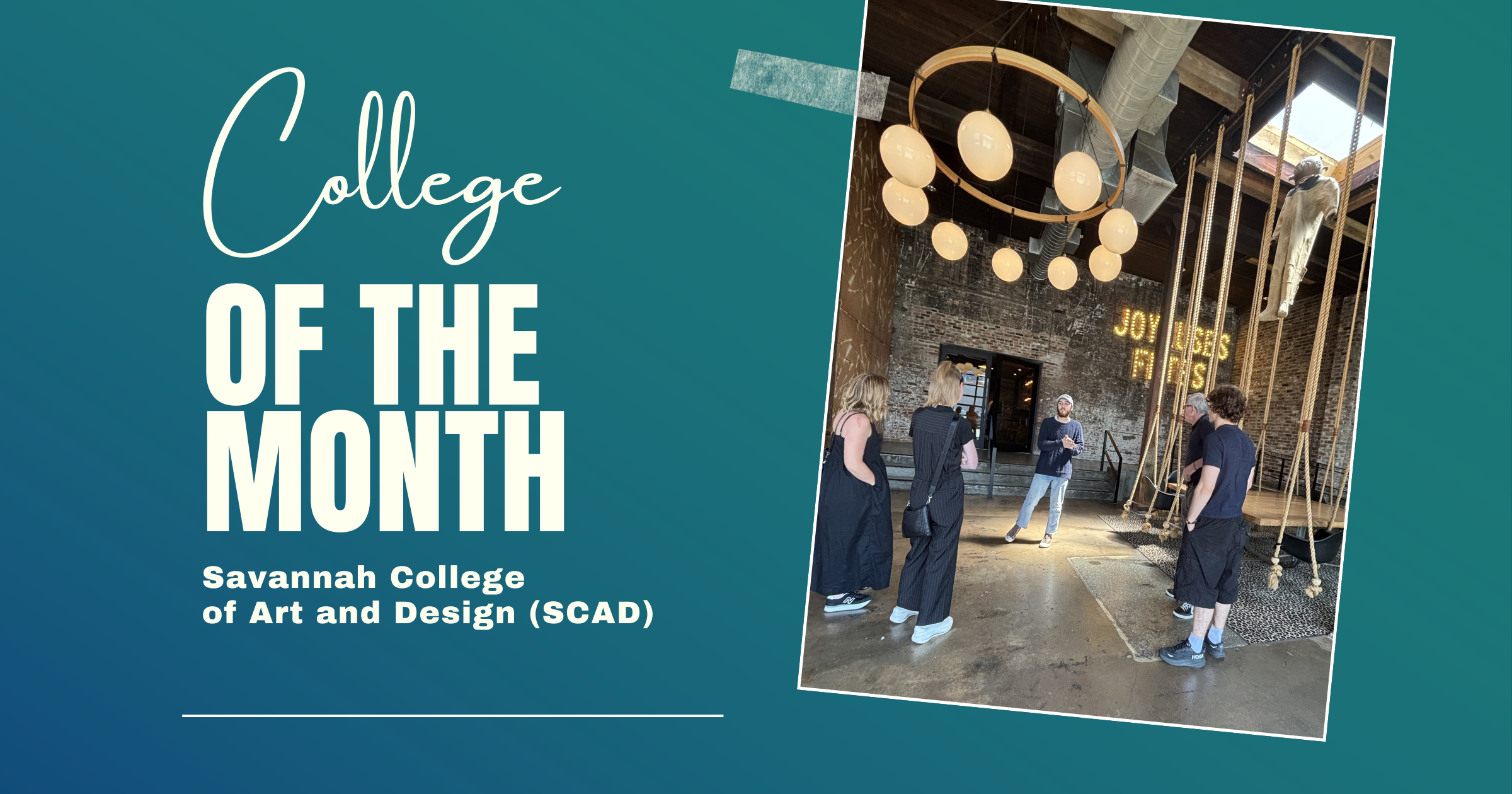
Art students, take note. December’s College of the Month highlights Savannah College of Art and Design (SCAD), which offers a collaborative, creative environment that will allow you to build an impressive portfolio while immersed in vibrant Savannah, Georgia. If that sounds exciting to you, read more about Aleece’s visit to SCAD!
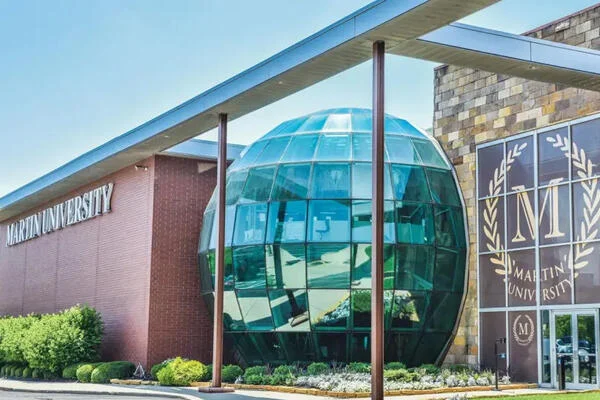
Martin University is the only predominantly Black institution in Indiana.
Martin University plans to wind down operations at the end of the current semester.
College officials are calling the move a “pause,” stopping short of calling it a closure. They attribute the pause to financial challenges, declining enrollment and the lack of an endowment.
“The Board has announced a pause in operations at the end of the semester. No final decision has been made regarding permanent closure. Discussions continue about how to carry forward Martin’s mission,” Martin spokesperson Keona Williams wrote to Inside Higher Ed by email.
While the official language indicates a pause, it appears unlikely Martin will resume operations given its financial challenges and historical precedent, which shows that institutions are rarely resurrected after ceasing operations. Some, such as Knoxville College, have bucked that trend; the historically Black Tennessee college suspended operations in 2015, reopened in 2018 and is working to regain accreditation.
Given Martin’s financial woes, Board of Trustees chairman Joseph Perkins noted in a news release that the private university needed “more community support,” especially for “first-generation college students who are fighting courageously to make a better life for their families.” Martin is seeking donations to continue operations through December. The college’s president Sean L. Huddleston stepped down late last month.
Should Martin close, Indiana will lose its only predominantly Black institution.
The decision to pause operations comes as Martin has teetered on the brink of closure for years and received warnings in its last three publicly available audits warning that it could go out of business due to significant financial challenges in the aftermath of the coronavirus pandemic.
“The University has seen enrollment declines during the COVID-19 pandemic. While the enrollment has stabilized, it has not returned to the pre-pandemic levels the University once saw. The University has incurred additional liabilities during the year due to the results of additional borrowings deemed necessary by management and the Board of Trustees for operations, including the use of restricted funding for operational needs,” auditors wrote.
Its latest available audit also noted that Martin “experienced a significant cyber-attack that resulted in extensive corruption of the University’s records that required significant resources for operations and recreation of the University’s records,” which “has taken a significant amount of time and effort due to significant turnover and instability in the finance and operation teams.”
As noted by auditors, enrollment has also plunged in recent years.
Martin had nearly 1,000 students in fall 2010, but by fall 2023, its head count was at just 223 students, according to federal enrollment data.
Martin was founded in Indianapolis in 1977 to “serve low-income, minority, and adult learners,” and the majority of its students are Black, female and over 25, according to its website. The university was named in honor of civil rights activist Martin Luther King Jr. and St. Martin de Porres, a Peruvian saint who worked to achieve racial harmony in the 16th and 17th centuries.

A story about pollution caused when fires destroy cars and devices that are supposed to be ecological took first prize in News Decoder’s 18th storytelling competition.
News Decoder published the article, “Are you storing toxic waste in your home or car?” by Paolo McCarrey on 11 November. McCarrey is a student at The Thacher School in California.
Three stories tied for second place: A personal reflection, “What’s not talked about when you live overseas,” about the different forms racial discrimination can take in different countries by Aida Sherwani of Connecticut College in the United States; a story about discrimination and ignorance surrounding autism in Tanzania by Ramona-Blessing Mkunna, a student at the African Leadership Academy in South Africa; and an article about the effect of climate change on the wine industry in Belgium and France by Slav Karaslavov, a student at the European School Brussels II (EEBII) in Belgium.
While News Decoder published Sherwani’s article in July, the stories by both Mkunna and Karaslavov were submitted in draft form.
Two other unpublished drafts tied for third place: An article about climate illiteracy by Amaury Chauve, who also attends EEBII and a podcast by Catherine Araba Esaaba Dowuona-Addison, a student at SOS-Hermann Gmeiner International College in Ghana, about the religious cult leader Jim Jones, who killed by poison some 900 of his followers in the 1970s.
Of the first place winner, one judge noted that the interviews served as a valuable tool in the investigation. “I also find the argument central to current discussions around climate change solutions, so the timeliness is great,” the judge wrote.
The winners were selected by a three-person jury that included Thadeus Greenson, an award-winning investigative reporter who serves as press education specialist at the First Amendment Coalition in California, News Decoder correspondent Christianez Ratna Kiruba, a physician and patient rights advocate in India who writes about healthcare issues and former News Decoder Student Ambassador Joshua Glazer, now a student at Emory University in the U.S. state of Georgia.
They rated the entries based on set criteria: whether the author interviewed anyone for the story; whether the student reported the story without bias; whether the student considered different perspectives and the judge’s own subjective assessment about the quality of the story.
News Decoder Educational News Director Marcy Burstiner was particularly impressed by the challenging topics students took on. “The entries knock back the notion that young people shy away from complexity,” she said. “Give them room to explore topics that interest them, give them to tools to find experts and reliable sources and they will dive into really complicated issues.”
The entries came from 10 schools in six countries on four continents.
To produce an article or podcast for the competition, the students needed to find an original topic, credible sources and experts to interview. For stories that explored personal experiences, they needed to dive deep into their feelings and into what was happening around them.
“If you didn’t know that the entries were being done by people with no journalism experience you would think they had come from professional publications,” Burstiner said.
For articles to be published on News Decoder, they have to meet professional standards. Students work through News Decoder’s approach, known as PRDR for Pitch, Report, Draft and Revise. The winning stories that were published went through that process. The other stories will be published in the next few weeks, after the students go through that final revision process.
News Decoder also encourages students to write through a global lens, connecting problems in one community with similar problems in other countries.
The contest is held two times a year in honor of the late Arch Roberts Jr., who served with the International Atomic Energy Agency in Vienna after more than 12 years as a staff member with the U.S. House Foreign Affairs Committee. With the backing of an anonymous donor, News Decoder was able to award a total of $800 in cash prizes to this year’s winners. The entries came from students across News Decoder’s network of school partners.
To be considered for the contest, an entry must have been written by one or more students enrolled in a News Decoder partner institution.
Learn more about News Decoder’s school partnership program.
Paolo McCarrey, The Thacher School (USA) for “Are you storing toxic waste in your home or car?”
Aida Sherwani, Connecticut College (USA) for “What’s not talked about when you live overseas”
Ramona-Blessing Mkunna, African Leadership Academy (South Africa) for “The Misconception of Autism in Tanzania”
Slav Karaslavov, EEBII (Belgium) for “From vine to bottle: Europe’s newest climate-caused crisis may significantly alter one of its oldest industries”
Amaury Chauve, EEBII (Belgium), for “Can we tackle the problem of climate illiteracy?”
Catherine Araba Esaaba Dowuona-Addison, SOS-Hermann Gmeiner International College (Ghana) for “Paradise on Earth — a podcast”

This blog, kindly authored by Thomas Owen-Smith, Principal Consultant at SUMS Consulting, and William Phillips, Data Analyst at SUMS Consulting, is part of a three-part mini series on UK universities’ approaches to land use.
Today’s blog introduces the work.
With the economic and policy developments of the last 18 months, the UK’s higher education institutions now face a heady mix of acute challenges and an emergent agenda around the contributions they are expected to make towards the country, its economy and society.
The sector is already seeing mergers, amongst a range of potential measures to reduce costs. That a prominent recently merged institution is keeping its constituent campuses is not really surprising: for most universities, their mission and even shifting identities are still broadly bound up with their location.
Over recent years, this has spoken to agendas such as the Johnson government’s “levelling up” or institutions’ own civic commitments. And place remains prominent in the current government’s Modern Industrial Strategy, in which Mayoral Combined Authorities will be central actors in integrated regional planning for many areas, and of course in the Post-16 Education and Skills White Paper.
We know that universities are critical economic players nationally and regionally, due to their scale and the value created by their education, research and convening power.
We also know that universities cover a lot of space. A sense of this is reported in quant data terms each year in the (now voluntary) HESA Estates Management Record which, although it does not cover all providers, can be deployed for powerful analysis at the aggregate level.
How we use our land is a national question that cuts across a range of issues including economic development, food security and a healthy environment for people and nature, amongst many others.
These questions are about “where” as well as “how much”.
For university estates we have the numbers, but until now we have not had much of a sense of where certain things are, happen or could potentially happen.
We have sought to change that.
In our new report published today, we have used public and open-source datasets and methods to map the UK higher education sector for the first time.
Overlaying the boundaries for 174 institutions (those with data on Open Street Map) onto geospatial datasets (that is, datasets which contain a geographic or spatial component which brings the “where”) has allowed us to explore perspectives about universities’ estates and how they use them – which would not be possible without geospatial data.
The list of institutions, representing a mix of more traditional institutions reporting to HESA as well as some alternative providers, does not constitute the whole sector (or all of its known lands). But we believe the coverage is sufficient to allow for grounded discussion of sector patterns.
We explore the data over four strategic themes for institutions and at aggregate (sector) level:
The report is accompanied by a mapping tool which allows user to explore these questions for themselves.
Purely in the direct financial terms we have modelled, “risks” and “opportunities” are to the tune of tens or hundreds of millions of pounds annually for the sector. And the wider dimensions of opportunities speak not only to universities’ contributions to environmental sustainability, but also to their role as critical players in regional economies and systems.
As such, this work has implications for a range of points in institutions’ thinking. These, of course, include approaches to risk, estates management, capital and strategic planning; but also core mission questions such as regional development, skills, innovation and industry partnership.
Over this series of blogs we will explore the strategic themes mentioned, starting today with the state of the sector’s land.
Due to the complexity of the topics involved, we have not been able to treat every risk and opportunity area in all the detail they deserve. But we do hope to inspire new ways of thinking about universities’ lands and locations and how these fit into their wider strategic context, including trade-offs and opportunity costs.
We also point to examples of institutions which are already engaging with these questions, to resources from sector organisations such as AUDE, EAUC and Nature Positive Universities, and to our own work supporting institutions across a range of topics relevant to this work.
Our mapping of UK universities’ core estates covers a total area of 6,390.1 hectares (ha).
This does not cover the full extent of the HE estate due to limitations of the data available. (The 2023 HESA Estates Management Record reports a total of 7,293 ha “total grounds area” for 135 reporting institutions and a larger “total site area” – roughly the same size again – outside the core estate). But it does achieve more than 80% coverage of core estates.
While our mapped area constitutes just 0.026% of the UK’s land surface, it equates to a town the size of Guildford, Chesterfield or Stirling.
Of this area, 3,796.8 ha (nearly 60%) is built environment (buildings or artificial other surfaces), 1,893.6 ha (around 30%) is grass, 646.4 ha (around 10%) is covered by trees and 52.8 ha (a little less than 1%) is water and waterlogged land.
We also used machine learning to develop a typology of institutions based on their land use profiles. This identified three clusters of institutions, each of which stands out for possessing a higher proportion of one of the three core land use types (built, grass, trees) than the other two clusters.
The various profiles of land use and institutions present different types of risks and opportunities, which we will explore over the coming days.
SUMS Consulting will host a webinar from 11:00 to 12:00 on Thursday 22 January 2026. The webinar will include a walkthrough of the report and online tool, and panel discussion featuring Nick Hillman OBE (Director of HEPI). Register here.

Key points:
America’s special education system is facing a slow-motion collapse. Nearly 8 million students now receive services under the Individuals with Disabilities Education Act (IDEA), but the number of qualified teachers and related service providers continues to shrink. Districts from California to Maine report the same story: unfilled positions, overworked staff, and students missing the services they’re legally entitled to receive.
“The promise of IDEA means little if there’s no one left to deliver it.”
The data tell a clear story. Since 2013, the number of children ages 3–21 served under IDEA has grown from 6.4 million to roughly 7.5 million. Yet the teacher pipeline has moved in the opposite direction. According to Title II reports, teacher-preparation enrollments dropped 6 percent over the last decade and program completions plunged 27 percent. At the same time, nearly half of special educators leave the field within their first five years.
By 2023, 45 percent of public schools were operating without a full teaching staff. Vacancies were most acute in special education. Attrition, burnout, and early retirements outpace new entrants by a wide margin.
Why the traditional model no longer works
For decades, schools and staffing firms have fought over the same dwindling pool of licensed providers. Recruiting cycles stretch for months, while students wait for evaluations, therapies, or IEP services.
Traditional staffing firms focus on long-term contracts lasting six months or more, which makes sense for stability, but ignores an enormous, untapped workforce: thousands of credentialed professionals who could contribute a few extra hours each week if the system made it easy.
Meanwhile, the process of credentialing, vetting, and matching candidates remains slow and manual, reliant on spreadsheets, email, and recruiters juggling dozens of openings. The result is predictable: delayed assessments, compliance risk, and burned-out staff covering for unfilled roles.
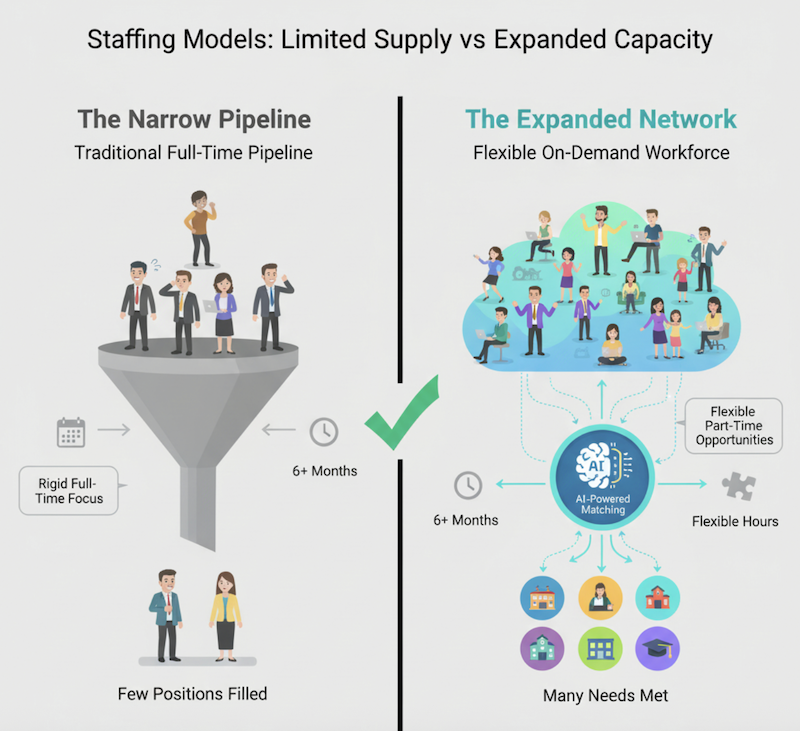
“Districts and recruiters compete for the same people, when they could be expanding the pool instead.”
The hidden workforce hiding in plain sight
Across the country, tens of thousands of licensed professionals–speech-language pathologists, occupational therapists, school psychologists, special educators–are under-employed. Many have stepped back from full-time work to care for families or pursue private practice. Others left the classroom but still want to contribute.
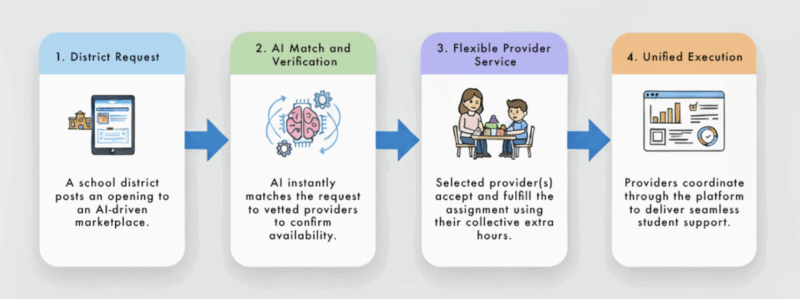
Imagine if districts could tap those “extra hours” through a vetted, AI-powered marketplace. A system that matched real-time school requests with qualified providers in their state. A model like this wouldn’t replace full-time roles; it would expand capacity, reduce burnout, and bring talent back into the system.
This isn’t theoretical. The same “on-demand” concept has already modernized industries from medicine to media. Education is long overdue for the same reinvention.
What modernization looks like
A moment of urgency
The shortage isn’t just inconvenient; it’s systemic. Each unfilled position represents students who lose therapy hours, districts risking due-process complaints, and educators pushed closer to burnout.
With IDEA students now representing nearly 15 percent of all public school enrollment, the nation can’t afford to let a twentieth-century staffing model dictate twenty-first-century outcomes.
We have the technology. We have the workforce. What we need is the will to connect them.
“Modernizing special education staffing isn’t innovation for innovation’s sake, it’s survival.”