Blog

  • international education stories that shaped 2025

    international education stories that shaped 2025

    Here are five key stories that captured how the region strengthened its global education footprint, expanded transnational provision and reshaped student mobility.

    1. UAE leads MENA surge as international study interest soars

    The United Arab Emirates emerged as one of the region’s most prominent education hubs in 2025, experiencing a sharp increase in international study interest. Data highlighted growing demand from students across MENA and beyond, reinforcing the UAE’s position as both a destination for inbound mobility and a strategic base for international providers operating in the region.

    2. UAE streamlines accreditation process for HEIs in Dubai

    Dubai took steps to simplify and align its higher education accreditation processes, a move aimed at reducing regulatory duplication while maintaining quality assurance. The changes were widely seen as a boost for international universities operating in, or considering entry into, the emirate, strengthening Dubai’s appeal as a transnational hub for education.

    3. Strategic planning pays off for the MENA region in QS rankings

    Across the region, strong investment in research output, international partnerships, and reputation reinforcements translated into tangible gains in the QS World University Rankings. Several MENA universities from countries such as Saudi Arabia, Qatar, UAE, and Lebanon all climbed significantly, with record representation from the region underscoring how coordinated national strategies are beginning to deliver global recognition.

    4. University of New Haven announces Saudi Arabia Campus

    Saudi Arabia continues to position itself as a major hub for transnational education, with the University of New Haven opening a campus in the Kingdom. The move reflected growing international confidence in Saudi Arabia’s education market, as well as the country’s broader ambitions to attract top foreign providers under its Vision 2030.

    5. Egypt signs 12 cooperation agreements with the University of Louisville

    Elsewhere in the region, Egypt strengthened its international academic ties through a series of cooperation agreements between 12 Egyptian universities and the University of Louisville in the US. The agreements aimed to expand research collaboration, faculty exchange, and student mobility, signalling Egypt’s renewed focus on global engagement.

    Source link

  • New year’s honours knighthood for Cabot CEO Taylor

    New year’s honours knighthood for Cabot CEO Taylor

    A prominent academy trust leader will be knighted and a well-known professor of social mobility will be made a dame in the new year’s honours list.

    Dr Stephen Taylor and Professor Sonia Blandford are among 57 people working in or with the schools community in England recognised this year.

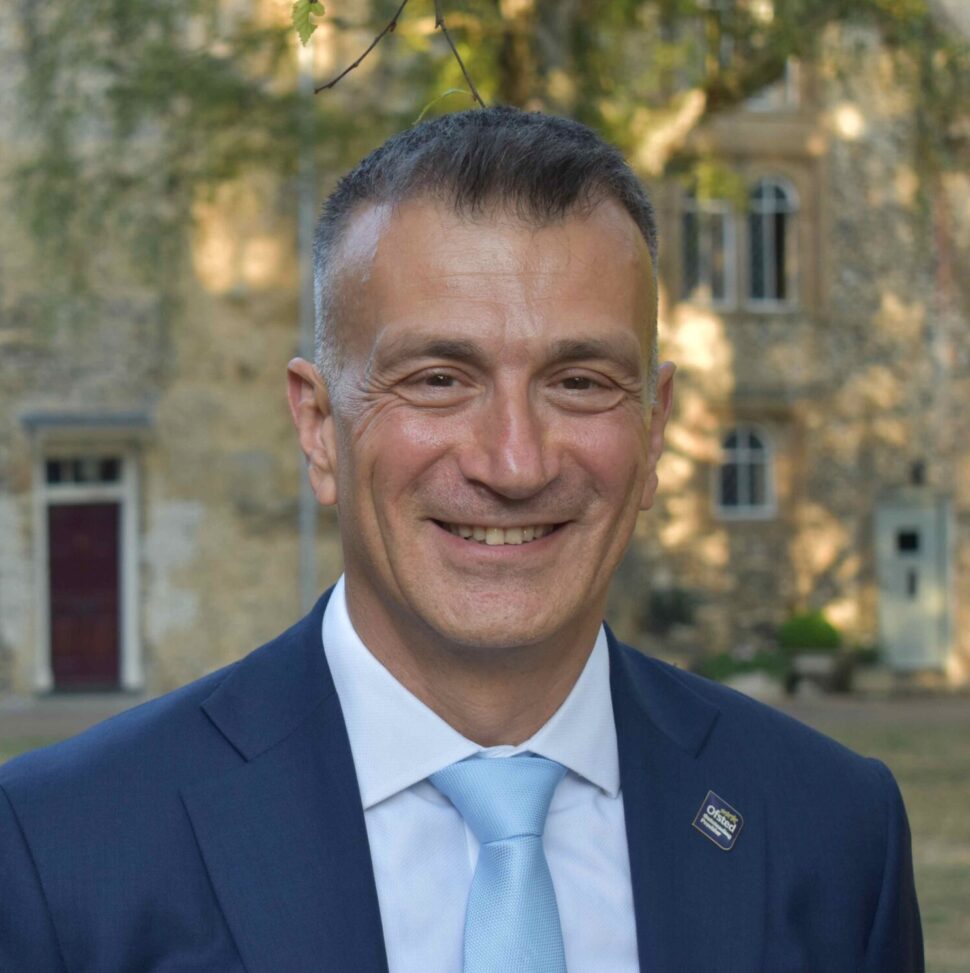
    Steve Taylor

    Taylor, the CEO of the 35-school Cabot Learning Federation and chair of the Queen Street Group of academy leaders will be knighted for services to education.

    “Since learning of this award, I have thought about all those colleagues in the Cabot Learning Federation and in the wider sector, whose work and successes have inspired me over the years to strive to do my best for the children we serve,” he said.

    “Anything I would count as an achievement has come about as the result of working in collaboration with great people I have had the privilege of knowing, in the CLF and beyond.

    “That includes a number of leaders in the Queen Street Group whose work in education has been recognised over the years, and I feel fortunate to have them as colleagues.”

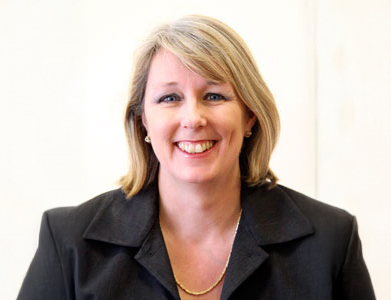
    Professor Sonia Blandford
    Professor Sonia Blandford

    He added he was “extremely grateful for this honour and look forward to sharing the news with colleagues and sharing the experience with my family, whose support I never take for granted”.

    Blandford, professor of social mobility at Plymouth Marjon University and founder of the school improvement charity Achievement for All, will be made a dame.

    She said: “My thanks to all my colleagues, friends and family for your support and kindness throughout my career. I am proud to be a member of the teaching profession.”

    Leaders honoured

    Fifty-five other people who work in or with schools were recognised this year.

    Four will receive the CBE, 15 the OBE, 25 the MBE and 11 the British Empire Medal.

    Among those recognised are 17 current or former trust CEOs or school executive headteachers, nine heads, eight people from the charity or third sectors, six support staff, five council officials, three governors or trustees, two volunteers, two academics, a civil servant and an assistant head.

    Dr Nikos Savvas

    Dr Nikos Savvas, chief executive of Eastern Education Group, which runs nine schools, will receive the OBE.

    “This honour belongs to the whole of Eastern Education Group and to Suffolk,” he said.

    “What we have achieved here shows that world-class education doesn’t only happen in big cities.

    “Suffolk is leading the way, and this award is recognition of the people, partnerships and communities that make that possible. I’m incredibly proud of what we’ve accomplished together.”

    Anita Bath

    Anita Bath, chief executive of the Bishop Bewick Catholic Education Trust has also been awarded the OBE.

    She said she was “deeply honoured and so happy to receive an OBE in the new year’s honours.

    “This recognition is not something I ever expected, and I accept it on behalf of the many dedicated colleagues I have worked alongside throughout my career.

    “I am particularly thankful for the opportunity to lead the Bishop Bewick Catholic Education Trust since its inception and I am so grateful to the leaders and staff who made this possible.

    “It was a brave leap of faith to bring all 39 Catholic schools together in such a short time and the commitment shown by its people has been very humbling indeed.”

    ‘Highly respected’

    Anne Dellar
    Anne Dellar

    Anne Dellar, the former chief executive of the Oxford Diocesan Schools Trust, will receive the MBE.

    Kathy Winrow, chair of the trust’s trustees, said: “During her time as our CEO, Anne always had an exciting vision for ODST.

    “She oversaw the MAT’s growth from two to 43 schools and her passion for ensuring every child had the opportunity to access the very best education was exemplary.

    “She is highly respected by trustees and headteachers within the MAT, and colleagues at national level. It was been a privilege to work with Anne over many years and see her ambition, generosity of spirit and care have a lasting and positive impact.”

    The full schools list

    Please note the spellings, titles and styles of each entry match what has been provided by government. If there’s a mistake or we’ve missed anyone out, please email [email protected].

    Please bear in mind we only cover the schools sector in England.

    Damehood

    Professor Sonia BLANDFORD, Professor of Social Mobility, Plymouth Marjon University. For services to Education. Wiltshire

    Knighthood

    Dr Stephen Peter TAYLOR Chief Executive Officer, Cabot Learning Federation. For services to Education. Somerset

    Commanders of the Order of the British Empire (CBE)

    Professor Teresa Mary CREMIN Professor of Education, The Open University. For services to Education. East Sussex

    Shazia Kauser HUSSAIN Director of Children’s Social Care, Department for Education. For services to Children and Families. Greater London

    Deborah Anna JONES Lately Executive Director Children, Families and Education Services, Croydon Council. For services to Children, Young People and Families. Oxfordshire

    Heather Ann SANDY Executive Director of Children’s Services, Lincolnshire County Council. For services to Education. Lincolnshire

    Officers of the Order of the British Empire (OBE)

    Anita Frances Maria BATH Chief Executive Officer, Bishop Bewick Catholic Education Trust, Newcastle, North Tyneside and Northumberland. For services to Education. County Durham

    Jonathan BISHOP Chief Executive Officer and Executive Headteacher, Cornerstone Academy Trust, Devon. For services to Education. Devon

    Simon ELLIOTT Chief Executive Officer, Community Schools Trust. For services to Education. Greater London

    Emma Kate ENGLISH Executive Director, British Educational Travel Association. For services to the Youth and Student Travel Industry. Greater London

    Clare Elizabeth FLINTOFF Lately Chief Executive Officer, Asset Education, Ipswich, Suffolk. For services to Education. Suffolk

    Linda Susan JONES Chief Executive Officer, Prospere Learning Trust. For services to Education. Cheshire

    Carolyn MORGAN Lately Chief Executive Officer, The Ascent Academies’ Trust, Sunderland, Tyne and Wear. For services to Special Educational Needs and Disabilities. County Durham

    Gaynor Alison RENNIE Lately Headteacher, All Souls Church of England Primary School, Heywood, Lancashire. For services to Education. Greater Manchester

    Paul Thompson RICKEARD Ecumencial Canon, Cathedral of Newcastle upon Tyne and Chief Executive Officer, Durham and Newcastle Diocesan Learning Trust, Tyne and Wear. For services to Education. Northumberland

    Dr Nikolaos SAVVAS DL Chief Executive Officer, West Suffolk College, West Suffolk Trust, and Eastern Education Group, and Principal Abbeygate Sixth Form College, Suffolk. For services to Further Education. Suffolk

    Timothy William SHERRIFF Vice-Chair, Chartered Institute of Educational Assessors. For services to Education. Lancashire

    William George Stewart SMITH Chief Executive Officer and Founder, Greenshaw Learning Trust. For services to Education. Oxfordshire

    Thomas Brendan TAPPING Chief Executive Officer, Bishop Chadwick Catholic Education Trust, Houghton-le-Spring, Tyne and Wear. For services to Education. County Durham

    Victoria Ann WELLS Lately Director of Sport, Youth Sport Trust, Loughborough, Leicestershire. For services to Special Educational Needs and Disabilities. Worcestershire

    Rachel Emma WILKES Chief Executive Officer, Humber Education Trust. For services to Education. East Riding of Yorkshire

    Members of the Order of the British Empire (MBE)

    Olusola Oluronke Anike ALABI Director, Exam Success Education Centre. For services to Education. Essex

    Oluremi Morenike ATOYEBI Headteacher, Osmani Primary School, London Borough of Tower Hamlets. For services to Education. Greater London

    Helen Victoria BINGHAM Early Years Practitioner, Aspire Academy Trust, St Austell, Cornwall. For services to Early Years Education. Cornwall

    Rebecca Jane BOLLANDS Head Teacher, Earlson Primary School, Coventry. For services to Cultural Education in the West Midlands. Warwickshire

    Georgina BURROWS (Georgina Stafford) Senior Teacher, Rumworth School, Bolton, Greater Manchester. For services to Education. Greater Manchester

    Mervin CATO Head of Secondary Behaviour Support Service, Enfield Council. For services to Education. Greater London

    Judith Lesley CHARLESWORTH Lately Chair, Barnet Special Education Trust, London. For services to Education. Hertfordshire

    Eileen Gillian CLARK Vice-Chair, Pickwick Academy Trust Board and Chair, School Improvement Committee. For services to Education. Wiltshire

    Lucy CONLEY Lately Chief Executive Officer, South Lincolnshire Academies Trust. For services to Education. Lincolnshire

    Kathryn Anne CREWE-READ Lately Headteacher, Bishop’s Stortford College. For services to Education. Shropshire

    Edison DAVID Executive Headteacher, Granton Primary School, London Borough of Lambeth. For services to Education. Greater London

    Jacqueline Anne DELLAR Lately Chief Executive Officer, Oxford Diocesan Schools Trust. For services to Education. Berkshire

    Andrea ENGLISH Lately Executive Headteacher, North and South West Durham Learning Federation. For services to Education. County Durham

    Margaret Antoinette FISHER Lately Chair of Governors, Dorridge Primary School. For services to Education. West Midlands

    Fiona Mary GEORGE Trustee, Rumbletums Community Cafe, Kimberley, Nottinghamshire. For services to Special Educational Needs. Nottinghamshire

    Beth GIBSON Head of Attendance and Inclusive Pathways, Birmingham City Council, West Midlands. For services to Education. Warwickshire

    Vanessa Marie GRAUS (Vanessa Langley) Headteacher, Arbourthorne Community Primary School, Sheffield, South Yorkshire. For services to Education. South Yorkshire

    David John GURNEY Chief Executive Officer, Cockburn Multi- Academy Trust, Leeds, Yorkshire. For services to Education. West Yorkshire

    David William HUDSON Lately Headteacher, Royal Latin School, Buckinghamshire. For services to Education. Oxfordshire

    Amanda KING Early Years Strategic Lead, Warwickshire County Council and Coventry City Council. For services to Early Years Education. Warwickshire

    Michael Andrew LONCASTER Lately Headteacher, Molescroft Primary School, Beverley, East Riding of Yorkshire. For services to Education. East Riding of Yorkshire

    Karen RATCLIFFE Lately Headteacher, Harton Primary School, South Shields, Tyne and Wear. For services to Education. Tyne and Wear

    Kylie Melissa SPARK Chief Executive Officer, Inspiring Learners Multi-Academy Trust, Cheshire. For services to Education. Greater Manchester

    John Francis TOWERS Headmaster, Barrow Hills School, Godalming, Surrey. For services to Education. Surrey

    Rachael WARWICK Lately Chief Executive Officer, Ridgeway Education Trust, Oxfordshire. For services to Education. Oxfordshire

    Medallists of the Order of the British Empire (BEM)

    Jake Oliver ARMSTRONG Careers Leader, Addey and Stanhope School, London Borough of Lewisham. For services to Education. Greater London

    Amila BEGUMAHMED (Amila Ahmed) Teaching Assistant, Cyril Jackson Primary, London Borough of Tower Hamlets. For services to Education. Greater London

    Kelly CLARKE Inclusion Manager, Hanson Academy, Bradford. For services to Education. West Yorkshire

    Annabel Susan Alice GITTINS Chair, Association of Senior Children’s and Education Librarians. For services to Young People. Shropshire

    Frances Elizabeth HILL Caretaker, John Ruskin School, Coniston, Cumbria. For services to Education. Cumbria

    John Melvyn JOHNSON Volunteer, Wolverhampton Grammar School, West Midlands. For services to Education. West Midlands

    Susan Renee MARSHALL For services to Education and to the community in Weston-super-Mare. Somerset

    Bhajan MATHARU Assistant Headteacher, Deanesfield Primary School, London Borough of Hillingdon. For services to Education and Early Years. Greater London

    Lisa RIDING Head of the Speech and Communication Specialist Resource, St Thomas à Becket, Wakefield, West Yorkshire. For services to Education. West Yorkshire

    Cindy Marie SUTCLIFFE Inclusion Manager, Hanson Academy, Bradford, West Yorkshire. For services to Education. West Yorkshire

    Brenda Irene WRIGHT Volunteer, St Issey Church of England Primary School, Wadebridge, Cornwall. For services to Education. Cornwall

    Source link

  • See you tomorrow and every other day until there is justice

    See you tomorrow and every other day until there is justice

    This past weekend, braving freezing weather, Serbian students set up nearly 500 stands in dozens of cities, towns and villages across the country. They’ve not been selling Christmas trinkets – they’ve been collecting signatures.

    The action, titled “Raspiši pobedu” (Declare Victory) was less a petition, more a test of support. After more than a year of campus blockades, protests drawing hundreds of thousands, and awareness-raising marches across the country, they wanted to know – does Serbia actually want the elections we’ve been demanding?

    Jana, a first-year philosophy student staffing one of the Belgrade stands, told AFP:

    We are counting to get a rough idea of how many people support us.

    The answer, by all accounts, was emphatic. In Niš alone (Serbia’s third largest city), more than 17,000 signatures were collected. In Kraljevo (a city in south-central Serbia), 16 stands had to print additional materials due to demand. Across the country, the queues kept coming.

    Political science professor Nebojša Vladisavljević sees the students entering a new phase of mobilisation:

    The goal is to turn the support gained through protests into votes and an electoral victory.

    As has often been the case, the protest action has been well timed. On our Christmas Day (Serbia itself follows the Julian calendar), a court had ruled there were no grounds to further prosecute the former construction minister suspected of a “serious crime against public safety” in connection with the Novi Sad canopy collapse that killed 16 people and triggered the entire movement.

    Since then, three investigations have been launched. Only one has resulted in an indictment confirmed by a court – and now another avenue of accountability has closed.

    A week earlier, thousands had gathered in Novi Pazar – Serbia’s youngest town demographically, with a majority Bosniak Muslim population – for the first protest of its kind there. The immediate cause was brutal – Momčilo Zelenbaba, who travelled 190 kilometres from Jagodina to attend, explained:

    I came because 200 students lost their status and 30 professors lost their jobs.

    Dženana Ahmetović, a student protester, framed the stakes:

    We are here today to send a message to Serbia that we fight for an interim management and the survival of our university. This concerns all of us, not only Novi Pazar.

    The Novi Pazar students had become famous across Serbia after walking for 16 days – one day for each victim – to join the anniversary commemoration in Novi Sad on 1 November. Now they were paying the price for that solidarity – and students from across the country were coming to stand with them in return.

    Nearly two-thirds of citizens, regardless of political affiliation, see snap elections as a way out of the crisis. For now, President Vučić has said elections won’t be held before late 2026. The students have other plans.

    No easy framing

    Back in January 2025, I wrote about the student protests as they called their first general strike – and at the time, I hedged, suggesting you could “pretty much flip a coin” on whether the movement would bring down the government or fizzle out over concerns about the academic year.

    It turns out I was too cautious. The students didn’t just survive – they’ve forced the question of snap elections onto the agenda and positioned themselves as a serious electoral force.

    But the path from those January blockades to this past weekend’s signature campaign has been anything but straightforward, and the story is harder to tell than the familiar framing would suggest.

    Western media, when it has covered the protests at all, has often reached for a familiar narrative – plucky pro-European youth versus authoritarian regime backed by Russia.

    Vučić himself encouraged this framing, repeatedly claiming the protests were a Western-orchestrated “color revolution” and that:

    …President Putin had clearly explained everything he needed to know about it in just three sentences.

    But the students who occupied faculties across Serbia weren’t waving EU flags. In fact, when a group tried to raise the EU flag during a vigil in Belgrade, they were surrounded, shouted at, and forced to leave – while Orthodox crosses, references to Kosovo, and students wearing traditional šajkača caps became common features of the protest aesthetic, while the organisers said nothing.

    Academics have called this “depoliticization as strategy” – the deliberate bracketing of partisan and ideological markers to claim moral legitimacy in an environment where all political institutions are compromised.

    This is a movement that has rejected the regime but also rejected the opposition, that demanded elections but refused to endorse any candidate, that cycled to Strasbourg to petition the European Parliament, but wouldn’t let anyone carry a European flag at home.

    When opposition leaders attempted to join protests, they were met with suspicion and outright rejection – student “plenums” have explicitly asked political parties to stay away, banned party insignia, and have refused to let politicians speak.

    One student in the documentary Wake up, Serbia! puts the generational logic directly:

    Our parents fought during the ’90s and 2000. They accomplished something. They brought in democracy. Now we have problems with democracy. Now it’s our turn to fight to make it less corrupt.

    Another is emphatic about rejecting old divisions:

    We don’t care if the guy representing us is gonna be a Catholic, a Muslim, Christian, Indian guy, whatever. We want to change this system and we don’t want to focus on bringing back Kosovo or seeing who is Croatian in our friend group and who is from Bosnia. We don’t care about that. We care about the current situation in Serbia.

    The academic analysis puts it formally:

    …what appeared as an ‘anti-political’ stance was more accurately an anti-partisan strategy, shaped by the authoritarian context that rendered conventional political participation ineffective.

    The students claimed to be about “justice, not politics.” And yet they articulated explicitly political demands – accountability, resignations, investigations, and eventually snap elections.

    The tensions were real. While the plenums formally disavowed ideological branding, progressive-leaning groups and pro-EU civil society actors were marginalised, sometimes physically removed – even as nationalist symbols were tolerated. The documentary captures one revealing exchange about violence:

    We don’t want to be responsible for violence as an organization of students.

    But you want violence?

    Yes, I literally answered that. I don’t want to be labeled as an aggressive student. I would love to be labeled as an aggressive citizen.

    And the challenges of direct democracy are frankly acknowledged:

    The process of making decisions is very, very slow. Show up to the plenary session, and then we debate for 4 and a half hours and come to no conclusion. Okay, let’s have another plenary session. 4 hours, no conclusion.

    What the regime threw at them

    Throughout 2025, the government’s response has drawn on every tool in the authoritarian playbook – and a few that seemed improvised on the spot.

    Violence

    On 15 March, somewhere between 275,000 and 325,000 people gathered in Belgrade for the “15th for 15” protest – the largest mass demonstration in modern Serbian history. At 19:11, the crowd fell into commemorative silence. What happened next remains contested, but accounts from those present are astonishing. Ivana Ilic Sunderic, a veteran of Serbian activism:

    I have been going to protests for 30 years but I’ve never heard anything like this. A sound rolling toward us, a whiz… very frightening, like a sound from hell.

    Evidence surfaced of a US-made Long Range Acoustic Device mounted on a Gendarmerie vehicle. Interior minister Ivica Dacic dismissed the devices as “loudspeakers available on eBay.” Vučić issued a high-stakes ultimatum:

    If there was a single piece of evidence that a sound cannon was used against demonstrators, then I would no longer be president.

    In June, the human rights organisation Earshot published forensic analysis concluding it was highly likely that protesters were subjected to a targeted attack using a directional acoustic weapon. Vučić remains president.

    By June, on Vidovdan – the national holiday commemorating the 1389 Battle of Kosovo, freighted with nationalist symbolism – riot police charged a largely peaceful protest of 140,000 people, using pepper spray, shields and batons. Student Luka Mihajlović became a symbol of the crackdown – beaten and arrested while standing calmly with hands raised.

    Institutional warfare

    The government adopted amendments to the Higher Education Law in March, promising a 20 per cent budget increase and 50 per cent tuition fee reduction – but in parallel came Regulation 5/35, altering the ratio of teaching to research hours from 20:20 to 35:5.

    Because research was no longer compensated, and blockades prevented teaching, professors supporting the protests would receive only 12.5 per cent of their usual salary – roughly €70 a month:

    This is obviously a try to break us down, but we are trying to endure and to support our students in spite of the punishments.

    By May, a government Working Group was drafting yet another Higher Education Law – this one allowing foreign universities to operate without local accreditation while receiving state subsidies, and introducing a voucher system forcing state faculties to compete with private ones.

    Jelena Teodorović (an Associate Professor at the Faculty of education, University of Kragujevac) warned of:

    …a fierce fight for financing that would force faculties to make studying faster and easier, ultimately resulting in worthless knowledge and worthless diplomas.

    Vučić, in Niš, made his preferences clear:

    Private faculties have shown to be significantly more stable and serious.

    A BIRN (Balkan Investigative Reporting Network) investigation published in December documented systematic retaliation – hundreds fired or demoted, over 100 teachers and 25 school directors dismissed for supporting the protests, and criminal charges launched against University of Belgrade rector Vladan Đokić.

    Last week, thousands gathered in Novi Pazar after the university administration revoked student status for 200 students absent due to protests and dismissed 30 professors. One public sector worker describes the coercion around pro-government rallies:

    We have a rally tomorrow, are you going? I’m not going. But, your contract is expiring.

    Counter-mobilisation

    Throughout 2025, the government has maintained a surreal counter-protest camp known as “Ćaciland” – part propaganda tool, part dark comedy. One student on the inhabitants argues they’re not students:

    They are adults. There are people 50 plus years old. It’s so transparent that they are protected by the government and actually sent there by the government.

    Another describes attempts to interview residents:

    People were interviewing people in the camp and they were like, “Oh, no, no, no, no.” Hiding their faces, being embarrassed. And the ones who spoke were like, “Oh yeah, I’m not going to the faculty for the past 2 years. I just came here.” Like, €200 a day – that sounds like a good deal.

    Some say the camp’s composition was, in fact, more sinister than laughable:

    Members of the brigade that was dismembered after Milošević left in 2000 – the brigade that actually killed Prime Minister Zoran Đinđić – the veterans of that brigade are right now supporting the students 2.0.

    Co-option

    The regime has repeatedly tried to reframe itself as being on the same side as the students – just against “lower-level corruption.”

    Vučić launched what he branded a new “anti-corruption offensive,” conveniently timed to coincide with the peak of protests. Pro-government commentators began echoing student demands for transparency, presenting Vučić as a fellow enemy of the oligarchs. Several mid-level officials were dismissed, and state media framed these changes as evidence that the president was listening.

    During a visit to Sremska Mitrovica, Vučić declared:

    I trust these young people. I trust them more than those who put them up to this. People will no longer tolerate it – that is why they want us to change. They do not want those who destroyed the country to come to power. They want none of them. But they do want us – different, better, changed.

    The European dimension

    On 3 April, eighty students set off on bicycles from Novi Sad, beginning a 13-day journey to Strasbourg. Their stated mission:

    For the world to hear the voice of Serbia. For European institutions to put pressure on the authorities.

    It was a pragmatic calculation, not an ideological embrace – the students needed external pressure that the regime couldn’t suppress domestically.

    Their letter to French President Emmanuel Macron combined political clarity with poetic determination:

    We are not here to complain, but to remind you that hope still moves – and sometimes, it moves on two wheels. We refused to give up; every turn of the pedals was a protest against fear.

    The European Parliament responded in May with a resolution acknowledging the “legitimacy of student protest demands” and calling for an investigation into the sonic weapon allegations – 419 votes in favour. European Commissioner for Enlargement Marta Kos:

    Corruption and irresponsibility are the two main triggers of the protests. They also represent the motive for dissatisfaction due to a lack of democracy, the enslavement of the media, and the impunity of politicians.

    By October, the Parliament had adopted what was described as the “harshest ever” resolution towards the Serbian regime – 457 votes in favour, featuring express support for student demands, denunciation of state repression, explicit condemnation of sonic weapons and Pegasus spyware, and a call for an EU fact-finding mission. MEP Irena Joveva said that the time of impunity for autocrats in Belgrade was coming to an end:

    We see this grotesque irony that those who order beatings call the beaten people Nazis, inventing fake ćaci students, while real students are bleeding for democracy.

    The regime’s media apparatus weaponised every European intervention, accusing the students of “selling out to Brussels” and labelling them “traitors.” Students who had carefully distanced themselves from ideological affiliation found themselves simultaneously supported by EU progressives and demonised by nationalist-authoritarian actors – their rhetorical insistence on neutrality was becoming increasingly untenable.

    The electoral gambit

    In April, moving from demands for accountability to wider demands, student plenums issued a declaration that changed the terms entirely:

    Government corruption is so deeply rooted that no functional reform is possible within the current institutional framework. Only new elections – conducted under fair and monitored conditions – can open the path to justice.

    The students had gone from demanding investigations to demanding regime change.

    November 1st marked a year since the canopy collapse. At exactly 11:52 AM, tens of thousands stood in 16 minutes of silence – one minute for each victim. Independent observers placed the Novi Sad crowd at approximately 100,000. Dijana Hrka, mother of 27-year-old victim Stefan, addressed the crowds:

    I need to know who killed my child so I can have a little peace. I am looking for justice. I want no other mother to go through what I am going through.

    A giant banner unfurled on Petrovaradin Fortress:

    See you tomorrow and every other day until there is justice.

    Vučić issued a rare televised apology:

    I apologize – both to students and to protesters, as well as to others with whom I disagreed.

    The students were unmoved. State-owned Serbian Railways suspended train traffic to Novi Sad on the day of the protest, citing an alleged bomb threat.

    Student plenums have now announced support for a civic electoral list while emphasising that students themselves won’t appear as candidates – they demand independent monitoring, transparent campaign financing, and genuine media pluralism, but they still refuse to endorse any party. Sociologist Zoran Gavrilović:

    We are witnessing the formation of a serious electoral player, because the students have become Vučić’s most serious competitor.

    The open question

    The academic analysis identifies both the strength and the risk:

    …without institutional continuity, moral mobilization risks dissipation. Without mechanisms to translate civic power into structural change, legitimacy may erode once the moment passes.

    One student puts it plainly:

    This has outgrown the student-led protests. We can do everything still – all of the organisation, the logistics – but we can’t do it all on our own. We need help for this next step.

    Another on the long game:

    We have to wake up as many people as we can until the next elections so that we can actually win. And if the election gets stolen again like they did in 2000, then we can violently protest.

    And another, more hopefully:

    You’re not aware of how many people have been woken up from a very long sleep here in Serbia. We are the students that managed to wake up the whole nation. Now it’s up to the citizens of Serbia to decide what will happen next.

    For those of us who follow student movements, there are lessons here – though perhaps not the ones we expected. The power of decentralisation is real – the movement was almost impossible to decapitate through targeted arrests or co-option precisely because it had no leaders. The importance of tactical evolution is also clear – from blockades to silent vigils to 24-hour road closures to bicycle journeys to signature campaigns, each phase wrong-footed the authorities.

    But the limits of “depoliticisation” have also been visible. Refusing to build political infrastructure, rejecting alliances with compromised but potentially useful actors, tolerating some ideological currents while excluding others – the movement may have constrained its own transformative potential.

    This weekend’s signature campaign suggests they know this. The paradox now is whether a movement built on rejecting politics can win at it.

    Source link

  • Texas A&M Won’t Reinstate Instructor Fired for Gender Lesson

    Texas A&M Won’t Reinstate Instructor Fired for Gender Lesson

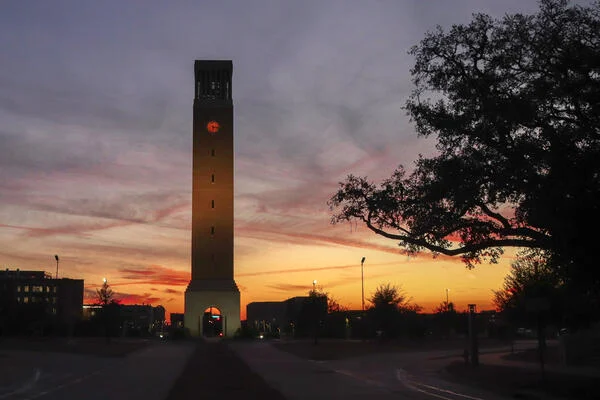
    McKenna Baker/iStock/Getty Images

    Texas A&M University will not reinstate Melissa McCoul, the instructor fired in September after a video showing a student confronting her over a gender identity lesson went viral, The New York Times reported

    In a Dec. 19 memo that McCoul’s lawyer Amanda Reichek shared with the Times, the Texas A&M system’s vice chancellor for academic affairs, James Hallmark, wrote that he had “determined that Dr. McCoul’s dismissal was based upon good cause.”

    A faculty panel determined in late September that McCoul’s academic freedom was violated and that former Texas A&M president Mark Welsh flouted proper termination processes when he fired her.

    McCoul was “disappointed by the university’s unexplained decision to uphold her termination but looks forward to pursuing her First Amendment, due process and breach of contract claims in court very soon,” Reichek said in a statement to the Times.

    Source link

  • Broward County + Microsoft Copilot: Changing the Game for Educators 

    Broward County + Microsoft Copilot: Changing the Game for Educators 

    Ever wonder what happens when one of the biggest school districts in the U.S. decides to go all-in on AI? Spoiler alert: It’s pretty amazing. 

    Broward County Public Schools (BCPS) just pulled off something huge—the largest global deployment of Microsoft Copilot licenses in education. Yep, the biggest in the world. And guess what? NCCE is right in the middle of it, making sure teachers feel confident and ready to roll. 

    So, why is this a big deal? 

    Because AI isn’t just a buzzword anymore—it’s here, and it’s changing how schools work. With Copilot, teachers can: 

    • Knock out lesson plans in minutes 
    • Automate those never-ending admin tasks-emails, agendas, data, feedback 
    • Spend more time doing what they love—teaching and connecting with students 

    This isn’t about replacing educators. It’s about giving them tools to make life easier and putting teaching and student learning at the forefront. 

    Where does NCCE come in? 

    We’re the professional learning crew behind the scenes working with Broward’s Innovative Learning Team and the Information System Team. Our job? Make sure Broward’s educators don’t just have Copilot—they know how to use it and implement it into their professional practice. 

    We’ve been running sessions like “Getting Started with Copilot” and “Copilot Champions and Beyond”—fun, hands-on workshops where teachers learn how AI can help with lesson planning, grading, and even sparking creativity. 

    And it’s not just one-and-done training. We’re doing coaching, virtual cohorts, and ongoing support, so teachers feel confident every step of the way. 

    What’s the impact so far? 

    Teachers and district staff are already using Copilot to: 

    • Create standards-aligned lessons and units in minutes tailored to specific learning pathways 
    • Draft school-wide communication memos and even event and initiative rollout plans quickly 
    • Assist with emails and professional communication to ensure appropriate tone and style 
    • Prepare meeting agendas, reminders, and summaries to help manage follow-ups efficiently 
    • Summarize email threads and missed communications for efficient catch-up 
    • Analyze instructional coaching data to identify trends and create graphic representations of the data 
    • Review vendor contracts from a cybersecurity perspective to ensure compliance with statutory mandated PII safeguarding. Even creating a report that indicates whether the contract has strong or weak compliance and the reasons why. 
    • Review previous meeting notes and discussions referencing relevant talking points for curriculum updates and budget planning 
    • Draft policies, memos, and communication plans, streamlining the process and ensuring clarity 
    • Compare versions of documents to identify changes and inconsistencies quickly 
    • Generate custom visuals such as graduation rate graphs, student progress charts 
    • Gather feedback and engagement data to refine report formats 
    • Personalize learning for every student 
    • Free up time for the stuff that really matters 

    Honestly, it’s a game-changer. 

    Why share this? 

    Because we want our community to know: NCCE can help any district make AI work for them. Whether you’re just starting or ready to scale big like Broward, we’ve got your back. 

    The bottom line 

    This isn’t just Broward’s story—it’s a peek at what’s possible when educators, tech, and great professional learning come together. AI isn’t the future anymore. It’s here. And we’re ready to help you make the most of it. 

    👉 Want to learn more? Visit https://www.ncce.org or reach out to our team. Let’s make AI work for you. 

    Source link

  • 3 Pressing Themes Shaping Early Care and Education – The 74

    3 Pressing Themes Shaping Early Care and Education – The 74


    Join our zero2eight Substack community for more discussion about the latest news in early care and education. Sign up now.

    The early care and education field has experienced an eventful — sometimes tumultuous —  year, placing it repeatedly in the spotlight. While some states such as New Mexico forged bold solutions to child care’s rising unaffordability, others responded to federal budget pressures by cutting or freezing their child care programs, or walking back the very regulations meant to keep kids safe. When Head Start’s federal grant disbursements were slowed or frozen, the 60-year-old early education program for low-income families suffered a severe, existential threat. Meanwhile, as the sector continues to reel from the staffing shortages and high turnover rates that have haunted child care since the pandemic, heightened immigration enforcement activity is sending chills through the field’s workforce, which is nearly 20% foreign born. Through these challenges, some child care providers have found themselves becoming involved with advocacy efforts to bring about change, with some even running for office.

    Amid these developments — some amazing research and resources have emerged for the field. As the year comes to a close, zero2eight asked early care and education experts to share what they consider to be the sector’s must-read research of 2025. What emerged from their responses were a collection of reports, studies and data tools relevant to a number of urgent themes. These include the sector’s ability to respond to current events, new ways of thinking about preschool gains and economic analysis of some of the ongoing challenges facing the early care and education workforce. 

    Here are some of the themes, studies and resources identified by the field’s insiders as essential to moving the sector forward.

    1. Timely Research and Resources for Challenging Times

    Steeply rising costs, dwindling federal child care funds, and an aggressive federal immigration crackdown have all contributed to a challenging, fast-changing landscape for families and early educators, many of whom are immigrants and reliant on public benefits. The following new research and tools offer timely insights into how such pressures are reshaping families’ lives and the early care and education sector, with some offering inspiration for how to respond. 

    Working Paper: Recent Immigration Raids Increased Student Absences 

    Authors: Thomas S. Dee, economist and the Barnett Family Professor at Stanford University’s Graduate School of Education

    Key Takeaway: Immigration raids coincided with a 22% increase in daily student absences, with especially large increases among the youngest students. 

    This study highlights the field’s “ability to innovate and be nimble to understand impacts of policy and policy enforcement,” said nominator Cristi Carman, director of the RAPID Survey Project at Stanford Center on Early Childhood who studies family well-being. It examines the collateral damage of unexpected immigration raids in California’s Central Valley, documenting a clear pattern in children’s school attendance, said second nominator Philip Fisher, director of the Stanford Center on Early Childhood, adding that “ICE raids are associated with increased school absenteeism.” According to the working paper, young children are expected to be the most likely to miss school, with students in kindergarten through fifth grade estimated to be far more likely to miss school as a result of immigration raids than high school students. 


    Report: State Strategies for Sustained Investment in Kids: A Landscape of Dedicated Funding

    Authors: Children’s Funding Project staff, including Bruno Showers, state policy manager; Lisa Christensen Gee, director of tax policy; Olivia Allen, vice president of strategy and advocacy; Josh Weinstock, policy analyst (former); and Marina Mendoza, senior manager of early childhood impact

    Key Takeaway: Facing dwindling federal funds, several states have innovated ways to provide dedicated funding for early care and education and youth programs.

    With pandemic-era relief funds running out, states are in desperate need of models for how to continue supporting early care and education, said Erica Phillips, executive director of the National Association for Family Child Care (NAFCC), who nominated this recent report. The report — from Children’s Funding Project, a nonprofit that helps secure sustainable public funding for children’s services — offers exactly that by providing a crucial, “very comprehensive overview” of how some states are building long-term, dedicated revenue streams for child care, early education and youth programs as federal money runs dry. As the report’s authors explain, stable, dedicated funding is critical to thriving programs, letting states and providers to “budget more than one year at a time, allowing them to make longer-term investments in quality improvement, facilities, staff education, and other key elements of evidence-based programs and services.” 


    Data Tools: Mapping Diaper Need in the U.S. and The American Affordability Tracker

    Authors: The diaper need mapping tool was published as part of a research collaboration between the Urban Institute and the National Diaper Bank Network. The affordability tracker was published by the Urban Institute. 

    Key takeaway: Families are facing mounting economic insecurity 

    The Urban Institute recently released two innovative data tools for policymakers, advocates and researchers that illuminate the increasing economic precariousness facing too many families, said Carman of the RAPID Survey Project. The interactive tool Mapping Diaper Need in the U.S., produced in partnership with the National Diaper Bank Initiative, shows how many diapers each county across the nation needs to address diaper shortages facing homes with young children that are below 300% of the federal poverty level. The American Affordability Tracker illustrates the rising cost pressures facing families across various indicators, including how the price of groceries has changed in counties and congressional districts in recent years. “Being able to see and understand scale and drivers of economic insecurity nationally is very powerful,” wrote Carman. 

    2. New Research Reveals Preschool’s Overlooked Impacts

    The body of early education research about how preschool affects children often measures child outcomes such as kindergarten readiness, standardized test scores or later graduation rates. While those are all important, Christina Weiland, professor at the Marsal School of Education at the University of Michigan and the Ford School of Public Policy, wrote in an email, “we’ve long suspected they aren’t the full picture of preschool’s effects.” Weiland nominated the following working paper as part of what she considers to be a new wave of research that explores a broader set of outcomes than the field has typically examined, such as parent earnings, accelerated coursework and subsequent schooling environments. “Together, these studies suggest benefits of preschool programs that have been largely overlooked,” but that are key to fully understanding the potential benefits of early learning investments for children and families, noted Weiland.

    Working Paper: Parents’ Earnings and the Returns to Universal Pre-Kindergarten

    Authors: John Eric Humphries, faculty research fellow at Yale University’s Department of Economics; Christopher Neilson, research associate at Yale University; Xiaoyang Ye, Brown University; and Seth D. Zimmerman, research associate at Yale School of Management 

    Key Takeaway: New Haven’s universal pre-K (UPK) program raised parents’ earnings by nearly 22% during pre-kindergarten, with gains persisting for at least six years.

    Weiland said that this notable study, published in 2024 and updated in 2025, expands the preschool picture by looking at how UPK might impact parents’ earnings,” and uses that to estimate the program’s returns on investment. It found that New Haven’s UPK program raised parents’ earnings by nearly 22% during pre-kindergarten, with gains persisting for at least six years, concluding that the returns to UPK investment are “high.” As one of the first studies looking at “earnings data in modern-day pre-K studies,” noted Weiland, it offers more evidence that the field is “likely underestimating the return on investment early education programs have.” 

    3. Spotlight on the Early Child Care Workforce

    Back in the spring, child care economist Chris Herbst spoke with zero2eight about how the COVID pandemic demonstrated how the child care workforce is “like a leaf blowing in the wind” — “sensitive to all kinds of changes in the policy and economic environment because it is is inextricably linked to the larger labor market.” Because of this, a new surge of recent research by economists has focused on the workforce, with researchers seeking to understand how early care providers respond to policy and market changes. Nominators pointed toward two such studies. 

    Working Paper: The Effect of the Minimum Wage on Childcare Establishments

    Authors: Katharine C. Sadowski, assistant professor at Stanford’s Graduate School of Education

    Key Takeaway: An increase in minimum wage changes who provides child care

    Combining “rich data with sensible research designs,” this study examines how an increase in the minimum wage could impact child care quality and access, noted nominator Aaron Sojourner, senior economist at W.E. Upjohn Institute for Employment Research. 

    Author Katharine C. Sadowski’s findings suggest that an increase to the minimum wage doesn’t lead to a decrease in the number of child care programs or the number of people working in the sector. However, minimum wage policies can influence who provides child care: larger enterprises, such as child care centers, are more likely to open and remain in operation, while smaller, self-employed providers, such as home-based child care programs, are less likely to open or remain in business. Among the smaller establishments that do stay open, the owners are less likely to have advanced degrees, the study found, potentially impacting the quality of child care provided, according to the author. “Unfortunately, minimum wage policy is binding and too important for a lot of child care employers and employees due to chronic underinvestment in the sector,” wrote Sojourner, adding that this is the first paper he’s seen to leverage “restricted-use data available through the U.S. Census Research Data Center system to generate insights on the sector.”


    Study: The Declining Relative Quality of the Child Care Workforce

    Authors: Chris M. Herbst, foundation professor in Arizona State University’s School of Public Affairs 

    Key Takeaway: The education of the early education workforce has dropped over time, possibly due to the sector’s low wages 

    This study found that the education levels and cognitive test scores of the early education workforce have been declining over time, suggesting lower teacher quality, which could have implications for children’s development. The study links this dip in teacher skills to the proliferation of early education programs which might divert future child care workers away from four-year colleges. It also looks at how low wages — which have remained low even as wages for other jobs for similarly-skilled workers have increased — might lead highly qualified individuals to choose other occupations. 

    “This is analogous to what previous research has found in the K-12 workforce,” wrote Jessica Brown, assistant professor of economics at University of South Carolina, who nominated the study. It “underscores the importance of the discussion of compensation in early childhood education.” Brown notes that it’s a difficult topic for the field to discuss, because “no one wants to imply that the current workforce is not high quality. But the reality is that compensation challenges mean that child care is not a very attractive job, and that has implications for the quality of the workforce.”


    Did you use this article in your work?

    We’d love to hear how The 74’s reporting is helping educators, researchers, and policymakers. Tell us how

    Source link

  • What College Leaders Learned About Change, Culture, and Strategic Partnerships – Edu Alliance Journal

    What College Leaders Learned About Change, Culture, and Strategic Partnerships – Edu Alliance Journal

    December 29, 2025 Editor’s Note by Dean Hoke: This fall, Small College America convened two significant webinars bringing together college presidents, merger experts, and strategic advisors to discuss the challenges and opportunities facing small institutions. What emerged were not just conversations, but frameworks, insights, and patterns that deserve close attention. This article synthesizes what seven leaders shared across both sessions.

    Insights from Small College America’s Fall 2025 Webinar Series

    Featuring conversations with seven leaders navigating the most critical decisions facing small colleges today

    When Tarek Sobh arrived at Lawrence Technological University as provost in September 2020, he had a plan. He was going to transform the institution. He had ideas, energy, and expertise from his previous roles.

    And then he did something counterintuitive: he stopped.

    “The tendency of leaders, in any kind of position, to effect changes immediately is, in my opinion, the wrong decision,” Sobh told participants in Small College America’s “Guiding Through Change” webinar this past August. Instead, he spent his first semester meeting with every single colleague on campus—literally hundreds of people. “Learning the culture of the institution was immensely important and crucial.”

    Eighteen months later—not three months, not six, but eighteen—Sobh became president of Lawrence Tech. And because he had listened first, he knew exactly what needed to change and what needed to stay the same.

    This isn’t just one leader’s story. It’s a pattern—and a warning—for every college president, provost, and trustee navigating today’s enrollment pressures, financial constraints, and partnership decisions. The institutions that will survive aren’t the ones making the fastest decisions. They’re the ones making the most informed ones. And that takes time, most colleges think they don’t have.

    That eighteen-month timeline wasn’t just personal wisdom. It’s a pattern that emerged across two webinars hosted by Small College America this fall—one featuring college presidents navigating uncertainty, the other bringing together experts who’ve guided dozens of institutions through mergers and partnerships.

    What they revealed is that small colleges aren’t just facing challenges; they’re facing them in a way that’s unique to them. They’re learning to navigate them with a sophistication and strategic clarity that larger institutions might envy.

    The State of Play: No Surprises Allowed

    “There should be no surprises. Not in this business, there should be no surprises.”

    Dr. Chet Haskell has seen enough college budgets to know when an institution is headed for trouble. As a former two-time president and provost directly involved in three significant mergers or acquisitions, he’s learned to read the warning signs.

    During Small College America’s December webinar on mergers and partnerships, Haskell laid out the early indicators with the precision of a surgeon: enrollment declines, graduation rate declines, multiple years of unbalanced budgets, the need to dip into unrestricted endowments to make budgets work, declining net tuition revenue, and expenses increasing faster than revenue.

    All well-known data points. The problem? Too often, leaders avoid confronting their implications.

    “At the end of the day, no matter what you’re trying to do, the financials do matter,” Haskell explained. “Too often, I would argue, a balanced budget—revenue equals expense—is defined as success.”

    But that’s not success. That’s survival. Barely.

    “You don’t have a margin, you don’t have a mission,” Haskell continued. “You need resources for investment in new initiatives. You need resiliency in the face of external factors like COVID or recessions.”

    He offered a sobering example: two well-regarded Midwest colleges, each with endowments exceeding $1 billion. One has had eight successive years of operating deficits in the order of $8 to $10 million annually. The other has consistently generated surpluses.

    “A billion dollars can last a long time,” Haskell noted. “It’s still a finite number.”

    Which would you rather lead?

    The Composite Score Deception

    Stephanie Gold, head of the higher education practice at Hogan Lovells and a veteran of nearly three decades guiding colleges through transformative transactions, added a critical warning about regulatory metrics.

    The U.S. Department of Education calculates a composite score (between 1.5 and 3.0) that’s supposed to measure financial viability, liquidity, capital resources, borrowing capacity, and profitability.

    “I have seen institutions with passing scores that ultimately are not financially sustainable and are in a place where they will soon be unable to make payroll,” Gold said flatly.

    The real indicator? Cash flow problems. When an institution is struggling to pay its operating expenses, that’s the red flag that matters.

    The lesson is clear: constant vigilance, not wishful thinking. Know your numbers. All of them. And don’t wait for regulatory metrics to tell you there’s a problem.

    The Four R’s: A Framework for Strategic Thinking

    While financial vigilance is essential, it’s not sufficient. The August webinar featuring three college presidents—all of whom started their roles post-COVID—revealed how successful institutions are thinking holistically about their challenges.

    Dr. Andrea Talentino, president of Augustana College in Illinois, described her institution’s strategic planning process as driven by what they call “the Four R’s”: Recruitment, Retention, Revenue, and Results.

    Talentino explained how they use this framework across campus: “We try to kind of preach that around campus to get everybody thinking about the Four R’s and really use them to drive strategic planning and enrollment goals.”

    It’s a deceptively simple framework. But its power lies in integration. Recruitment isn’t just the admissions office’s problem. Retention isn’t just student affairs’ responsibility. Revenue isn’t just the CFO’s concern. Results aren’t just the provost’s metric.

    Everyone owns all four R’s.

    This matters because, as Talentino discovered to her surprise, institutional thinking doesn’t happen naturally.

    “I think I really overestimated the extent to which people have awareness and appreciation for institutional needs,” she admitted. “Focus on self and focus on own department rather than institutional-wide awareness was a little bit of a surprise to me.”

    She’d come from “pretty open departments that were quite supportive.” The reality at many institutions? People are siloed, focused on their immediate concerns rather than the big picture.

    Building that institutional awareness—getting everyone to think about the Four R’s—is leadership work. It doesn’t happen by accident.

    COVID’s Long Tail and the Transfer Opportunity

    The presidents also spoke candidly about enrollment realities that data alone doesn’t fully capture.

    Dr. Anita Gustafson, the first female president in Presbyterian College’s 144-year history, described what she calls “COVID’s long tail.”

    “Our class of 2025 was a very small class,” she explained. “They were seniors in high school when we had a full year of COVID, and hence we never recruited well, or maybe they didn’t even attend college in large numbers.”

    That class just graduated. And Presbyterian is finally seeing enrollment growth—about 8 to 10 percent—as that COVID cohort cycles through.

    But the recovery isn’t automatic. It requires strategic adaptation.

    For Presbyterian, located in growing South Carolina, that’s meant focusing on a population they’d historically neglected: transfer students.

    “That’s a population we have not really targeted in the past,” Gustafson said. “A lot of that is hard with the traditional liberal arts education program, because we have very robust general education requirements.”

    So they’re working with faculty to be “more transfer friendly”—adjusting requirements, smoothing pathways, removing unnecessary barriers.

    It’s the kind of strategic adaptation that requires both data and cultural sensitivity. You can’t just mandate that faculty change requirements. You have to build an understanding of why it matters and bring them along.

    Which brings us back to culture, and to the eighteen-month rule.

    Eighteen Months to Know an Institution

    The December webinar on mergers and partnerships brought together an unusual panel: Chet Haskell, the consultant and former president; Dr. Barry Ryan, an attorney who’s served as president and provost at multiple universities and most recently led Woodbury University through its merger with the University of Redlands; AJ Prager, Managing Director at Hilltop Securities and an investment banker focused on higher education M&A; and Stephanie Gold, the regulatory attorney.

    Together, they’ve seen hundreds of institutions consider partnerships, dozens pursue them, and enough fail to know what separates success from disaster.

    And they kept returning to the same timeline: eighteen months.

    Haskell emphasized that meaningful partnerships require substantial time—typically around eighteen months—to really understand another institution’s culture, operations, and true compatibility.

    Not six months. Not a year. Eighteen months minimum.

    Why so long?

    Because culture can’t be rushed. Because trust takes time. Because what institutions say about themselves and what they actually are can be very different things.

    “Building that trust between the people, the leadership in both institutions—it takes some time to get to know each other,” Barry Ryan explained. “And then you find out, maybe you find out that you have a lot more in common, and this becomes a much easier process to take.”

    Ryan has seen it work both ways. He’s been involved in mergers between faith-based institutions that seemed very different on the surface but discovered deep commonalities. He’s also seen deals fail because “they just couldn’t get over the fact that, I’m sorry, you are different than we are. We have our 39 points, and you have your 16, and it’s just not going to work.”

    The difference? Time spent building relationships and understanding culture before committing to a deal.

    AJ Prager, an investment banker who helps institutions find and evaluate potential partners, emphasized that this isn’t just about mission alignment—it’s about cultural fit.

    “We always look at transactions through the lens of mission and accelerating mission execution,” Prager said. “And so oftentimes there is mission alignment between faith-based institutions and non-faith-based institutions.”

    The real question is how cultures align. And that takes eighteen months of conversations, campus visits, joint meetings, shared meals, and honest dialogue to discover.

    The Hidden Costs Nobody Talks About

    When institutions consider mergers or major partnerships, they typically calculate direct costs, including legal fees, consulting expenses, system integration, and facility modifications.

    What they don’t budget for—and what can sink even well-planned partnerships—are the hidden costs.

    “Management time, in our experience, is the biggest hidden cost of a transaction,” Prager said. “These types of transactions are all-encompassing. They require significant, significant employee time.”

    Management time is the most valuable resource an institution has. And mergers consume it voraciously—pulling presidents, provosts, CFOs, deans, and senior staff into endless meetings, planning sessions, due diligence reviews, and stakeholder communications.

    “Whether to pursue or not to pursue a transaction is a really critical decision,” Prager continued, “because you’re tying up, if you are going to be pursuing, you’re going to be tying up your most valuable resource for a considerable amount of time.”

    And here’s the paradox: passing on opportunities can also be risky. Which is why Prager recommends that institutions prepare before opportunities arise—assessing their position, understanding their options, educating their boards with hypothetical scenarios.

    One liberal arts institution on the West Coast recently conducted an exercise with its board: it presented three hypothetical partner institutions and asked, “Would you merge with these institutions?”

    “It was very fascinating to see how the board responded,” Prager said. “But it was, I would say, an innocuous exercise to help educate the board to say, here’s what’s happening in the sector, and these are the types of transactions that might be coming your way, and how would you respond to it?”

    That kind of preparation —doing strategic thinking before you’re in crisis mode—can make all the difference.

    But there’s another hidden cost that’s even harder to quantify.

    “Despite being the lawyer, I think there’s a lot of emotional cost associated with these matters,” Stephanie Gold said. “These are very stressful situations for students, for faculty.”

    Students worry they won’t graduate from the institution they expected. Faculty wonder about job security. Staff fear restructuring. Alumni mourn the loss of identity.

    “I think I am constantly needing to remind myself as the lawyer who’s just working on the deal documents to get the deal done that there are a lot of humans behind this,” Gold continued. “And it is a cost on them.”

    Managing those emotional costs requires something lawyers and investment bankers can’t provide: exceptional, continuous, transparent communication.

    The Communication Imperative

    Early in the December webinar, the panel addressed a question that haunts every institution considering a partnership: when do you tell people?

    The instinct is often to wait—to avoid creating anxiety until you have something definite to announce.

    That’s wrong.

    Gold emphasized the critical importance of managing stakeholder expectations through clear, consistent communication—distinguishing between exploratory discussions and finalized agreements, and being transparent about timelines and potential outcomes throughout the process.

    Tell people early. Tell them you’re “having discussions.” Tell them the timeline will be long. Tell them nothing is decided. Tell them what you know and what you don’t know.

    And keep telling them, consistently, throughout the process.

    The alternative—trying to keep major strategic discussions secret until announcing a deal—creates exactly the kind of anxiety and distrust that makes the emotional costs unbearable.

    This communication imperative extends beyond potential mergers. It’s central to the daily work of leading change.

    Back at the August webinar, Tarek Sobh—who became president of Lawrence Tech after just eighteen months as provost—spoke about the importance of helping every employee understand their role.

    “What is most important, I think, is having all of our leaders ensure that every employee on campus understands her or his role in how the campus runs and how important what they do is to the well-being of the whole campus and its students and its budget and its reputation, and so on and so forth.”

    This isn’t feel-good rhetoric. It’s strategic communication.

    “The whole concept of somebody coming in at any level to an educational institution to get a paycheck is not what is going to make eminent institutions of higher education thrive or survive,” Sobh said bluntly.

    Every custodian, every admissions counselor, every IT specialist, every faculty member needs to understand how their work connects to institutional success. And leaders at every level—not just the president—need to articulate that connection.

    Proving Value With Data

    Communication isn’t just about process and connection. It’s also about demonstrating value, to prospective students, current students, alumni, donors, legislators, and the community.

    And in 2025, that means data.

    Sobh has learned to articulate Lawrence Tech’s value proposition with precision: “97% of my students continue on and are employed at this level, and they are guaranteed a job, and 85% live locally.”

    That’s not abstract mission language. That’s quantifiable impact.

    “Articulating your student outcomes, articulating your impact on the community from an economic impact point and social impact point of view, keeping all of your channels open and continuing to clearly articulate your value proposition is the balancing argument or statement that is desperately needed for institutions in this time and day to prove their worth,” Sobh said.

    Economic impact. Social impact. Student outcomes. Employment rates. Local retention. These are the metrics that matter to legislators deciding on state funding, to donors considering major gifts, to families evaluating whether tuition is worth it.

    The Partnership Spectrum

    One of the most valuable contributions from the December webinar was Chet Haskell’s articulation of the partnership spectrum.

    Not every collaboration needs to be a merger. In fact, most shouldn’t be.

    Haskell outlined four levels:

    1. Consortium Arrangements: Shared services like libraries, bookstores, and food services. These reduce costs without requiring deep integration. They’re relatively easy to implement and maintain.

    2. Alliances: Academic program sharing, cross-registration, joint research initiatives. These require more coordination but preserve institutional independence.

    3. Affiliations: Closer integration around specific strategic goals. More commitment than alliances, but still stopping short of a merger.

    4. Full Mergers/Acquisitions: Complete integration, with one institution typically absorbing another or creating an entirely new entity.

    The key is matching the level of partnership to institutional needs and readiness.

    Haskell distinguished between crisis-driven partnerships—where institutions wait until they’re running out of money—and strategic partnerships, where institutions proactively explore collaborations that could benefit both parties. The latter, he argued, is far preferable.

    But strategic partnerships require something crisis-driven ones don’t have: resources in reserve. You can’t negotiate from desperation. You need time, financial capacity, and leadership bandwidth to explore options thoughtfully.

    Which means the best time to start building partnership relationships is before you need them.

    Remember the eighteen-month rule? If you wait until a crisis to start talking to potential partners, you won’t have eighteen months. You’ll have eighteen weeks, maybe eighteen days.

    Start the conversations now. Build the relationships. Understand the cultures. Then, when opportunity or necessity arises, you’re ready.

    State Demographics and Local Adaptation

    The August webinar also surfaced an important reality: national enrollment trends matter less than state demographics.

    Presbyterian College, in growing South Carolina, is seeing enrollment growth. Augustana College, in declining Illinois, faces different challenges.

    “South Carolina is a state that’s growing, and so that does help us,” Gustafson noted. About 60% of Presbyterian’s students come from South Carolina. “But we have to be very vigilant because we can’t guarantee that that will happen another year.”

    Meanwhile, Talentino at Augustana is adapting to Illinois realities by adding multilingual enrollment counselors, working with community-based organizations in urban areas, and creating summer bridge programs to support student success.

    Lawrence Tech, in Michigan, focused on developing three new graduate programs in high-demand areas—strategic program development based on market analysis rather than faculty interests.

    Each institution is adapting to its local context. There’s no one-size-fits-all solution.

    But there are common principles: know your market, track your data, be willing to change, and move before crisis forces your hand.

    The Board Challenge: Governance in Crisis

    Throughout both webinars, a consistent theme emerged that none of the panelists explicitly stated, but all of them circled back to: boards aren’t prepared for the strategic decisions facing small colleges today.

    This surfaced most starkly in the December Q&A session, when one participant observed that “colleges and universities cultivate irrational loyalty to the institution, which runs counter to the thought of mergers and partnerships and alliances.”

    Read that again: irrational loyalty.

    It’s the same emotional attachment that makes alumni generous donors and passionate advocates. But when an institution faces existential decisions—whether to merge, how to restructure, which programs to cut—that loyalty can become a liability.

    Another participant noted that “board members oftentimes don’t know how to act or ask the right questions, given the way that higher education oftentimes designs and recruits their board of trustees.”

    This is the structural problem: most small college boards are composed primarily of alumni who love their institution. They’re selected for their capacity to give and their willingness to advocate. They’re rarely selected for their expertise in finance, operations, technology, strategic restructuring, or M&A.

    Which means that when a president brings forward a partnership proposal or a CFO presents financial projections, the board often lacks the framework to evaluate what they’re hearing.

    They ask questions like, “Will we keep our name?” What about our traditions? How will this affect our identity?

    These are reasonable emotional questions. But they’re not the strategic questions that determine whether a partnership will work: What are the combined revenue projections? How will academic programs integrate? What’s the governance structure? What happens to debt obligations? Where are the synergies and where are the conflicts?

    The panel’s recommendation was consistent: board education before a crisis.

    Run hypothetical merger scenarios when there’s no actual deal on the table. Present three possible partner profiles and ask: Would we consider this? Why or why not? What questions would we need answered?

    Help boards understand financial metrics that matter beyond the composite score. Teach them to ask hard questions about cash flow, operating margins, and strategic positioning.

    And consider diversifying board composition—not to diminish alumni representation, but to complement it with specific expertise the institution needs: finance professionals who can read balance sheets, technology executives who understand digital transformation, healthcare or corporate leaders who’ve navigated mergers.

    Because when crisis arrives—and for many small colleges, it will—you need a board that can think strategically, ask sophisticated questions, and make difficult decisions based on institutional sustainability rather than emotional attachment alone.

    The eighteen-month rule applies here too: you can’t educate a board in six weeks when a partnership opportunity appears. You need to start now.

    The Bottom Line

    When Tarek Sobh arrived at Lawrence Technological University in September 2020, he could have started changing things immediately. He had the expertise. He had the mandate. He had ideas.

    Instead, he spent eighteen months listening.

    And when he finally became president and began implementing changes, he did so from a position of deep cultural understanding. He knew which changes would be embraced and which would face resistance. He knew whose support he needed and how to earn it. He knew what the institution was and what it could become.

    That’s not just one president’s wisdom. It’s the pattern that emerged across both webinars—from college presidents navigating daily challenges to experts guiding institutions through transformative partnerships.

    Know your numbers. Build your relationships. Understand your culture. Communicate transparently. Prove your value with data. Give yourself time.

    And remember: there should be no surprises.

    The challenges facing small colleges are real. The demographic cliff is arriving. Financial pressures are mounting. Political scrutiny is intensifying.

    But the leaders in these webinars aren’t panicking. They’re planning. They’re adapting. They’re building partnerships. They’re preparing their boards. They’re quantifying their value. They’re listening to their cultures before trying to change them.

    They’re giving themselves eighteen months to get it right.

    That’s not paralysis. That’s wisdom.

    And it might be exactly what saves small college America.

    Looking Forward: Proactive, Not Reactive: Three Conversations to Start This Week

    If you’re a president, provost, CFO, or trustee, here are three conversations you can start right now—before crisis forces them:

    1. With your board: Schedule a working session on hypothetical partnerships. Present three different institutional profiles (a larger regional university, a peer liberal arts college, a specialized technical institution) and ask: “If each approached us about a partnership, what questions would we need answered? What would make us say yes? What would be dealbreakers?” Don’t wait for an actual proposal to discover your board can’t evaluate one.

    2. With your leadership team: Review your financial indicators beyond the composite score. Do you know your real cash flow position? What is your operating margin trend over five years? Your net tuition revenue per student? If a crisis emerged in twelve months, what partnerships or changes would you need to have been building toward now? Move before you have to.

    3. With peer institutions: Identify 2-3 colleges (whether potential partners or not) and start building authentic relationships with their leadership. Not transactional networking—genuine understanding of their challenges, culture, and strategic direction. The eighteen-month rule means those relationships need to start today.

    These conversations won’t solve every problem. But they’ll position you to make better decisions when opportunity or necessity arrives.

    And they’ll help you build the institutional muscle memory for strategic thinking—the kind of thinking that distinguishes colleges that thrive from colleges that merely survive.

    Small College America’s webinar series is moderated by Dean Hoke of Edu Alliance Group, Kent Barnds of Augustana College and featured Dr. Anita Gustafson (Presbyterian College), Dr. Andrea Talentino (Augustana College), Dr. Tarek Sobh (Lawrence Technological University), Dr. Chet Haskell (higher education consultant), Dr. Barry Ryan (university leader and attorney), AJ Prager (Hilltop Securities), and Stephanie Gold (Hogan Lovells). For more information about Small College America, visit http://www.smallcollegeamerica.net.


    Source link

  • 25 of Our Top Stories About Schools, Students and Learning – The 74

    25 of Our Top Stories About Schools, Students and Learning – The 74

    Republish This Article

    We want our stories to be shared as widely as possible — for free.

    Please view The 74’s republishing terms.


    Source link

  • What’s not part of university requirements? Eating.

    What’s not part of university requirements? Eating.

    University systems have long been promoted as the most reliable path to upward mobility and economic security.

    Yet for a growing number of students, that promise is part of a troubling paradox: the act of seeking a degree requires a harrowing trade-off between paying for schooling and securing the eating. The result is a lack of physical and economic access to enough safe and nutritious food for a healthy and active life. It is a pervasive crisis of food insecurity,

    Today, nearly nine in 10 United States campuses operate food pantries or “basic need hubs,” serving thousands of students each semester.

    What began as a grassroots response to hunger is now becoming institutionalized — a subtle but significant shift in how universities define student success and well-being. According to a survey conducted by the Hope Center for Student Basic Needs, a national research center at Temple University focused on transforming higher education to improve student success and well-being, 59% of students of students at 91 institutions across 16 states experience at least one form of basic needs insecurity, while 41% of students experienced food insecurity.

    Many campus pantries have transformed into one-stop centers that connect students with food assistance programs, financial aid, child-care resources and mental-health support.

    Finding the funds for food

    The Lancer Care Center, which began as the Lancer Pantry in 2015 at the Pasedena City College, has now been integrated into a centralized, holistic support center. Today, it provides coordinated assistance and functions as a single hub for various types of basic needs, ranging from housing, food, emergency funding, peer mentoring and financial assistance.

    Yet, even as they expand, most remain under-funded and overstretched: 60% of campus food pantries lack adequate refrigeration and many rely on short-term grants and student volunteers to operate.

    A survey conducted in 2023 by Swipe Out Hunger, a national non-profit organization dedicated to eliminating student hunger, reported that food pantries face three key challenges: funding, inventory and staffing. More than one in five among the 355 college food pantries surveyed reported that securing stable funding, maintaining streams of funding and obtaining grants remain the most significant challenges.

    Beyond calories, these spaces also provide something harder to quantify: trust.

    “If you have somebody that trusts a systemic function of your campus, like a food pantry, it is likely that they will also trust other systems that are in place,” said Laura Egan of the Clery Center, an organization that focuses on campus safety and student rights. “If and when they or someone they know needs to make a report of a crime or needs to access a resource because they are a survivor of a crime, they will be more likely to look to and trust their campus, who has already established a system of providing them regular support in a non-judgmental [way].”

    When hunger is hidden

    For Egan, said accessibility matters just as much as supply.

    “What we really appreciate seeing with food pantries on college campuses is the community support that it provides, the ready access that provides a student, with no questions asked about why you might need to access that resource,” she said.

    Despite their growing presence, hunger on campus often remains hidden, masked by stigma and assumptions about who is considered food insecure. New York University Izzy Morgan is the administrative coordinator at the College Student Pantry  New York City and says that many students don’t even realize that they are food insecure.

    “I come from a family with money and, you know, I have all these privileges,” Morgan said. “I’m on a pretty big scholarship at school, and even if all of that is true, you could still be insecure.”

    The College Student Pantry, operated by New York City’s Trinity’s Services and Food for the Homeless, serves college and graduate students across the city.

    Affording healthy food

    For Morgan, that self-realization came upon discovering that the pantry provided access to fresh vegetables that would otherwise be unaffordable.

     “Part of why I got this job was because my boss, who is actually my pastor, came up to me and said, ‘Izzy, I think you’re food insecure’,” Morgan said.

    Daniela Bermudez, a volunteer and Outreach and Social Media coordinator at the pantry, said that For many students, hunger is normalized as part of the college experience. “A lot of college students have this (assumption) that they’re supposed to struggle,” Bermudez said. “It’s almost normal to not have a well-balanced meal daily.”

    Understanding food insecurity often comes gradually. “It’s kind of hard to almost wrap your head (around the meaning of food insecurity),” Bermudez said. “I’m noticing that (when) I’m not eating the right food groups and I don’t necessarily have the continuous ability to access these foods, that is a sign of food insecurity.”

    Universities often measure success through graduation rates and employment outcomes, but for a growing number of students, success must depend on something far more basic: the ability to eat regularly, without shame or uncertainty. As higher education continues to market itself as a pathway out of poverty, the persistence of campus hunger raises an urgent question: Can institutions truly promise opportunity while leaving students to choose between a meal and a degree?


    Questions to consider:

    1. Why do many university students struggle to pay for food?

    2. What are universities doing to make sure students can eat?

    3. Do you think food should be a basic right for everyone? Why?

    Source link

  • South Asia’s biggest international education stories

    South Asia’s biggest international education stories

    1. India set to become the world’s largest higher education system by 2047

    Delegates at The PIE Live India 2025 heard how India’s projected eightfold growth into a $30 trillion economy presents vast opportunities for higher education, with Niti Aayog’s Shashank Shah asking attendees, “If not India, then where?”. Speakers also highlighted that India is on track to become the world’s largest higher education system by 2035, with over 90 million students — positioning transnational education as a key growth driver.

    2. Outbound Indian university enrolments fall after three-year rise

    For the first time in three years, Indian students pursuing higher education saw a drop of around 5.7%, with over 1.25 million studying at international universities and tertiary institutions, compared to 1.33 million in 2024. This comes amid a range of policy changes in major destinations and the rise of cheaper, nearer options for students.

    The decline is also reflected in growing financial uncertainty around studying abroad in India, with remittances for overseas education falling to their lowest level in eight years when comparing April – August 2025 figures.

    3. More Australian and UK universities set sights on campuses in India

    In July 2025, four universities from the UK and Australia — La Trobe University, Victoria University, Western Sydney University, and the University of Bristol — received Letters of Intent (LoIs) to establish branch campuses in India, just a month after the University Grants Commission (UGC) issued LOIs to five other universities from the UK, US, Australia, and Italy. Currently, nine UK and seven Australian universities have either opened campuses or are in the process of doing so, with not only GIFT City but other economic hubs such as Noida, Bengaluru, Mumbai, Gurugram, and Chennai also hosting campuses.

    Despite this growth, The PIE has explored the rising debate around the “rush” to enter India’s higher education space at a time when international universities are cutting back on jobs and research, particularly in the UK, where four in ten English universities are believed to be in financial deficit, according to the Office for Students (OfS).

    4. Southampton opens India operations, attracts applications from Middle East and South Asia

    The University of Southampton, the UK’s first branch campus in India, told The PIE at The PIE Live India 2025 in January that the process of establishing its Delhi campus had been “fast, frenetic [and] exciting” from start to finish.

    The India campus, which began operations in August 2025, has since gained strong traction, receiving over 800 applications, with around 200 students joining the first cohort, and applications also coming from the UAE, Nepal, and Myanmar.

    5. Sri Lanka set to welcome first ever UK university campus

    The South Asian island nation, which is the second-largest host of UK TNE students, saw its first-ever UK university branch campus this year, with the University of West London launching a dedicated facility in the capital, Colombo, for local students.

    Meanwhile, Charles Sturt University is set to become the third Australian university to establish a campus in Sri Lanka. The country’s skills gaps and its Vision 2048 development agenda are driving Sri Lanka to pursue such opportunities, as it continues to face limited capacity across its 20 public universities, despite around 160,000 students seeking tertiary education each year.

    6. Trump and Modi pledge stronger India–US higher education ties

    While US President Donald Trump and Indian Prime Minister Narendra Modi appear at odds on trade, with Trump doubling tariffs on India to as much as 50%, both leaders are advocating closer ties in higher education. Their focus includes scientific research, dual degrees, joint centres of excellence, and offshore campuses, with Illinois Tech becoming the first US institution to receive approval for a campus in India.

    7. Cities within cities to host international university campuses

    Major Indian cities are planning dedicated education hubs on the outskirts of newly developing urban areas. While “Third Mumbai”, a purpose-built education city, is set to host five international universities near the upcoming Navi Mumbai International Airport, the Tamil Nadu Industrial Development Corporation (TIDCO) is developing the Knowledge City in Tiruvallur.

    The Tamil Nadu Knowledge City aims to create a first-of-its-kind education and research hub in southern India, attracting both international and domestic universities, along with academic institutions and research organisations.

    8. Bangladeshi government opens doors to international campuses and dual programs

    Bangladesh’s University Grants Commission (UGC) has announced its plans to develop “clear and stringent” guidelines for formulating a policy around international university branches in the country. While there has been interest from countries like the UK and Malaysia, the policy’s review and national interest assessments are currently underway.

    The establishment of branch campuses would be seen as key, as Bangladeshi students have faced increasing visa denials and allegations of misusing study visa status to enter the labour market, with universities in the UK and countries like Denmark imposing restrictions on them.

    9. F‑1 visa declines hit India and China hardest

    Though India has retained its position as the US’s largest sending country, accounting for 31% of all international students according to 2024/25 data, it — along with China — has borne the brunt of declining US study visa issuances. The number of Indian students receiving US study visas fell by over 41% in the year to May 2025, amid a range of policies targeting international students, including heightened social media vetting, proposed visa time limits, and increased deportations and SEVIS status terminations over political views and other minor misdemeanours.

    These developments have made international students, particularly Indians, more cautious about studying in what is widely considered the world’s top study destination.

    10. India to unveil new scheme for Indian-origin researchers overseas

    India’s Ministry of Education, the Department of Science and Technology (DST), and the Department of Biotechnology (DBT) are working to “bring back” Indian-origin researchers and scientists with strong academic credentials, targeting 12–14 priority STEM areas deemed strategically important for national capacity building.

    11. UGC launches dedicated portal for study-abroad returnees in India

    In April 2025, the UGC launched a standardised framework for recognising international degrees in India. Indian students who have studied abroad and wish to return for further education or employment can now apply for an equivalence certificate through the higher education body’s portal by paying the prescribed fee.

    12. B2B international education platform Crizac debuts on Indian stock market

    Kolkata-headquartered Crizac, which plans to expand beyond student recruitment into areas such as student loans, housing, and other services, and is targeting new geographies and growth markets within India, raised £74 million in its Initial Public Offering (IPO).

    The company listed on the National Stock Exchange (NSE) and Bombay Stock Exchange (BSE), becoming one of the few education platforms to enter the IPO space. Major edtech players like PhysicsWallah followed later, aiming for a USD$3.6 billion valuation through a USD$393 million IPO.

    13. Cost drives Pakistan’s TNE growth as student mobility barriers rise

    International universities and education providers are pivoting to TNE in Pakistan due to the country’s price-sensitive environment which is creating challenges for students going abroad for education. While Pakistan faces weak investment in research and development, its strategic growth vision is driving rising demand for international qualifications among students, delegates heard at The PIE Live Europe 2025.

    This shift is particularly significant as several institutions, especially from the UK, have halted recruitment in certain cities and increased deposit requirements from 50% to the full tuition fee.

    14. International universities tap into Nepal’s mobile student population

    With a student mobility ratio of 19% — ten times that of its giant neighbours, India and China — Nepal has attracted visits from over 16 universities under the Nepal Rising initiative. The country is already planning 30 or more franchise TNE campuses, with 30,000 students approved by the Ministry of Education.

    Source link