Blog

  • Why in-building coverage is a lifeline for school safety

    Why in-building coverage is a lifeline for school safety

    Key points:

    During a school emergency, every minute that passes is crucial, but in those moments, a reliable connection can mean the difference between confusion and coordinated response. Yet, across the country, there is an unseen danger confronting school staff, students, and emergency personnel. This is inadequate communication connectivity within school buildings.

    For years, schools have implemented fortified doors, cameras, and lockdown exercises. This is because communication is the unseen link that connects each safety measure. However, communication can weaken once someone enters a structure composed of concrete, steel, and reinforced glass. This is unacceptable during a time when almost every call to 9-1-1 is generated by a cell phone.

    The changing face of emergency response

    More than 75 percent of emergency calls now come from wireless phones, according to the Federal Communications Commission. When something goes wrong in a classroom or gym, the first instinct isn’t to reach for a landline–it’s to pull out a smartphone.

    But what happens when that signal can’t get out?

    This problem becomes even more pressing as the nation moves toward Next-Generation 9-1-1 (NG911), a major upgrade that allows dispatchers to receive text messages, images, and even live video. These new capabilities give first responders eyes and ears inside the building before they arrive–but only if the network works indoors.

    At the same time, new laws are raising the bar. Alyssa’s Law, named after Alyssa Alhadeff, a student killed in the 2018 Parkland school shooting, requires schools in several states to install silent panic alarms directly linked to law enforcement. Similar legislation is spreading nationwide. These systems rely on strong, reliable indoor wireless coverage–the very thing many older buildings lack.

    When walls become barriers

    School buildings weren’t designed for today’s communications reality. Thick concrete walls, metal framing, energy-efficient glass, and sprawling multi-story layouts often block or weaken wireless signals. During an active-shooter event or a tornado warning, students may shelter in basements, cafeterias, or interior hallways–places where signal strength is weakest.

    After several high-profile incidents, post-incident reports have revealed the same pattern: first responders losing radio contact as they entered, dispatchers unable to locate or communicate with callers, and delays caused by poor in-building connectivity. These breakdowns aren’t just technical–they’re human. They affect how quickly students are found, how fast responders can coordinate, and how well lives can be protected.

    Technology that saves seconds–and lives

    Fortunately, there are solutions available, and they are becoming more accessible.

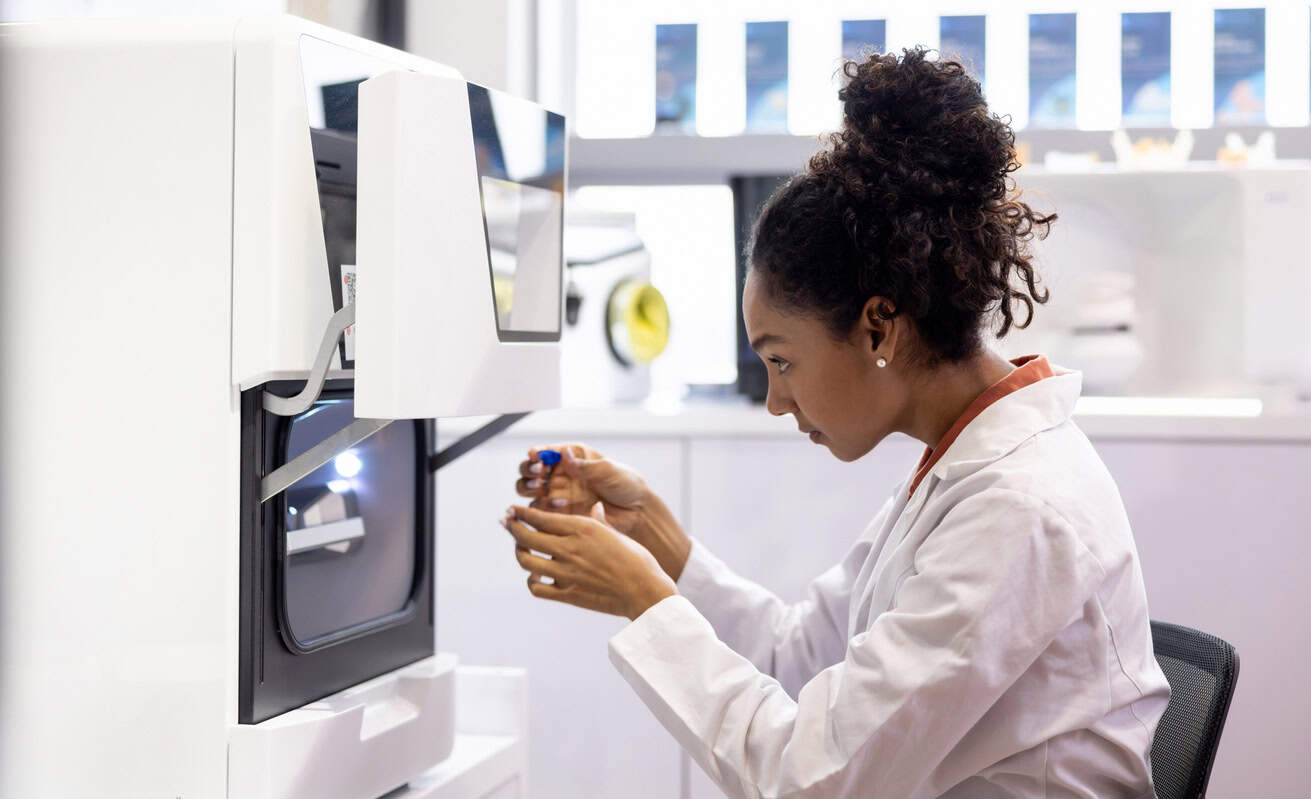
    The Emergency Responder Radio Coverage Systems (ERRCS) can also be referred to as Distributed Antennas Systems (DAS) within a public safety setting. The technology is responsible for extending radio communication coverage within building infrastructures. ERRCS are required within schools due to measures put into place within fire regulations.

    For communication and safety needs, cellular DAS, also known as small cells, are required to expand cellular coverage on a campus. These enable students, faculty, and staff to make calls, send texts, and exchange vital multimedia messages to 9-1-1 dispatchers, which is crucial during the NG911 era.

    Despite such technologies, smaller schools on more limited budgets can still leverage signal boosters and repeaters to fill coverage gaps within gyms, cafeterias, and other similar areas. At the same time, newer managed Wi-Fi solutions that offer E911 functionality can serve as a backup safety net that can transmit multimedia messages over secure Internet communications when cellular connectivity is no longer available.

    Best practices for schools

    Start with a coverage assessment. A comparison of where signals are dropping, not only for public safety communications but generally across each of the main cellular providers, will provide school administration with information on where to make improvements.

    Schools should then coordinate with the fire departments, the office of emergency management, and wireless service providers prior to implementing any system. This will ensure that they comply with local regulations and interoperability with first responders.

    Finally, maintenance and functionality are just as important as final installation. Communication systems should receive periodic tests, preferably during safety drills to verify that they work well under stress.

    Bridging the funding gap

    Improving in-building communications infrastructure can sound costly, but several funding pathways exist. Some states offer school-safety grants or federal assistance programs that cover technology investments tied to life safety. Districts can also explore partnerships with local governments or leverage E-rate-style funding for eligible network upgrades.

    Beyond compliance or funding, though, this is an equity issue. Every student, teacher, and responder deserves the same chance to communicate in a crisis–whether in a small-town elementary school or a large urban high school.

    A call to action

    A school is more than its classrooms and hallways, it is also a community of individuals each relying on others during times of fear and uncertainty. Perhaps one of the most straightforward ways to make this community more resilient is to provide a strong indoor building communication environment, both for public safety communications and cellular devices.

    The time has come to make connectivity a vital safety component rather than a luxury, because silence is simply not an option when seconds are at stake.

    Latest posts by eSchool Media Contributors (see all)

    Source link

  • Texas Pauses Use of H-1B Visas at State Universities

    Texas Pauses Use of H-1B Visas at State Universities

    Brandon Bell/Staff/Getty Images News/Getty Images North America

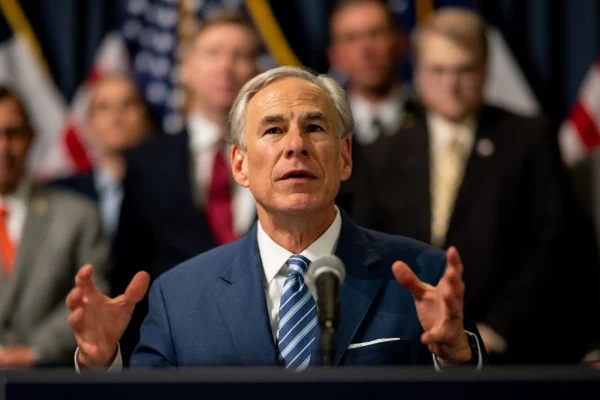
    Texas governor Greg Abbott, a Republican, ordered all state colleges and universities to freeze their applications for new H-1B visas, The Texas Tribune reported

    The pause, announced Tuesday afternoon, will last until May 31, 2027, though some institutions may be able to proceed if granted written permission by the Texas Workforce Commission.

    “State government must lead by example and ensure that employment opportunities—particularly those funded with taxpayer dollars—are filled by Texans first,” Abbott told the Tribune.

    Texas’s halt on hiring visa holders comes on the heels of a proposed pause in Florida. Colleges and other industries use the visa program to attract skilled workers. To qualify for one, a worker must be employed in a “specialty occupation” that requires “highly specialized knowledge,” according to U.S. Citizenship and Immigration Services. 

    In an effort to restrict access to the visas, the Trump administration added a $100,000 fee for new applicants in September, which colleges have said would be detrimental to the recruitment and retention of international faculty, researchers and staff members.

    The decision in Texas came less than 24 hours after Abbott first announced publicly that he was considering such a move and had requested records on all H-1B visa–holding employees at the state’s public universities and K–12 schools.

    News of the record collection was first made public Saturday by Quorum Report, a nonpartisan newsletter focused on Texas politics. The Report obtained internal emails between the governor’s office and key leaders in the Texas A&M University system discussing the request. 

    Abbott’s interest was then confirmed Monday on a conservative radio talk show, where the governor said he intends to have an “action plan” released by the end of the week.

    On the radio show, Abbott suggested that some visa holders may have overstayed their legal welcome, adding that those are “the type of people that the Trump administration is trying to remove.”

    Tuesday’s freeze on new applications will not relieve institutions of filing reports about their current visa holders. The state government wants data on the number of new or renewed visa petitions filed in 2025, the number of current sponsorees, their job titles, countries of origin and visa expiration dates. Abbott has also asked institutions to provide evidence that they made a good-faith effort to hire qualified Texans before filing the position internationally, according to the Tribune.

    Source link

  • Ph.D.s in STEM, Health Roles Fled Federal Agencies

    Ph.D.s in STEM, Health Roles Fled Federal Agencies

    Andrii Rotkin/iStock/Getty Images Plus

    The number of Ph.D. holders in STEM and health roles leaving 14 federal research agencies outnumbered hires 11 to 1 last year, according to a Science analysis of White House Office of Personnel Management (OPM) data. That has resulted in a net 4,224 fewer such Ph.D.s in those agencies, the journal reported this week.

    Science also noted that reductions in force “accounted for relatively few departures.”

    “At most agencies, the most common reasons for departures were retirements and quitting,” Science reported. “Although OPM classifies many of these as voluntary, outside forces including the fear of being fired, the lure of buyout offers, or a profound disagreement with Trump policies, likely influenced many decisions to leave.”

    The National Institutes of Health saw the greatest increase in departures of STEM and health-related Ph.D.s from 2024 to 2025, when President Trump retook the White House. In 2024, 421 left the NIH; in 2025, more than 1,100 left. The agency also hired far fewer of those Ph.D.s last year than the year before. (Trump proposed cutting the NIH’s budget by roughly 40 percent this fiscal year, alongside massive cuts to other federal research agencies.)

    The National Science Foundation lost a net 205 STEM and health-related Ph.D.s, equaling “40% of its total pre-Trump Ph.D. workforce of 517, by far the largest percentage at any agency,” Science reported. Nearly half of those who left the NSF last year were “rotators,” scholars on temporary leave from their universities, Science reported, noting that the agency erased 75 percent of those rotator positions last year.

    Across all 14 agencies, the number of such Ph.D.s employed shrank 17 percent on average from 2024 to last year.

    In an email to Inside Higher Ed, Emily G. Hilliard, a spokesperson for the Health and Human Services Department, which includes the NIH, wrote that “under the Biden administration and throughout the pandemic, HHS ballooned into a bloated bureaucracy” that produced “no measurable improvements in public health.”

    “The status quo was not working, and a major reset was overdue,” the spokesperson said. “HHS did just that, to streamline operations, reduce redundancies, and go back to pre-pandemic employment levels. It’s important to note many of these changes reflect voluntary departures through generous ‘Fork in the Road’ and early retirement offers, not a retreat from science.”

    Source link

  • The Bigger Picture Beyond the UCSD Math Report (opinion)

    The Bigger Picture Beyond the UCSD Math Report (opinion)

    The recent news about plummeting math preparation among University of California, San Diego, students was startling: Over five years, the number of incoming students deemed to need remedial math courses before taking calculus had risen from 32 in 2020 to more than 900 last fall. Math achievement declines across the country are real, but data from a single campus is not representative, even if it makes national news. In fact, UCSD offers a poor reference point for policy discussions in California and most other states, given how unique its approach to math proficiency has been.

    First, since the campus requires calculus for the vast majority—up to 80 percent—of its graduates, students whose educational goals don’t even require knowledge of calculus can nevertheless be waylaid by a battery of calculus-prep courses. Nationwide, 54 percent of students at R-1 universities graduate in majors that require calculus, according to Transforming Postsecondary Education in Math. Even taking into account UCSD’s relatively high proportion of STEM majors, TPSE estimates that only 59 percent of students there actually need calculus.

    Why the discrepancy? One reason is that one of the campus’s residential colleges requires every student—even those majoring in art—to take calculus. Plus the departments of psychology (for a B.S.) and biology require two calculus courses. The role of calculus in these two majors is narrow, yet a report from a UCSD Academic Senate working group notes that they account for the majority of the students UCSD requires to take its lowest-level remedial math course.

    Second, UCSD focuses on a lengthy prerequisite sequence rather than just-in-time strategies to support students with preparation gaps. Not only is UCSD alone among UC campuses in offering a course covering middle school math, as the campus’s report notes, it also appears to be anomalous within California public higher education over all.

    The California State University and community college systems—both far less selective than UC campuses—have eschewed placement tests, which have been found to have limited validity. Both have also largely eliminated remedial math courses, based on a body of research showing that such courses were deterring students with the potential to succeed from proceeding toward a degree. In fact, research suggests that shorter math sequences support student success.

    Driven by its assessment of declining student preparation, UCSD has implemented a three-course calculus preparatory sequence: Besides precalculus, it offers two lower-level courses that explicitly cover high school and middle school math content and collectively enrolled more than 900 students last fall. Another 362 students enrolled in precalculus. By contrast, at the University of California, Los Angeles—another highly selective, research-intensive campus—the lowest math course is precalculus. Enrollments in that course have dropped to fewer than 200 students from 769 in 2012.

    There is no question that declining math preparation is a real concern nationally, but UCSD’s situation provides a myopic perspective at best. Viewing it solely through the lens of admissions testing, as many recent opinion pieces have done, also misses the big picture. It penalizes students with a testing gate for lacking preparation that the system inequitably provides. The experiences of other California institutions point to a range of directions, including additional research, for strengthening success in college:

    • Redesigning math placement and prerequisite sequences using evidence-based approaches. Institutions around the state are addressing weak math preparation through approaches such as just-in-time corequisite support, stretching one semester of material over two semesters, summer bridge courses and proactive advising. At least two campuses that serve students far less prepared than those at the UC—Cuyamaca College in San Diego County and Sonoma State University—have reported success with placing STEM majors directly into calculus, providing additional support instead of prerequisite courses. Proposals to expand these kinds of approaches have prompted intense pushback from skeptical math faculty. That is precisely why more research and cross-system conversations are necessary to better understand the most effective paths to calculus success for aspiring STEM majors.
    • Revisiting calculus as a college graduation requirement. Calculus is an important foundation for certain STEM majors, such as engineering or physics. It is also a notorious weed-out course. Requiring it for students in majors that don’t truly rely on calculus constitutes an arbitrary barrier. It also interferes with students taking math courses such as statistics that are more applicable to their majors and discourages them from continuing in their studies.
    • Reimagining calculus for those who do require it. UCLA has shown that biology students can thrive in subsequent courses without a standard calculus class: In the redesigned Mathematics for Life Sciences sequence, UCLA biology majors develop quantitative and computational skills by learning how to model biological systems. In subsequent science courses, students who took the redesigned curriculum outperformed those who took traditional calculus. The redesign also helped narrow the achievement gap and increased students’ interest in quantitative analyses. UC Riverside’s Principles of Calculus course, another promising redesign, uses spatial learning strategies, adaptive technology and culturally relevant content.
    • Clarifying the math content and level expected for higher education success. A recent joint statement from math faculty across California’s three higher education systems is an important start. The statement has specific guidance about high school math sequences—including the importance of competencies such as conceptual understanding and mathematical modeling. It outlines critical content within high school algebra and geometry, creating an opportunity for reimagining those courses. Lastly, it highlights the most helpful math preparation across six discipline areas ranging from arts and humanities to STEM.

    Realizing the potential of these steps necessitates deeper collaboration between K–12 schools and higher education, efforts California’s newly established interagency council is well positioned to lead. It also entails continued investment. Lastly, ensuring that math policies are aligned and transparent across systems is in the interest of students, but success depends on a willingness to reconsider long-standing practices and learn from efforts around the state and across the country—beyond the UC system and certainly beyond a single campus.

    Pamela Burdman is executive director of Just Equations, a policy institute focused on the role of math in education equity. Marcelo Almora Rios is a Ph.D. candidate at the UCLA School of Education and Information Studies and a Just Equations research fellow.

    Source link

  • What Do People Get Wrong About the University Presidency?

    What Do People Get Wrong About the University Presidency?

    Now that we text each other approximately 7,000 times a day, and we’re going forward as friends in a relationship of equals, we’ve decided to use our initials for this column. Gordon’s full name is Ebenezer or something that starts with an E. Rachel was born without a middle name and in college, among the preppies, decided to give herself an S.

    RST: That good with you?

    EGG: Do I have a choice? I would have preferred Your Highness but highly unlikely that would fly.

    RST: That’s what my phone calls me. I like thinking of you as an egg. Maybe gain a whole bunch of pounds around your middle and then I’ll crack you.

    EGG: That is cruel. You have no respect for older people.

    RST: Whatever, geezer. Within minutes of our first column’s publication, I heard from folks telling me how I should attack you.

    EGG: Rachel, one of the agreements we have is that this is not an effort to say what others wish to hear. This is us unfiltered—

    RST: —um, I am always unfiltered. It’s why you wanted to work for me, since you are always decorous and stuffy.

    EGG: —and the reason we decided to do this together is because we can ask each other the tough questions and not let each other resort to pablum. Truthfully, it is a bit frightening for me after 45 years of people holding their breath about what I will say, but you insist that I be honest and say the things out loud that I mutter under my breath.

    RST: Well, we promised our readers we were going to get into it, go there, have it out. We already have a list of meaty topics to cover, and we’re both excited and energized by this project. We even started working on a column called “Majors Are Dumb.”

    EGG: Point of order: It is not so much that majors are dumb, rather it is because the structure that requires majors is antiquated. Universities are structured to put both faculty and students into a system that is hierarchical and siloed. Yes, students need to learn and have deep understanding about topics but not be forced to learn more about this and less about that. Only when we get rid of departments and colleges and organize around centers, institutes and working groups can true creativity happen and curiosity be stoked.

    RST: Can’t wait to get into that. But first, I want to ask about some of the things I’ve learned in the past three years talking confidentially to presidents for The Sandbox. They all say that everyone wants to tell them how to do their job. What do people like me fail to understand about the presidency?

    EGG: Everyone “knew” how to run the university better than I did. I always felt that if people who were second-guessing me and had the same amount of information that I had, they would make the same decisions. For example, at WVU when we were looking at the need to restructure, we had a fact-based approach. We discovered we had 28 faculty in World Languages teaching 21 majors. What the hell! That was a better student-faculty ratio than the Department of Surgery. Yet when we made the decision to eliminate the department, I was accused of being an absolute heretic. We continued to teach languages based on student demand. I know that asking the students to vote with their feet is a strange concept, but it is the reality.

    RST: What if there is a sudden and intense demand from students to learn Klingon? Would you set up a department to teach that? Don’t tastes and trends change? I mean, only a few years ago, students were being advised to major in computer science. Oops. I meant for us to have this conversation later.

    EGG: Not a department of Klingon, but I would respond by further reducing language programs where there is no demand and hiring Professor Spock and several others if the demand persisted.

    RST: Cultural appropriation much? Dr. Spock is Vulcan, Gordon (you ignorant slut!). Squirrel! We are both easily distracted, which is partly why it’s a hoot to collaborate with you.

    EGG: I am having so much fun, despite your unfiltered mouth. I will take your slings and arrows with grace … and get back at you.

    RST: Getting back to it, every president I talk to—and, to be clear, my circle is large but may not be representative, because everything in The Sandbox is anonymous and I do nothing to promote them or feed their egos—says that no one understands the job until their butt is in the chair. You got into that seat seven different times. Even when you were returning, did you still have a steep learning curve?

    EGG: Rachel, there is no playbook for the presidency. Each place is different, with their own values and culture. And when I returned to OSU and WVU, I had to totally reinvent myself and relearn the institutions because they had changed. If I had tried the old playbook for either place, it would have been a disaster.

    RST: Because you can’t step into the same river twice, though some colleges and universities are more like scum-covered ponds. An old peer of yours asked me this fall if I thought the presidency had changed in the last five years. Nope, I said. I think it’s changed in the past two. Now when former presidents spout off and tell those still in the job what they should be doing, it does damage, and I’m not going to allow you to do that, Gordon, so don’t get any ideas. The only thing worse is when those who haven’t spent meaningful time on a campus since they were students tell presidents how to do their jobs and treat higher ed as if it’s monolithic. What do you make of all these calls for presidents to stand up, fight back, make statements?

    EGG: They are fools. Some of those people would have their asses fired in two minutes if they were at a public university in a red state and did what people are calling for. You learn how to dance with the partner that brought you.

    RST: You mean boards. You’ve had public and private university boards, and if my sources are right, you make tons of coin serving on corporate boards (can you get me one of those cushy jobs?). What do people not understand about university boards?

    EGG: University boards are the challenge of the moment. They are often appointed because of political connections or have been substantial donors to the governor or the university. And sometimes they are even elected. I had many wonderful board members who wanted to learn and support the university, but when you get a rogue board member or a cabal, it makes the life of the president miserable and you end up fighting a two-front war—the board and/or the faculty or legislature—and so you slink off into obscurity. Truthfully, tender love and care of the board is a president’s first duty and ultimate lifeline.

    RST: I don’t know which is Scylla and which is Charybdis, but only one of them has real power. Lots of presidents get hired by boards who want them to do stuff, but when they fire the football coach or make some dumbass crack about the Little Sisters of the Poor, they don’t support them. And they are accountable to no one. So how do you solve this problem?

    EGG: As a president you do your homework. So many people accept a job without doing due diligence. I am a poster boy for that with my decision to go to Brown. You also need to get a clear understanding of the ground rules. Although I hate this, I do think a president needs to be represented by a good lawyer before accepting a job. Ambiguity is the enemy of a successful presidency. But, in the end, so many circumstances can derail a presidency which are beyond your control. When it is time to quit, exit with grace.

    RST: Not always easy. I wish I could remind faculty colleagues that if we vote no confidence in a president (misguidedly thinking that will have any effect other than souring a relationship that needs to work), the next guy the board brings in is likely to be a lot worse.

    EGG: I just had a great conversation with a distinguished president who has presided over both a big public and big private institution. We decided we are going to form a group of presidents called FNC (Faculty No Confidence) members. The popular idea of the moment for faculty to express their concerns is by votes of no confidence, but confident leaders view these often as marks of greatness. And they should if they are doing the right things. If they are being stupid, then they deserve such a vote and [to be] returned to their first love: teaching.

    RST: Which would be a rude awakening, because even though being a tenured faculty member is the most privileged position in the country, the students of today are a horse of another color, and not easy to corral.

    EGG: The cultural gap between the Millennials and the Z generation is huge. We tend to teach to the last generation instead of to the present, and that is one of the many reasons that higher education has lost so much trust. Meet the students where they are and not where we want them to be … back to the old problem of majors, which is a silly notion for so many present students.

    RST: You are famous for sending handwritten notes to journalists (for the record, since I am not a journalist, I have never received one). What does the media get wrong about the presidency and/or higher ed?

    EGG: Oh my. The press. I feel like I have had almost a daily colonoscopy from the press. With a few exceptions (and they know who they are), the press has little understanding of universities or the presidency. They come at it from a very progressive lens and listen to the voices who confirm what they want to hear. The old adage of “if it bleeds it leads” is accurate. If you can make the university president bleed, you are “brave”—and most often inaccurate, if not dishonest.

    RST: When I first started The Sandbox, I had a former president of a big university who wanted to write a piece called “Why We Can’t All Be Gordon Gee.” When you first reached out to me, I told you that and said I had the sense that at times even you couldn’t be who we thought Gordon Gee was. You started your career working for Chief Justice Warren Burger, and now, for the first time in 45 years, finally, you have another boss who can teach you: me. Now let’s get to work on majors and departments.

    EGG: Yes, ma’am.

    Rachel Toor is a contributing editor at Inside Higher Ed and the co-founder of The Sandbox. She is also a professor of creative writing. E. Gordon Gee has served as a university president for 45 years at five different universities—two of them twice. He retired from the presidency July 15, 2025.

    Source link

  • Universities as engines for economic growth

    Universities as engines for economic growth

    Author:
    Laura Trevelyan

    Published:

    This blog was kindly authored by Laura Trevelyan, Chancellor of Cardiff University.

    2025 was something of an annus horribilis for Britain’s universities. It felt as though barely a week went by without another alarming report on a university facing a ballooning deficit, compulsory redundancies, shrinking student numbers, or worse. Yet beneath the depressing headlines there is good news story to tell, about how our universities are vital economic engines. I’ve seen this first hand in my ten months as Chancellor of Cardiff University. Britain’s productivity is currently low and recent economic growth has been anaemic. But universities can help put Britain back on the map by commercialising their cutting-edge research, encouraging investment in biosciences and AI which can create the well-paying jobs we need.

    Living in America with a son in college, I’ve had a front row seat during a turbulent year for American higher education. The Trump administration’s determination to bring what it sees as woke institutions to heel by whatever means necessary is to Britain’s advantage. Talent will go where the opportunities are. Professor Baljit Khakh, a global authority on brain function, was recently appointed Director of the UK Dementia Research Institute at Cardiff University. eProfessor Khakh studied at Cardiff as an undergraduate and as Professor of Physiology and Neurobiology at UCLA made fundamental advances in understanding how our brains work. Thanks in no small part to the UK Government’s Global Talent Fund, Professor Khakh chose to come home. His work on dementia will, we hope, change lives while powering Welsh and UK science to new heights.  

    As Cardiff’s Chancellor, I have learned just how much higher education in Britain contributes to the UK economy – an estimated 265 billion pounds annually of which Cardiff’s share is 3.7 billion.

    Not only do we provide employers with skilled graduates who pay higher taxes, but we are ourselves one of Wales’ largest employers – almost 1 in every 135 jobs in Wales depends on Cardiff University. Our domestic and international students spend money in Cardiff. Like all of Britain’s universities in their different ways, Cardiff is an anchor institution for our community. Yet it is our role as a research university which holds even greater potential for unlocking economic growth.

    I confess that I had no idea what a spinout was until I attended a showcase event in Cardiff Bay on a sunny September evening. Now, I know that a spinout is a new company formed by academics to commercialise intellectual property and technology developed through university research. At Cardiff, we have 164 spinouts and staff and student start-up companies. I was bowled over to learn that a Cardiff spinout called Draig Theraputics (Draig is Welsh for dragon) has raised 140 million pounds from investors for a clinical stage trial into a new drug which could treat neuropsychiatric disorders – conditions like depression and ADHD.

    That’s just one example of how research has an impact in the real world, driving entrepreneurship and innovation, and if a new drug comes to market, transforming lives. At Cardiff, we honour our Welsh language and heritage when naming spinouts. Nisien.AI (named for the brother Nisien in the Mabinogion story who fosters peace and reconciliation) works in cybersecurity to make the online world safer by reducing threats and encouraging constructive dialogue.  Cardiff is far from being alone in developing spinouts – the latest register details 2,269 companies founded or owned by 100 UK higher education providers.   Of course, some of these companies may fail to reach their potential – but others will flourish. This data helps us understand how Britain’s universities are generators of innovation in the economy. 

    It’s not all doom and gloom within British higher education. Yes, our funding model is broken and we’re trying to figure out a new one. But there are exciting developments afoot which could bring new hope to millions while generating economic growth. In December, the first patient was treated in a clinical trial for a pioneering virus technology targeting cancer cells. The technology was originally developed by Cardiff University scientists. Our future is bright.

    Source link

  • A Piece of PEACE: Exploring Authenticity and How It Holds PEACE Together – Faculty Focus

    A Piece of PEACE: Exploring Authenticity and How It Holds PEACE Together – Faculty Focus

    Source link

  • HESA Spring 2026: Student data

    HESA Spring 2026: Student data

    New data from HESA shows us that the number of students in the UK higher education system has fallen by one per cent year on year, with the majority of this decrease centred around international postgraduate taught students (down ten per cent).

    Given the policy direction over the past few years – the end of dependant visas for the families of PGTs, the less public increase in the difficulty of actually attaining a visa – the fact that these numbers have stayed as robust as they have is perhaps cause for celebration.

    I’m sure ministers who have just signed off on plans to bring more international fee income to the UK (the international strategy) and to the Treasury (the international fee levy) will be delighted.

    Who and where?

    The release of HESA Student data for 2024–25 allows us to take a peep at the international recruitment efforts of individual providers in particular countries.

    This first version allows you to examine recruitment from a particular country. By default we are looking at India – but you can use the region and country filters to travel the world, and select the mode and level of study.

    [Full screen]

    We can see that BPP University – a prominent recruiter of PGT students from India – saw a year-on-year decline of 1,415 students. Other larger recruiters also fared poorly in recruiting from India, with the exception of East London (who recruited an extra 1,310 over last year).

    I’ve also put together a reverse look up, allowing you to look at where international students come from at your provider. Here we can see that East London’s strong full time PGT performance in India is supported by wider recruitment from the subcontinent.

    [Full screen]

    A place to live

    The international education strategy was notable in raising the prospect of where international students would be expected to live. Here the issue is localised, so I’ve put together a heatmap showing where demand for housing (students renting, or in provider halls, or private halls) has risen year on year.

    We don’t get the ability to sort by initial domicile – but here’s a peep at demand among all students.

    The map on the left shows the difference between the number of students in these types of accommodation between the most recent year available (2024-25) and the one before (2023-24). These are ranked in the chart on the top left, while mousing over a dot here or on the map shows year on year changes at the provider in question using the bar chart at the bottom left. You can also filter by mode and level.

    [Full screen]

    The red dots on the map show the biggest in year increase – showing how much additional capacity was needed last year in Edinburgh (at the University of Edinburgh) and Bristol (at UWE). In these cases a look at the bar chart suggests that this is a positive story, in that both have invested in more provider-owned capacity.

    Local heroes

    One of the big trends from the most recent End of Cycle data drop is the number of students that are choosing to study local to their home address. This clearly will have an impact on demand for rented accommodation, as students (especially those from disadvantaged backgrounds) decide that the expense of their own room is a bridge too far.

    Here I’ve put together a dashboard that allows you to define “local” for yourself (in five mile increments) and see how many and what proportion of your students have a home address within that radius. To be clear this is an approximation (I’m using the central point of local authorities as a reference), but it is an interesting if indicative way of showing trends.

    Set your chosen definition at the bottom and choose provider, level, and mode at the top. The students who live within pink areas are local – and you can see this by year using the bar chart on the left.

    [Full screen]

    (There’s a lot of data and calculations behind this one, so do be patient as it will be slow).

    A cold spot of winter

    Of course, if a student is limited financially to staying at their home address, this may limit them academically in terms of what they are able to study. Not every subject is available in every area of the UK, and – in an environment where providers are trimming financially unviable courses and departments – this is an issue that is fast reaching the stage where someone needs to take a regulatory view on it.

    Here’s another map, showing filters that let you see 2024-25 provision by (CAH level 3) subject – with the usual mode and level filters and the ability to look at the time series when you mouse over a provider. Bear in mind that some areas are not well served by universities at all (though I have shown information for every kind of provider UCAS collects data from).

    [Full screen]

    An absence of a note on data quality

    For the last couple of years, the HESA Student release has been delayed – and when it has finally arrived it has been surprisingly highly caveated. This year, a lot of effort has been put into getting the data out at the usual time.

    It’s perhaps stretching things to say that the post-Data Futures Student collection is now a mature collection – indeed, there have been several changes in the data collection guidance and validation rules – and even in the coverage of particular fields – between 2023–24 and 2024–25. As such, there are still some outstanding issues with what has been published, including issues that affect the four charts above.

    What I’m saying firstly is that if the charts look wrong it may be HESA rather than me, and what I’m saying secondly is that the absence of bright yellow boxes does not mean we can take everything in the open data release (or, perhaps more concerningly, being used for regulatory purposes) at face value.

    Source link

  • What does the 2026 January deadline data show?

    What does the 2026 January deadline data show?

    Every year, the January Equal Consideration Date provides the first clear indication of how the rest of the admissions cycle may unfold.

    It is the main point of application for undergraduate study in the UK, typically accounting for around 80 per cent of all applicants – and 95 per cent of UK 18-year-olds who apply.

    UCAS’ January data for 2026, published today, shows that 338,940 UK 18-year-olds have applied – a record high and 4.8 per cent more than the 323,360 that applied in 2025. But focusing on a headline number alone can obscure nuances in applicant behaviour and what these may mean for choice and participation.

    Population data

    Although the number of UK 18-year-olds applying this year is at a record level, this comes against the backdrop of a growing youth population. The number of applicants is driven by two key factors: the size of the 18‑year‑old population and the proportion who apply. This year’s UK 18-year-old population is the largest in at least 35 years, up 4.5 per cent on last year, yet the application rate has held steady at 40.7 per cent compared with 40.6 per cent in 2025. Before the pandemic, the rate rose each year but after a period of unusually high levels, peaking at 42.8 per cent in 2022, it appears to be returning to more typical patterns of demand. As a result, the rise in applicant numbers is almost entirely due to population growth.

    For those new to UCAS’ data, the January release provides early indicators across applicant numbers, demographics (age, domicile, background) and subject choices, with comparisons over time. What it does not capture is late-cycle behaviour such as offers and acceptances, which will follow after the 30 June deadline and Level 3 results day. These dates are when we also get a more complete picture for mature applicants (aged 21+), who typically apply later in the cycle.

    New and improved

    This year’s release also introduces several new features designed to shed more light on applicant behaviour.

    UCAS has refreshed its provider categories. Sector feedback highlighted the limitations of the previous broad ‘higher/medium/lower tariff’ groupings. The new categories offer greater precision, reflecting the evolving HE landscape and better distinguishing smaller and specialist providers. These classifications are for sector analysis only and are not used in information for applicants. This enables UCAS to highlight differences across tariff groupings at an aggregate level, recognising that patterns can vary across groups.

    Early trends suggest a continued shift in UK 18-year-old applicants towards higher tariff institutions (up +6.9 per cent to 247,130), with broadly stable demand for medium tariff (+2.8 per cent growth to 212,680) and a modest increase for lower tariff (+1.8 per cent to 180,210). The categories now also report on smaller institutions, where UK 18-year-old applicants are up +4.2 per cent to 9,360, and specialist institutions, which have seen a slight decline of -2.3 per cent to 40,670.

    Provider regions are now available within the January dashboard. One of the other factors that can impact application patterns is the demand for HE in a region, particularly as UCAS has recently reported an increase in the number of UK 18-year-olds intending to live at home while they study. Understanding provider region patterns enables a more granular view beneath sector level trends. The data shows that universities and colleges in London have received the most applications from UK 18-year-olds, with 239,780 applications (+5.8 per cent).

    This is unsurprising as the capital is home to a higher concentration of HE institutions than other regions. At the same time, London has a growing youth population, with students preferring to study locally. Having this data will support the sector in tracking not only where applicants are coming from but which areas of the country they are choosing to study at. Identifying regional disparities helps to highlight progression cold spots and areas requiring targeted support.

    UCAS has added data on intention to live at home, care experience, and disability and mental health to align the January release with the End of Cycle publication. While useful at a sector level, this information should also help universities and colleges to offer tailored support earlier in the cycle as applicants progress towards the offer making stage.

    UCAS remains committed to transparency in how data is shared. Having returned to the organisation last year and now having seen a full cycle again, I want to ensure that our data releases remain as informative, trusted and high quality as possible as we move forward.

    Source link

  • Revolutionizing University Assessments: From Essays to Portfolios

    Revolutionizing University Assessments: From Essays to Portfolios

    First posted on Substack

    The AI arms race still rages. Students will identify AI writing support tools, educators will rearm themselves with AI-aware plagiarism-detection software, and students will source apps that can bypass the detection software. Institutions are increasingly prioritising the ease with which mass assessments can be marked. Governments are revising legislation that banned ‘essay mills’ used for contract cheating to incorporate restrictions on Generative AI.

    Students may find themselves asked to handwrite their submissions to avoid the temptation to use fully integrated generative AI tools in their word processing software. Some shrewd students will (re)discover software that takes your typed text, AI-generated or otherwise, and turn it into a version that mimics your handwriting (calligraphr.com).

    Many institutions have already been thinking about this for years. In 2021, UNESCO issued a useful report, ‘AI and Education’, which remains a foundational reader for any institutional leader who wants to be able to go head-to-head with their head of technology services, and to be informed when members of the Senate repeat some of the dystopian viewpoints gleaned from their social media feeds.

    What we need is a revolution in the design of university assessments. This also means some radical redesign of programs and courses. Institutions should be redefining what assessment looks like. Not just because much of the assessments currently on offer lend themselves too easily to plagiarism, contract-cheating, or AI-generated responses, but also because they are bad assessments. Bad assessments, designed loosely to assess very badly written learning outcomes.

    Many universities face a fundamental problem: their entire assessment philosophy (if they have one) remains rooted in a measuring psychosis. One that sees its self-justification in measuring what the learner knows now, rather than what they could do before they undertook a specific course or degree, and how much they have improved. Each course is assessed against its own learning outcomes (where these exist and assuming they are actually well-formed). The odds are that these outcomes are heavily weighted towards the cognitive outcomes and have not moved beyond Bloom’s standard pyramid.

    Rarely are these course-level outcomes accurately mapped and weighted against programme outcomes. A student should always be able to match the assessment they are asked to complete against a set of skills expected as the outcome for a specific course. These skills need to be clearly mapped onto programme outcomes. Each assessment task is assessed against some formulation of marking rubrics or guides, often with multiple markers making controlled, monitored judgements to attempt to ensure just (not standardised) marks.

    Unfortunately, it remains common to see all of these cohort-marked assessments plotted against a bell curve, and top marks to be ‘brought back into line’ where convention dictates.

    Why? Surely the purpose of undertaking a university degree is self-improvement. There is a minimum threshold that I must meet, a pass mark, that allows me to demonstrate that I am capable of certain things, certain abilities or skills. But beyond that? If I got a second-class honours degree and my friend got a first, does that mean they knowmore than I do? Currently, given the emphasis on cognitive skills and knowledge, one can fairly say yes. Does it mean they are necessarily more proficient out there in the big, wide world? Probably not. We are simply not assessing the skills and abilities that most graduates need.

    I advocate for Universities to abandon isolated course-specific assessments in favour of programme-wide portfolio assessments. These are necessarily ipsative, capturing students’ disparate strengths and weaknesses relative to their own performance over time. There may be pass/fail assessments as part of any portfolio, but there are also opportunities for annual or thematic synoptic assessments. Students would be encouraged to draw on their contributions to the university drama club, the volleyball team, or their part-time work outside the university.

    I undertook a short consultancy last year for a university that has been a bit freaked out by the advent of Generative AI. The head of department had a moment of realisation that the vast majority of the degree assessment was based entirely on knowledge recovery and transmission. In reality, of course, their assessment strategy has been flawed long before the advent of ChatGPT. They’ve struggled with plagiarism detection, itself imperfect, obviously, and with reproducing answers that differ only at the margins between students.

    The existing assessment certainly made it easier for them to have external markers looking for specific words to match a pro forma answer. No educational developer worth their salt would have looked at this particular assessment strategy and thought it was in any way valid. The perceived threat to assessment integrity does offer an opportunity for those who are still naive enough to think that essay questions demonstrate anything other than the ability to regurgitate existing knowledge and, at its best, an ability to write in a compelling way. Unless such writing is a skill that is required of the programme of study, it’s a fairly pointless exercise.

    Confidentiality means I don’t wish to identify the organisation, let alone the department, in question. What became abundantly clear is that the assessment strategy had been devised as the programme grew. As they increased the number of students, they had contracted out significant amounts of the marking. This led to a degree of removal from individual students’ actual experiences.

    Surely one can see that it will become pointless to ask students to answer knowledge-based questions beyond a diagnostic exercise early in each course or programme.

    So what’s the alternative? With very rare exceptions, the vast majority of tertiary students will have lived for at least 18 years. They have life experiences that make their perspectives different from those of their fellow students. Suppose we can design our assessments around individuals’ personal epistemology, culture, and experience. We have a chance to differentiate between them. We can build assessment incrementally within specific courses and programmes. Each course in a programme can build on previous courses. In the case of this particular client, I suggested that eliminating as many electives as possible and narrowing the options would not deter applicants and would make the design of assessment strategies within the programme more coherent.

    Developing a personal portfolio of evidence throughout a programme of study gives students both a sense of ownership over their own learning and potentially a resource they will continue to augment once they graduate. The intention is to develop an incremental assessment approach. Students in the third year of studies would be asked to review coursework from previous years, for example. Students could be asked to comment and provide feedback on students in earlier years within the same programme. Blending the ipsative nature of assessments with credit-bearing assessment tasks is the crucial skill now required of learning designers.

    Maybe it is now a good time for you to review your learning outcomes and ask whether you are assessing skills and attributes?


    Paid subscribers will have access to assessment design tools

    Source link